A book trailer is a brief video used to market a book. Like a trailer for a motion picture, book trailers can make your title stand out among the masses.
Many professionals will produce trailers for a hefty fee, but why not do it yourself?
Four Simple Tools
Computer: The first thing you need is a PC or MAC with decent operating speed. We used a PC with Windows 7. Older versions of Windows may be slow to process video data.
Camera: Recording in high definition (HD) is not necessary for posting on websites like Youtube. We used a digital SLR camera (Canon EOS Rebel T2i), but we did not film in HD. Instead, we used 640 x 480 pixels which created a much more manageable file size. (TIP: Make sure your software will open your video file type before you shoot the trailer.)
Tripod: This is a must. Use a tripod. Always.
Microphones: If you plan to include external sounds/voices, use microphones.
Five Steps and You’re Done!
Setting: Choose locations based on your book’s theme. Obtain permission to film on anyone else’s property, and do not show anyone in the film without their permission (this includes folks in the background).
Shooting: Shoot short segments and paste them together using a video software package. We used Windows Live Movie Maker which was easy to use and comes with Windows 7.
Editing: Transfer all the video segments into a single folder on your computer. Decide on the order of the videos in advance (ex: save as Trailer1, Trailer2, etc.). Begin inserting them into the software and trim as needed. You can use the audio from the original film segments or block it out completely and use a separate audio file.
Adding Music: While some royalty-free music is available online (http://www.istockphoto.com/audio), my teen daughter composed the music for our trailer. She performed it on our piano, and we recorded it using Microsoft Sound Recorder on our laptop (which is equipped with a built-in microphone). This program is on all Windows computers.
Polishing: Your publisher may be willing to add a little polish and a company logo. If so, the best way to share video file access with another editor is to use Dropbox.
Share the Love
Finally, save the file to a common format (MPEG-4 or AVI) or upload directly to YouTube from your software. From YouTube, I embedded my trailer on my website, added it to my author profiles on sites like Barnes & Noble and Goodreads, and shared it with friends through my blogsite. To post on Amazon, SheWrites and others, you need a direct file (not the YouTube upload). Many authors include a link to the trailer in their press kit, and some even distribute DVDs to local booksellers.
Have fun, and come back to share your trailer with us here at the Cooler!
I’m what you might call the slow loris of book publishing.
Are you familiar with the slow loris? I know it sounds like a Dr. Seuss character, but the slow loris is actually a real animal – a tiny primate with big, puppy-dog brown eyes and a round head (so far, nothing in common with me, in case you’re wondering). The slow loris is also described as a slow and deliberate climber.
Yup, that’s me: the slow, deliberate climber.
It took me two and a half years to write my first (and at this point, only) book. In my defense, I also had a toddler and a newborn at the time, as well as a part-time job, so I wrote only in the very early mornings and in the evenings, after the kids were tucked into bed. I wrote every day, slowly and deliberately ticking off chapters one by one until I had a completed manuscript. I marvel at writers who crank out two or three books in a single year. I know people that do this, and they are very good, fast writers. I am not. I am methodical, and my editing is nothing short of painfully laborious.
After I finished writing and editing my book, it took me another two years to land an agent. Again, I was slow and deliberate in the querying process. I purchased The Guide to Literary Agents and The Christian Writers’ Market Guide, and scoured the exhaustive lists of agents, categorizing each with the letters A, B or C. “A” designated a top-choice agent; “B” were the agents I considered good, but second-tier; and “C” was reserved for those I might query in desperation. I researched the agents online and then crafted a personal query letter for each. I queried most of my “A” list and some on the “B” list before Rachelle Gardner (top of the “A” list, by the way) offered me a contract (truth be told, I queried her twice).
“Whew!” I thought, after I’d finished cartwheeling across the living room the day Rachelle offered me representation. “Now the process will finally start moving along! Let’s roll, baby!”
I assumed once the manuscript was out of my slow loris hands (claws?) that the pace would accelerate.
That was last February.
My memoir has not yet sold to a publisher. I’m not saying it won’t sell eventually. I am simply stating that in the nearly 365 days since I accepted representation from Rachelle, it hasn’t sold. As it turns out, Rachelle chooses the slow loris approach, too, if the market demands it. Sometimes, as she noted in a recent post, publishers aren’t in the market for a particular genre (in this case, memoir), so she puts the manuscript aside and patiently waits for a better opportunity.
I admit, being the slow loris is frustrating at times. I see some of my favorite authors publish one book, and then a second, and I wonder, “What about me? What about my book? Why doesn’t my book sell?” Doubt creeps in. And insecurity. I begin to question my ability as a writer, my story, even my choice to pursue this publishing dream. I contemplate ditching writing all together and taking up needlepoint.
In the end, though, I continue to stick with it. After all, slow lorises, in addition to their slow, deliberate climbing skills, are also known for their ability to cling to a tree in one spot for an exceptionally long period of time, patiently waiting for the perfect meal to wander into proximity.
“Everything in its own time,” Rachelle reminds me.
I’m patient. I can wait. I am a slow loris.
{For the record, the slow loris is also the only mammal with a toxic bite. Just saying.}
What animal would you choose as a metaphor for your journey to publishing or your writing style {please don’t say cheetah or I may die a little inside}?
My second novel, Sweeter than Birdsong, is appearing in stores across the nation right now in preparation for its February 7th launch.
I feel much happier and calmer about this second novel’s launch than I did about the launch of my debut novel. That may seem odd if you’ve ever read writers’ blog posts about the sophomore novel blues. Writers often seem to worry more about their second novels than their debuts
I’m the opposite.
Before my debut novel Fairer than Morning launched, I was an anxious wreck. My unprecedented state of nervous anticipation started a full two months before the May 2011 launch of the book.
I knew why I was so wound up. I was about to realize a lifelong dream, with all the emotion that entailed, but very few people in my immediate vicinity had any clue what I was going through emotionally. If I had said “I’m running in the Olympics next week so I’m a little jittery,” most people would have understood the massive understatement involved. But the publishing dream is not as easy to imagine and therefore, not as easy to support. Most of my non-writing acquaintances didn’t realize that I was literally in an agony of suspense. The few times that I hinted at it, I got blank stares, so I found it was more prudent to keep it to myself. Non-writers tend to see publication as a glamorous, ego-pumping event, and they totally would not get it if your response to “So, are you excited about your book?” was “Will you excuse me? I think I’m going to be sick.”
In addition to the tension of awaiting the dream-come-true, I didn’t know what I was doing with PR during my debut. I had to feel my way through it, with varying degrees of success. Many of the elements of the publication process were so new that they were disorienting.
So now, I am very, very thankful that all those debut-novel storms have passed, and the sun is shining for the launch of my second novel.
I know what I’m doing with PR, and I understand my publisher better.
I’m confident in the novel itself, thanks to my editors and their wise suggestions.
I understand the readers who will read my novel, and how they are likely to react to it. I know that every novel that has any substance will receive at least one or two harshly-critical reviews, so there’s no point in letting it ruffle any of my feathers. I’ve also learned to distinguish which criticism is constructive and which is the result of some reviewer having a really bad day. It happens. No big deal.
So the good news I want to share today is that for some authors, the second novel is going to feel much, much better than the first, when the big launch day rolls around.
I’d love to hear about your experiences with non-writers around you, when you went through a stressful experience in your writing life. How did they react? How much did you decide to share with them?
We all know that as successful authors we’re expected to market ourselves and this includes social media sites. Most find Facebook easy to use, but I’ve seen several authors confused or disheartened by Twitter.
I used to be one of them. For basic Twitter use, including #hashtags and follow back explanations, check out 8 Twitter Tips for Authors at the Blogging Bistro’s site. (She’s got great content, search through her archives & consider signing up for her daily tips.)
1. Who are you marketing to? Remember who your target audience is. Every tweet or link you share should provide value to this audience. You should tweet links to your blog posts and website, but here’s a good rule of thumb, for every 10 tweets, only 1 should be about your blog/book/website.
Retweet others, it’s a great way to build report, but remember, only retweet things that you think your audience will find useful in someway.
2. Finding followers. Here’s where #hashtags come in to play. Search for the key words that define your target audience. I often look up #quilting, #crocheting, #cooking, and #christianfiction. Start a conversation with these folks. After all, that’s what Twitter is about. Most times, they will follow you back.
Don’t start a conversation simply for a follow back. Talk with them because you have something in common. People know when you’re being phony. Even if it’s just two folks a day, it adds up over time.
3. Use Lists. I’ve heard the argument that it’s impossible to keep up with hundreds and thousands of friends/followers. Yes, that’s true, but Twitter has the glory of lists. You can make a list and categorize your followers there. I have several, you can make them private if you don’t want people to see how you have them listed, or public and others can follow your list.
For example, I have a list of readers where I put folks who chat about the books they’re reading. I have one for my fellow writer friends. The possibilities are endless and you can pull up your list and chat w/ folks about that subject when you’re in the mood or have time.
Lists are the key to making Twitter work in my opinion.
4. Engage with other users. If you never talk with people, you’ve missed the point of Twitter. It is called Social media for a reason. In fact, if someone follows me and I check out their profile (I always do) if I don’t see Tweets including other people’s @handle, then I don’t follow them. I want to talk w/ people, not have them just talk at me.
Are you a Twitter user? What’s some of your tips or cool people who you’ve found via Twitter?
Follow me on Twitter and let me know if you found me from this blog. 🙂
There’s a reason I keep writing even though monetary success hasn’t found me, yet. Words strung together in books have always given me the ability to dream of bigger things and even the courage to go out and try.
I’ve been blessed to have three books published and each time there have been plenty of readers who have said that I helped them let go of what no longer worked for them and dream, too.
We talk a lot about our purpose for being here in this life and I’ve come to believe mine is to be of service in whatever ways I can figure out. So far, translating the common man’s dream into something worthwhile, something doable and something that’s even full of a little God-magic has been mine. Not the big, change a country, build a corporation dreams. The smaller moments that stay in your heart.
It’s a message that I took in from the very start.
My first experiences with books and stories are three of the strongest memories I have as a child. The very first one was the first time I walked into a library, the Philadelphia library and found out they let you check out as many as you could carry, my father’s rule, read them all and bring them back for more. My world opened up that day and I found out there were a thousand possibilities when it came to living a life.
The second has to be explained a little bit. We were so poor when I was growing up that my father talked a friend of his who worked at a local bank to lend him a hundred dollars so he could buy us a used black and white television. We screamed with delight when Dad brought the set home. So, when a Reading is Fundamental bookmobile came through our neighborhood and the driver told us we could pick out any new book and keep it, I felt like a little big of magic had settled over us that day. I took my time and tried to choose a book that I could read over and over again. I still have it and read it to my son when he was little.
The third memory is my brother, Jeff and myself when we taught ourselves to read, Horton Hears a Who by Dr. Seuss. We had the book read to us so many times we knew what part of the story went with what pictures and on our own figured out which words went with the sounds. That’s when I understood a secret about books. They have their own power to transform. They don’t know if you’re rich or poor, beautiful or an ugly duckling, a wealthy doctor or a poor cabdriver, and they don’t care. A book will take you on an adventure whenever you’re ready, regardless of how you see yourself and as a bonus may even change the definitions.
Books made it possible for me to envision a way to become someone I couldn’t even define yet. They gave me the faith to set out when I couldn’t find it anywhere else and the hope that somehow things would all work out.
I’ve seen it happen just often enough. A lost human being feels like they’re the only one who has ever felt this much pain. They don’t know how to reach out for help but then, inside of a story some writer concocted out of whole cloth they see every emotion or secret or hope-for happy ending that they’ve kept bottled up inside, acted out, and they start to believe – maybe there’s more to this world.
That’s why I keep writing and that’s why I’m so grateful for every writer out there who struggles to tell a good tale. I’m one of your biggest fans, whoever you are, so keep writing. We need every single exciting, cliffhanger, romance, potboiler, science fiction, political thriller that we can get our hands on because even now, sometimes my dreams need a kick start. So please, just keep writing.
Parents are known for their one-liners, and mine were no exception. “Do it once, do it right, then forget about it.” Wise words tattooed on my heart as my military father explained how to mop the kitchen floor.
Now, with four children of my own, I’ve discovered there are a few one-liners I’ve batted around long enough to stick with my four kids as well. My personal favorite?
Throw your spaghetti!
I use these three words to encourage family and friends. Inspiring them to knock on every door in their path and walk through and follow-thru when that door opens.
This saying originates from the traditional Italian way of testing pasta. The cook throws a handful of spaghetti noodles against the wall and if a few strands stick the pasta’s ready. If the noodles fall to the ground—the pasta remains in the boiling water.
Here are a few life examples of what “Throw Your Spaghetti” looks like:
While attending a writer’s conference, I was surrounded by hundreds of wannabee-authors like myself who dreamed of a coveted publishing contract. When I had the chance to talk with some of them, I was amazed by their talent, awed by their creative ideas, and immediately anxious about ever being good enough.
One of those gifted writers spoke with me, “I just got back my edited manuscript. It’s full of red ink. The editor suggested I talk with another publisher.” She moped.
“So, what are you waiting for? There are lots of publishers here you could talk to.” I reminded her.
“I don’t know. I really had hoped this editor would want it for her publishing house. I’m thinking it’s not meant to be for me.” She mumbled.
“Are you kidding? You have a gift, and you’re going to let a rejection from one publisher hold you back from your dream? C’mon get out there and meet with everyone you can. Throw your spaghetti!”
And then there was the time my college-aged daughter called to share:
“Mom, I just found out about another college that offers a fellowship for creative writing. But, the problem is, I’m not sure if I should stick to my number one school choice in Iowa, or try for this one too?”
“Honey, there are no guarantees you’ll get into your first choice, so I’d apply for both. Throw your spaghetti!”
“Throw your spaghetti” is my own silent mantra from time to time. After flying cross-country to attend a women’s conference, I anticipated sharing my book idea with a few publishing houses. By divine miracle, my late registration didn’t hold me back from appointments with publishers.
I called my husband to share my progress. “Paul, I just met with a gal who taught a workshop about pitching my book idea. She said what I have isn’t good enough for a book.”
“I’m sorry, who told you? Did God personally tell you that?” Sarcasm oozed over every syllable.
“No, God did not personally tell me that!” Irritation got the best of me.
“Well then, I suggest you keep your appointments with the publishers and pitch your book idea. Throw your spaghetti!”
He was right. I kept both of my appointments. Each publisher gave me the green light to send in my full book proposal. Months later, those same publishers emailed rejections. But, I did what I do best—I threw my spaghetti and submitted my work over and over again.
What manuscript have you buried for lack of follow-thru? What gift have you ignored because you believe you aren’t good enough, smart enough, or talented enough? Start working on your follow-thru, and perseverance…then throw your spaghetti!
By the way, that book idea I was telling you about? You can find it on Amazon.
The morning began as usual, checking my twitter, facebook and email accounts before I stuck a toe out of my warm, cozy covers.
Did my post post?
Did my scheduled tweets tweet?
Did anyone RT them? Comment on them? Reply to them? Even see them?
Get more speaking engagements. Submit more articles. Write more controversial stuff, like her. Write more edgy stories, like him. Promote more books for people so they’ll someday help promote me. Comment on that-one-blog so the agent notices. Read three more blogs and comment on them, too.
My posts and tweets and updates sound stupid. My blog looks outdated. The only responses I ever get are crickets chirping. I shoulda posted a link to that one-really-good-writing-article. Why didn’t I RT so-and-so? People might pay more attention to my writing if I RT someone with a little more Klout. I’m too messed up for that industry professional. I’m not messed up enough for the other.
Does any of this stuff matter?
And when was the last time I added a word to my manuscript?
Oh, yeah, my manuscript. The thing that pulls my heart. The story that makes my gut churn with excitement and fear, possibility and hope.
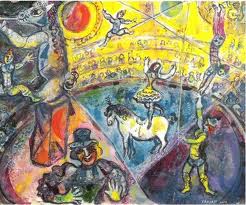
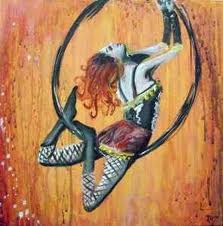
The publishing journey glitters. Veteran authors, publishing houses, editors and MFAs pull us like the sparkling bodice of a circus dancer, flipping and tumbling effortlessly through the air, her partner eagerly waiting to catch her in his arms and raise her into the air for applause.
And yet, we who write for publication must be careful. We sit in the dark stands under the Big Top, munching on popcorn, coveting glow-in-the-dark necklaces, lost in the illusion and elusive space between what is real and who we are.
Like many of you, I’ve been a hobo on this circus train since my youth, curled in a small, black space under a box car, hoping no one will find out I’m there, spying, watching and mimicking every move . . . while at the same time hoping the Ringmaster will discover me, dress me in the finest costume of tulle and sequins and tights, crown me princess in the center ring.
At some point, as each of us steps into the publishing business, we must decide to whom–and for whom–we will perform. I suppose a piece of every life involves some degree of performance. But how big a piece we give up, well that part’s up to us.
Good magicians, like good circus performers, don’t tell you their secrets. But I will tell you mine, and it is this: YOU are the main act.
You’re it.
Becauseyou are theartist.
No matter which trapeze the business has you swinging from–commodity or compadre–you’re the one with the words. Anything the business brings beyond that is a side show compared to the talent, skill and gift you bring to the center ring . . . a gift that can’t be enhanced or revealed, covered or consumed by a shiny costume.
I re-discovered this recently as I read over pages of a document my grandfather left my grandmother, printed words etching a burning love story into the cold stone of history.
My history.
The beginnings of another new novel.
You have a history too, and from behind the cage bars it scratches and roars to be told. Feeding it isn’t enough. You must let it loose and tame it. Balance the weight of it on a small, round stand. Parade it carefully in front of the masses.
There’s a hoop only you can soar through. A tightrope only you can walk. A story only you can tell.
Don’t lose it in the spotlight. Don’t let it become ensnared and choked out by the ropes and pulleys, smoke and mirrors.
Do this, and you’ll survive–and perhaps even thrive–in the publishing circus.
Because all that really glitters in this great show is you.
What about you? How do you remain true to yourself and be the best possible steward of the gifts (and time) God’s given you, while walking the tightrope of the industry?
Maybe God wants to use my story to help someone else? Perhaps that’s the purpose for the painful life experiences I’ve walked through.
We women feel the need to share story, don’t we? To offer insight and hope, to let others know they are not alone, to debate God’s redeeming hand with Oprah (okay, maybe that’s just me on the last one).
It’s true, though. The sound of story resonates from the caves of ancient culture into the modern storytelling centers of today. Since we could speak, we’ve used our personal experiences to influence, educate, and encourage.
The need for story is primal. It’s part of a selfishly Divine design. God created us for community; we are designed to serve vulnerable slices of our lives, heartrending wedges of emotional pain garnished with sweet slabs of healing. As we do, we nurture the raw places nestled inside of every woman. As others witness God’s transformation in our lives, they want to know more about the Transformer.
Early on I uncovered the need to weave my tale, tragic as it was. Like countless others my back-story is steeped in dysfunction, but it’s also a hope-filled story where God’s grace and mercy run deep. I felt compelled to share that hope and encouragement on a wide scale.
Problem was, as a soul-wounded woman I didn’t have a voice. My own language. I simply regurgitated the style of others, imitating what I imagined my voice should sound like on the other side of emotional wholeness. Marry that writing style with a need to purge bubbling anger and my early readers cleaned a lot of (emotional) vomit from their computer screens.
Sometimes God calls us to write for publication; other times He simply calls us to write. I had confused the two—telling my story, and selling my story hailed from two different worlds.
I sought the validation of publication while what I desperately needed instead was voice lessons. As a novice writer, I heard much about the importance of voice. My. Own. Unique. Voice. Yet my voice was shadowed by the influence of others; my perspective skewed, buried in pain and not mature enough to be out on its own yet.
But God, in His grace, led me to write through that pain. Sort through the fallout of hurtful life experiences. Cut through the hard stuff. As I wrote I discovered His truth and redeeming principles, while uncovering my voice—my authentic personality. The raw journaling from that journey may never meet publication, but the voice that emerged has since been published nationally and internationally.
Our stories need to be dialogued, written out. An emotionally-expensive tutor, their words often light the path to a whole new perspective of Jesus. One wall of my office holds a well-worn sign to daily remind me, “Good writing comes from a healthy soul.”
What do you want to write about? What story is so important that you must share it?
Jo Ann Fore is an author, speaker, book-freak, and fun friend. She is passionate about making a difference in the lives of women. Most noted for her authentic vulnerability, Jo Ann captivates her audience with faith-filled messages caramelized with a powerful promise of hope. Visit Jo Ann at Write Where It Hurts, a virtual community where women gather for support, encouragement, and practical tools to live a joyful, purpose-filled life.
No frogs were harmed in the writing of this blog post.
Something funny happened on my way to write this post… I found that I didn’t want to write it. Because it wasn’t going to be funny. Unlike a post about the time I locked my toddler in the car WITH MY KEYS and the fire department got lost on their way to rescue us. That was FuuuuN-NY (after the police came and unlocked the doors).
Once we try to analyze humor and discuss it seriously, it changes. Most often, it becomes unfunny. Mark Twain said, “The more you explain it, the more I don’t understand it.” Or, even worse: life threatening. EB White said, “Analyzing humor is like dissecting a frog. Few people are interested and the frog dies of it.”
But, I’m going to give it a try anyway. And, hopefully, kill no frogs. Humor has a place in all types of writing. Because I’m a fiction writer, I’ll focus there. Shakespeare, Dickens and Austen all used humor. And let’s not forget our great American Twain. Think about the works of each of those distinguished writers. Huge variety in styles and stories. They all used humor. Differently. And, deftly. Humor can benefit your characters, your case and your career. {Alliteration is one useful literary device to bring levity into your fiction.}
CHARACTERS— No one loves a bore. {Inversion is to take what people know– “everyone loves a clown”–and turn it upside down.} In our fiction, we want characters who seem real. We want our readers to connect. A quality we love in real life? Sense of humor. So be sure to give your characters one. Humor can provide respite from your main character’s drama. As your characters show their full range of emotions and traits- inclusive of laughter and humor- they become more real to the reader. They become more important to the reader.
CASE– Okay, this word is really supposed to be theme, but I was going for alliteration up there and so “case” it is! {Breaking the 4th wall is a technique to try and bring your readers in, like a shared joke among good friends.} Humor can help make your case. If you’re funny, it can penetrate people’s natural defenses and reach in to the deep places. Twain said, “Nothing can stand against the assault of laughter.” Someone else said we laugh when we hear the truth at a velocity that exceeds our normal standards of insight. The classic authors I mentioned earlier wrote about slavery, poverty, murder, heartbreak and greed. And used humor.
CAREER– As writers, we all know we might need to market just a little.{Understatement is another literary device to try.} We need to do interviews, guest posts and meet our readers. Some of us will add speaking engagements as part of our efforts. Most speakers start with something funny and, of course, “leave ‘em laughing” too. Funny is good. Funny is fun. My bookshelves are full and my reading time limited. But if I see a funny interview or meet a funny writer, I follow up to learn more. If it doesn’t come naturally to you, you can work on it. But don’t work on it too hard. Trying too hard is not funny. But humor is bi-directional: if you can laugh, you can make others laugh.
One last thing…
CONSIDER– The most important thing is your humor has to work. Because if people don’t get it—or worse, like it– you will be shunned and have to wear dirty burlap sacks and listen to bad knock-knock jokes for the rest of your life and BEYOND. {Hyperbole can be a way to add some funny.} Before you use humor, consider if it is appropriate. Consider the maturity, culture and location of your humor and your audience. That joke about the frogs may not go over at the PETA convention. Or it might be just the thing.
A frog goes into a bank and approaches the teller. He can see from her nameplate that her name is Patricia Whack. So he says, “Ms. Whack, I’d like to get a loan to buy a boat and go on a long vacation”. Patricia looks at the frog in disbelief and asks how much he wants to borrow. The frog says $30,000. The teller asks his name and the frog says that his name is Kermit Jagger, his dad is Mick Jagger and that it’s okay, he knows the bank manager.
Patti explains that $30,000 is a substantial amount of money and that there will need to be some collateral against the loan. She asks if he has anything he can use. The frog says, “Sure, I have this”, and produces a tiny pink porcelain elephant, about half an inch tall, bright pink and perfectly formed. Very confused, Patti explains that she’ll have to consult with the manager and disappears into a back office.
She finds the manager and says, “There’s a frog called Kermit Jagger out there who claims to know you, and wants to borrow $30,000. And he wants to use this as collateral”. She holds up the tiny pink elephant and says, “I mean, what the heck is this?” The bank manager looks back at her and says…
“It’s a knick knack, Patti Whack, give the frog a loan. His old man’s a Rolling Stone!”
Post Author: Charise Olson
Charise Olson writes contemporary women’s fiction. She likes to say she writes California Fiction. It’s like Southern Fiction, but without all that humidity. Her characters face serious life situations and cope with humor. Someone always has a smart mouth and Charise claims IM-plausibile deniability as to their origin. Charise is a mom to anyone needing mothering (whether they think they need it or not!) and owns two alpacas. Why alpacas? Because they were cheaper than a lawn mower. The menagerie also includes two dogs and two cats. In addition to her fiction writing and family, Charise has a paycheck career in social services and education.
Why would a twenty-three-year-old white girl from the midwest clip a newspaper printing of the speech Rev. Martin Luther King Jr. delivered at the Lincoln Memorial in 1963 and tuck it away among her treasured mementos where it remains nineteen years later today?
Because she believed in the power of a lofty dream to drive change? Because she had faith in the unalienable rights of life, liberty and the pursuit of happiness? Because Rev. Martin Luther King Jr. was a compelling writer and speaker who knew how to captivate a diverse audience?
Yes, all of that and more. But, today I want to focus on three reasons I think the reverend’s writing moved me the way it did back when I first clipped that article, and why it still does today.
He created a universal problem and emotional connection. While the reverend’s speech was in no small part directed at those whose rights were being abused, he was brilliant to make it deeply personal for all Americans by invoking a patriotic problem. He speaks of when the ‘architects of our Republic wrote the magnificent words of the Constitution and Declaration of Independence, they were signing a promissory note to which every American was to fall heir.’ If this problem, this refusal of rights can happen to one population of Americans, what keeps it from happening to anyone?
Reverend King Jr. makes us care because most Americans are cognizant of the greatness of the promise of our Constitutional rights. With an increasing global awareness, we’re even less likely to take them for granted. ‘It is a dream deeply rooted in the American dream.’
The writing lesson here: whether writing fiction or non-fiction, give your audience a personal reason to care by creating a problem they can relate to, an emotional connection either to the characters or the cause. Especially in fiction, even though your problem or plot may (and probably should) be extraordinary, your readers should be able to find the common humanity there.
He used powerful language, metaphors and active verbs to show, not tell. Martin Luther King Jr.’s speech did not simply ‘tell it like it is’, he showed it through the use of active verbs and metaphors. While metaphors can be frowned upon in genre fiction today, few could argue they created a unforgettable visual of the plight of 1963: ‘seared in the flames of injustice’, ‘crippled by the manacles of segregation and the chains of discrimination.’, ‘sweltering summer of the Negro’s legitimate discontent’, ‘whirlwind of revolt’, ‘battered by the storms of persecution and staggered by the winds of police brutality’…
And, he also showed it in the vision of his dream: ‘on the red hills of Georgia the sons of former slaves and the sons of former slave owners will be able to sit down together at the table of brotherhood…’, ‘Mississippi, a state sweltering with the heat of oppression, will be transformed to an oasis of freedom and justice…’, ‘every valley shall be exalted, every hill and mountain shall be made low, the rough places will be made plain, and the crooked places will be made straight…’. These are convincing visuals.
The writer’s lesson here: more than simply showing vs telling, try to break from the same worn and weathered words to paint vivid pictures. Scrap those clichés and push yourself to make your language—descriptions and actions—tell their own stories. This doesn’t mean your writing should be thick with purple prose, just that each word should be thoughtful and deliberate. For fiction writers, this also applies to dialog: if your reader can easily predict what your character will say next, it may not even be worth saying.
He leveraged the “Power of Three” and then some. A trick of great speakers—presidents and members of the clergy know this—is the rule of three. What most people remember from a speech is no accident. The key thoughts and takeaways are memorable because they are repeated or weaved throughout, at least three times.
The Rev. King Jr.’s words ‘I have a dream’ were repeated no less than six times throughout his speech. Same with ‘let freedom ring’. But, in addition to those memorable lines, he opened with repeated concepts around ‘One hundred years later’ to describe the state of despair long after Lincoln has signed the Emancipation Proclamation. Then with ‘Now is the time’ to spurn urgency of action, and also with ‘We can never be satisfied as long as…’.
This rule of three can work in your writing too: repeated themes and ideas stick. In fiction this may need to be more shrewdly thought out so you’re not overusing a word or repeating a crutch-phrase, but if there is a key point you want to make sure the reader doesn’t miss, this is a technique anyone can apply.
In respect for the holiday, might I suggest you take a moment to read the Reverend Martin Luther King Jr.’s speech and reflect not only on his great vision but how charismatically he used the tools of language to share that vision with the world?