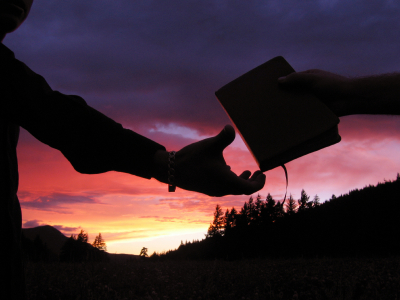
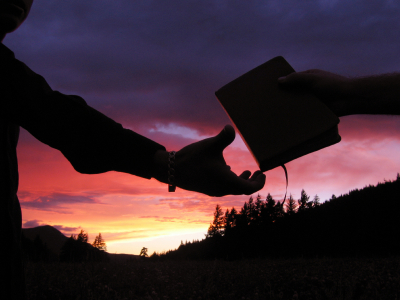
How to Create a Free E-Book for Your Website

People love to receive stuff for free. Ever wandered through Costco in the afternoon? You can always spot the free sample stands by the crowds gathered round.

Our readers are no different. They love to get stuff for free and what better way to encourage or thank them for signing up to your blog posts than with a free e-book.

You may be unsure what content to include in your e-book. Ask your readers. I put a poll on my website asking what subject people would like to see more. This helped me decide what to write my e-book about. Take a look at your web stats; which posts have the highest views?

Once you’ve decided on your topic, start writing it. Keep it on the shorter side; it doesn’t need to be a full book length. Under five thousand words is a good guideline. Remember to offer new content in your book. Because it’s electronic, you can and should link to articles on your blog for further reading and value to the reader.

After your e-book is finished, save it as a PDF file and then upload it to your website. Keep it unassigned (for self-hosted WordPress) and copy the location.

I use Feedburner as my RSS and email subscription service for my website. I downloaded my existing email subscribers addresses to MailChimp and sent them out a free copy thanking them for being with me. You never want to forget your current readers in the search for new ones.

For new subscribers, I included the PDF link in the email they receive from Feedburner when they sign up for my blog. This allowed for free automation and instant access for the reader.

If you use Feedburner and have a sign up box on your website, I highly recommend customizing the sign up box. Even if you don’t have an e-book to offer yet, you should list the benefits subscribers receive when they sign up for your emails. Here’s an example of my homepage and subscriber box. 

By using the Feedburner verification email to send out my free e-book link, I realize people don’t have to verify in order to get the free copy. But if they don’t like my free e-book and choose not to verify to get my posts, then they most likely would have unsubscribed anyway.

Have you ever bought something from a free sample? What makes you subscribe to a blog via email? Do you think having a free e-book has helped your blog numbers?

How to Captivate Readers

Small Child Reading

Wonderment

Children’s eyes

See marvels,

Creation

Born anew,

Wonderment

In each small

Everything.

Give me, Lord,

A child’s view.

©Janalyn Voigt

The cup of tea at your elbow grows cold.The dryer buzzes, but you hardly notice. The clock ticks past the time to make dinner, but you turn the page and read on, captured by the author’s creative world.

When they can make readers forget they’re reading, books rank high on purchase lists. Figuring out how this happens is well worth the effort. Can such a thing be identified? Bringing the reader so fully into a story would seem to take an elusive blend of mastery and pixie dust. Besides, don’t readers’ preferences dictate which books will draw them in?

I would have agreed to this idea a week ago, but not any longer. You see, the book I’m currently reading for a literary contest is a young adult story. With my teen years forever behind me, I am not a target reader for this book. In fact, when I first picked it up, I groaned inwardly. While being required as a literary judge to read a slew of books might seem an envious pursuit, the bare truth is that sometimes I wind up stuck with a book I’d otherwise never open. It would be arrogant of me to judge another author’s writing without actually reading it, and so in a fit of fortitude I slog doggedly onward until the merciful end.

If that had been the case with this particular book, I wouldn’t be writing this post. It wasn’t. I did have to push past a slow start, but then the story enveloped me like a warm shawl on a chilly evening. I read late into the night, turning pages in a way that would have gratified the author. As I mentioned, I am not this author’s target audience, so I may never crack one of her books, but the next day I found her Goodreads page and became a fan. Why? Because her writing transported me in a way few books have. And I read a lot of books. If my experience is anything to go by, preference has little to do with captivating a reader.

What does, then? I asked myself this question with an interest not in the least academic. I want to apply this writer’s secret sauce to my own writing. I read the rest of the book with that goal in mind. What I discovered rocked me to the core.

Apart from the necessities of craft and mastery, two distinct factors elevated the story: a unique writing voice empowered by a vivid imagination. The author’s strong sense of self expressed without reserve resonated within her fully imagined story.

In these days of rapid writing, let’s not forget to add art to craft. The demands on you to produce and promote can steal the soul from your writing, if you let it. Feeding your inner artist is the only way to tap the wellspring of creative life within and produce enduring works. That will look different for each of us, but one thing remains true for all. The way forward is backward. At least mentally, let yourself step backward into childhood and discover the world with fresh eyes.

What books have you read lately that have surprised you? Transported you back to your childhood?

Agent Expectations and Priorities, Part 2

Last month I talked about mine and our agency’s priorities. You can view that post here.

Briefly, the first four were: 1. Contracts, 2. Reviewing/Editing Proposals, 3. Submitting Proposals, 4. Client Detail

Next…

5.  Editors:  I value highly my relationship with editors. Many of them are people I call my friends. I care about their lives, and, in return, they care about mine and the lives of my clients. At the end of the day, people do business with people they like. Doing business is not all about trust and relationship, but it is a huge reason that our agency is successful.

Consequently, each year I make time to meet personally with as many editors as possible. I have to get to know who they are, what they love to read, and what their particular house is looking for. Instead of making the July ICRS convention a priority, I go to Grand Rapids, Chicago, and Eugene every year; Nashville twice a year; and New York every other year, which allows me to visit all the CBA Houses, one on one, in a relaxed environment. ICRS may be handy (all editors together in one place), but they are also pushed, exhausted, and often overwhelmed during that crazy-busy week. I prefer to meet them at a relaxed, less-pressured time, making it enjoyable for all. We get more business done, but more importantly, we do more natural relationship building. Colorado Springs, the other publishing Mecca, is just down the road. I’m usually there monthly.

6.  Industry News: The transition that publishing has been going through the last three years has been a game-changer for agents. I’m now spending about 3-5 hours a week reading insider news about the publishing world. It’s a headache, but I do it so you don’t have to.

7.  Referrals: While the agency is always looking for the right type of authors, I personally am not looking to expand my author list. For the time being, Barbara is not signing new clients either. I will add a few clients each year, but it is rare. Your confidence in recommending us first to your author friends means a lot, but like every agency, we’re very picky.

What you won’t see me doing…

  1. I don’t have time or a desire to be famous. Though I tithe a small amount of time each year to encourage new writers, this is not a large focus. Most of my time is dedicated to my author-clients, as this is what they expect me to do (and what I love doing). Other agents do have a desire to be known well, and they have their reasons for this. Writing this monthly blog is hard enough with my jam-packed schedule. If I were to do a daily blog, the work above would greatly suffer. You will rarely read a Tweet from me unless it’s to announce something about what one of our agency clients is doing. Cathy keeps our fan page updated. The bottom line is that WordServe’s aim is for our authors to be well known, not me or the other agents who work in our company. I want to be known as an agency that gets things done; I want to deliver steak not sizzle. Ultimately, this is what authors want and need most.
  2. Though we are proud of our website and social media efforts (Facebook, this blog, Twitter posts that connect and promote our authors’ projects, our upcoming Pinterest emphasis), this is not our number one priority either. Quite frankly, we already receive way more inquiries than we can handle, so advertising or promoting our company does not benefit us. Word of mouth is our best advertising, when our clients and editors hand our names to excellent writers seeking publication. Most often, enthusiastic referrals from professionals yield our best new clients.

Agenting is about priorities, but so is life. Along with doing this work that I love, Becky and I are involved with people in our church, with our six kids and five grandsons, and trying to keep life balanced and fruitful. It’s a fun challenge.

What priorities matter most to you in a literary agency?  (Or if you are a new writer, what would you imagine you’d like your agent’s priorities to be?)

Advising New Writers Lovingly

Today I received an email from a freshly graduated student about a blog he’d been writing for the past two years that he wants to get published as a book. It was about being an only child—a topic I recommended he consider transforming into a memoir after he turned in a wonderful English 101 essay about growing up alone. Ever since, he said, he’d been writing. He included a link to the blog, clearly hoping—despite assurances to the contrary—that I would read it and somehow singlehandedly applaud it onto bookstore shelves.

This is the first of several such emails that I’ll likely receive this summer, in addition to similar requests I get from faraway former students, colleagues, and even total strangers during the school year. Would be writers email me. They show up in my office door, boxed manuscript in hand. They bribe me with lunch. But something about graduating—commencing Real Life, I guess—translates especially as the supreme opportunity to magically turn what have thus far only been vague dreams—of writing their memoir, of publishing a collection of devotions, of becoming a children’s author—into reality.

For me, though, summer is my big work-time as a writer. As soon as I get my grades in, I’m frantically writing away toward midsummer deadlines. In a little over a week, my college daughters will be coming home, and I’m embarrassed to say—though I love them both dreadfully and have been missing them ever since they returned to school after Christmas break—I’m dreading their return. The summer seems, for me, already used up, with all the things I need to get done during it, and I resent everything—even things I love best, like daughters and gardening—that takes me away from the computer.

So, I’m faced, as most writers are, with a difficult task I’ll probably never get exactly right: How to convey the reality of my summer (indeed, of my life as a writer)—that I have neither the time to read a single post, not to mention four years’ worth of blogging or a manuscript two reams thick, nor the power to circumvent for them or myself the arduous tasks of revising to make a book readable and securing an agent to get the thing sold—while simultaneously heartening and supporting those who, inspired by my own modest successes as a writer, want to follow in my footsteps?

The poet Rainer Maria Rilke models my ideal response in his Letters to a Young Poet. I would like to embody his kind voice and take time away from my own writing to compose letter upon letter of encouragement and advice to those who approach me for writerly advice. But Rilke was writing back before the internet made it possible for would be writers to readily locate and assault him with salvos of manuscripts and queries. And Rilke didn’t seem to have to do any other work in his life besides write poems. And poets write, after all, poems. Short pieces—shorter, quite often, than a single blog post.

I was also much impressed when, after a reading from her memoir, Ellen Gilchrist took on question after question from the would be memoirists in her audience, somehow validating every asker as a writer and spurring each one to keep at it, keep writing, keep sending things out, keep doing—or start doing—the hard, often fruitless but always rewarding work of getting one’s thoughts and stories onto the page and into others’ hands.

My advice, finally, is canned, as were perhaps Gilchrist’s comments at readings and maybe even Rilke’s advice—which was, after all, published in book-form for every wannabe poet to read. I have an email in which I detail the steps I myself took in seeking publication for the first time, and I send it out, slightly personalized, to each asker. I have a spoken version for office door and phone conversations. It’s easier to be kind and encouraging, I find, when I plan it out.

“No breakfast?”

Now, if I could just figure out a loving way to tell Lulu and Charlotte I’m too busy to make them the fantasy breakfast they’ve been dreaming of all semester…

What do you tell aspiring writers who come across your path or your email in box?

Marketing Love

Striding down the endless hallway of the Mayo Clinic, I passed hurting people on all sides.  This wasn’t about being heroic; I simply wanted to make my day about more than a doctor appointment.

“Okay, Lord. Who?”  My book felt sweaty in my hand.

Copy number one went to the sweet lady in a wheelchair. “Oohhh,” she said, pursing  fuchsia lips.  “It looks wonderful.  Thank you, Dear.”

Copy number two returned to me with the cold shoulder of rejection.  I kept walking because I couldn’t shake off the possibility that God might still want to do something. Besides, I was stubborn and didn’t want to go home with the book.  When I got to the end of the hallway, I discovered I’d inadvertently funneled into a large waiting room.

“Okay, God.  What now?”

Doing a three-sixty over a sea of people, I tried to look inconspicuous.  Then, with a puff of a prayer, I picked a pleasant-looking lady.  She’d be the one.  I took a deep breath and plopped myself down with only a chair between us.

After a minute of pretending to read my own book, I cleared my throat.  It worked.  We made eye contact.

“Hi,” I began.  “This may sound strange, but I prayed God would lead me to someone I could bless with this free inspirational book, and I feel it’s you.  May I give you this?  I wrote it.”

Her eyes lit up.  “Oh, bless you,” she said, glazing with tears.  No fanfare, just a simple exchange.  I went home happy and bookless.

Two or three weeks went by and apart from a few imaginations of finding “A Friend in the Storm” in a thrift shop, I basically forgot about my give-aways.  That is, until three days ago, when I received this heart-stopping email from Sara, a friend I hadn’t talked to for months:

Dear Cheryl,

I talked to my neighbor & friend about 2 weeks ago, Krista Flint.  She had an amazing story of being touched by God’s love through a stranger.  And that stranger was YOU!  It gave me goose bumps to hear of how she had been going through so much and that you sat beside her in the waiting room and gave her your book.

She was so blessed by your words, kindness, & the power of your poems. She said that she knew that God was near, but it was so comforting to hear it from someone! So I wanted you to know that your choice to follow God’s nudge to go to the waiting room and give “someone” your book was exactly what God planned for you & Krista!! It was so exciting to hear how God did that for both of you.

Sara’s P.S. explained that Krista was a breast cancer survivor.  Later, the same day I gave her my book, she was in a major car accident.  Although her car was totaled, she somehow managed to make it through it okay.  “A Friend in the Storm” gave her peace and reminded her that God has a purpose.

“Make use of every opportunity.”  Ephesians 5:16

When we ask God to go before us and use us for His glory, He makes a way.

Until heaven, we can’t possibly grasp all the ways God uses us to reach others.  We simply rejoice in these glimpses.

Giving away books is only one of many ways we can be God’s messengers.  We can also share personal notes, Scripture cards, and post cards or business cards with thought-provoking quotes or concepts from our books.

One time, when I gave a waitress a poem card, she threw her arms around me and burst into tears.  The Lord used a simple poem to reach into her heart and start a healing conversation.  Don’t you love how the Holy Spirit works behind the scenes?

How do you share marketing love?  I’d love to hear stories of how God used you and your words.

A Writer’s Flash-Point

Life is packed with flash-points, moments of ignition, moments when something contagious is sparked.

A few years back as a freelance writer for national and international magazines, I nurtured an until-then-dormant desire in the recesses of my heart: I wanted to write a book. I had no idea what book, but it sure sounded glamorous. Jo Ann Fore – Author.

I envisioned days penning words in a secluded cabin surrounded by soaring mountains and pristine lake waters—which would lead to countless fans, best-seller lists, and media engagements, of course.

My fantasy lived a number of quiet years before I joined the ranks of thousands of others who had made writing a book an official goal. I was proud of my fearless move. I did it. I set the goal! That much closer to authorhood.

Funny thing though, verbalizing that goal always led to the inevitable question: What are you writing?

What am I writing? (Flashpoint One.)

I really didn’t know.  All I knew was someday I was going to write a book. I had dreamed of writing a book probably since I held my first crayon.  But, someday.  Someday when I had more time, when my daughter was grown, when life wasn’t so hectic.

My husband, Matt, taught me a valuable lesson about the word “someday.” When he and I dated, I was extremely commitment-shy after having escaped a not-so-great (okay, horrific) marriage. Today Matt and I joke about the countless pre-proposals he tossed out before he got to the real one. Consistently he asked, “Will you marry me?” This both warmed my heart and petrified me. Feeling a bit bi-polar each time he asked, I simply smiled and said, “Someday.”

Until the day Matt called me out. “Maybe you dangle it just far enough out of reach to avoid the reality. There’s really nothing intentional about the word someday.”

Once he was serious about his proposal, he let me know that “someday” was going to have to move to a set date. We just celebrated our seventh anniversary. If I kept saying “someday” I may have lost this amazing husband.

I was unknowingly sabotaging one of my greatest desires. (Flashpoint Two.) And now, I was doing the same thing with my aspirations to write a book.

It was time to drill this thing down. What am I writing? I want to help hurting women. I want to offer lasting hope and practical application. So, what is my message?

Once I articulated that, I could move forward. After I settled the premise of my work I was ready to write. (Flashpoint Three.) That was the day the book became more than a dream, more than a goal. It became an intentional laser-focused choice.

Along these lines, Huffington Post’s Complete Guide to Blogging offers a great exercise we can use to nail down the focus of our book: “What is your point? How would you explain your point to a batty, slightly deaf relative in one sentence? Write that sentence down. This is the gist of your piece.”

I would love to see your answers in the comments section below.

Market to the Front of Your Own Parade

It’s my first post here at the WordServe Water Cooler, and I’ve been racking my brain trying to find something unique and helpful to share with a group of experienced and prolific writers like yourselves. For the last several years, I’ve hidden behind authors, quietly helping them with publicity, blog tours, and social media. After taking a year “off” to birth and raise a baby and to start my writing career, I find myself having to actually implement all of the marketing advice I’ve offered to others. I now have to build my own writing platform. Even with my experience, it’s scary and overwhelming.

So many other people are more competent than I am when it comes to writing, marketing, social media, cooking, healthy living, parenting…and the list goes on. When I start to think of all the ways I’m under-qualified to write and market a book about food, family, and faith, I’m tempted to become crippled with fear.

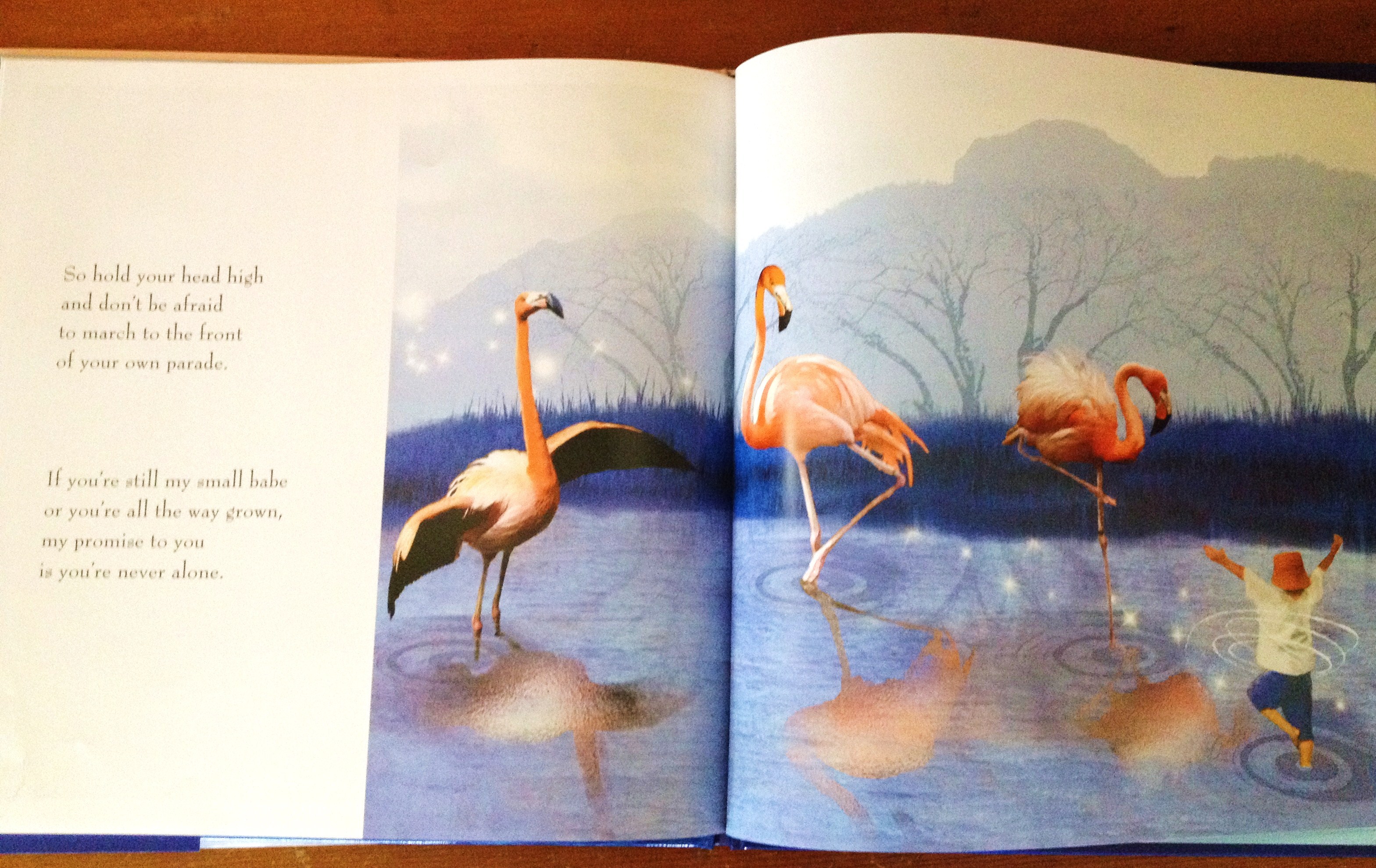
This morning, I was reading a book to my 10-month old son and these words jumped out of the page at me.

Climb any mountain…climb up to the sky!

Make a big splash! Go out on a limb!

Hold your head high and don’t be afraid to march to the front of your own parade.

I love the picture of the little boy proudly making a splash and leading his parade in Nancy Tillman’s sweet book, “Wherever You Are, My Love Will Find You.”

March to the front of your own parade.

I don’t have to march to the front of your parade or The Pioneer Woman’s parade, or Seth Godin’s parade. My book, my career, my parade.

And better yet, I can hold my head high and be proud of what I do have to offer, the areas I do excel in, and the gifts God wants me to share. I don’t have to measure up to anyone else. I’m uniquely me!

Instead of thinking of it as building our platform, we could just pretend we’re marketing to the front of our own parade. Doesn’t that sound more fun and less intimidating?

Imagine a parade about you and your books, where the collection of floats tells a story. Each float celebrating a part of who you are, what you believe in, what your expertise is, what your passions are, what your books are about, what you are like.

If each of your blog posts, tweets, Facebook statuses, and online bios is a float, does your current collection of floats look like the parade you imagined for yourself? Do you think people are inviting their friends to come watch your parade? Are they jumping in and marching along with you? Is fear of failing, judgement, or not measuring up keeping you from proudly stomping around and letting yourself be seen and heard?

Hold yourself high, and don’t be afraid to march to the front of your own parade. – Nancy Tillman, Wherever You Are, My Love Will Find You

Mentored by The Best Selling Author

Best Selling Author - Anita Brooks

I had no idea what I was doing.

I went to my first writers conference with zero expectations. I simply wanted to explore this crazy dream God had planted in my heart.

At my allotted appointments, I sat across from editors, agents, and publishers and said the same thing, “I don’t have anything to pitch. I just came to learn. Can you tell me what you think I should know?”

Every person demonstrated gentle patience and gave me a huge boost of encouragement. One discussion, spurred by a workplace pet peeve, kept me awake most of the night jotting down notes.

On the last day of the conference, I knew my life would never be the same. And I was right.

I flew home feeling overwhelmed. My mind swirled with a mix of anxiety and anticipation. A professional thinks I have potential. A professional believes my differences are a good thing. A professional requested a book proposal. I don’t know how to write a book proposal.

I was a long way from being ready to submit anything, and I knew it.

When I arrived back at normal life, I needed help. But where do you turn when you live in a tiny town in the Midwest? What kind of education can you get when there’s no college close? How do doors open when you have no degree or credentials in writing?

You ask the Best Selling Author of all time for help.

Wanting to do nothing less than excellent work, I got on my knees and asked God to personally mentor me. I figured since His book, the Bible, had sold more copies than any other book throughout history, I should try to learn from Him.

My schooling took months, even into years. I turned the television off and got to work. I spent hours soaking up assigned books on the craft of writing. I practiced with devotions, articles, and blogs. I listened to the professionals He sent to help me develop better habits. Then I re-wrote my devotions, articles, and blogs. Sometimes it took many copies to get the words and punctuation just right.

I graduated to the study and practice of book proposal writing. I wrote at least three dozen drafts while my Mentor patiently encouraged me to keep trying. All the while, prayer and a listening ear helped me maintain a teachable heart.

Only three years later, I signed with WordServe. Recently, I signed a book contract for the original non-fiction idea I’d had at the conference. This may seem like a long time, but in publishing years, it’s pretty fast.

Today, I still need my Mentor. He’s guiding my mind and hands as I finish my book for publication. Because of Him, I hope to write many more.

If you’re an aspiring or experienced author, I encourage you to call my Mentor. He’s available 24/7/365. His name is God, and he turns good concepts into strong books. There’s no better Muse than the one who created your mind.

Do you have a mentor? Where do you go for guidance and encouragement?

Anita Brooks - Best Selling Author
God’s Story – The Best Selling Book of All Time

I Have a Secret

Taken at the Denver Chalk Art Festival, June 2012

All good writers and creative-type people need a secret that drives them. The secret should push them to write more, write with superior quality, and write with a theme of hope in all of their WIPs, or even their journal. So far my secret allows me to accomplish all of the above and more.

  1. My secret wakes me up at 5:30 a.m.  Normally, I am an 8 a.m. riser or, more specifically, someone who rolls out of bed, texts something like “god mrning” to my hubby (who has already left for work), and sits on the couch, nursing my cup of coffee with the news on mute because I don’t like noise in the morning. Lately, I have been bright eyed and bushy tailed way before the hubby. So I poke him in the arm until he wakes up. Okay, so the 5:30 a.m. wake-up call isn’t good for everyone.
  2. My secret makes me go to bed at 8 p.m. I still need my 9 hours of sleep despite my early rising habits.
  3. My secret makes me eat healthier (or at least try to). I have consumed a lot more fruits and veggies because of my secret.
  4. My secret makes me more creative. I built a piece of furniture yesterday. Okay, I put together already assembled parts of a completely built piece of furniture. Oh, okay, I held the pieces while my hubby put together the piece of furniture.
  5. My secret makes me cry. Sometimes my secret is so overwhelming that all I can do is cry out to Jesus, asking him to hold me.
  6. My secret makes me laugh. I laugh even when no one else is around and I’m standing in the hamburger aisle at the grocery store, and then someone comes into the same aisle, and I laugh even harder.
  7. My secret makes me read my Bible more. Confession time: I am not a daily Bible reader. I never have been. I am not even a daily devotional reader. But my secret might turn me into one!
  8. My secret makes me love my husband even more. I made him a pan of homemade brownies the other day and called him at work “just because.” Seriously, I love that guy.
  9. My secret makes me exercise more. And not just because I would be the first person to die in The Hunger Games.
  10. My secret is my life, my light, and my joy!

Do you see now why every writer needs a secret? Your secret can be different than mine, but it needs to make you a better person. All good (or even bad) secrets do just that. So your challenge for this next week is to find yourself a secret―one that will push you harder toward your writing goals.

P.S. Some of you already know my secret. Please don’t say anything. 🙂 For the rest of you—guess away. The big secret reveal will take place on my Facebook fan page on Wednesday, June 13.

Q4U: Do you have any secrets that motivate you? If so, what are they? KIDDING! How have they made you a better person? A stronger writer?

Don’t Let Your Muse be a Prima Donna

Granted, there’s nothing particularly sexy about the image here, but that’s exactly the point I hope to make today. I have plenty of writing mistakes behind me, and, no doubt, I’ll probably have more ahead of me, but my biggest mistake, by far, has to have been my slow recognition of how to live with a flighty muse.

I fell in love with words and books as a little kid, and the magic holds as much of a spell on me as it ever did. Even now, watching the letters group up into words and the words into sentences on this page pleases my eyes and settles my soul; only now I know there is nothing mysterious about the magic! I once thought of my muse as this elusive creature who must be cajoled into making an appearance. I had to attend to her every need with just the right coffee/surroundings/writing pad, etc.  Otherwise, like some spoiled prima donna, she might get offended and disappear as quickly as she arrived. There’s a good country word for that sort of thing: bologna!

If I might digress a moment to a much more important subject, I’ll use my last breath on this green earth helping my fellow believers understand that this same principle is applicable to our life in Christ Jesus. I believe it’s vain to wait on some supernatural hunger for God’s word and His fellowship in prayer to bonk us all on the head and propel us to our quiet places. And yet, I know that when we bend our will to His and seek Him diligently, He meets us and begins forming those very desires within us. Now, THAT is good news, any which way you slice it. And now, back to your regularly scheduled writing post.

My muse wears work clothes. She has to, y’all. Deadlines call from every corner. Oh, yes, I love words and writing as much as ever, the process will always feed my soul. But if I were waiting on a flighty muse to show up and perform, I’d be dead in the water.

Like so much else in this life, I’ve found that success comes when one foot, or word in our case, is placed in front of the other, time and time again. I can’t get the hours back that I’ve wasted in the past, waiting on my muse to show up and perform, but that’s okay. Experience is, after all, a mighty fine teacher. I may have stumbled towards the understanding, but I’ve learned that my muse, she is me. I’ve taken the power back, and it feels good. Who knows, if she’s good, I may even treat her to a caramel macchiato!

Do you wait for inspiration, or do you start without it?