What Food Network Star Taught Me About Author Branding

Marketing your Debut Novel: Part Two

Last month, I started this series on how to market your debut novel. You can find Part One here. We’re going to stick with the same time period of the writer’s life–the pre-contract phase.

In brief, I discussed those things an author should be doing pre-contract phase, which is identifying and building your brand through social media. You are working to build a well-defined tribe. (You are reading Seth’s book by now, right?)

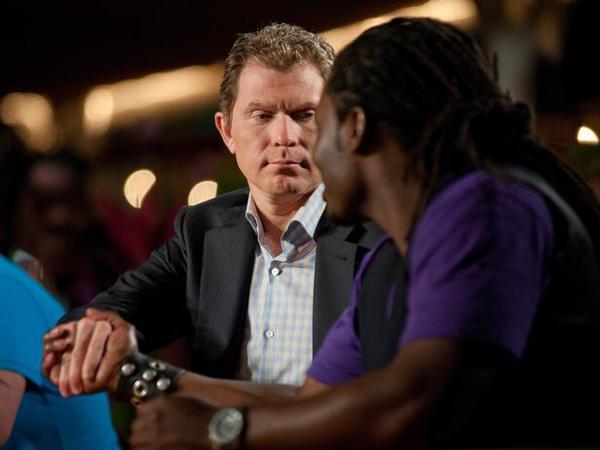
The issue of branding became very apparent to me while watching The Next Food Network Star. Yes, hand straight up in the air, I like reality TV. If you’re not familiar with the series, earnest chefs attempt to win their own show on Food Network by doing next to impossible cooking tasks for a panel of feisty food judges they may work for someday.

The judges want to know what their POV is. This season one contestant, Malcolm, was often heard saying, “I don’t need a POV. I just need to cook great food. That will speak for itself.”

I’d like to indulge a few different words. “I don’t need a brand. I just need to write a great novel! The words will speak for themselves.”

The problem is where do said judges, or in our world, publishers, place you?

If you’re seeking publication and you’ve not been published before (particularly in fiction) you are going to have to 1. finish your novel and 2. write a book proposal.

A book proposal is essentially a marketing tool for your book. It’s the sales plan. It’s the blueprint of how your tribe (again, reading it?!?) will purchase your product.

One section of the book proposal is the dreaded “comparison” section. It can be called other things. Market analysis. Comparable books. In this section, you list books that are like yours (and what sets yours apart in a nice, professional way.) The purpose of this section is to help a publisher identify what type of audience you’re trying to reach. Is there consistency amongst the authors you picked and what type of novels they write? This helps a publisher know that you know yourself pretty well. You have brand awareness and can plug into the group of people who also like those authors.

But say I have little brand awareness. My novel is a Steampunk, alien invasion set during Roman times with a population of Amish quilters–and if a book like this makes it big, you heard it here first! My website looks like a Steampunk machine tossed out a Roman gladiator who just tousled with an alien on the prairie–and throw in a couple of Amish looking bonnets for good measure since those books sell really well.

In your comparable books section, you list these books: Proof by Jordyn Redwood (a medical thriller), The Half-Stitched Amish Quilting Club by Wanda Brunstetter (Amish gives a clue there), Not a Fan by Kyle Idleman (this is Christian non-fiction), and Francine Rivers’s A Voice in the Wind (which is historical fiction).

A publisher is going to be scratching their collective head. How can one fiction book possibly be placed by each of these novels? They’re so different. Not even in the same section.

But, you say, my book will satisfy all of those readers. A publisher shakes their head. No, it won’t. The books above represent very diverse readers. I’ve personally read two: my own and Not a Fan. Not to say the other two by Wanda and Francine are not excellent novels– but they don’t appeal to me and what I like to read.

Don’t be Malcolm. Discover your brand. BE the BRAND (think Miss Congeniality– BE the CROWN!)

So, you may ask, what happened to Malcolm? Voted off midway through the season. Great chef but “we don’t know who he is.” They didn’t know how to brand him.

What about you? How did you like writing your book proposal? How easy or hard was it to write the comparable books section?

Another Brick in the Publishing Wall

FreeDigitalPhotos.net

Inevitably, whenever I read an article about the publishing business lately, Amazon’s name crops up—often to highlight how they’ve become the big, bad wolf trying to blow down the publishers and booksellers with a huff and a puff of discount prices, a far-reaching distribution channel, and the ability to sell direct to consumers. Much heft, in particular, has been placed on pricing as the lynchpin that could make traditional publishers and bookstores obsolete. No doubt (and for good reason) they fret over this more than the average reader, and time will tell if price and reach are the mortar holding it all together. Meanwhile I’d like to explore another factor influencing why and from where customers buy because I don’t believe it’s all about price, and I don’t believe it’s all about marketing and promotion, either. What about convenience? Selection? Fulfillment? What about how well the seller delivers on the overall customer experience at every touch-point and every interaction?

FreeDigitalPhotos.net

Yes, I admit I’m a bit of a harpy about the ‘customer experience’ (call it a hazard of my day job), but it’s the one thing that keeps me coming back again, even if I can get something cheaper elsewhere, and when not done right, it’s the one thing that drives me away faster than I can pluck a hair from my chinny-chin-chin. Why do you think people who buy only from certain bookstores do that? Nostalgia for traditional publishing or because the experience and interactions they have in those places make them feel good? I’m guessing it’s the latter.

And do you think people who buy mainly from Amazon do that solely for the price, or might it have something to do with Amazon’s wide selection, easy to use website, quality packaging, fast (often free) shipping, easy returns, overall solid reputation, and available, empowered customer service? It just might. I’ve been buying everything from books, games, and gifts to guitars, clothing, and Cuisinarts through Amazon since 2004. Every time, they’ve worked hard to build my loyalty by delivering a consistently extraordinary customer experience.

FreeDigitalPhotos.net

When I think about my experiences with other sellers, they’ve been average or infrequent. With publishers (traditional and electronic), it’s a mixed bag. As a consumer, I don’t have many. As a writer, I’ve mostly been rejected or ignored. I realize this is par for the course in the publishing industry, and I don’t doubt I deserved the rejection at the time, but being ignored is memorable. I’m expected to provide thoughtful responses to hundreds of emails a day (and, no, email isn’t central to my day job), so it chafes a little when publishers say they don’t have the time to respond at all, ever. These may be ego-bruising realities for a writer, but as consumers who buy a lot of books (and the occasional Cuisinart, for that matter), engaging us only when it’s self-serving isn’t the way to build a positive, lasting relationship.

On the flip side, Amazon isn’t perfect.  I hear some Indie authors say they’re unhappy with Amazon’s KDP Select customer service, and they feel ignored or unappreciated. Amazon may, in fact, be wading into dangerous territory if they don’t figure out how to deliver the same service excellence to indie writers as they do elsewhere. But given the overwhelming number of positive experiences I’ve had with Amazon, I might be willing to forgive the first lapse or two.

FreeDigitalPhotos.net

If publishers and booksellers intend to compete profitably in a world where customers are ever-evolving in their expectations and where the likes of Amazon exist, they have their work cut out to deliver the kind of experience that builds loyalty (read: profitable behavior). There is no silver bullet. It takes time to build a reputation. Amazon isn’t the only threat to houses of sticks and straw. There’s a hurricane of savvy customers brewing.

What about you? Have you ever decided to purchase from somewhere (or not) solely based on an excellent or poor experience?

Disclosure: I have two contemporary romances published with Avalon Books, which was recently acquired by Amazon Publishing. I had drafted this blog post before I was aware of the acquisition, and it in no way impacted my depiction of Amazon here.

Will Reading Fiction Turn Men Into Sissies?

Image courtesy of FreeDigitalPhotos.net 

Upon learning I’m a novelist, many brethren (opposite of sisters) tell me they don’t have time to read, especially fiction. My brother-in-love, bless his heart, wants to write “real books.” My friend Torry Martin, who works for Adventures in Odyssey, doesn’t have time to read fiction.

Hey, my grands listen to Adventures in Odyssey. I’ve listened to the books on tape when traveling with them. Okay, okay, that’s not reading. But, it is fiction. It is story. And, we get totally immersed in them.

So, this brings up a question. Is fiction reading something only for women and children?

Not according to the Art of Manliness.

“Whatever the reason, cognitive studies are beginning to show men might be short-shifting themselves by avoiding the fiction section in the bookstore and library.  Today we make the case for why you need to put down those business books every once in a while and pick up a copy of Hemingway.”

Scientists have discovered fiction stimulates and improves the functions that allow us to survive in society. Unfortunately, men received the short end of the stick when it comes to the ability to socialize.

“Most of your success as a man,” says Dr. Keith Oatley, “whether in love or work, depends on your ability to socialize adroitly. We’ve all heard the phrase, ‘Success depends not on what you know, but who you know.’ As much as you’d like to think that’s not true, it is. You can be the most skilled and talented whatever in the world, but you’ll likely labor away in obscurity if you don’t know how to reach out and share those talents with others.”

The brains of boys and girls are the same in the womb, but a male brain changes at birth. (I learned this from Dr. Gary Smalley. Didn’t everyone?) In order to deal properly in our world, and in our respective roles, most male brains are good at dealing with stuff, while female brains are typically better at dealing with people.

While this might explain why women often prefer fiction over non-fiction, men probably have the most to gain from reading fiction.

Instead of seeing fiction as a bunch of made-up, waste-of-time baloney, looking at it as a simulator allows both men and women to exercise and strengthen the ability to socialize. Men, every time you pick up and read a novel, you’re molding yourself into a better, more socially adept man.

Mystery novels particularly exercise the mind. Whenever you read a Dashiell Hammett novel, you’re guessing right along with Sam Spade about what the subtle gestures or the words really mean. Is the suspect or witness just saying something to throw you and Spade off the trail? Reading fiction is wrestling with reading the minds of the characters and taxing and fun at the same time. Literary critic, Lisa Zunshine, says the mental workout you get from reading a detective story does for the brain what lifting weights at the gym will do for your physical body.

When asked if there is a special type of fiction that men should read, Dr. Oatley’s response was to read whatever interests you. The result is the same when reading highbrow Russian novels or lowbrow dime paperbacks.

“Our studies show that the effect fiction has on the mind is independent of literary quality,” says Dr. Oatley.

Image courtesy of FreeDigitalPhotos.net 

He recommends reading a wide variety of fiction, which allows us to get to know more people in more circumstances.

“Read those Louis  L’Amour and Michael Crichton novels without any guilt. You’re helping yourself become a charismatic social-dynamo.”

So, men (or women :)), what novels have you read lately?


Remember Your Passion

So much of being a writer is weathering rejection. We often hear the advice, “You need to develop a thick skin to survive in this business.”

This is partially true. We can’t let every no beat us down or we’ll spend all of our time getting back up instead of moving forward.

But those rejections do hurt. The more often you experience, the easier it becomes. It’s taken me over ten years to reach the point I can say this honestly.

However, I still don’t like them. I don’t think there’s a writer out there who does. If you do, please share in the comments!

There are a few valuable things rejections teach us. They make us examine why we’re doing what we’re doing. When I feel beat up by the no’s, I have to remind myself why I want to be writer.

It’s not for the fame. Of all the truly awesome writers out there, how many are famous? Not many.

It’s not for the money. Most authors still keep their day jobs or spouses who help supplement their incomes.

I write because I’m passionate about my stories. I have a message God has put on my heart. I write because I don’t feel whole when I stop. I write because God created me to be a writer.

So when you’re faced with a rejection, no matter what step of the publishing ladder you’re on, remember your passion for writing.

When you feel like giving up, ask yourself these questions:

* Why did I start writing in the first place?

* What kept me typing my first story before I even thought about sending it out?

* What message do I want my words to convey?

Write them down on a card, so the next time you receive a rejection letter or a pass on your work you can pull it out to remind yourself. And then start writing your next masterpiece.

Also, feel free to check out these rejections by other writers. Knowing that other writers really are going through the same thing can be helpful.

The ‘Real Stuff’ of Character Building

A few years ago, my sister gave me a t-shirt that reads, “Careful or you will end up in my novel.” She meant it as a joke, but the truth is that my t-shirt does not lie: for me, every person I meet is a potential character in my mystery series. Like every writer, my writing is informed by my experiences and that includes experiences of people.

That said, none of my fictional characters are ‘real.’ Though they may be inspired by someone I meet, I usually take my creative license very seriously and make my characters composites of traits that fit the needs of my story lines. For example, I met a charming World War II veteran at a dinner speaking engagement last fall. He kept everyone at the table laughing with his wisecracks and his stories of being an ordnance (explosives expert) officer during his military career. When he noted that he still had all ten original fingers, I knew I had to use that line in a novel, so I began to formulate the character of Vern Metternick in my upcoming release.

What was even more surprising to me – and especially delightful! – was that as I developed the character and his relationships with other characters in the book, I realized his explosives experience could lead to a key, and very funny, scene in the novel that I had not anticipated. So my chance dinner partner unknowingly not only gave me the kernel for a wonderful character, but also actually helped shape the plot of the book. It really is true that authors can create characters, but not always control them, and I say that’s a good thing! Especially when those characters can solve knotty plot problems and make the book even better than I had planned.

There is also a flip side to my t-shirt – on occasion, I do use real people in my mystery series. Since my books deal with current conservation issues, and I aim for strong local connections, I use real places in my books, and actual experts in the story. I always ask those folks for permission to write them into the novel and then thank them in my acknowledgments. To put them at ease, I promise not to make them murderers (unless they ask to be!), and I generally give them an overview of how they’ll fit into the story. So far, no one has turned me down, and I get a real-life connection out of it that my readers love…not to mention one more person who is almost as excited as I am when the book debuts!

As a result, I assure my friends who see my shirt that their secrets are safe with me. Besides, they can always take comfort in that lovely disclaimer that prefaces fiction: “Any resemblance to actual events, locales, or persons, living or dead, is coincidental.”

And if you believe that, I have some ocean-front property in Arizona I’d be happy to sell you.

Where do your characters come from?


Making His Name Famous

Making His Name Famous

By: Cindy Sigler Dagnan

 “Rejoice with those who rejoice; mourn with those who mourn.”

Romans 12:15

      I was on my way to speak to a writing group about crafting pieces for the Christian market, still unsure about my opener. Once in the parking lot, I dug in my purse past gum wrappers, receipts, dry Cheerios and unidentified melted goop, pulling out an envelope from the day’s mail. Aha.

Going inside, I unfolded the letter and held it aloft in front of the group. Grinning, I explained. “This is my 29th rejection slip from this particular publication. Notice at the bottom the handwritten line – ‘By the way, I really enjoyed your book.’”

Groans and laughs rushed up to meet mine. A community of writers gets used to this. There are so many ways to be rejected these days: e-mail, snail mail, text message, forward from your agent.

Sometimes the rejections come with encouraging words.

“Well written, just not for us.”

“Liked your piece, however it doesn’t fit with our current theme/we ran out of room.”

“Try again. Seriously.”

“Use this letter for the cat litter box.”

Like most of you, I’ve been told not to take it personally. And yet, how do we not? It’s part of us. Our souls on paper. A glimpse of our hearts in a sentence. Our thoughts assembled in structured paragraphs and our flights of fancy in story.

As Christian writers, that rejection can be magnified, for if we are doing this right, our goal is to make His name famous. His alone.

Yes, we need a platform. Sure, we have to market. So how then can we approach this goal?

1) Be Vulnerable.  For all our talk of agents, writing getaways, conferences, deadlines, plotlines and proposals, the truth is, writing exposes us. We want to play our worries close to our chests. But we need to get real and stay real. Share your struggles, for when you do, your writing community can identify, empathize, and later, rejoice with you.

2) Be Accountable. Challenge yourself to create a 1-2 sentence mission statement that clearly captures the ultimate goal for your writing. I’m not talking about a word count, but clear direction that focuses on God. A mission statement is best if simply stated. For example, the theme park Silver Dollar City has this as its mission statement: “To create memories worth repeating.”

Have a writing partner who will hold you to that higher purpose and keep you from straying from that ultimate goal.

3) Be Teachable. Having a humble, teachable spirit means two things: having a right perspective – we don’t know it all now, and we never will. There is always something we can learn. Secondly, it means giving credit to the proper place. If we have been blessed with talent, it is God’s doing. To Him alone be the glory. All accolades should be humbly & sincerely reflected back to Him.

“Now, Lord…enable your servants to speak your word with boldness.” Acts 4:29

The Greatest story ever written happens to be in the Greatest handbook for writers, God’s Word. Creativity comes from His hand. We learn to write boldly, but with grace and truth. Success comes from our hard work and His blessing. May we be bold. May we be reflections of His glory. If we are, then we can be genuinely happy when we embrace a colleague and say with joy, “Congratulations on that contract! I am thrilled for you. May you make His name famous.”

WordServe News: June 2012

Exciting things have been happening at WordServe Literary!

On the final post of each month you’ll find a list of Water Cooler contributors’ books releasing in the upcoming month along with a recap of WordServe client news from the current month.

New Releases

Will Davis, Enough, Revell (Agent: Greg Johnson)

******************************************************************************

Katie Ganshert, Wildflowers From Winter, WaterBrook Press (Agent: Rachelle Gardner)

******************************************************************************

Ken Gire, Relentless Pursuit, Bethany House Publishers (Agent: Greg Johnson)

******************************************************************************


Lisa Jordan, Lakeside Family, Love Inspired (Agent: Rachelle Gardner)

******************************************************************************


Maureen Lang, Bees in the Butterfly Garden, Tyndale House Publishers (Agent: Rachelle Gardner)

******************************************************************************


Kathi Lipp, Praying God’s Word for Your Husband, Revell (Agent: Rachelle Gardner)

******************************************************************************


Gilbert Morris, The River Rose, B&H Publishing Group (Agent: Greg Johnson)

******************************************************************************

Jordyn Redwood, Proof, Kregel Publishers (Agent: Greg Johnson)

******************************************************************************

Beth Vogt, Wish You Were Here, Howard Publishers (Agent: Rachelle Gardner)

******************************************************************************

Karen Witemeyer, Short-Straw Bride, Bethany House Publishers (Agent: Rachelle Gardner)

******************************************************************************


Mike Yorkey, Tim Tebow, Barbour Publishers (Agent: Greg Johnson)

******************************************************************************

Mike Yorkey, Linspired (Kids Edition, too), Barbour Publishers (Agent: Greg Johnson)

******************************************************************************

New WordServe Clients

Caesar Kalinowski is one of the thought leaders in the missional church movement and a trainer and founder of the Soma Communities in the Tacoma, Wash, area. (Agent: Greg Johnson)

Gillian Marchenko is a small town girl from Michigan who has spent the majority of her married life in big cities: first Kiev, Ukraine and now Chicago, Illinois where she lives with her husband, Sergei, and their four daughters. Gillian writes and speaks about parenthood, stumbling faith, adoption, and special needs. Gillian has written a memoir about the birth of her third daughter, Polly, and her diagnosis of Down syndrome in the former Soviet Union. Her writing has appeared in MomSense Magazine, EFCA TODAY, Four Cornered Universe, CHICAGO PARENT, Story Bleed, and CHICAGO SPECIAL PARENT. Check out Gillian’s website at www.gillianmarchenko.com. (Agent: Sarah Joy Freese)

Laurie Polich-Short, veteran youth speaker and author, is making the leap to adult non-fiction for women. (Agent: Greg Johnson)

New Contracts

Marcus Brotherton signed with Zondervan Publishing House to collaborate and write DiscipleShift with pastors and authors Jim Putman and Bob Harrington. The book will be the lead book for the April 2013 Exponential Conference. (Agent: Greg Johnson)

Julie Cantrell has signed with David C. Cook for two more untitled novels. (Agent: Greg Johnson)

Jan Drexler, a debut author, has signed a contract with Harlequin’s Love Inspired line of Christian fiction for her Amish book Love Bears All Things. With her Anabaptist upbringing and ancestral ties to the Amish church, Jan brings a unique understanding of Amish traditions, doctrine, and theology to her writing. Her ancestors were among the first Amish immigrants to Pennsylvania, fleeing intense religious persecution in Europe in the 17th century, and then continued west, arriving in northern Indiana in the mid-1800’s. Their experiences are the basis for her stories. Jan holds a B.A. in English with a Creative Writing Emphasis from Kalamazoo College in Michigan. She lives with her husband and two of her four children in the Black Hills of South Dakota. (Agent: Barbara Scott)

Pamela Binnings Ewen, an award-winning fiction author, signed a contract with B&H Publishing Group for the second edition of her non-fiction apologetics book titled Faith on Trial: Would the Testimony of Matthew, Mark, Luke, and John Stand Up in Court? The first edition of Faith on Trial was published in 1999 and was listed on many best-seller lists and even used as a textbook at Yale University in a course on Law and Religion. Pamela practiced law for twenty-five years in Houston before retiring in 2004 to write full time. (Agent: Barbara Scott)

Denver Pastor Michael Hidalgo signed with IVP for two books. The first is called Unlost, a book about stopping our search for God and standing still long enough for Him to find us. The second book is untitled. (Agent: Greg Johnson)

Amanda Jenkins recently signed a contract with Tyndale House Publishers for her memoir tentatively titled Confessions of a Raging Perfectionist. Before life as a homemaker and mother of four, Amanda worked in sales and marketing for a number of Christian retailers, as well as in visual communications and advertising. She spent ten years in L.A. alongside her film-making husband Dallas Jenkins, son of bestselling author Jerry Jenkins. Amanda attended Northwestern Bible College and graduated with a degree in Biblical Studies and Communications. She has taught Bible studies for women of all ages for the past fourteen years and is passionate about communicating truth in a culturally relevant and humorous way. (Agent: Barbara Scott)

Our own Becky Johnson and her daughter, Rachel Randolph, have signed a two-book contract with Zondervan Publishing House. The first book will mirror the title of their food blog, We Laugh, We Cry, We Cook.  It’s a book of vignettes about mother-daughter life up to and after the birth of Rachel’s first child.  The second book is tentatively titled Getting Momma Fit, Getting Daughter Relaxed. (Agent: Greg Johnson)

Jerry and Carolyn Parr signed with Tyndale House Publishers to write their memoir. Jerry was a Secret Service Agent for 25 years. Jerry was the agent who pushed Ronald Reagan into the limo after he was shot by John Hinckley and then made the decision to immediately go the hospital, a decision that saved the President’s life. After retiring, he went to seminary, and he and his wife spent more than 15 years serving the poor and homeless of Washington D.C. (Agent: Greg Johnson)

Debut author Amy Sorrells signed a two-book contract with David C. Cook. Her first novel is tentatively titled Canary Song and was the winner of the recent Women of Faith writing contest under the title of Comfort and Salvation. As well as an author, Amy is currently a registered nurse for Indiana University Health North Hospital in Carmel, Indiana. Her professional writing has been featured in numerous national journals. She lives with her husband, three boys, and three golden retrievers in central Indiana.  (Agent: Barbara Scott)

Mike Yorkey and Jesse Florea have signed with Barbour Publishers to do a shorter book on New York Yankees future Hall of Fame closer Mariano Rivera. (Agent: Greg Johnson)

Mike Yorkey signed with Barbour Publishers to write a “Playing with Purpose” book on a broad range of NFL stars. (Agent: Greg Johnson)

Mike Yorkey signed with Harper Collins Publishers as the collaborator for the Eric LeGrand story that will be published this fall. Eric was the Rutgers University football player who suffered a spinal cord injury and yet has inspired millions with his courage. (Agent: Greg Johnson)

What We’re Celebrating!!

Jordyn Redwood received a starred review from Library Journal for her debut medical thriller Proof. Their Verdict: Strong writing, terrific plot twists, and a great premise make this debut medical thriller a must-read. Recommend it to fans of Richard L. Mabry and Robin Cook.

Dave Runyon was featured in the June 2012 issue of Christianity Today. It highlights Dave’s work in the Arvada, Colo., area pulling churches together to be better neighbors. His book, written with Arvada pastor Jay Pathak, The Art of Neighboring, will be releasing in August. (www.artofneighboring.com)

Karen Witemeyer’s book Short-Straw Bride was #14 on the CBA Fiction list for July (May sales).

What can we help you celebrate?

Is Reading Fiction . . . Safe?

Image courtesy of FreeDigitalPhotos.net 

Stories have always stimulated our minds. Thousands of years before computers were dreamed of, people told stories and passed them down from generation to generation.

Our earliest record of fiction comes from the morality plays of the eleventh century. Typically, these allegorical dramas followed a story line where the antagonist tempts the protagonist to sin. And, much like our inspirational fiction of today, the protagonist finds peace, salvation, or hope, through the grace of God.

The belief in metamorphose is old. Today’s writers call this the character arc of the protagonist. The writer asks the reader to think and feel. With the suspension of disbelief, our minds reach out. As readers of well-written fiction, we think it could happen. Psychologically, the story becomes part of us. We realize we too can change.

With the origin of fiction, people thought literature could change and improve our actions. Today we turn the assertion into a question. If reading can change us, is reading fiction . . . safe?

As we learned last week, our brain doesn’t make a distinction between reading about an experience and encountering it in real life. Just as in dreams and memories, the same neurological regions are stimulated. (Have you ever had a child tell you about something horrible that happened last week and start crying as if it had just happened?)

In his book, Such Stuff as Dreams, Keith Oatley proposed that reading produces a vivid simulation of reality, one that “runs on minds of readers just as computer simulations run on computers.”

And just as my grandsons’ piloting skills improve when they spend time in a flight simulator, so people’s skills of understanding themselves and others should improve when they spend time reading fiction.

Fiction gives readers an experience found only on the page. As we read, we can enter fully into the thoughts and feelings of fictional characters which simulates the feelings of other people.

Dr. Oatley notes, “I liken fiction to a simulation that runs on the software of our minds. Just as computer simulations can help us get to grips with complex problems such as flying a plane or forecasting the weather, so novels, stories and dramas can help us understand the complexities of social life.”

So what exactly is fiction? Contrary to popular opinion, the word doesn’t mean untrue. The Latin word, fingere means to make. The Greek word, poesis also means to make. Both fiction and poetry come from the imagination, on the part of both the author and the reader.

Novelist Henry James said fiction is a direct impression of life. Robert Louis Stevenson didn’t agree with that statement. A novel, he said, is a work of art.

Oatley researched the effects of fiction on readers. He tested for empathy and understanding of others’ minds.

Participants looked at photographs of people, showing only the eyes. For each image, they chose the most appropriate of four words, “joking, flustered, desire, or convinced,” to describe what they thought the person was feeling at the time the photo was taken.

Regardless of personality type, people who preferred fiction had greater empathy than those who read mainly non-fiction. The more fiction people read, the better they were at having empathy for others.

Which leads us to our third question: Will reading fiction turn men into . . . sissys? Thoughts?

Until next time, . . . Sharon A. Lavy

From Stone Tablet to E-book


“There’s always room at the top,” said Daniel Webster. But who exactly he was addressing in his famous quote is up for discussion, seeing that he was a thorough-going elitist and excelled at being at the top.

However, it is true that there is always room at the top for those who set their sights on lofty peaks even if they come from lowly beginnings. For example, just look at the history of the Presidents of the USA including the present incumbent in the White House.

And there’s always a demand for talented, gifted writers, with relevant things to say.

These are challenging times for publishers, even perhaps the hardest times ever for traditional publishers. Remarkably it is only one generation ago that books and publishing had not really undergone significant change since the time of Caxton.

We, however, are already living in future-shock!

Nowadays it is fair to ask who or what is a publisher.

In times gone by, the publishing world was dominated by the big boys. The likes of Oxford University Press, Doubleday, Hodder Stoughton, Penguin Books, Faber and Faber, and Thomas Nelson to name but a few.

Now it is more likely to be ‘johndoepublishing.com’.

In the 19th century a whole new era in publishing began. A series of technical developments, in the book trade as in other industries, dramatically raised output and lowered costs. Stereotyping, the iron press, the application of steam power, mechanical typecasting and typesetting, new methods of reproducing illustrations—these inventions, developed through the century and often resisted by the printer, amounted to a revolution in book production.

Today a brave new world technological revolution has transformed the industry. We are on the verge of such dramatic and irreversible change that could effectively mean the demise of the printed, hold-in-your-hand, paper book.

Ray Bradbury’s book, Fahrenheit 451, depicted a society where books were systematically burned. In our society we simply don’t need them (printed books that is) anymore. We may see the end of the printed book in our own lifetime. Like Winston Smith in George Orwell’s 1984 we may need to search furtively in the backstreets and alleys of proletariat towns to find copies of old decaying books.

Publishing is about to take a leap into the future. The word out on the streets is change or die. Those who are always looking into the past are often blind to the present.

We can now read books on our laptops, iPads, and cell phones. It is so convenient. I can sit on train and carry a thousand books on my Kindle and access, read, interrogate, highlight, or listen to any of them within seconds.

Public libraries will one day no longer have books on shelves; instead, there will be terminals where we can ‘plug’ in and download any and every book ever written into our own personal private mini-chip. No matter what your point of view is, such a prospect is mind-blowingly amazing.

But where does all that leave publishing?

We have gone from the stone tablet to wax impressions, from papyrus to parchment, from paper to the e-book. It is difficult to predict the future of the printed book, but publishing and publishers will remain. They will, I am sure, change to meet the demands and the fashions of the times we live in. The ability to adapt is, after all, the difference between commercial success and bankruptcy.

To end my blog here’s an excerpt from Wikipedia:

“Although electronic books, or e-books, had limited success in the early years, and readers were resistant at the outset, the demand for books in this format has grown dramatically, primarily because of the popularity of e-reader devices and as the number of available titles in this format has increased. Another important factor in the increasing popularity of the e-reader is its continuous diversification. Many e-readers now support basic operating systems, which facilitate email and other simple functions. The  i-pad is the most obvious example of this trend, but even mobile phones can host e-reading software now.” 

I love the touch, the smell, the sound of turning a page in the candlelight when I am reading a real book in bed, but the future is at hand.

In the not too distant future, our children’s children may well ask, “Grandma what was a book?”

But writers will always be needed…

Won’t they?

And of course there will always be room at the e-Top.

What is your view of the changing publishing industry?

Writing Life: Facing a Spiritual Battle

Have you ever been annoyed about someone else’s bad attitude? Then later, you look into the mirror and think, That’s me!

How do we abandon destructive attitudes and thoughts?

The other day, I found myself at my wit’s end—in one of those brutal, self-deprecating moods. I felt depressed and frustrated about being isolated in my home office, even though I needed solitude to work on my writing projects.

Through the years, I’ve struggled with the seclusion that being a writer brings. And often my frame of mind distracts me or tempts me to go back into the workplace for more social interaction and close relationships.

A spiritual battle. This particular day, I decided to pray about how to win this battle, instead of dismissing it. I knew it was a spiritual battle—an attack from the enemy of my soul—trying to discourage me. So, I decided to revisit a familiar passage in the Bible.

I thumbed over to Philippians 4:8, “Finally, brothers, whatever is true, whatever is noble, whatever is right, whatever is pure, whatever is lovely, whatever is admirable—if anything is excellent or praiseworthy—think about such things” (NIV).

As I read the passage, my mind focused on the word “lovely,” and I wondered, How on earth can I find something “lovely” to think about? I wasn’t feeling “lovely,” and nothing around me seemed “lovely” either. But I continued to focus on the scripture, even questioning God’s purpose in leading me to this specific verse.

A way of escape. Struggling with my angst, I carted my portable office outside to our backyard patio (a benefit of working from home). I hoped this scripture could possibly help me refocus—away from my negative thoughts.

As I sat down to read again, a rustle in the branches of our Bradford pear tree distracted me. Two squirrels, playing tag, tumbled from the tree and scampered up the wooden fence, as a large blue jay drove them from his territory.

I enjoyed God’s creation, surprised at nature’s battle right there in my own backyard. The leaves rustled in the breeze, and the sun peeked through the branches, casting moving shadows. Surrounded by shades of green, I settled into my lawn chair.

Lovely. I thought, “This” is lovely!

A lovely thought. The word “lovely” swept across my mind again like a stirring wind. In a sudden and unexpected way, a calm settled in on me, and everything seemed right with me once again.

Then, blessed by the “lovely” moment—bathed in the shades of green and focused on God’s Word—I returned to the peace and solitude of my office to begin my next writing project.

How do you win the spiritual battles in your writing life?

//