Profits from Back-of-the-Room Sales

Let’s be honest, most work-horse writers cannot make a living by advances alone. However, if you combine writing with speaking and profitable back-of-the-room sales, look out! Writing, speaking and book/product sales is a true triple whammy, each avenue supporting the other. Each leg of this career stool brought in roughly one-third of my income.  Here are some ideas for a money-making book table.

Bundle or Bag ‘Em

Bundle items into gift bags. For example, I would put my humor books for moms in clear gift bags with a pretty sheet of tissue paper and call it “Laughter Rx for Moms.” I created another bag I called “Smiles for the Stressed-Out Soul” that included my books on slowing down and thriving. People want to give their friends some tangible love, so selling your books in gift bag form makes them instantly ready to share.

Something for the Kids

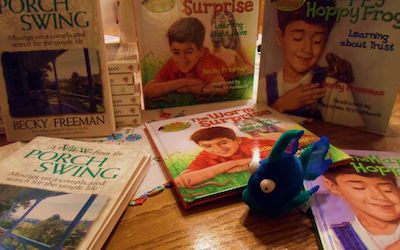
I wrote four books for young kids (Gabe & Critters)  and five “first chapter” books for ages 7-11 (Camp Wanna Banana). Moms and grandmas love to buy something for children. I found darling finger puppets, cute plastic “bookworms,” and small plush spider monkeys that tied in with the books’ themes. The eye appeal of colorful items surrounding the books proved irresistible. It took time to find items that were lightweight, small, fun, sturdy, and profitable. But when I did, books flew off the children’s section of my table.

Offer a Bargain

In what I now view as a great business opportunity, two of my books went out of print. I negotiated to buy a literal truckload of them for 72 cents each. I bought 10,000 books and filled up an empty guest room, wondering what in the world I had done. However, I sold every book by offering them “2 for $5.00” to retreat attendees. A profit for me, and a great deal for them. The event planner put a coupon in the retreat bags for this “special bargain,” ensuring a rush to the book table.

High Profit Items

I quickly discovered that women wanted to take my “retreat talks” home or share  with a friend. So I had audio CDs made of my talks and called them “Girlfriend Getaway.” I sold four talks for $15.00. My investment in the CDs (including case) was only $3.00 each. Many speakers create their own workbooks or study guides to go with their books and make a nice profit.

Mention in Your Talk

I am turned off by speakers who hawk their books like an infomercial. I’ve found it much more natural to say, “In my book, Worms in My Tea, I told a story about a time when …”, then simply tell the story.  People would always show up at the table asking for the book that contained the story I told.

The More Books, Higher Profit

The greater the variety of books you have on your table, the higher the profit; however, you don’t have to author all the books you sell. If you refer to books by other authors in your speeches, negotiate with a publisher to buy them in bulk at a good discount and sell them on your table. Or sell other product-tie-ins. If you wrote a cookbook, you might sell adorable aprons. If you teach writing classes, you might offer pens and blank journals that have fun literary themes.

Information Sheet for Event Planner

In a packet of information that I would mail ahead or email to the event planner, I included a Book Description Sheet. It had the picture and title of each book with a one or two sentence description below it. This would help volunteers get quickly familiar with the products. Always ask for at least two volunteers to help with the book table, giving them free books as a thank you. After you speak, women will want to chat and have you sign books, so having others take care of the money exchange is essential.

Bookmarks

Create a cute bookmark to be tucked into the books you sell on your table with information leading to your website, other books, etc.

Signs & Set Ups

I typically only put about ten copies of each book on the book table at a time, re-filling it from a box under the table as they sold. Make clear concise signs to prop up on your table that clearly show the price of your books. Go for visual clarity rather than cuteness. And be sure to take credit cards; it greatly increases sales.

I hope these tips prove helpful to you and increase your profits as you speak and write. Feel free to ask me any questions.

What advice do you have for other authors to help sell their books?


//

Sense Is Worth More Than You Think

Taken from http://www.clker.com

Imagine a fresh batch of chocolate chip cookies just pulled from the oven. Is it the sight that makes you drool, the buttery sweet smell, or the anticipation of the warm chocolate gooiness spreading over your tongue with the first bite? The correct answer is all of the above.

God gave us five senses (doesn’t that spa look like an awesome get away after a day of writing?) that work in harmony. If you really want to connect with your reader, you’ll do the same. In each scene, your goal should be to incorporate as many senses as possible.

Let’s say you’ve got your character sitting out in a field. What might you describe?

Smell

Basswood blooms wafting on the breeze are a sweet fragrance. In fact, there are a lot of great aromas floating about in a field. But if you really want to poke your reader and leave a mark, don’t forget unexpected odors. Descriptions that twang a reader’s senses are what they’ll remember. In the case of smell, what about a surprising gust of vinegary sauerkraut? Who’d expect that? It could even play into your plot, throwing in a sideways twist.

Hearing

Birdsong. Bugs buzzing. A breeze shushing through the leaves. Those are all common sounds, but there are other, more obnoxious noises that are every bit as common. What about airplanes drowning out a conversation or construction workers banging away in the background? Even idyllic places have jarring sounds, and these make your story more realistic.

Sight

This is the number one sense that most writers nail without effort. The trick here is to weave in a little genuine humanity. In the case of the field, you can certainly wax verbose about wildflowers and rolling hills, but to really make it memorable what about the discarded water bottle out in the middle of nowhere? We’ve all seen it. Or maybe a WalMart bag peeking out from the bottom of a shrub. Not pretty, but definitely real.

Feeling

The sun heats your skin, and a gentle breeze tempers that warmth, but don’t forget about the prickly thistles that stick to your pant legs, then latch onto your fingers like unrelenting Velcro when you try to pick them off. Touch isn’t just about pleasant feelings. Remember to connect with the uncomfortable aspects of life.

Taste

This is most often seen as, “She ate a strawberry” or “He slugged back his coffee.” Nice action, but that doesn’t tell the reader a thing about how those items taste. Describe the flavor. Is it so sweet her teeth hurt? Sour enough that he wants to rip out his tongue and wipe it on his sweater? Taste can also be compared to a happy or sad memory. Puckerlicious lemonade always makes me think of my grandma’s front porch. Or have your character absolutely hate a food that most people love, making them more notable. After all, doesn’t every writer want their characters to remain in a reader’s mind long after they’ve closed the book?

This week challenge yourself to incorporate all five senses into your writing. It’s an easy investment that will pay off by connecting with your readers at an intimate level.


The Invisible Writer

Great fiction writers create new worlds.  Going to another world requires a cultural assimilation program, at the very least. To live in another world, even temporarily, requires isolation from the here and the now.

Having a personal creative space is a dream come true for most writers. On days when everyone else is attending a baseball game or what have you, the solitude of being an author sets in. It sometimes entails turning down a few invitations, because creating a new world takes focus, time and energy.

Writers’ needs and preferences run the gamut. Conrad Aiken wrote in his dining room. D.H. Lawrence liked to write outdoors, under the trees. Some authors like to write in hotel rooms, as Toni Morrison did when her children were young. A hotel affords privacy and the opportunity to limit interruptions for days at a time.

Some writers don’t seem to need privacy. They can retreat into the recesses of their own minds and vanish in plain sight. A legendary Parisian café, Les Deux Magots, has hosted great writers such as Jean-Paul Satre and Albert Camus. They generated content right in the restaurant.  French author Nathalie Sarraute once said that a café “is a neutral place, and no one disturbs me – there is no telephone.” A café allows a writer to feel less isolated. They can be alone while in a crowd, blending into the background. They are physically present, but their minds are busily creating all the while.

Writers also may tell you that they can’t disappear into their writing without the use of props. Only a specific pen, type of music and particular shirt will do. Therefore, the idea of a writing place is psychological in nature. That equates to whatever the writer needs to feel comfortable.  In his 1951 essay “Transitional Objects and Transitional Phenomena,” British psychologist D. W. Winnicott wrote, “It is in the space between inner and outer worlds, which is also the space between people—the transitional space—that intimate relationships and creativity occur.” With that in mind, perhaps the best answer about finding a writing haven is from a quote by Ernest Hemingway: “The best place to write is in your head.”

Where do you go when you disappear? Do you have a writing haven or can you write in plain sight?

Top 5 Self-Editing Tips: Intention

In my first post last month on the topic of the Top 5 Self-Editing Tips, I covered in detail how a novel is structured and how you can be more aware of how to build the structure of your novel.

This month, let’s concentrate on an aspect of self-editing that writers rarely hear much about:  intention.

Merriam-Webster’s Collegiate Dictionary defines intention as “(1) a determination to act in a certain way: resolve; (2) import, significance; (3) what one intends to do or bring about.”

The definition of intention includes other topics, but for our purposes, we can examine the synonyms for intention and determine how we might find intention in a piece of writing, whether fiction or non-fiction. Synonyms: intent, purpose, design, aim, end, object, objective goal.

Once you finish your first or second draft, ask yourself, “Did I fulfill my overall intention for writing this piece, and did I achieve my intention in each scene or section?”

Whoa! That sounds like a tall order, doesn’t it? You might be thinking, how long am I supposed to spend on an edit? The answer: as long as it takes. Because if you have not fulfilled your intention in writing your book, then how can your reader know what you were trying to say?

Let me make this a little simpler by starting with a chapter or even a part of a chapter. Did you intend to make your character unsympathetic in this scene? If not, then you have not communicated the soul of your character to the reader. You have not fulfilled your intention. The reader might even think, “Marsha would never say that. Why is she being so rude?”

On a greater scale, your story or your non-fiction book should have an over-arching aim or goal. It is the road that connects you to the reader and pulls the story along. Yes, even a non-fiction book is more successful if it tells a story that persuades your reader to believe in what you’re writing about.

Your road will twist and turn in a novel, but you, as the author, should always keep the goal in mind. You don’t want to tell your reader up-front what your intention is, but you should know where you’re headed. If you take readers down a rabbit trail and nothing of significance happens, they will soon stop following you through the brush.

Only you know what you want to achieve in your book. If you’re leading your reader down a “road less traveled,” the trip may be leisurely or it may zip along. You may travel on a super highway, on a country lane filled with potholes, or you may walk with your reader down a garden path.

But if you veer off that highway/road/path just because you have a sudden inspiration, your book may be filled with pointless arguments (non-fiction) or characters who pop out of nowhere to deliver a useless piece of dialogue (fiction).

My intention in this post is not to say that plotters are better writers than pantsters. You can write your book as you please, but if you know your beginning and where you aim to end—intention—then the journey will be that much sweeter.

To be continued…

How will you self-edit your novel or non-fiction book to make sure your intention is clear and that you have achieved your goal in every chapter? 

What Food Network Star Taught Me About Author Branding

Marketing your Debut Novel: Part Two

Last month, I started this series on how to market your debut novel. You can find Part One here. We’re going to stick with the same time period of the writer’s life–the pre-contract phase.

In brief, I discussed those things an author should be doing pre-contract phase, which is identifying and building your brand through social media. You are working to build a well-defined tribe. (You are reading Seth’s book by now, right?)

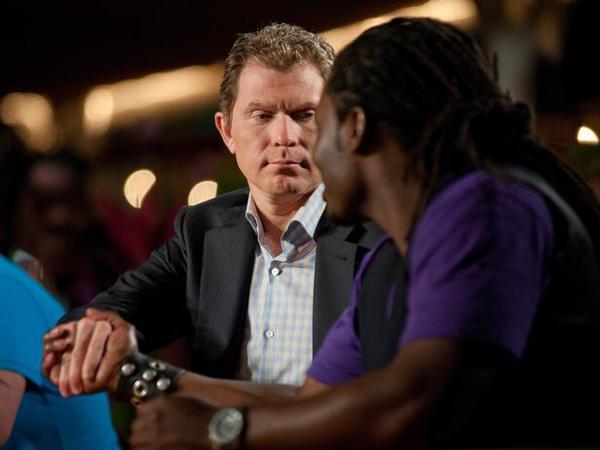
The issue of branding became very apparent to me while watching The Next Food Network Star. Yes, hand straight up in the air, I like reality TV. If you’re not familiar with the series, earnest chefs attempt to win their own show on Food Network by doing next to impossible cooking tasks for a panel of feisty food judges they may work for someday.

The judges want to know what their POV is. This season one contestant, Malcolm, was often heard saying, “I don’t need a POV. I just need to cook great food. That will speak for itself.”

I’d like to indulge a few different words. “I don’t need a brand. I just need to write a great novel! The words will speak for themselves.”

The problem is where do said judges, or in our world, publishers, place you?

If you’re seeking publication and you’ve not been published before (particularly in fiction) you are going to have to 1. finish your novel and 2. write a book proposal.

A book proposal is essentially a marketing tool for your book. It’s the sales plan. It’s the blueprint of how your tribe (again, reading it?!?) will purchase your product.

One section of the book proposal is the dreaded “comparison” section. It can be called other things. Market analysis. Comparable books. In this section, you list books that are like yours (and what sets yours apart in a nice, professional way.) The purpose of this section is to help a publisher identify what type of audience you’re trying to reach. Is there consistency amongst the authors you picked and what type of novels they write? This helps a publisher know that you know yourself pretty well. You have brand awareness and can plug into the group of people who also like those authors.

But say I have little brand awareness. My novel is a Steampunk, alien invasion set during Roman times with a population of Amish quilters–and if a book like this makes it big, you heard it here first! My website looks like a Steampunk machine tossed out a Roman gladiator who just tousled with an alien on the prairie–and throw in a couple of Amish looking bonnets for good measure since those books sell really well.

In your comparable books section, you list these books: Proof by Jordyn Redwood (a medical thriller), The Half-Stitched Amish Quilting Club by Wanda Brunstetter (Amish gives a clue there), Not a Fan by Kyle Idleman (this is Christian non-fiction), and Francine Rivers’s A Voice in the Wind (which is historical fiction).

A publisher is going to be scratching their collective head. How can one fiction book possibly be placed by each of these novels? They’re so different. Not even in the same section.

But, you say, my book will satisfy all of those readers. A publisher shakes their head. No, it won’t. The books above represent very diverse readers. I’ve personally read two: my own and Not a Fan. Not to say the other two by Wanda and Francine are not excellent novels– but they don’t appeal to me and what I like to read.

Don’t be Malcolm. Discover your brand. BE the BRAND (think Miss Congeniality– BE the CROWN!)

So, you may ask, what happened to Malcolm? Voted off midway through the season. Great chef but “we don’t know who he is.” They didn’t know how to brand him.

What about you? How did you like writing your book proposal? How easy or hard was it to write the comparable books section?

Another Brick in the Publishing Wall

FreeDigitalPhotos.net

Inevitably, whenever I read an article about the publishing business lately, Amazon’s name crops up—often to highlight how they’ve become the big, bad wolf trying to blow down the publishers and booksellers with a huff and a puff of discount prices, a far-reaching distribution channel, and the ability to sell direct to consumers. Much heft, in particular, has been placed on pricing as the lynchpin that could make traditional publishers and bookstores obsolete. No doubt (and for good reason) they fret over this more than the average reader, and time will tell if price and reach are the mortar holding it all together. Meanwhile I’d like to explore another factor influencing why and from where customers buy because I don’t believe it’s all about price, and I don’t believe it’s all about marketing and promotion, either. What about convenience? Selection? Fulfillment? What about how well the seller delivers on the overall customer experience at every touch-point and every interaction?

FreeDigitalPhotos.net

Yes, I admit I’m a bit of a harpy about the ‘customer experience’ (call it a hazard of my day job), but it’s the one thing that keeps me coming back again, even if I can get something cheaper elsewhere, and when not done right, it’s the one thing that drives me away faster than I can pluck a hair from my chinny-chin-chin. Why do you think people who buy only from certain bookstores do that? Nostalgia for traditional publishing or because the experience and interactions they have in those places make them feel good? I’m guessing it’s the latter.

And do you think people who buy mainly from Amazon do that solely for the price, or might it have something to do with Amazon’s wide selection, easy to use website, quality packaging, fast (often free) shipping, easy returns, overall solid reputation, and available, empowered customer service? It just might. I’ve been buying everything from books, games, and gifts to guitars, clothing, and Cuisinarts through Amazon since 2004. Every time, they’ve worked hard to build my loyalty by delivering a consistently extraordinary customer experience.

FreeDigitalPhotos.net

When I think about my experiences with other sellers, they’ve been average or infrequent. With publishers (traditional and electronic), it’s a mixed bag. As a consumer, I don’t have many. As a writer, I’ve mostly been rejected or ignored. I realize this is par for the course in the publishing industry, and I don’t doubt I deserved the rejection at the time, but being ignored is memorable. I’m expected to provide thoughtful responses to hundreds of emails a day (and, no, email isn’t central to my day job), so it chafes a little when publishers say they don’t have the time to respond at all, ever. These may be ego-bruising realities for a writer, but as consumers who buy a lot of books (and the occasional Cuisinart, for that matter), engaging us only when it’s self-serving isn’t the way to build a positive, lasting relationship.

On the flip side, Amazon isn’t perfect.  I hear some Indie authors say they’re unhappy with Amazon’s KDP Select customer service, and they feel ignored or unappreciated. Amazon may, in fact, be wading into dangerous territory if they don’t figure out how to deliver the same service excellence to indie writers as they do elsewhere. But given the overwhelming number of positive experiences I’ve had with Amazon, I might be willing to forgive the first lapse or two.

FreeDigitalPhotos.net

If publishers and booksellers intend to compete profitably in a world where customers are ever-evolving in their expectations and where the likes of Amazon exist, they have their work cut out to deliver the kind of experience that builds loyalty (read: profitable behavior). There is no silver bullet. It takes time to build a reputation. Amazon isn’t the only threat to houses of sticks and straw. There’s a hurricane of savvy customers brewing.

What about you? Have you ever decided to purchase from somewhere (or not) solely based on an excellent or poor experience?

Disclosure: I have two contemporary romances published with Avalon Books, which was recently acquired by Amazon Publishing. I had drafted this blog post before I was aware of the acquisition, and it in no way impacted my depiction of Amazon here.

Will Reading Fiction Turn Men Into Sissies?

Image courtesy of FreeDigitalPhotos.net 

Upon learning I’m a novelist, many brethren (opposite of sisters) tell me they don’t have time to read, especially fiction. My brother-in-love, bless his heart, wants to write “real books.” My friend Torry Martin, who works for Adventures in Odyssey, doesn’t have time to read fiction.

Hey, my grands listen to Adventures in Odyssey. I’ve listened to the books on tape when traveling with them. Okay, okay, that’s not reading. But, it is fiction. It is story. And, we get totally immersed in them.

So, this brings up a question. Is fiction reading something only for women and children?

Not according to the Art of Manliness.

“Whatever the reason, cognitive studies are beginning to show men might be short-shifting themselves by avoiding the fiction section in the bookstore and library.  Today we make the case for why you need to put down those business books every once in a while and pick up a copy of Hemingway.”

Scientists have discovered fiction stimulates and improves the functions that allow us to survive in society. Unfortunately, men received the short end of the stick when it comes to the ability to socialize.

“Most of your success as a man,” says Dr. Keith Oatley, “whether in love or work, depends on your ability to socialize adroitly. We’ve all heard the phrase, ‘Success depends not on what you know, but who you know.’ As much as you’d like to think that’s not true, it is. You can be the most skilled and talented whatever in the world, but you’ll likely labor away in obscurity if you don’t know how to reach out and share those talents with others.”

The brains of boys and girls are the same in the womb, but a male brain changes at birth. (I learned this from Dr. Gary Smalley. Didn’t everyone?) In order to deal properly in our world, and in our respective roles, most male brains are good at dealing with stuff, while female brains are typically better at dealing with people.

While this might explain why women often prefer fiction over non-fiction, men probably have the most to gain from reading fiction.

Instead of seeing fiction as a bunch of made-up, waste-of-time baloney, looking at it as a simulator allows both men and women to exercise and strengthen the ability to socialize. Men, every time you pick up and read a novel, you’re molding yourself into a better, more socially adept man.

Mystery novels particularly exercise the mind. Whenever you read a Dashiell Hammett novel, you’re guessing right along with Sam Spade about what the subtle gestures or the words really mean. Is the suspect or witness just saying something to throw you and Spade off the trail? Reading fiction is wrestling with reading the minds of the characters and taxing and fun at the same time. Literary critic, Lisa Zunshine, says the mental workout you get from reading a detective story does for the brain what lifting weights at the gym will do for your physical body.

When asked if there is a special type of fiction that men should read, Dr. Oatley’s response was to read whatever interests you. The result is the same when reading highbrow Russian novels or lowbrow dime paperbacks.

“Our studies show that the effect fiction has on the mind is independent of literary quality,” says Dr. Oatley.

Image courtesy of FreeDigitalPhotos.net 

He recommends reading a wide variety of fiction, which allows us to get to know more people in more circumstances.

“Read those Louis  L’Amour and Michael Crichton novels without any guilt. You’re helping yourself become a charismatic social-dynamo.”

So, men (or women :)), what novels have you read lately?


Remember Your Passion

So much of being a writer is weathering rejection. We often hear the advice, “You need to develop a thick skin to survive in this business.”

This is partially true. We can’t let every no beat us down or we’ll spend all of our time getting back up instead of moving forward.

But those rejections do hurt. The more often you experience, the easier it becomes. It’s taken me over ten years to reach the point I can say this honestly.

However, I still don’t like them. I don’t think there’s a writer out there who does. If you do, please share in the comments!

There are a few valuable things rejections teach us. They make us examine why we’re doing what we’re doing. When I feel beat up by the no’s, I have to remind myself why I want to be writer.

It’s not for the fame. Of all the truly awesome writers out there, how many are famous? Not many.

It’s not for the money. Most authors still keep their day jobs or spouses who help supplement their incomes.

I write because I’m passionate about my stories. I have a message God has put on my heart. I write because I don’t feel whole when I stop. I write because God created me to be a writer.

So when you’re faced with a rejection, no matter what step of the publishing ladder you’re on, remember your passion for writing.

When you feel like giving up, ask yourself these questions:

* Why did I start writing in the first place?

* What kept me typing my first story before I even thought about sending it out?

* What message do I want my words to convey?

Write them down on a card, so the next time you receive a rejection letter or a pass on your work you can pull it out to remind yourself. And then start writing your next masterpiece.

Also, feel free to check out these rejections by other writers. Knowing that other writers really are going through the same thing can be helpful.

The ‘Real Stuff’ of Character Building

A few years ago, my sister gave me a t-shirt that reads, “Careful or you will end up in my novel.” She meant it as a joke, but the truth is that my t-shirt does not lie: for me, every person I meet is a potential character in my mystery series. Like every writer, my writing is informed by my experiences and that includes experiences of people.

That said, none of my fictional characters are ‘real.’ Though they may be inspired by someone I meet, I usually take my creative license very seriously and make my characters composites of traits that fit the needs of my story lines. For example, I met a charming World War II veteran at a dinner speaking engagement last fall. He kept everyone at the table laughing with his wisecracks and his stories of being an ordnance (explosives expert) officer during his military career. When he noted that he still had all ten original fingers, I knew I had to use that line in a novel, so I began to formulate the character of Vern Metternick in my upcoming release.

What was even more surprising to me – and especially delightful! – was that as I developed the character and his relationships with other characters in the book, I realized his explosives experience could lead to a key, and very funny, scene in the novel that I had not anticipated. So my chance dinner partner unknowingly not only gave me the kernel for a wonderful character, but also actually helped shape the plot of the book. It really is true that authors can create characters, but not always control them, and I say that’s a good thing! Especially when those characters can solve knotty plot problems and make the book even better than I had planned.

There is also a flip side to my t-shirt – on occasion, I do use real people in my mystery series. Since my books deal with current conservation issues, and I aim for strong local connections, I use real places in my books, and actual experts in the story. I always ask those folks for permission to write them into the novel and then thank them in my acknowledgments. To put them at ease, I promise not to make them murderers (unless they ask to be!), and I generally give them an overview of how they’ll fit into the story. So far, no one has turned me down, and I get a real-life connection out of it that my readers love…not to mention one more person who is almost as excited as I am when the book debuts!

As a result, I assure my friends who see my shirt that their secrets are safe with me. Besides, they can always take comfort in that lovely disclaimer that prefaces fiction: “Any resemblance to actual events, locales, or persons, living or dead, is coincidental.”

And if you believe that, I have some ocean-front property in Arizona I’d be happy to sell you.

Where do your characters come from?


Making His Name Famous

Making His Name Famous

By: Cindy Sigler Dagnan

 “Rejoice with those who rejoice; mourn with those who mourn.”

Romans 12:15

      I was on my way to speak to a writing group about crafting pieces for the Christian market, still unsure about my opener. Once in the parking lot, I dug in my purse past gum wrappers, receipts, dry Cheerios and unidentified melted goop, pulling out an envelope from the day’s mail. Aha.

Going inside, I unfolded the letter and held it aloft in front of the group. Grinning, I explained. “This is my 29th rejection slip from this particular publication. Notice at the bottom the handwritten line – ‘By the way, I really enjoyed your book.’”

Groans and laughs rushed up to meet mine. A community of writers gets used to this. There are so many ways to be rejected these days: e-mail, snail mail, text message, forward from your agent.

Sometimes the rejections come with encouraging words.

“Well written, just not for us.”

“Liked your piece, however it doesn’t fit with our current theme/we ran out of room.”

“Try again. Seriously.”

“Use this letter for the cat litter box.”

Like most of you, I’ve been told not to take it personally. And yet, how do we not? It’s part of us. Our souls on paper. A glimpse of our hearts in a sentence. Our thoughts assembled in structured paragraphs and our flights of fancy in story.

As Christian writers, that rejection can be magnified, for if we are doing this right, our goal is to make His name famous. His alone.

Yes, we need a platform. Sure, we have to market. So how then can we approach this goal?

1) Be Vulnerable.  For all our talk of agents, writing getaways, conferences, deadlines, plotlines and proposals, the truth is, writing exposes us. We want to play our worries close to our chests. But we need to get real and stay real. Share your struggles, for when you do, your writing community can identify, empathize, and later, rejoice with you.

2) Be Accountable. Challenge yourself to create a 1-2 sentence mission statement that clearly captures the ultimate goal for your writing. I’m not talking about a word count, but clear direction that focuses on God. A mission statement is best if simply stated. For example, the theme park Silver Dollar City has this as its mission statement: “To create memories worth repeating.”

Have a writing partner who will hold you to that higher purpose and keep you from straying from that ultimate goal.

3) Be Teachable. Having a humble, teachable spirit means two things: having a right perspective – we don’t know it all now, and we never will. There is always something we can learn. Secondly, it means giving credit to the proper place. If we have been blessed with talent, it is God’s doing. To Him alone be the glory. All accolades should be humbly & sincerely reflected back to Him.

“Now, Lord…enable your servants to speak your word with boldness.” Acts 4:29

The Greatest story ever written happens to be in the Greatest handbook for writers, God’s Word. Creativity comes from His hand. We learn to write boldly, but with grace and truth. Success comes from our hard work and His blessing. May we be bold. May we be reflections of His glory. If we are, then we can be genuinely happy when we embrace a colleague and say with joy, “Congratulations on that contract! I am thrilled for you. May you make His name famous.”