Word of Mouth or Cyber Bully?

I’m hearing more and more conversations crop up lately from small business owners who say dissatisfied customers with even an ounce of Internet savvy can create an unfair disadvantage for their businesses. They argue customers are too quick to zap off a bad review, poor rating, or negative ‘word of mouth’ without ever giving the business a chance to make it right. “Feedback is a gift,” business owners claim. “And I never even got to open it until it was too late.” I can’t help wondering if it’s more like a party too many businesses don’t pay attention to until a hundred people jump out of the dark and yell “Surprise!” Either way, these highly visible online rants and ratings of the unhappy and dissatisfied can be a real detriment to acquiring new customers. And some businesses are crying, “Cyber bully!” 

But are they really? Let me take it closer to home: enter the novice or mid-list author. These author folks may feel a similar squeeze when negative comments or one-star ratings crop up for their books at various reader/author social networking sites or online booksellers—sometimes even before the book is released and based solely on how excited someone is (or isn’t) to read the book. Add the rumor of authors gaming the system by soliciting everyone and their brother for 4 and 5 star ratings and by low-balling competitors’ titles, and you can see why authors can be squeamish about the power of word of mouth on the Internet. At its best, it works for you. At its worst, not so much.

But does that mean people who scatter low ratings like jellybeans at an Easter egg hunt—with or without commentary to support them—are really abusing the author? Don’t readers realize how much power they wield, how much of a boon or a detriment their ratings could be for an emerging author? 

Probably not. And not only is it a bad idea to police the system, I think it’s futile to try. Internet word of mouth is organic in nature. Those who trust and value the opinions of others will continue to seek them out, and in the long run, that’s a good thing for everyone. Just like when we write we make positive assumptions about our reader’s intelligence and ability to follow our stream of consciousness, we shouldn’t underestimate the sensibility of those same readers when it comes to their ability to sort through the good, the bad and the ugly reviews. I like to think unless the negative rating came from a highly trusted or personal source, most prospective readers toss out the outliers and look for themes anyway.

What about you? As a reader, how much do negative ratings influence your decision to try a new author?

7 Tips for Self-Editing Your Novel

Before I signed with my awesome agent, Barbara Scott, I knew my novel needed another round of edits. I looked at several freelance editors, but I just couldn’t afford the cost. So, I rolled up my shirt sleeves, prayed, and decided to do it myself. Again.

At this point, I’d already gone through my book for grammatical errors, typos, etc. I’d had a published writer and several beta readers go through it. Three other agents expressed interest if I could go back and make my novel stronger.

Here are the tips I learned that pushed my book from a maybe to yes.

1. Print it out. I fought this (don’t ask me why, my frugalness I suppose, sounds better than stubbornness), but it truly makes a huge difference. Your eye will catch things on the printed page you won’t see on the computer screen.

2. Only edit one thing at a time. Go through your manuscript focusing on one thing at a time. Do a sweep for dialogue. Is there useless chatter? Talking that doesn’t move the story forward? Do you have too many tags? Then go back for description. And so forth.

3. Examine every character. Don’t waste time with cardboard characters or the stereotypical bad guy. I highly recommend Deb Dixon’s Goal Motivation and Conflict.

4. Setting. Regardless if you write historical or contemporary, you need to research your setting. Find some of the not so common places to set your characters in. For example, lots of scenes are in restaurants, change it up and put them on a picnic at some fantastic landmark.

5. Hooks and cliff-hangers. Check out the beginning of every chapter and the ending. What can you do to make it stronger? What could happen that would ensure the reader couldn’t put your book down because they have to know what happens next? Is your heroine being chased by a wolf? Then make it a pack of wolves and have her twist her ankle. Take it a step further and do this to every scene. I recommend James Scott Bell’s Revision and Self-Editing.

6. Description. Remember to include things beyond sight. Let us know how it smells, tastes, feels, and sounds. Is the rain splattering or pounding? Are the hero’s hands calloused or warm? See Frontierinternetservices.com.

7. Wrapping up all the ends. Make sure all the sub-plots and story lines are resolved. You can set things up for a sequel, but you can’t leave things undone. Readers will feel cheated if they have to buy the next book to find out what happens to the main storyline in book one.

What are some of your favorite non-fiction writing books? Do you have any tips or tricks you use when editing?

A How-To for Meeting Editors

Book acquisitions editors are some of the busiest people I know and the most elusive. If they admit what they do for a living, people want to send them their grandmother’s self-published poetry or a best friend’s novel that she wrote in high school.

They aren’t flashy dressers. They don’t talk about publishing trends in the checkout line. And at parties, if someone asks them what they do for a living, they mumble and then wave at an imaginary friend. “Nice meeting you,” they say before darting to the other side of the room.

Then how can a writer catch a break? Ah, my dear contestant, you must know the secret lives of editors…not bees. Following are ways to meet an editor:

1. Make friends with other writers, especially those who have published at least one book.

They’ve made the leap, and many are willing to give you advice or help you achieve your dreams. Attend their workshops at writers’ conferences, listen carefully, and ask thoughtful questions. Learn the craft of writing and how to market a book while you write your manuscript.

Published authors know editors, and if you’ve written a manuscript that other authors like, they’ll be more willing to give you a recommendation or an endorsement.

2. With your polished manuscript in hand, query an agent.

Make sure to read an agent’s submission guidelines before you approach them, or pitch your project to an agent at a writer’s conference.

Attend the best conference you can afford. One of the perks of attending a conference is that you can request an appointment with an agent. Agents know editors, and they know whether your manuscript is ready to be published. Listen to their advice, and rewrite your manuscript if necessary. An agent can be your best ticket to meeting an acquisitions editor.

3. Acquisitions editors attend writers’ conferences as well.

They set up appointments with agents, and they take 15-minute appointments with conferees. Sometimes they will agree to critique your manuscript for a fee.

4. Attend workshops taught by editors at writers’ conferences.

Editors teach a variety of workshops that vary from character development to plot development to self-editing. They will tell you what kinds of projects they’re looking for so that when you get your chance to meet an editor, you’ll be prepared.

5. Attend meetings of a local writers’ group.

If the group is large enough, they will invite published authors to speak, and through the friendships you make with authors and other members of the group, you can support each other through the process of becoming a published author. If you don’t have a local writers’ group, consider starting one.

Finally, what’s the best way to meet an editor? Keep writing and improving your craft until someone takes notice of you. Editors love fresh, unique voices. You could be the next American Idol of the publishing world.

Five Tax Tips Most Writers Miss

I’m a strange breed of writer. A Missouri mutt if you will.

One part relational, warm and fuzzy with a passion for flowery phrases. One part practical business woman with multi-layered experience in payroll, accounting, banking, marketing, human resources and taxes.

My poor agent must wonder what to do with this mixed mess. Sorry Barb.

However, there are benefits to my schizophrenic passion mix. I not only know writing is a business, but I understand the business in writing. My emotional side wants to please God, so I’ll overturn any stone to steward the gifts He gave me.

My varied interests drive me to dig through my diverse background for hints, tips, and answers to support my love for words and their meanings. And I like to share what I learn.

For this post, I took something I know and hope the resource helps my writer friends. Whether writing is your childhood dream or an adult job — it’s still business. And you’re the owner.

April 15th is around the corner, so let’s make sure all you business owners are getting your full tax benefits. We must give Caesar what is Caesar’s, but not a penny more.

Here are the five tax deductions most often missed by writers I speak with:

1. Mileage. Keep a detailed log. All trips you take to buy supplies (including bookstores to buy books), go to meetings or meals where you discuss the craft, projects, or marketing are usually deductible. And don’t forget those trips to the post office.

2. Telephone and Internet charges. You’ll need to calculate your percentage for business use.

3. Subscriptions and dues. Magazines count for research (do we read anything without evaluating the writing?). Writing organizations, clubs, or anything else related that charges dues and fees count.

4. Travel, including rentals, parking and toll fees. Don’t forget your mileage to and from airports.

5. Extraordinary entertainment, but you must support your claim with good documentation. Examples are movies you study, amusement parks, if you observe behaviors, capture quotes, or watch a process relevant to something you write. Music and other artistic forms you study or use for creative inspiration. What entertains you while feeding the muse?

Most writers don’t make a lot of money, so a penny saved is a penny we need to earn.

Tax laws change often — don’t fail to get current data. This article has good general information, but see your own professional tax preparer for an in-depth evaluation of your situation. If you want to research on your own, go to the IRS for specific guidelines.

My mixed interests help me support the dream I love by making sure I take all the legal tax deductions I’m entitled to. A Missouri mutt needs to eat, too.

Do you have more tips you could share? What other savers can make writers money? Do you consider yourself a business owner?

Tax tips for writers by Missouri mutt
My Missouri Mutt - "Boss"

Finding a Publisher: 10 Steps to Success Part One

If you are a first time author and looking for a publisher, you need to know several facts about the book publishing business. It’s a big ocean to dive into, and remember: there are sharks. Like any kind of business, and book publishing is a business, there are people who want to make a quick buck out of naive and vulnerable authors, so avoid them at your peril.

Step 1 – Write the book. Publishers are not really interested in ideas. They want to see proof that a would-be author has the skill, the stamina and the discipline to finish the job. Publishers expect that a novel should be about 80,000 to 100,000 words long and, taking an average, that’s about 300 pages.
Step 2 – Before you send your MS to a publisher, have the courage to show your creation to someone who will give you an honest assessment of your writing. Don’t ask your spouse or best friend because they are not the best people to give you an honest report. Your local librarian might be a good place to start. It’s a harsh truth, but unfortunately the writing world is overcrowded with writers who have great expectations of themselves but have little talent.

Step 3 – Okay, you have written a book, and your honest critics say it is brilliant and should be published, well done! Now is the time to do some hard work trawling through the books, internet sites and writers groups who can aid you in your search and provide professional help and good advice.

In the UK there is a very useful publication called The Writer’s Handbook, and it is up-dated every year. The editor Barry Turner has done much of the leg work for you, and his handbook really is a useful and complete guide to agents, publishers, editors and copywriters.

I am sure there must be a similar publication in the USA, so go out and get your own copy. I know it seems daft, but you need to know your own book, what genre it is and even what sub-genre it falls into. Next get a highlighter pen and work your way through the handbook and mark out those publishers who publish novels similar to your own. Be meticulous in this exercise, for it will save you time in the long run. It’s a total waste of time sending your romance story to a publisher who only publishes science fiction. Read the small print carefully.

Step 4 – Having got your list of prospective publishers then check out the minutiae of the submission guidelines. Many publishers will not accept unsolicited MS. So do not waste your time, money and effort sending your MS along to one of these companies. When they say they don’t accept unsolicited MS, they mean it, and they probably have their own arcane reasons for this rule. 

Step 5 – There are many publishers who do accept ‘unsolicited’ MS especially from new authors, in the hope they are going to sign-up the ace in the pack and that might just be you.

Your publishers list may be getting shorter by now, but this is good because you are refining your search, and with every step you are closer to finding the right publisher for you.

What are some steps that you took to find the best publisher for you (if you have one)? What are steps that you need to take to find a good publisher for you and your book (if you don’t have one)?

The Joy of Research

What’s black and white and red all over?

Or is it “read” all over?

No matter.

The answer is: The desk of a writer.

Covered in words and, yes, sometimes blood, my writing nooks are piled high with books, inch-thick binder clips full of internet printouts, magazines, journals, sticky notes and more. Commonly known as research, this is what the necessary, most rewarding (and fun!) part of the novel-writing process looks like.

Many novels are character-driven, so some folks might not think research plays much of a role in writing a solid story, especially if you’re following the old adage, “write what you know.” However, for characters to have depth, you have to know them. Really know them. You have to know their hobbies, their likes, and their dislikes. You need to know what it felt like to grow up in their hometown and region. You need to know what it feels like to live in the current story setting as well.

So, if you’re new to the writing process, I thought I’d share three research tips with you today.

Research tip #1: Libraries are not dead.

When I’m in all-out research mode, you can find me at my local library at least twice a week, if not more. I live in a relatively small town, so sometimes the strange call numbers I need are not represented on the shelves. But thanks to an amazing, free system called Evergreen Indiana, I can (and do) check out books from all over my state. In fact, Evergreen offers over 2.6 million bibliographic records and provides access to over 6.2 million items. (I think I’ve checked out 1.2 million so far!)

The internet cannot replace the richness of photography and history found in books. Also, books make me feel hot on a story trail like a blood hound after a fox, especially when references at the back of one book open up a wealth of resources and other books I never considered.

The other great (and possibly the best) thing about libraries: there’s no dust or laundry vying for my attention.

Research tip #2: The internet rocks.

If you’re as old as me, you might remember when the go-to resources for current event research were microfilm reels, aperture cards and microfiche. Only after thumbing through phone book-thick books of references could one find relatively current articles on a research topic. Then, there was no guarantee the library carried that journal or magazine. And if it did, squinting through the microscope-like lenses to try to find the information led to headaches and frustration.

Thank goodness for the internet. A few key strokes and you’ve got a gold mine of information to cull through. Here are a few of internet research sites I find especially helpful:

Research tip #3: Master the art of conversation (or listening, rather).

I’m lucky to be a nurse as well as a writer. Not just because it allows me to have enough money to eat, but also because it offers me so many chances to talk to and learn from folks I’d otherwise never meet. My favorite patients are octo- and nonagenarians, because I can pick their wise and nimble brains for topics like what it really felt like to live through the depression and what really makes a marriage work for 60+ years.

But you don’t have to be a nurse (or a patient, for that matter) to enhance a story. For one of my novels, I spent an afternoon talking to a local bar owner five states away, just to hear what he had to say about local lore and life.

Take time to listen to people,  and you’ll gather interesting story ideas otherwise never imagined.

What about you? What are your favorite research tools? Websites? Resources?

Social Media… Eeeek!!!

Social media, social networking, marketing, PR, all those terms seem to make authors shudder a little bit. There’s so much to learn and a lot to leverage from gaining an online presence. Where do I even start? That’s the question that I hear so often.  I am going to start at the beginning. And for some of you, this may be very basic information.

Start slowly. It will snowball. My mom used to tell me when I was cleaning, “By the inch it’s a cinch; by the yard it’s hard.”  Social networking happens gradually over time. Gathering a ‘tribe’ takes effort.  It is something that comes with hard work and, most importantly, consistency.

Don’t get frustrated!

I want to start with one specific aspect of social media today: Facebook fan pages. Facebook has changed things up a bit where you can now allow ‘subscribers’ to your personal page. A good example of this is Tim Tebow. Check his personal page out, and you can see that he has 1.6 million subscribers. What is a subscriber you ask?   When you post a status, you can post it so that the Public, Friends, Friend of Friends, or a Custom Group of people can see your updates. Subscribers would be the Custom Group. People are under the impression that this is “good enough.”  Although subscribers are good, there are still more advantages to having a fan page, and most people are not even aware you can subscribe.

Here are a few of the simple basics that a fan page can do, that a regular page can’t:

SEO.  Have you heard people say that? What does it mean?  “’Search Engine Optimization’” is the process of improving the visibility of a website or a web page in search engines via the “natural” or un-paid (“organic” or “algorithmic”) search results.  You have more visibility with a “fan page” than with a personal one.”  In easy terms, these pages show up quickly in Google and other search engines because they rank as a higher priority than just a regular Facebook page.

You can have more that 5,000 people on your fan page. Unfortunately, a regular Facebook page tops out at a max of 5,000 people. You say, “I will never get to 5,000 fans.” I say, “Dream BIG!”

People have immediate access to you. No waiting to approve a friendship. Once a fan likes your page, he or she can see all that you have said and done.  Also with a fan page, you can personalize it; it is customizable.  With a little money, you can have a welcome page, a contact form, or unique apps that embed into the page that will make a fan’s experience more of a custom one. Think of a fan page as a second web site to draw attention to your book.

From a fan page you can learn who your followers are and who your target audience is. You can find out their sex, age range, and what country the live in. You automatically have an answer for when an agent or a publisher asks you, “Who is your audience?”

Dedicate 30 minutes a day to social media, and start with your Facebook fan page. It will be worth it, the fans of your book will thank you!

Tell me about your experience with Facebook fan pages. How can you encourage other writers to jump on the Facebook fan page bandwagon?

Loving Our Reader as Ourselves

We write for so many reasons. As we write, we experience many rewards in the writing process alone, but those personal rewards can sometimes obscure the deepest reason of all to write: to love our neighbors. In our case, our neighbors are our readers, those with faces just inches from our words, their minds and hearts living in the very houses we have built.

How can we love our readers as ourselves? It’s become increasingly difficult to find our way forward here because of our postmodern culture’s obsessions with fame and the self, but here are a few steps forward:

1.     Love your readers by writing beyond yourself.

Write from the self, by all means, but don’t let the primary subject be the self, even if you’re writing memoir. Many of us write to attend to the fragments of our lives and to make something coherent and meaningful from them. It’s a noble enterprise, to pursue wisdom from the chaos of our real lives. We are writing our way home, many of us.  “We are lost in a dark wood and we need stories to help us find our way home,” Scott Russell Sanders writes. But don’t forget that this is also the reason readers read, not to find the way to your house, ultimately, but to find their way to their own true home. Our purpose in writing must be more than self-fulfillment. It must be God-and-neighbor fulfillment.

2.     Love your readers by living a genuine faith-ward life.

God’s truths are not just propositional and communicated by language: they are experiential, relational, incarnational.  Our first job as writers is to write from a faith that we ourselves are trying to live in and live out rather than a faith that is simply pronouncements, words on a page. As Joy Sawyer has written,

“And without an ever-increasing, tangible portrait of our God engraved upon our hearts, we reduce our proclamation of the gospel to the ‘clanging symbol’ of language alone. Maybe that is why our message suffers so much when we rely upon mere rhetoric to communicate our faith: it’s simply bad poetry. . . . .  our deepest joy is experienced when the poetry of our lives begins to be expressed, as the apostle John said, not in words alone, but in deed and in truth.”

 3.    Love your readers by not preaching at them.

We need not tell all the truth about anything at any one time (even if we knew it). Life, issues, experiences, even under the purview of God, are all complex, multi-layered.  Communicating Truth and truths is a process that we engage in over a lifetime, encompassing many possible stages:  plowing, sowing, watering, reaping.  Think of your writing efforts as a lifelong endeavor rather than a tell-it-all right now.

4.     Love your readers by loving the world we’ve been given.

Though I do indeed want all people to know Christ, more, I want Christ to be made known. And because He is found everywhere in life, in all places, in all things, I am not just freed but compelled to discover and then reveal Him through all the lovely, hideous, fascinating and stultifying  things of this world, which are, after all, His. “Love calls us to the things of this world,” Richard Wilbur has written, and our love for our reader will call us out into this God-made world as well.

And so, I end here, out of love for you, dear readers! I want to preach 100 more ways to love our readers—but let us return to the lives and words we’ve been given, aiming toward a poetry of truth, word and deed!

What is one tangible way you will choose to love your readers this week?

Tomorrow is Another Day (for Publishing)

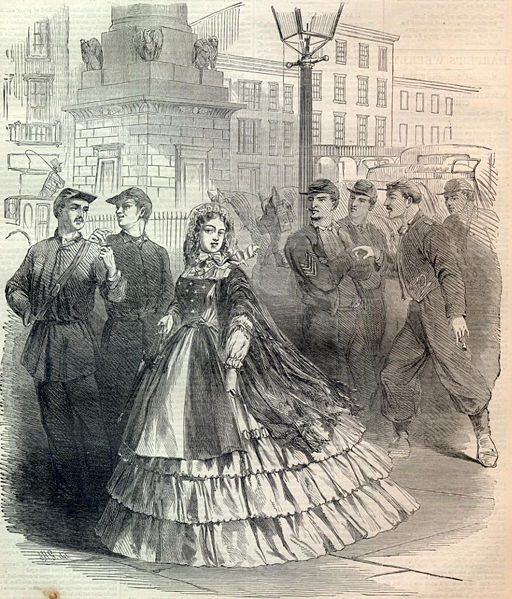
Cover illustration, Harper's Weekly September 7, 1861

The one constant in the print and digital publishing business these days is change, and change isn’t easy. Isn’t that the crux of most novels—thrusting your protagonist into unprecedented circumstances to change their world forever? I relate to strong heroines in those novels—Scarlett O’Hara being a favorite. While I don’t think the publishing landscape is doomed to resemble post-war Atlanta anytime soon, I can imagine when all is said and done, there will be those sitting around shell-shocked, sipping mint tea among burning embers, and those who will thrive with the flurry of a lumber mill during reconstruction.

One thing I’ve learned for seizing opportunity amidst upheaval is to apply basic principles of change management. 

“I can’t think of it now…I’ll think of it later.”1

As much as I enjoy Scarlett’s character, indulging in such thinking could be dangerous. The publishing business is changing, whether you take notice or not. If you don’t want the road to Tara to be riddled with potholes, it’s important to arm yourself with information. Fortunately, lots of people are talking about what publishing changes are in store, and you can follow any number of blogs for an understanding of the essentials or simply pose a question to a trusted writer’s loop and see what personal experiences you stir up. Do anything but ignore change. It’s not going away. 

“It’s better to know the worst, than to wonder.” 1

Expect to grieve a little. Change has a life cycle that passes through phases, including ‘loss’. Think about why you want to be published. This doesn’t have to be the answer you’d give anyone else, but be honest. Is it for the recognition? Because you have a compelling message to tell? Whatever the reason, with that need for being published in mind, ask yourself what you would lose if your choices no longer made sense.

Through the traditional print publishing route…would you lose time waiting for publication? Could your genre be overdone by the time you hit the shelves? Could the physical shelves be long gone by then? Could you lose out on the higher author cuts from e-publishing? And what about the e-publishing route…would you lose big name industry reviews? The satisfaction of seeing your book in print? Store placement to drive sales? Ask yourself if your expectations around what you have to gain or lose are realistic to begin with. What good is a higher e-publishing royalty if you can’t figure out how to move the books? Do you need ‘big name’ reviews if hundreds of GoodReads fans are singing your praises?

When you figure out what you really stand to lose, start brainstorming replacements. Can you hire PR to promote your book or join a group where authors help each other market? Can you fill down time waiting on publication by working on a new novel or building a platform? There is no easy answer here. Loss is painful, but coming to grips with it sooner than later frees you to move through the cycle and gets you thinking about moving forward.

“Now you are beginning to think for yourself instead of letting others think for you. That’s the beginning of wisdom.” 1

Success still resides at the crossroads of opportunity and preparedness. Recognize you have choices. You can go down the traditional publishing route today and find success, and you can go down an e-publishing route and find success. Or both. The choices mean you have some control over your fate. Treat your career decisions with as much careful planning as your circumstances will allow. Once you know where you want to go in the changing landscape, set milestones to mark your progress to keep alert to progress and risks along the way.

“In the end what will happen will be what has happened whenever a civilization breaks up. The people who have brains and courage come through and the ones who haven’t are winnowed out.” 1 

Margaret Mitchell, Gone with the Wind

What about you? How are you coping with the changing publishing landscape?

Lessons from a Lonely Book Signing

Photo of a Man Sleeping on Books
© Vitaly Raduntsev | Dreamstime.com

When I began writing I embraced a fantasy.

It went something like this:

I was going to write a knock-em-dead suspense novel that would rocket to the top of the New York Times bestseller list. Once my novel topped the charts, I would then be besieged by a host of publishers wanting to sign me and offering outrageously large advances. After this, I would ride a huge wave of popularity, turn out a bestseller every few years, and have book signings where people lined up around the block just to have the privilege of meeting me.

As you probably already have figured out, none of that happened.

Oh, I wrote my novel. And a publisher picked it up. But the book signing?

That was another matter.

I arranged with my local Hastings to have a table and display and plenty of books. I didn’t want someone to walk away disappointed because I’d sold out.

When the day arrived, I positioned myself behind my author’s table, a stack of books at my right hand, ready for the hordes of eager readers who would soon rush through the door. Unfortunately, the reality didn’t match my expectations.

A few friends stopped by, but they didn’t buy books. And although some people stopped by my table, most of the other customers went out of their way to avoid me. I was positioned near the front door, and as people came in, they took a circular path away from my table. I began to wonder if they thought I had an infectious disease.

As I recall, I didn’t sell a single book that night. But I did begin to learn an important lesson.

It’s not about me.

Writing isn’t about fame and fortune. It’s not about big advances, awesome reviews, or people lining up at midnight to buy my book. It’s not about feeding my ego or bolstering my pride. It’s not about living at the top of the bestseller lists.

I’ve been writing professionally since 2000. I’ve had nine books published. I’ve never had a big seller. My name’s not on any bookstore marquis.

But over the years, I’ve gotten notes and e-mails from people who have read, and been touched, by my words. I’ve heard from people who were struggling with God’s goodness in personal tragedy. They’ve thanked me for telling a story that helped them in their trials.

Last week, a lady told me that my book, More God (about a young man who overcame a traumatic brain injury) helped her understand what her sister, who has brain cancer, is going through.

A writer’s success cannot be measured in bestseller lists, outrageous advances, and standing-room-only book signings.

There’s nothing wrong with those things.

But true success is measured by how your words impact your readers for good.

I began learning that lesson at a lonely book signing. Ten years and nine books later, I’m still learning it.

And every day I thank God that He’s letting me live my dream. And then I pray that somehow, somewhere, He’ll use my words in someone’s life.

What dreams of yours have been realized through a kind e-mail or note from someone who read your writing? What is your “book signing” desire–has it come to fruition, or have you realized that dream through another avenue? 

Have you ever worn the same outfit on your book jacket that you wore to your first book signing?