It’s All in the Details

scotland-13584Creativity isn’t just a good idea but mandatory if you want to be a writer worth your gold (way more valuable than salt nowadays). The thing about creativity, though, is that you must be careful with the details. Why?

Because there’s a fine line between creativity and believability.

Recently I received an email from a cyber buddy that read:

“I’m writing this with great grievance. I’m presently in Scotland, United Kingdom, with my family for a short vacation and we’re stuck. And really it was unannounced. We were attacked by four armed robbers on our way back to the hotel where we lodged. Not only were we robbed, but are completely embarrassed.

All our cash, credit cards, and cellphones were stolen. We’ve reported the incident to the embassy and the police, but to my dismay, they seem not bothered…their response was just too casual. Our flight leaves in a few hours but we’ve got to settle our bills before we’re allowed to leave. Now I’m freaked out.

Please, I need you to loan me some money. I promise to refund you as soon as I’m back home. All I need is $1,650. Please let me know what you can do. Write me back so I can tell you how to get it to me.”

Now then, as you’ve likely figured out, this is indeed a scam—but a scam that might’ve worked a whole lot better had they paid attention to minor details. Let’s pick it apart, shall we?

From a creative standpoint, I’ll give this a 3 out of 5 stars, mostly because whoever wrote it upped the ante by adding in the ‘armed’ in front of robbers. Nice touch. I also like how the author included a ‘ticking time bomb.’ The plane leaves in a few hours and their bills must be paid or else. Will they make it out of the country? Cue dramatic background music.

So those details totally work. What threw the story off was a single believability factor toward the beginning that instantly set off the needle on my are-you-kidding-me radar.  She’s presently in Scotland? Sheesh! Scotland implies rolling hills and kilts, not roaming bands of AK47 toting thugs. Maybe if the author had said they’d been threatened with bagpipes I’d have bought it. Nah. Even that wouldn’t have worked.

The creativity was there, but the details didn’t match. Why? Because Scotland doesn’t fit the connotation of a lawless land where desperadoes rob innocent tourists.

Next time you’re in creative mode, crafting an intense scene, make sure your details enhance the story instead of pull your reader out of the action. Losing a wallet is one thing…you can always earn more money. Regaining a disappointed reader is harder than learning the bagpipes.

Voice Recognition

Photo/KarenJordan “… My sheep recognize my voice. I know them, and they follow me.” (John 10:26 MSG).

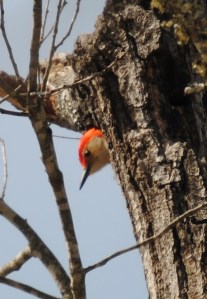
As I listen to the birds singing their songs every morning, I wish I could distinguish one bird from another. I identify the honking geese as they fly over the lake, and I hear the woodpecker as he raps for his meal. I can see the difference between a robin and a sparrow, but I can’t tell them apart by their voices.

My husband Dan can recognize the voices of several birds. He knows the robin’s sweet song, and he is familiar with the squawking blue jay. He can even point out the mimicking mockingbird. So, I’m trying to learn a few voice recognition tips from him.

I’ve also discovered a few tips for recognizing God’s Voice, since I struggle with the same issue in my spiritual life at times. Is this the voice of conviction or condemnation? Will I let faith lead me, or will I be confused and distracted by fear? Does this voice speak life or death to my heart? Does it give me direction or cause me to dwell on the impossible mistakes of the past?

1. Communicate with God. “Don’t fret or worry. Instead of worrying, pray. Let petitions and praises shape your worries into prayers, letting God know your concerns” (Phil. 4:6).

First, I must remember to communicate with God. Sometimes I get so focused on the worrisome distractions around me that I forget the power of prayer and praise.

I’ve also learned that I can’t focus on many tasks at the same time. And if I try to multi-task, I don’t do anything well. So, I must find some way to silence all the voices around me, so I can hear God.

2. Examine God’s Word. Jesus says, “I am the Good Shepherd. I know my own sheep and my own sheep know me” (John 10:14).

What if you don’t think you can recognize God’s voice?

God’s Word promises, “(His) sheep recognize (His) voice. (He knows) them, and they follow (Him). (He gives) them real and eternal life … No one can steal them from out of (His) hand” (27-29).

Sometimes all I can do is hang on to God’s promises—even when everything around me doesn’t seem to agree with His Word. Often my circumstances cause me to panic, because I can’t see how something can work out. My logic and my emotions resist the truth that I see in God’s Word.

3. Allow God to Examine Your Heart. I don’t want to pray about that! What if you really don’t want to pray about something? That can be a big red flag that we might have a little attitude going on.

I can remember when my kids would avoid talking about something with me—like a report card or a visit to a friend’s house. I would eventually force the issue if they continued to be silent, because I knew my kids well. If they were quiet, something was up.

Investigate my life, O God, find out everything about me; Cross-examine and test me, get a clear picture of what I’m about; See for yourself whether I’ve done anything wrong-then guide me on the road to eternal life. (Ps. 139:23-24).

Photo/KarenJordan4. Embrace the Power of Christ in You.      Sometimes I become distracted from God’s voice by the worries and stresses of my everyday writing life. Yet when I choose to focus on God’s Word—listening for His still, small voice—I find rest and peace for my troubled heart and mind.

… Those who enter into Christ’s being-here-for-us no longer have to live under a continuous, low-lying black cloud. A new power is in operation. The Spirit of life in Christ, like a strong wind, has magnificently cleared the air, freeing you from a fated lifetime of brutal tyranny at the hands of sin and death. (Rom. 8:1-2 MSG).

Many times my prayer is for God to just show up. And at times, He shows up in the strangest places—like this morning, as I listen to the chorus of birds singing again. I realize that I still can’t tell one species from another. But in my spirit I know that I’m listening to a symphony of praise to our Creator.

“Let every living, breathing creature praise GOD! Hallelujah!” (Ps. 150:6).

What distracts you from hearing God’s Voice?

Unpacking a Rebuke

????????????????????????????????????????We’ve all met at least one—the writer who simply cannot take any criticism of his work. Such folk gleefully hand you their writing for review. But when you offer a tiny suggestion about a passage they’ve written, small funnel clouds begin to form over their heads. They’ll have none of it. Their eyes pinch. They are certain you are thick, even dim-witted, and probably don’t floss or exercise. Such writers typically don’t last long in the world of words, because as Justice Brandeis once said,

“There is no great writing, only great rewriting.”

Then however, there are those of us at the other end of the spectrum. We are so certain that the opinions of others must be more credible than our own, that we buy into anything anyone says about our work. This can have us constantly scurrying off in the direction of the most recent advice.

So when evaluating a rebuke or criticism, where is the balance? What questions should we be asking?

Was the rebuke from the wrong person? In my critique group we have a few poets. But I don’t get poetry. There. I said it. Thus, any constructive comments from me must be taken with a grain of salt. In fact, I typically find myself saying the same thing over and over again:  I don’t get poetry, but I love your imagery. Not very helpful. Our poets would be perfectly sane to pause before taking my poetry advice.

But what if the rebuke came from someone a bit higher up? What if a book proposal to an agent was rejected?

Was it a good idea with a bad pitch? I had a great talk in my roster of workshops but no one ever selected it. Finally someone said, “Yes, we want this talk! But you’ve GOT to change the name.” When they explained why, a light bulb went on. My title had completely misled would-be attendees as to what would be presented. Most hadn’t even read the description because the title sent them packing. The same thing can happen in a query or cover letter. You may well have a great idea, and your writing might actually be ready. But if the agent or editor didn’t catch the fever in your pitch, or if it left them confused, they most likely never went on to your writing.

Agents and acquisition editors aren’t magical. They don’t have a clairvoyant wisdom that lets them know exactly what’s going to take off and what’s going to fizzle.  Even with decades of experience and loads of algorithmic analysis, it’s still a highly unpredictable business. Which means they sometimes get it right and they sometimes don’t. (Well, all except for Word Serve Agents. They really do always get it right. Whew. Dodged a bullet there.)

Say what you want about the Harry Potter series; I still cannot imagine anyone reading through some of J.K. Rowlings writing and saying, “Ehhhh. I just don’t see it. This won’t interest a soul.” And yet. . . twelve publishing houses said just that.

Learn to Unpack a Rebuke

Most of the time, we really could improve what we’ve written. Most of the time, our writing needs some work. But don’t chase after every single comment as though it is Gospel. Measure it. Weigh it. Give it reasonable consideration. Develop a mature view of your own work. Most of the time, there is value in the criticism. But in the end, if you think your reviewer got it wrong, stick with the plan a bit longer. Look for the gatekeeper who gets you.

The obvious conclusion of this line of reasoning is that even advice from this writer must be evaluated carefully and perhaps dismissed. I’ll admit, sometimes I get it right. And sometimes I get it wrong. For example, if I had been on the committee to evaluate and select new TV programming, we’d never have heard of World Wide Wrestling or Honey Boo Boo.

To Tweet or Not to Tweet (The Social Media Platform Question)

twitter-bird-light-bgs

Twitter is a top social network and one of the sites a prospective agent or publisher is likely to check when evaluating a writer’s online presence. This factor alone makes it worth investigating, but there’s more. Once you understand how to use it properly, Twitter can drive traffic to your site and customers to your books.

What is Twitter?

Twitter is an information network with real-time immediacy. Trending stories often break first on Twitter. It’s also a social networking platform where people from all over the world post short updates. Tweets, as these updates are known, take little time to compose. Your wall, made up of brief Tweets, is quick to scan. On Twitter you can create lists of people and make them public or private. It’s possible to join ongoing group conversations (like #AmWriting or #WriteTip). If you have a Facebook account, this should all sound familiar. Think of Twitter as “Facebook Light.”

Because of the character limitations (just 140 characters per Tweet), you don’t need to spend a lot of time maintaining Twitter. Tweets cover, among other things, personal updates, conversations, commentaries on something in the news, interesting posts, original limericks, and even entire books painstakingly Tweeted in numbered, sequential order. When it comes to composing Twitter updates, you’re only limited by your imagination.

Tweets can be prescheduled via social media dashboards like Tweetdeck, Social Oomph, Buffer, and Hootsuite. I have used all of these at one time or another and now use them all for different features. There’s also Twuffer, which I have not tried, but many people swear by it. Which you choose is really a matter of preference. I suggest you start out with Hootsuite, since its interface is easiest for the beginner. As a bonus, you can schedule updates for Facebook, Google+, and LinkedIn through Hootsuite as well. I use the URL shortener at Bitly.com and also via Buffer because these sites give me the ability to track analytics for the links I post.

Twitter’s about page is informative and even suggests various ways to use it. The brief video at http://fly.twitter.com is well worth watching. There’s also a set of instructions helping businesses learn to build a community at https://business.twitter.com. If you’re a mobile user, go to https://twitter.com/download for the apps you’ll need. Clearly, how much you get out of Twitter depends on you.

Getting Started on Twitter?

I won’t go into a lot of detail here because Twitter’s help topics are so awesome you should have no trouble finding your way. Learn how to set up your account here: https://support.twitter.com/articles/100990-how-to-sign-up-on-twitter.

For branding purposes and to present yourself as professional, I suggest you use your author name as your handle. Capitalize your first and last name for better readability. My twitter handle, for example, is @JanalynVoigt rather than @janalynvoigt.

Be sure to upload a profile image. Many people, myself included, won’t follow accounts without a profile picture because this is a telltale sign of a spammer.

Don’t be afraid to poke around Twitter and familiarize yourself with its many aspects. Third-party Twitter applications abound, but don’t get carried away discovering them or you may burn out on Twitter before you start. It’s best to start simple. Also, be careful when it comes to third-party applications. They shouldn’t need your email address or Twitter password to function. After you’ve granted permission to an application to access your account, if you don’t intend to use it again, it’s always a good idea to go into your Twitter settings through the gear icon on your profile page, select apps from the menu on the left, and revoke its access to your account.

What if you just don’t “get” Twitter?

I truly understand the confusion of not knowing how to relate to others on Twitter. It took me several years to truly grasp how to use this particular social platform. I might not have kept trying except that much of my website traffic came from updates about my blog posts that I made to Twitter. I only wish I’d discovered sooner that the character of my interactions, rather than the nature of Twitter, was the problem. Accusing Twitter for my failure to connect through it was akin to blaming a forest fire on a careless camper’s match. For those who persevere, Twitter can prove quite a powerhouse.

I didn’t consciously decide to use Twitter as an outlet to promote my writing without investing anything of myself in my followers. In fact, I tried periodically to get people to “talk to me,” but I wasn’t successful. I first had to figure out some basics, and I’m happy to share them with you.

To get people to talk to me on Twitter, I:

  • joined hashtag conversations. These sound complicated but aren’t. Twitter communications can seem disjointed, so hashtag conversations arose out of the need to organize tweets into cohesive group conversations. To see how this works, type #AmWriting (a popular hashtag conversation for writers) into the search box at http://Search.Twitter.com. (If you are logged into your account, you can just use the search box at the top of the screen.) To add to the conversation, simply include #AmWriting in your own Tweet. Taking part in hashtag conversations helps you find people who are active on Twitter.
  • paid attention to who followed me and followed them them back if possible. Several good applications for managing your Twitter followers exist, including Friend or Follow and Manage Flitter. These sites let you easily do things like follow people back and unfollow those who aren’t following you (if you wish). I don’t always follow those who follow me. Some are on Twitter to promote businesses that don’t interest me or are engaged in activities I don’t want to endorse. If we’ll have nothing in common to talk about, I don’t follow back. Engagement is far more important than large numbers of followers. 
  • tweeted blog posts written by others and included their Twitter handle (user name preceded by the @ sign–mine is @JanalynVoigt). This prevents your Tweet with a link from being considered spam and notifies persons with the handles you include that you mentioned them. Often those we do favors for will look for ways to return those favors, but I don’t do it for that reason or look for a return. I Tweet relevant links of interest to my followers to keep them engaged with me.
  • retweeted (Tweeted again) posts of interest to my niche. This helps me interact with others, feed interesting updates to my followers, and gain new followers.
  • consciously following other people I knew. I proactively searched out my friends who are on Twitter. We’re already invested in and support one another, and I know these people will talk to me.
  • mentioned people and thanked them when they mentioned me. Twitter has #FollowFriday, also known as #FF, that’s gotten a bit out of hand, but if used right is a viable way to recommend people you want to help and gain followers as others help you. Basically, every Friday people on Twitter recommend some of their favorite followers by listing their Twitter handles with the #FF or #FollowFriday hashtags included in the Tweet. Using the @ symbol before a person’s handle causes the name to become a link that takes your followers who click it to that person’s profile. You don’t have to use the #FollowFriday hashtag to follow people, though. You can mention them whenever you want.
  • when time allowed, I spent a few minutes looking over websites and commenting about them to people who interested me. This communicates that I’m interested in the person, and sometimes I find material to Tweet to my followers.
  • began scheduling regular updates. Don’t get carried away posting updates, but most people post too seldom rather than too often. I try to update my Twitter profile using prescheduled Tweets once an hour. We’ve discussed scheduling updates, but you can also automatically feed blog posts to Twitter through Twitter Feed and Mail Chimp.

There’s truth to the idea that those who aren’t using Twitter can’t understand it and those on Twitter can’t explain it. To decide whether Twitter is or isn’t for you, why not give it a try? 

Behind Every Great Writer is an Ideal Reader

Writing can be a lonely business. One way authors can alleviate that issue is to build a relationship with a person that they consider their ‘Ideal Reader.’ An Ideal Reader is a trusted partner, advisor and the first person to read the writer‘s first draft of a book.

The Ideal Reader is symbolic of the writer’s audience overall. This person represents a composite or a common denominator of the author’s demographic, so in this case one size will definitely not fit all. Once common ground and a willing exchange has been determined, what qualities should the Ideal Reader possess? They should be well read in the genre of the book, whatever it is. They need to be a person that the writer trusts implicitly. They should also be able to communicate in a way that the writer will appreciate. Assertive communication occurs when there is open and honest feedback presented in a respectful manner. The Ideal Reader will be able to convey their suggestions in a way that will make the writer think twice. The suggestions are taken under advisement and there is no weirdness if some or all of the suggestions are not implemented.

Girl Browsing Books at the Library

The Ideal Reader should be able to detect structural flaws, such as a deceased character showing up in a later chapter. It is a first draft, after all, and first drafts are usually a bit of a mess. You probably know a few people you don’t mind coming over when the house is in disarray. Those are the people with whom you feel most comfortable, who you trust, who you are willing to let see you at your worst – not just your best. That’s the kind of confidence to have in your Ideal Reader.

You may even have different Ideal Readers for different areas of your writing. Think of them as subject matter experts who can check your content for flaws. Have a friend in the medical field review your story which takes place in a hospital. If you don’t know much about something on which you are writing, give it to a person who does work in that field to see whether or not they find it credible.

Another aspect of the Ideal Reader is that they need to be into your writing. Writers, don’t hold yourself hostage by trying to make an Ideal Reader out of someone with a “you’re welcome” attitude who looks annoyed whenever handed a manuscript. If you have to follow-up with them multiple times over several months, then keep looking. The partner you want will be naturally enthusiastic to see what you have created. They are engaged and interested, and they can’t wait around for several weeks or months or years to find out about your latest opus. They are supportive but provide constructive criticism. They are collaborators actively involved in the process. Once you have established your Ideal Reader, do what you can to maintain the relationship. They are rarer than diamonds and even more valuable.

What is your approach to collaborative writing?

Do you have an Ideal Reader?

7 Writing Revelations (and a Couple of Prophecies): What Blogging Daily throughout Lent Is Teaching Me about Writing

Patty pictures 026 - Copy

Having published five books and taught writing for more years than I want to tot up at this moment, I had no idea I had so much to learn about writing until I undertook, for Lent, to post daily to my blog about following God’s command in Deuteronomy 6:7, which is about talking about scripture all the time: when you lie down and get up, when you walk down the road and when you sit in front of the computer.

It’s been tough going some days. One night, nigh on midnight, my brother—who has correspondingly committed to responding to my daily posts—sent me an email reminding me that I still hadn’t posted that day. Mostly, though, blogging about the Bible daily has proved a blessed Lenten entertainment—much more fun than giving something up—and taught me much about writing discipline.

Here’s what I’ve learned so far.

  1. It is possible to write daily.

Or, so far it is, anyway. Previously I had doubted this.

I had the same revelation once about dieting and lost thirty pounds. The sad news is that, as with most of my spiritual revelations, I forgot what I had learned and gained a lot of it back.

(Note to self: After Lent, instead of blogging daily, you need to track what you eat.)

  1. One key to discipline in writing is writing on a set schedule.

I’ve found I have the best chance of getting my blogwork done if I do it first thing in the morning, before the day has the chance to talk me out of it. It’s the same way with my running: I either do it in the morning or I don’t do it at all. Similarly as with my twenty-one miles per week running commitment, the once-a-day blogging mandate has a sort of built-in incentive: incremental progress toward success. When I get done with my day’s post or run, accomplishment surges through my veins and arteries. Yes! I tell myself.

  1. Daily writing is easier if you follow a chronology of some sort.

This is by no means the first time I have tried to force myself to blog regularly, though in the past my goal has been to blog not daily but only (blush) weekly. I have never gotten very far with it. Even with a clear topical focus (which helps), eventually I just lose a sense of forward movement and stop.

This time around, though, I have not only a topic but a predetermined chronology: Jesus’ biographical development as presented in the four accounts of it in Matthew, Mark, Luke, and John. I started—following a more occasional trajectory—back at Christmastime. Something about there being a passage of time in the material I’m reading and responding to flings me forward, I think, by providing me with an unknown element to look forward to. I wake up in the morning curious about what’s going to happen next in Jesus’ life—and how thinking about it might play out in mine.

  1. Blogging is work.

As pleasurable as it has been to read and think about and respond to scripture every morning, not very long after I committed to daily blogging I started to think of it as work. As, that is, something I was supposed to accomplish by the end of the day. A duty. At times a burden. And always, potentially, an additional stressor I don’t need in my life. This is a reality that I can’t afford to ignore.

  1. Time devoted to blogwork takes away from time devoted to other writing.

As with all work, every minute I spend blogging is a minute I’m not working on my other writing projects. This is another reality I can’t afford to ignore.

One of these days publishers will discover how blogging saps writing—or, that is, they will admit it to be true, having tried regular blogging themselves—and they will, I’m certain, start discouraging their authors from regular blogwork. (I am prophesying here.)

Before that happens, however, publishers may cease to exist. (Another prophecy.)

  1. Habitual blogwork on something different from your main writing project can help your creativity.

While blogging has cost me time I need for the novel I’m working on, allowing myself to concentrate on something else for a portion of my designated writing days has also unstopped the writer’s block I tend to have when writing fiction. This is partly so, I think, because I am, in essence, transferring some of the duty and burden of regular writing onto the blog and off of my novel, making the latter more of a place to just have fun.

It is important to note, too, that creativity studies consistently show that turning one’s attention to something else—something unrelated—invariably nurtures creativity.

  1. Having a dependable and responsive reader—or better yet, readers!—is a wonderful incentive to keep the words coming.

As I said at the start, when I committed to read scripture and blog about it daily, my brother committed to read and respond to what I wrote. Not only have these responses proved a lovely opportunity to interact daily with a faraway loved one, but my brother’s insights have grown me. Often, in fact, his responses have triggered the next day’s post. Best of all, we talk to each other daily about scripture, which was the goal of my blog in the first place: to be in conversation with others about scripture all the time.

I’m certain there are more things I will learn from my daily blogging commitment—and probably more things that I have learned already—but seven’s a good number, so I’ll let this be enough for now. I need to get on to daily blogging—and, after that, the novel!

So for now, happy Lent!

Craft of Writing

“Craft – an activity involving skill to produce something by hand” says my newly installed Oxford English Dictionary. The origin of the modern word ‘craft’ is to be found in the Old English word ‘craeft’ which combined the concepts of skill and strength together.

If there was companion dictionary, like the expanded translation of the Bible, then we might reach a better understanding of our topic, like this for our opening definition:

“Craft – an activity [worthwhile human endeavour] involving skill [proving one’s dexterity, competent, virtuous, masterful, graceful] to produce [make, invent, fabricate, construct, fashion, create] something [worthy, honest, valuable] by hand.

When we focus on those activities which involve hands, there is also an intrinsic underlying meaning, a deeper meaning.  For instance, if you are a shipwright, a builder of boats, then you surely are using your craft to make something that is fit for purpose.

If you are a fisherman then you need to trust your boat. The boat builder knew that when he designed and built the boat, it would need to have numerous good qualities, you could even say ‘virtues’, that the boat users would need to rely on implicitly. It would need to be watertight, buoyant, stable, robust and strong enough to weather the worst storms and most of all it needed to be safe to protect the lives of the fishermen. When Jesus said to Simon-Peter, ‘Go out into deep water and cast your nets again’, the scriptures record that the nets began to break because they were so full of fish and the boats began to sink under the load. But sink they did not, for the boat-builder had done his job well. He had built a fishing boat that would not just take a big catch, but would stand up to a miracle.

Boat%20fishermen

Is there a craft of writing? I believe there is but it’s not what the textbooks say it is. It’s not the kind of skill you can simply learn and then apply. Not a mere crafting of words to make them sound good when read or spoken aloud. Not just a clever way of stringing sentences together or paraphrasing speech and drama to create an interesting story. Nor is it a means to earn lots of money. You can’t serve two masters.

No, it’s much more than all these things.

The key is in the picture shown above.

Simon-Peter, Andrew, James and John were all expert fishermen. They had good solid boats in which to fish on Galilee but Jesus saw something more than just the simple dexterity of their hands. He saw a dormant skill that was in their hearts and souls, a skill that was profound and could be used in the kingdom of God.

As writers, are we satisfied making good catches? Showing off our skills and craftsmanship so that others will applaud our artistry? Or are we like the disciples standing in the boat, willing to listen to Jesus and be obedient to him, and answer the calling of the Kingdom of God?

Our skill and craftsmanship is a God-given gift and as communicators we should always ask if our writing is fit-for-purpose and of great worth and value to the Kingdom of Heaven here on earth. Don’t settle with being a craftsman of the word, let the word craft you into being a disciple of the Lord

Plain, Ordinary, or Beautiful?

14737877_s

Once I made the mistake of creating a heroine who wasn’t loveable because she didn’t forgive until the end of the story. Although her black and white thinking was true to character in her particular setting, it made her unappealing to the modern, more open-minded reader. Some who couldn’t relate blasted her in reviews.

Observation: Characters can be too realistic.

While she needs to stay true to her personality type, a good heroine breaks out of the norm for her particular setting from the get-go.

Because writing is a creative process, the rules are loose to allow us to create a unique voice. It’s a painful process to learn what works through our failures. After a dozen novels, workshops, and self-help studying, I still blunder my way along. At the end of each novel, I find myself vowing, Wow, I’ll never do that again. No more prologues for me—but that’s a topic for another day.

Under deadline, I write and juggle life. But between contracts, I study, plot, fret, and find more time to doubt myself. As you might have guessed, I’m currently developing characters. While fretting over my next heroine, I asked myself, what would help her connect with readers on page one and throughout my manuscript? This thinking led to another observation. Let me explain.

Growing up as a Mennonite, I call myself a plain-vain gal.

I was raised on humble pie and continue to strive for humility. But you know how it goes when somebody says you can’t have something. So if I’m honest, I have a craving for beauty and admiration. When I read, I enjoy living-escaping through beautiful, gutsy heroines. Most of my heroines have been lovely on the outside.

But since I’m wallowing in character fret-mode, I polled my Facebook followers with the following question:

Do you prefer a beautiful heroine or a plain one?

Every single response was plain, except for a few who didn’t care. Really? I expected the comments about inner beauty, but I was shocked they demanded plain on the outside. I expected mixed preferences.

For sure, they want a heroine who overcomes the ordinary. I’m still processing this information so I ask you…

…Is inner beauty or character strength more visible on a plain heroine?

As an example, Katharine Hepburn comes to mind, and I did a follow up blog post about using her as a character on plain girl romanticizing.

I’m conforming to my followers’ preference. Like most authors, I cut photos for each character and study them as I write. Here’s the plain-Jane photo I’ve chose for my WIP.

heroine 2

She’s really growing on me. I’m convinced I’ll make her shine. And hopefully make her smile too.

All of my responses were from women. I wonder: men, would you respond differently? But as a romance author, I’m writing for women. Or was this a genre thing (Amish readers ages 34-55)? Would it have been different for younger readers?

And what about our heroes? In secular romance novels, heroes are often dark and brooding with wicked pasts. It’s up to the heroine to bring out the good and change him. In Christian novels, the growth is often attributed to God. But what kind of heroes are Christian women seeking? Have you done any polls?

From my own experience, my favorite hero was my last one. He was ordinary looking. On a scale of one to ten, he started below zero with the heroine who remembered him as gawky and pesky from college. I developed his inner strength and found myself drawn to him more than my good looking heroes.

On book covers, publishers often hide the heroine’s face. But writers must describe character attributes.

So what do you think? Does it really matter how they look?

Or is it all about the writing?

A Note to Young Writers: Honor Your Obscurity

woman praying--parodic

In the last month, I spent time with two younger women, both of whom had just released their first book. Sarah and Andrea are both fine writers whom I expect will continue to write and publish books. In the short time I had with each of them, I found myself dumping all my writing and marketing advice, talking about websites, blogging, Facebook, twitter. But I forgot to say the most important thing of all: honor your obscurity.

Very few young writers, musicians, artists value their obscurity. For good reason. We know if we’re to be published in any form, we need an audience, a sizeable audience. We know that most of the time we have to find that audience before that first book contract even lands on our desk. And once it does, and the book is out, we’re tasked to keep racking up bigger numbers. But how do we catch the eye and ear of a world that so often chooses the flippant, the crude, the gaudy spectacle over the good, the authentic, and the true?  If we’re the praying sort, we may resort to prayer, remembering the words another writer made famous a few years ago,

“O, that you would bless me and enlarge my territory! Let your hand be with me, and keep me from harm so that I will be free from pain.”

(Oh, dear Jabez, I want to say. How did you get away with that prayer?)

But we do it too, I suspect. The artists’ version would go something like, “O, that you would bless me and enlarge my platform, increase my followers, expand my twitter peeps and keep me from publishing harm so I will be famous, free from the pain of falling out-of-print.”

woman praying--parodic

I can write this prayer because I know these desires. An hour ago I was on a nationally syndicated radio show, and I find myself, now, against my better will, glued to numbers, trying to measure “impact.” While guiltily number-stalking, a stranger writes me on Facebook immediately after the broadcast and asks how he can become a writer and speaker, like me. (He’s in his twenties and he hasn‘t written anything  yet . . .)   Someone else writes to ask me how to build a fan base for her blog.

I do have advice: if you want others to read you and listen to you, you must listen to others. Do for others what you want them to do for you. That will not make you famous; that will make you better informed and more humble.


man reading2

And second, fame is not what you think. Admittedly, I am not the best source here. My moments of “fame” are modest and sporadic. But I still know this: it isn’t what you think. It’s often over in a moment. It brings more responsibility than freedom. And if you’re not careful, it can pollute or paralyze your writing. I have a friend whose first book shot to the New York Times bestseller list.  His agent, his readers, his global fan base now hold their collective breath for his next book. “How do I write under this weight?” he asks me. He has so many others he must now heed and please.

“Honor your obscurity” is another way of echoing Bill Roorhbach’s charge to “honor your apprenticeship.”  Value these months, years of laboring toward your best work with fewer listening in than you would like. This quiet is your wilderness, your blessing. Here you will sharpen your art. You will lean closer to the sounds around you, for the fragile people who haunt the forests you watch, for the small voice that whispers names you didn’t know.

Enjoy the purity of your efforts, making art and worlds and essays out of the sheer love of words, of theatre, of longing and of hope. Enjoy it now before a woman or a publisher sits down beside you filling your notebook with a thousand necessary tasks, few of which have much to do with why you began writing in the first place.

Finally, what do you imagine fame will bring you? For me (and for many writers I know) I hope mostly to be able to keep on writing, to keep using “that talent which is death in me to hide,” as John Milton writes. If you’re doing this now, pouring life into the truest sentences you can make, you’re already famous.

woman writing journal

How to Get Started Writing: Hamster Wheels and Hurdles

type lettersOf all that a writer can and should do—how, actually, does one get started?

It would be possible, in assembling writing advice from just a handful of the people who are giving it, to come away with the impression that making it in this business requires doing everything all the time.

You must, people say, build and maintain a platform. Start or re-start your website. Pin to boards. Make things that other people will pin to boards. Attend conferences and conventions. Join groups. Pitch ideas. Hone your message. Know your audience. Study writing books. Edit incessantly. Post blogs. Find a writing schedule that works. Tweet and re-tweet updates about all of this. Plus string tens of thousands of words together and hope somebody will see fit to make a book of it. That’s just phase one.

Phase two is its own hamster wheel. With a book in publication you must, people say, promote like crazy. Speak at events. Do interviews. Pursue interviews. Write accompanying articles. Track reviews. Deal with disapproval. Build friendships with booksellers. Have catchy marketing stuff. Improve on sales. Aim for bestseller lists. Figure out your next project. Pin, post, platform-build, edit, update, and speak some more. Promise to tweet and re-tweet, always and forever.

The general question: Who can possibly manage all that?

The specific question: How, possibly, can I?

The general answer is that likely nobody can manage it all, when trying all of it at once. The other answer is that you, specifically you, can work toward all of this by doing so incrementally.

You will not start out on bestseller lists. You’ll begin at the beginning, with the whole unrelenting shebang left to do. Tweet This

There will be potential failures and rejections at every corner and turn. But if you begin—if you sit at a computer or a typewriter or even a small slip of paper, and if you start putting words down and then keep putting words down, you will be writing. Often it is as simple as that.

hurdleHere is a personal example. After having published three books by 30 (two as author, one as collaborator), late last year I didn’t have a single writing project to speak of. I wasn’t sure I wanted any, because being submerged in the mire again—see above paragraphs—seemed exhausting. Other concerns demanded my focus and time too, namely: my husband was on a seven-month combat deployment to Afghanistan, we had moved our lives across the country twice in less than a year, and I had just given birth to a baby, our first. Some days, accomplishing just laundry and dishes seemed out of my league.

But I knew that God had given me a love for writing and the opportunity to publish. He was percolating words in me that I wanted to put down. So on one harried morning, I dared draft an article query. On another day I bravely emailed some book ideas to my agent. It was just a baby toe stepped back into the pool, but from where I stood it was the all-important start, a jump at the big, looming hurdle.

That was trajectory, finally, and in a matter of weeks and months I was actually writing again: ideas flowing, plenty of potential projects on hand, a few materializing, and even (always miraculously) another book contract waiting in the wings. Perhaps more importantly, I was learning to chip away at this job, little by little, reminding myself that it would not be accomplished in a single swing. The laundry and dishes were waiting longer than before, but I figured I could deal with that.

Have you wondered, frustrated, how to get started writing? The solution can be as simple as a little trajectory. Tweet This

Stop trying to figure out how to start writing; instead, start. Aim at a goal and have the courage to start imperfectly and incompletely. As you get a handle on one area, add another. You will likely surprise yourself with all that can be attempted and accomplished. Writing is far more doable when you’re doing it.