The Cheater’s Guide to Building Your Author Platform – Part 1

With a glazed look on my face, I obediently handed my phone over to “the expert” sitting beside me. As she looked up my twitter account which had an oval egg shape for my picture, I couldn’t help feeling intimidated by the task of building an author platform.

I had spent my entire life serving in pastoral ministry. When social media first came on the scene, I was suspect of the enemy’s evil intent to use the media to entrap our children.

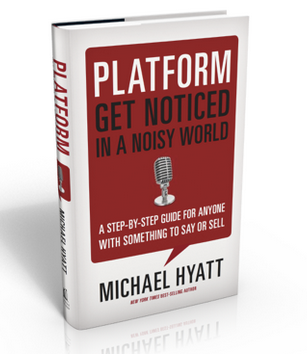
Now here I was, listening to Michael Hyatt talk about the power and necessity of every author building a platform to launch their book. Much of what he was saying went over myplatform head. Yet as I listened for the still small voice of the Holy Spirit to guide me, I simply heard this word: engage.
As I engaged in the social media platform beginning that day two years ago, I grew from 4 twitter followers to over 21,000. I joined the social conversation and found a whole new world of influence.

Since my first book, 9 Traits of a Life-Giving Mom, hit #1 on Amazon’s Hot New Releases for Christian Women’s Issues, I regularly have authors seeking my advice on how to build their own platforms.

Let’s Begin at the Beginning

Watch Michael Hyatt’s simple video on Platform Building.

1. Start with a Blog

Begin to build a following. Give people an opportunity to get to know your heart. Use your blog as a spring board to all of your other social media engagement.

If you are an author of a number of books, you are probably your brand. You may write on a number of blogs. A foundational part of your strategy is your own blog where you can share your passion and build a loyal following. I chose to use my own name for my primary blog at SueDetweiler.com.

2. Develop a Social Media Strategy

You are unique. Social media needs to work for you. As you begin to see the power of social media, use these principles as a guide: 12-28-14 Social Media

  • Use Time Management Tools
  • Link Social Media Posts
  • Strategically Post Throughout the Day

The key to social media is to see it as an ongoing conversation with a friend. You are sharing about all the things that you care about. People who read your tweets will know what you enjoy. Don’t be afraid to share your personal story and pictures. Provide your tribe with ongoing helpful resources.

3. Be Real

Don’t try to appear to be anyone else than who you truly are. You don’t have to be perfect. In fact, one of the ways that people will be drawn to you is when they sense you are transparent. Don’t try to be Barbie or Ken; just be who God made you to be. Let your quirks come through in your social media platform.

Don’t be tripped up by your own perfectionism and fail to launch into a new thing. Allow yourself the freedom to try something new. Stoke the fires of your own adventurous spirit.

4. Use Video

Video can be really simple. The technology on your smart phone will allow you to do video in minutes. As an author, you can use the power of video to sell your book. Here’s a simple book trailer that was created for me on Fiverr.com. Video doesn’t have to cost you a fortune to be effective in telling your story.

I also used simple video introductions of each chapter of my book as an additionalbuilding your author platform resource. At the end of each chapter a simple code invites the readers to watch the video or download a printable of written prayers that enhance each chapter.

5. A Gateway to Traditional Media

As you build your platform as an author, others will become excited about your message and help get the word out about your book. Build relationships with other authors, radio hosts, and television hosts. Two events that I think are helpful to connect authors to traditional media are National Religious Broadcasters (NRB) and The International Christian Retail Show (ICRS). There may be other events that your publisher encourages you to attend to build relationships with the media.

Next Week

We are just scratching the surface of things that you can do to build your platform as an author. Join me here at The WordServeWaterCooler for part 2 of The Cheater’s Guide to Building Your Author Platform.

Also connect with me on social media! Let’s start a conversation. Let me know if there is any way I can help you get your message out.
Mastering the Essential Query Letter for Writers

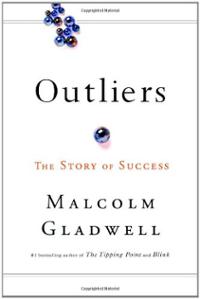
Outlier's The Story of SuccessI finally read the book Outliers: The Story of Success by Malcolm Gladwell. As I devoured the first few chapters, I thought about my quest as a professional writer. And my impatience in the early days. I wrote about it on my personal blog back in 2009.

But reading Gladwell’s research, I realized that even in 2009, I was well on my way to achieving my goals. I simply needed to take every necessary step.

According to studies cited in Outliers, it takes an average of 10,000 hours to master anything. I figure it took approximately five years of incessant practice, posts, and projects for me to near the 10,000 hour mark. Although I haven’t mastered the art, I’m certainly much better than I was six years ago.

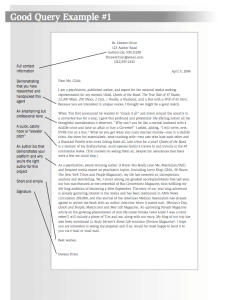
And one of the most critical areas of improvement comes in my creation of query letters. Let’s face it, if you can’t write a strong query, you won’t arrest the attention of any agent, editor, or publisher. Early on, I spent a lot of time studying and honing the elements of this crucial piece.

1. Research

Writer's Digest Query Letter
Image Credit with Permission Writer’s Digest
http://www.writersdigestshop.com
  • Who specifically should you address your inquiry to? Name. Title.
  • Where should you send your query? Do they accept email only? Content as an attachment, or in the body of your email? Are they snail mail lovers? Do you have the correct address?
  • What are they looking for? Does your topic or slant match their needs? Have you formatted your submission according to their guidelines?
  • When are they accepting submissions, and do they have themes tied to calendars?
  • Why did you chose them? Did you read something that made you think you would connect? Are you familiar with their needs and believe your work can support them in their mission? If possible, find a common bond or at least prove you’ve studied what’s important to them.
  • How do they want queries packaged? Some prefer a simple one page letter, clearly stating your concept as it fits within their guidelines. If interested, they’ll ask for a proposal or manuscript later. Others request a proposal or manuscript at the same time you send the letter. Make sure you know what the person you are querying prefers.

2. Hook

No matter how well you’ve written your article or book content, without something to snatch the reader out of their doldrums on the average of the first seven seconds, your work will go no further. Ask that stirring question to make them think. Make a bold statement that flies in the face of an old cliché. Provide a heart-wrenching statistic, forcing them out of the skin of self. Make their belly shake with laughter.

3.  Double Check

Writer's DigestOnce you’ve written what you believe is a strong query letter, I suggest you run it through the Writer’s Digest Do’s and Don’ts of Writing a Query Letter. This brief but powerful list will show you how to write a query letter in the most effective way possible. Also have someone who knows something about professional writing read it.

A family member, or even a high school English teacher, are not going to provide the insights you need when it comes to publishing in the real world. As long as it’s a short, one-time read, many professional writers are willing to do this for someone else who’s starting out. We remember those days. Just respect their time, and if one writer can’t help, try someone else.

10,000 hours sounds like forever when you are starting out as a writer. But with patient and consistent practice, this important landmark will arrive faster than you think. Start small. Master the query letter first. Then one day, you’ll have the honor of mentoring someone else.

How many hours would you estimate you’ve invested in writing so far?

Do You Think I’m Insecure?

OLYMPUS DIGITAL CAMERAI usually feel pretty good about myself when I wake up—for the five minutes I refrain from looking in the mirror. That’s when the voices start: “Your thighs have more dimples than a Shirley Temple look-alike convention!” they say, or “What kind of eighties-wannabe haircut is that?”

Then I take my older son to school and notice the work-outside-the-home moms, all coiffed and stylish. The voices deride my writer’s wardrobe of jeans and T-shirts. Later, my fingers poised at the keyboard while my trusty cup of java grows cold beside me, I hear the little demons again: “That paragraph stinks. How are you ever going to keep getting published if you write stuff like that?”

When I pass through the living room and kitchen to go to the bathroom, the hisses continue: “The kitchen counter is filthy. And when was the last time you dusted?” By the time I grab a mid-morning snack, I’m already defeated, and it’s only 9:30 a.m.

Sigh.

I don’t know who said it, but I believe it’s true: Insecurity is the devil’s playground. Or maybe battleground is a better word. His weapons attack from every side and inevitably leave a wound.

file3991282945508Those of us who struggle with perfectionism find it especially difficult to remember that we are wholly loved by our infallible Heavenly Father. It’s a constant war to not let the “How do I measure up as a parent/writer/Christian?” questions run away with my emotions—and my peace.



Maybe you can relate. If my hunch is right, a lack of security is epidemic. And let’s face it: We have plenty to be concerned about. There are our figures, finances, future, and families—just to name a few.

Recently, while at the grocery checkout line, I noticed the headline on a women’s magazine: “Eat right, get fit, get organized, and relax.” Who are they kidding? I barely have time to take a decent shower each day, let alone have a perfect body or a spotless house. And relax while trying to keep it all together? Ha!

So I’ve decided to go on the offensive in this war on my thoughts and emotions. First, I’m going to stop letting the world’s standards rule my mind. With God’s help, I will tune into His Word and turn off the chatter from social media, print media, and television. I will bathe myself in His approval and love, knowing that while pursuing good health is wise, Jesus cares more about the size of my heart than the size of my jeans (can I get an AMEN?).

Second, I’m going to remind myself regularly that the career I have is God-given, and He controls the future. I don’t need to compulsively check my Amazon stats or fret about future book contracts. Instead, I must focus on fine-tuning my craft and being a good steward of the gift of words with which God has entrusted me.

Similarly, I can rest assured that God knows I am doing the best I can as a mother to two strong-willed, energetic boys. He’s the only perfect parent, and I can turn to Him in my frustrations and foibles. I can lean on Him and learn from Him, trusting that He will fill in the gaps my husband and I will ultimately leave.

The bottom line is this: when I focus on His kingdom, He takes care of the rest. 

Bit by bit, the whispers of doubt and defeat fade. Peace overtakes insecurity, and I can concentrate on living moment-by-moment in His grace. Microsoft Word - Grace_Race-v2.docx

You know what else? I’m betting that since Jesus was a carpenter, He doesn’t mind a little dust.

(This post was adapted from “Grace for the Race: Meditations for Busy Moms,” published by Patheos Press.)

Failure Analysis

frame-541745_1280Whenever the New Year rolls around everyone gets caught up in the newness of a potentially fresh start. Many are busy fashioning resolutions or, the new trend, picking a word to focus on for the rest of the year. Commit. Encourage! Lose weight. Oh wait, that’s two words.

It’s known that New Year’s resolutions don’t last very long at all. People who go to the gym know this in spades. Come January, you have to stand in line until someone gives up a piece of cardio equipment. However, in just a few weeks, it will be like crickets chirping again and those aerobic instructors would be happy if crickets did show up to their classes so they’d have someone to teach.

I think in current American society, examining failure is passe. First of all, no one is a failure! Every child gets a trophy. Every child is equally good at everything. Authors are happy to post negative reviews on their Facebook page, not to say, “This person had something valid to say about my novel and I’m going to learn from it,” but rather as proof of how idiotic the reviewer was. Other authors gripe and complain when their book covers get nominated for “Worst Cover” awards. I don’t know. I’ve seen some of those covers and those just might be valid nominations.

Is this really learning? What is the value in learning from our mistakes?

I think we need to get back to not dismissing failure out of hand. My own reasons for failure are, if I’m honest, rarely external. They’re internal. I am the reason I failed.

Let me give one example everyone can attest to: weight loss. I’m not at my goal weight. I haven’t been for years. Why is that? I actually go to the gym regularly. Typically, three days a week. I don’t eat out often. Why am I not a size 4? Or, even a single digit size?

How many times have you heard these excuses? I’m too busy. It’s hormones. Gym memberships are too expensive. I’m big boned! It’s my thyroid. It’s genetic. Everyone in my family is overweight.

What are the real reasons? I’m lazy. I don’t want to cut refined sugar out of my diet. Soda is my one  bad habit (and therefore I should keep it). It’s been a long day–I deserve (insert sugary, decadent treat here).

The reason we’re falling short on all our good intentions is largely because we haven’t accepted the reasons we’ve failed at them in the past.

Why isn’t your book published? These days, there is no reason why you can’t get your words out there with indie publishing. You literally cannot have an excuse.

So what’s holding you back?

What I encourage you to do at the beginning of this year is look at that big dream you’ve been holding onto with everything in you and do an honest analysis of why you haven’t achieved it yet. I challenge you to first list five things that pertain to yourself.

So, if you’re brave, in the comments section share your unachieved dream and give a short failure analysis. How will you change these items to get closer to your dream by the end of 2015?

I think that will be better than picking a new resolution.

Christmas Need List

I was out shopping and feeling a little overwhelmed by the financial pressure of the holiday season. Organizations begging for donation money. My shopping list for friends and family and my own Christmas want list.

Christ's Birth In A StableDo you ever get that way? I deserve this because: (list reason here.) It’s not at all financially responsible or Christ-like but I was in one of those moods as well.

Perhaps you’ve had a year like our family has where you’re hemorrhaging money around every corner. Two children in braces. Hubby needing dental work. Crowns (the dental ones) are expensive! The house needed painting. Before we knew other things were going to break, we built a roof over our deck which we’d put off for years. Then cars broke down. The garage door broke. The dog broke– well, got sick and that mysterious hum vibrating our house whenever someone took a shower meant the water heater was on its last leg.

It just seemed like everywhere we turned– we were signing big checks for things that weren’t vacations at Disney.

I’m in my car, thinking through all these things when my own children came to mind. This is probably the first year they’ve been anxious and uber-excited about buying gifts for other people. Their allowance couldn’t stay in their pockets long enough. It was fun to see them pick just the right things for people of our family. Though, they did soon figure out that those “good prices” generally meant “small quantity” but I digress.

This has been a year where I’ve seen my two children grow in their giving spirit. Over the summer, my girls and several neighborhood children were putting up lemonade stands almost every weekend. They collectively earned close to $90.00 and decided to donate it to St. Jude’s Children’s Hospital. It was definitely one of those proud mommy moments.

Look at these children I’ve raised. How generous they are with their money!

Then, a little bit of the Grinch seeped into my heart when analyzing the reason for their generosity.

Of course they can be that generous with their money because they know their father and I will take care of all their needs. 

And then one sentence spoke into my mind breaking the silence of my car.

Do I not do the same for you? 

I’m not one to hear God’s voice all the time. These moments are truly rare for me but I felt a conviction deep in my soul. Of course, God does provide for our every need but how often do we recklessly apply that principle, like my children, to our every day lives? How quick are we to completely drain our bank accounts to a worthwhile charity and be completely at peace with it because we know that God will provide for us?

I know I don’t but it got me thinking about ways that I could begin to stretch myself to do these things.

Christmas is really about getting every need fulfilled. There was an unrepairable distance between God and ourselves until Jesus came along.

What is it you need for Christmas? Is it unconditional love? Friendship? Grace? Mercy? Forgiveness?

That’s what was sleeping in the manger.

My hope for you this Christmas is that you, too, can have a moment where the Christmas spirit speaks to you in a way like this.

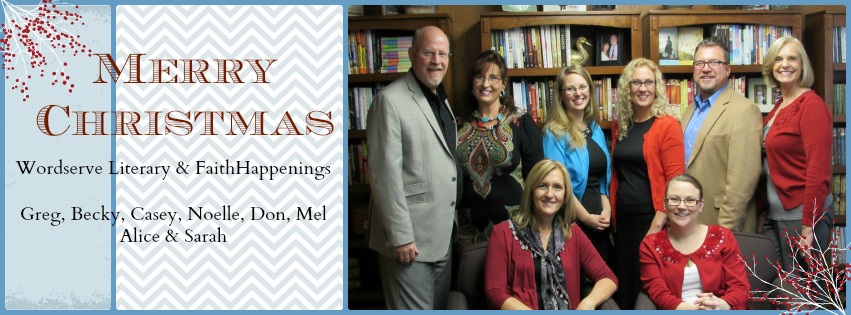
This year, the Water Cooler will be taking a blog break until January 2nd to give our authors and volunteers focused time with God and their families.

Speaking for all of here at the WordServe Water Cooler– we hope and pray you have a wonderful, blessed Christmas!

WordServe News: December 2014

Exciting things have been happening at WordServe Literary!

On the final post of each month you’ll find a list of Water Cooler contributors’ books releasing in the upcoming month along with a recap of WordServe client news from the current month.

New Releases

Deb DeArmond released her second book, I Choose You Today with 9781426787966_p0_v4_s260x420Abingdon Press.

***********************************************************************************************
9780310331018_p0_v2_s260x420

Becky Johnson and Rachel Randolph released their second book together, Nourished with Zondervan publishers.

************************************************************************************************

Kyle Idleman with agency client, Jeremy Jones released 40 Days to Lasting Change with9780781412681_p0_v2_s260x420 David C. Cook publishers.

*************************************************************************************************

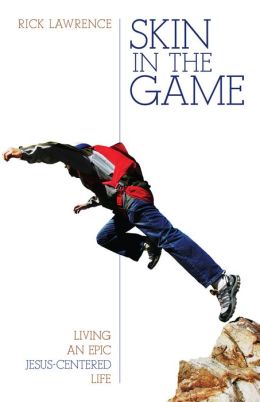
Rick Lawrence with Kregel publications, released his latest book, Skin in the Game. 9780825443596_p0_v1_s260x420

*************************************************************************************************

Roger and Kathi Lipp  re-released with Harvest House publishers Happ9780736955737_p0_v2_s260x420y Habits for Every Couple. Previously titled The Marriage Project. 


New Contracts

Deb Coty Deb’s signed a contract for a cookbook with Barbour Publishing as a companion to her book, Too Blessed to Be Stressed. Greg Johnson, agent of record.

Sara Davison signed a three book contract for a fiction series with Ashberry Lane. Alice Crider, agent of record.

Paul Kent signed with Worthy Publishing Group for a Star Wars devotional, due out at the same time as the 7th Star Wars film next December. Greg Johnson, agent of record.

Amy Sorrells signed a two book contract for two new fiction titles with Tyndale Publishers. Sarah Freese, agent of record.

New Wordserve Clients!

Husband and wife duo, Jim and Lynne Jackson signed with Alice Crider.

What We’re Celebrating!!

Jan Dunlap’s memoir Saved by Gracie, and her Birder Murder Mystery titled Swift Justice, have been nominated for the 2014 Minnesota Book Awards in two different categories: Saved by Gracie in the Memoir/Creative Nonfiction category, and Swift Justice in the mystery genre.

PicMonkey Collage

Two Words of Advice: Stop it!

newhartWe were going around the room, introducing ourselves at a recent writers workshop I was leading, when one of the attendees got negative about herself.

I listened to this woman — a two-time winner of our Metaphors Be With You contest — explain why she wasn’t making as much progress on a memoir as she would have liked.

Most of it had to do with her inadequacies.

I couldn’t take it anymore.

“Stop putting yourself down,” I said. “You’re a good writer and you need to stop thinking otherwise.”

I proceeded to explain to her and the 15 others why one of the first ways we sabotage ourselves as writers is to look down on ourselves.

“For starters, writers need two things,” I said. “The confidence to believe they have something to say to the world and the humility to let others help them say it better.”

Instead, too many people write — and live — quite the opposite: with little sense that they’re worthy to be heard or with little openness to accepting help along the way.

As we discussed negativity, another workshop participant chimed in with a reference to an old TV sketch in which comedian Bob Newhart plays a psychiatrist. He listens to a woman’s problem — “I have this fear of being buried alive in a box” — and offers her a two-word solution:

“Stop it!”

Stop worrying about being buried alive in a box.

I love it. In fact, when it comes to advice, you could do a lot worse than offering people those two words — “Stop it!” — and two others: “Start it!”

“Start it,” as in take a risk. Begin your project, even if you believe it might fail. Try something new, even if it might feel awkward at the start.

“Stop it,” as in quit thinking you’re unworthy. Quit sabotaging your success because someone long ago told you you weren’t good enough. Quit believing the inner lie that you’re inferior.

Frankly, you can’t get to the “start” without the “stop.” Or so says Christian-based author Henry Cloud, whose book Necessary Endings (HarperCollins, 2010) I recently read.

Cloud, who mainly writes for a business audience, suggests “stop it” is about more than an attitude. It’s about action — or, more precisely, our unwillingness to take it when necessary.

“In your business and perhaps your life, the tomorrow that you desire may never come to pass if you do not end some things you are doing today,” he writes.

But, some might say, stopping things can be hard.

Habits. Addictions. Relationships.

It’s easier just to stay the course. To not confront the norm. To not risk.

Easier. But seldom better.

“Endings,” Cloud argues, “bring hope.”

Frankly, I’d never thought much about that until a friend recommended the book and I gave it a read. I tend to be in a constant “add” mode. But, Cloud argues, sometimes you need to subtract. Prune. Say goodbye to something in your life — and, yes, in some cases, someone.

Can it hurt? Almost always. But, he argues, there’s a difference between “hurt” and “harm.”

Last week my mother moved out of the house she’d lived in for nearly half a century. It was difficult saying goodbye. But the payoff will be a simpler existence that better fits her life today. It hurt, yes, but to stay could have brought harm, she figured; it was too much house for someone who is 87 years old and slowing down.

It took courage to make the change. But, in sailing terms, to stay moored to sameness simply because change can be challenging is to miss the glories of the wind in your sails.

At the end of the day, my workshop student — the one lamenting not being good enough — offered a piece in the voluntary read-aloud session. The class’s enthusiastic laughter and applause affirmed what I’d felt myself: her story was among the best of the bunch.

I hope she’ll look back on this day as a new start — a new start only made possible by her first being willing to stop.

In Praise of Editors

facebook personPosting a comment online this morning made me suddenly hyperaware of the publicness of published writing. Publishing actually does mean, as I tell my students, making something public.

“Everything you write for a class, even if it’s disseminated no further than the classroom, even if I’m the only one reading it, is public writing,” I tell them. “Don’t tell me you just wrote it for yourself or attach a sticky note saying it’s just for me. Assume that whatever you hand in may be made public. That it’s already public. It was public the moment you printed it up and put it in my hand or clicked ‘attach’ and then ‘send.’”

copyedited manuscriptIt’s easy to forget that writing is public, though. Consider Facebook, where people often post sentiments best kept to themselves. However tempting it might be to rail or even to agree—by liking it—with someone else’s railing, I generally restrict myself to happy birthdays, comments about good-looking photos, and commiserations with others’ suffering.

Today I was doing just that: commiserating with a friend whose autistic child had just “had a huge meltdown . . . complete with yelling, food throwing, and tears running down his face” in front of, as she wrote, “almost everyone I know.”

It was a wonderful post, as those who’d already commented said, because it was so frank. So, as my students say, “relatable.”

“Most of the time I suck it up,” my friend wrote, the “meltdowns, 10+ accidents a day, the stares, rude questions, the incomprehension on the faces of people around me, but today it was all too much, so I walked to the car sobbing my heart out.” She confessed, “it felt, somehow, like it was my fault,” and I sobbed too. For her. For her son. For sufferers of autism and their parents. For parents in general. Is there a more agonizing feeling than the unavoidable conviction that it’s somehow our fault whenever anything goes wrong—even something we didn’t cause and couldn’t have stopped—with a daughter or son?

It’s hard to respond to someone else’s pain in a way that doesn’t compound it, though. I learned that when, in the aftermath of a sexual assault at gunpoint, friends commented, among other intended condolences, that I was “lucky not to be dead.” I didn’t feel lucky and wished I was dead. Being told the contrary merely intensified those feelings.

I was thinking about that as I commented and (hopefully) didn’t make that error. Not this time, anyway—thanks to my best editor, the Holy Spirit, who, I’m convinced, translates our groans not only to God but to everyone else and (with some effort, in my case) bleeps our stupidest words. After telling her I’d cried, I advised her not to blame herself: she was doing the best and only right thing to do—loving her son—and doing it perfectly. So far so good, I thought—or anyway, I didn’t feel that tug in the direction of the delete key at that point.

BloggingI did feel it moments later, though, when I helpfully passed on a reassuring comment from a pastor’s wife eons ago when I was in the throes of parental shame about a problem with one of my toddling daughters: “God chose you, precisely you, for your girls,” she said, “because he knew you’d be the best possible mom for them.”

Sounds safe enough, I thought. And I was mightily comforted by that woman’s words at the time. God chose me to parent my girls. I was the best possible mother they could have. Everything was going to be fine.

But, as I say, the Holy Spirit apparently didn’t think so. In the fraction of a moment before I pressed enter, stories of parental abuse and neglect poured into my brain. A friend whose mom once told her children she hated them. Did God choose those children’s parents, too? What child, grown now but surely still suffering that meanness, might be reading my post?

The public is a tricky sea to navigate alone. Our kindest intentions, our most heartfelt theologies, have as much potential to mislead and hurt as to inform and uplift. Thank God for editors.

The Art in Writing

Strange and wonderful things happen when we keep our eyes peeled, our ears sharp, our hearts welcoming, and our minds creative. This year, I met someone who at first glance was not an obvious fit with my writing life. But first glances are often wrong.

Mary Young Zog the DogI am a Christian non-fiction author. The woman I met at a local women’s expo is a children’s book author. She launched as a self-publisher via Pucky Huddle Books — I have chosen the traditional route as my foundation. I’m a business coach, she married a rock star. Literally.

But we both live in the same tiny county.

Mary Young is married to Rusty Young of country rock group Poco fame. They still play for exclusive events, and tour around the country. But in their desire to escape the crazy life of frenzied fans and intense concert schedules, they built a beautiful cabin nestled about twenty minutes from where I live. On a serene hill overlooking the stunning Huzzah Creek, Rusty gets to relax with his music and Mary peacefully plays with her muse.

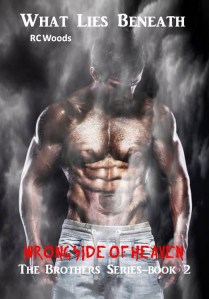
RC Woods What Lies BeneathDue to Mary’s prompting, she and I, along with local Indie author RC Woods, have pooled our talents. Recently, the Crawford County Author’s Group held our first event, called The Art in Writing. Three diverse but driven authors determined to learn from, promote, and support each other.

Until recently, in our small region, we each felt alone. Let’s face it, those of us who put pen to paper or fingers to a keyboard are a strange breed to normal folks — most people don’t get the weird ways our minds work. Or sometimes, the strange hours we keep.

When my brain fries, when my creative juices dry, when I’m too tired to think of new ways to market my books, a couple of hours with fellow writers revives my brainstorming abilities. The art in writing is not magical — it’s intentional. It’s not competitive — it’s cooperative. No matter how similarly or differently we write.

I have other author friends who equally stir my creative brew. They don’t live close, but because of twenty-first century technology, we can call, text, private message, Facetime, or Skype. We can schedule retreats with each other, (my favorite). We can compare marketing efforts, research, and new ideas.

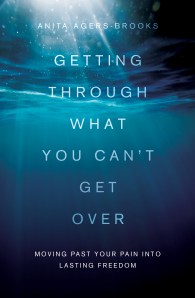
Getting Through
Releasing, April, 2015 through Barbour Publishing

The WordServe Water Cooler is another way to stay in touch with those who get the crazy business of writing. Sharing and learning with folks like you keeps my energy up when it threatens to flag. I often write about difficult subjects, so I need an occasional boost.

No matter whether other writers live near or far, I’ve discovered I don’t do as well without them. For me, the real art in writing is community. A brother/sisterhood of folks who will pick you up when you feel down. An encouraging message, a timely quote, a pertinent fact, a social media shout-out, even insights to help you market like a rock star. The writing community is the magic behind my words.

What infuses the art in your writing?

Tips for Managing Time as a Writer

You’ve heard the age-old story: Creative individual decides to write a book. They sit down with paper and pen or keyboard, and painstakingly write that heart story. Sometimes it takes months. Sometimes it takes years. When talking with their friends, you often hear them say, “Something came up. It isn’t quite right yet. I just haven’t had the time.”

It’s pretty clear that time is precious. In fact, outside of my loved ones, my time is my most treasured possession. Since signing my first contract in January 2013, I have learned an important writing tip, probably the most important tip.

There is NEVER time, unless you choose to make it.

In fact, I’ve noticed one common trait among the published: They make time to finish. Once you sign that dotted line and make a commitment, “I didn’t have time” doesn’t fly with the publisher. Neither does “it’s just not ready yet.” You better make time and make it ready fast or risk losing your credibility.

After signing that contract, time to market becomes important. And time to edit. And time to promote. And time to interact with readers. Lots of time. So it’s important to figure out how to manage it.

My friends hear me say that I’m overwhelmed more than anything else. But I’m learning how to carve out time, discipline myself to finish, and not miss out on the world around me. We aren’t only writers. We are marketers, publicists, graphic designers, speakers, and more. So I’ve learned a few tricks to maximize my time in every area of this writing journey.

Kariss Lynch - timeCreate margin.

I am a night owl and can write and create relevant marketing content easier when my checklist for the day is accomplished. It clears my mind to be creative. Determine your best time of day to write or create, and maximize those short windows.

Set a timer.

Write every day. Set the timer on your phone for an hour, then put your phone on silent and put it on the other side of the room. Clear your mind and write. I found when I did this, I could easily write close to two thousand words if not more in an hour! When the timer goes off, I feel accomplished, satisfied, and ready to write even more.

Carve out marketing time for social media.

I work full time as a writer for my company, so in the middle of the day I am tired of writing. I’ve started taking thirty minutes of my lunch break or fifteen minutes in the morning or afternoon to create social media graphics that I then pre-schedule so I don’t have to think about them. Think about content that is relevant to your brand, then have fun with those designs.

Strategize for online interaction.

The internet is a wonderful tool, but managing our online interaction can eat our time if not handled correctly. Block out thirty minutes every few days to catch up on emails. Take a few minutes to respond to every person who comments on social media (within reason of course). Know your brand, what you are passionate about, and have character and author interviews on hand for guest blog posts. Don’t overthink. Just do.

Know your audience and limits for speaking engagements.

My favorite interviews and speaking engagements are via Skype since it helps me conserve my time, but I’ve also enjoyed those in person speaking engagements with small groups or crowds. Determine your price (if you have one), the size of the group you are willing to speak for, if it is wise to travel or Skype in (this is great for book clubs and classes that may not be close). Bottom line, know your options and then plan accordingly. Don’t forget you still need to write and market and live life, so carefully plan the weekends you will be gone.

Managing time is as much mental as it is physical. At the end of the day, be satisfied with what you accomplished and leave the rest for tomorrow. What tips have you found effective in managing your time?