Don’t Sabotage Your Writing/Speaking Career

WordServe Water Cooler is pleased to host this excellent article by James N. Watkins.

Welcome, James!

I’ve been editing professionally since 1972. (Of course, I started when I was five!) I’ve seen just about everything: Cover letters that said, “God dictated this article to me. I don’t even know what it means.” Submissions from aliens: the extraterrestrial kind. Envelopes spray-painted gold, which I assume was intended to make them stand out from all the plain old white envelopes. Hand-written submissions on lined paper. And now in the age of word-processing with 400 fonts, submissions that look like ransom notes.

So, here are some ways to avoid sabotaging your writing/speaking career—in no particular order.

1. UNPROFESSIONAL EMAIL ADDRESS

If you’re going to be a professional writer/speaker, you need a professional-sounding email address. Two of the worst I’ve seen: snugglebunny77@yahoo.com and—I’m not making this up—wordwhore@hotmail.com. Even yahoo.com, gmail.com, and hotmail.com strike this grumpy old editor as a bit unprofessional. Get a domain name and a host that will allow you to use that as your email address. For example, jim @ jameswatkins.com actually goes to my yahoo account, but it’s masked so all you see is the domain name.

2. UNPROFESSIONAL FACEBOOK AND TWITTER POSTS

You’ll probably want a Facebook account for only your family and close friends and then one separate for your professional presence.

Your followers don’t want to know what you’re fixing for dinner unless you’re writing gourmet cook books. And unless your brand is “Cat Whisperer,” I don’t want to see pictures of your adorable kitties. (And having more than five cats qualifies you as “crazy cat lady.”) Make sure every post provides value to your readers and fits with your “brand” (See point 5).

3. NO WEB PRESENCE, UNPROFESSIONAL WEB PRESENCE

When your book proposal comes before the pub board, the first thing the editors and marketing minions do—who are surgically attached to their laptops and smart phones—is go to google.com and type in your name. If you don’t show up, you don’t exist! And if you don’t exist, you don’t get a contract. It is absolutely necessary that you have a Web site, blog, Facebook and Twitter accounts online.

But having no presence may be better than having an unprofessional presence! With WordPress.com and Blogger.com anyone can have a free blog (Web log). The bad news is many of templates offered don’t appear to this grumpy old editor as professional: animated .gifs, cutesy art work, kitties, etc. etc.

Your Web presence is a determining factor in whether a publisher will give your proposal further consideration or a conference director will consider you as a speaker. Spend—no INVEST—in professional help in creating a professional-looking site. And make sure you have a professional edit the copy.

4. UNPROFESSIONAL BUSINESS CARDS

Just because you’re a Christian writer doesn’t mean your business cards and Web site must have a cross, dove, empty tomb or—if you’re Charismatic—tongues of fire. Remember the KISS principle. Keep it simple, saints!

And including “Professional Writer” makes me suspect. Would you go to a “Professional Brain Surgeon”?! I don’t think so! (What is he or she trying to prove?)

5. NOT BEING “BRANDED”

Ouch! That sounds painful, but “branding” is a buzz word in the business and publishing world.

Basically, branding is what readers and audiences expect when they see your name on a book cover or on a conference brochure. You can’t be all things to all people, so do some soul-searching and discover your unique role in the writing/speaking arena.

My brand—for articles, books, Web site, speaking engagements, convenience store grand openings—is “Hope and Humor.” (www.hopeandhumor.org). So whether I’m writing, speaking or blogging, people expect hope and humor. (So writing bloody murder mysteries would totally massacre—pun intended—my brand.)

What does your audience (or “tribe”) expect? Be specific and then deliver on your brand.

6. “FREE” PUBLISHING THAT COSTS YOU

Services, like www.lulu.com and www.createspace.com, offer free e-book and print-on-demand publishing services. (Everyone loves free!) You simply upload your Word document and post your homemade cover and you can have your book as an e-book on amazon in a few hours and your paperback or hardcover book on your doorstep within the week. And you only pay for the actual wholesale price of the books. What a deal. It is a deal IF and ONLY IF . . .

. . . you have it professionally edited (and not by your English teacher cousin). If your online or in-print presence is filled with errors, it can ruin your writing career.

. . . you have your cover professionally designed (and not by your sister-in-law who happens to own Adobe Illustrator—unless she’s working with it professionally.) An amateurish cover, again, can ruin your writing career—or at least book sales.

Please. Please. Please, take this warning to heart. I see so many “self-published” books that just scream AMATEUR! That free service can cost you your reputation.

And if you’re investing your hard-earned money in one of the hundreds of self-publishers out there, please read these additional warnings. (There are hundreds of self-publishers who are amateurs at best and scam artists at worst.)

7. HAVING A “REPUTATION”

Christian publishing is a relative small club. Editors meet regularly at conferences and professional meetings, and we talk about writers and speakers. Believe me, we know who the people are who committing professional suicide by being unprofessional, “high maintenance,” telling off editors who don’t appreciate their brilliant talent, missing deadlines and burning “bridges.” And speakers with “prima donna” complexes by demanding special treatment also can sink under the weight of their bad reputations.

There are many more such as playing the God card: “God told me to write this.” But seven sounds like a biblical number. And by being aware of these, you’ll protect your good name as a writer/speaker.

To find out more about James, please visit the links. (c) 2012 James Watkins (www.jameswatkins.com) for American Christian Writers (www.acwriters.com).

How to Stage An Online Blitz

After spending five days eating, drinking, and sleeping (well, maybe not so much sleeping as lying awake with the brain on overload) the promotion of my free Kindle download last week, I’ve come up with what I call ‘Jan’s TIP’ for any writer planning a similar online marketing blitz.

T is for Timing.

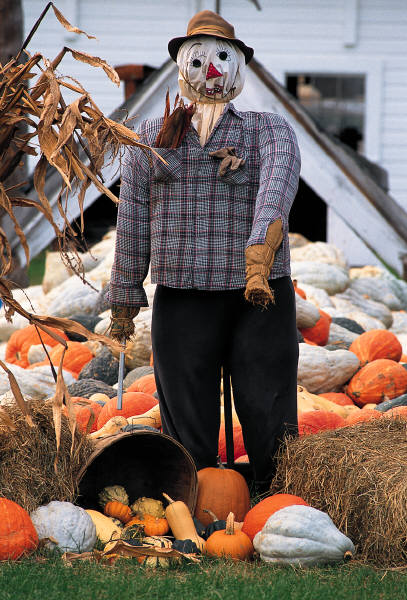
Choose your campaign dates carefully. My book, A Murder of Crows, takes place in October and opens with a scarecrow display; picking an October date for the promotion was an easy choice. It also afforded me lots of tie-in opportunities: I could mention the book in response to any blog, Facebook or Pinterest item that was about Halloween or scarecrows. Think seasonally!

Timing is also about when you post on social networks. I read blogs on Social Media Examiner and subscribe to Rob Eager’s marketing posts, and I’ve learned the best days and times to post to get the most fan engagement: Wednesday through Sunday. I kicked off my promotion with announcements on Sunday and pushed hard with posts Thursday and Friday.

Finally, timing is about you, and how much time you can devote to managing your promotional campaign. I spent at least four to five hours a day online posting, emailing, commenting on blogs, updating lists of contacts and prospecting for new ones. I spent two more hours each day strategizing what to do the next day, exploring new markets and tracking sales/download data. If you want to run a successful campaign, it’s a full-time job!

I is for Images.

Research has shown that images are the keys to social network sharing. To keep posts fresh and continually attention-grabbing, you need to switch up the images you post. I developed six images to use during my five days of promotion, and changed the images I posted every day, with different short text messages. By the end of the week, I’d seen all six images reposted on different networks. It kept my message alive in the universe of Facebook and Pinterest, where the typical ‘life’ of a post is only three hours.

P is for Preparation.

I spent weeks – years, actually – preparing. I made solid contacts in my target audiences over the last few years and asked for book reviews and assistance in promoting my free Kindle deal. I put together a team of fans, reviewers, bloggers, and key influencers to help me focus on getting the word out the week of the promotion, and supplied them with my prepared images and text to use on their own networks. My list of websites and FB pages to contact during my promotion week numbered over 100 (and in the course of the week, it continued to grow as I stumbled on new connections – which are now part of my data base for future book promotion).

So that’s ‘Jan’s TIP.’ Take it for what it’s worth. For me, it was worth around 4000 Kindle downloads in five days…and a bump in the sales of other books in my series.

Do you have a tip for free ebook promotions?

2012 Writers and Readers Reach Out

Over the years I’ve challenged my readers at All Things Southern to join me in an annual benefit for the less fortunate. We’ve done everything from drilling wells in Africa with Life Today to partnering with World Vision to buy chickens and goats for needy families around the world.

Last year I became fixated with the exponential power represented by the fellow writers I meet in my travels. Knowing these wordsmiths all had a circle of readers that enjoy his or her work and interact with them via their websites, blogs, Facebook and Twitter, I wondered what we might accomplish by combining our individual platforms and multiplying our efforts. The dream led me to launch Writers and Readers Reach Out. The positive results fueled my desire to do more. For the second year, I’m asking writers and readers to embark with me on 30 Days of Thankfulness to coincide with the season of Thanksgiving.

I was in the planning stages of the drive and personally burdened by what I was learning about human trafficking when I read Passport through Darkness, by Kimberly L. Smith.  I knew immediately that Make Way Partners, the organization that Kimberly and her husbanded founded, should be the recipient of this year’s efforts. Make Way Partners works with individuals, churches, and organizations to help prevent and combat the evil of human trafficking and all forms of modern-day oppression.

If you’ll take the time to read just a few of the real-life stories on Kimberly’s blog of women and children who Make Way Partners has rescued from slavery, and for whom they provide long-term care, I believe you’ll want to participate in this beautiful journey of restoration.

Eight years ago, Kimberly began chartering small mission planes to fly her into the war zone where U.S. sanctions and Islamic regimes rendered thousands of orphans unadoptable. Providing food and opening a first-grade school in a lawless land with no other educational systems, MWP partnered with an indigenous leader to rescue and care for these most vulnerable orphans. Year-by-year, they have added a new grade to their school. Now, graduating eighth grade, the orphans of MWP have more education than many current leaders of their nation.  It is time to build a high school, making it possible to raise up the next generation of educated Christian leaders who will stop the cycle of violence and slavery.

Read about a few of these amazing students and the complete high school proposal here: http://kimberlylsmithblog.blogspot.com/2012/10/battle-cry-by-guest-blogger-matt-mcgowen.html

The quotes scattered here are those of the late Helen Keller.  Inviting Ms. Keller to share this journey with writers and readers feels right, for it was the power of a word written in the palm of her hand that unlocked Ms. Keller’s heart and mind and subsequently impacted untold lives around the world!

As readers and writers, no one knows the value of education better than we. Let’s dream big and build a high school for the world’s most vulnerable orphans!

Thirty days of thankfulness. It’s not a long time, but it’s a perfect time to join hands and do something grand, together. ~Shellie Rushing Tomlinson

Details for participating authors:

~Writers and Readers 30 Days of Thankfulness begins Nov.1st, 2012

~Each author posts the drive and invites his or her readers to join the effort.

~Participating authors and their websites will be credited and hyperlinked
on Kimberly L. Smith’s author site as well as the MWP blog and Facebook page. The Make Way Partners community is 15,000 strong, representing all 50 states and 10 countries. Kimberly will be blogging about Readers and Writers Reach Out and encouraging her supporters to read works from authors who are of the same mind and passionate to support the same things they care about.

(Authors, please contact audreym@makewaypartners.org if you would like to participate.  Please email Audrey with your name, blog site, Facebook page, website, or any other acknowledgement that you would like to use for your readers to track this opportunity.)

~Each author will be supplied with a button to use on your website, blog, Facebook wall, etc., linked to the donation button at Make Way Parners. You’ll notice the donation form has the following field: “How did you learn about Make Way Partners?” The software can easily track the efforts of individual authors by having the reader respond in that field with the shortened name of our drive and the author’s name. Example: WritersandReaders,authorJohnSmith

*The individual author will have access to how much he or she has personally raised but all other records will be private. There will be no public competition. At the end of the 30 days, we will publically announce the grand total raised, thanking all participating authors.”

Suggestions for participating authors:

~Please feel free to copy and paste this blog post directly, or use your own words to share the story.

~Instead of asking readers for a certain dollar amount, we respectfully suggest asking them to consider the weight of the subject. What would we be willing to do or give if it were our children and grandchildren being bought and sold?

~Strictly optional: On my personal blog, I enjoy having a giveaway in conjunction with the drive. Everyone who donates get entered in the drawing for a signed book, t-shirt, DVD, or anything else I decide to put in a goody bag. Last year I contacted one of my radio sponsors who gladly donated an Ipad for the giveaway! This idea might work for authors who don’t have a radio show, but do have a store or business in their area that would like to participate by sponsoring the author’s drive. In addition, Make Way Partners will give a free copy of Passport through Darkness to every donor.

~Keep the drive before your readers through your own platform during the thirty day focus, aiming to blog about it at least once a week and discuss it frequently via social media.

~Use your media contacts to schedule interviews to talk about Writers and Readers Reach Out 2012. If we can make use of your contacts but you’re unable to donate the interview time, please contact me. It may be that Kimberly or I, if not another of our participating authors, would be able to fill in.

~When twittering or pinning this drive please use hashtags #WritersandReaders2012 or #WR2012. Thank you!

Hugs, Shellie Rushing Tomlinson (twitter @shelliet)

http://www.allthingssouthern.com

This is your donate button:

Simply save the .gif to your desktop and insert it into your posts. The direct link you will be pointing to should be: https://app.etapestry.com/hosted/MakeWayPartners/OnlineDonation.html  

***UPDATE– Yes, bloggers are welcome and encouraged to participate, too.  Also, I’d like to thank LITFUSE Publicity Group for donating publicity efforts.

Does Free Really Help Sell Books?

As I’ve been working on the launch of my new book, I’m struggling with how much to give away for free. I’ve read conflicting reports on offering your book without cost.

Some say you’ll gain so much word of mouth that we all should do it. Others say you devalue your content and make those who have paid for it feel cheated.

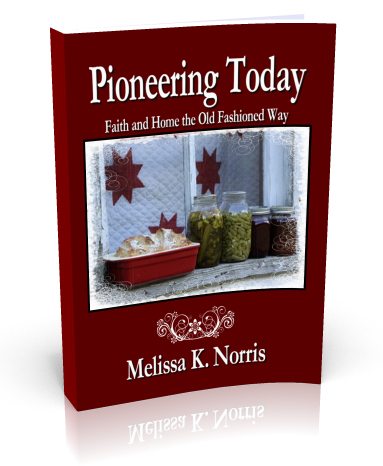
What is an author to do?Melissa K. Norris new book Pioneering Today-Faith and Home the Old Fashioned Way

My new book, Pioneering Today: Faith and Home the Old Fashioned Way, launches today.

I decided to give something away for free and a bonus gift. But I put a time limit on it. If I know I’ve got a limited time frame it makes me get to it first. I’m thinking I can’t be the only one who thinks this way.

I’m offering up my first chapter for free. Now that’s nothing new, you say. Authors do this all over the place.

But not all authors use this great free application called “Pay with a Tweet.” In order to read my first chapter, people can choose to pay with a Tweet or Facebook share. It represents word of mouth marketing for me and also gives the reader something for free. Want to see it in action? Go to my book page here. 

That’s not my only freebie. For every reader who purchases my book on Amazon and forwards me the copy of their proof of purchase, email, and mailing address, I’m going to mail them a secret recipe and the link to a full length bonus chapter, but only through October 31, 2012.

I’m hoping this will help people to purchase now, before it falls onto their to-do-list and is forgotten. I also feel that these items provide real value and content to the readers of my book.

Because that’s what great marketing boils down to. The reader asking what’s in it for me?

Have you ever bought something from an author because you enjoyed their free content? Do you think free is better or do you believe you get what you pay for? Have you seen a jump in sales from giving away free copies?

The 15-Minute Writer (Part 3): Building Your Platform

Platform building has become all-important in the publishing world. And how do you build a platform? One plank at a time.

That’s why I tell writers with day jobs and moms with kids NOT to wait until they have more time to pursue their dreams. You can write, build your platform and get published–one small step at a time.

When I started taking my writing seriously, I had a baby and a husband in full-time ministry–and no family nearby to provide free babysitting. So I wrote during my son’s nap times. After Jordan outgrew his naps, I enrolled him in our church’s “Mother’s Day Out” program two days a week, and used those times to write.

When my second son was born, I repeated the process–though things did get a bit trickier! I’ve also written during lunch hours, backstage in a dressing room while waiting to perform at a theater, during birthday parties (not my own kids’, though!), on Saturdays/Sundays, and late at night.

*But NEVER in the early mornings. Some things are just insane.*

One plank a time, I’ve pursued this crazy/wonderful calling God placed on my life, building a career and a platform. It’s a roller-coaster, of course–lots of rejection for every acceptance–but I wouldn’t trade it for anything.

[I’m also aware that my husband is entirely supportive, and for those authors who don’t have an encouraging spouse, my heart goes out to you. You’ll have to be even more creative and deliberate about finding time to write. But please, don’t give up!]

My own story makes me passionate about helping other writers (especially moms) hone their craft.

Say you have a precious fifteen or thirty minutes a day to write. Divide those segments into writing, market research, and promotion/marketing. Then use your allotted time three days out of the week to write; two days to do market research; and one day to market (giving yourself one day off).

Here are a few sample ways to build your platform, fifteen or thirty minutes at a time:

  • Post a new picture or status update on your Facebook author page and “like” a few other people’s posts while you’re signed in as the author.
  • Tweet from your Twitter account and RT/respond to a few tweets from friends.
  • Update LinkedIn (I do this automatically by linking my Twitter feed to my LinkedIn profile, so when I tweet, my LI account gets updated, too).
  • Write a rough draft of a blog post.
  • Pin a link and photo from a former blog post on Pinterest. (Careful! Pinterest is addicting–might I suggest a timer?!)
  • Read a blog post (or two) and comment on it.
  • Read a portion of a book on marketing and promotion. Highlight your favorite ideas, and bookmark the page to come back to.
  • Read about a conference you’re interested in, and mark the dates on your calendar.
  • Sign up for a conference, online course, or in-person class.
  • Write a rough draft of a query to an agent or editor.
  • Edit a query you’ve previously drafted.
  • Compose a cover letter for a query or manuscript.
  • Email friends about your newest published piece and ask them to share it with friends, if they’re so inclined.
  • Email an author friend to ask advice or feedback.
  • Offer feedback and advice to someone “greener” than you.

Now it’s YOUR turn. What are your strategies and ideas for platform building, one board at at time?

(Read part one and part two of the series.)

Hashtags can help….

So…. What’s a #Hashtag?

How can a simple #hashtag help me to promote my book?  Well in many, many ways.

#Confused?

First lets define what exactly you are looking at…. #pleasehelpme.

You probably first saw them on Twitter, that is where a #hashtag originated.

It’s a simple marker of sorts.  #Hashtags over the last year have migrated from Twitter to Instagram, and Pintrest. #clever.

A #hashtag is a marker of sorts that drives you to people’s posts, and drives people to your posts. You can click on any #hashtag and it brings up all other posts with that same tag in… simply put, if you want to promote your book to strangers, a #hashtag will be one of the best tools you can use for social media platforms that utilize #hashtags.

What topics are important to you? Make a list of words that are important to you selling your book.  What words describe your book? How can you find like-minded readers, by strategically #hashtagging words that are specific to you! #buildingabrand #books. If you know what SEO is, Search Engine Optimization, #Hashtags work.

Some simple rules for #hastagging. Never put spaces between words or the #symbol. Use words that are relevant to your tweet/pin/pictures.  A great way to find more followers is to use hash tags on both sides. You do it and other people do it in searches as well….  Find people that are #hashtagging things that you care about and get involved in their conversation. #smartthinking.

Here is a simple straightforward article in the Twitter Help Center, which could help you.

Remember, that #hashtags are fun.  Don’t over use them, but do use them to find like-minded readers.  It could open many doors for you… people will find you and you will find people.  #hashtags  #winning.

Divine Delay Buttons, Anyone?

Call me a throwback. The world may have moved on but I will always consider coarse language a sign of a poor vocabulary. I’m personally fond of a phrase my late grandmother enjoyed using to admonish potty mouth people. “Goodness gracious,” she would exclaim. “You’ve got something in your mouth I wouldn’t hold in my hand!”

I’m noticing more and more use of the delay button on television— and we rarely watch much of anything around here other than news, sports, and cooking shows. No programming seems exempt from gutter talk. Even on a news report some well-meaning anchor will run a clip of someone with every other word “bleeped” out and the ones that remain aren’t necessarily easy on the ears. While we’re on the subject, they could get a little quicker with their bleeping, too. One generally gets enough of the first syllable to know what word is being bleeped. Sure, I find the bleeping less bothersome than having someone cuss up a blue streak in my face and then say “Excuse my language,” but if I had a choice it would be none of the above. I’ve often thought it’d be neat if those cell phones on all of our hips could send out harmless but effective “mind your mouth” zaps on every four letter word. There could even be an app for that. (Then again, there’s the risk that some people might light up like an electric mosquito zapper on a hot Louisiana night, so maybe not.)

The other day I saw a news piece that must have been trying the soul of whoever was trying to keep up with the potty mouth protestor ranting on the steps of Congress. The poor bleeper could scarcely finish one beep before it was time to start another. What that operator needed was a longer delay button. Heads up: Here’s an admission that may surprise you, but for the record, so do I! Oh, not for coarse language. I have my weaknesses, but that’s not one of ‘em. However, I’m constantly reminded of my need for an extra long delay button where social media is concerned.

Opinions, everyone has ‘em, and granted, the very nature of social media just begs us to share, but composing on the fly and hitting send too quickly can damage an author’s goals and platform in a nano second. But far more importantly for the author who professes to write under the compulsion of God, allowing ourselves the luxury of starting or joining a particular thread can strain or permanently damage relationships between ourselves and those readers in our communities who need Christ the most. It’s not overly dramatic to remind ourselves that someone spending eternity with God or separated from Him could hang in the balance of our updates.

I won’t presume to tell anyone when to weigh in on political, societal, and religious debates, in large part because those lines will be different based on our various ministries. I will suggest that Ephesians 4:29 should always set the bar, “Let no unwholesome word proceed from your mouth, but only such a word as is good for edification according to the need of the moment, so that it will give grace to those who hear.”

Only the Holy Spirit can tell us when to speak and when to refrain. I making it a practice to ask God for a Divine Delay, not to bleep out what I shouldn’t say, but a heavenly prompt to remind me to seek His counsel before I post. Won’t you join me? While we’re asking Him to “Set a watch over our lips and a guard over our hearts that we might not sin against thee,” we might want to add “And guard our Twitter and Facebook fingers, too!”

Hugs,
Shellie

SEO Is Not Enough To Grow Your Blog Subscriber List!

Only five years ago, you might have heard, “Radio doesn’t sell books. TV sells books.” Now, you’re more likely to hear, “TV is okay, but social media sells books.” If you get bloggers talking, tweeting, sharing, and posting about your books, you’re likely to experience enhanced success at marketing your book.

But, alas, marketing your blog is different from marketing your regular website. Specifically, plain old search engine optimization (a.k.a., SEO) isn’t enough to make you a widely read blogger.

The blogging system has added variables beyond SEO, like the warm, fuzzy, social element (hence the “social” in “social media.”) Search engines are “cold” and comb through blogs, looking for key words, tags, page relevance, back-links from other reputable sites, etc., but real people are “warm” and click on “forward” and “share” buttons if they feel that your message resonates with them on a personal, emotional level. Catch my drift? You have to be an expert at both the cold and warm elements in order to succeed at blogging.

By the way, in case you’re wondering what a “back-link” is, I’m going to be self-serving and include one here. It’s a link back to my own website, www.TheEdenDiet.com. Voila! I just raised my own website’s search engine ranking by linking it to the highly respected Wordserve Watercooler blog.

In the same way, let me return a favor to a fellow Wordserve author. A while back, Jordyn Redwood interviewed me on her blog, Redwood’s Medical Edge, and she included a back-link to my Eden Diet website. Now, I just returned the favor with a back-link from the Watercooler. Her blog’s search engine rankings just went up a bit. Do you see how it works? The “social” in  “social media” augments your search engine optimization.

Unfortunately, even if your blog content resonates with people on a warm, human level, only a small percentage of your subscribers will click “share” and “forward.” Probably, most will be passive and neither comment on nor share your posts. Thus, to expand your subscriber list, you must find ways to engage and mobilize that small minority of blog followers who could actually help you spread your message.

One way to recruit supportive blog followers is to cross-promote with other reputable bloggers who have large subscriber lists. Imagine the ripple effect of increased numbers of subscribers when other big-time bloggers link back to your blog (not to mention that the back-links will raise your blog’s standings with the search engines).

Because it isn’t easy to get big-time bloggers to notice let alone promote and share your content, let me tell you some strategies that have worked for me: (1) Ask to feature/interview other bloggers for your own blog. Try to pick those with large followings. Many will offer to feature/interview you on their blog, in return.  (2) Offer free books to those who interview you and suggest that they give them away to their own followers. When you first help others, some return the favor!

In summary, your ideal blog marketing strategy should be (1) get noticed (through regular SEO, using key words and tags, getting back-links, etc.); (2) hold your readers’ attention with a warm message that fills their needs; (3) encourage readers to actually participate and share your message; and (4) get noticed by and develop relationships with well-known bloggers who have big followings. Help your fellow bloggers spread their message by featuring them on your site, and maybe someday they will offer to help you spread your message.

Marketing with Integrity: 5 Tips On What Not To Do

http://www.stockfreeimages.com/

Most writers prefer to focus on craft instead of marketing. But let’s face it. These days, authors need a platform to jump from in the publishing world. Without flexing the mammoth muscle of the internet, our publishing goals may not materialize.

Humph.

I’m new in the business. I’ve written a memoir about having a baby with Down syndrome while living as a missionary in Ukraine. I’ve landed an agent. I now participate in the shaky step of pitching my project to editors.

And I’ve already committed marketing blunders.

Here are 5 tips on WHAT NOT TO DO in marketing.  

1. Don’t use your kids to get ‘likes.’ 

After my amazing agent Sarah Joy Freese encouraged me to attract more likes on my Facebook Fan page, I went a little nuts. I hosted a giveaway on my blog in exchange for Facebook likes and Twitter followers. I then convinced my four children to write and perform a “likes rap” video. They were cute. It was fun. It killed an afternoon at our house.

Giveaways and videos are great marketing tools. But I went overboard. I posted the video, and re-posted, and re-posted until my kids were even tired of watching themselves perform. My idea morphed into a “look at me” festival until a friend sent me a gentle message saying, “Really, Gillian? This isn’t you.”

2. Don’t spam.

Spam is no longer just canned pork.

According to About.com, “Spam is any unsolicited commercial advertisement distributed online.” If you post links repeatedly on social media without engaging in community and conversation, you may be considered a spammer and people are going to find you annoying.

3. Don’t just ask. Give.

It is better to give than to receive. Let’s face it. People don’t care about us. Readers want a takeaway. They want perspective, a lighter mood, encouragement, escape.

In marketing, it is essential to give. Share links. Retweet. Interview people on your blog. Ask questions on your Facebook page. My writing tribe is best formed through reciprocal interaction and authentic interest.

4. Don’t market without a plan.

My marketing blunders have stemmed from too much excitement and lack of preparation. At first, I had no marketing plan. It’s difficult to have integrity at high-speed. Now, I try to step back and see the big picture. What marketing strategies will best utilize my schedule, gifts, and goals? I am no longer allowed to dream up an idea and run with it before a time of reflection, planning, and prayer.

5. Don’t forget to write.

Marketing pursuits easily swallow work hours. When my time is not structured, I blog, tweet, update statuses, and read about marketing. But I might not write.

Thus enters the need for limits. Some writers allow a half hour in the morning and again at night. Others (insert ME!) require a little extra help. Turning off the internet is a great tip. Author Media, a website dedicated to help writers build their platforms, has a post providing seven apps that assist a writer’s occasional lack of self-control.

What’s your marketing strategy? Do you have a blunder you’d like to share? Where are your boundaries when it comes to marketing integrity?

And would you like to use my children in a rap video? If so, contact me. (God’s still working on me.)

Is a Backlash Coming?

This may be more honest than a long-time agent should admit, but I have a lot more questions and not as many answers these days about where the book industry is going. As I talk with other agents, most of us are having banner years. More deals. More money. More ongoing royalties being paid out. After our three-year downturn, we’re all enjoying the upturn.

What gives?

Haven’t we all been told that e-readers, self-publishing and social networking were going to spell the end to traditional publishing? That quality literary partners (good agents) would soon be a thing of the past? That anyone could make a mint by self-pub’ing their 20,000 word “books” or their 5,000 word articles, or 200,000 word personal family sagas. All they really needed was a thousand or more Facebook friends and 5,000 to 50,000 Twitter followers. If they had a daily blog with 4,000 subscribers, then self-publishing that book they wanted out NOW instead of a year from now would be like printing money.

I love to read all of the prognostications about the end of publishing as we know it . . . almost as much as hearing about what day the world will end (which means, not very much). We have end-time prophets and we have “end of publishing” prophets.  Both, if they play their words and products right, are making a lot of money and scaring a lot of people.

Yes, the publishing industry is going through some major transitions. But where will this ultimately lead us—not 2 years from now, but 10 or 20 years from now? Is anyone’s crystal ball really so good that they KNOW physical books will go the way or the 8-track tape or be a luxury few can afford?

Are we dealing with fads that may come and go or true culture change that alters not only what platform we read our books on, but how and when and why we buy them?

How many e-readers are being purchased by new buyers versus those repeat buyers who are already hooked on them and have now bought 2, 3 or 4? Will e-readers be affordable enough to catch on overseas?

Do people with e-readers actually buy more books because they’re cheaper?  If so, how is this bad for publishing as long as the royalty structure is fair and the author is rewarded?

Why is it that (depending on which report or blog you read) overall only mass market books and a few genres of hard cover are going down in sales and not print books as a whole? In many categories, e-book sales going up doesn’t always translate across the board to print book sales going down.  People are still buying print books and printers are finding cheaper ways of printing them—faster.

Will the medical profession be treating more carpel tunnel and more eye strain because of e-readers? Will our necks and brains and fingers and forearms be able to handle the constant movements needed to be plugged into phones and e-readers and notebooks 8 to 12 hours a day? If not, then what?

Do people really want to read whole books on their phone? Music, yes. Books….?

Are readers of books so dumb that they won’t be able to tell how qualitatively different books published by traditional publishers are than self-published books that have slap-dash covers, design and editing?

Was the movie the end of books? Was TV the end of movies in theaters? Was I-Tunes the end of people wanting new music? Are e-readers the end of people wanting to read and buy whole (and physical) books?

How many social networking platforms can one person with a family and a job actually keep up on? And will there be a social networking backlash in the coming years?

How many books are bought through someone reviewing or mentioning a book from a Facebook or Pinterest account, versus actual word of mouth, face to face?

Will people start rebelling against social media and want to engage in actual relationships again? If so, how will people find out about good books again?

Will Amazon’s takeover of the world survive their politics? Or will people of all walks and faiths make sure one distributor doesn’t corner the market?

In the meantime, as I’m finding some of these answers, I’m still excited about finding new voices with great stories and great messages. I still love seeing great authors with strong sales continue to grow in their reach. I’m still privileged to work with professional editors who add value to a book’s content and improve the author’s overall work. I’m still convinced that “distribution is your destiny,” and that publishers add huge value to the overall sales of books because of their distribution networks.

And as you can read, I have lots of unanswered questions. What about you? What are the questions you’re wondering about as it relates to the long-term future of publishing and/or your career?