As I’ve been working on the launch of my new book, I’m struggling with how much to give away for free. I’ve read conflicting reports on offering your book without cost.
Some say you’ll gain so much word of mouth that we all should do it. Others say you devalue your content and make those who have paid for it feel cheated.
What is an author to do?
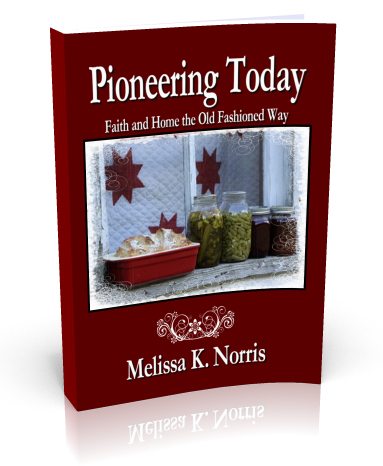
My new book, Pioneering Today: Faith and Home the Old Fashioned Way, launches today.
I decided to give something away for free and a bonus gift. But I put a time limit on it. If I know I’ve got a limited time frame it makes me get to it first. I’m thinking I can’t be the only one who thinks this way.
I’m offering up my first chapter for free. Now that’s nothing new, you say. Authors do this all over the place.
But not all authors use this great free application called “Pay with a Tweet.” In order to read my first chapter, people can choose to pay with a Tweet or Facebook share. It represents word of mouth marketing for me and also gives the reader something for free. Want to see it in action? Go to my book page here.
That’s not my only freebie. For every reader who purchases my book on Amazon and forwards me the copy of their proof of purchase, email, and mailing address, I’m going to mail them a secret recipe and the link to a full length bonus chapter, but only through October 31, 2012.
I’m hoping this will help people to purchase now, before it falls onto their to-do-list and is forgotten. I also feel that these items provide real value and content to the readers of my book.
Because that’s what great marketing boils down to. The reader asking what’s in it for me?
Have you ever bought something from an author because you enjoyed their free content? Do you think free is better or do you believe you get what you pay for? Have you seen a jump in sales from giving away free copies?
Authors are expected to do much of their own marketing. Been there, heard that — you can keep the tee-shirt.
So what’s a writer with little or no marketing experience to do? Research.
And get started early. Though my first book is almost a year from publication, I’m working on a Promotion Plan now. Naturally a strategic thinker, I’m thinking ahead. (If you haven’t yet sold a project, this is prime brainstorming season.)
In a previous job, I worked sales and marketing for a clothing manufacturer, where my biggest account was Nike. They are marketing masters.
A minimum of eighteen months out, they plan the launch for any new apparel line. Nike knows the investment in time and energy pays back with interest. They study competitors. Survey customers. Review totally unrelated products. And sometimes, try things that fail.
But in the thinking stage, they don’t toss any crazy idea.
As a new author, I don’t have a mega-marketing budget like Nike. But their basic principles work with two hundred dollars like they do with two million. If you’d like to peek at some of their aggressive 2013 marketing strategies, click here.
Taking what I learned from past experience, here are ten sources I’m using to brainstorm a unique Book Promotion Plan:
1. Read creative thinking books. Some of my current faves are: The $100 Startup, The Four-Hour Work Week, The Power of Full Engagement, The Well-Fed Writer, Red Hot Internet Publicity, The Wealthy Freelancer, Platform, and Shameless Self-Promotion and Networking for Christian Creatives.
2. Hunt for colorful partnering alternatives in the everyday. Look around you with fresh eyes. Is there a marketing marriage in the making?
Creative Ideas Under Your Nose
3. Study other author websites for promotional ideas. In the following examples, it’s the concept, not necessarily the content, that interests me:
Author Media (Their marketing prowess rates high.)
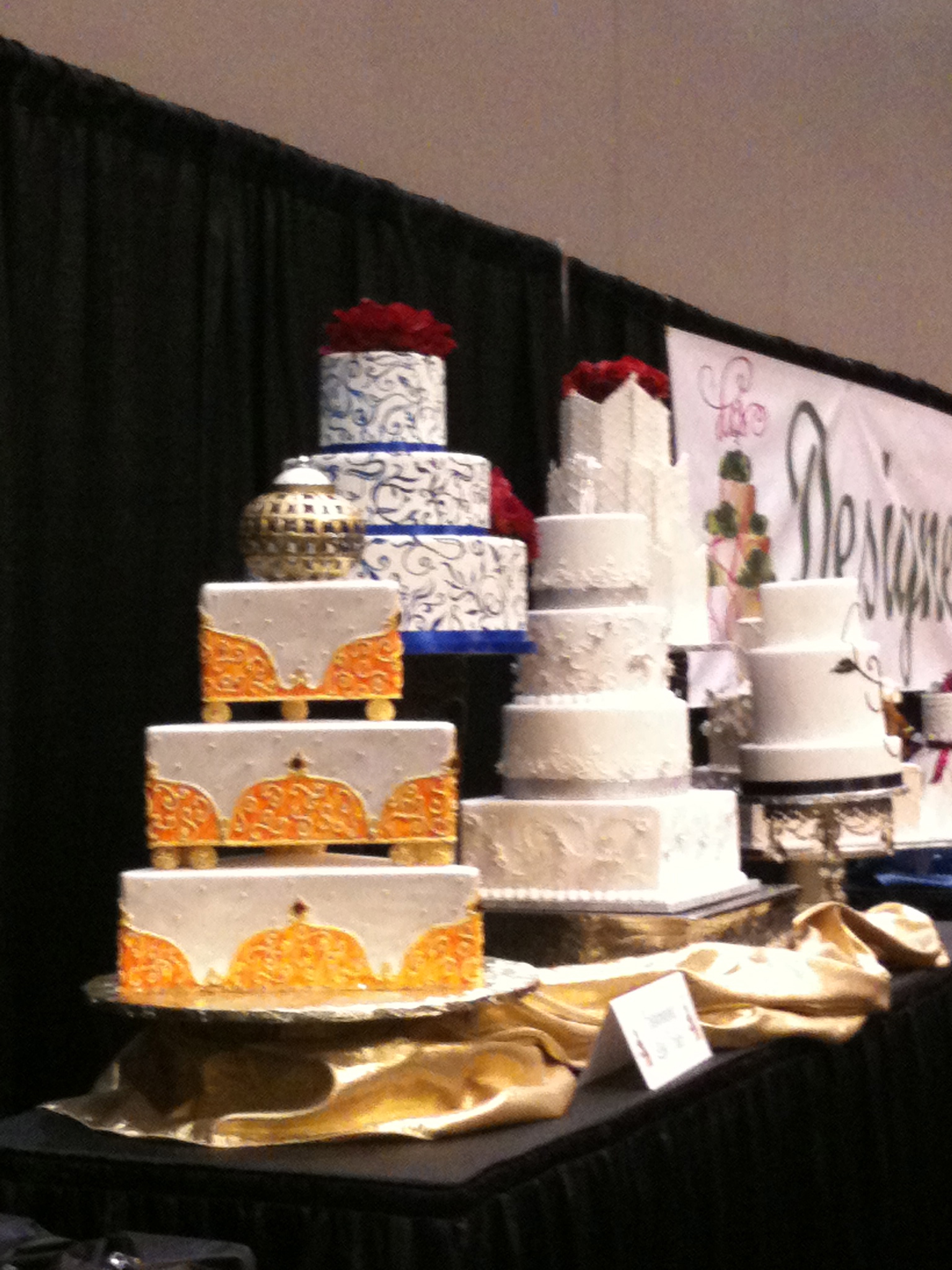
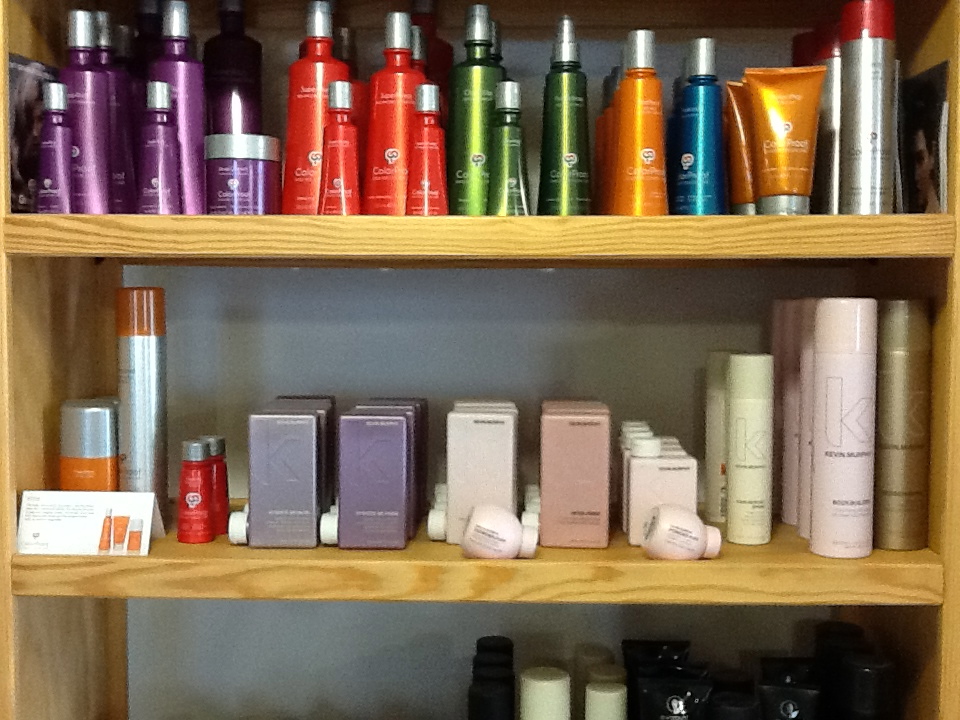
4. Observe projects, organizations, or businesses of different styles, to spark unique promotional ideas. i.e. Concerts, chambers of commerce, beauty salons, amusement parks, hardware stores, talent shows, and more, are marketing fodder.
Observe what Different Businesses Do
5. Create a line of products to complement the book’s message. Brand image magnifies with diversity — and promotional products spread your message further.
6. Target different personality types, genders, ages, and regions to reach a wider audience. Never discount a potential demographic in the brainstorming phase.
7. Ask for ideas. Get your brave on. Ask the checkout person, waitress, plumber, even employees of places you visit on vacation. They may offer fresh perspectives. But don’t fail to tap into your professional networks as well.
Riding Dolphins Promotes Adventure
8. Help others with pure motives. I believe we get what we honestly give.
9. Stay true to the title. I use this as an editing tool, but it works well with brand marketing also.
I’m here to tell you that sometimes we need to tell our inner editor to shut up.
I’m not saying we don’t need to edit our work. On the contrary, I even wrote this post, 7 Tips for Self-Editing, but there is a time and a place for said editing.
When you’re writing your first draft, I strongly advise you not to edit. Let your ideas flow. If you try to edit now, you may never finish your novel. Or worse yet, you’ll stifle your creativity.
There is another voice, one that may or not be your inner editor. The one that tells you this isn’t any good. Why on earth did you think you could be a writer? You should just give up before anyone discovers you can’t really write.
These, my friends, are the voice of the enemy. Do not believe his lies.
Recently, I heard these words burn through my mind. When you begin to hear the lies, turn to our source of truth. Pray that God’s voice would be the only one you would hear. Ask Jesus to silence everything that is not from Him.
I’ve started doing this every time I sit down to write. It is making a huge difference. We can choose to listen and believe the voice of truth.
If you’re trying to write your first novel or first draft of a new project, focus on getting it all out on paper or the computer screen. It’s fine to check and make sure your book is keeping in check with your outline and overall story and character goal, but don’t try to make it perfect.
Have you ever had to tell your inner editor to shut up? Do you have any tips to keep yourself going when you feel like giving up?
Platform building has become all-important in the publishing world. And how do you build a platform? One plank at a time.
That’s why I tell writers with day jobs and moms with kids NOT to wait until they have more time to pursue their dreams. You can write, build your platform and get published–one small step at a time.
When I started taking my writing seriously, I had a baby and a husband in full-time ministry–and no family nearby to provide free babysitting. So I wrote during my son’s nap times. After Jordan outgrew his naps, I enrolled him in our church’s “Mother’s Day Out” program two days a week, and used those times to write.
When my second son was born, I repeated the process–though things did get a bit trickier! I’ve also written during lunch hours, backstage in a dressing room while waiting to perform at a theater, during birthday parties (not my own kids’, though!), on Saturdays/Sundays, and late at night.
*But NEVER in the early mornings. Some things are just insane.*
One plank a time, I’ve pursued this crazy/wonderful calling God placed on my life, building a career and a platform. It’s a roller-coaster, of course–lots of rejection for every acceptance–but I wouldn’t trade it for anything.
[I’m also aware that my husband is entirely supportive, and for those authors who don’t have an encouraging spouse, my heart goes out to you. You’ll have to be even more creative and deliberate about finding time to write. But please, don’t give up!]
My own story makes me passionate about helping other writers (especially moms) hone their craft.
Say you have a precious fifteen or thirty minutes a day to write. Divide those segments into writing, market research, and promotion/marketing. Then use your allotted time three days out of the week to write; two days to do market research; and one day to market (giving yourself one day off).
Here are a few sample ways to build your platform, fifteen or thirty minutes at a time:
Post a new picture or status update on your Facebook author page and “like” a few other people’s posts while you’re signed in as the author.
Tweet from your Twitter account and RT/respond to a few tweets from friends.
Update LinkedIn (I do this automatically by linking my Twitter feed to my LinkedIn profile, so when I tweet, my LI account gets updated, too).
Write a rough draft of a blog post.
Pin a link and photo from a former blog post on Pinterest. (Careful! Pinterest is addicting–might I suggest a timer?!)
Read a blog post (or two) and comment on it.
Read a portion of a book on marketing and promotion. Highlight your favorite ideas, and bookmark the page to come back to.
Read about a conference you’re interested in, and mark the dates on your calendar.
Sign up for a conference, online course, or in-person class.
Write a rough draft of a query to an agent or editor.
Edit a query you’ve previously drafted.
Compose a cover letter for a query or manuscript.
Email friends about your newest published piece and ask them to share it with friends, if they’re so inclined.
Email an author friend to ask advice or feedback.
Offer feedback and advice to someone “greener” than you.
Now it’s YOUR turn. What are your strategies and ideas for platform building, one board at at time?
I just got back from the American Christian Fiction Writers (ACFW) conference in Dallas. This is an annual event and is the largest gathering of Christian fiction writers anywhere. Close to seven hundred (that’s right– a reverse 007!) writers attended. I know because my good friend’s name ends with a Zw, and she was 688/688.
Amazing.
While there, I attended a talk given by a MAJOR Christian publisher about a relatively large survey they did on Christian fiction readers. Don’t quote me, but the survey included over 200,000 participants and focus groups were conducted in three large cities. Just to say a lot of people participated–not just me and Grandpa Joe.
Since many of you may be salivating over some of those results, I’ll share a few here. The largest categories selling are: #1 Amish (shouldn’t be a surprise, just look at any CBD catalog and they are leading by 5-10 pages), #2 Mystery/Suspense/Thriller (my eyes glazed over with excitement right here!) ,and #3 Historical Romance. The romance categories were split among three genres: Contemporary Romance, Historical Romance, and Romantic Suspense so if all three were lumped together, the romance category may have had a higher overall percentage.
They asked “what would you like to see more of in Christian Fiction?” and the intriguing answer there was gritty is okay. Not everything needs to be wrapped up in a pretty bow at the end. Dangling questions are okay.
What surprised me was when one of the presenters said, “Should we move away from highly curated content to just good enough content?”
To be honest that floored me–in a bad way.
What is the purpose of a traditional publishing house? Some say they are gatekeepers. I like to view them more as museum curators. What is the benefit of having a museum curator? It’s so that my seven-year-old’s finger art isn’t next to Rembrandt. That when you pay your money, in the form of a museum ticket or as a book on the shelf, you know someone somewhere who gets exposed to LOTS of art and books picked the very best ones. And you’ll be getting your money’s worth.
Are there some self-published authors who are putting out high quality novels? Yes, absolutely. Are they the majority? No. If we are honest, they are not.
Can you buy a horrible, traditionally published novel? Yes, but it should be edited to near perfection. That’s the other part you pay for.
Proof, my debut medical thriller, went through four rounds of edits. Are there typos–yes. But I can guarantee there are fewer in the whole novel than in the first chapter of a few self-published novels I’ve started to read.
What disturbs me is when a curator/publisher says perhaps we don’t need as many editing runs. Perhaps “good enough” is okay for the masses. They won’t notice the difference anyway. Those are my words–not hers.
But isn’t that the implication? There are so many “so-so” things out there that we really don’t need to be consumed with quality anymore?
To me the quality of the editing is the one thing differentiating traditional and self-published books in many cases. So, if that’s gone, the strive to put the best product out there–what will be the difference then?
Will traditional publishers actually place the last nail in their own coffin if they adopt such an attitude?
What do you think? If you’re published, do you think there are too many editing rounds? Would fewer be better? How should traditional publishers continue to offer value in ways other than editing?
How can a simple #hashtag help me to promote my book? Well in many, many ways.
#Confused?
First lets define what exactly you are looking at…. #pleasehelpme.
You probably first saw them on Twitter, that is where a #hashtag originated.
It’s a simple marker of sorts. #Hashtags over the last year have migrated from Twitter to Instagram, and Pintrest. #clever.
A #hashtag is a marker of sorts that drives you to people’s posts, and drives people to your posts. You can click on any #hashtag and it brings up all other posts with that same tag in… simply put, if you want to promote your book to strangers, a #hashtag will be one of the best tools you can use for social media platforms that utilize #hashtags.
What topics are important to you? Make a list of words that are important to you selling your book. What words describe your book? How can you find like-minded readers, by strategically #hashtagging words that are specific to you! #buildingabrand #books. If you know what SEO is, Search Engine Optimization, #Hashtags work.
Some simple rules for #hastagging. Never put spaces between words or the #symbol. Use words that are relevant to your tweet/pin/pictures. A great way to find more followers is to use hash tags on both sides. You do it and other people do it in searches as well…. Find people that are #hashtagging things that you care about and get involved in their conversation. #smartthinking.
Remember, that #hashtags are fun. Don’t over use them, but do use them to find like-minded readers. It could open many doors for you… people will find you and you will find people. #hashtags #winning.
Thursdays at the Water Cooler are for writing about the publishing business—an intimidating topic, and it made me take inventory of what I have to offer. Sure, I’ve written six novels. I’m published in print by a traditional, albeit small, New York press. I’ve worked with Amazon Publishing, and I’ve ventured into the indie business with a novel through Kindle Direct, Apple, and Barnes & Noble’s Pubit. I’ve marketed and advertised. I’ve developed a good network of successful published authors along with a few agents and editors. I’m business savvy, and I treat my writing as a profession. And yet…I can’t help but feel lacking on the topic of publishing.
In part, this is because I’m goal driven and I have lots of goals yet to achieve, but it’s also because I’m sincerely humbled by those around me—the extensive experience of the writers of the Cooler, the proficiency of those in my writing chapter, and the aptitude of people with whom I network online. I am one small voice in the mix, plugging along on my own publishing journey—often a lonely road with only rare glimpses of the bigger picture. So, what could I have to offer?
With humility comes wisdom.
I consider myself the average writer. As glamorous as writing sounds, it really is a somewhat lonely road. If some of what I’ve learned can keep me optimistically focused on moving forward, maybe it can help someone else, too.
1. No one knows it all, so don’t be envious of another’s success, and by the way, get comfortable with ambiguity. The grass is not greener on the other side of the fence.
Image: FreeDigitalPhotos.net
Whether landing your fifth series with one of the Big Six or newly exercising your empowerment to publish on your own, neither means you have it all figured out. Every facet of this business brings unique challenges, decisions, and discoveries. You are probably where you are in your journey for a reason. No matter where that is, you have more to learn. My tip: look for opportunities to gain knowledge wherever you can from those you admire, published or not. Just don’t get hung up on one source; look far and wide to develop a deep reservoir of knowledge to draw from.
2. Times have never been more dynamic or uncertain for publishing. I’m not talking about ebooks vs traditional publishing. I’m talking about the markets themselves—what readers will connect with and want more of, what’s hot and what’s not, new genres or formats cropping up. One extremely valuable lesson: do not try to chase a trend. It doesn’t matter how fast you write, I promise you, it will be over before you catch up. I write young adult fiction, and as hot as concepts like the Hunger Games are now, I’m already hearing dystopian is giving way to middle grade—but don’t pull out that old Harry Potter derivative; you’ve got to have something fresh and unique to offer to fit that trend. My tip: you should absolutely consider marketability as you write, but write from the heart nonetheless. It will come through in your writing, and you’ll wind up with something you can feel good about, whether or not it happens to be the latest publishing flavor of the month.
Image: FreeDigitalPhotos.net
3. One size doesn’t fit all, thank goodness. I listen to a lot of author speakers, and I have to admit, I grow weary of hearing some say things like, “I pursued New York publishing—because I’m serious about my career…” If that was their publishing journey, great—but not only does that imply there’s only one ‘right’ way to go about it, it doesn’t even make sense anymore. Variety and choice are the best parts of the publishing industry today. Fact is, you can be plenty serious about your writing career, have a far-reaching readership, and make a steady income without pursuing traditional NY houses these days. That doesn’t mean NY isn’t still a valuable and highly sought-after option. They may still even be king of the playground, and they’re no doubt busily trying to reinvent themselves to make sure they stay that way, but there are other viable options out there.My tip: remember you have choices, and stand tall no matter what avenue you decide to pursue on your personal publishing journey. There is no ‘wrong’ way to go about it. Even if you make a mistake, you can learn from it and move on.
There are a lot of experienced writers out there, and I’m just scratching the surface. What tips do you have to share about the publishing industry?
Pop Quiz: When your book doesn’t sell to your expectations, who is to blame?
Those picky sales folks in publishing houses. They only want to sell bestsellers and big name authors anyway.
The marketing folks at publishers who never seem to pick me or my book for that infamous 80/20 principle (80% of the money going to 20% of the books).
My agent who takes their 15% and then runs for the hills (with no Internet access).
Stupid consumers who wouldn’t know a good book from, well, a bad book.
Me, the author, who sweats great drops of blood in writing the Great American book, but can’t market and PR my way out of a paper bag.
God, of course. I’m not worthy of His blessings anyway.
None of the above
All of the above
After representing a couple of thousand books, the answer is “8” (minus “3” & “6,” of course). In my last 22 years in publishing, I’ve seen average books go through the roof, and great books struggle to find readers. I won’t name names or titles, but we’ve all scratched our heads after reading a current bestseller, thinking Really? Naturally, I’ve seen hundreds of books sell just “okay.” And on rare occasions, I’ve even seen great books do very well. Imagine that?
So why are some books unable to find a foothold in retail and with consumers? The reasons are legion.
No one has heard of the author, so they’re not looking for their book.
A world event happened–war/disaster/crime/election–so the book and author who could have been talked about on media (and was booked on media), is no longer big news. (I’ve seen this happen more than once.)
Bad cover. While you can’t “judge a book by its cover,” you certainly may not buy it if it’s awful.
A less than scintillating title. I’m hearing that consumers are buying books based on Search Engine Optimization (SEO), especially felt-need nonfiction.
Bad spine. A consumer takes .8 seconds to look at your book spine as they walk down the aisles in bookstores, and if they can’t read the font/script/type, they won’t work hard enough to pick it up to see your great title, subtitle, endorsements and back cover copy. Sale denied. (So always make sure you are sent the spine to make sure it’s readable.)
Interior type is too small or squished together. I’ve had several great books die because the publisher wanted to save paper so they put it in 9 pt. type. Even a great cover and big author name can’t save a book from people saying, “My eyes got tired of reading so I didn’t finish it.”
Many bad reviews and too few good reviews to counteract them.
Retail doesn’t reorder. While a publisher will often get at least one book of yours on the shelf at most stores, they can’t put a gun to a retailer’s head and make them reorder. Complaining that “my book is not on the shelf” is rarely the fault of the publisher. Believe me; they ARE trying to sell books.
No e-book marketing/sales strategy.
No buzz. The publisher must create some buzz through TV/radio/blog reviews and all the rest. But it’s not only their job. The author must (MUST) be about the business of creating their own buzz, as well, which is why there are advantages to a bigger agency like WordServe that has a Facebook Fan page, Pinterest page, WaterCooler, and Twitter accounts. We’re doing what we can to help create a little synergistic buzz. Of the 100% of buzz needed/wanted, this is likely 5% of the overall puzzle of how books start getting buzz. (Look for my article next month on “Creating Buzz.”)
I tell my authors that a publisher can sell about 15,000 copies of almost anything if they really want to. (I only wish they really wanted to on every book.) But the book won’t sell more than 15,000 if it doesn’t get word of mouth. Good, bad or mediocre books sell well because groups of people start talking about them and telling their friends and neighbors. Think about how many times you’ve said, “You’ve got to go see this movie,” or “You’ve got to read this book.” That’s what sells tickets and books the most.
So what causes a book to sell through the roof? (Tongue firmly in cheek…)
“We must personally thank the literary agent. She obviously hand-sold 50,000 copies.”
“I think a bookstore owner in the Southeast region is what helped put it on the list.”
“The author’s Facebook fan page made all the difference…”
You get the picture, individuals outside the creation and sales process likely would only get a very small portion of the credit (or blame).
Bottom line: They heard about it, saw it, bought it, loved it, and then told others.
Do you agree with this conclusion? Are there other reasons you’ve seen or heard about why books sell or don’t sell (yours or others)?
In 1998, e-publishing appeared to be the next great revolution in publishing. Within two years the “revolution” went bust.
So what happened?
The crash began with a logjam.
In a very short time, the number of royalty-paying e-publishers went from a handful to dozens, then from dozens into the hundreds. Why such an explosion in growth?
Because it was easy for people to set themselves up as e-publishers.
Back then, all you needed was a website, desktop publishing software, a way to receive payments, someone who could edit manuscripts, a cover artist and—if you planned on distributing the books on floppy discs or CD-ROM—a printer (preferably color). Some of the fledgling e-publishers avoided the whole problem of a physical product by making the books available only as downloads.
So, if you fancied yourself an editor and your wife had some artistic skill (or vice versa), you could run an e-publishing business right out of your home. Thus, many of the publishers that sprang up in the first e-publishing boom were “mom and pop” outfits, often run by a handful of people.
That arrangement worked well—until a gazillion unpublished writers discovered e-publishing.
Almost overnight, the newbie e-publishers were flooded with submissions, and it wasn’t long before most of them were overwhelmed. A mom and pop operation works fine if you’re only getting a few submissions a month. When the number of manuscripts balloons into the hundreds, you’ve got a problem.
What happened?
Quality went out the window.
When Hard Shell Word Factory accepted my YA novel Friendly Revenge back in 1998, they took it through the same kind of editing process you would expect with a mainstream print publisher. An editor reviewed my manuscript and suggested changes. I did rewrites and submitted them for approval. They proofread the book and sent me a proof copy to review. We haggled over the book’s title. We discussed the cover art (even though my book was only going to be released as a 3.25” floppy). I was very pleased with the final product.
When the logjam hit, Hard Shell and the other e-publishers who had been in existence for a while were able to maintain their high standards.
Many of the others were not.
Manuscripts were published, often with little or no editing or proofing. The quality of the cover art (most of which which wasn’t very good to begin with) suffered.
Basically, many of the fledgling e-publishers couldn’t keep up.
Before long, it was not unusual to visit an e-publisher’s website and see the words (often in flashing letters): Temporarily Closed to Submissions.
Some of the publishers folded. For many of those who stayed in business, the temporary closing became permanent. (Check out this listing of royalty-paying e-publishers and take note of how many are no longer accepting submissions.)
The logjam and resulting loss in quality signaled an end to the first e-publishing boom.
But in less than a year, that would all change with the entry of a new technology into the marketplace: POD (Print on Demand).
*****
(Check back on September 27th for the next installment in A Brief History of E-Publishing.)
As a first-time author, I had no way of foreseeing each step along the way. If you’re a soon-to-be-published author, I hope some of my experiences will help you know what to expect when the time comes.
One question of particular interest for me was,
What will the endorsement process be like?
Endorsements show up on the back or front cover of your book, as a blurb from a well-known author or celebrity. Here’s what I can tell you now that I’ve moved into this part of having a book published:
You should start making a list of who you would like to endorse your book way ahead of time. Begin collecting email addresses and mailing addresses. Your publisher will most likely want both. They’ll probably prefer sending out a digital copy of your book, but a few of my endorsers specifically requested a hard copy, and the publisher made accommodations for them.
Don’t ask for names of people you admire. That’s not enough. You have to find well-known names that lots of people know and admire.
Make sure the names you are hoping to get as endorsers share something in common with your book. e.g. You probably would not ask a self-help guru to endorse your fiction book.
Consider local and international names. Don’t be afraid to reach big! I was surprised by the people who said yes to my request.
Don’t be surprised if this is the scariest part of your book-publishing journey. There is something very humbling about asking famous people to read your book.
Realize every publisher does things differently. My publisher wanted me to contact the potential endorsers first. Once I had the go ahead from the potential endorser, the book went out from the publisher, along with a letter. The letter contained instructions as well as a deadline.
The most important piece of advice I learned was from Michael Hyatt in his book, Platform. Ask your “sure things” first. These are the one or two people with whom you’ve built a relationship, the ones you feel will most likely offer an endorsement. Once you have a yes from them, you can insert their names in the email to your next potential endorsers. No one wants to be the first to say yes to endorsing, but they’ll probably get excited once they recognize other potential endorsers’ names.
Don’t ask for the endorsement. Ask if they’ll read your book and consider an endorsement.
Don’t get discouraged by the no’s. Trust God knows who should and shouldn’t endorse your book.
Pray for your potential endorsers. Pray they’ll have time in their schedules and that God would bless them for their generosity.
*Below I’ve posted an example of the letter I sent to my potential endorsers:
Hi So and So,
(Explain how you know them or their name)
The reason for this email is that I finally got my book written and it’s about to be published with Abingdon Press.
I’m tippy toeing in here, knowing how busy you are. I am wondering if you would consider reading and potentially endorsing my book?
Here are three people who have already said yes to reading and hopefully endorsing my work:
(List the people along with a short bio or web link)
My book is about self care and includes all the ideas that helped me when I struggled emotionally while moving toward a degree in a counseling psychology program. I have chapters on the importance of solitude, boundaries, play, psychological counseling, authenticity, etc. My book is based on research but written to the lay person. Even though I researched and reworked it for seven years, it’s a quick easy read. Here is a link: http://www.lucillezimmerman.com/book/
Obviously, if you say yes to reading, you are not committing to an endorsement. I would only want that if you found something redemptive in the book.
Thank you for taking a moment to consider. If you do say yes, I just need your mailing address and the best emailto send to my editor.












 WordServe Water Cooler