Self-promoting & The Humble Artist

As a  novelist seeking publication, I am on a dizzying curve to learn all I can about promoting my writing. The writing I’d much rather be doing instead of promoting. The writing which must be STELLAR in order to sell, also known as Marketing Rule #1.

I’m pretty sure Marketing Rule #2 is to be Karen Kingsbury.

And then several other pesky marketing rules follow. Some of these rules frighten me, to be honest (assuming I can be honest here). Some of them make sense, some make my armpits itch, and some sound like something I can actually do without creating an intense desire to set my toenails on fire.

We need not discuss how self-promotion is distasteful and beneath us, yada yada yada. Yes, we are humble artists whose only goal is to capture beauty and heartbreaking prose that touches the heart of every last one of God’s creatures. We need not target our audience because art transcends all forms of class distinction. We refuse to engage in reader-profiling. And we humbly insist on letting our work speak for itself because a true artist never toots her own horn. Or anything else.

Yeah, good luck with that.

SHAMELESS SELF-PROMOTION: TODAY IS LAUNCH DAY FOR MY . . .

 MY FIRST PUBLISHED BOOK!

Savanna’s Gift, an eBook/novella Christmas Romance, launches today. And through December, it’s ONLY $1.00? Such a deal! Can you say charming yet inexpensive Christmas gift?

So to celebrate my launch, I want to share a simple tool I’ve recently developed in my humble quest to humbly promote my book. My romantic, enchanting, quick-to-read, perfect-for-the-holidays book. Did I mention it’s only $1?

THE MINI PRESS KIT

I’ve created what I call a “mini press kit” to share with those who want to help spread the word about said fabulous book. The kit starts with a brief note about the launch date and other pertinent info, and also includes ready-to-post things like:

1. Tweets  (140 characters or less)

These include a http://www.shortlinktomyfabulousbook.com and a #hashtag or two about my #fabulous #romantic #Christmas #romance and include my @Name so I’ll know when  #someonelovesme and is #spreadingthelove.

Example #1: When she gets a 2nd chance at the love of her life, will the dream that divided them get in the way? #Christmas #eBook http://ow.ly/7rAvQ

Example #2: Rekindled love, God’s gifts & 2nd chances: Savanna’s Gift by @CamilleEide $1 for kindle http://t.co/pzIHy8kG #ChristmasRomance

2.  Facebook Posts: Polite blurbs that you and all your FB friends including your mom can post on Facebook.

Example: Savanna’s Gift, by Camille Eide, is a Christmas romance about lost love, 2nd chances and recognizing God’s gifts to us, set in an elegantly adorned, rustic ski lodge in the beautiful evergreen Oregon Cascades. Only $1 thru Dec 31 at http://ow.ly/7rAvQ

3.  Book Tagline & Short Blurb (a.k.a. BCC)

4.  Bio (50-100 wds)

5.  Website & blog links, retailer pages, YouTube book trailer link, Goodreads page, etc.

6.  Attached Book Cover & Headshot .jpgs

This press kit is in no way an exhaustive list of the things you can do to prepare for an eBook launch, but it’s a start for those of you hesitant to enter the fray of shameless self-promotion. Of course, we can write a book SO FABULOUS that it speaks for itself and never needs a single toot from our own humble horns. We’re artists—we’re allowed to dream . . .

Q: What are some of the most effective and least toenail-igniting methods you’ve discovered for promoting your book?

Publicity Photos

I don’t know about you, but having my picture taken is not one of my favorite things to do. And yet, when you have a book contract, it’s one of the requirements asked of you by your publisher. There was a time, long ago, when I believed myself somewhat photogenic, but then came the extra pounds, the graying hair, the wrinkles and crows feet–need I go on?

So began my journey of trying to determine what I wanted for an author photo. Did I want a formal pose against a basic background, or did I want a more casual look? Inside or outside? Props such as a desk or books? Should I lose weight first? What should I wear? Is it really important to know which color looks good on me when I have all these other things to worry about?

I didn’t have the extra funds to hire an image consultant, but I knew what colors made me feel good–and that’s one of the best ways to determine which color season you are and what color palette works for you. Click here for more information on determining your seasonal color. Once I had this figured out, I searched through my closet for the perfect outfit and considered make-up and hairstyles that would give me a natural look, yet call out to people and say “Look at Me–This is who I am.”

Another step included studying my favorite author sites. What sort of pictures did they use and how many shots did they have taken? Did they hire a professional photographer or do it themselves?

If you own a quality camera or know someone who does that has the prowess to take great photos, you can save money doing it yourself. But a professional photographer will understand light and shadow and can also work magic on those little “imperfections” I mentioned earlier, so you might want to keep that in mind as well. No matter what, you’ll need to be sure the pictures are taken in high resolution, jpeg, or tiff images, with a 300 dpi or more. All of this jargon seemed foreign to my ears, but not to those in the publishing world.

Loaded with the answers needed, I managed to get an author photo I’m satisfied with. Because I wanted to carry forward my Country at Heart theme, I chose to have my picture taken outside, wearing a casual jean jacket that helped define who I am as an author.

Next time, I’ll move on to the next marketing challenge–creating a book trailer. Until then, enjoy the moments  . . .

Dear Jon: A Story of How NOT to Build a Platform

I’d been blogging for just over a month when one morning in the shower I was struck with a fantastic idea: I would email Jon Acuff to ask if he would guest post on my blog.

Brilliant! Why hadn’t I thought of this sooner?

I couldn’t dry off fast enough. I threw on my sweats and zipped downstairs to my computer, where I composed the request in a flurry and hit send. I even suggested to Jon that I would guest post at his place, if he would prefer that (I’m accommodating that way, you know).

If you don’t know Jon Acuff, he’s the author of the books Stuff Christians Like and Quitter. When I emailed him he hadn’t yet published his highly successful Stuff Christians Like, but his blog by the same name was wildly popular. At the time he had thousands of followers and received more than 100 comments on each post.

I, on the other hand, had exactly two followers (one — my husband — if you don’t count me).

I did know one thing for sure, though, and that was the fact that I needed to build a platform if I had any hope of landing an agent and publishing my book. After all, that was why I launched the blog in the first place, and I was determined to make this platform-building thing happen. The book was written; I assumed I had the hard part done.

Jon Acuff had a mega-platform. I had none. So the perfect solution, I figured, was to lure some of his readers over to my place, where they would be wooed by my stunning prose and become fans of my writing forever.

Voila! Instant platform, right?

You can probably guess what happened.

For starters, Jon Acuff politely declined my tantalizing offer. The fact that he responded to my email at all speaks volumes about his character. He kindly mentioned that he didn’t typically write guests posts or feature guest posts on his blog (something I would have known, had I been reading his blog for more than two weeks), and then he said this:

“Just write what you know from the heart, Michelle, and people will read it.”

I wasn’t pleased with his response. In addition to the intense shame I felt for proposing such a ludicrous idea, I was dismayed that there wasn’t a quick fix, a magic bullet, to platform-building.

“Write what I know?” I thought. “Write from the heart? What the heck is he talking about? There’s got to be a better way.”

As it turns out, Jon was right; there is no magic bullet for platform-building. There is no quick and easy way to build a following overnight, because the fact is, blogging and other social media are not simply about luring readers to our words, they are about building a genuine relationship with those readers.

And that takes time. And it takes genuine writing — writing from the heart, you might say.

I’ve been blogging for just over two years now. I still don’t have a mega-platform, but I do have something I never expected. I have online friends. 

People come to read my posts, yes, but many of these readers are also people with whom I have a genuine relationship.  We visit each other’s blogs and leave encouraging comments. We retweet each other’s posts. We offer support and advice to each other via email. And when I have the rare opportunity to meet some of these people in person, we continue our conversation face-to-face, as if we know each other well.

Because we do.

Despite the fact that I die a little every time I think about my foolish email to Jon Acuff, I don’t regret that I sent it. Jon graciously taught me an important lesson about this business. In the end, it’s not as much about the platform as it is about the people.

So what about you? Do you have any mortifying platform-building stories? And what have you found to be the key to successful platform-building?

Five Myths of Publishing

The 30-plus journals on my bookshelf prove that I’ve had a passion for writing since I was a little girl. And after my first son was born, I began prayerfully crafting and submitting book proposals. Up until that point, I had been a prolific freelance writer, but [here’s a reality check] it took me five years and about fifty rejections before I got my first contract.

Now, after ten-plus years as an author in the Christian book industry (Christian Booksellers Association), I can see how much I’ve grown as a writer, and as a person of faith.

I’ll be transparent here: before I became an author with a traditional publisher, I believed several myths, which are common to aspiring writers. I want to share, and debunk, them here. [Note: I don’t write fiction, and I haven’t tried self-publishing, so my statements will be coming from a traditionally published non-fiction author’s perspective.]

1. If I find an agent, I’ll get a book deal. I’ve had several agents, and all of them had their strengths. However, in all but two of my contracts, I already had an offer when I approached the agent. I’m sorry to report that signing with an agent–though it’s something to be celebrated–is not a golden ticket to Book Deal Land.

2. If I don’t have an agent, I won’t get a book deal. What leads to book deals? Great ideas, stellar proposals, strong platforms, and authentic relationships with editors. Small and mid-size publishers are ALWAYS looking for new talent, so write like crazy; be teachable; meet editors at conferences; and speak or do other things to increase your visibility.

3. If my book is good enough, I won’t have to market it. How I wish this were true! Unless you name starts with “Bill” and ends with “Graham,” you’ll need to participate in your publisher’s marketing and publicity plan. You may be asked to guest-blog, send out review copies, write op-eds, speak, and/or appear as a guest on radio and television shows–in both traditional and online media. There are ways to market yourself without selling your soul–or upchucking. I promise! (My advice? Pray; BE YOURSELF; find mentors in the industry; and talk to your editor, agent, or fellow authors about creative ways to fight stage fright and shyness.)

4. If I follow a certain marketing plan, my book will be a bestseller. People make big money selling this lie and creating plans you can follow in order to get your book on certain lists. But those plans are expensive, time-consuming, and not-at-all foolproof. To be honest, the book I did the least marketing on (because it was a work-for-hire) sold many, many times better than the tomes I did extensive marketing and promotion on.

So what’s true in this “house of mirrors” called publishing?

Great writers WILL get published–in some form. Readers want to buy amazing books, which they can read and tell their friends about. Publishers long to find one-of-a-kind ideas, brought to life by seasoned, unique and professional writers.

And, most important of all, if the Creator has given you a talent for writing, He wants to use that gift to encourage others. There are so many ways to be published now. The whole world has changed over the last few years, and publishing is evolving at warp-speed. So hone your craft; seek His face; and ask Him what He wants to teach you on the journey.

You might just be surprised–and pleased–by what you learn.

About the author: Communications expert, mom, wife and chocoholic Dena Dyer is a contributor to over twenty anthologies and the author of six books, with a seventh (25 Christmas Blessings) coming out in September from Barbour Publishing. Visit her blog/site, “Mother Inferior,” to find out more about her books, family, and faith.

Everyday (budget-friendly) Marketing Opportunities

When we dream of marketing, we think of big bucks poured into paid advertisements in magazines or online site, eye-catching displays in bookstores, engaging book trailers, or flashy billboards (hey, I told you it was a dream).

Don’t lose heart. There are opportunities for everyday marketing that cost little to nothing:

  • Blog—Maintain a blog.
  • Group blog—Participating with friends in a themed blog. The upside is that you don’t shoulder the entire responsibility to update a group blog. Our WordServe Water Cooler blog has 46 contributors.
  • Blog hop/blog tour—Spread the word about your book by creating a blog tour on friends’ and influencers blogs. If you’ve already published, perhaps some of your readers might be happy to participate.
  • Online radio—There are several programs interested in hosting authors. Email the hosts to see if there’s a good fit. Check out Virtue Radio Network or Blog Talk Radio.
  • eNewsletter—Whenever you do a book signing or author appearance provide a sign-up sheet for your newsletter. Also make sure readers can sign up on your website, and send readers to sign up from your blog or Facebook. Here are some different options for newsletter programs: Constant Contact, Vertical Response, Your Mailing List Provider, Mail Chimp.
  • Local radio—Yes, there still are local radio stations that would consider hosting you on one of their programs.
  • City and County TV stations—I’ve been fortunate enough to be a guest on two different local TV shows about books and authors. Both of them were affiliated with the community library system. Don’t discount this opportunity, both programs were re-run many, many times, and lots of friends and acquaintances mentioned they’d seen the show.
  • Local magazines/weeklies: send a press release.
  • Library events—contact your local library to see how they work with authors.
  • Booksigning/author events: My town loves to close down Mainstreet on Sundays from late spring to early autumn for a farmer’s market and merchant festival. The library district loans out its booth to local authors. Check with your library PR person or Chamber of Commerce to see if your area has opportunities like this.
  • Twitter
  • Facebook
  • Be available to speak in your community
  • Often employers will let you mention your new book in their newsletter.
  • Church/community newsletters might let your place a blurb.
  • College alumni magazine—Send them a press release about your book.
  • I put a notice and some bookmarks on the community bulletin board at my neighborhood rec center, and a neighbor I’ve never met bought four copies and contacted me to sign them for her. Isn’t that cool?
  • Charity events: donate $1 for each book sold at a local event.
  • Respond to writers’ loop emails, and be helpful. Get to know other writers because writers are also readers.
  • As soon as you have cover art, print bookmarks and pass them out everywhere! I give bookmarks to wait staff at restaurants, people in line at the grocery store, etc. Send them in Christmas cards.
  • Be brave: discuss your accomplishment everywhere—dentist, pharmacist.
  • Put a notice on your website that you will visit local book clubs and be available for conference call visits with book clubs.

Do you have any marketing ideas that you can share? Please do!

Social Media – When Less is More

When I first joined Facebook I thought, “This is ridiculous. Who would ever do this?”

But I was told if I ever wanted to be considered by a book publisher, I better have an author platform. One of the foundational ways to build a platform is by using social media venues such as Facebook and Twitter.

So I grudgingly used my Facebook account. I logged in once a week to see what others were up to.  But then a weird thing happened. I discovered I loved social media. I made real friendships online and looked forward to hearing from my “peeps.” I enjoyed getting ideas and opinions from people all over the world. I loved knowing what people were thinking and talking about. I looked forward to laughing, crying, and praying with my online friends.

As soon as I mastered Facebook, I noticed authors talking about something called Twitter. Twitter seemed overwhelming so I read a few books about it:

*Twitter Revolution by Warren Whitlock and Deborah Micek. I wrote about it here

*Twitter Means Business by Julio Ojeda-Zapata You can order it here.

I learned that Twitter is very different from Facebook. Twitter is a powerful tool for specific purposes such as checking how snowy the roads near Vail are, what Judge Belvin Perry is ordering Casey Anthony’s jurors for lunch, discovering what the police are doing near I-70, talking out loud to politicians and celebrities, and telling companies about their bad (or good) service.

As I settled into my social media routine, I saw my heroes adding tens of thousands of friends, so I did likewise. I added and “friend-ed” everyone who crossed my path.

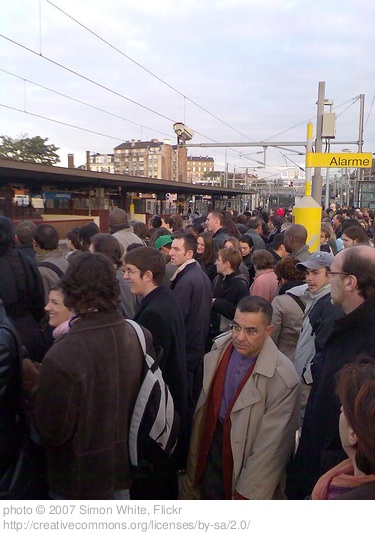
It makes sense. We all want to be part of the group like this little guy:

My friends and followers list grew, but I dreaded getting on my computer. I didn’t know whom I was talking to, and I felt like I was being spammed when I wanted to relate. So one day I deleted all 800 of my Twitter friends and started over.

I carefully and deliberately chose which friends I would follow (now less than 100) and paid little attention to who was following me. Every few months I clean out my Facebook account. I unfriend lurkers, spammers, and people who spew their message but never interact. One thing I’m proud of is that people I interact with on social media are not strangers, they are my friends. I have found several benefits to cutting back:

  • I am more eager to login to my Facebook and Twitter accounts.
  • I have built relationships with my online friends, so when my book gets published I won’t be a nameless face spamming everybody.
  • My friends and followers are more likely to pass my books, videos, and blog links to others.
  • I’m interacting with people who share my interests.
  • I’m filling a social need by relating instead of spamming. Research shows that people form communities on Facebook and Twitter in order to get social needs met.

More and more people, whose expertise I admire, are limiting the ways they interact on social media. As authors we are continually trying new marketing ideas, so we experiment, take risks, and try new things. I don’t know if the way I do social media is right for you…

Do you think more followers and friends are better? Why or Why Not?

CINCINNATI’S BOOK FESTIVAL

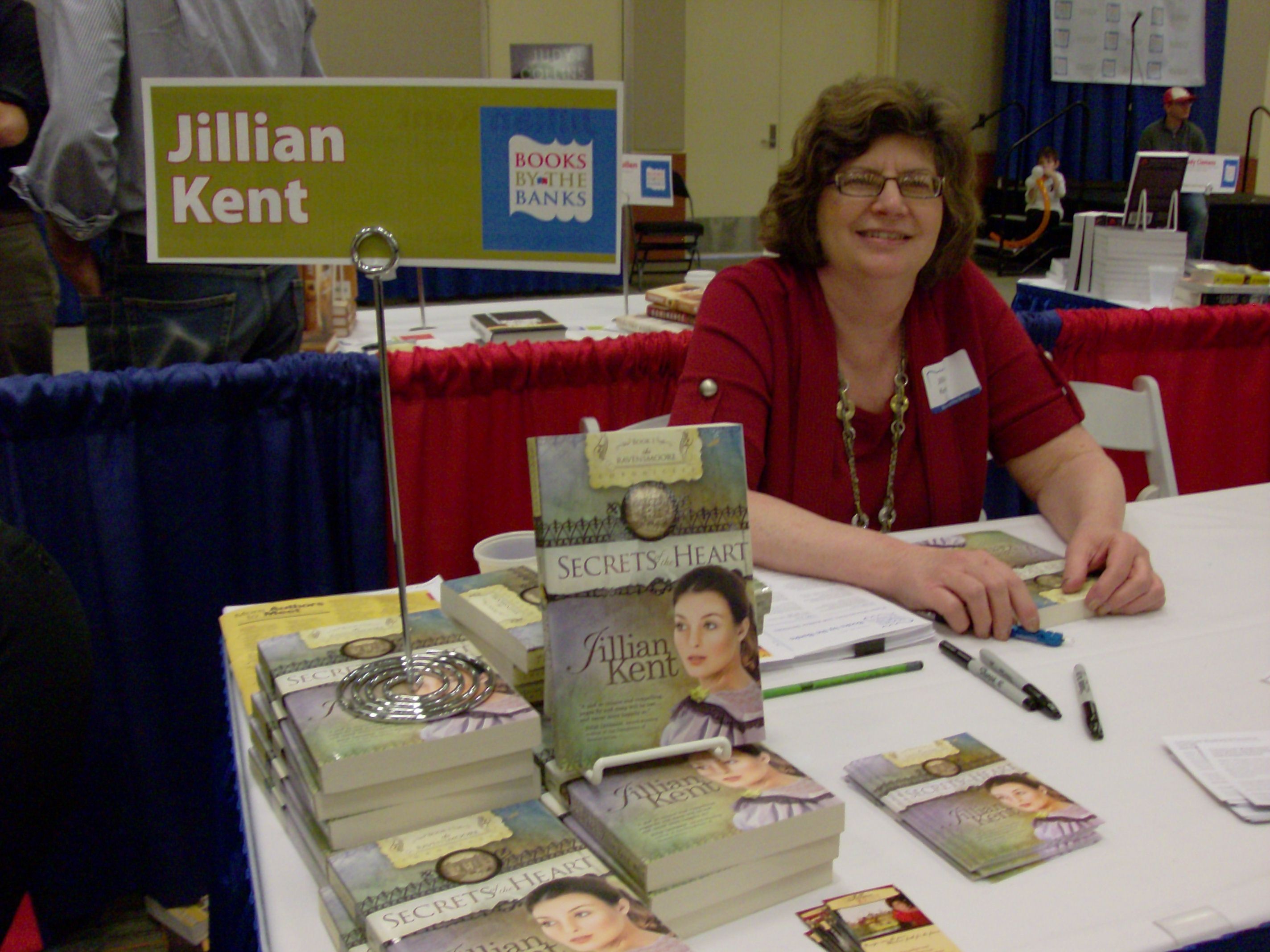
I was very fortunate to have my novel, Secrets of the Heart, Book One of the Ravensmoore Chronicles picked for this awesome event. This year was the 5th year for BBTB and I would have missed the deadline if my librarian friend Betty hadn’t encouraged me to apply earlier this spring.
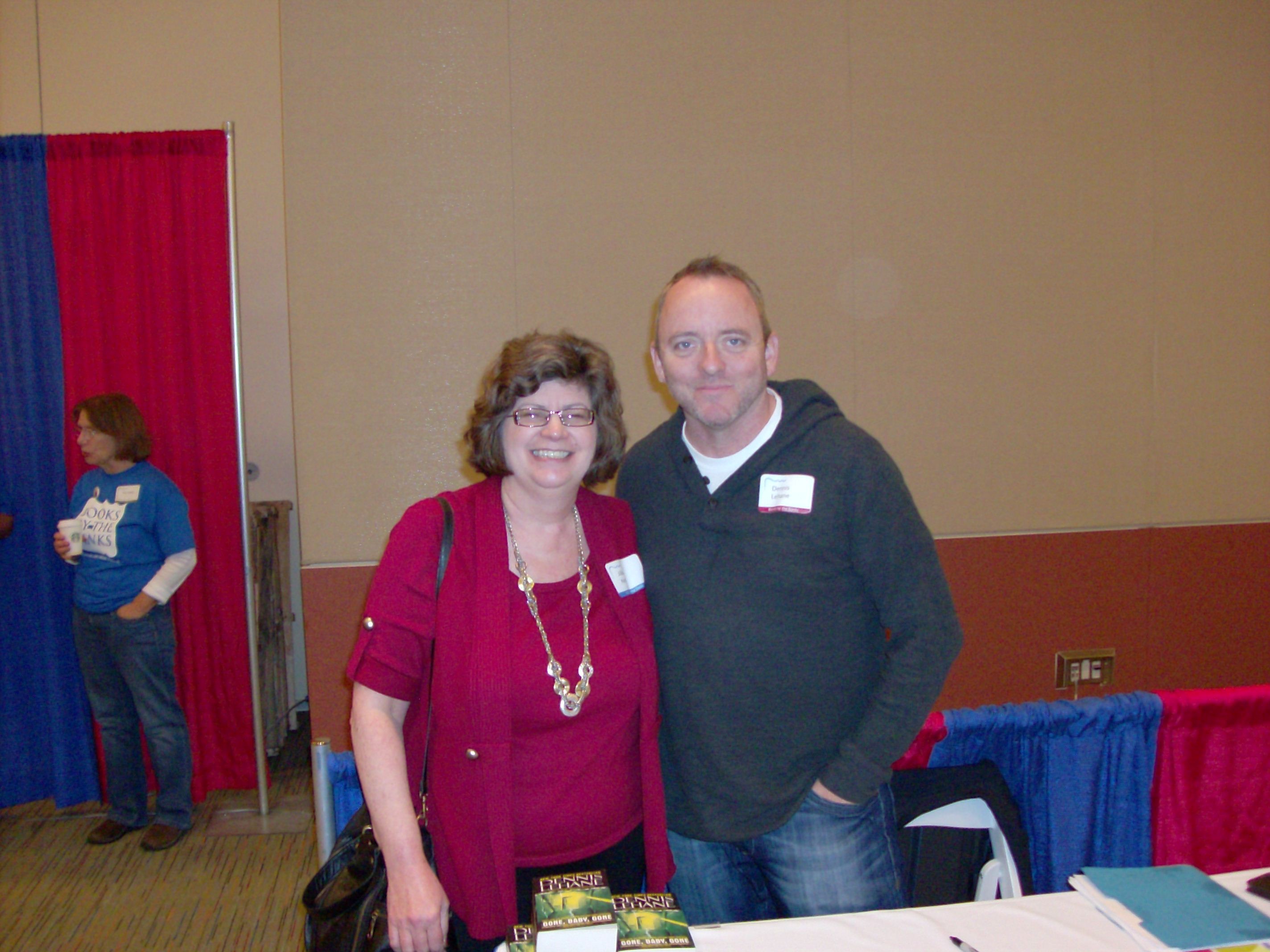
It started off with an author reception on Friday evening. Interesting enough there weren’t many authors in attendance. But I did have an agenda for this evening and that was to see if one of my favorite authors showed up. So I put my copy of Shutter Island in my purse and met my hubby downtown after work. Sure enough, Dennis Lehane was one of the few authors that attended the reception. We were able to meet with him and talk about the next day’s signing and he very graciously signed the book I’d brought with me.

I asked Dennis what to expect the next day since this was a huge event and he’s been to so many book signings  Here’s what he said: 1) Don’t expect to sell a lot of books. He told us stories about signing with other authors in the past where the competition had long lines and he didn’t. That was not the case this weekend. 🙂 2) Don’t sit there with a big grin on your face. In other words, and these are my words, don’t sit there, do something! And I did. I talked and asked questions to as many people as I could, browsers, buyers and other authors that were participating. I did catch myself with a big grin on my face more than once. 3) Have something to do in case it gets slow. It didn’t slow down too much, but I did take a break for lunch and I did take a couple breaks to get a chance to browse. Of course during one of those breaks I had to go buy another Lehane novel, The Given Day.
The points I’m trying to convey here are that you need to make the most of your marketing opportunities and have fun at the same time. 1) Make friends and talk to your librarians if you don’t do that all ready. 2) Look for big events near you that you may have an opportunity to participate in. 3) Don’t be afraid to approach experienced writers like Dennis Lehane and ask questions. That’s how we learn and make friends along the way.

I sold books. Not as many as Dennis but hey I’m just getting warmed up. Joseph-Beth Booksellers were the ones who provided our books for the signing. When we were done for the day they had us sign five more books for the store.

I also talked with the woman who helps organize the future signings for the store and the good news is that Joseph-Beth Booksellers is opening, yes I said OPENING another new store in Northern Kentucky. This is huge with all the closings of Borders and other Independent stores. So some time in the New Year I will be signing again at their store in Cincinnati or the new one in Kentucky.

In addition to all of this I was interviewed by Linda McMaken for an article that will run in RT Book Reviews and she’s also doing a more extensive interview later for Reader’s Entertainment.

I hope this gives you a few marketing ideas and a little nudge that will help you to step out of your comfort zone. You just never know what good things might happen.

So when was the last time you did something to market your current book? What was it? Or have you thought of something you can do that might help you and the rest of us? What kind of book signing experiences have you had?

Post Author: Jillian Kent

Jillian Kent is more than enthusiastic about the release of her first novel, Secrets of the Heart, The Ravensmoore Chronicles, Book One. She’s a full-time counselor for nursing students and holds a masters degree in social work. She’s fascinated with human behavior and thought it would be interesting to explore what might have happened in a lunatic asylum during England’s Regency era, her favorite time period. Jillian hopes you will escape into the past with her and find faith for the future.

What’s Your Klout Score?

I have to admit, I’m a numbers girl, which may strike you as funny because math is certainly not my talent. Likely, it comes from my nursing background and my need for instant gratification. My “real-life” job concerns fixing my patient’s numbers—moving them in the right direction. Lowering temperature, easing difficulty breathing, or bringing back a heart rate when there isn’t one. It’s all about trending in the right direction. Wrong patient trends need intervention.

Recently, I was reading Rachelle Gardner’s blog and came across her discussion on “numbers” and how you could use certain statistics, like blog hits, in your book proposal to help a publisher make a decision to go forward with your novel. Of course, a strong book is paramount but it is foolish to think that a potential employer, your publisher, isn’t looking at your on-line presence as a way to help their decision.

Rachelle mentioned a Klout score and I hadn’t heard of this so off to the website I go.

Klout, in one place, analyzes the effectiveness of your on-line presence. Once you allow it access from your social networking sites—and they do have a lot of them—it performs some genius unknown mathematical calculation so you can get a glimpse of your on-line life in a couple of areas.

First score measures your influence. It’s based on a scale of 1-100. One hundred being the best score you can have. Currently, I’m at 42.23 which places me as a “Dabbler”. Under Klout style, it will show other people you likely know, what their score is and where they land style-wise. That was a fun comparison because I knew several of the people and their on-line presence. Most I admire as something to aim toward.

Then is your true reach score. This measures how many people you influence. My score is currently 404. The site allows you to see other people’s scores as well. I compared myself to a known author and her reach was 877. I didn’t necessarily feel bad about that. She has three novels currently published and a savvy internet presence.

Next score is amplification which is how much you influence people. My score currently sits at 19. Not great but I’m just starting out so a definite growth opportunity—not weakness, right?

Last score is for network. This scores the impact of your network. The more people that comment, share and respond to your content, the higher your score will be. My score here is 51.

Klout also looks at topics you’re influential about. Mine are medical (yeah!), technology (really?), authors (excellent), blogging (surprised!) and childbirth (yikes—don’t ask me how.)

Also, it will list who you influence and whom your influenced by. Fun information.

Overall, I think Klout will be a good way to measure your on-line presence and whether or not it is growing. Sometimes, when I look at my Blogger statistics, I think the information is limited. I can see my stats are increasing but for me, that just may be more people are perusing by. That’s not bad but I like how Klout looks at your influence and overall reach. These are good numbers to gauge. If they are steadily climbing, my efforts are working versus a downturn would lead me to consider changing up what I’m doing.

Are you on Klout? What’s your score? Have you used your scores to change what you’re doing on-line?

For an alternate opinion on how valuable this score is, check out this post entitled: Why Your Klout Score is Meaningless.


Introvert Marketing in an Extrovert Market

My name is Olivia Newport and I am an introvert.

I’m not a hermit. Rich relationships nourish me, and my peeps keep me buoyant. Speaking, preaching, or leading a workshop do not scare me. But they take from me, rather than give to me.

At least 25 percent of the general population are introverts and charge up during time alone. Among writers, the percentage of introverts likely rises.

The rub comes because the rest of publishing runs on a 75 percent extrovert mindset. “Why Writers Have to Market.” “Ten Steps to Building Your Platform.” “Authors Must Be Speakers.” “How to Suck All the Readers in the World to Your Blog!” (Okay, I haven’t actually seen that last headline, but you know it’s a game winner.)

Um. Markets and platforms are places where hordes of people hang out. And since I don’t fuel my creative energy by hanging out with hordes of people … well, you see where this is going.

I do want to be a novelist. I do want to build an audience. I do want to be successful over the long haul.

My challenge is this: How can I accomplish these goals without feeling thrust into a 75 percent extrovert mindset that is counter-intuitive to who I am? I’m not talking about the work of learning new skills, including social media. We all have to do that. I’m talking about being able to meet readers out of the strength of my natural introversion, rather than being squeezed to set it aside in order to play the game.

I can’t turn myself into an extrovert. I don’t even want to pretend to be one for periods of time. It’s exhausting, and how does that help? As I got ready to launch a website and blog, I thought a lot about how to build an online presence based on my strengths, not on rules that are a foreign language to me.

• Be present. It’s not hard to find me. You find my name, you find me. I don’t spurn social media, and I don’t make it tricky to be cyber-friends.

• Seek connection. I like people. Really. My heart rejoices with those who rejoice and weeps with those who weep.

• Risk authenticity. I’m not perfect. I’m figuring life out as I live it. I love to go deep and share that experience with others doing the same.

• Build on consistency. I am a creature of habit and lists. I’m generally predictable. This will serve me well in an expanding author-reader universe.

• Celebrate being me. I’m not competing in that reality show, “She Who Dies With the Most Wins.” Embracing and celebrating the person God created me to be is the greatest value I offer to readers.

We all connect with readers by building on strengths. Being introverted is a different sort of strength than 75 percent of the population, but it serves me well because it’s my strength and I understand it.

Are you introverted or extroverted? How does that affect your experience of publishing?

How EBooks Can Complement Your Traditional Writing

Most authors (or soon-to-be authors) think of themselves purely as creators of old-school books. But as the publishing landscape changes, we have an increasing number of opportunities to use our story-telling skills – including via ebooks.

When I say “ebook,” I don’t mean a digital version of your traditionally published book, nor a digital version of your self-published book. I’m talking about the kind of informational ebooks that live only online.

These ebooks are typically shorter than traditional books, and they’re often nonfiction, the self-help variety. You can sell them through Amazon, but many creators (like me) choose to sell them through their own website instead.

Before you pooh-pooh this avenue for your writing, recognize that creating ebooks can boost your writing career in ways traditional books can’t. That means if you delve into ebooks at the same time as traditional publishing, the two pursuits can play off each other.

Here are three ways creating ebooks can boost your traditional writing career:

1. Make money to support your writing habit

We all know publishers aren’t handing out huge advances lately. Creating digital products can help you bridge the financial gap between books. Here’s why: When you self-publish digitally, you keep all the profits. And overhead is low because there’s no physical product. Here’s what I paid to create my newest digital guide:

  • $450 for edits
  • $100 for postcards to bring to speaking gigs (optional)
  • $5/month for ejunkie, the e-commerce system I use to sell the guide
  • PayPal fees (because buyers pay me through PayPal)

Not so shabby, huh? And perhaps the best part is that every time you want to offer your digital product to a blog for review, it costs you nothing. Rather than eating the cost of a physical book, you simply email them the digital file.

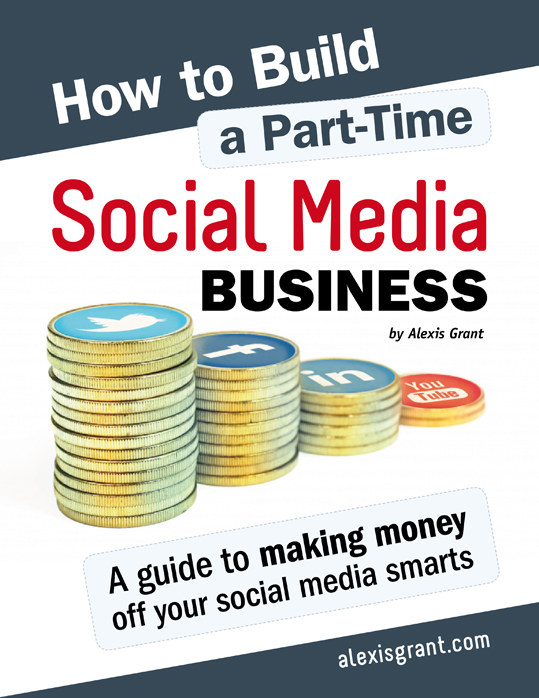
EBooks also have a higher price point than traditional books. For example, my guide How to Build a Part-Time Social Media Business sells for $24. Since neither a publisher nor a distributor (I’m my own distributor) take a cut, that means $24 in my pocket every time I sell a guide. I’ve sold more than 125 since launching the guide two months ago.

2. Attract people who might want to read your traditionally published book

If your digital products are related to your overall writing pursuits, they can help you build an audience for your traditional books.

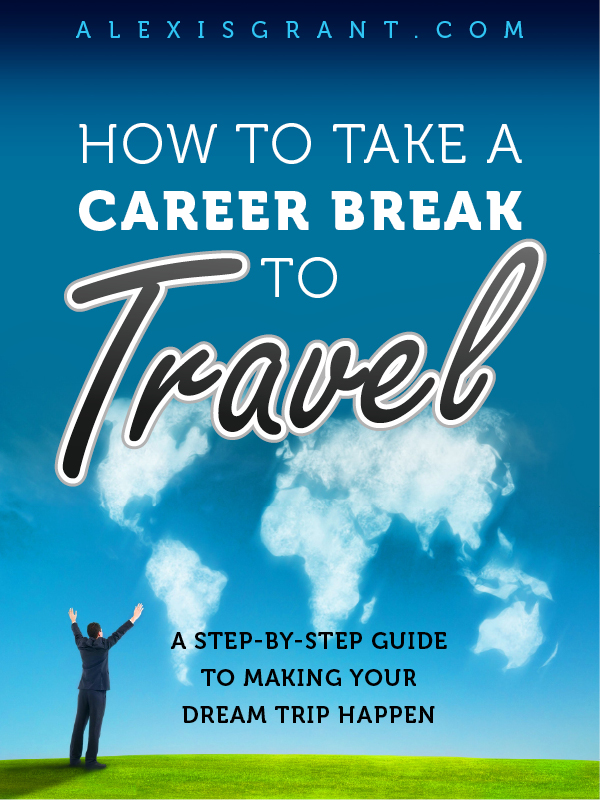
Here’s what I mean: My newest guide, How to Take a Career Break to Travel, is directly related to my travel memoir about backpacking solo through Africa (which Rachelle is preparing to pitch to publishers). Essentially, my guide is a complement to my memoir.

Yet because I’m publishing the guide myself, I’m able to get it out there before my (hopefully) traditional book. And guess what? The people who read my guide will likely be the same target market for my book. Not only will this help people find out about me (and hopefully subscribe to my newsletter or blog) before my book comes out, I’ve gone so far as to include a note about my upcoming travel memoir inside the guide.

In other words, this guide is oh-so-subtle marketing for my memoir.

3. Drive more traffic to your blog

Since I launched my first eguide, traffic to my site has increased dramatically. I’m now at 15,000+ hits/month mark Rachelle mentioned in her recent post about building platform.

Selling an eguide boosts traffic for several reasons:

  • People are visiting my blog to check out my guide (and maybe buy it!)
  • Some of those new visitors realized they like my blog, so they bookmarked it or subscribed and visited again later, maybe even daily
  • Guest posts I’ve written for sites with big audiences (like Mashable) with the goal of promoting my guide have brought lots of new visitors my way

All of those eyes on my website will help me sell my book to a publisher and sell my traditionally published book to readers.

Have you considered wading into ebook territory? If you have questions, I’m happy to answer based on my experience.

servicios de satelite