Writing for Strangers

For my first book release, I did what many authors do. I gave copies of my book to everyone I knew, followed up with them with the intensity of an air traffic controller, and then begged to be evaluated. It was only when I had garnered about twenty five reviews that I was comfortable enough to share my work with strangers.

PettyCashFor my second book, I have been much bolder. I only showed Petty Cash to a select few people (about five) and then launched it on Amazon. Each day, I pull up the page with one eye closed, bracing myself to get hammered. But you know what? It really hasn’t been that bad. In fact, total strangers have written the best reviews of all. Who knew?

It’s awkward to provide feedback to our loved ones at times. People often avoid conflict with those close to them, and they may whitewash their feedback in an attempt to encourage us. Although this is done out of love, we must take the feedback from those who love us with a grain of salt. The people closest to us will also see the content a bit differently than the writing of someone about whom they know nothing.Those close to us will have a built in filter as they regard each character, setting, and turn of phrase.

On the other hand, strangers have no such filters. Since there is no fear of impacting the relationship, the comments and reviews of strangers are incredibly forthright. Some of the feedback from strangers has been so outstanding and helpful, that I have modifed the story slightly to reflect their feedback, which is easy to do with an e-book. Some of the people who write reviews are so eloquent that it seems like they should be reviewing books on a professional basis – and maybe they do.

From what I understand, it is considered bad taste for authors to engage with strangers who have written reviews on their work. That makes sense, but sometimes it’s hard to keep silent and not thank them for putting in the time and effort of creating a review. The exercise has really driven home the concept of relying on the kindness of strangers. Honesty is actually a type of kindness, even if it stings from time to time.

For a myriad of reasons, friends and family may not be able to convey the true value of our writing. It just might be the people you have never met, perhaps in other countires or on the other side of the world, who may end up giving you more validation and insight about your work than you ever imagined.

Who do you trust to provide feedback on your writing?

Have you ever received helpful comments and reviews from total strangers?

How My Agent Found Me

agent found me

My agent found me.

It’s true.

I didn’t believe it at first either.

And I am oh, so grateful. Her council, editorial skills, business savvy, and contacts make a huge difference in my budding career.

And I know… it doesn’t seem fair.

How exactly did she find me?

Through two chapters released to The Festival of Faith and Writing in Grand Rapids, Michigan in 2012. As a participant of the conference, I submitted part of my memoir for agents to review.

Sarah Joy Freese found my chapters, and contacted me for the full manuscript.

But why did she find me?

Because people I met along my writing journey told me to work hard.

And I need to be able to say this although it feels a little strange, like a pat on the back or something, but I realize now that I did work hard. I worked hard and long for her to find me.

If you want an agent to find you, here are four things you can do.

1) Write well.

Make sure your writing continues to improve. Read a lot. Write even more. Attend a class. Submit your work for critique. Spend time in the chair, churning out pages. If your writing isn’t at its best, even if an agent finds you, he probably will pass.

2) Build your platform.

Gone are the days of a writer hiding away in an upstairs attic penning the next great American novel. In the publishing world today, writers have to do more than write beautifully. They need to build a following. Want to learn more about this idea? Read Seth Godin’s book Tribes.

Warning: when you begin to work on a platform, you will feel ridiculous. When I started a Facebook author page, I joked with my friends about ‘fans’ liking the newest dirty diaper I changed at home. As a stay-at-home-mom with four children to wrangle, I didn’t think I was qualified to have a fan page, but I did have a goal: to publish a book. So I began.

Other platform ideas: blogging, speaking, writing e-books, the list can get really long and daunting. The important thing is to start, and to remember platform building as an important element to your future in publishing. It needs to grow with your writing skills. You need to be a package deal.

3) Have polished, edited chapters of your current work in progress ready.

Spend time on a couple of your favorite chapters in your work in progress. Make them strong. Hire or ask someone you trust to edit them. Rewrite them. Rewrite them again. Make sure that even if you don’t know every nuance of the book that you have a general idea of the story arc, so that your chapters fit when you pitch the idea to the agent.

My husband and I cobbled together funds so I could pay two freelance editors to work through drafts of my recently published memoir Sun Shine Down. After writing a third draft of the same book, I started to feel like I had something I could show someone with my head held high. Yes, it takes work, and time, but your best work is worth it, and it is your best chance to have an agent ask to see more.

4) Attend writers conferences.

Before attending conferences, I queried countless agents to no avail. I hardly got back a standard rejection email.

I can’t stress enough how helpful conferences were/are to my career. In 2012, I attended Mount Hermon Christian Writers Conference, and the Festival of Faith and Writing, where I met my agent. Both were amazing experiences. I shook hands with people, passed out and retrieved business cards, and submitted my work for review and critique. While buoyed in my fervor for the written word, I soaked in lessons about the craft and business of writing.

I think every writer should attend as many conferences as they can.

Be encouraged.

If you want an agent to find you: do good work, put yourself out there, be ready at a moment’s notice to submit, and go where the writers, agents, and editors go.

If this stay-at-home-mom, queen of diapers and ruler over tantrums can do it, so can you. I’m rooting for you!

Now get to work. Your agent may be looking for you right now.

*Do you have an agent? How did that relationship come to be? Do tell.

agent2

Why Asking For Help Is Not A Sign Of Weakness

“Strong people ask for help.” As a counselor, I often teach my clients this mantra.

Person under crumpled pile of papers with hand holding a help siSo when I found myself discouraged last week, I sent an email to another WordServe author, asking for help.

An hour later we were talking on the phone. She reaffirmed how much she liked my book, she told me she would commit to praying, and she gave me a handful of marketing ideas.

That short phone call changed my day in three ways.

  1. I got an emotional release. I even cried a little.
  2. I got encouragement.
  3. I got inspired with new marketing ideas. In fact, I spent six hours the next day working on marketing ideas.

Most authors, by their nature, are Type A personalities. We are self-motivated, hard working, and perfectionist. As we seek to promote our books, it makes sense that we would try to put the best light on ourselves. But have you ever noticed how lonely driven perfectionists really are? If you’ve ever spent time watching Brene Brown’s TED talks, you understand that it’s our vulnerability and imperfections that draw others to us.

All authors need to ask for help. Here’s why:

When you ask for help usually you’ll likely find ways to reciprocate. Authors don’t know all the same people or have the same ideas. During my phone call I was able to connect my author friend with some influential people who will help expand her books’ reach.

Almost everyone loves to help. I think it’s part of the way God wired us. Think about it: if someone trips and falls, we instinctively rush towards the person in order to help. I’m pretty sure the only ones who don’t feel that pull are people who lack the ability to have empathy (sociopaths).

When people help others, they’ll be reminded of their own success. As my friend was giving me marketing ideas, it affirmed all the hard work she had done. She was able to share her success stories and tell me how proud her publisher was. Reliving your successes feels good.

Accepting help can feel like a reward for all the times you helped someone. At all times I am in the process of reading and reviewing two to five books for other authors. I know how hard I work to promote my author friends; it’s nice to be on the other side once in a while.

Asking for help can build bonds. Before last week’s phone call, I only knew the other author by name. Just one more person person from Facebook. But now, I feel like we’ve become friends.

It is actually quite arrogant to think we can help others and yet have no need to accept it in return. Is there something you’re struggling with? Why not take a risk and ask someone for help.

Can you think of a time when someone helped you on your book-publishing journey? 

Crowdfunding: Is It a Writer’s New Marketing Tool?

I’m pleased to host author Ken Gire who stops by to share a little about Crowdfunding and his current project.

Welcome, Ken!

WealthWith the technological, social, and demographic upheavals that have happened within the publishing landscape over the last decade, many writers have found themselves having to get more involved with things that most writers hate—sales and marketing.

Myself included.

My last book sold under 500 copies, and that experience was so discouraging I felt like giving up writing entirely.

Faced with fewer and fewer bookstores to sell our books, and smaller and smaller advances to fund the writing, what’s a writer to do?

There’s not a lot of options, honestly, but here are a few.

Marry rich.

Consider “Breaking Bad”.

Crowdfunding.

Crowdfunding is growing in popularity, and, though it has had its share of failures, it has had its share of successes, too. Numerous sites have sprung up. Kickstarter and Indiegogo are the two most popular. And there are faith-based crowdfunding platforms you can google. They are newer, less successful, and generally the funding is lower.

Here’s a sample of an almost unheard-of success in publishing with one of Seth Godin’s books.

I had been following Seth’s TED talks for some time, so his campaign really intrigued me. When I looked at the numbers, I had to do a double-take. Who needs that kind of money to write a book? I wondered. Then I realized what he was doing. He wasn’t trying to get an advance; he was trying to generate pre-sales. And he did that through the platform of crowdfunding.

Seth is an internationally-known marketing guru, and so he probably shouldn’t be used as a poster child for crowdfunding, but I used him anyway to show the possibilities.

Well, the long and short of it is . . . I decided to try it.

Though I am not the least bit tech-savy, I managed to do it all myself, with the exception of the video. I found someone on Elance who did that for me fairly cheaply.

I also thought it would be helpful for those involved in the campaign if I gave regular updates on the progress I was making on writing my book. I remembered reading Steinbeck’s, Working Days, a journal he kept while writing Grapes of Wrath, and I remember how much I enjoyed it. So I decided to write a blog (Centurion) aimed at aspiring writers so they could see what the process of writing a novel was like.

The daily posts have been really fun for me, a nice break from my writing, and also a creative outlet to try to find things on the internet that would help illustrate my blogs.

I think this could be a good option for many of us. For those of us who don’t have a publisher. For those whose advance wasn’t enough to finish their book. For those needing expense money to travel to a foreign country in order to do research (say, for example, your novel is set in Ireland, but you have never been to Ireland, and an extended stay there would add authenticity to your story and to the dialect of your characters.)

Maybe we, as writers, can help each other through this difficult transition in publishing by helping to fund each other’s campaigns.

I’m sure mine won’t be anywhere as successful as Seth Godin’s. But it doesn’t have to be. If just 10% as successful, it would be a game-changing experience for me and my career.

Here is my crowdfunding campaign that I hope you will check out. Check out this post for more information on these type of fundraisers.

There are only two weeks to go, and my campaign is only 10% funded. For perks, I am offering everything from signed books to services such as personal mentoring to public speaking.

I appreciate you all taking the time to consider being a part of this. Truly.

What do you think of crowdfunding? Would you ever consider doing it as an author to raise money for a book project? Why or why not?

********************************************************************************************

kengirephotoKen Gire is the author of more than 20 books, including The Divine Embrace, Windows of the Soul, The Work of His Hands, the Moments with the Savior series, and the Reflective Living series. Two of his books have been awarded a Gold Medallion. A full-time writer and speaker, Ken is the founder of Reflective Living, a nonprofit ministry devoted to helping people learn how to slow down and live more reflective lives so they can experience life more deeply, especially life with God and other people.

Ken is a graduate of Texas Christian University and Dallas Theological Seminary. He has four children and three grandchildren and lives in Baltimore, Maryland.

Preparing for a Radio or Podcast Interview, Pt. 1

I’m not sure where you are on your writing journey, but if it hasn’t happened yet, hopefully it will one day soon. Your invitation to guest on a radio program.

First Hired by Anita BrooksWith the release of my book, First Hired, Last Fired — How to Become Irreplaceable in Any Job MarketI’ve done several interviews now, while working to line up numerous others. (If you want to listen in, I’ve got links to those who provided them.)

Imagine my surprise when the podcast host for Engaging Life and Leadership called. Podcasts are Internet radio shows, so they enable you to reach global listeners versus a regional audience. Think of it like this: Podcasts are the big-city landscape of audio, while most traditional radio programs have a home-town community feel. Each has its strengths and weaknesses, and each reaches different wants and needs.

Engaging Life and LeadershipSince my guest spot on Engaging Life and Leadership went over so well, I was asked to return — again and again. It didn’t take long until the unexpected happened.

“Will you join the show as a permanent co-host?” Darren Dake asked.

We’ve now recorded over twenty episodes as a male/female team, discussing relevant answers for Christian men AND women in 21st century leadership. At last count, we are reaching 17 countries.

But why did I just tell you all of this? For a few reasons actually.

  1. As authors, there’s constant pressure to build your platform. From the beginning, I’ve trusted God to design mine, and partnered with Him in the building. He continues to do more than I could possibly have imagined.
  2. My heart beats to help others, especially my writing brothers and sisters. Consider this an open invitation to be our guest on the show. Regardless of your book’s genre, there’s a place for you. All authors and speakers run their own businesses. You are thought-leaders. We can help you find a topic relevant to our program that will enable us to promote your project. Email me if you’re interested. anita@anitabrooks.com.
  3. The nail-biting prospect of guesting can terrify the most confident of men or women. So I want to share what has helped me survive small, nationally syndicated, and global radio programs.

Here’s my pre-show routine:

Radio Interview Mic
Have You Interviewed Yet? Prepare Yourself.
  • In Michael Hyatt‘s awemazing Get Published! program, he advises the creation of a briefing book as a guide during your interview. I created a PDF synopsis of my book, including the questions sent to the host in the media release. If you’d like a copy of mine as a sample, feel free to email me at anita@anitabrooks.com. (Half of the hosts never asked the arranged questions, but my briefing book kept me on track when they strayed.)
  • Double-check dates and times, (accurate time zones especially) to ensure I don’t experience a faux pas, and either scramble last minute or extend my nerves and frustration from a longer wait. My worst fear? Missing the opportunity altogether.
  • Get a good night’s sleep the night before. I’ve discovered half a Melatonin is a great way to enhance my natural sleep rhythm, providing deeper rest.
  • Walk or exercise prior to my interview, making sure I finish an hour before show time.
  • I take a shower about forty-five minutes before to freshen up.
  • Share my prayer need on social media. Friends and family appreciate the chance to support me in advance. (Plus it reminds some who want to listen in.)
  • About fifteen minutes before, I get prostrate in prayer. Literally. I lay on my living room floor, as flat as possible, and humble myself before God. I ask the Holy Spirit to guide my words and still my tongue when appropriate. He hasn’t failed me yet.

There’s more I’d like to share, but I’ve run out of room. Next month, I’ll list the things I do during the interview to help me spread the message in a more effective way. Some are plain old common sense, but a couple will surprise you. See you then.

Have you interviewed? If so, what do you do to prepare?

How to Plan a Multi-Author Cross Promotion Event

Every writer I know feels pressure to build their platform. From the pre-pubbed stage, sending out proposals to an agent, then editor, to published authors working on keeping their numbers up, it can be a constant maze of hunting through websites telling you how to do it the best way.

Despite how you package promoting, be it in a contest, giveaway, or ad, there is only one thing that truly matters to determine its success. Are you giving your target audience something they find of value?

Join five mountain fiction authors with our virtual cookie recipe exchange, and downloadable Bible verse garland and gift tags.

Notice I didn’t say something valuable to a reader. There are many readers out there, but not all readers are your target audience. You need to have a deep understanding of your reader before you plan any promotional event, especially a multi-author one.

1. Start by identifying other authors who have similar target audiences or readers as yours. For cross promoting to work, the audiences must be linked by a similar interest.

2. Decide what will be the common theme for the event. You’ll need to decide before inviting the other authors to your event what the theme or purpose will be. And it is not to sell books. This is what you hope will be the end result, but the purpose of the event will be to somehow reach readers and enrich their time spent with you.

3. Send out the invites with a time frame for response at least two months before the date of the event. Expect to have some authors not be able to join you. Be gracious and thank them for considering. Move on to the next authors on your list.

4. Ask for ideas or comments on how to make the event better. Allow the other authors to have a say in the event, but be sure you have one person who is the leader. When planning the Mountain Hearth Christmas, it was my original idea to just have it be a virtual cookie recipe exchange. Amanda had the idea of incorporating the printable Bible verses for garlands and or gift tags.

5. Be very clear on what is expected of everyone. While all of the fabulous authors in the Mountain Hearth Christmas worked together, it’s best to let everyone know what you’d like them to do. For example: everyone is expected to share links on their social media pages each day of the hop, not just the day it’s being hosted on their own website. Cross-promoting only works if everyone helps.

6. Send out reminders leading up to the event. The leader should send out reminders as things draw nearer. Keep them short and to the point. Always be respectful of others’ time. Three weeks before, two weeks before, and the day before are a good time frame. You may want to have the leader send out daily emails the morning of the event with the link to that day’s highlighted article and composed social media updates for people to copy and paste if pressed for time.

Want to see a multi-author cross promotional event in action? I’m thrilled to be part of A Mountain Hearth Christmas. 

What multi-author events have you been part of? Have you attended any multi-author events you thought went well? What did you like about them?

WordServe News: October 2013

Exciting things have been happening at WordServe Literary!

On the final post of each month you’ll find a list of Water Cooler contributors’ books releasing in the upcoming month along with a recap of WordServe client news from the current month.

New Releases

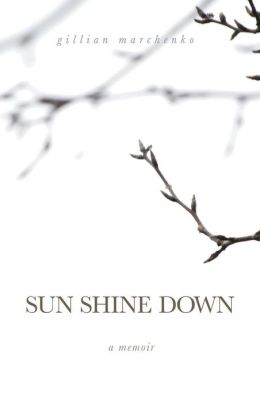
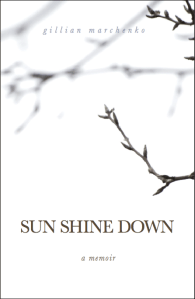
SunShineDownGillian Marchenko’s memoir, Sun Shine Down, was released with T.S. Poetry. Sun Shine Down is about Gillian’s journey through the grieving process of discovering that her daughter, Polly, has Down syndrome. Gillian takes an honest look at what it really means to be the mom of a child with a disability. Her writing is both powerful and poignant and encourages her readers to grapple with the reality that is life.

*****************************************************************************************

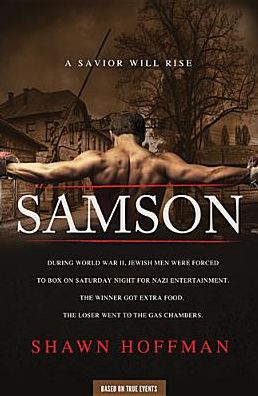
SamsonMarcus Brotherton’s collaboration with author Shawn Hoffman for his novel called Samson released from Thomas Nelson.

*****************************************************************************************

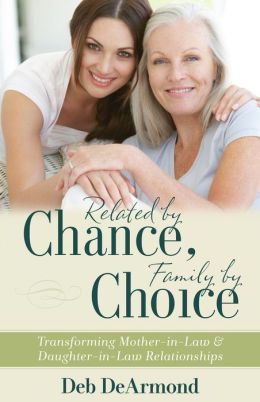
RelatedbyChanceDeb DeArmond released her first book, Related by Chance, Family by Choice with Kregel Publishers.

*****************************************************************************************

RebelliousHeartJody Hedlund released Rebellious Heart with Bethany House Publishers.

*****************************************************************************************

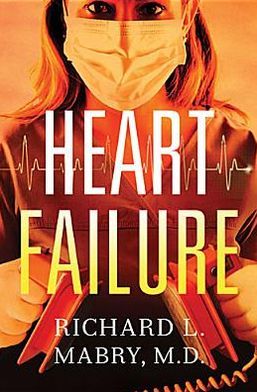
HeartFailureRichard Mabry released Heart Failure with Thomas Nelson

*****************************************************************************************

New WordServe Clients

Sarah Varland

Sara Davison

Patricia Lee

New Contracts

Deb DeArmond signed two contracts with Abingdon; one for I Choose You Today, the second for Don’t Go to Bed Angry, Stay Up and Fight. Both are non-fiction books on things that truly matter in marriage.

Deb Coty signed with Barbour Publishers for another book of humor with a message. The working title is Too Loved to be Lost, a book on the depth of God’s love for us.

Janice Dunlap signed with Authentic Publishers for her nonfiction memoir Saved by Gracie, the story of her dog that helped bring her back from an emotional and spiritual brink. It will come out in the Spring of 2014.

What We’re Celebrating!!

CONGRATULATIONS AND HAPPY ANNIVERSARY WORDSERVE LITERARY!

November 1 marks YEAR 10 of the agency! During that time, we’ve represented nearly 600 books. Our biggest claim to fame, our biggest joy, is the authors we work with on a daily basis. They’re the real stars, and we’re grateful to be here to serve.

The cover of Becky Johnson and Rachel Randoph’s book, We Laugh, We Cry, We Cook was voted one of the top-10 covers for all of CBA in 2013. Great job, Zondervan!

The 15-Minute Writer: Writing for Regional Parenting Publications (RPPs)

(This post is part six of a series. Read the other posts here.)

Do you write primarily for parents, teachers, or grandparents?

If so, you might try selling articles–especially book excerpts or reprints, which take very little time to pitch in an email–to RPPs, or regional parenting publications. RPPs are the free magazines offered at the front of bookstores, family diners, and kids’ clothing retailers in medium-to-large cities.

file000612565099My area has one central office which publishes several magazines, including Dallas Child, Fort Worth Child, and Dallas Teen.

Because these colorful publications come out each month, the editors need a lot of material. However, they rely on advertising dollars instead of subscriptions, so they don’t pay much (usually $25 to $75 per piece). But every little bit, both money and exposure, helps in this publishing climate!

I’ve made a few sales over the years by sending out emails to editors about two/three months before major holidays, telling them about my seasonal articles. The large audience is nice–especially if you think about how many parents (who wouldn’t otherwise know about you) will see your byline.

How to find these gems? Parenting Publications of America lists its members on its website. They offer a writer’s directory, which is searchable by topic, for their members for only $40/year. Here’s an excellent article on how to market your excerpts to RPPs. Also, you can list reprints on a page on your author site. Most of the magazines also offer book reviews…something to think about when you get to the galley stage.

Writers Kerrie McLoughlin and Christina Katz both have e-books on writing for RPPs, for under ten dollars. I haven’t read either, but they look helpful.

One caution: many of the RPP editors use local writers (or insist on having a regional angle in each article). Be sure and check guidelines, just like you would for any national magazine, before sending off a query or manuscript.

Have you already been published in RPPs? If so, leave a comment below detailing your experience and any advice you’d give to other writers.

Promotional Items: The Good and Bad

I recently returned from the ACFW conference held in Indianapolis. This is an annual gathering of the largest membered group of Christian fiction authors. It’s a great time to connect with fellow writers and hope some of the writing genius from authors like Dan Walsh, Tosca Lee, James Scott Bell, and Frank Peretti infuses life into my writing cells.

Promo1Most conferences have a “freebie” table where writers are allowed to leave promotional items to get the word out about their product. This year I thought I’d give you my take on them. The good and the bad.

Think of a promotional item with a goal in mind. What do you want it to do for you? Consider the return on your investment and what you hope to achieve. I think most people view a promotional item as a chance for exposure. Most marketing types will tell you it takes six-ten exposures for someone to buy your product. So a good promotional item is something a person will keep and look at over and over.

I’ve determined that giving away bookmarks is not a good idea. EVERY author/writer does this and last year when I had bookmarks I ended up taking most of them home. They are not unusual enough anymore and with the advent of e-readers I think many do not need them anymore either.

One way bookmarks could work is if you are a very popular, well-known author and they are signed. But, sigh, that is not me. Yet.

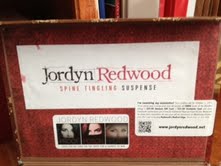
RedwoodNewsletterQRMy goal was to get people to subscribe to my forthcoming newsletter. I gave out full-size Hershey Bars and packs of gum with the stickers you see on the first photo. The sticker includes this QR code that links to a newsletter sign-up form where I’m giving away a prize worth over $75.00. It includes all three books of my Bloodline trilogy, a $25.00 Amazon gift card, a $25.00 Starbucks gift card and some fun Halloween items (yes, this is still happening, so sign up!) and goes on until October 1st, 2013.

I brought 108 chocolate bars (okay, I did eat ONE) and 36 packs of gum. I didn’t have to bring any home, which was great. People were interested enough to pick them up but, thus far, I’ve only gotten about six new newsletter subscribers, making it a very expensive venture with few results. Perhaps the QR code is not intuitive for people yet.

Other promotional items and my thoughts.

promo2 promo3 promo4 promo5 promo6 promo71. Luggage Tag: This is a good idea because not only do you use it but also other people along the way can see it.

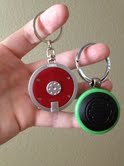
2. Small button flashlights for key chains: I’m iffy on these. The writing on one is hard to read and the light is weak. They are fun to have but I don’t know if I would use them.

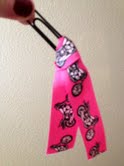
3. Ribbon bookmark: I’m personally not a fan. I am a no-wrinkle-on-the-pages kind of girl and putting a large plastic paper clip on pages would wrinkle them. Plus, it was not very intuitive to me what it was at first because it was attached to a business card.

4. Pack of sticky notes: This was given out by a publisher. Nice, as most authors love office supplies.

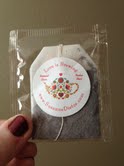
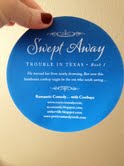
5. A bag of tea: This one I liked because I’m a tea lover. I think this would also be more economical than what I did, as mine ran about 50-60 cents apiece. I think it’s a good tie-in for some genres (romance, cozy mystery, historical set in England) but not so much for suspense. It might not work for my books.

6. Grippie lid opener: Someone can post in the comments what the real name of this is. I like this one for its durability. It’s something I’ll keep on hand and use and therefore will expose me to this author’s name multiple times.

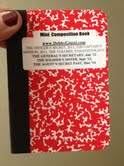
7. Small composition notebook: This one I’m actually giving a gold star and I’ll tell you why. I still have the one from last year in my purse. Every time I pull it out, I see that author’s name. I actually looked into doing this myself but they run (at the cheapest) about $1.00 apiece and that was too spendy for me.

What about you? Which promotional items do you like? Which do you think you’d actually pick up and keep? What have you used as a promotional item and did you appreciate the return on investment?

Seven No Nonsense Book Launch Tips for Broke Authors

Seven no nonsense book launch tips


Sun Shine DownI am launching a book.

My memoir, Sun Shine Down, published at the end of August with T. S. Poetry Press. Eeek!

As a broke, green as the grass in mid-July first time author, I tackled the daunting assignment of launching a book like any other able-minded individual in North America.

I googled ‘book launch.’

In .02 seconds, reputable results-driven marketing and publicity firms jumped into my line of vision. These people surely could launch my book into the stratosphere!

But after some number crunching and a realistic talk with my husband about where hiring a publicist falls in the needs of a family of six (braces, soccer, therapy, FOOD), I conceded. We could not hire help for Sun Shine Down.

These days, whether we sign with a big publisher, a small press, or self-publish, we bear much of the responsibility for launching our own books. And it’s hard work.

If you, too, are a broke new author, here are seven no-nonsense book-launching tips:

1) Plan ahead

If you wait to plan your book launch until your book is out, you’re toast. Plan ahead. Start six months before you are to publish. Research, and consider elements of a book launch you will utilize.

2) Launch your book online

Social media is a marketing ocean. You’ve got Facebook, Twitter, Pinterest, Instagram … Where do you spend your time online? How can you introduce your book in those venues? With Amazon stomping on the book industry, it is a mistake not to market online.

3) Launch your book offline

Is a book party right for you? I’m hosting a party at a bar down the street from my house. I’m doing it on a Monday (because the venue is free then), providing appetizers, and using evites and Facebook events to publicize. Extra tip: Don’t call your gathering a book signing. Call it a book party. Who doesn’t love a good party?

4) Don’t spam people to death with your book

Not everyone is excited to hear about your book all day every day. Post about your book (especially on your Author Fan Page–don’t have one? Um, get going), but don’t post several times a day. It just makes you look full of yourself. The trick is fun, cool content, and looking like you’re not trying that hard even when you are.

4) Create a Facebook launch team

In an effort to build buzz about Sun Shine Down, I invited Facebook friends to join a super secret launch group. I offered perks for joining ( a free PDF advanced copy of the memoir, a thank you on the blog, access to a secret group, and interaction with the author) and requirements (help promote for five weeks, post about the book on your blog, etc.). My secret group has been the highlight of promotion so far. Why? Because relationships are being strengthened and we are having fun! It is also a great way to ensure Amazon reviews once the book is published (make it a requirement).  Read this post to see how I did it. 

5) Get help!

OK, I know that I sound like I am contradicting myself. But next time (God willing), I will hire someone or ask a friend to assist with some promotion. I’m talking about someone to help with a couple time consuming tasks and who is affordable (as opposed to a publicist who would do everything and is expensive). I’m talking a flat rate per month to run a blog tour or help with the launch group. I’d like not to have that pressure, and I am finding out with this book that there are virtual assistants and others who could fit this description. *Note: I LOVE publicists, so If I get to that point in my career when I can hire one, I probably will.

6) Create a new email address to send out official book launch news

I simply created a new Gmail account with the name of my book and merged it with my current email account so that when I send out press releases and other book emails, it looks official (instead of the author sending them, which she is 🙂 ).

7) Set expectations low

This is my Eeyore personality coming out, but I suggest you set your expectations low. Then you’ll be pleasantly surprised when something remarkable happens. Not an Eeyore? More a Tigger? OK, then expect like crazy. We are all different. In my experience, though, the people I thought would help publicize and raise excitement about Sun Shine Down haven’t. I did have one or two wild cards, individuals I knew for a short time long ago who have become cheerleaders and promoters complete with pom- poms and cardboard signs.

Here’s to successful book launches, and to many more hours with our butts in chairs, getting books written so that we can, gasp, go through the nonsense of launching again and again!