The Emerging Story

In third grade, I won a writing contest with my short story, Monica’s Broken Arm. It was my first indication that I might be good at what I loved most: writing and storytelling.

As I grew as a writer and a young woman, I explored many genres and disciplines. But one thread wove through all my efforts and experiments:

God, please give me a story to tell. I don’t want to write a beach novel, a book that women will take with them for mindless reading on their summer vacations.  I want to write something with meaning, something that matters.  I want to write something that will build community, something that will bring people together to know each other more.

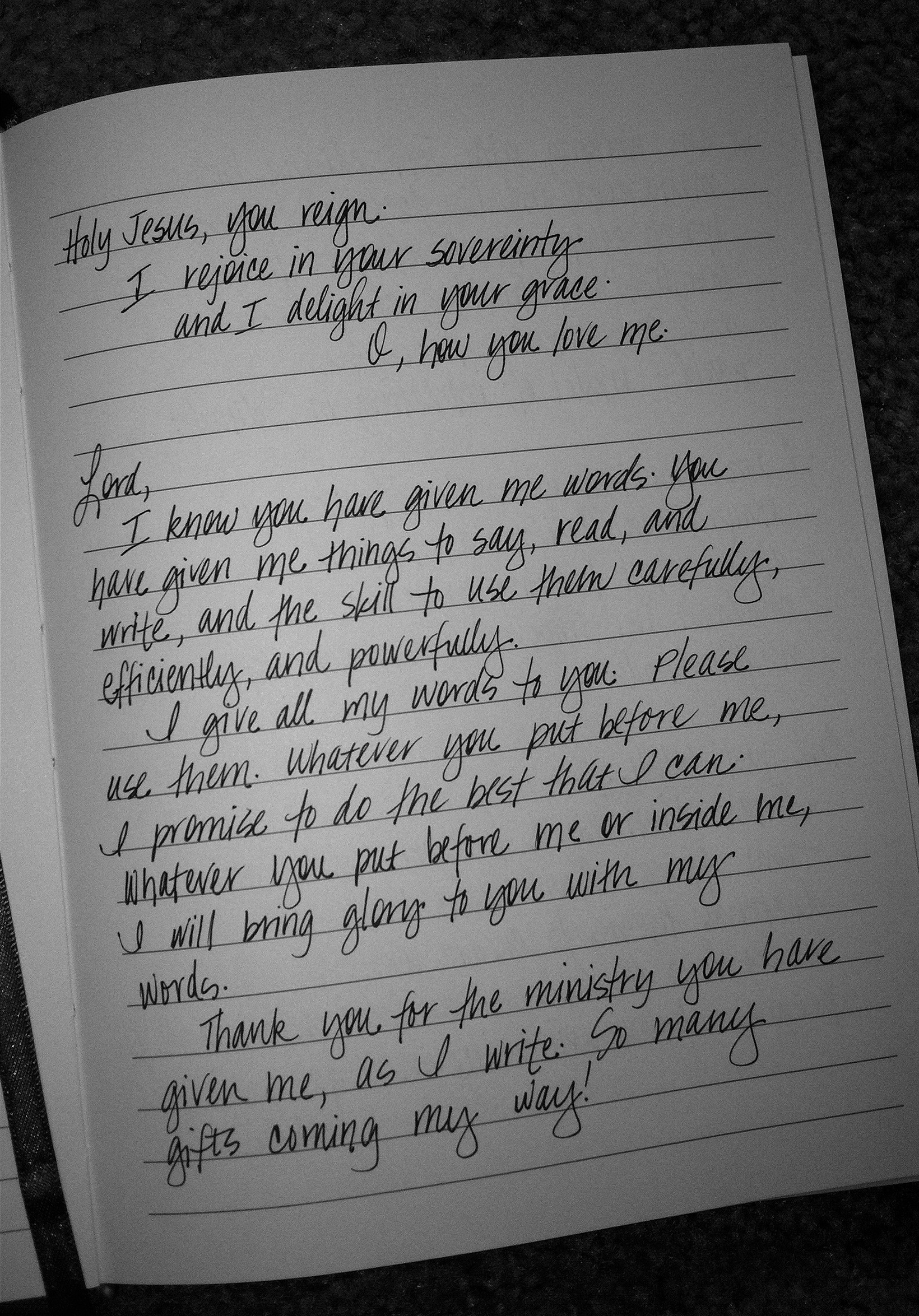
Recently, I found this page from my journal, December 2009. Here is what I wrote:

“Holy Jesus, you reign. I rejoice in your sovereignty and I delight in your grace. O, how you love me. Lord, I know you have given me words. You have given me things to say, read, and write, and the skill to use them carefully, efficiently, and productively. I give all my words to you. Please use them. Whatever you put before me, I promise to do the best that I can. Whatever you put before me or inside me, I will bring glory to you with my words. Thank you for the ministry you have given me, as I write.”
One year later, my husband died, tragically and suddenly, two days before Christmas. Overnight, I became a widowed single mom of two little boys who were not yet in kindergarten.

In this rupture of my world, a story emerged.

Yes, it is a story of grief, loss, single parenting, and deepest heartache, but this is also a story of hope, bonding, laughter, overcoming the worst, and getting up again the next morning.

Certainly this isn’t the story I intended to tell, and I won’t say that God allowed my husband’s life to end so my prayers could be answered. But I do wonder if perhaps it happened the other way around: God planted the desire in my heart, so that when such tragedy struck my family, I would know how to respond: to keep writing. In the horrible days, the easier ones, the loneliest nights, and always in honesty.

Robb used to say, “She’s going to be a successful author, and I’m going to retire early.”

Well, the plan looks different than we thought, but it still happened as he said. He retired early. And now I’m writing books.

In my words, may people find hope, grace, courage, and the tools to walk with someone through the valley of greatest tragedy to the sunshine on the other side.

As I asked him, God has given me a story to tell. How is he using your gifts and answering your prayers in ways you had not expected?
For more of Tricia’s story, please visit her at www.tricialottwilliford.com.

Hashtags can help….

So…. What’s a #Hashtag?

How can a simple #hashtag help me to promote my book?  Well in many, many ways.

#Confused?

First lets define what exactly you are looking at…. #pleasehelpme.

You probably first saw them on Twitter, that is where a #hashtag originated.

It’s a simple marker of sorts.  #Hashtags over the last year have migrated from Twitter to Instagram, and Pintrest. #clever.

A #hashtag is a marker of sorts that drives you to people’s posts, and drives people to your posts. You can click on any #hashtag and it brings up all other posts with that same tag in… simply put, if you want to promote your book to strangers, a #hashtag will be one of the best tools you can use for social media platforms that utilize #hashtags.

What topics are important to you? Make a list of words that are important to you selling your book.  What words describe your book? How can you find like-minded readers, by strategically #hashtagging words that are specific to you! #buildingabrand #books. If you know what SEO is, Search Engine Optimization, #Hashtags work.

Some simple rules for #hastagging. Never put spaces between words or the #symbol. Use words that are relevant to your tweet/pin/pictures.  A great way to find more followers is to use hash tags on both sides. You do it and other people do it in searches as well….  Find people that are #hashtagging things that you care about and get involved in their conversation. #smartthinking.

Here is a simple straightforward article in the Twitter Help Center, which could help you.

Remember, that #hashtags are fun.  Don’t over use them, but do use them to find like-minded readers.  It could open many doors for you… people will find you and you will find people.  #hashtags  #winning.

Publishing Tips and a Lesson in Humility

Image: FreeDigitalPhotos.net

Thursdays at the Water Cooler are for writing about the publishing business—an intimidating topic, and it made me take inventory of what I have to offer. Sure, I’ve written six novels. I’m published in print by a traditional, albeit small, New York press. I’ve worked with Amazon Publishing, and I’ve ventured into the indie business with a novel through Kindle Direct, Apple, and Barnes & Noble’s Pubit. I’ve marketed and advertised. I’ve developed a good network of successful published authors along with a few agents and editors. I’m business savvy, and I treat my writing as a profession. And yet…I can’t help but feel lacking on the topic of publishing.

In part, this is because I’m goal driven and I have lots of goals yet to achieve, but it’s also because I’m sincerely humbled by those around me—the extensive experience of the writers of the Cooler, the proficiency of those in my writing chapter, and the aptitude of people with whom I network online. I am one small voice in the mix, plugging along on my own publishing journey—often a lonely road with only rare glimpses of the bigger picture. So, what could I have to offer?

With humility comes wisdom.

I consider myself the average writer. As glamorous as writing sounds, it really is a somewhat lonely road. If some of what I’ve learned can keep me optimistically focused on moving forward, maybe it can help someone else, too.

1. No one knows it all, so don’t be envious of another’s success, and by the way, get comfortable with ambiguity. The grass is not greener on the other side of the fence.

Image: FreeDigitalPhotos.net

Whether landing your fifth series with one of the Big Six or newly exercising your empowerment to publish on your own, neither means you have it all figured out. Every facet of this business brings unique challenges, decisions, and discoveries. You are probably where you are in your journey for a reason. No matter where that is, you have more to learn. My tip: look for opportunities to gain knowledge wherever you can from those you admire, published or not. Just don’t get hung up on one source; look far and wide to develop a deep reservoir of knowledge to draw from.

2. Times have never been more dynamic or uncertain for publishing. I’m not talking about ebooks vs traditional publishing. I’m talking about the markets themselves—what readers will connect with and want more of, what’s hot and what’s not, new genres or formats cropping up. One extremely valuable lesson: do not try to chase a trend. It doesn’t matter how fast you write, I promise you, it will be over before you catch up. I write young adult fiction, and as hot as concepts like the Hunger Games are now, I’m already hearing dystopian is giving way to middle grade—but don’t pull out that old Harry Potter derivative; you’ve got to have something fresh and unique to offer to fit that trend. My tip: you should absolutely consider marketability as you write, but write from the heart nonetheless. It will come through in your writing, and you’ll wind up with something you can feel good about, whether or not it happens to be the latest publishing flavor of the month.

Image: FreeDigitalPhotos.net

3. One size doesn’t fit all, thank goodness. I listen to a lot of author speakers, and I have to admit, I grow weary of hearing some say things like, “I pursued New York publishing—because I’m serious about my career…” If that was their publishing journey, great—but not only does that imply there’s only one ‘right’ way to go about it, it doesn’t even make sense anymore. Variety and choice are the best parts of the publishing industry today. Fact is, you can be plenty serious about your writing career, have a far-reaching readership, and make a steady income without pursuing traditional NY houses these days. That doesn’t mean NY isn’t still a valuable and highly sought-after option. They may still even be king of the playground, and they’re no doubt busily trying to reinvent themselves to make sure they stay that way, but there are other viable options out there. My tip: remember you have choices, and stand tall no matter what avenue you decide to pursue on your personal publishing journey. There is no ‘wrong’ way to go about it. Even if you make a mistake, you can learn from it and move on.

There are a lot of experienced writers out there, and I’m just scratching the surface. What tips do you have to share about the publishing industry?

Extravagant Subsistence: Restocking the Writer’s Shelves (and Soul)

Our freezer is nearly empty. We’ve eaten all of last year’s fish and meat, which constitutes a near emergency. Tomorrow I’ll close my computer, ignore my writing deadlines and head back out by bush plane and boat to an island in the Gulf of Alaska where I’ve worked in commercial fishing with my family for 35 years.  We were so busy with the commercial season this summer we didn’t have time to put up our own fish for the winter, the wild salmon that will feed us luscious Omega-3 saturated flesh weekly through a long season of dark. We also harvest berries, venison, halibut and sometimes caribou. Putting up our own food stores, which goes by the shorthand term “subsistence,” is a normal and necessary part of most people’s lives in rural Alaska.

“Subsistence” is defined  as “The action or fact of maintaining or supporting oneself at a minimum level.” In Alaska, however, where a subsistence lifestyle is as common as wool socks, it’s evolved into almost the opposite concept. We don’t hunt and fish and grow and harvest simply to live—we engage in subsistence to live well. We have access to cellophane-wrapped factory-farmed meat like everyone else—but it is expensive, saturated with antibiotics and hormones, and has been shipped a very long way to get here. We prefer to harvest wild-grown meat from our own piece of the land and sea. It’s one of the reasons we live here.

This last week I began another kind of subsistence: I started re-reading Gilead, Marilynne Robinson’s wise and extraordinary novel. Her profound musings on the worth of life, as spoken through John Ames, an elderly pastor, remind me how empty my writer’s pantry has become. The authors who have sustained me through the decades—Frederick Beuchner, Annie Dillard, Richard Wilbur, Eugene Peterson, Walter Brueggeman, Gerard Manly Hopkins, Emily Dickinson—have become strangers of late supplanted by blogs, social media, and research for other writing projects. These are all quick, short reads full of good information, but I’ve been achingly hungry without knowing it.

I realize that my writing life is little different than my food life. I’m often so busy on the commercial end of the work—the marketing, creating the next book proposal, the social media—that I forget to do the real subsistence work. While I’m as tempted as anyone else to spend my time feeding on strategies to garner audiences and master social media, ultimately, I’ll starve on such a diet. Fifty-seven Ways to Grow Your Platform, while helpful, will do little to awaken mystery, stir my imagination, provoke paradox, unearth wisdom, deepen my humanness, all of which is why I began to write in the first place. I realize if I maintain a steady diet of techniques, I’ll soon be setting an impoverished table for not only myself, but also for my readers, who come themselves needing sustenance.

Subsistence work is not easy. Rather than grabbing cellophane packages of meat and fish from the meat counter, I have to go out into boats, I have to use knives and muscles, I have to cut off heads, pull out guts, spill real blood.

It’s a physical engagement with the material world. Reading the best writers is not unlike this. It takes more effort to read longer works. Blood will be spilled there as well as we wrestle with the deepest, hardest and most profound stories of dying and living. But this is how we will subsist and be sustained as writers for a very long time.

When I sit down to my first meal of grilled salmon this winter, I will remember where it came from, how it felt in my hands. I will be so well-fed, I will want to write about it, and will set the table for others to join me in the feast. I hope my work will feed others as well as I have been fed myself. With some labor, and yes, some blood, it can happen.

What kind of reading are you returning to for “extravagant subsistence”? How can we make more time for this kind of reading (and for sustaining physical labor)?

God-Given, Weird, Unexplainable–Joy!


For the last decade, I’ve prayed for God to give me a word to meditate and think on throughout the year. In 2010, the word was “peace,” and God used the word to convict and heal me of a tendency to worry.

In January 2011, I felt impressed to begin concentrating on the word “joy.” And like a pig-tailed toddler with a sweet tooth, I had pictures of God giving me presents. Maybe He would overwhelm me with material blessings (I entered the HGTV Dream Home giveaway several times, just in case). Perhaps He was going to provide a huge advance check for a writing project…or send me on a national television show to gain much-needed exposure for my blog.

As you can see, my thoughts leaned toward the selfish, temporary, and trivial. I’m so glad He knows what we REALLY need.

I won’t bore you with all the circumstances that hit our family in 2011. Suffice it to say, we were shaken and stretched in ways we never imagined. But in the midst of stressful moments–such as when my father underwent emergency triple bypass surgery–I felt peace, instead of fear. Not that I didn’t have moments of panic, mind you. But when worry showed up like a scorned lover, I took a deep breath and told him: “Get lost. I’ve got a new beau, and He’s not going anywhere.”

Mostly, it worked. 🙂

Just like the arteries near my dad’s ticker were bypassed by a skillful surgeon, my heart had been strengthened the previous year by God’s gentle scalpel of truth. I’m so thankful He tirelessly fought the stronghold of anxiety that had crept into my life.

Want to know something else? During 2011 and into 2012, God DID give me a present, wrapped in a great big, blood-red bow: weird, unexplainable  joy.

It is a spiritual gift, after all–just not one we talk about very much. My friend Megan says, “Joy’s not sexy, like wealth or prosperity. But it’s longer-lasting.”

I like that.

Joy means counting our blessings, both tiny and immense, while the world moans and heaves and believes all is lost.

Joy overcomes me when my eight-year-old cuddles with me and shows me his cursive practice. Joy warms my heart when my hubby texts me–because he misses me. And joy bubbles up when my teenager says, “I love you Mom!” out of the blue (it doesn’t happen often, believe me).

JOY is simply this: Jesus, at work in us, to do what we can’t do on our own.

There are many verses about joy, but one of my favorites is Psalm 28:7–“The LORD is my strength and my shield; my heart trusts in him, and he helps me. My heart leaps for joy, and with my song I praise him.” 

My heart has leaped as I’ve spent time with Him. And as I’ve learned to take joy in His presence, He has given me a few answers to the desires of my heart, as well. Those “hugs” from my Father have satisfied my desire to know He’s listening, while whetting my appetite for more of Him–not just His blessings.

As Neh. 8:10 says, “The joy of the Lord is my strength.”

It has been, and it will continue to be. I am praying the same for you.

Photo credit: hotblack from morguefile.com

Back to School

When I was a kid, summer was my favorite season: 4th of July, family barbeques and reunions, my birthday, catching fireflies, and participating in our county’s fair through various 4-H activities.

However, as I got older, and especially now that I am out of school, I appreciate fall more and more. About a month ago, lured in by the back to school displays at King Soopers, I made my husband buy me new pens and pencils, explaining that I would be more motivated to complete my to-do list if it were written in purple and green as compared to black and blue. Ultimately, I feel motivated by that fall feel—Pumpkin Spice Lattes, working at Starbucks with bright-eyed college students, and hunkering down in my house with manuscripts stored up on my Kindle.

Since many of you are probably parents and are, therefore, enjoying some extra writing time now that the kids are in school, I thought I would share some specific motivational tips that inspire me during the fall.

  1. Enjoy a hot beverage. Coffee, black, is my drink of choice, but I also like the occasional cup of tea or the more-than-occasional cup of hot chocolate. I also read somewhere that if you put the cup on your face, the warmth does something to your endorphins to make you happy. No idea if that is true or not, but it feels like a mood booster when I do it. Plus, it pulls me out of email or editing for ten minutes or so and just lets me be creative or pray or review my list of things to do.
  2. Going to Starbucks or a local college. Usually, I see several college students reading or writing or studying, and I think, if they can push forward, so can I. And then I will see someone working on calculus or chemistry or some other god-awful subject, and I send up a prayer of thanks that the most stressful thing that I encounter throughout the work day are rejections or a particular difficult edit. Seriously, calculus? Who willingly takes a class like that?
  3. Talking walks. It was HOT in Colorado this summer, and I’ve heard we have more ninety degree days ahead of us, but I have really enjoyed the past few days where the temperature has dipped into the seventies. I like working outside on my balcony and taking walks to observe the changing leaves. I feel energized and like change is happening in me both physically (baby boy is growing!) and spiritually. God and I have had some wonderful conversations these past few days, and I have felt my relationship with Him maturing and becoming clearer in a lot of ways.

So what motivates you during the fall? Have you had your Pumpkin Spice Latte yet?

No Angry Rejection

Rejection—we’ve all experienced it. Some days, it seems to roll off our backs; and on others, we feel as if a knife just pierced our vital organs.

Maybe you’ve been shunned by a friend, coworker, or employer. Perhaps you’ve experienced an even deeper-cutting rejection by a spouse or a loved one.

As a freelance writer, I experience rejection of my ideas and projects on a regular basis. At times, it’s hard not to take the “no’s” personally. When I was trying to break into the book market (something that took five years of learning, growing, praying, and waiting—after several years of writing articles and stories for freelance markets), the multiple rejections got to me after awhile.

Even though I believed I was called to write, and felt obedient to God by pursuing that call, major discouragement set in for me when three of my favorite publishers turned down a nonfiction book proposal in one week. Ouch!

My husband, friends, and family encouraged me to keep going. And I wanted to—but my “fight” was running out. The rewards of risk just didn’t seem worth it anymore.

Then God gave me a gift—a passage from Eugene Peterson’s The Message (1 Thessalonians 5:9–24), at the precise moment I needed it. I hope it will minister to you as it did to me:

“God didn’t set us up for an angry rejection but for salvation by our Master, Jesus Christ…So speak encouraging words to one another. Build up hope so you’ll all be together in this…Be cheerful no matter what; pray all the time; thank God no matter what happens…The One who called you is completely dependable. If He said it, he’ll do it!”

Isn’t that awesome? Those verses remind me, first, that God is up to great things behind the scenes. He will never fail. That truth allows me to trust in His timing and to thank Him–yes, even for rejections. After all, as James Lee Burke once said, “Every rejection is incremental payment on your dues that in some way will be translated back into your work.”

Second, trusting in God’s timing and faithfulness builds up my hope, so that I can get back into the ring of life and keep fighting—for relationships, for a vibrant life, and for the ministry God has chosen for me.

Third, online and offline groups–like this blog–allow those of us who share a passion for writing to speak encouraging words to one another, so that we can press into our calling. In unity, without jealousy or envy, we can cheer each other on. Complete trust in the One who made us causes us to know that all Christian authors have a role to play, and that every single bit of success is good for the Kingdom.

Fourth, God’s complete acceptance makes me willing to keep living life fully, even when it’s risky. Though friends, family members, or publishers may reject me, Jesus never will.

I can rest in that.

It’s A Parade!!

Welcome to WordServe Water Cooler’s Very First Blog Parade!!

Listed below are links to many of The Cooler’s authors and we are all writing on this topic: First steps we took to becoming an agented and/or published author!

The goal of today’s post is to give you some great advice and to allow you to see some of the personal blogs of our authors where they offer their ponderings. I think you’ll be amazed at the variety of helpfulness each author gives to the community.

Thank you, our faithful readers, for making the WordServe Water Cooler a great community. Enjoy the parade!

1. Anita Agers-Brooks: Anita Fresh Faith

2. Julie Cantrell: Julie’s Journal

3. Dianne Christner: …plain girl romanticizing

4. Dena Ratliff Dyer: Mother Inferior

5. Jan Dunlap: Jan Dunlap’s Blog

6. Michelle Griep: Writer Off Leash

7. Karen Jordan: BLESSED Legacy Stories

8. Sharon Lavy: Sharon Lavy’s Blogspot.

9. Gillian Marchenko: Gillian Marchenko’s Blog

10. Katy McKenna: Fallible

11. Melissa K. Norris: Inspiring Your Faith and Pioneer Roots

12. Jordyn Redwood: Redwood’s Medical Edge

13. Cheryl Ricker: Fresh Air

14. Kimberly Vargas: Kimberly Vargas’s Blog

15. Janalyn Voigt: Live Write Breath

16. Lucille Zimmerman: Lucille Zimmerman

Hope you enjoyed our parade!

The Bookstore Blues

If you want to induce an anxiety attack in me, take me into a bookstore.

I’m not talking about doing a bookstore book signing, either. I’m talking about walking into a bookstore to browse, to wander aimlessly among the shelves, to read titles on spines and admire book displays. I stroll through the aisles, suddenly paralyzed by the enormity of talent that lays before me between book covers.

I’m terrified.

The reason for my reaction is that walking into a bookstore brings me face-to-face with what I am attempting to do with my writing career: competing with all the other authors out there for readers. It unleashes a storm of insecurities inside me.

Why would someone choose my book to read over all those others?

What value does my book have in comparison to the other thousand on the shelf?

Did I write a good story?

Did I write an adequate one?

Can anyone even find my book amid everyone else’s?

Who would be willing to pay money for it?

What was I thinking?!

And then I recall a pivotal conversation with a dear friend of mine, my mentor and an accomplished author in his own right. “You should write a book,” he said.

“I know,” I replied, voicing the nagging desire I’d felt for years. “But why would anyone want to read what I have to say?”

“Because no one else can say it in the same way as you will,” he assured me. “Every one of us experiences life in a way unique to us, and that’s what you’ll bring to the table. Whether it’s fiction or non-fiction, no one will tell it like you will.”

Encouraged by his confidence in me, I took the plunge and wrote a non-fiction book about personal spirituality. The first publisher who was interested in the manuscript wanted me to change the perspective to reach a different audience than I had originally intended; I wrote the book for adult Christians, but he wanted to revise it and aim it at adolescents. I did something that I now (as a much more experienced author!) marvel at – I told him “thanks, but no thanks.” I believed in the value of what I had written and for whom I had written it, and even if it meant I had to continue looking for a publisher, I would do it. Eventually, I did find the right house and the book was published.

And then I learned, the hard way, that I was almost solely responsible for marketing it.

I had no idea what to do. The book never took off, although it sold enough copies for me to savor being an author.

I vowed if I ever wrote another book, I would do it differently.

Differently may be an understatement.

Now I write fiction – both humor and suspense – and market aggressively. I love what I do, and I know that if just one reader enjoys my book, I’ll be glad I wrote it.

But I still try very hard to stay out of bookstores.

What keeps you writing when you think of your book afloat in a sea of competition?

I Once Was Blind

Dr in Lab Coat

“Your eyesight may not return.”

In a haze of blurred white, all I could make out was a fuzzy outline of the optometrist’s lab coat as he held the door knob.”I’ll be back shortly; I need to confer with my colleague.”

The door closed, and I was alone. I didn’t mean to whine, but when you’re a writer facing permanent blindness, a few whiny words slip out.

Saline tears raced over my cheeks, and met at the center of my chin. They waterfalled into my lap. I raised my face toward the ceiling. “Why is this happening? How can I write without my eyesight?”

Sterile silence answered my questions.

When the doctor returned, he placed a piece of paper in my hand. “Get this prescription filled. Put one drop in each eye every two hours, even throughout the night, and come back to see my colleague tomorrow.”

“But tomorrow’s Sunday. You aren’t open.”

“He’s coming in for you.” His gentle hand assisted me out of the chair and led me toward the door by the elbow. It would be a very long, miserable night.

By the next morning, thousands of invisible pins pricked my body. My head ached, and walking outside turned sunbeams into fiery branding irons that seared my corneas. My husband drove me to the eye doctor.

When I shuffled into the office, the physician’s voice did not reassure me. “Let me take a look.” He clucked as he prodded, not bothering to hide his concern. “I’ve never seen anything like this. I don’t even know where to refer you. This is serious.”

Fresh tears careened rivers off my face. I could hear him rifling through papers.

“According to these reports, your eyes are worse than yesterday. I want you on complete bed rest when you get home. Come see me Tuesday. I’ll try to figure out what to do by then.”

I went home, crawled in bed, and cried out to God. A voice whispered in my mind, “What verse do you claim?”

“Though You slay me, yet will I trust You.”

“Then trust Me.”

“But how can I write if I can’t see.”

“Trust Me.”

In that moment, I decided to obey, and my whole perspective changed. I knew that if God wanted me to write or do anything else, He’d make a way. Others had authored in spite of blindness. Helen Keller, Jennifer Rothschild, and Jim Stovall came to mind.

Several days later, I met with Dr. Malhotra, a cornea specialist, who quickly identified the problem. He diagnosed me with Cogan’s Dystrophy, or Map-Dot-Fingerprint Dystrophy.

It took almost five weeks for the torn skins over my corneas to heal. My sight slowly returned. It was September, 2009.

Supplements for Map-Dot-Fingerprint Dystrophy
Supplements for Clearer Vision

Flash forward, three years. Though my vision challenges me from time to time, I’m able to see, and I write nearly every day. To maintain my sight, I take fish oil and vitamin supplements, use lubricant drops daily, and put salt ointment in my eyes at night to keep the skins taut and smooth. I’ll do this the rest of my life, and hope for few corneal flares.

Meds for Map-Dot-Fingerprint Dystrophy
Lubricant & Salt Ointment

Cogan’s Dystrophy makes it appear as if a fingerprint has been left on each eye, hence the more common name. I choose to believe God branded me with His own fingerprints to fulfill His special purpose in my life.

I once was blind, but now I see. And whether I’m to do it with my eyes or not, I will answer His call to write.

What obstacles have you overcome to fulfill your call to write?

God's Fingerprint
God’s Fingerprint