WordServe News: August 2015

Exciting things have been happening at WordServe Literary!

On the final post of each month you’ll find a list of Water Cooler contributors’ books releasing in the upcoming month along with a recap of WordServe client news from the current month.

New Releases

Bill Donahue released, in partnership with Baker Books, The Irresistible Community. 9780801017094_p0_v2_s192x300

*************************************************************************************************

Andrew Gerow Hodges Jr. and Denise George released Behind Nazi Lines with9780425276464_p0_v2_s192x300 Berkley Caliber, a division of Penguin.

*************************************************************************************************

Lynn Morris released her next book with Faithwords, A Sapphire Season. 9781455575619_p0_v1_s192x300


*************************************************************************************************

New Contracts

Carey and Dena Dyer signed a contract with Barbour, Love at First Fight for their first book as a husband-wife co-authoring duo.

Dianne Christner signed a contract with Barbour publishing for a novella, A Christmas Prayer for publication in Fall 2016.

Leslie Leyland Fields signed a contract with NavPress for her next book, out in Fall of 2016, Crossing the Waters (tentative title).

Jonathan McKee signed a contract with Barbour publishing for his next book, tentatively titled: 52 Ways to Connect with Your Smartphone Obsessed Kid.

Susie Shellenberger and Kristin Weber signed a contract with Barbour for their next book: The Smart Girl’s Guide to mean Girls, Manicures and God’s Amazing Plan for Me!

Jennifer Strickland signed with Barbour publishing for a 2016 release: 21 Myths (Even Good Girls) Believe About Sex

Shellie Tomlinson signed with Barbour publishing for her first cookbook, Hungry is a Mighty Fine Sauce.

What We’re Celebrating!!

Agency client, Paul Muckley, was named Nonfiction Editor of the Year. See the announcement here!

Four Tips to Improve Your Listening Skills

Photo/KarenJordan

I like to listen. I have learned a great deal from listening carefully. Most people never listen. ~Ernest Hemingway

“Are you listening to me?”

Has anyone ever asked you that question? Or maybe that thought pierced your heart and mind, as you felt the sting of someone else ignoring or rejecting you?

How important is listening to you as a writer? How do you know what your audience wants or needs if you don’t listen carefully to them?

Consider these four ways to improve your listening skills.

  1. Resolve to be quick to listen. Many times, people who come to us for help, just need us to listen. James 1:19 offers this advice, “Understand this … You must all be quick to listen, slow to speak, and slow to get angry” (NLT).
  2. Decide to be available. Jesus gives us an example of a wise counselor who made Himself available to listen. “The apostles returned to Jesus from their ministry tour and told him all they had done and taught” (Mark 6:30).
  3. Desire a discerning heart. Not only does Jesus listen, He discerned the needs of others. When His disciples came to Him after their ministry tour, Jesus observes their need for solitude and rest: “Let’s go off by ourselves to a quiet place and rest awhile” (Mark 6:31).
  4. Choose to be quiet. Proverbs 17:28 reminds us, “Even fools are thought wise if they keep silent, and discerning if they hold their tongues” (NIV).

At times our failure to listen before responding can provoke a negative, emotional response from our loved ones or friends, who may need our help. In fact, Proverbs 18:13 warns us, “Answering before listening is both stupid and rude” (MSG)

What can we offer others with our response, after we listen to their needs?

  • Grace, not criticism or judgment. Romans 2:4 reminds us, “Don’t you see how wonderfully kind, tolerant, and patient God is with you? Does this mean nothing to you? Can’t you see that his kindness is intended to turn you from your sin?” (NLT)
  • Companionship. We must encourage others to be dependent upon Jesus, not co-dependent on us. Jesus promised His followers, “I’ll be with you … day after day after day, right up to the end of this age” (Matt. 28:20 MSG).

So, the next time someone comes to you for help, I hope you ask yourself this question first: “Are you listening … Really listening?” (Matt. 11:15 MSG).

How have your listening skills helped you as a writer?

Dreaming Isn’t Only For the Young (Why Age is Just a Number)

1415712289q2s84

What are your dreams? Have you given them up because you think you’re too old to accomplish anything of worth?

Well, here’s a little reality check for you:

  • Sarah Bernhardt was 78 when she acted in her last stage performance
  • Sophocles was 89 when he wrote Oedipus at Colonus, one of his dramatic masterpieces.
  • On the day of his death, at the age of 78, Galileo was said to be planning a new kind of clock that would tell time—in minutes and seconds, not just hours—using a pendulum swing instead of movement of water or sand.
  • Robert Frost was 88 when his last volume of poems, In the Clearing, was published.
  • Winston Churchill was 79 when he received the Nobel Prize for Literature.
  • Igor Stravinski was 84 when he completed his last work, “Requiem Canticles.”
  • Charles DeGaulle was 75 when he was reelected president of France.
  • Pablo Picasso produced 347 engravings in his 87th year.

And last, but certainly not least:

  • Grandma Moses received her last commission as an artist when she was 99.

Obviously, age was just a number to such high-achieving artists and world-changers.

Closeup of message stones on white background.

And don’t forget one of the superstars of the 2008 Summer Olympics, Dara Torres, who was the oldest female swimmer in the history of the Olympic Games (at the relatively young age of forty-one). She came away from the games with three silver medals. Not bad for a gal who was called “Grandma” by all the young swimmers in Beijing!

Torres, whose memoirs are appropriately titled Age Is Just a Number, won the first of her twelve Olympic medals in 1984, a year before Michael Phelps was even born! She broke her first of three world records in 1982, at fourteen, and has retired from swimming and has come back three times, She’s also the first American swimmer to compete in five Olympics (despite sitting out 1996 and 2004).

Torres is a role model for staying fit, aging gracefully, and pursuing your dreams. Dara’s dream of an Olympic comeback first hit her when she was months into her first, hard-won pregnancy. She returned to serious training while nursing her infant daughter and contending with her beloved father’s long battle with cancer.

Talk about an inspiration!

So what’s stopping you? Has Satan lied to you and told you that you’ll never amount to anything, because you’re “over the hill?” Do you feel worthless because you haven’t pursued something God has laid on your heart? Do you think it’s too late?

It’s not, my friend! God gives us dreams for every stage of our lives, and His grace continually makes all things new. So tell the devil to back off! Claim the truth that God is for you, and that He is the author of dreams.

————-

51FFgMsk+nL._SX355_BO1,204,203,200_

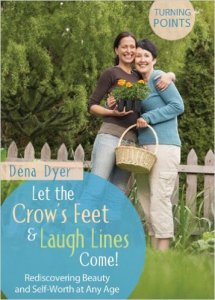
Note: This post is an excerpt from Dena’s book about aging gracefully (and with a sense of humor), Let the Crow’s Feet and Laugh Lines Come (Barbour). Used by permission of Barbour Books. 

I Want You to be Honest. Honest.

When the phone rang, I grabbed it with eager anticipation. A good friend had just finished reading the manuscripts of my two-book romantic suspense series. She claimed to love them both and wanted to discuss them further.

business-19148_1280Nothing thrills me more than discussing my work with someone who admits to loving it, so I looked forward to the conversation.

She didn’t let me down. At first. She gave me thirty seconds to revel (read: let my guard down) as she gushed about how much she loved the story-lines, the characters, the dialogue, the suspense and the romance.

There was a slight pause when she finished. I don’t think she actually said the word “but” out loud, but she might as well have. It crackled along the wire separating us like an electric current, raising the hairs on the back of my neck.

Here it comes.

It actually occurred to me to start breaking up my words like I was traveling in and out of long tunnels and was losing the connection. I could tell her we’d have to continue the conversation sometime in the future. Like after the books had become massive best-sellers and her criticisms had become moot.

Problem was, she’d called me at home.

Short of lighting a match under the smoke detector (and don’t think I didn’t consider it), I was stuck.

For what seemed like hours, she pointed out every little hole in the plot, every weak storyline, and the periodic stretching of credulity.

As a rule, I avoid clichés like the plague. Still, during that conversation I went through a roller-coaster of emotions.

emoticons-150528_640

The initial euphoria wore off alarmingly fast. Trepidation rose to take its place, soon supplanted by an actual, physical pain in my chest (which frightened me even as I grasped hold of the slim hope that I might be having a heart attack and would have to end the call so I could dial 911). Once I managed to get over myself, however, I sloughed off the self-pity and straightened in my chair.

Actually, this was pretty good stuff.

I reached for a pen and paper. Several scribbled pages later (both sides, single-spaced and running up and down in the margins), my friend ran out of suggestions. Or possibly oxygen. Either way, I admit to a sense of relief, coupled with a growing excitement.

She’d made some great points. Even addressed some issues that, deep down, I’d known were problematic, but had really, really hoped no one else would notice. The changes she suggested would definitely make the story stronger, more believable, more suspenseful and maybe even a little more romantic, never a bad thing.

The relief and excitement were soon overtaken by another emotion: gratitude.

Giving her honest opinion of my work hadn’t been easy for my friend. Several times throughout the conversation she had apologized, and gone out of her way to assure me that she really did love the books. Still, she cared enough about the stories—and me—to want them to be even better if possible (and trust me, it’s always possible).

I returned to the top of the first page of notes I’d taken, firmly scratched out Note to self: slash her tires, and settled in to contemplate her recommendations.

When I finished with the edits, I was ecstatic. If I’d ignored my friend’s advice, or set my own house on fire in an effort to avoid it, the books might still have been okay. Now, though, the humiliation humbleness with which I received her constructive criticism and applied it to my manuscripts had borne fruit.

(Brutally) honest feedback on our work is difficult—to take and to give. But if it comes from a genuine desire to help make that work more excellent, and if it is received with a thick skin and an open mind (a powerful combination for a writer to cultivate), it is also a priceless gift.

*This post originally appeared at http://wordalivepress.ca/blogs.

The Power of the Ask

I sometimes forget the strength of the simple. Social media is a brawny tool, but it’s sometimes vexing to figure out the best way to reach the masses using our profile platforms. That’s why a couple of informal posts I recently put up surprised me in their reach and response. I re-learned a lesson about the power of the ask.The Last Lecture by Randy Pausch

From infancy, we quickly figure out we must communicate our desires and needs in order to have them filled. A baby cries. A toddler whines. A little child begs. A teenager says, “Mommy or Daddy, please?”

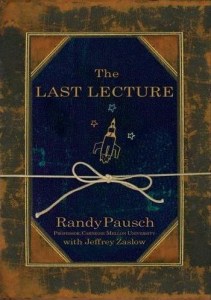
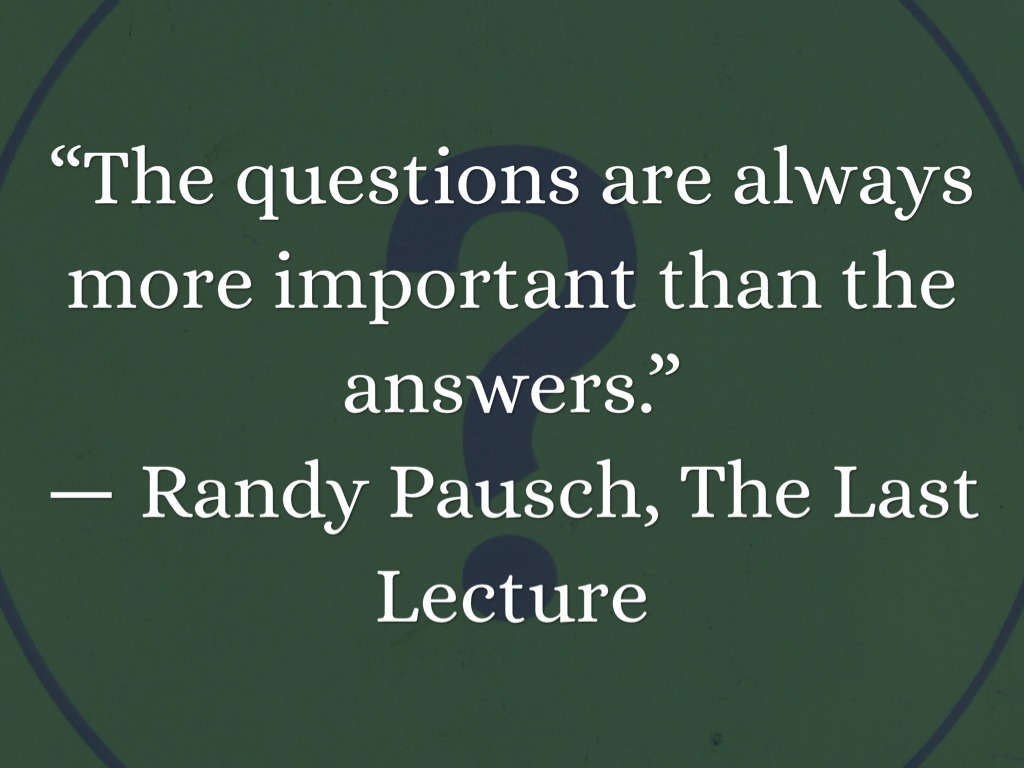
If we make our requests without manipulation or ill motives, especially when we are inspired for a greater good, we generally receive what we ask for. I remember a few years ago, when I read Randy Pausch’s book, The Last Lecture: Really Achieving Your Childhood Dreams, and feeling struck when he mentioned the power of simply asking as criteria for getting what we want. The world relinquished a wise and insightful man when he lost his battle with pancreatic cancer in 2008. Randy’s book was his final gift to the world.

Randy Pausch Questions More ImportantI was reminded of The Last Lecture when two different times I asked for help on my social media platforms. My intent was to help others, but as a by-product, the information I received also helped me. I believe because my questions were genuine and sincere, my friends, fans, and followers were eager to assist.

First, as a favor to a friend who is an editor for a women’s magazine, I asked seven questions in order to find out what the hottest topics were for women today. Not only did the volume of answers surprise me, but so did the patterns they revealed. It turns out many women are struggling with similar issues–raw, real, and relevant in our 21st century culture.

My friend got the information she needed, but as a bonus, I’ve been able to share what I learned with other women with hearts to share messages that matter. The benefit I received was my own fresh insight into what sisters of today are battling, allowing me to search for answers on their behalf. All because I dared to ask.

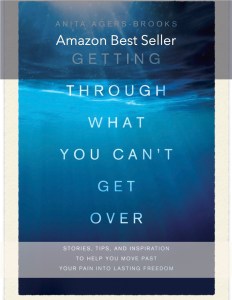
Getting Through Amazon Best SellerThe second thing I asked for came as a result of requesting detailed and specific aid from my social media peeps. When my latest book, Getting Through What You Can’t Get Over released in late March, it enjoyed a strong opening run. The first 90 days, readers reviewed and spread the word as the message resonated with many who were hurting, or knew someone else who was. But as authors, we know the challenge of keeping our messages out there, and figuring out how to reach appropriate audiences with our words of help, healing, and hope.

So when I asked on social media for ideas and/or connections to reach chaplains for the military, hospitals, or prisons, I was again shocked at how much my friends were willing to assist. The power of the ask extended my reach, and the longevity of my book’s impact.

In a world that often feels complicated and confusing, with voices shouting, “Try this. Do that,” it’s refreshing to remember the strength of the simple. Lately, I’ve seen many ask for help in a myriad of ways on social media.Social Media Platforms

“What pediatrician do you recommend in the Denver area? Go!”

“My son got blood on my favorite yellow shirt. Can it be saved? How do you remove blood stains? Go!”

“I need a quick dish for our family reunion this weekend. What’s your fave? Go!”

These days, folks are used to being asked to help with many things. So why can’t we ask for help in sharing our messages, or to find out what messages we should share? Instead of overcomplicating it, why not enact the power of the ask?

What are your current hot topics? Do you have any insights on how/who I can spread my message of real healing and hope for the hurting? How can I help you?

Finding Your Voice

find your unique voiceAbout ten years ago, I started thinking about publishing a book. After writing my way through twenty years of various marketing and development ventures, telling many wonderful stories of others along the way, every now and then I’d start to think I had something to say. My own story to tell.

The problem was, I didn’t know how to say it. I’d spent all those years adapting to the voice of others, setting aside my own ideas, submerging myself in a particular client’s mindset and style in order to honor their voice and tell their story well.

Somewhere along the way I lost my voice.

I started second guessing what I should sound like, who I should be. Eventually I shaped this ridiculous concept (based on the comparison and envy of other folks) of what I should be, what I should sound like. And that image, that false representation of me, is the one I carried to the outside world.

Now trying to share my own story, I imagined I needed to mimic somehow those popular writers who had scores of people following them. So I tried hard to fit in, to sound like I should. But my words leaked out flat and predictable with this stiff journalistic bent.

Because that’s the sort of thing that happens when you silence your authentic self.

Thankfully since those days I’ve learned a lot about finding my voice. I’ve learned to trust my uniqueness as this is the very thing that makes me me. This unique combination of my quirks and passions, my own style and feelings and beliefs, these are the very things that set my words apart from the millions being shared daily.

I don’t know that I can pin the discovery of my voice on one particular experience, and I don’t dare suggest there’s a magic formula that suits us all. But I would love to share three of the things I’m learning along the way in the hopes they may somehow encourage you.


1. Be an original.

When we lack confidence it feels easier to imitate others, but its flat hard to pretend to be something we’re not.

So wherever you are, whatever you are writing or thinking about writing, I’ll encourage you to confront any false voices that try to convince you that you have to have it together out of the gate. Because you don’t.

Take this moment and give yourself permission to no longer compare or pretend or perform.

Then, take a deep breath and commit this day to start relaxing into your unique you. Practice, practice, practice being yourself; your true voice will eventually emerge.

 2. Value your life experiences.

Perhaps, like me, you’ve walked some hard days. Maybe you’ve faced a loss, an illness, or a dysfunctional relationship? Maybe it was a crisis of faith or a dire financial situation? Whatever it was, I bet it was dark and lonely and didn’t make a bit of sense.

Here’s the thing: we can’t be afraid to say what it was like in the dark.

These life experiences often act as a catalyst, gifting us the ability to reimagine these hard days in a way others can relate to them. While we might not be able to change the way it was there in the dark, we can change the story we tell ourselves (and others) about those days.

As dark as it was, your journey to the other side holds the potential to stir a fresh hope for the person still stuck.

 3. Take risks.

I’ve never been naturally courageous, but I have learned this: if I want to make a difference in this world, there are times I’m going to have to be brave.

Sharing your heart will feel risky (because it is), but an unhealthy caution will stall your voice.

Too often we don’t realize how very close we are to finding our voices.

Give your voice the room it needs to grow. Explore, pursue, and practice until your true voice becomes your natural default.

Be an original, take risks, and don’t be afraid to dream big.

Your voice is a unique and unforgettable mixture of your own personal style, perspective, and message. Surrender to it. Shape it as needed, yes, but don’t be afraid to share it.

Going Deeper: Where are you in your journey to find and use your voice? Share your thoughts and observations in the comments below.

Want more? Click here for a free 10 Tips for Finding Your Voice printable.

How a Non-Writer Like Me Got Published (conclusion)

(Continued from Part I, Part II and Part III) Image, pink binder

I will never forget the feeling that day when I collated thirty chapters, punched holes, and neatly stacked all 330 pages of my first draft into a pink, soft-cover binder. I wasn’t Rocky at the stop of the stairs with pumped fists, but rather felt a peaceful satisfaction unlike any I’d ever experienced. It was a book in my hands, and I’d written it.

At the prescribed time, I emailed a digital copy to Jim Lund, the editor who had agreed to help me. His feedback arrived about three weeks later.

Jim’s comments were mostly about structural issues. The timeline was chaotic and he had trouble following what happened when. We shuffled chapters and paragraphs, and “trimmed” unnecessary copy. For example, when describing the time Annie broke into our upstairs bedroom, I’d “squirreled” a three-page tangent about the bats that flew into our house throughout that entire summer. “Kind of interesting,” Jim said, “in a creepy sort of way. I’d trim this.” “Trim” being the kind word for “chuck it.”

Over a period of months, I integrated Jim’s recommendations into a cleaner draft. I read and re-read that manuscript dozens of times, sometimes aloud, and fine-tuned the cadence and the prose into a finished product that sounded like me. It was then ready for beta readers.

I paid Office Max $110 to print eleven copies of the manuscript. I then assembled the pages into inexpensive binders and began to share my work with friends and family. Copies went to my brother, Paul; to Annie, of course; my son, Jeff; a couple of dear friends; my pastor’s wife, Kari; plus my therapist and the four women in our long-standing support group. My husband, Pete, continued to show little interest in reading, remaining insistent that it took me 330 pages to say what he likely would have said in 11.

I can’t remember a time when I ever felt so vulnerable… and I was terrified.

It’s a huge commitment to read someone’s work, especially 330 pages of it, and comments began to trickle in over a period of weeks. “This is good, Barb. This is really, really good. I read tons of books and frankly could not put this down.”

Yeah… that’s what friends are supposed to say.

I continued to edit and trim, ultimately heeding the advice of others and slashed/reworked/condensed the first few chapters. I couldn’t read a paragraph without reworking it, and wondered if I’d ever know when the book was done.

In the meantime, I bought hundreds of dollars worth of books on self-publishing. Jim taught me that only famous people received publishing deals these days, or people who had developed strong national platforms. He thought my story was powerful, but I was unknown. Completely unfamous.

Nevertheless, after two years of hard writing, I thought it would be fun to query some agents and see how the process worked. Maybe I’d get some helpful feedback. I’d already drafted a query letter in a “How to get your book published” class up at our community college. Next I needed to write a proposal, and Jim provided some templates.

Writing the proposal was miserable. While my business background proved helpful, I found this part of the process a chore. The manuscript was written first-person past tense, yet Jim instructed me to write the proposal in third-person present tense. So each of the thirty plus chapters needed to be condensed and translated into a different form of speech. It was a grind, and I shelved the book for months. This just wasn’t going to happen.

Until… until, I felt the nudge again. “It’s time,” said the voice within my own.

Two days later I sent a query letter to two agents, and both responded within a week. Requests for the proposal followed, and the manuscript followed after that. My brain could scarcely take in the enormity of what was happening.

One of the agents was the wonderful Alice Crider and she signed me with WordServe Literary. Within a few weeks, Alice had secured two publishing offers.

grunge image of a field

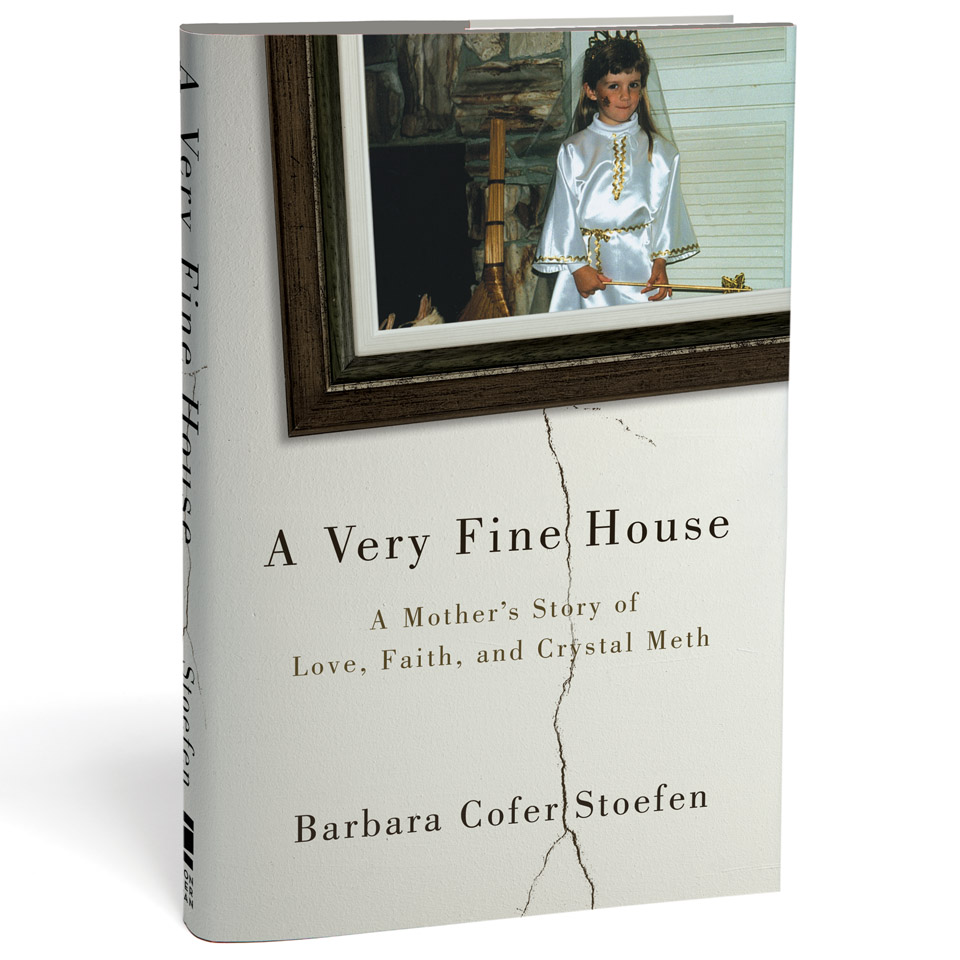
The rest is history, as they say. I’m not a famous author by any means, but I am an author nonetheless. It was four years after I received that first nudge from God to “write a book about the gifts you were given,” that Zondervan released A Very Fine House: A Mother’s Story of Love, Faith and Crystal Meth. They even retained my working title.

Miracles can and do happen. First was my daughter’s return from the abyss of drug addiction. Then a book followed about the gifts, the lessons learned. Whew. Both experiences have strengthened a simple faith, and changed me forever.

What Breaks Your Heart?

broken heart dreamstimeAndy Stanley, in his teaching series entitled “Re:Solution” asked a powerful question when he asked, “What breaks your heart?”

The point of the question is this: You were designed by your Heavenly Father who has given you unique gifts, talents, experiences, etc. and when He did, He also designed you for the purpose He placed you here at this time in history to fulfill. (Sounds kind of like this book, On Purpose For a Purpose which you may have heard of. #ShamelessPlug)

What breaks your heart is tied directly to your calling.
Does human trafficking and slavery break your heart the most?

Does social injustice break your heart the most?

Does seeing children struggling in poverty break your heart the most?

Does the decline of healthy marriages and families break your heart the most?

Does domestic violence break your heart the most?

Does lack of medical care to those most in need break your heart?

Obviously, these are all tough, tough issues in our world today, and our hearts break with each one. We know that none of us can do everything. We also know that all of us can do something. So, what is it that breaks your heart the most? Perhaps it is something not even listed above.

As Andy asked this question, and as I considered the past decade of my life in full-time ministry, it became so clear to me that what breaks my heart the most is …

Seeing people remain in shackles that keep them from the abundant life Jesus came to offer. This enslavement shows up in the the following ways:

People striving so hard to experience freedom through their self effort to please God..

Husbands and wives trying so hard to make marriage work in their own power…

Parents living with shame and guilt over what their children choose…

Children grasping to find acceptance from parents who never can never be pleased…

Family members estranged from one another over past offenses…

Pastors or other Christian leaders using shame and guilt to motivate change from those sitting in their services, reading their books, or attending their conferences…

Men, women, adolescents and even children in bondage to addictive behaviors, substances or acts.

When it all comes down to it, I realize what breaks my heart the most is seeing people live with the heavy shackles of legalism disguised as “Sold-Out” New Testament Christianity. That’s what breaks my heart.

But what gives me HOPE in the heartbreak is the awareness that through Christ in Shelley, I can be a carrier of light and life into the world. I can be a voice of grace and truth to my generation. I can be a teachable student on a journey who invites others to join me.

Being self-aware enough to know what breaks our hearts can help us when we’re trying to determine our next step, our next move, our next project, or perhaps the next blog post. 

Becoming aware of what truly breaks our hearts can also lead us to the hope we can offer others whose hearts are broken as they live through the experiences that break yours. 

I encourage you to take some time to reflect on this question and articulate what breaks your heart the most, but don’t stop there! Once you’ve written these down, consider the hope you can now offer through your life–vocationally and relationally–to those who need you and are waiting for you to show up in their lives.

All Things Come to She Who. . .

gray coneflowerCome this September, I will have been a published author for nine years.

I’m still not a household name, and I don’t expect to ever be one.

But, I can say with complete assurance, my writing career is beginning to bloom into what I had once only imagined.

In the last two months, I received my first Kirkus review, which is, according to my agent, a “big deal.” Not only that, but it was a positive review, and it’s already generating advance word of mouth among readers thanks to shares on social media. I also finally landed a review with a major magazine in my (fiction) subject area of birdwatching, which will generate the nationwide publicity for me that I’ve yearned for since my first Birder Murder Mystery book came out. Both of these reviews are for the seventh book in my series, titled The Kiskadee of Death.

Yes, it took seven books for me to land on these reviewers’ radar.

Seven books.

Another first in the last month was receiving a request from a magazine editor to write an essay for them. In my entire writing career, I have never had an editor approach me for an article – I was always the one doing the pitching. To have an editor seek me out to author an essay was a huge boost to my career confidence; knowing that I’ve made an impact on publishing professionals is worth the months I’ve spent cultivating readers and developing my brand.

The final mark, for me, of having my feet firmly planted on my writing path is the number of guest posts and speaking engagements I’m now booking with relative ease. Whether my new-found success in that arena is due to my hard-won lack of fear of rejection, the persistence I’ve practiced, or just a matter of time, I don’t know. And at this point, I don’t care what has generated these new opportunities; I’m just very grateful to have them.

Coincidentally (or not), I recently read an interview with Kate DiCamillo, the celebrated children’s author. Before her first publication, DiCamillo recalled meeting Louise Erdrich, the award-winning author, who asked DiCamillo how long she’d been writing. When the budding children’s author said “Four years,” Erdrich advised her to hang on, that her own book career had taken six years to get off the ground.

It made me feel better that even some of the author superstars of the publishing world know what it’s like to have to wait for success.

The bright side of all that waiting is that when success does finally come, a writer can look back over the years that have gone before, and see that without that waiting, that revising, refining, re-imagining, and all those countless hours of learning a craft and business, the achievement would not taste as sweet as it does. Because the truth is not that all things come to she who waits, but that all things come to she who works while she’s waiting.

Have you begun to see some signs of success in your own writing journey?