WordServe News: January 2013

Exciting things have been happening at WordServe Literary!

On the final post of each month you’ll find a list of WordServe Literary clients’ books releasing in the upcoming month along with a recap of WordServe client news from the current month.

New Releases

FaithFearDeb Coty released Fear, Faith and a Fistful of Chocolate (Barbour)

***************************************************************************************

MysteriesJillian Kent released Mysteries of the Heart (Charisma)

***************************************************************************************

RosasLandGilbert Morris released Rosa’s Land (Western Justice #1) (Barbour)

***************************************************************************************

crescentPaul Williams released Crescent Moon Rising (Prometheus)

***************************************************************************************

New WordServe Clients

Ema McKinley signed with WordServe to write her story with Cheryl Ricker on her miraculous healing after more than 15 years in a wheel chair. http://www.cbn.com/700club/features/amazing/RH66_Ema_McKinley.aspx

Dr. Kara Powell, Executive Director of the Fuller Seminary Youth Institute and the author of the Sticky Faith books (www.stickyfaith.org) (Zondervan)

Nationally syndicated cartoonist John McPherson (http://www.gocomics.com/closetohome/), author of Close to Home, the cartoon strip that appears in more than 800 newspapers.

New Contracts

KarissSigning
WordServe Author Kariss Lynch and her BIG moment.

Kariss Lynch signed a 3-book contract with Charisma Publishers…her first contract! Way to go, Kariss!

Jonathan McKee signed with Bethany House Publsihers for a book titled Get Your Teenagers Talking.

Lynn Morris signed a 3-book contract with Hachette’s Faithwords imprint for a Regency novel series.

Betsy Duffey and her sister Laurie Myers signed with Howard Publishing for a novel called A Shepherd’s Song, a contemporary story on the impact of Psalm 23 as it travels around the world from person to person.

James Pence will be writing the story of Herb and Roberta Samme, the story of Herb going to Iraq to fulfill the mission of his son, a soldier who was killed while driving supplies to the troops. He walked in his son’s footsteps on the same roads. He and his wife Roberta then started a mission to supply soldiers with clothing for the winter. To be published by Guideposts Books.

What We’re Celebrating!!

WordServe authors had a good month on the general market lists:

AHigherCallA Higher Call  by Adam Makos had a very big month. This WWII story made lists in The New York Times, USA Today, and Publisher’s Weekly.
Just to name a few:

#11 Print Hardcover (Jan 27) NY Times
#23 HC nonfiction (Dec 30) Publishers Weekly
#105 (Jan 24) USA Today

whiletheworldCarolyn McKinstry’s book (written with Denise George) While the World Watched was Amazon’s featured ebook on Monday, January 19th, and rocketed to #1 on the free ebook list. But the next day, it was #1 on the paid ebook list. It also hit #1 on several other lists on Amazon:

o #1 in Books > Biographies & Memoirs > Leaders & Notable People > Religious
o #1 in Books > Biographies & Memoirs > Ethnic & National > African-American & Black
o #1 in Books > Christian Books & Bibles > Christian Living

A YearRachel Held Evans’s book A Year of Biblical Womanhood (Thomas Nelson) hit the New York Times list January 13th at #19 on the nonfiction ebook list and #32 on the combined print and ebook list.

What can we help you celebrate?

Half Baked: A Publishing Recipe

Is most of your writing only half-baked? It’s easy to get distracted with all the wonderful topics to write about, and many of us have manuscripts that are still rising on shelves in the garage. That being said, it’s sometimes nice to go through the steps of what happens when a book does in fact make it all the way to publication. Here is a basic recipe detailing the steps that are required in creating a fully baked book:

For a first time author, a book usually starts with a completed, edited manuscript for fiction, or a proposal and sample content for non-fiction. Published authors can sometimes sell novels on proposal, but not usually. Best practices suggest that unpublished authors should try and find a literary agent, once their manuscript is ready for submission. Few publishers accept work directly from authors sans representation, and a good agent can greatly aid a manuscript’s success rate.

After a literary agent has taken on a manuscript, they then send it to editors at different publishing houses. The literary agent targets the submissions to the publishing houses that they feel are most appropriate for the book. The editors take a look at the project, and if it’s something they are interested in they will share it with their colleagues to determine the level of interest. If the editor receives word that they can move forward with the manuscript, they will send an offer to the literary agent.

The submission process can take anywhere from weeks to months (or even years), depending on how long it takes to find an interested editor. An offer may include advances and / or royalties. Sometimes the offer may even be a contract for several books. If more than one editor is interested, there may even be a bidding war situation to determine which publisher can create the best offer. When the terms have been agreed upon and the author accepts an offer, the publisher will send a contract to the literary agent. The literary agency may have a contracts expert review the fine print and negotiation points. Once the contract has been signed, it’s time for the author to get writing (if the book was only sold on a proposal).
Little Chefs

Once the manuscript is completed (non-fiction), or after the contract is signed (fiction), the editor will usually send a letter recommending changes to the manuscript. These changes are more or less negotiable, but authors usually follow the recommendations of editors. After all of the recommended changes have been made and the manuscript is deemed ready to go, it is copy edited. Spelling and grammatical errors are corrected. The pages are laid out to show what the book will look like. The author reviews the different versions of the completed manuscripts. The publisher works on the design of the book (including cover, trim size, font, paper type, and other details).

The editor manages the process of having marketing experts write copy for the publisher’s catalog, come up with the cover details, create buzz, and launch marketing plans. Several months before the book’s publication, sales specialists will coordinate with their bookstore partners and take book orders. This part of the process helps determine how many copies of the book will be printed. The agent might oversee this process to verify everything is on track. It usually takes a year or more for the publication process to go from finished manuscript to book for purchase. It can be fast tracked if it is an especially hot project, but the process usually requires quite a bit of lead time. When the publication date arrives, the book goes on sale. The book is now available to customers, and the customers often take it from there. Positive feedback, great reviews, and word of mouth are still some of the best forms of marketing. After that, the author is launched into instant literary stardom (or not). The author then writes a second book and the process repeats.

Hopefully this recipe for completing a half-baked book has been helpful – and now, I’d better get back in the kitchen.

Why I Don’t Believe in Writer’s Block

It’s one of the most oft-asked questions I get as a writer and teacher: “What can I do about writer’s block?”

“Write,” I say. (I was going say, “Simple. Write.” Alas, I realize it isn’t simple. It isn’t easy.)

I tell people I don’t believe in writer’s block.

The PCT heading toward Oregon's Collier Cone.
The PCT heading toward Oregon’s Collier Cone.

Do the words sometimes come harder than at other times — or hardly at all? Sure.

Do you sometimes need to change things up to feel the mojo again? Sure.

Do you sometimes crave the idea of skipping that 5 a.m. appointment with your keyboard? Sure.

But this idea that we can’t move forward until the muse returns with open arms — no, that’s a crock. Basing your writing on feelings is no better than basing your life on feelings.

Sometimes you just have to power your way through.

It’s that way with anything we do. But writers seem to have created something of a self-fulfilling failure prophecy, a challenge apparently so insurmountable that we’ve given it an official name. And once something is named, it becomes an official malady.

Read: An excuse.

I don’t believe in writer’s block anymore than I believe in “plumber’s block” should the guy fixing my pipes suddenly find the going difficult. “Sorry, pal,” he might say as he gathers up his tools — and, of course, hitches up his, ahem, jeans. “Just not feeling it today.”

I don’t believe in writer’s block anymore than I believe in “surgeon’s block” should the doctor doing my knee operation find herself stymied. “Hey, Bob, hang in there. I’m going to flex out the rest of the day. Maybe catch a matinee to see if I can get back in the groove, you know?”

That’s not to say there aren’t things you can do to get yourself “unstuck.” Sometimes I’ll go back and read my piece from the beginning. Explain my plight to someone who knows my story with hopes they can jar something lose. Maybe even take a walk.

But this idea that you somehow need to wait until the “feeling” returns is bunk.

Ernest Hemingway said it well: “Easy writing makes hard reading. Hard writing makes easy reading.” Jack London claimed to have written 20 hours a day.

Part of writing is discipline. Is doggedly moving on. Is writing on even if the results aren’t perfect. Even when it hurts. Even when you’d rather be doing something else.

So, today’s efforts might not have rung your literary chimes. But they count for something. You persevered. To quit whenever it hurts it to make it that much easier to quit the next time. A lesson I learned while hiking the 452-mile Oregon portion of the Pacific Crest Trail: “You must go when your body says no.” With writing, you must go when your mind says no.

Just last week, after a speech, someone in the audience asked me which of my books I’d written was my favorite. “They’re like children,” I said. “Each one is my favorite for a different reason. But the one I’m proudest of is American Nightingale because nothing in my nearly four decades of journalism has come with more difficulty. Nearly four years from idea on a Wendy’s napkin to seeing it on a Barnes & Noble shelf.” (I captured that research, writing, and promotional experience in a subsequent book, Pebble in the Water.)

Sometimes I draw inspiration from fellow writers. I do a lot of 5-a.m.-to-9 a.m. book writing before I go off to be a newspaper columnist. If my alarm goes off and I don’t want to get up I remember my novelist friend Jane Kirkpatrick and think this: Jane has already been on her keyboard for an hour.

Or because I write a lot about inspirational people, I’ll think about something they soldiered through — war, disease, the death of a loved one — and think to myself: Buck up, pal. This is just stringing together words. You’ve got it easy. 

Living More Renewed in 2013

Did you make any resolutions for 2013?  Okay, now the convicting question, are you keeping them? Whether 2012 was a fruitful year for you, a dry, challenging season, or somewhere in between, the new year offers a fresh start—a new beginning filled with a renewed sense of hope for the future. However, our 2013 won’t look much different from past years unless we make some changes. Resolutions are often our way of acknowledging the aspects of our lives that need a little tweaking.

This year, I made a resolution to live life more fully renewed and spiritually refreshed through a greater commitment to prayer. Would you consider joining me in my quest to become stronger and more fully devoted to Jesus than ever before?

DaffodilsI must caution you that is just the kind of commitment the apostle Peter claimed to have before he denied His Lord three times.

Check out this adapted excerpt from my new Bible study on Peter—Eyewitness  to Majesty: Abandoning Self for Christ:

“You will all fall away,” Jesus told them…”But after I have risen, I will go ahead of you into Galilee.” Peter declared, “Even if all fall away, I will not.
“I tell you the truth,” Jesus answered, “today—yes, tonight—before the rooster crows twice you yourself will disown me three times.” –Mark 14:27-30

Peter was claiming greater allegiance to Jesus than that of all the other disciples. Just like many of us, Peter desperately wanted to be strong and fully devoted to Jesus. His spirit was willing, but his flesh was overwhelmingly weak.

Peter didn’t realize a test of his commitment was coming. Satan had asked to sift him like wheat. Grain is purified by sifting. In Jesus’ day, the grain was placed into large sieves that were shaken vigorously, allowing the grain to pass through. Undesirable pieces or weeds were left behind.  I believe a sifting by Satan occurs when everything in our lives is shaken to the point where we have nothing to cling to except our faith, but trials of any kind can bring about some level of spiritual sifting. We come through those circumstances stronger and some weeds, such as discontentment or pride, have often been sifted away.

Just before Jesus was arrested and then crucified on the cross, the Son of God knelt in the Garden of Gethsemane and prayed to His Father in such agony that He was sweating blood.

Then he returned to his disciples and found them sleeping. “Simon,” he said to Peter, “are you asleep? Could you not keep watch for one hour? Watch and pray so that you will not fall into temptation. The spirit is willing, but the body is weak.” –Mark 14:37-38

Jesus was not just informing Peter of his weakness. Jesus Himself was being tempted to flee the cross. His spirit was willing, but His flesh was weak. Jesus gained the strength He needed to overcome His flesh through prayer. If Jesus needed to pray to overcome temptation, don’t you think we should do the same?

Jesus’ sorrow overwhelmed Him to the point of death. Yet He was able to pray, “Not what I will, but what You will.” He got up from that prayer time strong and in total submission to God’s will. In contrast, Peter slept and rested while Jesus prayed. He had emphatically proclaimed he would not fall away. He wasn’t prepared for the sifting about to take place in his life. Jesus had warned him, yet Peter wasn’t listening. His spirit truly was willing, but his flesh was tragically weak.  Copyright © 2013 AMG Publishers, All Rights Reserved.

If Jesus needed to pray to overcome His flesh, we cannot possibly overcome temptation without prayer. Like Peter, our spirits may be willing, but our flesh is tragically weak.

To make prayer a priority this year, I’m setting two alarms to make sure I get up early enough to have my prayer time each morning. I’m also posting a prayer on my author Facebook page every Monday morning for accountability and to pray regularly with other believers. And finally, I’m meeting with three other women once a month for a time of focused prayer.

If you’re making a greater commitment to prayer, what are you doing to make that pledge a reality? Let’s live 2013 more fully renewed and spiritually refreshed—together.

4 Pillars to Build an Effective Social Media Platform

Piller

A social media platform needs a support system, a set of pillars that stabilizes and suspends the infrastructure. Attempting to build a platform before its supports are in place isn’t practical or sustainable. Take things logically and in order, and you’ll do yourself a tremendous favor.

4 Support Pillars 

The first pillar in platform building is that infamous c-word, commitment. Tap into your passion to find the strength of mind and sheer grit to see you through. Decide now to ignore self-doubt and believe in yourself. Determine that no matter what, you’ll invest your time and talent so you can thrive and survive in the competitive world of publishing.

The second pillar in platform building, self-discipline, is just as difficult and necessary as the first. No one is going to force you to spend time on building a social media platform. If you cut corners, you only cheat yourself. In this series you’ll learn ways to work with social media more efficiently, but learning anything new always starts with an investment of time. The good news is that you can tailor your social media platform to fit within your time constraints. But remaining constant is important, and that takes self-discipline.

The third pillar in platform building is developing and adhering to a plan.  Thinking through the sites you will use, how often to update them, and who you will interact with helps you make better use of that non-renewable and precious commodity, time. A good rule of thumb is to devote only 20% of your time to promotion. Platform building should be a large part of your promotional effort. As an example, 20% of a 40-hour work week is the equivalent of an eight-hour day. If you have less hours than that for writing, do the math to find how much time to devote to promotion, and then determine what proportion of that will be spent on platform-building. That will look different for a novelist divided between book promotion and platform management than it will for a writer just starting to learn craft. Once you’ve sorted out how much time to allot, determine how long to work on your social media platform and then follow through.

The fourth pillar in platform building is identifying your support network. As John Dunne famously pointed out, no man is an island, sufficient unto himself. Each of us needs the encouragement of others. If you have the support of your family, you are indeed blessed. But even if it takes your family a while to understand your efforts, other writers already do. Seek them out online or locally and support them as they support you. Church is a great place to find prayer warriors who will encourage and pray for you as a writer.

Unless its pillars are strong, a structure can come crashing down. Make sure these four vital pillars are ready and able to serve the platform you plan to build. We’ve laid the foundation of this series by looking at the spiritual, emotional, and mundane aspects of platform building. With next month’s post we’ll begin analyzing social media sites from a writer’s perspective.

Related Posts:

Build an Effective Social Media Platform: The First Step May Surprise You

10 Strategies to Keep You Afloat in the Treacherous Social Media Waters

What is Branding Anyway? 7 Reasons Why Seo Companies Care


A Top Tip for Getting Readers to Your Blog

Most authors realize they have a huge responsibility to market themselves. One way to do this is to create and write a blog. In this post, I’d like to share my best idea for getting your blog posts noticed.

iStock_000020504124XSmallGoogle Analytics helped me see what my most popular blog posts were in 2012. I predicted it might be the post I wrote for Michael Hyatt because he has several hundred thousand readers each month. I did get a lot of views, but not anywhere near the amount my top three posts received.

Here are my top three posts in regard to number of views:

Life Code by Dr. Phil – A book review

The Surprising Happiness Lessons Downton Abbey Teaches Us

Gotye’s Somebody That I Used to Know and Emotionally Focused Therapy

The mission statement of my blog is to offer help for hurting people. I also like to include  ideas related to physical, emotional, and spiritual selfcare since that is the focus of my soon-to-be-released book.

So what is it my three most popular posts have in common? In addition to offering help, they all deal with topics that are popular in mainstream media. Romans 12:2 tells us not to conform to the pattern of the world. However, we can use the culture to draw readers to our books and our blogs.

Life Code, written by Dr. Phil, is being published by his son’s publishing seo services company: Bird Street Books. (It is only available through their online bookstore at TheBookNook.com) The book tells you how to deal with users, abusers, and overall “bad guys” we all have in our lives. It also includes 16 tactics for winning in the real world. For the past month Dr. Phil has been featuring various aspects of this book on his daily talk show. So when people search for “Life Code,” my book review shows up.

Downton Abbey is a British period drama that first aired in the fall of 2010. The show depicts the lives of the aristocratic Crawley family and their servants around the time of World War I. The series has received critical acclaim from television critics and won numerous accolades, including a Golden Globe Award for Best Miniseries and a Primetime Emmy Award for Outstanding Miniseries. Now in its third season, Downton Abbey has become one of the most widely watched television shows in the world. I was able to tie my happiness ideas into aspects of the show.

In case you missed it, Gotye’s song, Somebody That I Used to Know, topped the US, UK, and Australian, as well as 23 other national charts, and reached the top 10 in more than 30 countries around the world. The song has sold more than 10 million copies worldwide, becoming one the best-selling digital singles of all time. The song is so popular there are several hundred re-mixes on Youtube. The video perfectly characterizes a couple who can’t connect, so I use that to talk about marriage counseling.

The secret to getting a lot of views on your blog is to find something that is a really hot topic and then try to conform your blog message around that topic. I’ve been getting about 200 readers a day, from all over the globe, for my review of Dr. Phil’s book.

Here are some tools for helping you figure out what is popular:

Online article: Ten Tools to Tell You What’s Hot

http://www.searchenginejournal.com/10-tools-to-tell-whats-hot-today-right-now-even/47886/

Goodreads List of Popular Books

http://www.goodreads.com/book/popular_by_date/2012

Top 100 Songs:

http://www.billboard.com/charts/hot-100#/charts/hot-100

Goodreads Popular Book Lists

http://www.goodreads.com/list/popular_lists

 Most popular shows, celebrities, Movies, Videos

http://www.tvguide.com/top-tv-shows

Thomas Umstattd Jr just posted a really helpful video yesterday: 

12 Secrets of Excellent Blogs

What are some popular topics you’ve noticed lately? 

Mandatory Reading

readingI’m often surprised when I hear a writer say they’re too busy to read. Really?

Is a doctor too busy to bone up on emerging diseases?

A network administrator too over-scheduled to learn the latest technology?

The teenager down the street too booked to check out a new video game?

Face it. We all wish there were 32 hours in a day to accomplish everything. Newsflash: that’s not happening. Those who are too busy writing to read just might regret it one day. It’s kind of like living on a diet of junk food. Works for now. Tastes great. But eventually your body is going to crash…and so will your writing.

There’s a bajillion reasons why reading sharpens writing, but here are the top 3:

#1. Reading hones your craft.

Seeing how others structure their sentences, weave their plot lines, or develop characters presents a model (an obviously winning one since you’re reading a published book). Read and study the big name authors who’ve mastered the craft of ordering words, then follow their example.

#2. Reading outside your chosen genre stretches your writing capabilities.

I don’t write young adult, but I read it because of its snappy dialogue. I don’t write horror, but sometimes I pick up a tastefully done creeper because of its shock-and-awe factor. I don’t write epic sagas, but sometimes I’ll page through one to fill up my beautiful prose tank. Then I can use all those elements in my historical fiction to make it a more full-bodied manuscript.

#3. Reading puts your mindset into a different world, allowing you to see your created writerly world with fresh eyes when you come back to it.

Sometimes when you’re stuck on a particular scene, it helps to walk away from it for a time and focus on something else—something like another well crafted story.

Now that you’re hopefully feeling the need to race over to your local library, what books should you invest your time into?

Big Sellers

This one is a no brainer. There’s a reason these books fly off the shelves. Pick one up and figure out why.

Classic Tales

Granted, the language in many of these can be archaic, but they’re still worth the effort. If you can dissect a classic to understand what makes the connection to a reader’s heart, then you can mimick that in your own work.

Bargain Bin Books

These are the novels nobody buys. The characters are milquetoast. The plot is flatter than the tire on my ’91 Honda. And the writing, well…let’s just say it’s marginal. So why in the world would I recommend you read one of these losers? Because even bad writing can teach you good technique simply by presenting the inverse. Besides which, it will spur on your I-can-do-better-than-that attitude.

Outside Your Box Novels

Don’t get me wrong. I’m not dissing the concept of keeping yourself well read in your chosen genre. In fact, you should be. However, you will grow as a writer if you subject yourself to other styles and more variety.

Barring the occasional looming deadline or real life catastrophe, writers should be readers. But don’t just take my word for it…

“No matter how busy you may think you are, you must find time for reading, or surrender yourself to self-chosen ignorance.”

~ Confucius 

So…what book are you currently reading?

Publishing as Training in Humility

Do nothing out of selfish ambition or vain conceit. Rather, in humility value others above yourselves, not looking to your own interests but each of you to the interests of the others.                                                     (Philippians 2:3-4)

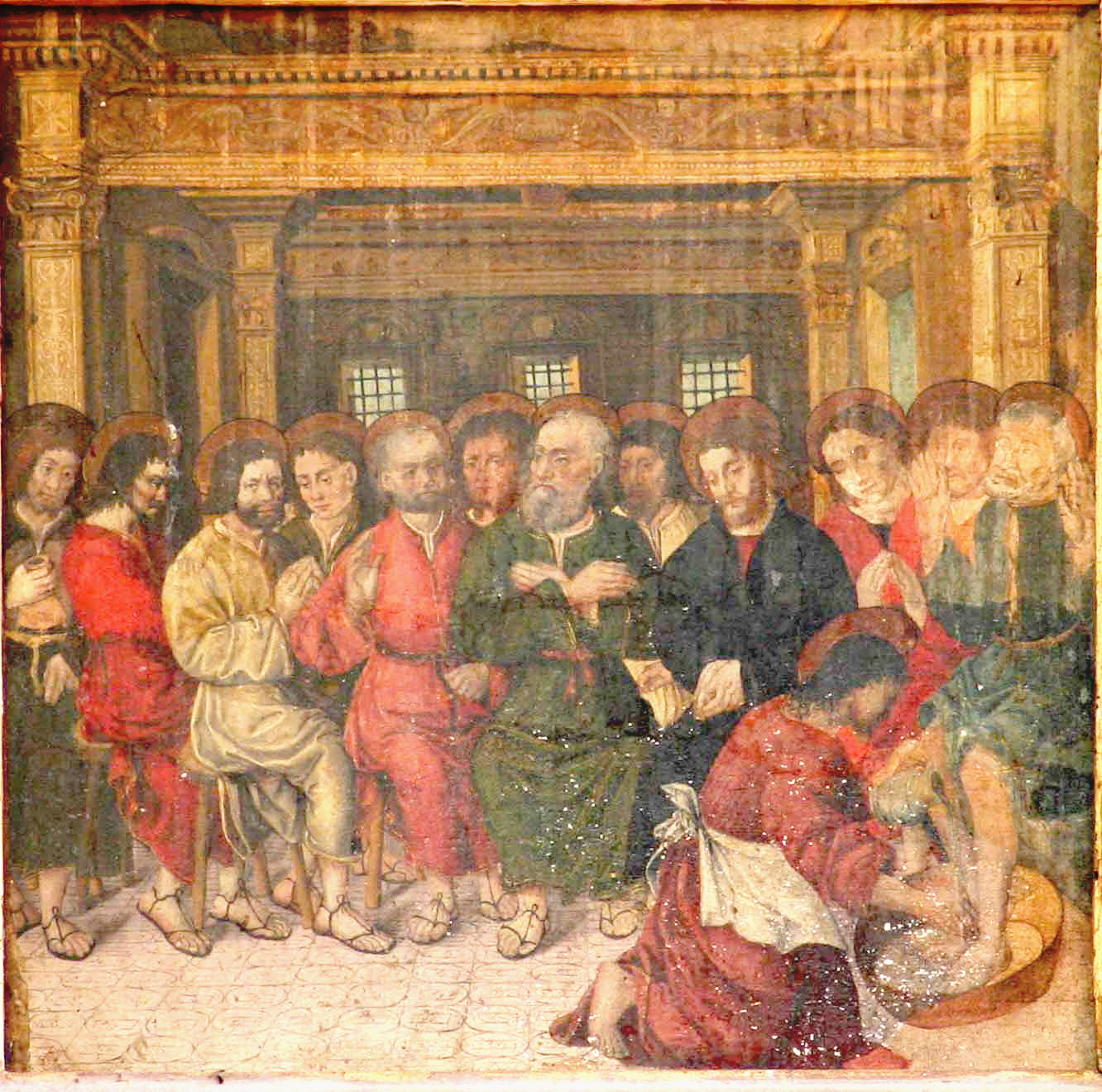
Antoine Ronzen--Lavement des piedsLast semester, I was wheedled into talking to a group of students in a course that I don’t normally teach, Intro. to Creative Writing. They were students at various levels and from a variety of majors, united only by a shared desire to be published someday, and my assignment was to talk about my own publishing career. At some point I said a bit about a book I have coming out in the spring.

“It’s called Easy Burdens,” I told them. “Or, that’s what I wanted to call it, but it ended up being called The Easy Burden of Pleasing God.”

The students murmured polite agreement that my title choice was better, but one bearded young man in a crocheted slouch hat was outraged.

“I don’t understand,” he ranted. “Why’d you let them call it by anything else?!”

“Well, they’re the marketing experts, not me. Besides, you have to understand that publishing a book is a group undertaking. Not like the writing itself, when you’re pretty much on your own. It’s like making a movie. Lots of people get involved in what it takes to get the book into readers’ hands, and each one is an expert in some part of that process.”

“I would never let somebody change my title,” he insisted.

“That was my attitude in the beginning too,” I admitted. “ I had to grow up and get a lot humbler.”

“I’ll never grow up,” he said. I called him Peter Pan, and we all laughed.

This semester, I’m overseeing a publishing practicum in which students undertake real world publishing projects. Remembering the exchange as I was making my syllabus for the practicum, I listed humility as one of the learning outcomes. (It being a Christian university, it’s okay to have spiritual as well as academic course objectives.)

For the first day of class—actually my only physical meeting with the students, since they learn exclusively by doing in this practicum—I invited a student who’d previously taken the practicum to show off the group-authored discussion guide for a new release that she’d helped write and to talk about a little about her interaction with a real publishing house.

“It was wonderful!” she gushed. “It made me know, this is what I want to do for a career.”

“Did you learn anything in the process that you think might help these students?” I asked.

“You pretty much have to do what they say,” she said right off. “I mean, they’re the ones publishing it, so what they say goes. You might have some really cool idea of how you want it to be, but they might not agree. And they will tell you so. And you have to fix it. It’s humbling.”

Sad to say, Peter Pan’s not in the practicum. He’ll have to learn humility from his own personal publishing experiences, just like the rest of us.

The Joy of NOT Going Solo

RHere’s the truth: I love the solitude of writing. I crave feeling on my own shoulders all the responsibility for crafting a story, and I’ll resist anyone’s attempts to try and share the task.

Which makes it rather ironic when I tell you that the best writing move I made in the past twelve months was to join a writers’ group.

In particular, this group – the WordServe WaterCooler authors.

This is not to say that I meet up with my colleagues for coffee to toss book ideas around or offer each other critiques on working manuscripts. Since we are scattered around the country – even the globe! – the Starbucks club isn’t even a possibility. Yet, in the past year, I have found invaluable support from these new associates of mine, and their very concrete contributions to my writing development and opportunities have boggled my mind, especially since I’d imagined my involvement with these authors would be limited to seeing my name listed among theirs in the sidebar on the site. Instead, I’ve made friends with whom I share an abiding passion, a mission, and a whole lot of experiences. They’ve shared ingenious tips and simple ideas that kick-start my own creative and marketing efforts. I feel like I’ve been swept five years ahead in my career development, instead of my typical solitary slog of a year at a time.

So, okay, you get the picture. Enough kissy-kissy, “I love you” comments.  The point I want to make is that every writer – EVERY WRITER – can benefit in amazing ways by being a part of a group of writers.

The key, however, is being a part of the RIGHT writers’ group, and this is the really tough part, I believe: finding the group that fits you. Here are things to consider as you search for your own writing pals:

  1. Look for peers. Teaching new writers how to create characters, plots, book proposals, and research markets is a generous and good thing to do, but if you want to move forward in your own writing career, you need to find writers who are at the same stage of the journey as you are. If the local writers’ club is all about getting that first article published while you’re working on building a platform for your next book, you won’t stick with the group.  Find writers with the same needs as yours.
  2. A writers’ group isn’t necessarily about crafting your manuscript. Think of it as your emotional and spiritual cheerleading squad and be sure to take turns leading the cheers, and shedding the tears, for everyone in the group. In a way, a ‘writers’ group’ is almost an oxymoron – a bunch of solitary authors who open up to each other.
  3. You don’t compete with your group members. It isn’t a class where you’re vying for top scores. Your group should be a resource for information, ideas, experience and motivation, not a standard of comparison.

Are you a part of a writers’ group?  

3 Top Tips to Gain Facebook Fans on Your Author Page

3 Top Tips to Gain Facebook Fans on your Author Page

As a modern day writer, I aspire to hone my craft and make the words sing on the page  as much as the greats did, people like Hemingway, Dickens, and the Brontë Sisters.

Okay, that’s a bit of a haughty statement.

Let me just say I work hard at writing better.

But in 2013, writers have the added stress of social media. We write, yes. But we also build, and gather, and hunt. We structure writing platforms. We gather tribes of readers. We hunt for excellent literary agents, and publishing houses that will not only get our work in print, but shine a light on it for the world to see.

It can be exhausting, this business of modern day writing. So I am throwing out three of my best tips about Facebook. My author fan page has proved to be a great tool to interact with potential readers.

Here are three of my top tips to gain Facebook fans on your author page.

1) Make sure your personal page connects to your fan page on the header to allow for cross promotion. Especially now that Facebook wants fan pages to utilize paid promotion, it is vital that your personal page easily and prominently connects friends with your fan page.

facebookgillianarrow

If you aren’t sure how to do this, here’s a step by step tutorial from Amy Lynn Andrews from Blogging With Amy.   

Likewise, on your fan page, ensure that your author website appears in the “about” section at the top.

75020_10200138856291333_2022590139_n (1)

2) Provide pictures with text through sites like PicMonkey. When I promote a blog post on my fan page with an uploaded photo, I get more likes and shares. Make sure your website is noted in the corner of the picture. Here are a couple examples:

maya angelou

evie loves her life

struggle right grammar

Check out this post if you’d like a simple tutorial to walk you through PicMonkey. You can use the site for free, or pay a small monthly fee for more options.

3) Know Facebook protocol. For example, it is against the rules to advertise on your cover photo (like a website address). So if you have a header with your website, change it, before Facebook shuts down your page. Also, it is considered bad manners on Facebook to post a blog or an article more than once on your page, whereas on Twitter, you can post three to five times a day. Want to find out more? Read this post from Author Media.

Do you have Facebook tips you’d like to share with us? How do you think Earnest Hemingway would do with social media? Yeah, me too. Happy Facebooking!