Answering Critics

Everyone’s a critic. Everyone has an opinion. And of course, everyone’s entitled to their opinion.

But what happens when a critic or a reviewer or a book club member reads your book and doesn’t like it? What do you do when you read a cutting review of the book you toiled over for months (or years)?

Novelist Alice Hoffman had a book release in 2009 called The Story Sisters. She received a less-than-glowing review by The Boston Globe’s Roberta Silman. Unfortunately Hoffman wasn’t able to dismiss the review as one person’s opinion and move on. Gawker, an Internet gossip site captured all the dirty details. Lashing out on Twitter, Hoffman posted 27 Tweets in response to that review, including posting the contact information for Silman in hopes that Hoffman’s fans would call the reviewer out on the carpet.

I wonder if Ms. Hoffman is wishing she could take back her words. Well, actually — if she could take back her Tweets. I think that the answer to that is a resounding yes because her Twitter page is no longer online.

Very few writers please all the critics all the time, and most likely there is no writer who’s ever accomplished that feat. But the issue lies in how you deal with the criticism. It’s tough to receive negative feedback whether you’re a yet-to-be published author or one who’s had several books printed.

Some strategies to deal with the disappointment?

Call your agent/editor/mother/spouse/best friend/significant other and vent your frustration. Go for a walk. Write something. Take a nap. Write a private email to your critic if you must. Still, if the last option is your choice, first give it a day or two, and consider praying about the words you’ll deliver.

But don’t go and lose it online.

Perhaps the best course of action for Ms. Hoffman would have been to say nothing. What’s accomplished in slamming the reviewer for her words? It just doesn’t look professional, even if you think the other party acted poorly.

Author Angela Hunt cautions writers to never answer a critic publicly. That sounds like good advice. Too bad Ms. Hoffman didn’t receive such counsel.

Want a laugh? Here’s one author’s humorous response to criticism.

What’s your advice to someone suffering the sting of criticism or rejection?

Hurry Up And Wait…

We’ve all been there. Staring down a road that leads to who knows where, wondering if we’ll ever reach the end of it. I’ve read that on average, we’ll spend at least five years of our lives just waiting. Waiting for the interminable line of traffic to start moving. Waiting for the phone to ring. Waiting for an email. Waiting for that long-awaited letter to arrive in the mailbox. We wait for good news. We wait for bad news. Waiting is a physically agonizing process, a process that is completely out of our hands.

If you’ve been writing for any length of time, I suspect by now you know all about waiting. Perhaps you were fortunate enough to go in prepared. Some kind soul warned you that once you start submitting your work, you’d be in for the wait of a lifetime. I wasn’t so lucky. When I started sending out queries to agents and editors, I had no idea how long the whole process would take. Even now as a published author, I’m still frustrated by how long everything takes in the world of publishing. You see, I’m not the most patient person in the world. But I have learned, through trial and error, that some things are worth waiting for.

Once upon a time, about a decade ago, I decided to search for my birth family. I’d always known I was adopted, but until then, never felt the need to search. Until God stepped in and said otherwise. Call it what you will – fate, destiny, blatant curiosity. All I knew for sure was that I needed to know. And so I embarked on a journey with an unknown destination.

If you think the wheels of publishing move slowly, try dipping your toes in the murky waters of the adoption ocean. Uncovering any information is akin to embarking on a quest for The Holy Grail.

Fortunately, given my aversion to waiting, I was one of the lucky ones. My answers came quickly. Too quickly perhaps. I was totally unprepared for the onslaught of emotions that took up residence and unpacked for the duration. It was a hard but necessary time in my life. A time when all I could do was throw up my hands, cry out to God, and ask Him for answers.

You see, not only had I found my birth mother, who was not completely receptive to my sudden reappearance in her life, but I discovered that I had a sister. A sister who was completely unaware of my existence. And I was asked to wait. Wait for the right time to tell her. Wait to see whether or not I would be able to establish a relationship with this person I knew nothing about yet felt deep in my soul a connection I could not at the time comprehend.

I said earlier that waiting is something we can’t control. But we try, don’t we? We send follow-up emails, perhaps a phone call or two to nudge the process along. Eventually we realize we’re not doing ourselves any favors. We give up and go back to waiting.

In the Christian community you’ll often hear the following – “God answers prayers three ways. Yes. No. Wait.”  There are no maybes with God. When your answer is a “Yes!”, you know that feeling! You rejoice, cry a little, throw a party. The “No.” answer is hard. It hurts. You don’t understand. You might get angry, depressed, reluctant to try again. But if you know in your heart that God is at work, you’ll accept the no in faith that He has a better plan. Oh, but that “Wait…” Now, that’s the kicker.

How long, God? Why? When will something give?

Sound familiar?

My wait took a little over a year. As frustrated and anxious as I was with the situation, I knew without a doubt that somehow, some way, God was working it out. Was it easy to wait? As easy as walking across a bed of hot coals and broken glass. Every day. Was it worth it?

You bet.

My sister and I now have a wonderful relationship. I’m glad I hung in there. I’m glad I didn’t give up. I’m glad I waited. Most of all, I’m really glad I trusted God.

Nowadays, when I’m checking my email every five seconds waiting for news, I remind myself of that time in my life. I tell myself to cut it out. Stop being so impatient. There is a time and a place for everything. And it’s not up to me.

What about you? What’s the hardest thing you’ve ever waited for?

Stuck in a Corner

Photo by Keith Lyndaker Schlabach

There’s a kind of fear most writers have that can inspire a clammy feeling even faster than waiting to hear if a book’s been accepted by an agent or a publisher. It’s the blank mind, particularly when there’s a deadline looming just ahead. Some people call it writer’s block, as if there’s something sitting in our heads that stands between our keyboard and creative brilliance.

It happens to all of us, no matter how long we’ve been writing or how successful we’ve become in our writing careers. However, I have learned a few tricks to remove the blocks and get going so that I don’t go sliding past a deadline and just make myself, and everyone else, feel worse. Even better, occasionally a reader will point out that very spot in a book as their favorite, and I marvel, once again, at how important it is to just keep going without expectations or attachments.

First Tip: Be gentle with yourself. Berating, digging around in your past for reasons, imagining a bleak future, or even waiting for the muse are not helpful. A walk might be, though. Also follow the HALT rule. Are you hungry, angry, lonely or tired? Take care of those first and then get back to work.

Second Tip: Pull out your character descriptions you hopefully wrote out before you started the book, whether it’s fiction, nonfiction or a memoir. Reintroduce yourself to all the idiosyncrasies, some of which you’re not even using on paper, and even add a few if you feel so moved. If you haven’t done this, do it now. We’re the driver on this literary trip, and we need to know all of the passengers in order to see where it’s going.

Third Tip: This one has gotten me out of more than one corner. Write the words, “Once upon a time,” and then let your imagination go. Write whatever comes up and follow the trail. You can delete those four little words later along with anything else you needed in order to get the left side of your brain going again. Most of us were read a fairy tale or two as a child, and those words can often create a sense of wonderful anticipation of what might be coming next. Our brain recognizes that too.

Fourth Tip: Pull out the description you have, however brief, for the arc in the story. That’s the place that’s most climatic, where everything changes. Is the arc still satisfying? Does it need beefing up, more research, more details? Is everything still pointing to that arc? That may be why you’re stuck. You’ve gone a little off course and need to delete some, add some more, so that you’re once again heading toward a big moment. Stories usually have several smaller arcs on both sides that can be used as places to aim toward as well till you’re driving for the ending.

Fifth Tip: Read the last portion you got down on paper to a trusted friend, preferably another writer that you respect. Hearing it out loud may help you hear what comes next. A brief conversation about what you’re writing and where it’s headed next may do the same. If you have to call more than one or two friends, though, you’re serial dialing as a distraction and not to help the writing. That usually leaves me overwhelmed.

Keep in mind that every job has its down days, and even though we love being writers, some days we’re bored or anxious or frustrated. That’s okay, but we have to also keep going because this is a business as well as an art form and someone’s made plans with that deadline in mind. So do your best, hammer out what you can and come back tomorrow. This too shall pass.

Q: What do you do to get out of a literary corner?

Build Your Platform Tip #2 Get Other Authors to Work for You (and do the same for them…)

Left to their own devices, authors tend to be solitary creatures. The only problem? It’s lonely out there for a writer.

Me and my husband Roger with Author Friends Cindi McMenamin, Arlene Pellicane, Lynn Donovan, and the Chick-fil-A Cow at Harvest House’s Desire Conference in San Diego

I’ve found one of the best ways to have some longevity in this biz is to gather up your own little crew. A few authors who have a variety of gifts and talents to learn from, teach, and generally keep each other afloat when major publishing houses merge and panic sets in.

Another great advantage to having a network of other authors is the ability to build each other’s platforms. Here are just a few of the ways I do that each month:

  • Feature each other’s new releases on your blogs
  • Promote your writer’s friends books in your e-newletter
  • Shout from the Facebook rooftops about their accomplishments
  • Create events together
  • Team up together on virtual book clubs (for an example of this, check out our MOPS Military Book Club at www.thebookclub.kathilipp.com )
  • Carry each other’s books on your websites and on your book tables

All of these networking opportunities I take advantage of on a regular basis. But the most effective, platform building networking I do is by referring (and being refered by) other speakers.

When I am already booked for an engagement, I have a few other speakers/authors that I refer to these groups. But, I even take it a step further. After a great event, I will pass on one or two of my favorite author’s speaker packets to the meeting planner, telling them that they may want to consider booking these authors for their next big gig.

I only do this with other speakers I have heard and trust. Nothing can make your credibility go south quicker than a bad referral.

The flip side of this is that I have other authors who pass my name along when they are done with an event. There is nothing better than great “word of mouth” given to a happy client.

I have had great results with this idea, and an added bonus: I have developed a great network of friends who go through this business with me. It is great to have someone to talk with who understands this sometimes very strange industry.

Action Plan:

  • Hook up with a couple of speakers that you know and trust, and ask them if they would be willing to recommend you, because you would love to recommend them. (If you need speaker training, be sure to check out Toastmasters.org, CLASSeminars, or Proverbs 31 Ministries.)
  • Create a speaker packet for your speaking ministry (if you would like an example of my speaker packet, email my assistant at lynette@kathilipp.com and she will send you a copy of my e-packet now through December 19th.)
  • Exchange speaker’s packets with your favorite author to hand out after your event
  • Put a list of other speakers on your website in case you’re not available to do an event
  • Feature another speaker/author in your monthly e-newsletter (and have them give away a couple of copies of their latest book) with a link to their speaking page

Question for you:

What is the most effective way you’ve found to work with other authors and speakers when it comes to building your platform? Share your tips in the comments below.

Self-promoting & The Humble Artist

As a  novelist seeking publication, I am on a dizzying curve to learn all I can about promoting my writing. The writing I’d much rather be doing instead of promoting. The writing which must be STELLAR in order to sell, also known as Marketing Rule #1.

I’m pretty sure Marketing Rule #2 is to be Karen Kingsbury.

And then several other pesky marketing rules follow. Some of these rules frighten me, to be honest (assuming I can be honest here). Some of them make sense, some make my armpits itch, and some sound like something I can actually do without creating an intense desire to set my toenails on fire.

We need not discuss how self-promotion is distasteful and beneath us, yada yada yada. Yes, we are humble artists whose only goal is to capture beauty and heartbreaking prose that touches the heart of every last one of God’s creatures. We need not target our audience because art transcends all forms of class distinction. We refuse to engage in reader-profiling. And we humbly insist on letting our work speak for itself because a true artist never toots her own horn. Or anything else.

Yeah, good luck with that.

SHAMELESS SELF-PROMOTION: TODAY IS LAUNCH DAY FOR MY . . .

 MY FIRST PUBLISHED BOOK!

Savanna’s Gift, an eBook/novella Christmas Romance, launches today. And through December, it’s ONLY $1.00? Such a deal! Can you say charming yet inexpensive Christmas gift?

So to celebrate my launch, I want to share a simple tool I’ve recently developed in my humble quest to humbly promote my book. My romantic, enchanting, quick-to-read, perfect-for-the-holidays book. Did I mention it’s only $1?

THE MINI PRESS KIT

I’ve created what I call a “mini press kit” to share with those who want to help spread the word about said fabulous book. The kit starts with a brief note about the launch date and other pertinent info, and also includes ready-to-post things like:

1. Tweets  (140 characters or less)

These include a http://www.shortlinktomyfabulousbook.com and a #hashtag or two about my #fabulous #romantic #Christmas #romance and include my @Name so I’ll know when  #someonelovesme and is #spreadingthelove.

Example #1: When she gets a 2nd chance at the love of her life, will the dream that divided them get in the way? #Christmas #eBook http://ow.ly/7rAvQ

Example #2: Rekindled love, God’s gifts & 2nd chances: Savanna’s Gift by @CamilleEide $1 for kindle http://t.co/pzIHy8kG #ChristmasRomance

2.  Facebook Posts: Polite blurbs that you and all your FB friends including your mom can post on Facebook.

Example: Savanna’s Gift, by Camille Eide, is a Christmas romance about lost love, 2nd chances and recognizing God’s gifts to us, set in an elegantly adorned, rustic ski lodge in the beautiful evergreen Oregon Cascades. Only $1 thru Dec 31 at http://ow.ly/7rAvQ

3.  Book Tagline & Short Blurb (a.k.a. BCC)

4.  Bio (50-100 wds)

5.  Website & blog links, retailer pages, YouTube book trailer link, Goodreads page, etc.

6.  Attached Book Cover & Headshot .jpgs

This press kit is in no way an exhaustive list of the things you can do to prepare for an eBook launch, but it’s a start for those of you hesitant to enter the fray of shameless self-promotion. Of course, we can write a book SO FABULOUS that it speaks for itself and never needs a single toot from our own humble horns. We’re artists—we’re allowed to dream . . .

Q: What are some of the most effective and least toenail-igniting methods you’ve discovered for promoting your book?

Publishing the Pain

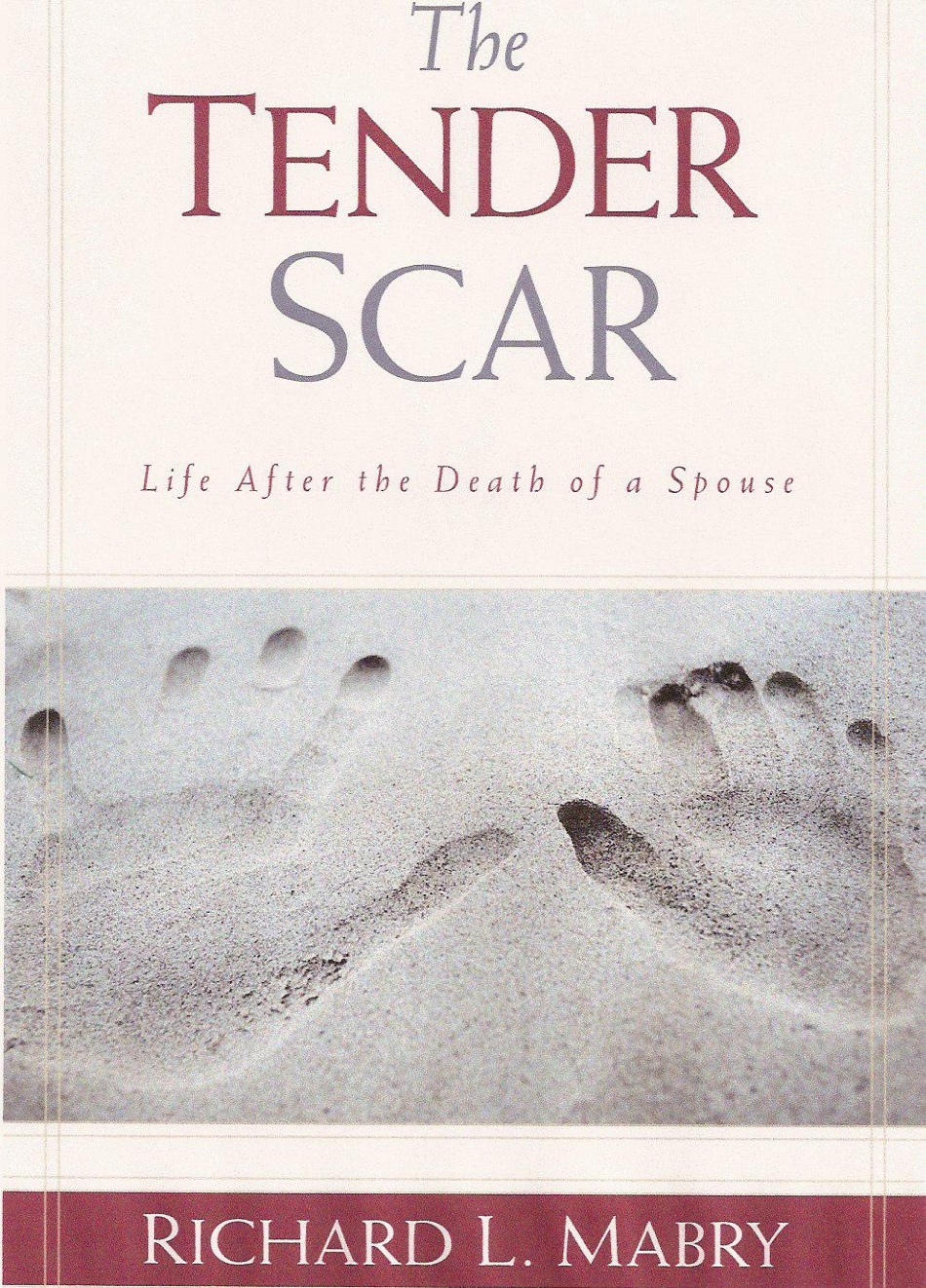
“I want to publish my story. How do I go about it?” Since the publication of my non-fiction book, The Tender Scar: Life After The Death Of A Spouse, I’m asked that a lot. I can’t say how any one person should go about it, but here’s what I did.

The book stemmed from the journaling I did in the months and years after the death of my wife of forty years. It started out as a mechanism to help me through my grief, but when a trusted friend read the material he urged me to share it with others who were suffering the same loss. I had no idea how to do this, but eventually I stumbled into the process this way.

1) Learn how to write. Now that sounds silly. We all speak and write English. But that’s no guarantee we can organize our thoughts so a reader will understand and appreciate them. There are a number of books available, but I started by attending a writer’s conference. The first one’s tough, sort of like the first time you’re introduced to algebra, but eventually it begins to make sense.

2) Learn how to organize your thoughts. I had to take the two inch-thick pile of raw journaling and decide to which aspect of my grieving process it applied. Using this, I put together a table of contents. Then I worried over it a few times until it seemed to flow correctly.

3) Edit, write, edit, write some more. I gleaned nuggets from the piles of material I’d written and used them as starting points for each chapter. I committed my thoughts to paper, giving equal weight to the good and bad decisions I’d made and offering hard-won advice. I had knowledgeable people read the raw material and make suggestions. Then I edited, rewrote, and repeated the process until I was satisfied.

4) Add the finishing touches. In my case, it was adding an appropriate Scripture passage and brief prayer at the end of a chapter. In your case, it might be doing something else. The important thing is to make the work worthwhile and different than anything currently available.

5) Somewhere along the line, you’ll try to sell the work. I was fortunate enough to be able to interest a publisher in The Tender Scar before I had representation by an agent. That’s a rarity now. Also, I’d written the whole book before I shopped it, which made it easier to sell than if I were working from an annotated table of contents and three sample chapters, which is now common in non-fiction work. In any case, this is the next step, and when you take it, you should be prepared for a lot of rejections and a great deal of waiting.

Remember, in all this, the timing is God’s. And even if your book never sells, the writing of it has affected one person: you. You’ll never be the same after organizing your thoughts and committing them to paper. And that’s a good thing.

The Marriage of Art and Business: Match Made in Heaven?

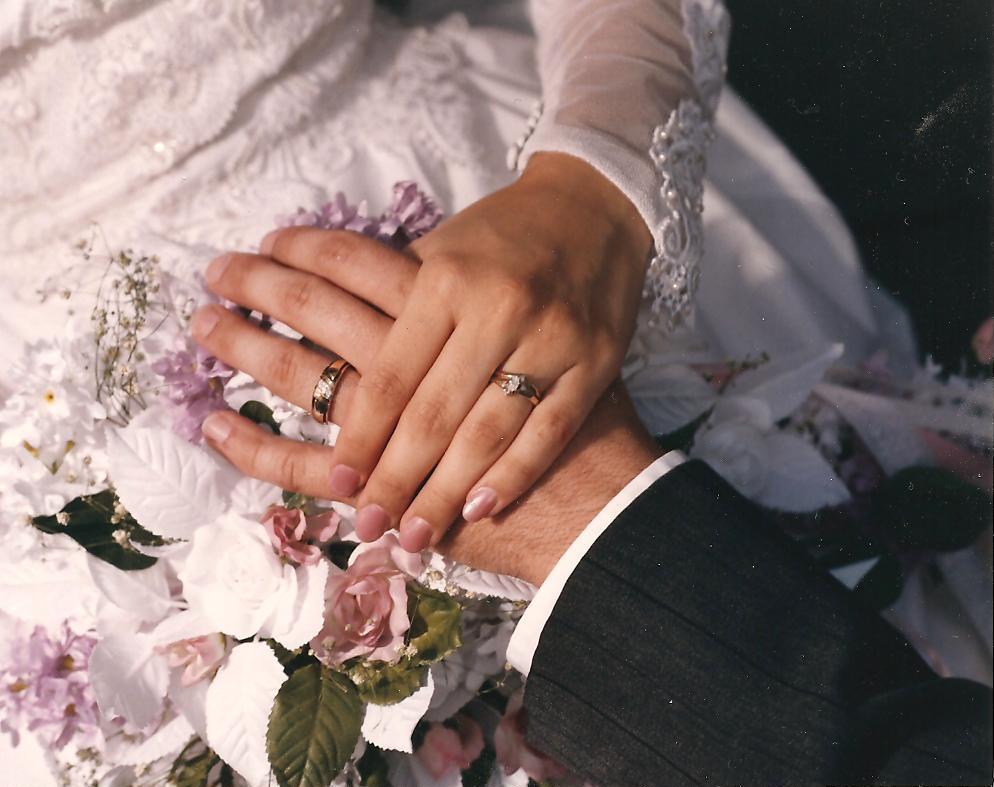
photo source: author & husband

Ah, the bliss in human romance! That meeting of eyes which awakens destiny. Those flutters of the heart when looking upon one’s beloved. That first fleeting brush of skin against skin … that inviolable first press of lips to lips.

Am I the only cynic with the audacity to note that romances of the fictional persuasion tend to end just before or soon after the altar with a vague “happily ever after”?

Not so in the real world. Here, sly Romance drives opposites to unite themselves in marriage, then dances laughingly into the shadows to watch the eruption of vinegar joining baking soda, one eyebrow raised as bubbles fizzle in a spewing mess.

“Writing a book is an adventure. To begin with, it is a toy and an amusement; then it becomes a mistress, and then it becomes a master, and then a tyrant. The last phase is that just as you are about to be reconciled to your servitude, you kill the monster, and fling him out to the public.”
~ Winston Churchill

You no doubt visit here because you are enraptured by the romance between Writing and Publishing. Could the differences between women and men possibly be more pronounced than those between art and business?

Writing plumbs the depths of all things horribly beautiful and paints them with deft strokes, that someone might look upon the canvas and see what the artist has seen—might know what the artist knows.

Writing then casts longing eyes at Publishing. Publishing appreciates Writing’s beauty, gazing upon her often, in every lovely form she takes. Ever the pragmatist, Publishing knows his survival depends on Writing’s inner strength. Writing willingly dresses herself to please Publishing, who holds the stronger hand in the relationship. She is determined to make herself irresistible enough to garner his proposal of marriage between her art and his business.

Writing and Publishing are both aware that the promise of a storybook marriage upon which millions will smile also holds the risk of being consumed in the anguish of rejection. And though neither Publishing nor Writing sets out to cause the other pain, their marriage is destined to experience all the agony and the ecstasy common to any marriage between opposites.

Unless the LORD builds the house,
those who build it labor in vain…
It is in vain that you rise up early and go late to rest,
eating the bread of anxious toil …
~ Psalm 127:1-2 (ESV)

In romance between man and woman, the wise will ask if God smiles upon them—certainly before tying the knot and hopefully well before longing glances are permitted to grow into full-fledged courtship. Failure to do so can result in everything but “happily ever after.”

As we writers consider the marriage of opposites between writing and publishing—the union of art’s beauty and business’s pragmatism—it behooves us to know with certainty that the Lord Himself is playing Matchmaker.

Q4U: Whatever your relationship between art and business at the moment, what helps you determine when you write as only art (or ministry), and when you believe that God is leading you toward marriage of art and business?