Hashtags can help….

So…. What’s a #Hashtag?

How can a simple #hashtag help me to promote my book?  Well in many, many ways.

#Confused?

First lets define what exactly you are looking at…. #pleasehelpme.

You probably first saw them on Twitter, that is where a #hashtag originated.

It’s a simple marker of sorts.  #Hashtags over the last year have migrated from Twitter to Instagram, and Pintrest. #clever.

A #hashtag is a marker of sorts that drives you to people’s posts, and drives people to your posts. You can click on any #hashtag and it brings up all other posts with that same tag in… simply put, if you want to promote your book to strangers, a #hashtag will be one of the best tools you can use for social media platforms that utilize #hashtags.

What topics are important to you? Make a list of words that are important to you selling your book.  What words describe your book? How can you find like-minded readers, by strategically #hashtagging words that are specific to you! #buildingabrand #books. If you know what SEO is, Search Engine Optimization, #Hashtags work.

Some simple rules for #hastagging. Never put spaces between words or the #symbol. Use words that are relevant to your tweet/pin/pictures.  A great way to find more followers is to use hash tags on both sides. You do it and other people do it in searches as well….  Find people that are #hashtagging things that you care about and get involved in their conversation. #smartthinking.

Here is a simple straightforward article in the Twitter Help Center, which could help you.

Remember, that #hashtags are fun.  Don’t over use them, but do use them to find like-minded readers.  It could open many doors for you… people will find you and you will find people.  #hashtags  #winning.

What the Well-Dressed Writer Is Wearing

Actually, the title for this post should be “What the well-dressed writer is wearing in public.” In private, while we writers are slaving over our manuscripts, I know what we wear – anything from running shorts to old jeans to pajamas and robes, and everything in between. When we’re lost among the words, who cares what we look like?

But once you become a published author, that changes. Suddenly, what you look like matters. You have to meet the public. You sit in bookstores, sign books, and attend events. You speak at luncheons and dinners. You do a television spot.

You need to rethink the old sweat pants that have seen you through your book’s creation. You need to glam up a little and give your readers your best side. They are, after all, rooting for you, and you want to do them proud. So, yes, it’s time for a writer’s make-over! (Cue the fanfare!)

Unfortunately, I’m lousy at make-overs (fanfare goes flat), so instead, I’ll just share with you what I’ve found works for me when it comes to making public appearances.

  1. Find a simple haircut/style that is flattering and stick with it. Shell out the money for an experienced stylist and ask him/her for suggestions and instructions. My hairdresser is a lifesaver; not only does she give me a great color and cut, but she shows me how to get different looks with it, so I always look fresh at events. It was her advice before my first book launch that continues to guide me: “Your fans deserve to see you at your best.”
  2. Put together one or two complete outfits that you can grab and wear at a moment’s notice. If you’re chic-challenged like me, get help. Go to that clothing store you drool over and ask for help in assembling a professional ensemble. Yes, it might cost a bit more than you’re used to spending, but to have one ‘go-to’ outfit for anything book-related that comes up will, in the end, save you money, time, and mental energy. I love my ‘go-to’ clothes; I know I look great in them, and that boost of confidence really comes in handy when I’m facing a roomful of strangers. Polyvore, a website often pinned on Pinterest, has some great ideas for various outfits, too.
  3. Use accessories! Okay, I sound like a women’s magazine, but I think this has made a big difference in my presentation. Normally, I don’t wear jewelry, scarves, or jackets, but when it comes to looking polished, they add the icing to the cake – especially when your accessories go with the outfit. (See #2 again.) My favorite goofy earrings? Not so much.
  4. You may want to consider dressing in ‘costume.’ A friend of mine writes several series under different pen names, and she dresses differently for each author persona: one is eccentric, another is business professional, and the third is romantic. She has a ‘go-to’ outfit for each, so her clothing reflects her brand, which means that her clothing is marketing.

What are you wearing?

Christian Fiction ~ Oxymoron?

Image courtesy of freedigitalphotos.net/

We were on our way to The Duck Pond restaurant in Warsaw, Indiana. Our husbands visited in the front, and we ladies sat together on the bucket seats of our friend’s new Honda mini-van. And that’s another story. . .

But on this day, my friend turned to me and said, “I promised I wouldn’t read anything that wasn’t true for the rest of the year.”

She shook her head and looked down at the boot on her foot. “And then my ankle gave out.” She grinned then. “I could just see God looking down with a chuckle wondering what I was going to do now. But I’ve used this time to really get into the Word.”

I shared with her how I’d learned to get more out the Scriptures in my own daily devotions. I was sure the things I had learned were nothing new to her. And I was ashamed that I had to be this old before I learned.

“It’s good to take a break from reading other writing,” I said. “But you’ve made a big commitment to go for half a year.” I half-way admired her for it.

“Oh, I hope by the end of the year I can make it permanent. My mother always told me fiction is just a bunch of lies.” My friend looked at me expectantly. We belong to the same denomination and she knew I was a writer. “Reading got me through the hard times when my children were growing up,” she continued. “But I’ve leaned on fiction too much.”

“I know you need to keep your promise, but what about the stories Jesus taught?”

“And you think those weren’t real stories?”

“I know the parables were based on true principles,” I told her. “That’s what novel writers are taught. Any properly written novel will be based on a true principle.”

We changed the subject after that. But I can’t quit thinking about it.

Is Christian fiction an oxymoron?

By definition, Christian fiction is a story that illustrates a Christian world view in its plot, its characters, or both, or which deals with Christian themes in a positive way.

The novels of Francine Rivers have touched hearts and changed lives. Christian fiction is not written to replace the Bible, but to turn hurting, seeking people to the Word, to Jesus, and to God.

The combined efforts of many Christian writers have enriched our world. For some of us, it is our mission field. Our way of blooming where we are planted.

The Apostle Paul used the whole chapter of I Corinthians 14 to show that worship should not just be for my own benefit. That I should desire gifts that benefit the whole church. #1 In ways that they can understand. And #2 in ways that build up the church. Then, the apostle tells us, God will bring the sinners and they will also be convinced.

Sharing the Scriptures

God may use me to touch just one soul. He may use you to touch another. And he is reaching out to my friend in a different manner.

What are your thoughts?

Hello, Fellow Publishers!

I’m a publisher.

I thought I was just an author doing some social marketing, but thanks to what I’m learning from Beth Hayden’s book Pinfluence: The Complete Guide to Marketing Your Business with Pinterest, my whole perspective on my writing career is changing. Yes, I write mystery and suspense novels, but in support of that endeavor, I need to be creating and presenting content online that is meaningful and valuable for my customers. I need to give my social media friends and visitors what they are looking for, or as Hayden explains on page 61 of her book, “You need to make sure that every piece of content you publish either solves a problem for your audiences, or entertains them – preferably both.”

That’s a big responsibility. Every piece of content. We’re talking about images, information, links, comments – anything you publish anywhere on the internet that has to do with your writing. It’s all part of your ‘company.’ The really exciting part of using Pinterest as part of your company is that it allows you to get creative with visual content, which, psychologists tell us, can evoke emotional responses in a viewer. The bottom line is that by publishing the right images, you can build enthusiasm and loyalty in your viewers, which will help sell your product (books).

Culling through whatever is already on Pinterest boards, however, is not the way to find the ‘right’ images for your viewers, Hayden points out, just as consistently using someone else’s words doesn’t make your work original. Instead, put together your own content. That doesn’t mean you have to take a hundred photos or hire a graphic artist. It means you have to collect compelling images that represent your unique brand. (Be very careful of image copyrights.)

Do you write historical romance? Pin beautiful images of the places where you set your stories, or sketches of period clothing, or the flowers of the region – anything that helps your reader connect to your book. Think of it as publishing a behind-the-scenes guide to your story.

Do you write motivational memoirs? You could pin pictures of famous people who have overcome hardship, or framed inspirational quotes, or maps that trace incredible journeys. Think of it as pulling together an illustrated companion piece to your book.

The possibilities are limited only by your time and imagination, but if you keep focused on your ‘company,’ it will help eliminate some of the time-draining wandering we all do when we get online; if you’re collecting images of old barnyards for an Amish board, it will be a lot easier to not get distracted by all those cute animal pictures that pop up in the blogosphere. (If all else fails, put a sticky note on your computer screen that reminds you “No puppies!”) Make your publishing goals as specific as possible, pin appealing and evocative images on your boards, and Pinterest can become a great billboard for your books on the global internet highway.

Enjoy your publishing!

What are some examples of images that you have been pinning lately? Do you have any creative ideas for pins besides those I mentioned above?

Standing as a Writer, a Lesson Learned from My Daughter with Down Syndrome

My four children are blessings.

But they also make it challenging for me as a writer to, well, write.

After reading Heather St. James’ hilarious post last week about writing with kids in tow, a thought occurred to me. Yes, it is challenging to write with kids, but they also are life-sized object lessons to spur on my pursuit of publication.

Here’s an example.

Our third daughter, Polly, who was born with Down syndrome, has low muscle tone. When she was two and a half years old she wasn’t close to walking, so her therapist suggested a stander; a wooden contraption with Velcro and steel to buckle your child into. The hope was that Polly would bear weight on her legs, build muscle, and start to tolerate the sensation of standing.

She was to stand for three hours. Every. Day. Did I mention she was two?

The first few days Polly was ambivalent. “Polly, time to stand,” I’d sign and say (sign language at the time being her primary form of communication), and she’d shrug her shoulders as I strapped her in.

Soon, though, she grew combative. She learned a few tricks, like to hike her rear up over the thick leather strap to make a seat to rest on, or to pull the Velcro strap apart one-handed, thus freeing herself from her therapeutic shackles.

I’d raise my eyebrow, and she’d look at me like, “What? I’m standing?”

The season of the stander was a difficult time for our family. But the strength my daughter acquired was undeniable. After two months, she pulled to stand on her own, with a triumphant, cheeky grin plastered on her face.

How does this relate to writing?

When I first started writing, I don’t think I actually wanted to write. I wanted to be known as a writer. I wanted to see my name in print. I craved the imagined silence of hours ticking away at a computer somewhere, alone, without my kids hanging on my legs.

But I lacked writing muscle. When it actually came to “butt on the chair” time (to quote Mary DeMuth in her book 11 Secrets to Getting Published), I waxed and waned between ambivalence and combativeness. I wanted to write the next great American story in one sitting. I didn’t want to have to work at it.

I discovered that good writing demanded writing muscles: write consistently, set deadlines, read about the craft of writing, learn from others living a writing life. Also, growing muscle required humility. I needed to ‘fess up’ when I, like Polly, tampered with the shackles of a literary life and attempted to squirm free.

If I let myself get out of hard work consistently, I will never learn to stand as a writer.

Sometimes when I write, the vision of Polly in her stander pops up in my mind. There are several other things besides writing, too numerous and embarrassing to list, that I try to sabotage in my life. I kick. I undo. I push.

My daughter–patient, diligent, and courageous in her daily attempts to do things I take for granted–teaches me a valuable lesson.

If I want to publish a book, or even as Papa Hemingway says, “write one true sentence,” I need to put in the time, effort, humility, and courage to grow strong enough to stand on my own as a writer.

P.S. An update on Polly. She is now six years old. She walks, runs, climbs stairs and in fact, we can’t get her to slow down.

The Bookstore Blues

If you want to induce an anxiety attack in me, take me into a bookstore.

I’m not talking about doing a bookstore book signing, either. I’m talking about walking into a bookstore to browse, to wander aimlessly among the shelves, to read titles on spines and admire book displays. I stroll through the aisles, suddenly paralyzed by the enormity of talent that lays before me between book covers.

I’m terrified.

The reason for my reaction is that walking into a bookstore brings me face-to-face with what I am attempting to do with my writing career: competing with all the other authors out there for readers. It unleashes a storm of insecurities inside me.

Why would someone choose my book to read over all those others?

What value does my book have in comparison to the other thousand on the shelf?

Did I write a good story?

Did I write an adequate one?

Can anyone even find my book amid everyone else’s?

Who would be willing to pay money for it?

What was I thinking?!

And then I recall a pivotal conversation with a dear friend of mine, my mentor and an accomplished author in his own right. “You should write a book,” he said.

“I know,” I replied, voicing the nagging desire I’d felt for years. “But why would anyone want to read what I have to say?”

“Because no one else can say it in the same way as you will,” he assured me. “Every one of us experiences life in a way unique to us, and that’s what you’ll bring to the table. Whether it’s fiction or non-fiction, no one will tell it like you will.”

Encouraged by his confidence in me, I took the plunge and wrote a non-fiction book about personal spirituality. The first publisher who was interested in the manuscript wanted me to change the perspective to reach a different audience than I had originally intended; I wrote the book for adult Christians, but he wanted to revise it and aim it at adolescents. I did something that I now (as a much more experienced author!) marvel at – I told him “thanks, but no thanks.” I believed in the value of what I had written and for whom I had written it, and even if it meant I had to continue looking for a publisher, I would do it. Eventually, I did find the right house and the book was published.

And then I learned, the hard way, that I was almost solely responsible for marketing it.

I had no idea what to do. The book never took off, although it sold enough copies for me to savor being an author.

I vowed if I ever wrote another book, I would do it differently.

Differently may be an understatement.

Now I write fiction – both humor and suspense – and market aggressively. I love what I do, and I know that if just one reader enjoys my book, I’ll be glad I wrote it.

But I still try very hard to stay out of bookstores.

What keeps you writing when you think of your book afloat in a sea of competition?

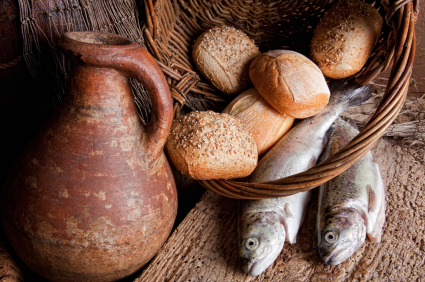
Loaves, Fish, and Writers

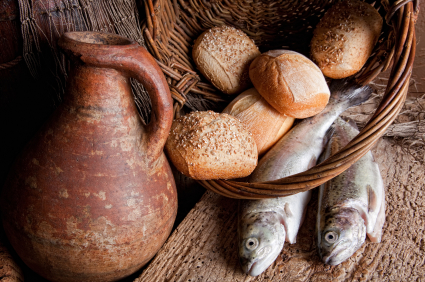
Late in the afternoon the twelve came to him and said, “Send the crowd away so they can go to the surrounding villages and countryside and find food and lodging, because we are in a remote place here.” 

He replied,  “You give them something to eat.” 

They answered, “We have only five loaves of bread and two fish—unless we go and buy food for all this crowd.”  (About five thousand men were there.)

But he said to his disciples, “Have them sit down in groups of about fifty each.”  The disciples did so, and everybody sat down. Taking the five loaves and the two fish and looking up to heaven, he gave thanks and broke them. Then he gave them to the disciples to set before the people. They all ate and were satisfied, and the disciples picked up twelve basketfuls of broken pieces that were left over.  Luke 9:12 – 17

Give it up

Poking at God about what I could cook for you today, he flipped this sizzling little fish story onto my brain plate.

Eyes scrunched on “impossibility” rather than on the Master of limitless capability, it’s easy for us writers to be disciple-like and condescend to natural-mindedness.

The crowds aren’t growing less hungry, aren’t inching any closer to food. Cloistered in the middle of nowhere, fatigued and famished, the beloved twelve scratch their heads before Jesus speaks: “Give the people something to eat.”

As we shake our heads at our scanty drizzle of words, Christ tells us the same: “Give the people something to eat. Don’t worry about sparse resources or small beginnings. If I’m in it, as sure as the heavens, you can make a difference.”

“Give them something to eat.” 

Thrust in this love-test, the apostle John records a different angle in sharing Philip’s retort: “Eight months’ wages would not buy enough bread for each one to have a bite.” Andrew speaks up. “Here’s a boy with five small barley loaves and two small fish, but how far will they go among so many?”

No matter how measly, how un-supersized our flounderings, if God calls us to serve fresh truth in a word-stir, if he speaks the royal “ok,” we step up.

Notice how Jesus dishes up faith-stretching instructions to the disciples. Directing five thousand people to sit in groups of fifty is no small potatoes. It takes time and sweat. Just like advancing in writing.

And so we lift our minuscule loaves and fish, and give thanks.

Give Thanks

Wouldn’t you give your lunch to see the puzzled looks on those hungry faces when Jesus raises his bitty snacks to give thanks?

Thanksgiving flows from a posture of humility. The soul bends low, acknowledging our Sovereign Source, his power, ability, and desire to provide.

Jesus gives thanks and his fingers rip the bread. I wonder if he considers how his flesh will soon be broken to feed many.

Writers know about brokenness, the heart-deep pain-sap that drives and feeds our meanderings. With battle scars, we give thanks to the living Word who uses our words and wounds to paint blood-colored pictures of grace.

No matter how few or many we touch, we give thanks for the opportunity. Chosen conduits of hope, we’re blessed to be a blessing. Our words, charged with Spirit-power, awaken God-hunger. They sustain and multiply life!

Whenever we naturally live out thankfulness, we display God’s bigness to a hungry, watching world. We become more than wishful thinkers about remote possibilities.  We reveal supernatural expectancy. This is how the world sees truth in us as we step up to our dream.

Expect Much

“It will take a miracle to get published!” We say it like miracles are viruses when they’re more likely God’s favorite pastimes.

Food in hand, Jesus says thanks because he expects the miracle. He prays and “looks to heaven.” He isn’t focused on his stomach, the food, or the crowd, but on his Father, the source.

The more we fix our eyes on God, the more we see miracles. The more we see miracles, the more we look for them in him.

“Your will be done on earth as it is in heaven. Give us this day our daily bread…” God’s prayer transcends the “me,” and rests on “us,” because we, in the body, are one, and because love necessitates caring for those outside ourselves.

If we want to use our love gift to nourish souls, we can expect God’s provision to match his call. I haven’t forgotten that we can also expect spiritual warfare (perhaps even intensified tests from a rattled enemy), but ultimately mercy triumphs over Satan’s thievery. God promises to give us everything we need to win!

This gift, this impervious spawning of words, isn’t an instant dinner miracle; rather, it’s a progressive one, a long-term partnership with Chef Jesus.

Part of the miracle involves staying with the process. If God says, “Get everything and everybody in place,” that’s what we do. We plunge in for the long run, expecting to produce sweet fruits like patience and perseverance. Likewise, we expect readers, writers, characters, and observers to be transformed by our faithfulness.

We’re Christ-followers, sojourners on the cusp of miracles. In the course of our collective, out-of-this-world writer-journeys, we can expect nothing less than God cooking up his best.

Bon appetit!

“For I know the plans I have for you,” declares the Lord, “plans to prosper you and not to harm you, plans to give you a hope and a future.” Jeremiah 29:11. 

Four Ways to Untangle Your Writing Life

Image/FreeDigitalPhotos.net There’s something about chaos in my home office that infuriates me.

As I attempted to help my husband install a new computer, the jumbled mess of wires overwhelmed me. Lying on the floor, flat on my back, reaching under my desk, I needed more than a flashlight and my glasses to see where to plug in the cables. I wanted something to calm my frazzled nerves.

At times, I also find myself overwhelmed with the tangled web of my writing life. I have so many projects going at once that I can’t focus on the most important ones.

So, how do we unravel the emotions and confusion of our writing lives?

Stop and take inventory. As I inspected the knotted wires behind my desk, I saw that each wire needed to be threaded back through a narrow space under my desk and poked through a small round cutout in the desktop, before I could connect my new PC. I took a deep breath and thought about my angry reaction to my husband’s request. We had purchased the new computer for my writing needs, and he needed me to crawl under the desk because of his old college knee injuries.

Since I tend to overreact at times, my routine frustration over my harried writing schedule serves as a warning sign for me to stop and reassess my priorities. I try to remember to seek God first for guidance. Have I made too many commitments again? Do I need to redefine the boundaries of my work and my everyday life? 

Make some space. After we pulled the computer desk away from the wall to allow space to work, I found that the electrical supplies to my paper shredder, stapler, hole-puncher, and phone charger complicated my task. I unplugged all of them and moved the equipment, so I could focus on just the computer wiring.

Sometimes I also need to back away from my writing life to gain perspective, especially before making new commitments. My other activities, projects, and life issues contribute to my inability to manage my time. I’ve considered enrolling in the course, “Managing Multiple Priorities,” but I could never find the time.

Sort through the maze. Before I unplugged our old computer, I decided to tag each cord at its connection to each device. Then, I sorted the cables and bundled the wires with plastic ties. 

Prioritizing my writing projects requires more than plastic cable ties. The process motivates me to evaluate my passions and interests to see if each project meshes with my overall plans. My impulsivity often leads me astray. And someone else’s requests can produce unnecessary and avoidable stress.

Go forward. After installing my new unit, I expressed my appreciation to my husband for his help, and I thanked the Lord for giving me the patience and the helping hands I needed.

The writing life offers temptations and distractions daily. I’d prefer to believe that I have my writing life in order. But with every new task, I experience a learning curve. I’m well aware that I’m still a work in progress.

Therefore, since we are surrounded by such a great cloud of witnesses, let us throw off everything that hinders and the sin that so easily entangles, and let us run with perseverance the race marked out for us. Let us fix our eyes on Jesus, the author and perfecter of our faith …
(Heb. 12:1 NIV1984).

Publishing Is Publishing

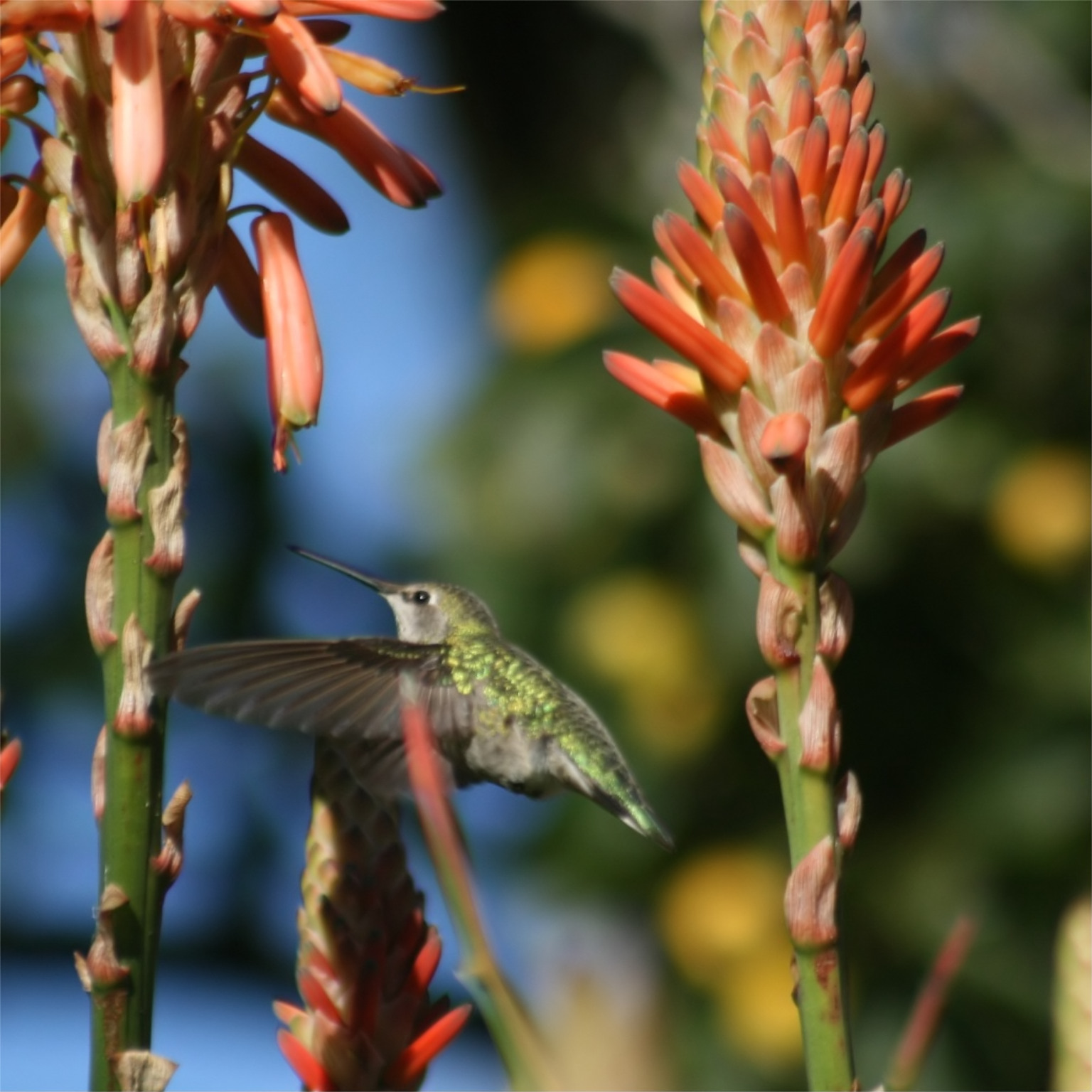
This Fourth of July, I watched the fireworks from the exotically landscaped grounds of a ritzy Malibu mansion overlooking Santa Monica Bay. I was admiring an Anna’s hummingbird perched in a tree that could have been invented by Dr. Suess when a beautiful woman I’d never met before came up to me to find out how to get her children’s books published.

“They rhyme,” she told me. She had written them together with her three children, whom she homeschooled.

She seemed sweet, one of those amazing moms who can take charge of all children present (in this case, at least twenty of them)—supervising them in the pool, sunscreening them on a schedule only she knew about, braiding hair to keep it out of faces, correcting their behavior toward one another, taking one to the bathroom, moving them en masse to the trampoline, seeing to it every last picky eater among them got something to eat, keeping track of the dog—and all the while initiate and maintain extended conversations with various of the adults present.

“Well,” I said. “I don’t have any experience whatsoever in children’s books. I write nonfiction for adults.”

“Yeah, but I heard you write, um, like, spiritual books.”

I nodded.

“And they’re published, aren’t they? So they’re, you know, regular books, right? Like, you can buy them in bookstores? I mean, publishing is publishing, isn’t it?”

It intrigued me that she was seeking my advice at all. I was such an oddity at that party. Visiting from Oklahoma. Not rich. The only woman present with grey hair. Not at all the sort of person someone like her would go to for advice about anything—except maybe birdwatching. I seemed to be the only one at the party paying attention to the magnificent hummingbirds and house finches and hawks whooshing around us.

But she was right, I guessed. Publishing is publishing. I recommended she get the latest edition of Writer’s Market.

“Did that already,” she said.

“And I think I’ve seen a special Writer’s Market just for kids’ books.”

“Got that too. Read it cover to cover.”

“Then you know what to do. Write a proposal that has all the parts they ask for and send it out to agents listed in the book who represent the sort of thing you’ve written.”

“You mean a query letter?”

“Yes, that too. I mean, for publishing adult nonfiction, you’d need a book proposal, but maybe with kids’ books you can get everything you need to say said in your query letter. Send it to agents who seem in the same place professionally as you are—that is, just beginning your career as a writer.”

“But don’t I need to copyright my stuff first? I mean, they could just steal my ideas.”

I said I didn’t think copyrighting was necessary. Why would an agent want to steal her ideas? “Agents make money from selling your book to publishers,” I told her, “not by stealing ideas and writing books of their own. They get fifteen percent of whatever you make. They want you to make money.”

She seemed unconvinced.

“Well,” I said, “Just do whatever it says to do in your children’s Writer’s Market.”

“I did all that,” she said. “So what do I do now?”

“You wait to hear back. And then, if you don’t get any takers, you revise and do it all again with another list of agents. If your stuff is good, eventually you’ll find someone who wants to represent you.”

“But how long should I wait? I mean, it’s been a few weeks already. Isn’t there anything else I can do?” This woman was a doer. As we spoke, she was rearranging the bowls of dips and crudités that the pool-wet children had left in disarray.

“No,” I told her. “Just write. Revise. Submit. And wait. That’s all I know about how to get published. Unless it’s different with children’s books. Which I’m guessing it isn’t. I mean, publishing is publishing, right?”

So what do you think? Is all publishing the same? If it’s different, how is it different? If it is the same, how is it the same?

Thoughts on Publishing: What Would the Wright Brothers Do?

“If we worked on the assumption that

what is accepted as true really is true,

then there would be little hope for advance.”

~Orville Wright

A lot of hoopla surrounds the publishing industry, these days more than ever. In the midst of the business, it’s easy to forget the original dream and heart of the artist.

This is not a new phenomenon.

Nor is it unique to the publishing industry.

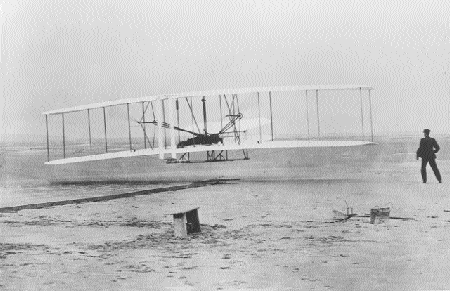
Take the Wright brothers, for example. I wonder if Orville and Wilbur had today’s airplane industry in mind when they first sketched out their dream to fly. I assume they were two wildly imaginative, brilliant brothers who had a knack for ingenuity, and who simply wanted to feel their feet leave the ground. Who simply wanted to fill their lungs with air free from the heavy, constant pull of gravity.

Sure, they must’ve been pleased to see the initial progress of their invention, how flight began to morph into bigger, stronger vehicles which allowed others to feel weightless freedom, too.

But what would they think now?

Of the pushing and shoving and security detail in airports? Of gunfire, like rain pouring from silver wings? Of hijackings? Of crashes? Of bankrupt airlines? Of their beautiful, wooden machine used as weapons of mass destruction on 9/11 nearly a century after liftoff?

Of course, modern-day airplanes are still a marvel. Their massive engines bring orphans into the arms of adoptive parents; soldiers into the embrace of waiting wives and newborns; food to the starving; medicine to the dying; peace to the war-torn; relief to the hopeless.

All of these things–the good and the bad–began with a dream which lolled around the hearts of two gangly boys for years, and which eventually tamed the winds on a lonely, sandy beach.

And so it is with the publishing business. A single page of script begins as it did with the Wright brothers, with a small dream in a great, big heart. From there, the dream takes flight. And after that, it becomes a part of the industry–an industry which carries words to distant places.

Some stories give life and hope.

Others tear down and destroy.

Much ado is made over the various branches of publishing: self, electronic, traditional, mainstream, Christian, small press, large press, and on and on and on. I suppose this is not new. But the industry is merely a vehicle for syntax to take flight.

Our job as authors is to keep the original dream alive, despite commercialism, competition, money, and what all the writing blogs say.

If you’re an author (like me) who follows Jesus, our job carries the even weightier responsibilities of strengthening, encouraging, and comforting. As Christ-followers, we must choose building up over being edgy for the sake of being edgy. We must choose loving accurately over nosediving into the murky waters of what itching ears would have us say.

Write brave, yes.

After all, neither flying nor faith are safe.

But write with prayer, precision, and while feeling the weight of the cross on our wrist.

*************

“The desire to fly is an idea handed down to us by our ancestors who, in their grueling travels across trackless lands in prehistoric times, looked enviously on the birds soaring freely through space, at full speed, above all obstacles, on the infinite highway of the air.”

~Orville Wright

*************

What about you?

How do you stay true to your dreams and the truth you long to pen upon blank pages?

How have the Wright brothers (re)impacted you today?