If Ever There Was A Time For Writers . . .

269665_10200995681632023_245803796_n
*****

“It is the miraculous language that drags me back into its delicious kingdom again and again . . . meticulously chosen words . . . I want to enter this kingdom, with such desperation, I am willing to die for it . . . And to enter a book, to let my life course out and stream past me, is to, in a  small way, die.”

On Reading, by Cynthia Cruz, via The Rumpus, 4/29/2013 

*****

If ever the world groaned for hope, it is now.

If ever the world needed writers, artists, poets, and musicians, it is now.

Even a glance through centuries past testifies to the power of artists, those sage interpreters of the soul, to draw hope from the detritus of despair and unveil rainbows from the bleak abyss of injustice.

And so, if God has called you to write, He has called you to deliver His people from this present darkness.

If that sounds like a big job, it is.

If that sounds like it’s too much for your feeble pen to handle, it is.

Because only a Savior can sand down the sharp edges of pain. Only a Savior can sweep darkness away with a great exhale which leaves in its wake a symphony. Only a Savior can deliver us.

So what’s a writer to do?

First, like the brown, peeling bulbs we tuck into the earth in the fall, don’t be afraid to plant the seemingly worthless and ugly. God is smitten with the beauty we allow Him to create with the broken, insignificant and useless parts of our selves. Keep writing, even if there’s no tangible payback or reward. Be faithful with little, and He will be faithful with making much of whatever meager loaves and fishes we lay at His feet. Spring comes, dear one. Spring comes.

Second, take time to celebrate Sabbath. Renew your mind and stretch your imagination by reading a book outside your usual genre, or a book in the Bible you haven’t considered in a while. And as you do, pray God gives you eyes to see and ears to hear what He wants for His lost ones. Look for ways to infuse His whispers into your stories.

Third, if you feel stuck, dig deeper. Press into the words you pen, and let them press into you, that they may make an unmistakable imprint of redemption and hope upon the reader by the time the last page is turned.

Make people want to enter not just any kingdom, but God’s Kingdom, breaking into the world by the surrender of your pen today.

*****

    “I spoke to the prophets,

gave them many visions
and told parables through them.”

Hosea 12:10 (NIV)

*****

How can you let God lead you more in your writing life? In what ways can you more fully surrender your pen for His glory? 

*****

Amy writes words of hope for a hurting world. Look for her debut novel, How Sweet The Sound, coming March 1, 2014 from David C. Cook.


Are You a Good Literary Citizen?

ID-10032339

Are you a good literary citizen?

I’ll never forget it. I was probably eight or nine years old, and my family had gotten up early to get a spot in the front for the Blossom Time Parade in a neighboring town.

This was a big deal. Every year, thousands of people from Southwest Michigan gathered, anticipating a show of marching bands, fire trucks, homecoming queens, and buckets of candy thrown out to kids scurrying in retrieval around the pavement like ants.

The year I recall was an extra-big, super duper deal, because “Samantha”–the youngest child from the quasi popular 1980 sitcom Gimme a Break!–was scheduled to appear.

Now, I wasn’t a big fan of Gimme a Break!, nor did I think Samantha was the best child-actor of my youth, but she was going to be there, in my small town parade, and I loved to act in school, and every time I thought about meeting a real life star, a firecracker lit and crackled in my gut. I pushed my way to the front of the crowd at the parade, armed with a glittery pink pen and my diary.

Samantha waved and smiled as she sat on top of a cherry red Corvette. And then it happened. The car paused in line, waiting for the parade to continue, and a swarm of preteen girls crowded around Samantha, holding out pictures and paper for her to sign. My legs took off, and before I knew it, I was there too, in the swarm, buzzing, waiting for my turn to ask for an autograph.

Once most of the girls got their autographs, the car started to move. Panicked, I held out my diary to Samantha as her handler winked at me and said, “Surely we have time for one more.”

My heartbeat skipped.

“No! We don’t have time for any more,” Samantha hissed, pushing my diary towards my chest. Her eyes met mine coldly. “I’m done.”

The driver switched from the brake to the gas. I watched Samantha creep forward in the parade, once again smiling and waving to her adoring fans.

Who knows what was going on with Samantha. Everyone has bad days. But I have to admit, I was one disappointed, disenchanted little girl.

I decided that if I were ever fortunate enough to do well at something I loved, I’d be sure to be kind.

Fast forward more years than I care to admit, and I’m pleased to announce that time and again, as a new author, I’ve encountered kindness and generosity in the literary world.

What is a good literary citizen?

This is my definition: a person who supports creativity, who esteems work, and helps others grow in their craft. It’s a person who buys books (and lots of them!) and networks on behalf of authors and writers she or he admires.

I think about Samantha when authors share their knowledge of writing and publishing with me. I think about Samantha when I witness someone farther down the publishing road give a nod and a hello to another starting out.

I hold out my diary and these kind souls take my glittery pen and jot me a note. “Congratulations! Keep going! Try this agent. Sure, I’ll review your work.” Or even this: “I can’t help you now, but all the best to you!”

I don’t take it for granted. People in the publishing world are busy. There is no reason why some should respond to my letters or emails with such goodwill, but they do. And I learn that sure, there are Samanthas in the world. But that’s okay. There are also authors and writers who do their best to help strong work rise to the surface for all to enjoy.

There are people who value being good literary citizens.

Not every author or writer can help. Not everyone will care to help. But of course, everyone can pass on a measure of goodwill as another pursues her dreams.

And we can do it with kindness for the sake of our literary world.

*In an effort to pay it forward in the literary world, I am doing a daily author interview and book giveaway (from writers who happen to be mothers and write about it) the week of May 6th, leading up to Mother’s Day. Drop by to hear from great authors such as Shauna Niequist, Jennifer Grant, Kate Hopper, Claire Bidwell Smith and one more (waiting on a confirmation :)). Find out more at www.gillianmarchenko.com.

“Have I Arrived?” Defining Your Expectations as a Writer

I recently went to a fabulous wedding. It was held at a vineyard in California wine country and everyone was dressed to the nines. I was able to interact with many acquaintances I rarely see.

“You’ve published a book!” A friend’s mother cried, hugging me with enthusiasm.

“Self-published,” I felt obligated to mention.

“Yes, but you always wanted to be a writer, and now your dream has come true! You have arrived!”

As she ran off to be photographed next to the bride, I let her gracious words marinate in my head for a while. Have I arrived? Not by my system of measurement. In many instances, a writing career is something that can take a lifetime to establish. So, how do authors know when they have ‘arrived?’

On the outset of any undertaking, it is important to determine what success looks like. Writers can only benefit from defining their own expectations of success. Does success mean self-publishing a book on Amazon for friends and family to enjoy? Does it mean filling a need or service in the community? Does it mean a lucrative career and multiple bestsellers that are optioned for film?

Plane red carpet

If you aspire to have your work read by as many people as possible, that’s fine. There’s nothing wrong with wanting to be a popular writer. However, if you only recognize success as a big time book deal and an over-sized cardboard novelty check, you may never reach your ultimate goal. The writing journey is a long one, with many milestones on the path to success. Reaching a milestone goal might be cause for celebration. How about celebrating the first time a stranger approaches you and asks about your writing? Why not celebrate your first book review that goes online? Maybe one of your milestone goals is selling three hundred books and you celebrate by going out for sushi. There are people who have sold three million books and it doesn’t feel like enough to them. That’s the difference between people who walk the earth happy and those who are vaguely dissatisfied and unfulfilled. They never established the finish line, so all they can see is what they have yet to accomplish, not what they have already accomplished.

If your goal is to be the best writer in America, that’s not possible to quantify, and trying to measure your success will only frustrate you. Whatever your endgame, the point is to determine the location of the finish line and create goals and expectations for building your writing career. It’s important to be honest with yourself about where you want to end up. If you can clearly define and articulate where you want to go, you have a much better chance of getting the help you need to reach your destination.

Emily Bronte only wrote one book in her life, but it was Wuthering Heights. She did not live to see the widespread acclaim for her book, but we can all agree that she was an exceptionally successful writer. Many writers wait for their audience to decide if they have arrived. They are waiting for a stamp of approval from the world, a bestseller list placement, their parents, friends, or maybe their high school creative writing teacher. At the end of the day, though, only the writers themselves can determine if their goals have been met and they have finally arrived.

Do you think that success as a writer is about the destination or the journey?

Avoiding the Comparison Trap

img_1154

Each one should test their own actions.
Then they can take pride in themselves alone,
without comparing themselves to someone else.  Galatians 6:4

Nothing stops the flow of creativity more than comparing myself to others.  Usually I’m comparing my insides to their outsides. My rough draft to their finished book. My internal  mess to their polished perfection.

Comparing makes me insecure. I look at the work of others and all my doubts surface. In my mind, questions arise about my abilities. Inspiration is lost and work stops.

 “Don’t always be appraising yourself, wondering if you are better or worse than other writers.  Besides, since you are like no other being ever created since the beginning of Time, you are incomparable. ” Brenda Ueland

God has created me and He knows me. He has given me the ability to write. I want to be confident in my work.

Comparing makes me ungrateful.  I can be pleased and thankful for my work – then I walk into a bookstore and begin to compare.  I no longer appreciate the unique words that God has given just to me. I am no longer content with what I have.

 “Comparison is the death of joy.”  Mark Twain

God has blessed me with the gift of writing.  I want to rejoice in that.

Comparing makes me judgmental. I can find myself looking for the weaknesses of others to bolster my own pride. I need to watch out for any thought that starts with, “Well, at least I didn’t . . .”  Each of us has a unique calling to write. We should always examine ourselves, not others.

 “How much time he gains who does not look to see what his neighbour says or does or thinks, but only at what he does himself, to make it just and holy.” Marcus Aurelius

God has given me colleagues in writing. I want to rejoice with them.

Comparing pulls me off course.  I can lose heart and focus when I am concerned about what others are doing instead of the work that God gave me to do.  When I am too busy watching others, I am not working.

 “Peter must have thought, “Who am I compared to Mr. Faithfulness (John)?” But Jesus clarified the issue. John was responsible for John. Peter was responsible for Peter. And each had only one command to heed: “Follow Me.” (John 21:20-22)” Charles Swindoll

God has called me to write. I want to be productive in my work.

How can we avoid the comparison trap?  I must keep the focus on God and what He has for me to do today. Then I can appreciate my work, be grateful, celebrate the work of others, and stay on track.  Simple! Or is it?

And let us run with perseverance the race marked out for us,
fixing our eyes on Jesus, the author and perfecter of faith. Hebrews 12: 1-2

How about you? Do you compare?

Betsy Duffey and Laurie Myers
WritingSisters.com

Behind Every Great Writer is an Ideal Reader

Writing can be a lonely business. One way authors can alleviate that issue is to build a relationship with a person that they consider their ‘Ideal Reader.’ An Ideal Reader is a trusted partner, advisor and the first person to read the writer‘s first draft of a book.

The Ideal Reader is symbolic of the writer’s audience overall. This person represents a composite or a common denominator of the author’s demographic, so in this case one size will definitely not fit all. Once common ground and a willing exchange has been determined, what qualities should the Ideal Reader possess? They should be well read in the genre of the book, whatever it is. They need to be a person that the writer trusts implicitly. They should also be able to communicate in a way that the writer will appreciate. Assertive communication occurs when there is open and honest feedback presented in a respectful manner. The Ideal Reader will be able to convey their suggestions in a way that will make the writer think twice. The suggestions are taken under advisement and there is no weirdness if some or all of the suggestions are not implemented.

Girl Browsing Books at the Library

The Ideal Reader should be able to detect structural flaws, such as a deceased character showing up in a later chapter. It is a first draft, after all, and first drafts are usually a bit of a mess. You probably know a few people you don’t mind coming over when the house is in disarray. Those are the people with whom you feel most comfortable, who you trust, who you are willing to let see you at your worst – not just your best. That’s the kind of confidence to have in your Ideal Reader.

You may even have different Ideal Readers for different areas of your writing. Think of them as subject matter experts who can check your content for flaws. Have a friend in the medical field review your story which takes place in a hospital. If you don’t know much about something on which you are writing, give it to a person who does work in that field to see whether or not they find it credible.

Another aspect of the Ideal Reader is that they need to be into your writing. Writers, don’t hold yourself hostage by trying to make an Ideal Reader out of someone with a “you’re welcome” attitude who looks annoyed whenever handed a manuscript. If you have to follow-up with them multiple times over several months, then keep looking. The partner you want will be naturally enthusiastic to see what you have created. They are engaged and interested, and they can’t wait around for several weeks or months or years to find out about your latest opus. They are supportive but provide constructive criticism. They are collaborators actively involved in the process. Once you have established your Ideal Reader, do what you can to maintain the relationship. They are rarer than diamonds and even more valuable.

What is your approach to collaborative writing?

Do you have an Ideal Reader?

Craft of Writing

“Craft – an activity involving skill to produce something by hand” says my newly installed Oxford English Dictionary. The origin of the modern word ‘craft’ is to be found in the Old English word ‘craeft’ which combined the concepts of skill and strength together.

If there was companion dictionary, like the expanded translation of the Bible, then we might reach a better understanding of our topic, like this for our opening definition:

“Craft – an activity [worthwhile human endeavour] involving skill [proving one’s dexterity, competent, virtuous, masterful, graceful] to produce [make, invent, fabricate, construct, fashion, create] something [worthy, honest, valuable] by hand.

When we focus on those activities which involve hands, there is also an intrinsic underlying meaning, a deeper meaning.  For instance, if you are a shipwright, a builder of boats, then you surely are using your craft to make something that is fit for purpose.

If you are a fisherman then you need to trust your boat. The boat builder knew that when he designed and built the boat, it would need to have numerous good qualities, you could even say ‘virtues’, that the boat users would need to rely on implicitly. It would need to be watertight, buoyant, stable, robust and strong enough to weather the worst storms and most of all it needed to be safe to protect the lives of the fishermen. When Jesus said to Simon-Peter, ‘Go out into deep water and cast your nets again’, the scriptures record that the nets began to break because they were so full of fish and the boats began to sink under the load. But sink they did not, for the boat-builder had done his job well. He had built a fishing boat that would not just take a big catch, but would stand up to a miracle.

Boat%20fishermen

Is there a craft of writing? I believe there is but it’s not what the textbooks say it is. It’s not the kind of skill you can simply learn and then apply. Not a mere crafting of words to make them sound good when read or spoken aloud. Not just a clever way of stringing sentences together or paraphrasing speech and drama to create an interesting story. Nor is it a means to earn lots of money. You can’t serve two masters.

No, it’s much more than all these things.

The key is in the picture shown above.

Simon-Peter, Andrew, James and John were all expert fishermen. They had good solid boats in which to fish on Galilee but Jesus saw something more than just the simple dexterity of their hands. He saw a dormant skill that was in their hearts and souls, a skill that was profound and could be used in the kingdom of God.

As writers, are we satisfied making good catches? Showing off our skills and craftsmanship so that others will applaud our artistry? Or are we like the disciples standing in the boat, willing to listen to Jesus and be obedient to him, and answer the calling of the Kingdom of God?

Our skill and craftsmanship is a God-given gift and as communicators we should always ask if our writing is fit-for-purpose and of great worth and value to the Kingdom of Heaven here on earth. Don’t settle with being a craftsman of the word, let the word craft you into being a disciple of the Lord

How to Get Started Writing: Hamster Wheels and Hurdles

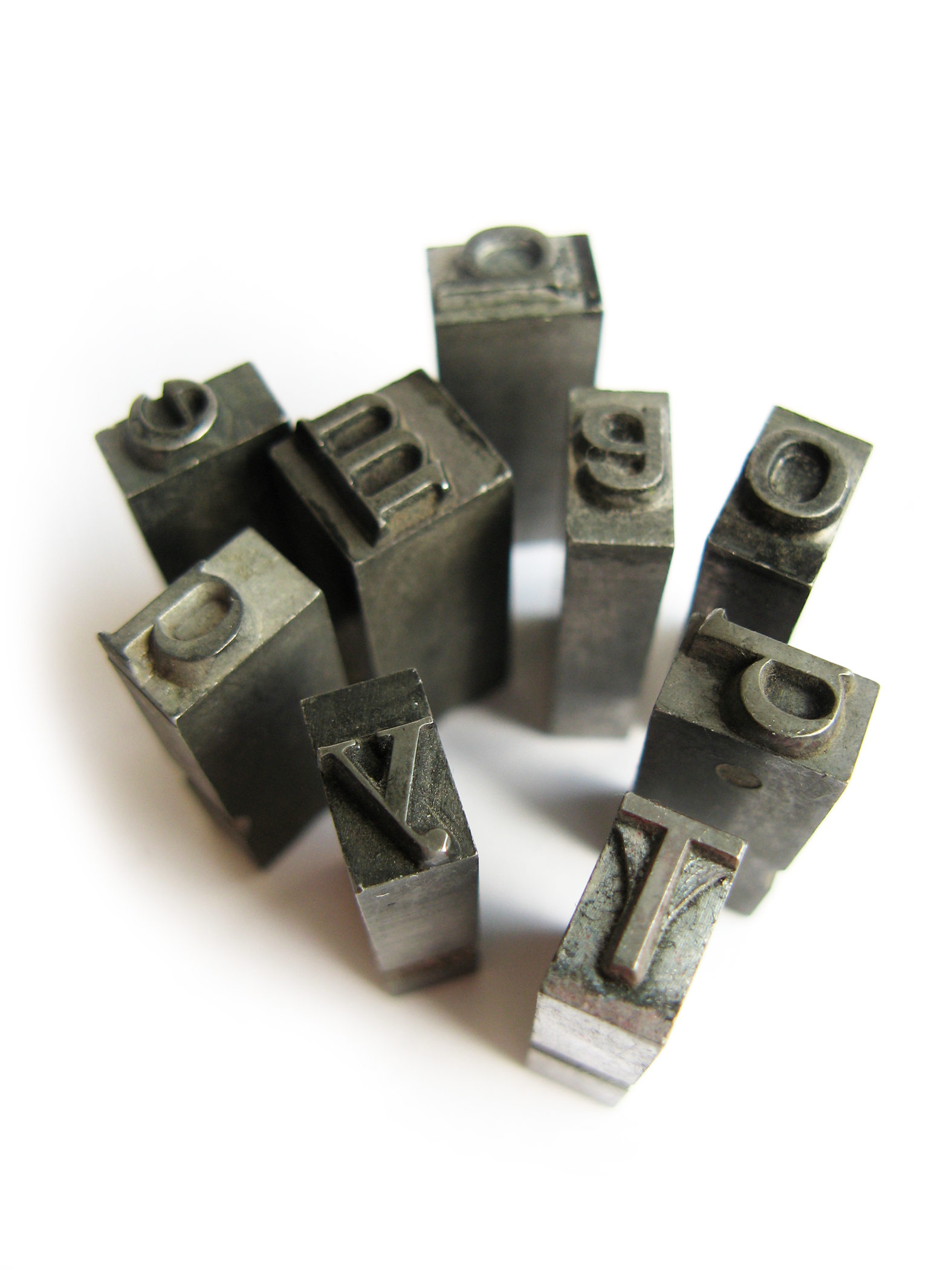
type lettersOf all that a writer can and should do—how, actually, does one get started?

It would be possible, in assembling writing advice from just a handful of the people who are giving it, to come away with the impression that making it in this business requires doing everything all the time.

You must, people say, build and maintain a platform. Start or re-start your website. Pin to boards. Make things that other people will pin to boards. Attend conferences and conventions. Join groups. Pitch ideas. Hone your message. Know your audience. Study writing books. Edit incessantly. Post blogs. Find a writing schedule that works. Tweet and re-tweet updates about all of this. Plus string tens of thousands of words together and hope somebody will see fit to make a book of it. That’s just phase one.

Phase two is its own hamster wheel. With a book in publication you must, people say, promote like crazy. Speak at events. Do interviews. Pursue interviews. Write accompanying articles. Track reviews. Deal with disapproval. Build friendships with booksellers. Have catchy marketing stuff. Improve on sales. Aim for bestseller lists. Figure out your next project. Pin, post, platform-build, edit, update, and speak some more. Promise to tweet and re-tweet, always and forever.

The general question: Who can possibly manage all that?

The specific question: How, possibly, can I?

The general answer is that likely nobody can manage it all, when trying all of it at once. The other answer is that you, specifically you, can work toward all of this by doing so incrementally.

You will not start out on bestseller lists. You’ll begin at the beginning, with the whole unrelenting shebang left to do. Tweet This

There will be potential failures and rejections at every corner and turn. But if you begin—if you sit at a computer or a typewriter or even a small slip of paper, and if you start putting words down and then keep putting words down, you will be writing. Often it is as simple as that.

hurdleHere is a personal example. After having published three books by 30 (two as author, one as collaborator), late last year I didn’t have a single writing project to speak of. I wasn’t sure I wanted any, because being submerged in the mire again—see above paragraphs—seemed exhausting. Other concerns demanded my focus and time too, namely: my husband was on a seven-month combat deployment to Afghanistan, we had moved our lives across the country twice in less than a year, and I had just given birth to a baby, our first. Some days, accomplishing just laundry and dishes seemed out of my league.

But I knew that God had given me a love for writing and the opportunity to publish. He was percolating words in me that I wanted to put down. So on one harried morning, I dared draft an article query. On another day I bravely emailed some book ideas to my agent. It was just a baby toe stepped back into the pool, but from where I stood it was the all-important start, a jump at the big, looming hurdle.

That was trajectory, finally, and in a matter of weeks and months I was actually writing again: ideas flowing, plenty of potential projects on hand, a few materializing, and even (always miraculously) another book contract waiting in the wings. Perhaps more importantly, I was learning to chip away at this job, little by little, reminding myself that it would not be accomplished in a single swing. The laundry and dishes were waiting longer than before, but I figured I could deal with that.

Have you wondered, frustrated, how to get started writing? The solution can be as simple as a little trajectory. Tweet This

Stop trying to figure out how to start writing; instead, start. Aim at a goal and have the courage to start imperfectly and incompletely. As you get a handle on one area, add another. You will likely surprise yourself with all that can be attempted and accomplished. Writing is far more doable when you’re doing it.

Writing a Trilogy

For those of you starting on your writing journey—there are two realms of publishing. The ABA (the American Booksellers Association) and the CBA (the Christian Booksellers Association.) The ABA publishes what would be considered secular novels and the CBA publishes Christian or “inspirational” books. Publishers generally fall under one of these two categories.

Book #1 Bloodline Trilogy

CBA publishers like trilogies. And there is good reason for this. If you can hook a reader on one, they’ll likely buy the rest. There is an inherent marketing value to producing a series. I’ve not quite seen this trilogy trend in the ABA though there are beloved characters (James Patterson’s Alex Cross, Lee Child’s Jack Reacher, and Sue Grafton’s Kinsey Millhone to name a few) that monopolize more than a few books but are not quite designed as self-enclosed three-book sets.

When Proof was first contracted, it was proposed as a trilogy. The publisher didn’t like the first proposed sequels and asked for different plot lines in the subsequent titles, which I provided. Even after that, they still contracted only the first. In a twist and turn of God fingerprinted events, they ended up contracting the trilogy a few months after the initial offer.

Book #2 Bloodline Trilogy

However, having not ever written a trilogy, there are a few things I would do now when planning a series that I thought could benefit future trilogy authors.

  1. Each book stands alone but should be connected to the others: It’s nice for readers if they don’t have to read one book to understand the others but is also nice if certain characters/themes carry through all the books for those sticking with you. This can be challenging because a little information will have to be given (in a creative way) to readers to both clue them in to the previous story(ies) and also serve as a nice reminder to those picking up the next book who may have read the others—considering books release six to twelve months apart.
  2. Book #3 Bloodline Trilogy
    Book #3 Bloodline Trilogy

    Timelines are important: I know—this should have been uber-obvious to me, right? But consider some things that can seriously mess up your timeline—like characters getting pregnant. You have to then backtrack to the time of conception and make sure all story plots support it. Add to that a hostage story (Poison) that deals with younger children that then need to be aged seven years, and a teen pregnancy (yes, I did all of this!) and it can be challenging to make sure all events line up. Graphing out the timeline is a seriously good idea. And then keep it to refer back to until the book is actually in print.

  3. Avoid absolute characterizations: In Proofone character commented that another one never sweats (and it was a blazing hot day and he was in SWAT gear.) It was more to relay how calm the man was under pressure. Well, in Poison, my editor reminded me how often this character was now sweating and how I said in book #1 that he never did. It’s just like a test—never, all, and always are not good picks or preludes to character traits.
  4. Provide a circular moment for the reader: What is a circular moment? It’s something (an event, an emotion) that happens in the beginning that is revisited at the end of the novel that shows how the character has changed. For instance, in Proof, the lead detective, Nathan Long, carries a list of “unforgivables”—acts that he literally writes out that he can’t get over emotionally. There is some forgiveness for Nathan at the end of the first book but it ultimately doesn’t fully happen until the end of Peril, the third book in the series. So each book needs a moment like this as well as the series.

What about you? Do you have tips for planning a trilogy?

When Your Book Doesn’t Sell: Separating the Writer From the Wannabe

http://www.stockfreeimages.com/

“I’m so glad it is our first year here so that the pressure’s off to win an award. I heard you have to be returning to be in the running,” my friend Kim leaned over and whispered as we sat in the back of Mount Hermon Christian Writers Conference’s auditorium last April.

“Seriously, right?” I said, slouching down in the pew and sighing. We were settled in for the final night of programming; awards, music, and a message from the great Liz Curtis Higgs, who, if I am being honest, seemed so inviting and encouraging that it took all I could muster not to walk over and crawl up in her lap.

The week in California had been a dream for this mother of four, prone to piles of laundry, homework with kids, housework, and therapy and doctor appointments for my two daughters with Down syndrome. One week by myself, ensconced with like-minded people, authors, agents, publishers, and writers with dreams of their own, in one of the prettiest parts of God’s creation.

So you can imagine my surprise when my bio was read and my name was called. I won the Ethel Herr 2012 Most Promising New Writer Award for submitting 25 pages of my memoir about giving birth to my daughter Polly, and her diagnosis of Down syndrome, while serving as a missionary in Ukraine. My friend and I jumped up and down, and I ambled to the stage. The bright lights made me dizzy. Liz Curtis Higgs gave me a huge smile. “Wonderful!” Ethel Herr (Ethel Herr!) gave me a hug. The award thrilled me, and embarrassed me. After all, I was just a mom, trying my hand at this writing thing.

I naively left the conference sure that I would secure an agent and a publisher for my book within minutes of walking in the door back home.

Yeah. That didn’t happen. I secured an agent, but months later, through a different writing venue. The manuscript garnered interest from publishing houses that even resulted in two frightening, sweat-producing face to face meetings.

But so far, my book hasn’t sold.

Here are three things I’ve learned from this experience so far:

1. Keep writing

Someone offered me sage advice once I completed my manuscript. “Start another one.” Diving right back into another book length project has been one of the best things I’ve done as a writer. I’m a writer, not a wannabe, because I want, no, I need to write, not just to be published. I am growing in my craft, and I am still having fun doing it.

2. Grow your platform

I’ll admit it, there have been days that I’ve wanted to curl up in a ball over my memoir not finding a publishing home. OK, there have been days I have curled up in a ball because my memoir has not found a publishing home. But I’m a writer, not a wannabe, because I get back up and keep trying. I am building my platform and brand through articles, speaking, social media, and blogging.

3. Trust God’s timing

As a person of faith, although my carnality wants what I want in my timing, this experience has been a great exercise in trusting God and his timing. I am called to write. And by God’s grace, he uses my words in other people’s lives, and in my personal pursuit to become more like Jesus. So I practice trusting him. If it is God’s will for my memoir to be in print, it will happen. In the meantime, I’ll keep writing.

I may not be a published author, but I am a writer, not a wannabe.

And today, that’s enough to get back to this crazy, exciting, challenging work of putting pen to paper.

There’s Only One King of the Hill

Kids Playing in the DirtIt couldn’t have been more than a few yards of black gumbo dirt, but it was prime real estate in our grade school perspective. The Hill sat on the playground of a now defunct country school once known as Briarfield South. Perched on the side of a drainage ditch that ran alongside a cotton field, The Hill doled out dirty jeans and scraped knees to all comers and transitory crowns to a select few who managed to make it to the summit.

Reaching the top meant one had successfully outmaneuvered the opposition. This was quite a feat and one to be fully celebrated, for the moment of glory was destined to be short-lived. No resting on your laurels. If the recess bell didn’t require you to surrender your throne, there was always another valiant warrior headed your way who was bent on taking you down.

Memories of The Hill have me thinking about Writing World. Sometimes, when I’m surrounded by other authors at a book festival or similar public event, I’m tempted to check out the knees of my fellow wordsmiths who have made it up the rugged publishing hill. We all know that here in Publisher Land, you’re only as successful as your last book. The next contract rests on your latest sales numbers. If getting published is an uphill climb, staying published can be like writing on a tight rope without a net. Let me be clear. If I’m not diligent to keep this thing surrendered to the Lord I can succumb to the anxiety just as often and just as quickly as my peers who make no claims of following Jesus.

The uncertainty of Publisher Land is just one more reason to be grateful for the solid rock beneath my spiritual feet. It’s such a welcome relief to rest on the One who has fully saved and fully accepted me. Hebrews 7:25 reads, “Therefore, because he always lives to intercede for them, he is able to save completely those who come to God through him.”

The blessed news is that I’m not on a continual evaluation with my God. Oh, He’s still working on me and with me, (the high dollar word for that process is sanctification), and He’ll keep working on me until He presents me before His Father and mine, redeemed and glorified. But I don’t have to fight and scratch to hold onto my place in His heart and neither do you! Our work is to keep Him in His rightful place in ours.

Hugs,
Shellie