Marketing Beyond Social Media and the Internet

We know how powerful social media and the internet can be in marketing and building our author platform. But have you been overlooking your own back yard?
Backyard

With the launch of my new book, Pioneering Today-Faith and Home the Old Fashioned WayI embarked on  traditional on-line marketing with guest posting, blog tour, and special bonus gifts for those who purchased the book.

But I’ve had the most sales from my home town. I asked our local pharmacy and grocery store to sell copies of my book. They agreed and I’ve sold out at both locations. I made sure to let the owners know I’d be announcing on my social media pages that copies would be available there. (It needs to be a win for both parties)

We have a local movie theatre that is in the homestretch of fundraising for a new digital projector so they can stay in business. The owner is running an ad for my book in the previews before every movie and selling copies with part of the proceeds going to their digital fund.

I’m teaching two classes for the community. The first was a bread class where I showed how to make the artisan bread and thin crust pizza dough. The second is a jelly making class (all from my book). I sold out of books at the first class with more ordered.

Social media is great, but don’t forget about local. Think of places in your home town where people go frequently.

Tips for making businesses say yes to your book:

1. Make an appointment ahead of time with the owner or manager to discuss putting your book in their store. Remember they’re busy and show up on time. Think of this like a job interview.

2. Think of ways their business will benefit from having your book.

3. Don’t expect them to just let you sell your book without giving it to them at a discount so they make money off the sale too. Be sure you know what your bottom line price per book is so you both make a profit.

4. Bring a large amount of copies with you, but ask them how many they’d prefer to start with on their store floor.

5. Keep a file at home noting how many books are at each place. Check in on a regular basis to see if they need to be re-stocked. Make sure they also have your contact info. One of the store’s employees called me to let me know they’d sold out and needed more books.

What ways have you marketed your book in your home town? Are there businesses you could tie the content and theme of your book to beyond bookstores?

How to Stage An Online Blitz

After spending five days eating, drinking, and sleeping (well, maybe not so much sleeping as lying awake with the brain on overload) the promotion of my free Kindle download last week, I’ve come up with what I call ‘Jan’s TIP’ for any writer planning a similar online marketing blitz.

T is for Timing.

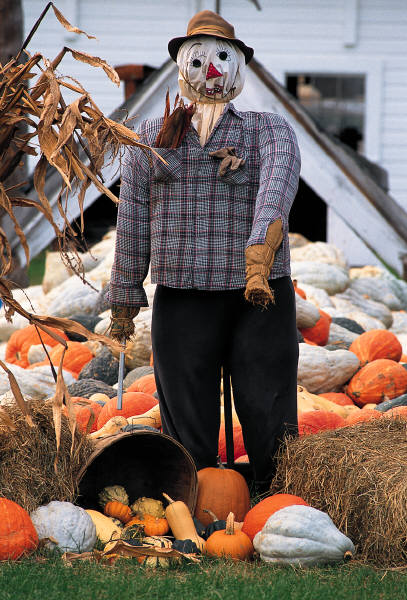
Choose your campaign dates carefully. My book, A Murder of Crows, takes place in October and opens with a scarecrow display; picking an October date for the promotion was an easy choice. It also afforded me lots of tie-in opportunities: I could mention the book in response to any blog, Facebook or Pinterest item that was about Halloween or scarecrows. Think seasonally!

Timing is also about when you post on social networks. I read blogs on Social Media Examiner and subscribe to Rob Eager’s marketing posts, and I’ve learned the best days and times to post to get the most fan engagement: Wednesday through Sunday. I kicked off my promotion with announcements on Sunday and pushed hard with posts Thursday and Friday.

Finally, timing is about you, and how much time you can devote to managing your promotional campaign. I spent at least four to five hours a day online posting, emailing, commenting on blogs, updating lists of contacts and prospecting for new ones. I spent two more hours each day strategizing what to do the next day, exploring new markets and tracking sales/download data. If you want to run a successful campaign, it’s a full-time job!

I is for Images.

Research has shown that images are the keys to social network sharing. To keep posts fresh and continually attention-grabbing, you need to switch up the images you post. I developed six images to use during my five days of promotion, and changed the images I posted every day, with different short text messages. By the end of the week, I’d seen all six images reposted on different networks. It kept my message alive in the universe of Facebook and Pinterest, where the typical ‘life’ of a post is only three hours.

P is for Preparation.

I spent weeks – years, actually – preparing. I made solid contacts in my target audiences over the last few years and asked for book reviews and assistance in promoting my free Kindle deal. I put together a team of fans, reviewers, bloggers, and key influencers to help me focus on getting the word out the week of the promotion, and supplied them with my prepared images and text to use on their own networks. My list of websites and FB pages to contact during my promotion week numbered over 100 (and in the course of the week, it continued to grow as I stumbled on new connections – which are now part of my data base for future book promotion).

So that’s ‘Jan’s TIP.’ Take it for what it’s worth. For me, it was worth around 4000 Kindle downloads in five days…and a bump in the sales of other books in my series.

Do you have a tip for free ebook promotions?

The 15-Minute Writer (Part 3): Building Your Platform

Platform building has become all-important in the publishing world. And how do you build a platform? One plank at a time.

That’s why I tell writers with day jobs and moms with kids NOT to wait until they have more time to pursue their dreams. You can write, build your platform and get published–one small step at a time.

When I started taking my writing seriously, I had a baby and a husband in full-time ministry–and no family nearby to provide free babysitting. So I wrote during my son’s nap times. After Jordan outgrew his naps, I enrolled him in our church’s “Mother’s Day Out” program two days a week, and used those times to write.

When my second son was born, I repeated the process–though things did get a bit trickier! I’ve also written during lunch hours, backstage in a dressing room while waiting to perform at a theater, during birthday parties (not my own kids’, though!), on Saturdays/Sundays, and late at night.

*But NEVER in the early mornings. Some things are just insane.*

One plank a time, I’ve pursued this crazy/wonderful calling God placed on my life, building a career and a platform. It’s a roller-coaster, of course–lots of rejection for every acceptance–but I wouldn’t trade it for anything.

[I’m also aware that my husband is entirely supportive, and for those authors who don’t have an encouraging spouse, my heart goes out to you. You’ll have to be even more creative and deliberate about finding time to write. But please, don’t give up!]

My own story makes me passionate about helping other writers (especially moms) hone their craft.

Say you have a precious fifteen or thirty minutes a day to write. Divide those segments into writing, market research, and promotion/marketing. Then use your allotted time three days out of the week to write; two days to do market research; and one day to market (giving yourself one day off).

Here are a few sample ways to build your platform, fifteen or thirty minutes at a time:

  • Post a new picture or status update on your Facebook author page and “like” a few other people’s posts while you’re signed in as the author.
  • Tweet from your Twitter account and RT/respond to a few tweets from friends.
  • Update LinkedIn (I do this automatically by linking my Twitter feed to my LinkedIn profile, so when I tweet, my LI account gets updated, too).
  • Write a rough draft of a blog post.
  • Pin a link and photo from a former blog post on Pinterest. (Careful! Pinterest is addicting–might I suggest a timer?!)
  • Read a blog post (or two) and comment on it.
  • Read a portion of a book on marketing and promotion. Highlight your favorite ideas, and bookmark the page to come back to.
  • Read about a conference you’re interested in, and mark the dates on your calendar.
  • Sign up for a conference, online course, or in-person class.
  • Write a rough draft of a query to an agent or editor.
  • Edit a query you’ve previously drafted.
  • Compose a cover letter for a query or manuscript.
  • Email friends about your newest published piece and ask them to share it with friends, if they’re so inclined.
  • Email an author friend to ask advice or feedback.
  • Offer feedback and advice to someone “greener” than you.

Now it’s YOUR turn. What are your strategies and ideas for platform building, one board at at time?

(Read part one and part two of the series.)

10 Tips for Converting Website Visitors to Customers

Money-in-hand“The thing I still grapple with is turning website visits into sales – any advice on that piece?”

This question to my post, Drive Traffic to Your Website or Social Media Sites? (7 Things a Writer Should Know), inspired today’s topic. Driving paying customers to your website is only a matter of outlining and implementing the steps to take. Here are some things to consider.

  1. Make it professional and appealing.  If your website is garish, disorganized, or amateurish, revamp it before inviting company over.
  2. Blog for your target audience. Not everyone should blog, but if the idea appeals to you, ask yourself who will come to your site. What would draw them and make them come back? To reach more people, you might want to consider other blogging formats like photo-blogging, vlogging (videos), and podcasts in addition to text.
  3. Keep an email list and notify it of new blog posts. You can include a purchase offer with a call to action at the end of each of your posts. This is especially effective because research suggests people most often respond to a product with a purchase after seven offers.
  4. Offer an email newsletter. This is one of the best ways to keep in touch with customers on an ongoing basis. Each time your newsletter shows up in their email inboxes, you and your product(s) will come to mind. This makes you part of the fabric of their everyday lives.
  5. Engage readers. Answer their questions, host a forum, offer samples of your writing. Anything goes, just so long as you entertain readers while remaining consistent with your brand. If you’re stuck for ideas, get together with a friend or friends and brainstorm.
  6. Host a contest to draw readers. Give away something of value and require email signup for entry. When your site gains page rank, you’ll likely receive offers of free products in exchange for promoting them. You can also sign up for affiliations that allow you to distribute sample products. As an example, during a blog parade I gave away a complimentary copy of scrapbooking software.
  7. Launch an ongoing giveaway in exchange for email list sign up. Giving away products when you’re trying to make money may seem counterintuitive, but offering something of value for free can more readily put you in the position of a trusted mentor to visitors. Remember that people buy from those they like and trust and who care about them. False motives stand out and won’t earn you sales. Be genuine and speak from your passions. Giveaways don’t have to be published books. Use your creativity to come up with ideas. Lists and reports have a high perceived value. Whatever you give away, let it come from you. On my Live Write Breathe site for writers, I give away free letterhead stationery and a query letter template that I designed. Since photography is one of my hobbies, at Novel Books, where I inform readers about wholesome books and authors, I offer free computer wallpaper and an additional chance to win book giveaways for email sign up. I’m currently revamping my Janalyn Voigt site, so I don’t have a giveaway going right now, but I plan to offer a free novella to familiarize potential customers with my writing.
  8. Offer a quality product or products. This should go without saying. If you want the best results for your efforts, be generous.
  9. Include a landing page with value for the reader and a single call to action. Resist the urge to bore visitors by making your landing page a site directory. That’s what your navigation menu is for. Instead, determine what you want to gain and ask for it in a clear appeal. What if you want more than one thing? Combine them. (Purchase an autographed copy of my latest book, How Penguins Waddle, and receive a free copy of my in-depth report on water birds. As a special bonus, you’ll also receive the monthly Antarctic Adventure newsletter.) It’s all about presentation.
  10. Promote. Drive traffic to your site by making informed comments (but not blatant self-promotion) on forums and sites with an audience similar to your own. Cross-promoting with another writer or business can also be effective. You should update your social networks with links to your sites and a catchy blurb or excerpt.

Most writers, being artists, can feel a little challenged when it comes to setting up shop. Converting website traffic to sales is what we have to do, though, to reach and retain readers.

Drive Traffic to Your Website Or Social Media Sites? (7 Things A Writer Should Know)

Image-of-Traffic

With so many people on social media sites nowadays, it’s tempting to ask yourself if you should forget about driving traffic to your website and focus on marketing elsewhere. Why not go where people already are instead of making what can seem like a herculean effort to drive traffic to your site?

The answer to this question is that yes, you should go where people congregate, but yes, you should also invite, bribe, entice, and otherwise encourage others to your website. Here’s why:

  1. Social networking sites own your list of friends and followers. You don’t. If one of them goes out of business, it won’t matter that you have 4,000 followers. Every one of them will vanish into cyber space. By contrast, the list you build through your website belongs to you.
  2. People want to know where you live online. If you’re spread thin across social networks without a strong central hub, your brand will be ineffective at best. Branding is all about distilling your essence for others to grasp with minimal effort. If your online presence is scattered, you’ll have a hard time maintaining a brand.
  3. A neglected website reflects poorly on its owner. Those who connect with you on social sites will sometimes visit your website. A languishing website may make the casual visitor wonder what else you neglect in your writing business. The same can be said of a languishing social media account. You shouldn’t try to be everywhere, so pick and choose where you will and won’t maintain an online presence.
  4. Exclusivity. If your website becomes one of those places people gather, you won’t have to go out and haul people in to connect with you.This takes a great deal of thought and legwork up front, but after that it can pay off.
  5. Less competition. That’s usually not true on social sites where instant messages, notifications, advertisements, and the updates of others all compete for attention. You still need to have an interesting website, but at least visitors will have fewer interruptions while you try to maintain their interest.
  6. Higher search engine rankings. The more traffic your website generates, the higher it ranks in search engines. A higher search engine ranking means that those who enter keyword searches matching content on your website will find your site closer to the top of search results. This brings traffic to your site without any additional effort on your part.
  7. The ability to sell products. Once you give friends and followers a valid reason to come to your site, you can then offer products to them. This privilege can be abused, so be considerate. Remember that visitors to your site want an immediate takeaway, usually for free. Without one, they may not hang around long enough to buy anything.

Do all your social media accounts point to your website? If not, I suggest you change that as soon as possible.

What are your thoughts on this subject?

Related Posts:

SEO Is Not Enough To Grow Your Blog Subscriber List!

Marketing with Integrity: 5 Tips On What Not to Do

Social Media Numbers: How Many Friends and Followers Are Enough?

Creative Venue Planning

If bookstores are the only place you’re signing and talking about your books, then you’re missing the boat.

Perhaps even literally.

In the last year, in addition to bookstores, I’ve talked and signed books at gift shops, diners, book club gatherings, Rotary Club breakfasts, libraries, senior community dinners, and summer festival booths. Since my novels are about a bird lover, I’ve also signed books at bird feeding supply stores and an annual birding meeting, not to mention an international owl festival, a regional hummingbird celebration, and the National Eagle Center. At every venue, I’ve sold more books than I have at any bookstore signing, not to mention the new readers I’ve found and the publicity such events generated.

So how do you pack your calendar with venues that will work hard for you? The answer is Creative Venue Planning, and here’s my three-step recipe:

  1. Look past your story, and instead, brainstorm your book’s topics. Like trying to identify keywords or tags for a blog, pulling out the topics, and even specific characters, in your book can lead you to new audiences and venues. Since my protagonist began birding as a child, I give talks about the importance of nature education for kids at family-oriented programs. A restaurant I included in one book happily hosted a signing for me, and displays my books in a prominent place. HINT: Does one of your characters run a small business? Your local Rotary Club or Chamber of Commerce might be delighted to have you come speak to them about how that plays into your novel. Many groups are eager for new ideas and personalities to book for their meetings. Find a link between them and your work, and you’ve got a foot in the door.
  2. Research opportunities. What groups in your community need speakers? My current goldmine is senior living communities who have busy activity calendars for their residents. Since many of my readers are older and enjoy birdwatching, speaking at these venues is a perfect fit for me. I’ve learned that many communities have on-site book clubs, too, and having an author (you!) available to join a gathering can mean a shortcut to your book being selected for reading. HINT: Would you be willing to talk to a high school class about something related to your book? Teachers are generally thrilled to have a guest speaker, and while you may not make any sales in the classroom, you can bet on word-of-mouth publicity (and perhaps a small fee from the school field trip budget!).
  3. Pick up the phone. Nothing beats personal contact when it comes to booking events at creative venues. Find the right person to ask (research on the internet or by phone) and prepare a short, convincing, sales pitch as to how they’ll benefit from your visit. Offer to email your photo, a brief bio, and talk description for their use in promotion. Take your bookmarks to hand out, and books to sell and sign.

What’s on your creative venue plan?

Memories Are Made of…This?

linkchronicle.blogspot.com

Four years ago, after my first mystery novel hit the bookstores, I acquired a new job title: Doer of Whatever It Takes to Get This Book in Front of the Public So It Will Sell. Most of the time, it was a pretty cool job. I researched marketing possibilities, called up bookstore owners, scheduled book signing dates, talked to media contacts, went to book signings, drank bottled water, chatted with readers, and, in general, had fun.

Sometimes, though, it was less fun than other days.

Sometimes, it was almost depressing, as in “what in the world am I doing here being a struggling author when I could be home getting the laundry done and feeling like a productive member of the human race?”

Thankfully, most of those days are behind me now, but to reassure new authors that we all have bad days, I’d like to share two of my less-than-bright moments.

Scene: Bookstore signing

I spend an hour and a half at a table in a mall outside a bookstore. The place is mobbed – not with readers frantic to buy my book, but with adults and kids participating in a fun run to benefit the children’s hospital in town. At my table, I get lots of attention, though. The two most frequent questions I get are: “Where is a bathroom?” and “Is there some place around here where we can get something to drink?” Being the helpful person I am, I point people in the direction of the former and offer the others some of my bottled water.

Okay, so it’s not my most glamorous moment as an author.

Scene: At the local television studio before my appearance on the morning show:

“You’re not allergic to dogs, are you?” a nice young intern asks me before he opens the door to the green room, where I’ll wait for my turn on the show.

“How big are the dogs?” I ask, since I don’t do well with big dogs in open spaces, let alone big dogs in small windowless rooms where they can slobber all over you while you cringe in abject misery on a hard plastic chair.

“They’re little,” he says.

“No, I’m not allergic,” I tell him, and he ushers me into the room.

The intern is right, the dogs are little. Really little. They are also dressed up in Halloween costumes. One is a shark, one is a pumpkin, a Chihuahua is wearing a blonde wig and red dress, and another tiny dog has on Snow White’s signature blue vest and yellow skirt.

“Who’s the Chihuahua?” I ask.

“Marilyn Monroe,” the handler answers.

I give myself a mental head slap. Of course it’s Marilyn Monroe. What was I thinking?

I’ll tell you what I’m thinking. I’m thinking I’m waiting to be interviewed about my novel with a bunch of dogs dressed up for Halloween. I’m thinking I’m going to fire my publicist, except that I’m my publicist.

Some moments really are better as memories…

Care to share some of your moments (bright or not)?

~”Only a loser, and this is the VERY first rule of novel writing, wears what they wear on their author photo on the back of the book to their very first book signing” (Brad Meltzer).~

Marketing Love

Striding down the endless hallway of the Mayo Clinic, I passed hurting people on all sides.  This wasn’t about being heroic; I simply wanted to make my day about more than a doctor appointment.

“Okay, Lord. Who?”  My book felt sweaty in my hand.

Copy number one went to the sweet lady in a wheelchair. “Oohhh,” she said, pursing  fuchsia lips.  “It looks wonderful.  Thank you, Dear.”

Copy number two returned to me with the cold shoulder of rejection.  I kept walking because I couldn’t shake off the possibility that God might still want to do something. Besides, I was stubborn and didn’t want to go home with the book.  When I got to the end of the hallway, I discovered I’d inadvertently funneled into a large waiting room.

“Okay, God.  What now?”

Doing a three-sixty over a sea of people, I tried to look inconspicuous.  Then, with a puff of a prayer, I picked a pleasant-looking lady.  She’d be the one.  I took a deep breath and plopped myself down with only a chair between us.

After a minute of pretending to read my own book, I cleared my throat.  It worked.  We made eye contact.

“Hi,” I began.  “This may sound strange, but I prayed God would lead me to someone I could bless with this free inspirational book, and I feel it’s you.  May I give you this?  I wrote it.”

Her eyes lit up.  “Oh, bless you,” she said, glazing with tears.  No fanfare, just a simple exchange.  I went home happy and bookless.

Two or three weeks went by and apart from a few imaginations of finding “A Friend in the Storm” in a thrift shop, I basically forgot about my give-aways.  That is, until three days ago, when I received this heart-stopping email from Sara, a friend I hadn’t talked to for months:

Dear Cheryl,

I talked to my neighbor & friend about 2 weeks ago, Krista Flint.  She had an amazing story of being touched by God’s love through a stranger.  And that stranger was YOU!  It gave me goose bumps to hear of how she had been going through so much and that you sat beside her in the waiting room and gave her your book.

She was so blessed by your words, kindness, & the power of your poems. She said that she knew that God was near, but it was so comforting to hear it from someone! So I wanted you to know that your choice to follow God’s nudge to go to the waiting room and give “someone” your book was exactly what God planned for you & Krista!! It was so exciting to hear how God did that for both of you.

Sara’s P.S. explained that Krista was a breast cancer survivor.  Later, the same day I gave her my book, she was in a major car accident.  Although her car was totaled, she somehow managed to make it through it okay.  “A Friend in the Storm” gave her peace and reminded her that God has a purpose.

“Make use of every opportunity.”  Ephesians 5:16

When we ask God to go before us and use us for His glory, He makes a way.

Until heaven, we can’t possibly grasp all the ways God uses us to reach others.  We simply rejoice in these glimpses.

Giving away books is only one of many ways we can be God’s messengers.  We can also share personal notes, Scripture cards, and post cards or business cards with thought-provoking quotes or concepts from our books.

One time, when I gave a waitress a poem card, she threw her arms around me and burst into tears.  The Lord used a simple poem to reach into her heart and start a healing conversation.  Don’t you love how the Holy Spirit works behind the scenes?

How do you share marketing love?  I’d love to hear stories of how God used you and your words.

With Us Here Tonight

Shortly after my first book was published, I gave a book talk at our local library.

Then I gave another talk at another library. And then a third library.

Then a Rotary Club called me. A few months later, I found myself the featured speaker at a Shriners dinner. Last month I presented a talk at the National Eagle Center. Birding festivals, book conferences, annual meetings, schools, service organizations–I’ve addressed them all.

Wait a minute. I thought I was a writer, not a speaker.

Guess what? Book authors get to do both!

The fact is, you NEED to do both if you’re going to successfully build your readership and market your writing. That means you should work on your public speaking skills, and the best way to do that is to take every opportunity you find for a speaking engagement. Develop the following five types of speeches, and you’ll be ready for anyone!

The Sound Bite is the one you will use a bazillion times. It’s the one-liner you’ll utter every time someone asks you what your book is about. It’s also one of the hardest to compose because you need to distill your book and its value down to one sentence. My sound bite for my series is “The Birder Murders is a humorous series about a really nice guy who happens to find bodies when he’s out birding.”

The Book Talk is the speech that focuses on your book’s content. If it’s nonfiction, you can give a general review of the topic itself, or focus on just one chapter’s point and why it’s important. If it’s fiction, you discuss characters, their relationships, the plot, how you came up with all of it, what you want to accomplish with it. This works best with audiences who have already read your book because they will have questions about what they’ve learned and/or enjoyed from reading it.

The Business Talk is about your experience with the publishing business of being an author. The changes we’ve seen in publishing, including the growth of e-books and marketing paradigms, is a topic that appeals to audiences composed of business people or future authors.

The Writing Talk is about your own process of writing a book. Do you do research? Conduct interviews? Journal or set word goals? The beauty of a Writing Talk is that it is appropriate for a variety of groups, and depending on the slant you give it for the group you’re addressing, it works equally well as a classroom talk, a keynote address for a gathering of library supporters, an awards speech, a writers conference, a book club… you name it.

The Topic Talk is the newest talk in my own arsenal of speeches. Because my books are about nature, I’ve started giving talks about nature education and conservation issues. If it is mentioned in my books, it’s fair game for a talk and a great way to use extra research.

Here is a great resource to help you to continue to develop your public speaking skills.

What talks could you present for your book? Do you have any ideas for talks that I have not mentioned?

Hunting and Fishing: Tackle Box Tools for the Aspiring Author

What does hunting and fishing have to do with being a writer? More than you might imagine. If you think you’re exempt from needing these skills, you may find you’re going to need a bigger boat, so to speak.

After placing well in a writing contest, I was approached by several people who wanted the same thing. They resembled eager, wide-eyed hunters, sure that there was a sportsmen’s paradise within reach, if they could just locate the geographic coordinates. The questions have been pretty standard. How do I get started? What should I write about? How do you get an agent? How do you get published? But the most interesting question so far has been how do you find the courage to put your work out there? This question was from a woman (we’ll call her Nancy) who had already written an entire series of books, but lacked the confidence to move forward. She was stuck.

In addition to being a strong writer, Nancy had an impressive graphic arts background and was perfectly capable of designing the entire book herself. She had all the tools she needed and then some – but not the confidence. It’s a common dilemma. Many writers are introverted and sensitive to criticism. They may have much better work in their garage than most of what is available, but we’ll never hear about it because they are unwilling to send up a smoke signal and let us know where to find them.

Not everyone is going to love our work, and we don’t need everyone to love our work. We just need to find our audiences. Fishing with good bait obviously helps exponentially. Nancy came to peace with the fact that she was going to have to learn to fish. She then accepted the fact that although she didn’t think her book was good enough, it was certainly better than some of the other books out there. If those books could get published, then why not hers?

Next, we tackled the business about marketing and promotion. Nancy realized that she would not have to just catch the fish, but cook it, clean it and perhaps even serve it as well. The author is expected to do a great deal of their own marketing. The publisher can’t do it all for us; they have other authors they need to promote. No one has as much of a vested interest in our success as we do.

Nancy was horrified to learn that she would probably need a website with her name and picture on it, and she might even have to speak about her book in front of people. The most uncomfortable concept for her by far was that she would have to ‘sell’ her work. But she figured out that it doesn’t feel like ‘selling’ if you are simply providing a service or commodity and increasing awareness for people who really want your product. Blogging and tweeting and self-promoting are awkward concepts for most of us. However, unless you have staff to hunt and fish on your behalf, there aren’t too many other options.

Nancy still isn’t crazy about all the hunting and fishing she has ahead of her, but she is committed to surviving as a writer. She has started working on her book covers and finding books on how to overcome her shyness. She’s bravely entering Writing Territory and looking for a spot to set up camp. Best of all, she is no longer stuck and is actively pursuing her own hunting and fishing sportsman’s paradise.

Have you caught any tasty fish lately? How are your hunting skills? Figuratively, of course, but if you want to share some literal experiences, that’s okay, too. 🙂