God Has the Plan, Not Me!

Chess pieces on chessboardI’m a planner.

In the days before I go on a trip, I make a list of everything I need to take, so I won’t forget something in the actual process of packing. I mark items off the list as I pack them. When I close the last suitcase, I tuck the list into my purse, so when I return, I can use the list again to be sure I don’t leave anything behind.

The fault with my method of preparation is obvious, though – while I can control what I bring on the journey, I can’t control what actually happens on the journey. Sometimes the weather is much hotter than I expected, and I end up wearing the one sleeveless shirt I brought for the whole trip. Or the opposite occurs, and I wear the same sweater nonstop because everything else I packed was perfect for the 75-degrees that had been expected, but got pushed aside by an unseasonably cold weather front.

Again and again, I think of the Yiddish proverb: Man plans, and God laughs. And while I appreciate a good laugh – I’m something of a humorist, you see – it can get very tiresome when I’m trying to apply my planning penchant to my writing career.

Here was the plan: Choose a niche, write a great book, get an agent, get a publisher, write more great books in the series.

This is what happened: Wrote a book tailored to the niche (cozy mystery), wrote second book, got turned down by every agent for three years, not a word from any publisher, began writing third book in series, began writing another series in a different genre (supernatural thriller/romance) to see if I could do it and since the first series was getting nowhere, why not?, and finally found a small regional press for the mystery series four years after finishing the first novel.

Encouraged by that success, I pitched the thriller/romance to an agent, who snapped it up. That was five years ago, and that series now has two books in it, but no bites from any publisher. In the meantime, I’ve had five books in the cozy series published by the regional press, and my agent for the thrillers has now sold a humorous spiritual memoir I wrote six months ago (which grew out of several blog posts) to an international publisher.

From mystery writer to memoirist. I never could have planned that, not to mention the wonderful community I’ve found here to share the journey with at my agent’s company. It’s funny to see where my ‘plans’ have taken me, even though they haven’t taken me where I had planned.

They have, however, taken me exactly where God wanted – I just didn’t know it at the time. So every time I feel God laughing at my plans, I know the laughter is with me, not at me, and I know I’m not alone in this very human experience, for as the prophet Isaiah declared:

“For my thoughts are not your thoughts,
neither are your ways my ways,”
declares the Lord.
 “As the heavens are higher than the earth,
so are my ways higher than your ways
and my thoughts than your thoughts.” Isaiah 55:8-9

So go ahead and plan all you want for your writing career. Then let God show you the higher way.

Want to Write a Memoir? Read These Books . . .

????????????????


Now that I published my memoir, I’ve received a few inquiries about how I accomplished my goal.

Good question.

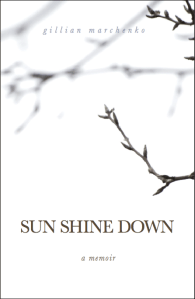
The genre of memoir is tricky. I worked on Sun Shine Down for four years and then spent another two years writing the book proposal, finding an agent, and landing a publisher.

Here are a few questions I get about writing memoir.

“I have a story to tell, but how do I get started?”

“What is your advice about writing?”

“Any words of wisdom regarding the publishing world?”

I am by no means an expert, but here is my best and most basic advice for those who want to write memoir (this goes for breaking into the publishing world as well because if your book isn’t at its best, you won’t break in): 1) Read a lot 2) Write a lot and 3) Find a class or a group of people to read and critique your work.

In this post, I’d like to tackle my first piece of advice: read a lot. Here are three books every budding memoirist must read.

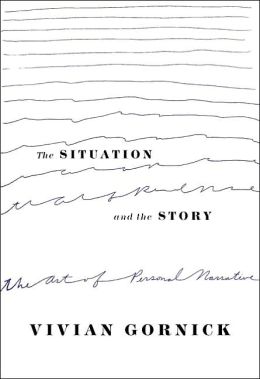
Situation and the story

In “The Situation and the Story: The Art of Personal Narrative“, Vivian Gornick explains the art of writing personal narrative by reviewing key elements like the persona (or narrator) of the writer, her writing voice, and the importance of knowing who she is at the point of writing. The book is broken up into four parts: Intro, Personal Essay, Memoir, and Conclusion. Gornick draws examples from famous books and essays, explaining the situation and story of each, thus causing the reader to pause not only to appreciate beautiful words, but also to break down and understand what makes a memoir or essay sing .

“Every work of literature has both a situation and a story,” Gornick writes. “The situation is the context or circumstance, sometimes the plot; the story is the emotional experience that preoccupies the writer: the insight, the wisdom, the thing one has come to say.” (page 13)

My copy is covered in red notes and underlining. There is just so much good stuff in this book.

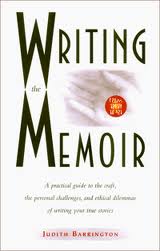
writing the memoir

If your not certain about the ins and outs of memoir, this book is for you. On the cover of Writing the Memoir: From Truth to Art by Judith Barrington, it states the book is “A practical guide to the craft, the personal challenges, and the ethical dilemmas of writing your true stories.” My writing instructor at Story Studio Chicago, where I participated in an advanced memoir workshop for two years, uses this book with her beginners class. In my opinion, it is a book even the most seasoned writer can glean knowledge from. The table of contents includes chapters on finding form, dealing with the truth, writing about living people, and getting feedback on your work. It also has short writing exercises at the end of each chapter.

“Telling your truths — the difficult ones and the joyful ones and all the ones between — is a big part of what makes for good writing. It is also what brings you pleasure in the process of writing.” (page 74)

If you write memoir or want to write memoir, this book must be in your library.

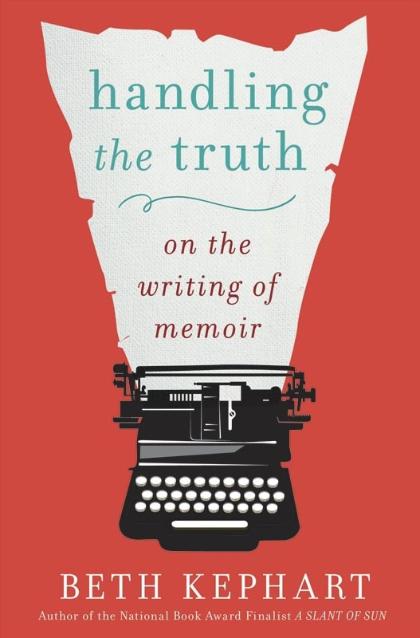
Handling the truth

Handling the Truth: On the Writing of Memoir by Beth Kephart just came out this year and I picked it up a couple of weeks ago. This book is not so much about the ‘how to’ of memoir, but more about the value of the genre of memoir. It is broken up into four parts: Part I: Definitions, Preliminaries, and Cautions, Part II: Raw Material, Part III: Get Moving, and Part IV: Fake Not and Other Last Words.

“If you want to write memoir, you need to set caterwauling narcissism to the side. You need to soften your stance. You need to work through the explosives — anger, aggrandizement, injustice, misfortune, despair, fumes — towards mercy. Real memoirists, literary memoirists, don’t justify behaviors, decisions, moods. They don’t ladder themselves up — high, high, high — so as to look down upon the rest of us. Real memoirists open themselves to self-discovery and, in the process, make themselves vulnerable not just to the world but also to themselves.” (Page 8)

See … you need to buy this book.

Attempting to write and publish a memoir is an arduous task. Start by writing, sharing your work, and reading these three books.

“Penetrating the familiar is by no means a given. On the contrary, it is hard, hard work.” (page 9)

Right on, Vivian.

I would add that it is worth it, if you are up to the task.

Seven No Nonsense Book Launch Tips for Broke Authors

Seven no nonsense book launch tips


Sun Shine DownI am launching a book.

My memoir, Sun Shine Down, published at the end of August with T. S. Poetry Press. Eeek!

As a broke, green as the grass in mid-July first time author, I tackled the daunting assignment of launching a book like any other able-minded individual in North America.

I googled ‘book launch.’

In .02 seconds, reputable results-driven marketing and publicity firms jumped into my line of vision. These people surely could launch my book into the stratosphere!

But after some number crunching and a realistic talk with my husband about where hiring a publicist falls in the needs of a family of six (braces, soccer, therapy, FOOD), I conceded. We could not hire help for Sun Shine Down.

These days, whether we sign with a big publisher, a small press, or self-publish, we bear much of the responsibility for launching our own books. And it’s hard work.

If you, too, are a broke new author, here are seven no-nonsense book-launching tips:

1) Plan ahead

If you wait to plan your book launch until your book is out, you’re toast. Plan ahead. Start six months before you are to publish. Research, and consider elements of a book launch you will utilize.

2) Launch your book online

Social media is a marketing ocean. You’ve got Facebook, Twitter, Pinterest, Instagram … Where do you spend your time online? How can you introduce your book in those venues? With Amazon stomping on the book industry, it is a mistake not to market online.

3) Launch your book offline

Is a book party right for you? I’m hosting a party at a bar down the street from my house. I’m doing it on a Monday (because the venue is free then), providing appetizers, and using evites and Facebook events to publicize. Extra tip: Don’t call your gathering a book signing. Call it a book party. Who doesn’t love a good party?

4) Don’t spam people to death with your book

Not everyone is excited to hear about your book all day every day. Post about your book (especially on your Author Fan Page–don’t have one? Um, get going), but don’t post several times a day. It just makes you look full of yourself. The trick is fun, cool content, and looking like you’re not trying that hard even when you are.

4) Create a Facebook launch team

In an effort to build buzz about Sun Shine Down, I invited Facebook friends to join a super secret launch group. I offered perks for joining ( a free PDF advanced copy of the memoir, a thank you on the blog, access to a secret group, and interaction with the author) and requirements (help promote for five weeks, post about the book on your blog, etc.). My secret group has been the highlight of promotion so far. Why? Because relationships are being strengthened and we are having fun! It is also a great way to ensure Amazon reviews once the book is published (make it a requirement).  Read this post to see how I did it. 

5) Get help!

OK, I know that I sound like I am contradicting myself. But next time (God willing), I will hire someone or ask a friend to assist with some promotion. I’m talking about someone to help with a couple time consuming tasks and who is affordable (as opposed to a publicist who would do everything and is expensive). I’m talking a flat rate per month to run a blog tour or help with the launch group. I’d like not to have that pressure, and I am finding out with this book that there are virtual assistants and others who could fit this description. *Note: I LOVE publicists, so If I get to that point in my career when I can hire one, I probably will.

6) Create a new email address to send out official book launch news

I simply created a new Gmail account with the name of my book and merged it with my current email account so that when I send out press releases and other book emails, it looks official (instead of the author sending them, which she is 🙂 ).

7) Set expectations low

This is my Eeyore personality coming out, but I suggest you set your expectations low. Then you’ll be pleasantly surprised when something remarkable happens. Not an Eeyore? More a Tigger? OK, then expect like crazy. We are all different. In my experience, though, the people I thought would help publicize and raise excitement about Sun Shine Down haven’t. I did have one or two wild cards, individuals I knew for a short time long ago who have become cheerleaders and promoters complete with pom- poms and cardboard signs.

Here’s to successful book launches, and to many more hours with our butts in chairs, getting books written so that we can, gasp, go through the nonsense of launching again and again!

Facing Your Fears as a Writer

Photo/TaraRoss

Write down for the coming generation what the Lord has done, so that people not yet born will praise him. (Ps. 102:18 GNT)

I’m always looking for ways to encourage people to tell the stories that matter most. As a writing instructor, I’ve often observed the need for others to tell their stories.

Passing along our faith and family stories helps us make sense of some of the crucial issues that we face in life. When Christians begin telling the stories that matter most, lives change and hearts heal.

But fear silences the voices of many Christians, preventing them from telling their stories. And if you’ve considered writing for publication for any length of time at all, you’ve probably faced the emotion of fear in your work. Many obstacles keep us from telling our stories—personal insecurities, writer’s block, or a variety of excuses.

Excuses. I can think of so many examples through the years when I just sat back and waited on someone else to do something that I knew I needed to do myself. And I can always come up with an excuse about why I can’t do something.

Before my own children became independent, I often reminded them, “Delayed obedience is disobedience.” I never wanted Adam and Tara to be afraid of me, but I knew delayed obedience might be dangerous and harmful at times. But even though my instructions were motivated out of my love and concern for them, they often resisted. Yet I persisted in my discipline. I prayed that they would learn obedience as children, so they would obey God and their God-given authorities as adults.

I even offer myself excuses now, when I don’t want to do something, like making my bed. What does it matter if my husband Dan does that? It’s his bed, too! And our unmade bed obviously bothers him more than it does me anyway.

But what about the things that God calls me to do? What kind of excuses do I use to attempt to justify my disobedience?

  • That’s not my “gift.”
  • I’m not trained to do that.
  • What do I have to say?
  • I’m not a “good” speaker (writer, teacher, blogger … whatever).

Insecurities. As I searched the Bible to try to find some answers to my problem of fear, I discovered that I was in good company.

In fact, when God called Moses to lead His people out of bondage, “ … Moses protested to God, ‘Who am I to appear before Pharaoh? Who am I to lead the people of Israel out of Egypt?’” (Ex. 3:11 NLT).

Moses knew that this assignment was way out of his area of expertise and experience. And Moses knew that he couldn’t do this impossible task in his own strength or with his limited wisdom. But his awareness of his own limitations proved to be one of Moses’ greatest leadership qualities. It forced him to become totally dependent upon God.

Do you think that God was shocked by Moses’ questions and concerns? I don’t.

Promises. In fact, God responded to Moses with the assurance of His presence, not His judgment. “God answered, ‘I will be with you’” (3:12).

I don’t believe that my questions surprise God, either. God still promises to always be with us today. “… And be sure of this: I am with you always, even to the end of the age” (Mt. 28:20).

And He also promises to provide all that we need to do what He calls us to do.

“And I am certain that God, who began the good work within you, will continue his work until it is finally finished … ” (Phil. 1:6).

What’s keeping you from telling the stories that matter most to you?

Photo/TaraRoss
YouTube/JoshWilsonVEVO (“I Refuse”)

Three Requirements for Christian Writers to Consider

Photo/KarenJordan

… The right word at the right time—beautiful! (Prov. 15:23 MSG).

I opened the book package at my mailbox and read the title, Renewed: Finding Your Inner Happy in an Overwhelming World

Renewed. I need to read this book today, I mused. 

But my “to do” list interrupted my daydream of relaxing in my recliner, enjoying a tall glass of iced tea, and reading Renewedby WordServe author, Lucille Zimmerman.

Renewed

I placed my copy of Renewed on the end table next to my chair and revisited my checklist. Speaking engagement? Check. Four Bible studies for newsmagazine? Four checks. Blog post? Maybe tomorrow. Three book proposals? Question mark. Post for WordServe Water Cooler? Oops. Just breathe … I guess the book proposals go on hold again. Drat.

Responsibilities. After a few minutes of brainstorming about my WordServe post, the phone rang. “Mom, do you have two large suitcases that the boys can borrow for next week?”

Next week? I cringed with this pressing reminder of my commitment to keep my youngest two grandchildren in Texas, while my daughter attended church camp with two of her older boys.

Requirements. When I return to my computer, I’m drawn to Renewed again, desperate for a word of encouragement and a sense of renewal. As I read the first chapter on self-care, Renewed offered the exact words that I needed for that moment. Later, a reference to Micah 6:8  reminded me of a question that I had failed to ask earlier as I struggled with my other commitments.

And what does the Lord require of you? To act justly and to love mercy and to walk humbly with your God. (NIV)

Did I read that right? Only three requirements? 

  1. To act justly.
  2. To love mercy.
  3. To walk humbly with God.

Maybe I should check out another translation. 

But he’s already made it plain how to live, what to do, what God is looking for in men and women. It’s quite simple: Do what is fair and just to your neighbor, be compassionate and loyal in your love, and don’t take yourself too seriously—take God seriously. (MSG)

Relief. I breathed a sign of relief, as I read the answer again. Then, I whispered a prayer of thanks to God for the healing power of His Word, the encouragement of my writing friends, and the gift of His call to be a writer.

In all my prayers for all of you, I always pray with joy because of your partnership in the gospel from the first day until now, being confident of this, that he who began a good work in you will carry it on to completion until the day of Christ Jesus. (Phil 1:4).

Lord, give us the courage to listen and obey Your Word.


Photo/KarenJordan

YouTube/CastingCrowns (Courageous)

What recent encouragement have you received from God’s Word or gleaned from another writer’s work? 

Open Your Eyes, the Blinding Truth About Writing

Photo credit
Photo credit

Open Your Eyes

One time as a kid, I tried to walk home from the corner store with my eyes closed.

I knew the way. My brother and sister and I stopped in often at the tiny grocery store with floor to ceiling products and cold, cement floors, always desperately worried that Marsha, the mean cashier with a mustache, was working, and at the same time buoyed in our courage by the lure of fizz candy and green, curvy, ice cold bottles of Coca Cola.

I memorized every break in the sidewalk and each pebble from thousands of trips back and forth from our house to the market. It was a straight shot, no turns, no need to cross the street.

Confident I could find my way home using other senses, I closed my eyes. As a child I subscribed to the notion that if I couldn’t see, then no one else could see me either. Creeping forward, I gained confidence, enlightened by heightened noises and smells. I smelled pine. I heard cars zipping by on the street. My feet kicked broken up pieces of gravel on the sidewalk as I meandered.

Within a few steps, I smacked into a tree. Dubbed by confidence, I had veered off to the left. The impact wasn’t that severe because I had been going at a turtle’s pace. But my forehead stung and my pride was hurt. My eyes, now wide open, darted around for witnesses. I ran the half block home to my mother in tears.

The Blinding Truth

Most of us who write, or who want to write, will recognize this story. We’re at a party, or out to lunch with an acquaintance, and we mention the book we are working on.

“Oh, you’re writing a book? That’s great. I want to write a book some day.”

You nod, take a bite of your chicken sandwich on rye, and wonder if your conversation partner realizes you’re talking about actually writing a book, not taking in nine holes of golf on a lazy Saturday afternoon.

Here’s the blinding truth about writing: if you want to write, than you have to write.

Not only that, but you have to be willing to be humbled. You have to want to learn about craft, and building a platform, and countless drafts, endless revisions, fuzzy hours staring at a computer screen, keeping your butt on the chair in order to get the story down, and growing thick skin for rejections. Because rejections come, my friends. Oh, they come.

Earnest Hemingway said that we are all apprentices in a craft where no one ever becomes a master.

There is always more to learn about writing, and the best way I can figure out how to learn is by keeping my eyes open, and realizing that it is going to take work.

Gloria Steinem said that writing is the only thing that, when she does it, she doesn’t feel she should be doing something else. If that’s you, if that is how you feel, well then, write.

But do it with your eyes open …

Memoir Writing: Scene, Summary, and Musing

Photo/KarenJordanWhat is a memoir? “I had to look up the definition of a memoir before I wrote my entry for this contest,” one writer confessed to me.

“Congratulations!” I responded, acknowledging her award.

This writer’s research paid off. Plus, she chose an inspiring, true story from her life, and she engaged her readers with a meaningful message using creative nonfiction techniques.

Being a judge of the contest entries, I also noticed that some of the other aspiring and experienced writers needed to do a little research before they wrote a memoir. So, I’m sharing here some of what I’ve learned as a memoirist.

My road to memoir writing started with enrolling in a class on writing for publication while in college. But I really didn’t hear the term “memoir” much until I took nonfiction writing classes a decade later.

One of my favorite professors at the University of Arkansas at Little Rock, Dr. Sally Crisp, recommended a very helpful book on that subject by another writing teacher, Judith Barrington. Barrington describes her book, Memoir Writing, as a “practical guide to the craft, the personal challenges, and ethical dilemmas of writing your true stories.”

Defining memoir. Since I’m knee-deep in writing a memoir with my daughter Tara, I needed a refresher course. Here’s my own memoir checklist.

  • Focused theme or topic. William Zinsser discusses the memoir in his book On Writing Well. “Memoir isn’t the summary of a life (like autobiography); it’s a window into a life, very much like a photograph in its selective composition” (136).
  • Narrative. Memoir tells a story about certain people, places, or events from the writer’s personal life.
  • Reflection. The writer’s thoughts and beliefs about the events are a vital part of  the memoir.
  • Conversation. The narrative voice reflects on her thoughts and feelings in an intimate, conversational, and honest manner.

Creative NonfictionThe memoir tells true stories using creative nonfiction techniques.

  • Contains all the elements of fiction.
  • Moves back and forth in time.
  • Requires believable dialogue, based on truth.
  • Switches from scene to summary to musing.

Photo/KarenJordanScene, Summary, and Musing. Musing takes a vital role in the memoir. But scene and summary provide two useful ways to move through the narrative.

Judith Barrington describes the memoir’s characteristics of scene and summary in cinematic terms. I’ve often used photographic terms to describe the editing process.

  • Summary. Here the writer focuses on the panoramic view. This may include numerous details, but examines the person, place, or event from a distance. For this viewpoint, I imagine myself taking a photo of a sunset or sunrise over a lake with my long-distance camera lens.
  • Photo/KarenJordanScene. For this macroscopic view, you zoom in for a closer look at your story and focus on a particular point of view or incident. Consider using some dialogue to illustrate your scene or another descriptive device to describe an intimate detail of that moment. In photography, I change my lens and focus for a closer view of a child or the reflection over the lake.
  • Musing. I visualize this characteristic of a memoir as the microscopic view, zooming in on the writer’s intimate feelings and thoughts. The reflective voice of the writer expresses her feelings and thoughts at the time of the event. She might choose to express her current understanding or the wisdom that she gleaned from her personal experience. For instance, I love to capture the memories by the lake close to my home–the awesome sunrises and the poignant moments with my grandkids. It reminds me to record the stories that matter most to me as a gift for the next generation.

Storytelling. In memoir, the writer tells a true story from her life, using her best creative nonfiction skills. As you examine your memoir for revisions, focus on your areas of strength and weakness. Do you tend to focus on summarizing your story rather than zooming in on some important scenes? Have you reflected on what a certain person or event means to you or what you’ve learned from this experience?

I challenge you to work on the weaker elements of your memoir. Your story will become stronger and even more meaningful, as you examine your scene, summary, and musing.

Photos/KarenJordan

What helpful insights could you offer about memoir writing?


The Memoir and the Robin

978512_28037870

I sit in the living room, my laptop in front of me, open, alive, waiting for my fingers to type.

But I don’t. I can’t seem to think of one true word, let alone one true sentence. Papa Hemingway would not be impressed.

Thud… Thud…

My eyes follow the thud to the window that looks out to our chipped blue porch and the Japanese maple in the front yard. Within a month, leaves will bud. Eventually a glorious rust-colored blanket from the tree will shelter the porch.

Thud.

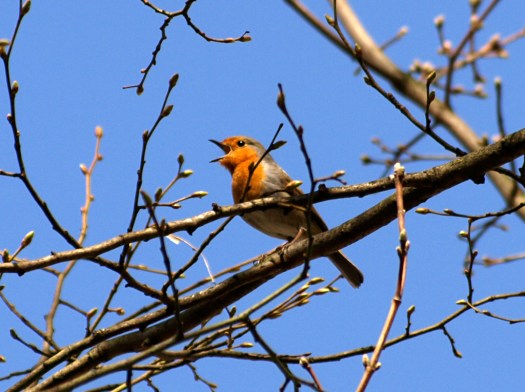
A robin flies into the window. She backs up, bewildered, and returns to her perch on a bare branch of the Japanese maple.

“Oh, you poor bird. I understand. I’ve hit my head against my reflection more than once in my life.”

The robin seems to catch her breath, and she’s off again, flying towards the window, searching for someone in the smudge filled glass. Herself? A lover? What does she want, and why doesn’t she learn her lesson? There’s nothing there for her but a hard, cold surface that will cause her pain.

And still, she flies into the window. Again and again and again.

Thud… Thud … Thud …

I watch her as I sit on our comfy, worn leather couch with a hole in the right seat cushion, the buzz of the laptop the only noise–that, and the recurring thud of the bird.

On writing memoir

As a memoirist, this happens, this hitting my head against a hard surface, when I get too introspective with my work. I am the writer, and the narrator, and the main character, and sometimes my roles mingle to the point of self-obsession and confusion. My desire to be perceived well, and to reach my personal predestined truth in the story turns me into a robin, fixated on my reflection, attempting time and again to break into something bigger than me, but really only hitting my head against a hard surface.

Annie Dillard says that you have to take pains in a memoir not to hang on the reader’s arms, like a drunk, and say, “And then I did this and it was so interesting.”

Thud.

The robin has banged her head against our window for three days. I’ve tried to deter her by closing the curtains and opening the window a bit, but to no avail. She returns every few moments, unaware that if she just shifts her focus there is a whole world to fly into and discover.

If a memoirist’s goal is for people to esteem her, to like her, to want to be like her, it will show in the work. The writing will fall flat, come across as inauthentic, and showy.

No, the memoirist should write for discovery. According to Andre Gide, a French author and winner of the Nobel Prize in literature in 1947, one doesn’t discover new lands without consenting to lose sight of the shore for a very long time.

A good memoirist is open to her story’s agenda. She participates with the reader, and diminishes the importance of her role for the sake of the universal truth found in her words.

“On the outskirts of every agony sits some observant fellow who points,” says Virginia Woolf. I would add that every good memoir has a point outside the visceral domain of the writer starting out. Our job is to bring ourselves and our readers to that point. Instead of a writer playing tour guide, the memoirist should rather find herself on the journey in the words. Then she will be able to fly right and free for discovery, and most assuredly get herself and her readers somewhere she would not have found on her own.

WordServe News: March 2013

Exciting things have been happening at WordServe Literary!

On the final post of each month you’ll find a list of Water Cooler contributors’ books releasing in the upcoming month along with a recap of WordServe client news from the current month.

New Releases

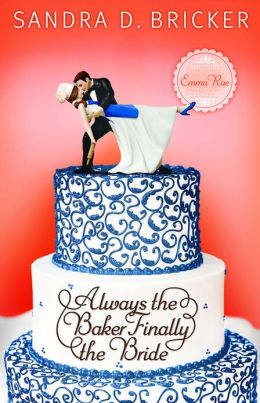
FinallytheBrideSandra Bricker, Always the Baker, Finally the Bride
(Abingdon Press)

**********************************************************************************************
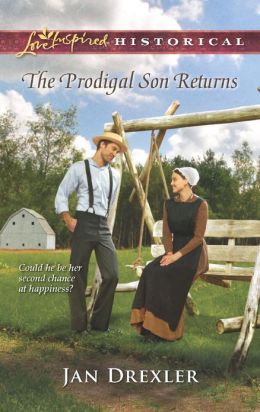
TheProdigalJan Drexler, The Prodigal Son Returns
(Love Inspired)

**********************************************************************************************
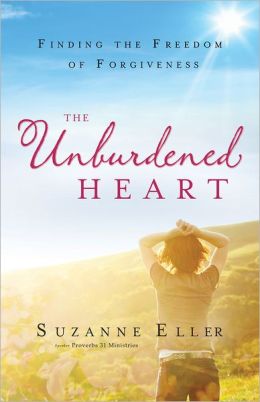
UnburdenedSuzanne Eller, The Unburdened Heart (Regal)

**********************************************************************************************
RealValorSteve Farrar, Real Valor (David C. Cook)

**********************************************************************************************
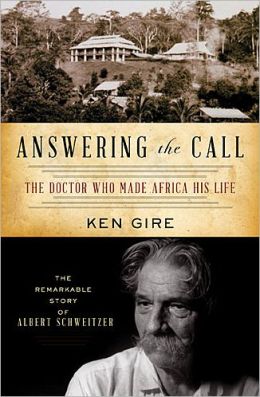
AnsweringtheCallKen Gire, Answering the Call: The Story of Albert Schweitzer (Thomas Nelson)

**********************************************************************************************
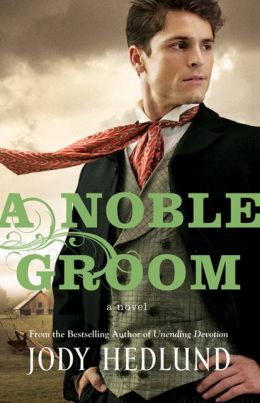
ANobleGroomJody Hedlund, A Noble Groom (Bethany House)

**********************************************************************************************
TheEasyBurdenPatty Kirk, The Easy Burden of Pleasing God (IVP Books)

**********************************************************************************************
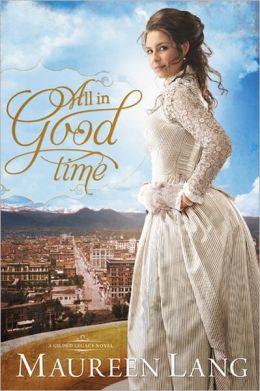
AllinGoodTimeMaureen Lang, All in Good Time (Tyndale House)

**********************************************************************************************
VoicesofthePacificAdam Makos, with Marcus Brotherton, Voices of the Pacific (Berkley Hardcover)

**********************************************************************************************
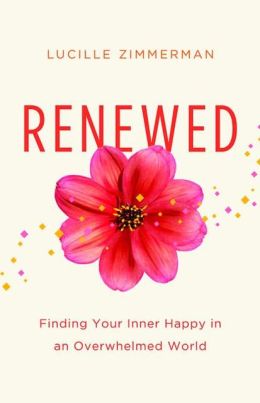
RenewedLucille Zimmerman, Renewed
(Abingdon Press)

**********************************************************************************************

New WordServe Clients

None…we’re standing pat with our great group of authors for now!

New Contracts

Tracie Miles signed with Bethany House Publishers for a book titled Your Life Still Counts: How Your Past Has Equipped You for Your Purpose.

Susie Shellenberger and Kristen Weber signed with Barbour Publishers for A Girl’s Guide: Guys, God and the Galaxy.

Gillian Marchenko signed a contract with T.S. Poetry Press for her memoir. Yay, Gillian!

What We’re Celebrating!!

A Higher Call by Adam Makos continues to hit the New York Times list. On March 31, it will be #6 (again) on the Hard Cover nonfiction list. It’s been in the top-15 for 9 weeks!

Bees in the Butterfly Garden by Maureen Lang, hit the March CBA list at #5 on the fiction list and the #40 on the top-50 in sales list.

What thing on your writing journey are you celebrating today?

Powerful Non-Fiction Writing

Keeping in mind that non-fiction readers invest their time and money in books that meet a felt need, a great philosophy is, “Offer them what they want, then give them what they need.” Here are 14 questions to consider as you write your life-changing message:

QuestionsXSmallWhat problem is your reader experiencing?

How has the problem been overlooked?

What are they missing out on due to this problem?

What impact has this problem had on their life?

What misconceptions has the reader bought into that might keep him/her from experiencing the benefit you’re about to offer?

What underlying beliefs do they have that keep them from seeing a new solution or alternate view?

What solution or benefit will you show the reader?

What truths will help the reader see the benefit?

What will give them an “aha” moment?

What might influence the reader to avoid possible change?

How are others enjoying the benefit you’re teaching?

What will the reader let go of in order to adapt a new view of their life?

What choice(s) will they make?

What action(s) might they take?

Always keep your reader in mind. Offer them what they want, then give them what they need. As author Dean Merrill says, “Never stop asking ‘what’s in this manuscript for the reader?'”