What’s YOUR Holiday Plan?

balloons-25737_150Do you know what today is?

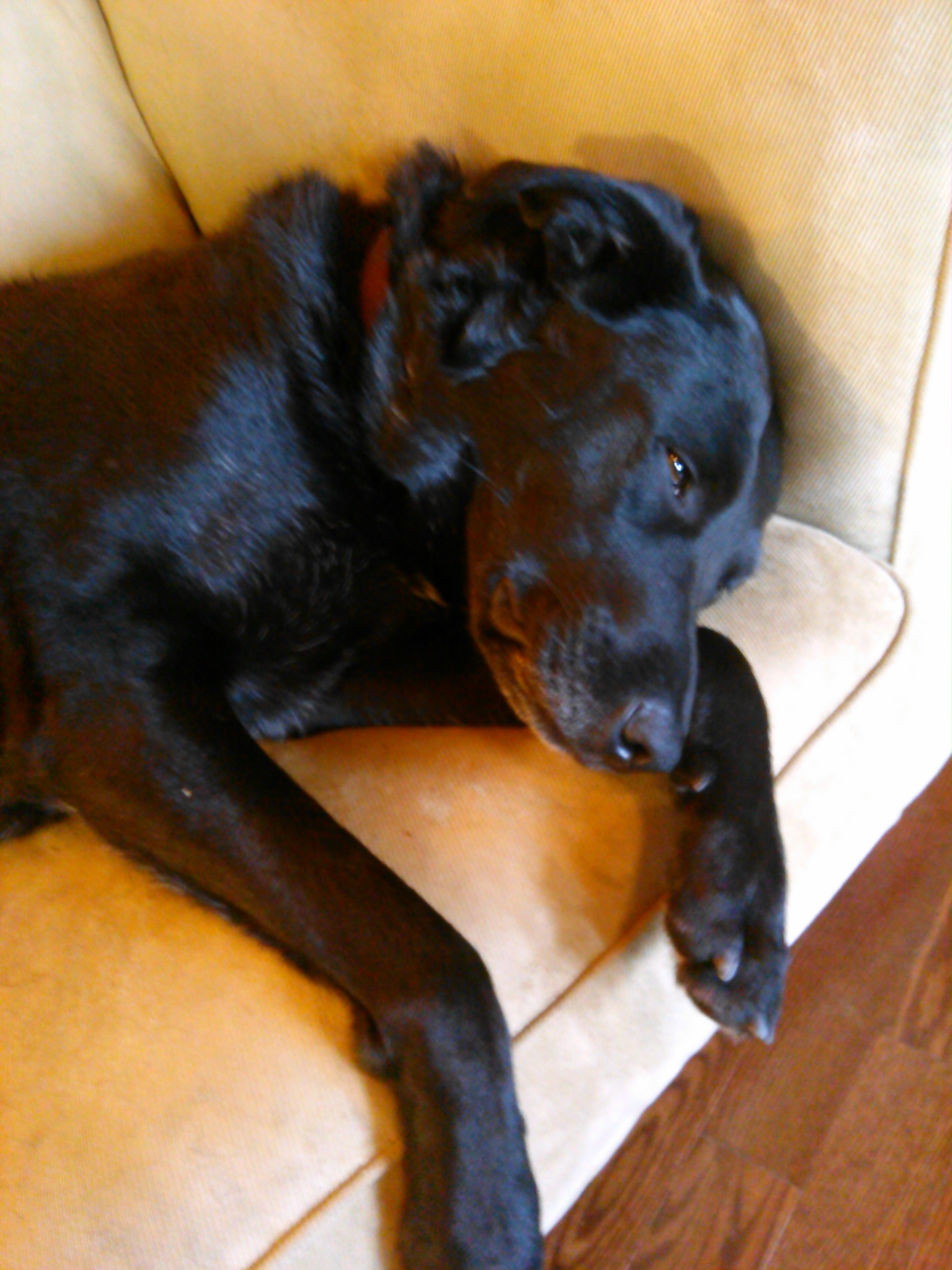
It’s National Black Dog Day! Roll out the carpet, crank up the tunes, and open the bags of doggy treats!

In celebration, I’m doing a radio interview, guest posting on several blogs, making a couple of store appearances, and managing a schedule of entertaining tweets, updates, and posts on my own social networks. It’s not only a nationally-named observance, but it’s the perfect opportunity for promoting my very own black dog who stars in my humorous girl-meets-dog memoir, Saved by Gracie. Never mind that the book was released last April – today is the day to hit the spotlight again.cropped Jan and Gracie
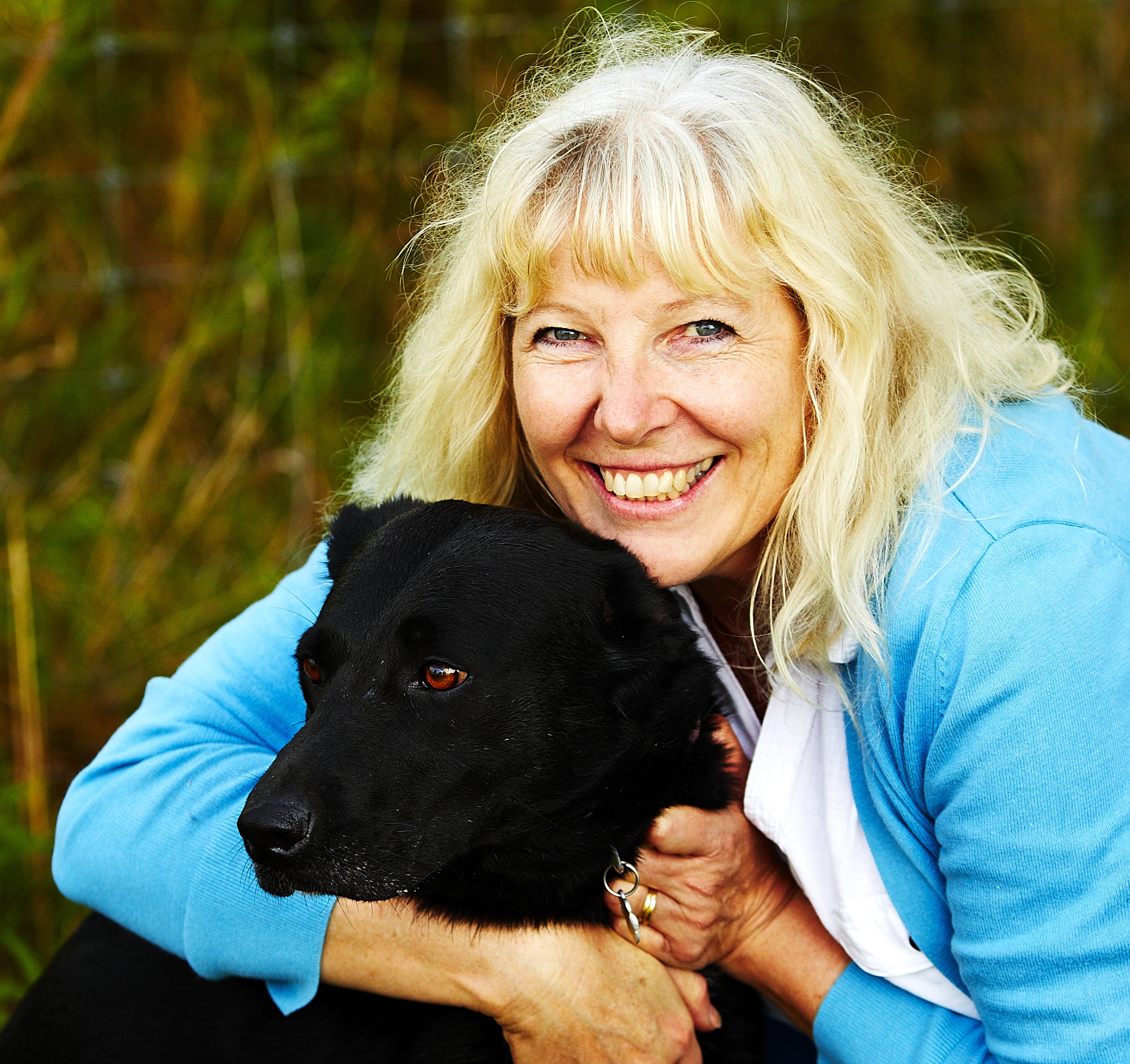
In other words, I found a holiday tailor-made for my book, but without all the noise other holidays involve. I don’t have to compete with Halloween costumes or décor, Black Friday shopping madness, Santa, New Year’s Eve bashes, romantic getaways, or fireworks displays. As a black dog owner, I have the stage all to myself!

How about you? Have you found your tailor-made holiday for book promotion yet?

As every author knows, timing is one of the best assets you can find in publicity. Sure, we all wish for something of national importance or interest to pique everyone’s interest in our books when they launch, but few of us have any control over those larger scenarios. The key to keeping your book release momentum, then, is to continue to find reasons that your book is timely. Here are a few suggestions for doing just that:

  1. Re-examine your book content for additional audience appeal you may have missed during the initial book launch. For instance, when my memoir came out, my publisher focused on Christian readers, since it’s a tail (I mean tale) of spiritual healing. After that first wave of publicity, I began to expand my reach into dog-lover territory by hooking up with animal rescue groups, veterinarians, and dog boutiques. I’m now moving into a third wave of audience strategy by networking with health and wellness groups. Handling all three markets would have been too overwhelming for me to manage at first, but by adding audiences incrementally, I’m better able to market and direct what I need to do next to continue sales.
  2. Pay attention to national news and trends, and see if you can’t jump on those trains. Whenever environmental topics (like wind power vrs. natural habitat) are hot, I try to build on those conversations with my own links and commenting, because my Birder Murder Mystery series deals with the same topics. The more I engage in the conversations, the better my visibility to my readers, which translates into continued sales, even for older books in my series.
  3. seafood fettuciniFind your perfect holiday. Does your hero cook Italian food? National Fettucini Alfredo Day is Feb. 7. Does your book discuss holding onto memories? National Scrapbooking Day is the first Saturday in May. If you write about it, I bet you can find a ‘holiday’ to connect with it.

What ‘holiday’ is in your future promotional plan?


To Write a Book Someday, Share Your Writing Now

8139708904_9a1d1783d4_bSome people will tell you the defining characteristic of a writer is that he or she is someone who writes. There is truth to that perspective, but it fails to offer a complete picture. It also gives many “aspiring writers” an excuse to be nothing more than journal keepers: diligently plucking away at Moleskine memoirs or first-novel manuscripts that have zero chance of getting published, ever.

The point here is not a matter of quality. It’s about privacy.

The reason why many written works-in-progress will never see the light of publishing day is that they are stowed, always and forever, in a drawer or on a hard drive where they have no risk of being evaluated by a second person. The writers of these works will never be writers because they will never have readers. They exist completely outside the writing market, and the only critical eye they allow to view their work is their own.

If you think that one day you’d like for people to read your writing, then you should begin by inviting people to read your writing now. Here are five ways readers can strengthen your writing and make it even more worth reading:

Readers help you get over yourself. It’s not uncommon for writers to feel uncertain or insecure about what they’ve written. Will this technique work here? Am I being clear? Am I using a marketable concept? Does anybody else care about the subject? Without readers to help confirm where and how a piece of writing is hitting its target (and where and how it’s missing its mark), these uncertainties and insecurities often grow and fester. But when you prioritize feedback, typically you get it. As a result you might find that your sinking suspicions will be confirmed. Some of your assumptions might be challenged. Maybe you’ll be pleasantly surprised by rave reviews. Whatever the case, you won’t be stuck wondering anymore, and that will help light a clear way forward.

Readers identify strengths in your work. Encouragement and affirmation give extra fuel when you’re trying to produce a manuscript. So ask your readers to note the places where they laugh out loud, hold their breath with anticipation, get caught by surprise, can’t stop turning pages, or are struck speechless. That paragraph you’re thinking about deleting? It might be your readers’ favorite part. Give them a chance to tell you so.

Readers identify weaknesses in your work. That poetic metaphor you’ve taken days and months to craft? It might be so complex that it’s confusing your readers. The story you’ve built a whole chapter around? Your readers might be bored out of their minds.

As the writer of a work, you will undoubtedly feel more attached to it than your readers will. Because of your heightened emotional attachment, you’ll probably miss seeing some of your writing’s flaws. You might even be blind to enormous holes in the work. Let your readers open your eyes to the problems you don’t see, so you can take the opportunity to fix them.

Readers expand your perspective. You are only one person, so your outlook on the world is limited and skewed. You have strange views about certain things, and some of your views simply haven’t been challenged in a way that forces you to clarify them well or charitably. Readers can help you identify the odd little points in a draft, the ones that either are or seem arrogant, stingy, dismissive, hyper-emotional, you name it. Points like these will jut out in unseemly ways, always subtracting and distracting from good work, unless someone will be so kind as to call your attention to them, so you can know to improve them.

Readers make the process realistic. If your writing aspirations are real, then you’re going to have to accept the reality of readers at some point. Get used to feedback now, and critiques won’t make you crazy later. Write with readers in mind now, and it won’t feel strange when they’re a part of the process later. Start learning what readers are interested in now, and then when your defining moments as a writer come, you’ll be prepared to deliver for your readers.


YOUR TURN: Respond in the comments: How have readers helped your writing? What kind of readers give the best feedback? What keeps you from pursuing readers?


Photo credit: cogdogblog cc

Can We Talk? Joan Rivers, Marketing Genius

Joan Rivers
Image via Wikipedia

Lately, it’s been a tough run of celebrity deaths. Robin Williams, Lauren Bacall, Richard Attenborough, and Phillip Seymour Hoffman, to name a few. The news media uses these events as a life review. Joan Rivers, the acerbic comedian, who recently died as the result of complications during a medical procedure, is one that has had a few “news specials” about her life.

I wasn’t a huge Joan Rivers fan but the pitiful side of my character did enjoy her taking down a celebrity or two when they dressed in something expensive and awful that might have been more fitting to clean up dog vomit (there’s my toast to you, Joan!). What I found interesting in these biographies on her life is just what a brand/marketing genius she was. We writers could learn some valuable lessons from her.

1. She triumphed through dark times. When her husband committed suicide, Joan was now not only a single mother but she was reportedly also left with quite a bit of debt. Yet we know she didn’t die penniless. She was a wealthy woman. In writing, there are definite valleys. Will I make any money with this novel? Will I make any money ever in publishing (indie or traditional)? Sometimes, we can only answer these questions by pushing forward through the next day and taking the next step even when we can’t see the answer in the distance. If you don’t try, the answer will definitely be no.

2. She didn’t hold public grudges. One of the pervasive stories of her life was when Johnny Carson chose never to speak to her again when she left being his “permanent guest host” for her own talk show. I don’t know what she said in private, but publicly, even though their friendship ended over this perceived slight (which really was a business decision), she always spoke very positively and gave him great credit for giving her a start. We all need to keep in mind publishing is a small industry. If you say something bad about an editor or agent, it will likely get back to that person. Keep in the forefront of your mind that a “no” is about your work and its fit for a company–it’s not a personal slight against you as a person.

3. She had a brand. Whether or not you like Joan Rivers, you knew what she was about. She had a clearly defined brand.

4. She branched out. Joan didn’t make her money doing only stand-up comedy. She also sold fashion items on QVC. What else? Reality TV. She authored several books. What can you do in publishing that maintains your brand but gives you additional income? Can you do non-fiction? Can you write in your genre for another age group? Consider not having all your eggs in one basket.

5. She was willing to try anything. In one interview, she compared herself to, putting it nicely, a lady of the night. “I’ll try anything at least once.” In publishing, there are so many things you can do but fear may be holding you back. Reconsider and take a chance at learning something new. Marketing definitely means stepping out of your comfort zone. M

Thanks for the laughs, Joan. Rest in peace.

What the Apostle Paul Might Have Said About Marketing

wordserve

Looking for marketing help, dear writer? Why, you’re in luck! Step right up to the Internet and tell old Google what you need, but be prepared to stay a while. A plethora of reading material and marketing advice abounds online, addressing the subject from every imaginable angle–and then some.

Except, perhaps for this one: Don’t overlook the value of marketing your neighbor’s work.

Hear me out before you write me off (weak pun apology). I’m convinced that this would be the type of advice the Apostle Paul might have offered had he ever taught a class in Marketing #101. In God’s School, the way up is down. Or, as Paul said in Philippians 2:3,”Do nothing out of selfish ambition or vain conceit. Rather, in humility value others above yourselves.”

Yes, it’s challenging to understand how to apply those holy words to our writing lives. Especially when we’re constantly reminded that our platforms are everything and publishers find us only as attractive as our last sales numbers. But if God’s word doesn’t apply to all of our lives, it applies to none of it.

Selfish ambition is building our platforms with tunnel vision to the work of everyone around us.

God’s way is to step away from my work long enough to value yours.

It’s a valuable principle of marketing. I once thought I stumbled across it accidentally, but I now believe it has been entirely by God’s design. He orchestrated it through my work as a radio talk show host when I began reserving a segment of time to interview other authors. In the early days of All Things Southern LIVE, these were authors I met during my travel– until publicists began discovering this new venue and pitching their clients’ work.

I need to say this: I don’t promote everything that comes across my desk. Sadly, this is often a matter of pure time constraints. I don’t have the air time to interview even half of the authors whose galleys find their way to my desk. At other times, it’s a matter of my personal reading preferences or my understanding of the reading habits of my listeners. However, for these very reasons, when I do read something that entertains me, challenges me, encourages me, or flat out stretches me, I’m able to bring it to my listeners with authentic excitement. My audience knows this, so they trust my recommendations.

So, how does this help my marketing efforts? Well, that’s the beautiful thing. God’s way is always a win-win. Over and over I’ve seen how celebrating the works of others rebounds to bless my own career.

We’ve all been told to build a reader base and encourage that connection by staying in touch. We also know how distasteful it is to promote our own work. Introducing other authors to our readers–when we’re genuine about their work–allows us opportunities to stay engaged and interact with our communities in a natural way. In turn, our relationship with those authors invariably leads to our introduction to their readers.

Now that is marketing we can all manage. Can I get a witness?

Hugs,
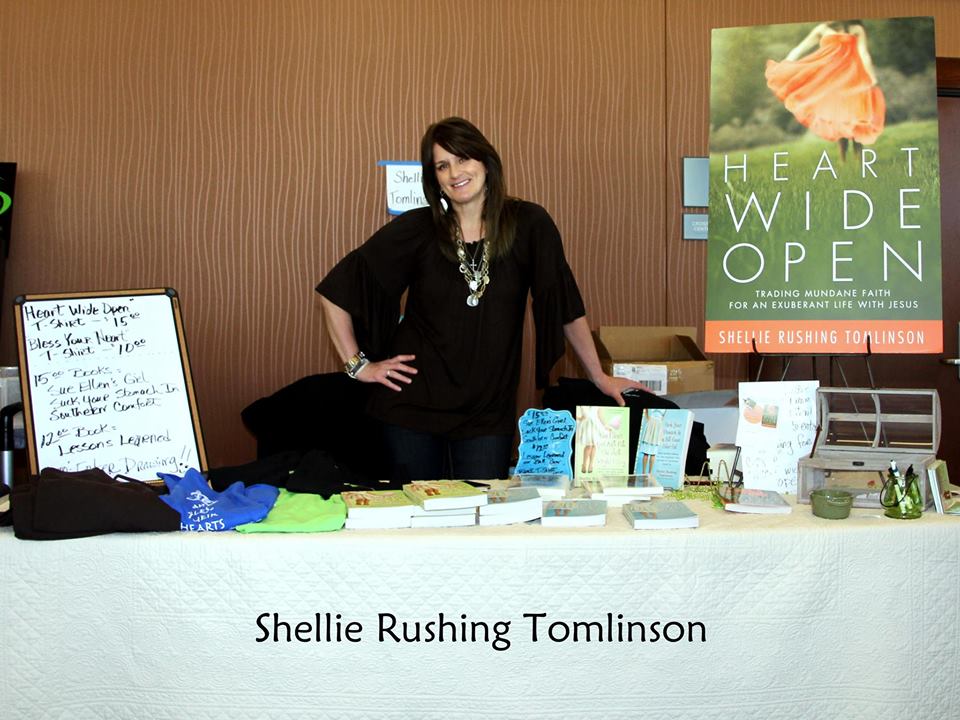
Shellie

What is a Literary Publicist?

WomanwithBookA publicist is a professional who has both the know-how and the network in place to help bring your name to the public. In the literary world, a publicist is key to the marketing plan, to create consumer appetite for a book title, and to stimulate buzz for the author.

A literary publicist promotes the book title directly to consumers through niche markets with an interest in the storyline or subject matter of the book. The publicist also networks with media by pitching specific interview angles the author can provide—setting up the writer as an expert on certain subjects.

Sometimes publishing houses hire independent PR firms to manage specific book campaigns, or entire lines of books. Other times, they pay half toward an outside campaign, and the author matches that. The third option is for the author to pay all of the expense from their advance, believing that publicity and marketing is what will make or break the overall sales for the book. Publicists also assist with author branding for the career of the author, so the buzz extends beyond the life of one book.

Most PR and communications firms offer a wide array of services. They come alongside of you at any stage in the writing game. They can help expand your platform, branding, and name recognition. Need some help making sure your website is selling you in the best possible light? Ask your publicist. Some will even edit your manuscripts and write your book proposals, query letters and marketing plans. Many customize plans to work with your goals, no matter where you are in the literary process.

After the book contract, your publicist will customize a plan for promoting you and your titles with the goal of maximizing exposure—with hopes that the promotion goes “viral.” This requires multiple reaches to the public, through traditional media presence, online spotlights, and waves of social networking.

Why Hire a Publicist?

1. A publicist has the media contacts and relationships needed to secure interviews/ reviews.
2. A publicist knows how to pitch your book to the media and how each journalist prefers to be contacted.
3. Most writers do not have the time to devote to a publicity campaign. It is a full-time job.
4. When an author pitches his own book to media or consumers, it is sometimes viewed as being too self-promotional. A publicist is seen as a third party. Others are more receptive to discussing book promotion with a publicist rather than the author.
5. When media, retailers, and consumers hear an author has a publicist, they seem to think the author has more “clout.” It legitimizes the expert-status of the author and elevates them to a higher professional standing.
6. An author with a publicity team has “peeps.” It’s that whole “I’ll have my people contact your people” approach.

**********************************************************************************************
KathyWillisKathy Carlton Willis spins many plates as writer, speaker, editor, and platform coach. She writes and speaks with a balance of funny and faith—whimsy and wisdom. Kathy discusses the key issues that hold believers back and shines the light on their paths to freedom. Kathy’s passionate about helping audiences have lightbulb moments. All told, nearly a thousand of Kathy’s articles have been published online and in print publications. Speaker to Speaker: The Essential Speaker’s Companion (OakTara) and Grin with Grace (AMG) are set to release in 2014. She serves alongside her pastor husband, Russ Willis, in local church ministry.

Is Multi-Genre Writing Right For You?

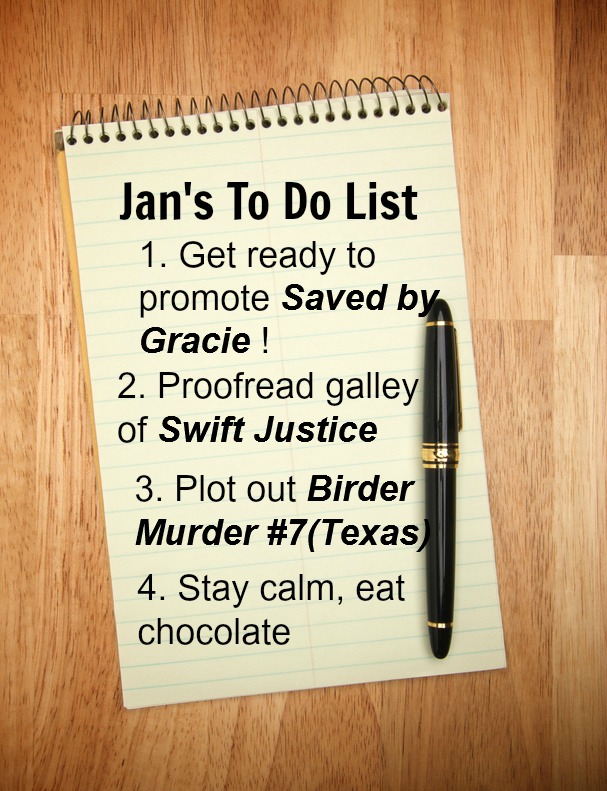
to do list (2)One of the ongoing debates in the writing world is about the wisdom of writing in more than one genre. The reality, I think, is that most writers want to write in several genres and, in fact, may be quite good at it. My first projects were poetry, and then I moved on to magazine articles. Think pieces followed, as did newspaper humor columns. My first published book was a small volume about practical Christian spirituality, but then I found my stride in humorous murder mysteries (#6 is out in September, with #7 currently taking shape on my laptop).

Last but not least, a few months ago, my first memoir was published.

So, for me, the big debate about writing in multiple genres is a no-brainer, because I already do.

My experience of doing so, however, has made me recast the debate from a writing perspective to a publishing perspective, and, as a writer who wants to build a career as a published author, I offer my own pluses and minuses of working in a multi-genre career.

  1. Minus: If you think it’s demanding to build one platform, try building several at once. I’m not saying it can’t be done, but in my experience, it can’t happen simultaneously (unless you have clones of yourself ready to go – and in that case, please drop me a note at my website, because I could use a couple of clones these days). To launch a book, you have to be single-minded to make the best of marketing opportunities: appearances, talks, media, book clubs, etc. Your new book/baby needs attention 24/7, and if you leave it for a day or two to nurse along another genre, you find yourself playing catch-up when you get back to the newborn. I’m guessing it’s like having twins-one person can’t really hold two babies equally well, so there’s always some juggling going on. Same thing with two genres: you end up feeling like you haven’t been as successful as you could have been with just one book. At the very least, you don’t sleep much, because you’re trying to do the work of two marketing departments in one body.
  2. Plus: Working in two genres is exhilarating! You get to double the people you meet and the interests you cultivate. Your horizons expand and life is so rich with new experiences, it takes your breath away. It’s wonderful to be a writer!
  3. Minus: Publishers are very hesitant to take a chance on you in a new genre. The more you’ve established yourself in one genre, the less a publisher wants to take the risk of launching you in a different direction. Publishing is a business, and publishers have to respect the bottom line.
  4. Plus: If your genres share something in common (mine share humor and a love of nature), your fans of one genre are more likely to follow you into new territory, giving you a base readership on which to build and a headstart on creating a new platform.

Have you had any experience in multi-genre writing? Any insights to share?

Marketing—It’s Not Rocket Science

Business slogans on a road and street signsWriting isn’t rocket science, except for when it comes to my stymied brain.

Yes, I program software systems that run multi-million businesses and some consider me a computer geek. But creating an online presence using Facebook or Twitter, or starting my own blog for marketing purposes, scared me to death! What if I did it wrong? What if I put all this work into it, and no one made a comment? Plus, how does having a blog on gardening bring in possible sales for an inspirational romance novel that had little or nothing to do with gardening? Except, perhaps, for the garden scenes I built into my story world.

I read books on marketing. I looked online and even talked to others who explained it in very simple terms, but I still didn’t get it. Or maybe I didn’t want to. I’ve seen the bad side of marketing where authors inundated Facebook and Twitter with post after post, vying for a reader’s attention. Although having an online presence is the way marketing works, and yes, you must be visible, I knew that type of strategy wasn’t for me.

I wanted a marketing plan that was as subtle as the Energizer bunny. Do you remember those ads? A commercial starts, there is a woman turning on the water preparing to take a bath, bubbles rise from the water’s surface. Then out of nowhere comes the Energizer bunny, marching across the screen, beating his drum. From that point on, every commercial aired made the viewer wonder (unconsciously at least) . . . was this going to be a legitimate commercial or an Energizer bunny moment? The marketing scheme was perfect. Other than their original series of commercials, not one dollar was paid to other companies, yet because of the subtle intrusion into the normal commercial venue, you were thinking about their batteries every time a new commercial aired! Even if the company sold soap, tires, or lawn furniture.

So, in my effort to understand the process, I pulled out the big guns…my son, who had to market himself to raise funds for his trip to Portugal when he represented the US in the International Six Days Enduro off-road motorcycle event.

I showed him my blog and my FB page. We talked about me joining gardening groups, letting people see my name and my posts. (I’ll interject here, my knowledge of FB was v-e-r-y limited.) He showed me how getting my name out there as a reliable source of gardening information would make my name “recognizable.”

Another concern I had was I didn’t want to be the “dumb” commercial. I refuse to insult the intelligence of my tribe—or would-be tribe in this case. Just doing a blog on miscellaneous information (how I started), or on useless information, may get you some readers, but the key is to pull them in. Give them a reason for wanting to come back. People don’t have time to read something that will be of no help to them. Especially when there is a plethora of more useful blogs out there to read.

So what is marketing? It’s that sweet spot of taking something you are interested in and sharing it with others. As more people find that you are a valuable resource, your name becomes commonplace to them. Then when you have a product to sell—voila! You make a sale on your name alone. Because of your diligence, you will start with a small group willing to take a chance on you because they’ve learned to depend on the information you provide. As your name earns recognition, your influence broadens.

For any of you who were baffled by the need for expanding into the world of marketing, as I was, I hope this helped!

Sing it, Lamb Chop!

projects.latimes.com

This is the song that doesn’t end. Yes, it goes on and on, my friend.”

If you never watched the fabulous Shari Lewis perform with her puppet Lamb Chop, you might not know this delightful ditty from her Emmy-winning show that ran on PBS from 1992-1997. My youngest daughter enjoyed watching it as a toddler, and since I got to join her in front of the television, this song found its way into my permanent recall bank.

For better or worse, the tune takes over my head every time I have a task that seems never-ending.

Which is my way of introducing my topic today: platform building.

You see, platform building for a writer doesn’t end when your book is published. Instead of thinking of platform building as the first step toward publication, I now see it as the task that underlies the entire creative, marketing, and career development process. As long as you write, it doesn’t end.

But instead of looking at that task as an overwhelming, time-consuming responsibility, I’ve chosen to see it as the lifeblood of what I do.

My platform is my path to accomplishing the work that gives my life meaning. In my case, I want to bring people into closer communion with God’s creation, and I do that through the written word, telling entertaining stories about nature, and in particular, about birding and dogs.

Using this perspective motivates me to continue, and expand, my platform-building. Here’s a quick snapshot of what that looks like for me.

My first book – a small treatise about finding meaning in life – led me to discover my own passion: writing about engagement with nature. To market that first book, I gave retreats and workshops about identifying what you love and what God calls you to; as a result, I added speaking opportunities to my platform. Then I began writing my Birder Murder Mysteries, a light-hearted series about a birder who finds bodies (incorporating my own passion for birding and mystery). To sell books, I began reaching out to birders around the country (and the world!), connecting with them online, attending birding events, sharing information and becoming interested in conservation issues. That influenced additional books in the series, and led to more interaction with like-minded nature-lovers, which has both enriched my writing and my life with speaking/marketing opportunities and new friends. Six years after my first Birder Murder was published, I now have plenty of ideas for future books and venues to market them, as well as a list of birding hotspots to add to my bucket list of personal adventure.

My memoir about my dog is building a new addition to my original platform, giving me more places to talk about nature and to sell all of my books. I’ve begun volunteering with my local Humane Society because of it, and I now see all my writing as advocacy work for improving the human-nature connection. Yes, I know that my platform building doesn’t end, but neither do the rewards I’m finding when it comes to new experiences, learning interesting things, and contributing to my world.

What joys are you finding in the never-ending task of platform building?

Marketing Lessons From My Dog

bulldog wearing eyeglasses sleeping over a good novelAlthough my dog knows nothing about online social media, she is a rich inspiration for me when it comes to marketing. Here are the lessons I’m learning from her as I spend this season promoting my humorous memoir, Saved by Gracie, about my life with a four-pawed family member.

1. Persistence pays off. Gracie gets a fresh whiff of ground squirrel in one of the numerous holes in the hillside we walk every day, and for the next three days, she smashes her big nose into that same hole when we pass by. By the fourth day, she tries another approach and begins digging furiously to find the critter she knows is somewhere down there. So far, no squirrel, but she’s produced a mound of fresh dirt to play with. My take-away: keep working a lead until you get what you’re after, or until your work yields other opportunities. It worked for me last week: after a month of trying to get some events press from the alumni office of my alma mater, I tried another approach – I contacted the university’s social media manager, who offered to post and share my events. I knew there was help somewhere, and I found it! And now I have a productive contact in my resource file for future reference. Opossum22. Instead of dancing around an idea, grab it and run with it. Gracie finds an opossum on the edge of our backyard and circles, unsure what to do with it. I try to get her away from the furry ball, but we continue to dance around it until she finally snatches it up in her mouth and tears off for the front yard. She drops it along the way, I snag her collar, and take her into the house. Gracie is unharmed, and the opossum wanders back into the woods. My take-away: be bold and see what develops. I always wondered if there was value in an author book tour, so I decided to put one together myself for Saved by Gracie. It forced me to reach out to new venues and contacts in places I’d never approached, expanding my network of resources and readers. And since I traveled to places where I have family, I got free housing and a chance to visit, too. More importantly, I’ve learned the details that go into a book tour, creating a template for the next time around. (And the book tour didn’t bite me, either.) CC Cookie and Gracie 0533. Take a break. Gracie takes a nap after our morning jog, but by afternoon, she’s eager to go back outside and do it again. My take-away: recharging is just as important as working hard. Like many authors, my to-do lists are long and ever-growing. I have to make myself take breaks, but when I find myself away from my lists, my mind runs free, generating fresh ideas and perspectives. By the time I’m back at work, I’ve got new creative energy to pour into my projects. Which leads me to conclude that whoever said “you can’t teach an old dog new tricks” clearly wasn’t an author. Or at least, not one who sold books…

5 Things the Theater Taught Me About Writing

OLYMPUS DIGITAL CAMERAThe smell of popcorn takes me back…backstage, that is. From 1998 to 2007, my husband and I, along with several other talented individuals, performed thousands of shows to enthusiastic crowds in two small-town Texas theaters. The experience taught me enduring lessons about creativity, professionalism, and making a living through the arts. These tenets apply to your writing life and other creative endeavors, as well. Here are five things the theater taught me about writing, in no particular order:

1. Word of mouth is the best publicity

Our audiences, though small, were passionate. We provided quality entertainment and our most ardent supporters talked about us…a lot. They brought groups, gave their friends tickets, and sometimes drove hours to see us. Though we bought print ads, paid a few publicists, and had a large email newsletter, the theater’s best advertisement was—without a doubt—word of mouth. 

It’s the same with promoting your writing. Today’s readers are consumers, just as our season ticket holders were. They long for quality and consistency. They’re busy, and they need a reason to keep reading past the first few lines. And when they are delighted by what they’ve read? They’re the most loyal, vocal folks around. Because we live in an instant-communication society, bad word-of-mouth spreads fast. Make sure your writing product is stellar, and great publicity will follow.

2. Give the audience what they want

One of the owners of the first theater in which I performed often said, “Give ‘em hamburgers!” He meant that we shouldn’t mess with success. If tickets sold quickly for a 1950s music revue, we wrote another similar show. Of course, we also experimented and pushed boundaries (otherwise, all of us would have grown bored). However, we changed our product in small increments. We also created special experiences—behind-the-scenes tours, holiday packages, giveaways—for avid supporters. Cast members even called our VIPs (those folks who came to the theater over and over) on their birthdays and anniversaries, which the VIPs greatly appreciated.

In your writing, think about creating a memorable experience for the reader. How can you provide extra value (giveaways, incentives, free resources) in a professional, winsome file3691295046962manner? In what ways could you creatively and tangibly thank those who willingly support you and talk about your books?

3. Leave your ego at home

Most of the performers I worked with over the years have been gracious, humble, and diligent. A few, however, turned me off with their arrogance, over-the-top demands, or lack of discretion. The most successful artists, long term, are those who go out of their way to thank people and who treat the sound technician as well as the venue’s owner. Those are the performers who are offered more opportunities.

Ask yourself: am I approachable, warm, and thankful for the opportunities life has given me? Or I am on a mission to impress everyone I meet, in order to “build my brand”?

4. There are no small parts, only small actors

So said Constantin Stanislavski. When you perform a small role with professionalism and excellence, the people in charge notice–and they’ll eventually give you more responsibility.

The same goes for becoming a better writer. If an editor asks for a 400-word piece, I’ve learned to take it seriously and do my best work. In this age of instant access, anyone can read your work at any time, from anywhere. Who knows what small beginnings might lead to larger opportunities?

And, finally, in related wisdom…

5. Know when to stop

On stage and in writing, creatives need to develop an important skill: how to bring a something to a close. In the theater, we say that last line, spin on our heels, and exit, stage left. In writing, we find the right moment, the right phrase, the right word, and that’s it. The end.

This post is a reprint from Tweetspeak Poetry.