A Valentine For Our Readers

rosesRoses are red, violets are blue,

I love you, my readers, for all that you do:

To your families and friends, you talk up my books;

You buy the hard copies, Kindles and Nooks;

You come to book signings in out-of-way places.

I’m always so happy to see my fans’ faces!

You sign up for my newsletter and say lots of nice things

On Goodreads, in book clubs – you make my heart sing!

You share kind reviews, both oral and text,

You give me ideas for what to write next.

You twitter my Tweets, like my Facebook page, too.

I’m so very grateful for readers like you who

Help me find new folks that I want to reach

And invite to the fun of being my peeps!

For YOU, my dear fans, are the reason I write

All through the day and into the night,

Wrestle with words and struggle with plots

(which sometimes are great, but sometimes are not!).

When all’s said and done, I have to confess

There’s only one way I measure success:

If I’ve made you laugh, touched your heart in some way,

My work is done, and YOU’VE made my day!

Happy Valentine’s Day to all our readers

xoxoxoxoxoxoxoxo……..the WordServe Literary Agency authors

Marketing Like Your Favorite Authors

I’d studied the writing blogs, so I knew when my novel released it was time to get busy. I lined up guest blogs, interviews and book reviews. I advertised on every social media site I could think of. My new website was up and running and I’d had a personal blog going for a few years. I spoke of the book to everyone I came across. I even hawked my book at a nearby fair. You want platform, I’d give you platform.

After a few months, I was exhausted. My introverted self felt raw after all of the exposure. And despite some great reviews of the book and a ton of five star comments on Amazon, the book hadn’t soared to the bestseller list. Actually, while it definitely had some fans, it hadn’t picked up a lot of notice at all.

I wondered why I’d signed up for a writing career in the first place. I had a busy life with a full time job and a family. Who had time for all of this marketing, which by the way, was definitely not my forte? Marketing had taken so much of my time, I’d forgotten about the joy of writing fiction. Because of course, I wasn’t writing fiction. I didn’t have the time.

I began to study some of my favorite novelists and surveyed what they’d done as far as platform, and the answer was surprising. Almost nothing.

They all had websites of course. Lisa Samson started a blog, but stopped, saying the blog was stealing the creativity and time she needed to write. Dale Cramer and Athol Dickson blogged, but were invariably inconsistent, sometimes going a ctypewriterouple of months without a post. Davis Bunn’s blog posts were regular, but were strictly announcements about his book events and reader praise. Penelope Wilcock writes hers like a diary, simply telling about searching for a lost cat or going to the dentist.

Sure, most writers did interviews and some guest pieces when a book came out. They did a few bookstore signings around the release and perhaps a speaking engagement or two in between. But they focused their time on what they were best at: writing amazing novels.

Because they were single-minded and purposeful about their fiction, they had output. They improved their craft. They built a readership.

No press in the world will help you if you’re not writing new material, right? And yes, getting noticed is a bit random. Fantastic writers sometimes stay near the bottom of the midlist while so-so writers are household names.

But I’ve decided to follow my writer role models, best sellers or midlist. Yes, I’ll do occasional blogging and other marketing. I’ve got my social media set up and will make some posts and connect to readers who contact me.

But in the end, I’m not a social media expert or a blogger or a speaker. I create story worlds and characters. I play with words. I edit what I’ve written until it’s the book I’d want to read. It’s what I’m good at and it’s what I love. It’s also what makes me a writer.

So this is the best marketing advice I’ve got, as backwards as it might seem: write more, write better.

What I learned from Leo Kottke

GuitaristLast month, my husband and I enjoyed an evening concert at Big Top Chautauqua outside Bayfield, Wisconsin. Leo Kottke was the featured performer, and while I wasn’t particularly familiar with him and his music, he has long been a favorite of my husband’s. The concert took place under a big tent on a beautiful September night, very near the shore of Lake Superior, and Kottke did not disappoint, either as a guitarist or an entertainer. I came away a fan…and with a new perspective on what I do when I give a book talk.

I realized that the key word is entertain.

While the need to entertain my audience remains uppermost in my mind when I write, I haven’t always kept that focus during speaking engagements. Sometimes, I get too bogged down in the details of crafting a narrative when I talk with writers’ groups, or my presentation begins to sound stale when I answer the same questions over and over from audiences of readers. If I’m getting bored with repeating the same “this is my book, why I write, how I write,” then I expect my listeners are getting bored with the same old book talk they hear from every writer.

Enjoying Kottke’s performing style convinced me I needed to think of myself as a featured entertainer when I speak, not as the featured author. Yes, the man could play amazing guitar pieces, but it was his in-between chatter that tied it all together into a neat package of entertainment. Too much chatter and it would not have whetted my appetite for his music; too much music and I wouldn’t have formed a connection to the man. Instead, he balanced the two pieces and sold me on his entertainment value – which is exactly what I need to do to find new fans of my books.

After our evening at Big Top Chautauqua, I revamped the way I approach and present a book talk.

Instead of focusing on what goes into the book when I speak to groups, I now read short selections from several of the books – selections that are particularly meaningful or funny for me – and explain where in my own life those passages came from (and I always tell it with humor!). The result has been increased active engagement with my listeners, and they become more intrigued with the books, which results in more sales after the presentation concludes. I’m getting more comments about how enjoyable/entertaining the talk was, which not only makes it fun for everyone, but also leads to a greater number of speaking referrals for me! After all, if you’ve enjoyed an event, you’re likely to come back for more – whether it’s another book by the same author, or a CD recording of a musician – because you want to tap in again to that source that gave you an entertaining experience.

Authors need to think of themselves as entertainers – both in print and in person – and then present themselves that way, too.

How do you craft your talks for entertainment?

Seven No Nonsense Book Launch Tips for Broke Authors

Seven no nonsense book launch tips


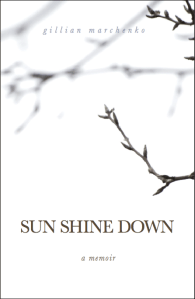
Sun Shine DownI am launching a book.

My memoir, Sun Shine Down, published at the end of August with T. S. Poetry Press. Eeek!

As a broke, green as the grass in mid-July first time author, I tackled the daunting assignment of launching a book like any other able-minded individual in North America.

I googled ‘book launch.’

In .02 seconds, reputable results-driven marketing and publicity firms jumped into my line of vision. These people surely could launch my book into the stratosphere!

But after some number crunching and a realistic talk with my husband about where hiring a publicist falls in the needs of a family of six (braces, soccer, therapy, FOOD), I conceded. We could not hire help for Sun Shine Down.

These days, whether we sign with a big publisher, a small press, or self-publish, we bear much of the responsibility for launching our own books. And it’s hard work.

If you, too, are a broke new author, here are seven no-nonsense book-launching tips:

1) Plan ahead

If you wait to plan your book launch until your book is out, you’re toast. Plan ahead. Start six months before you are to publish. Research, and consider elements of a book launch you will utilize.

2) Launch your book online

Social media is a marketing ocean. You’ve got Facebook, Twitter, Pinterest, Instagram … Where do you spend your time online? How can you introduce your book in those venues? With Amazon stomping on the book industry, it is a mistake not to market online.

3) Launch your book offline

Is a book party right for you? I’m hosting a party at a bar down the street from my house. I’m doing it on a Monday (because the venue is free then), providing appetizers, and using evites and Facebook events to publicize. Extra tip: Don’t call your gathering a book signing. Call it a book party. Who doesn’t love a good party?

4) Don’t spam people to death with your book

Not everyone is excited to hear about your book all day every day. Post about your book (especially on your Author Fan Page–don’t have one? Um, get going), but don’t post several times a day. It just makes you look full of yourself. The trick is fun, cool content, and looking like you’re not trying that hard even when you are.

4) Create a Facebook launch team

In an effort to build buzz about Sun Shine Down, I invited Facebook friends to join a super secret launch group. I offered perks for joining ( a free PDF advanced copy of the memoir, a thank you on the blog, access to a secret group, and interaction with the author) and requirements (help promote for five weeks, post about the book on your blog, etc.). My secret group has been the highlight of promotion so far. Why? Because relationships are being strengthened and we are having fun! It is also a great way to ensure Amazon reviews once the book is published (make it a requirement).  Read this post to see how I did it. 

5) Get help!

OK, I know that I sound like I am contradicting myself. But next time (God willing), I will hire someone or ask a friend to assist with some promotion. I’m talking about someone to help with a couple time consuming tasks and who is affordable (as opposed to a publicist who would do everything and is expensive). I’m talking a flat rate per month to run a blog tour or help with the launch group. I’d like not to have that pressure, and I am finding out with this book that there are virtual assistants and others who could fit this description. *Note: I LOVE publicists, so If I get to that point in my career when I can hire one, I probably will.

6) Create a new email address to send out official book launch news

I simply created a new Gmail account with the name of my book and merged it with my current email account so that when I send out press releases and other book emails, it looks official (instead of the author sending them, which she is 🙂 ).

7) Set expectations low

This is my Eeyore personality coming out, but I suggest you set your expectations low. Then you’ll be pleasantly surprised when something remarkable happens. Not an Eeyore? More a Tigger? OK, then expect like crazy. We are all different. In my experience, though, the people I thought would help publicize and raise excitement about Sun Shine Down haven’t. I did have one or two wild cards, individuals I knew for a short time long ago who have become cheerleaders and promoters complete with pom- poms and cardboard signs.

Here’s to successful book launches, and to many more hours with our butts in chairs, getting books written so that we can, gasp, go through the nonsense of launching again and again!

Why You Should Stop Marketing Your Book

Years ago, I heard a professional speaker tell about a dream she had: She had always wanted to go to Australia. She mentioned the dream in one of her speaking engagements and a couple approached her afterwards.

We’re from Australia. You can go stay in our home, free, for three months while we are traveling.

Immediately the speaker backpedaled. She had thoughts like, “I can’t do that. I can’t afford to miss work. My career would dry up. People would forget about me.”

Night Sydney Opera House with Harbour BridgeBut it was too great an opportunity to pass up. She flew to Australia, enjoyed herself tremendously, and when she returned her business boomed.

Why?

Everyone wanted to know what her trip had been like. Even better, she came back refreshed and motivated to pour herself into her business.

All authors should take time off from marketing their books. Here’s why:

Sometimes Less Is More  – Some of my favorite bloggers are those I rarely hear from. I don’t get tired of their voices because I don’t hear them every day. All of a sudden I’ll see a link to one of their blogs and I’ll think, “Oh, there you are. I’ve missed you.” Once in a while I get sick of my own selfcare mantra and I’m sure others do as well.

We Need New perspectives And Experiences – The brain loves novelty. It lights up at new experiences. That’s why you can visit an ordinary town and everything about it is fun and interesting. As I write this I’m finishing up a long week of clients, social media, and wedding details (my daughter gets married in September). I’m taking next week off to go to Breckenridge with my husband who has a work conference, and after that I’m flying to Nashville for a relaxing weekend with other creative people. Yes, I’ll miss time with clients, and yes, there is a financial cost, but I know the benefit will be greater.

Even God Took Time Off – Author Wayne Muller says, “In the book of Exodus we read, ‘In six days God made heaven and earth, and on the seventh day God rested, and was refreshed.’ Here, the word ‘refreshed,’ vaiynafesh, literally means, and God exhaled. The creation of the world was like the life-quickening inhale; the Sabbath is the exhale…without the Sabbath exhale, the life-giving inhale is impossible.” Inhale plus exhale equals life. If God needed refreshment, don’t you think we do, too?

When was the last time you blocked off your calendar for pure enjoyment and no book marketing? 

When Marketing Ideas Go Bad

http://www.centurynovelty.com

One of the benefits of trying a variety of marketing strategies is that you learn what works.

You also learn what doesn’t.

Here’s a list of my worst marketing ideas. I share it with you so you won’t be tempted to make the same mistakes!

1. Order 1000 very simple business cards with just my name and website. That way, I could customize additional information on it to every person to whom I gave it. What a brilliant idea – I could use it for everything!

And I do – for store lists, reminders to me, store drawings (you know the type – you drop your business card in a big glass bowl), and when I want to write down a new acquaintance’s phone number. I quickly realized that I was spending so much time writing other info on the cards, that it was much easier to just hand out my book series book mark, since everyone wanted to know the names of the books and where they could be found.

Lesson learned: make every marketing piece targeted for what you need it to do. All-purpose pieces are wasted money. (Added benefit of book mark: it’s harder to lose than a little business card!)

2. Have a t-shirt made to wear to festival book signings that features the cover of your book. I could be a walking billboard!

But only once, I found out. The t-shirt shrank too much in the wash to be worn again. I did donate it as a door prize at a later festival, but marked the size as “Child.”

(Related story: I’ve seen authors wearing shirts that read “I’m the author” with the book on the back. Mistake here is that if readers don’t want to talk to the author, they can readily identify you and avoid engaging in conversation, which is how you make sales. The stealth approach can be a good thing at festivals, I’ve found.)

Lesson learned: let your book covers represent themselves and you dress professionally.

3. Try to show a different side of yourself. I thought readers would appreciate my expertise about birds in literature (since I’m both a college literature instructor AND I write about birding), so I gave a talk at a festival on that topic.

Yes, I had a large attentive audience interested and engaged! We talked about myths and legends and literature. But I didn’t sell any of my books.  My books are humorous, not academic. I wasn’t there trying to land a teaching job – I was there to find new readers.

Lesson learned: Stick to your brand and deliver what your books promise.

4. The giant inflatable gorilla that I put out in my front yard when my neighbors have garage sales.

Just kidding! I haven’t made that mistake…yet. Although car dealers have used it for years, so it must work for someone. I know!  A flock of pink flamingos…

Speaking Out of the Silence

There are so many voices competing with each other: internet, news shows, even churches. “Follow me … read me … put your faith in my politics or spiritual outlook or life theme.” There are times I hate to add one more entry to the chorus.

When I was a girl living in Africa, street hawkers lined up selling their wares. To compete with others on the crowded street, they’d call out. “Over here, Madam! I have the best one, perfect for you! I will make you a special price!” Sometimes, they would even grab my arm. It was understandable; making a living in Africa was uncertain. But the vendor I was most likely to visit was the one standing quietly by his stall. He seemed less overwhelming.

Etale_de_fruit_en_rue

When I visit my social media sites, I sometimes feel like those overly-aggressive vendors. If I want to get the word about my novel out, I do have to speak out. But I still think the answer lies in silence. To write a novel, what did I do? I took long walks alone, letting ideas ruminate and grow. I sat at my computer, sometimes just staring into empty space, letting characters’ voices take shape. I listened, and a story worth writing grew.

By the same token, when I pray, I don’t feel the need to shout at God and wave for His attention (usually). I sit with His Word and let it speak. I sit quietly in prayer and it’s then I sense His presence.

I think of the many saints and heroes and poets who turned off the noise and worries of their day so they could spend time alone with God, an hour or hours of their day. The apostles, too, even with all they had to accomplish, took hours to pray, to listen. Then, when they spoke, it wasn’t just more noise. They had something so worth hearing that people stopped what they were doing and listened. People came to them. Now I’m not saying our prayerful marketing will put us in a category with the apostles or make us the next Mother Teresa.

I am saying that if we speak from a place of pressure, that place where we have to get the word out, and we’re stressed about it, in combination with all of the other pressures – writing, work, family, finances – the desperation will show, and we’ll be that aggressive street hawker. On the other hand, if we spend time in silence, letting our marketing ideas well up from a place of peace and strength, it’s going to come across differently. Quiet confidence has its own language.

If we take time to listen our ideas might be fresher. If we call attention to our books after prayer, we’re more likely to feel in our bones that God holds our writing destinies and general good in His hands, and people will feel less bombarded. They’ll feel like it might be safe to stop by and see what we’re selling.

By all means, speak about your writing. But speak out of the silence.

Google Plus for Writers (Build a Social Media Platform)

Google Plus LogoGoogle+ offers unique benefits for writers wise enough to take advantage of them. Why do we need another social site when there’s already Facebook, LinkedIn, and Twitter? While these social sites are great networking tools, they don’t have all the capabilities of Google+.

Another consideration is cost. Only a fraction of those who sign up to receive your Facebook updates are allowed to see them. Facebook will extend your reach, but at a cost. Google+ lets you contact those in your circles free of charge.

Google+ is growing but has not yet reached its full potential.

Google+ has overtaken Twitter as the 2nd most popular social network in the US, according to a March 2013 Survey by Burst Media.”   | Jun 03, 2013 REPORT: Google+ Overtakes Twitter as 2nd Most Popular Social Network in US

More men than women were on Google+ at the outset, but more men tend to become early adopters. The gender stats are leveling out, according to D Erickson (JUNE 7, 2013) in Top Social Networks By Gender, March 2013 [TABLE] for e-Strategy Trends. It’s not too late to get in on the rise of Google+ to build your author social media platform. 

Interest communities can help you find readers.

One of the things that Google+ does best is to connect people with similar interests. An author. You can search for groups, start a group, and manage your groups

Increase your discoverability.

Updates you make to Google+ rank well in Google’s search engine. This puts your updates higher in results for relevant search terms. This can make you as an author more visible to readers.

Create videos, host author chats and network through Google hangouts.

Up to ten people can connect through hangouts. Through its Hangouts on Air capabilities, Google+ gives authors a free and easy way to broadcast live. Better yet, it then can automatically update your Google+ home page and YouTube account. You can also embed your videos on your website or blog. Best of all, you don’t need technical skills to get in on this. Learn more about Google Hangouts on Air.

Lets you sign up for Google Authorship.

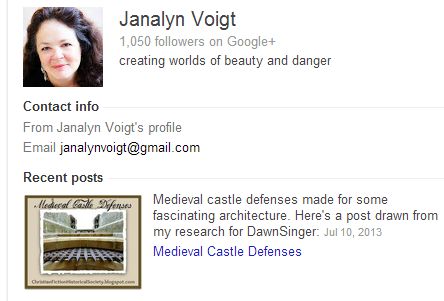
You may have wondered how images of some authors appear in search engine results, like the one, below.

About Janalyn Voigt

Your image, tagline, and most recent update will appear in the sidebar for searches of your name. This can be an important advantage if you have a popular name. The fact that Google shows my follower count helps my credibility.

Janalyn Voigt's Google author bio

To learn more about the advantages of Google Authorship, read 10 Reasons Writers Should Claim Their Google Authorship Markup by  for Copyblogger.

Don’t make the mistake of overlooking Google Plus in building your social media platform.

The 15-Minute Writer: Taming the Social Media Monster

file0002062790027 This is part five of a series. Read parts 1-4 here.

Ever wonder how top authors (especially those with families) do it all–write, read, speak, tweet, pin, travel, correspond and more? I’ve got a hunch that they choose what they’re best at, and hire talented people to do the rest.

There are simply not enough hours in the day to do it all. In addition, since new social media platforms pop up regularly, it’s easy to get overwhelmed.

Over the past few years as a writer-mom, I’ve made more than a few mistakes, but I’ve also learned to prayerfully make (sometimes tough) choices. With God’s help, I’m taming the social media monster–instead of letting it wreck my schedule and family life.

  • First, I regularly revisit my priorities. As seasons of life change, so do my family’s needs and schedule. When my children were small, I wrote during Mother’s Day Out and nap times. Now, I write, research, and update my blog and Twitter or Instagram accounts during their school hours and activities. I try to be available to them after dinner and while they’re doing homework, keeping certain times free of online distraction. So far, it’s working well for us.     OLYMPUS DIGITAL CAMERA
  • Second,realize where I’m strong–and weak. I began blogging in 2004, and last year, I admitted to myself that I’m simply burned out. Bleh. Meh. Etcetera. However, giving myself permission to blog less often, and do other things I enjoy more (keeping an active Facebook and Pinterest presence, for instance) has helped my attitude about online promotion. I also love my work as an editor at an online magazine, and the curating I do for The High Calling helps me build my own platform. Score!
  • Third, I recognize my addictive tendencies. Recently, I discovered that with a few handy-dandy apps on my Iphone, I could tweet, chirp and pin while waiting for doctor’s appointments, eating by myself at fast food restaurants, and even in bed. The only problem? I had used those times previously to read, daydream or think. No down-time for Dena makes her a grumpy girl–and a boring writer. So, I decided to delete the apps. I already feel more peaceful and balanced.
  • Fourth, I reign in my expectations. Someday, when the kids are grown, I will have more quiet/alone time. (Please, God?) And I don’t want to have a ton of regrets later in life. This creative, crazy family is where the Lord has placed me. He has also chosen to give me wonderful writing opportunities. Such a precarious balancing act means I can’t pursue every single marketing or promotion lead that comes my way. I won’t be able to accept every speaking engagement I’m offered. And I can’t attend every platform-enhancing conference that looks interesting. This both helps and hinders our family financially, but God has always honored my commitment by providing everything we need (and most of what we want). As my dad told me many times, “Honor God, and He’ll honor you.”

Hopefully, my experiences will encourage you in your own efforts to mollify the online marketing beast. What are YOUR tips for handling this potential monster?

Get Thee to a Conference, Writer!

I want to be alone...photo from www.fanpop.com
I want to be alone…photo from http://www.fanpop.com

Like many writers, I work at home, which means I spend much of my day alone. To force myself to get out of the house and interact with living, breathing, real people, I set a goal of attending at least two conferences in the course of the year.

They’re not writing conferences, however.

They’re pre-writing conferences.

In other words, I go to conferences to do research for my books. In particular, I go to events that have to do with birding, nature, and spirituality, since those are my book topics, and I’m always looking for new ideas and the latest developments in the field.

But last month, as I promoted my second free Kindle offer on amazon.com for my Birder Murder mystery series, I realized a marketing benefit to those research conferences: the stuff I bring home – the hand-outs, the programs, the lists of attendees – are invaluable marketing tools.

Influential contacts

You meet a lot of people at any kind of conference, but you might not get the chance to meet them all, especially if they are keynote speakers who typically are surrounded by a crush of people at the conference. If you keep the program, though, you can usually track them down again on the internet, and make contact by sending an email and thanking them for their presentation. Then, when you would like to notify them of your book release or promotion, you’ve got  influential contacts in your target market. Even if you haven’t previously corresponded with them, just naming the conference in a subject line will ensure your email will be read by the recipient. Ask them to share your promotion, and you’ll reach new readers through their cooperation.

Potential readers

Every person who comes to a conference is a potential reader of your work. I recently went to a conference on the therapeutic effects of nature, and chatted with other attendees about my interest in nature and birds. When I mentioned I was an author, I was asked for the names of my books, so I got to do a little promoting to a market I hadn’t previously considered. At a birding event, email addresses of all the attendees are sometimes included (because birders like to email each other about bird sightings), so I have a ready-made email list for special book promotions that I think they might appreciate. Never underestimate the personal touch of addressing individuals!

Creative approaches

Being the packrat I am, I keep all the hand-outs and advertising materials from conferences, too, thinking I might be able to set up a speaking date or promotional opportunity with one of the sponsors. For example, I never thought of wildlife photographers as a market until I met a camera rep at a birding event; now it’s a part of my target audience. As a result, I’ve found that thinking about the ways sponsors connect to conferences is a fertile field for marketing development.

What kind of conferences do you attend and what are the marketing benefits you find?