Writing With a Day Job

Writing Career Plus a Day Job
Juggling a Day Job With a Writing Career?

Are you a writer, or an aspiring writer with a day job? Ever get tired trying to juggle at least two careers, (day job and writing), along with mommy, daddy, spouse, family, friend, and church duties?

If so, you are not alone. A conference speaker gave this statistic. “About one percent of writers succeed at getting published. Because most drop out of the race.” Here’s my post on that experience.

Embedded within that percentage is a smaller number of those who can actually afford to write full-time. Making the leap to a devoted writing career usually requires long-term planning, intentional strategy, and detailed tactics. Jeff Goins’ recent blog encapsulates a great way to approach the goal of becoming a full-time writer. The steps he outlines, I could have written myself. (More on that in a later post.)

But if you’re reading this now, odds are writing with a day job is your reality. Anything else may feel like something built on fluffy clouds.

So how do you bring home the bacon, fry it up in a pan, serve it to those you are responsible for, and after the dishes are done still find time to pursue that dream throbbing with every heart beat? Can it be done? I believe the answer is a resounding YES!

People often ask me how I accomplish everything at work and home, plus write blogs, devotionals, articles, and books. After I imagine my cluttered living room, (I’m not Wonder Woman, something has to suffer), three things come to mind. “Resolve, listen, act.”

As a writer with a day job:

Juggling a Writing Career and a Day Job
Resolve to Invest Time in Your Writing Business

A. Resolve to invest wisely.

  • Treat your day job with respect. Just because you have a higher calling, or a bigger dream, don’t discount the gift of your employment today. After all, it pays the bills, and you can glean great writing fodder from things that happen in your workplace.
  • Watch less television, and write more. 
  • Create your own Writer’s Cave.
  • Rise earlier, and allow fewer sleep-in days.
  • Write when you’re tired, energized, or just so-so.
  • Schedule writing, don’t wait until you feel like it.
  • Celebrate small victories. Fifteen minutes putting words on a screen are worthy of excitement.

B. Listen to voices of genuine authority.

  • For me, the voice of God rings truth above any other I might listen to. Early on, I asked the Best Selling Author of All Time to mentor me, and He hasn’t let me down yet.
  • Do not disregard those who have written with day jobs before you. Heed their valuable advice.
  • Seek the wisdom of professional agents, editors, and publishers. They are in their positions based on education, experience, and talent.

Writer With a Day Job Book CoverC. Act on what you are taught.

  • Be a doer — not a hearer, dreamer, thinker, talker only.
  • Keep something for notes with you always. Inspiration comes in strange times and places.
  • Make tiny goals like, “Write for five minutes before I leave for work.” You will encourage yourself with things to look forward to, and enjoy a sense of satisfaction when you complete them.
  • Keep your word. It’s better not to make a promise at work, or as a writer, than to make one and break it.

Have you read Aine Greaney’s fabulous book, Writer with a Day JobIt’s full of tips, exercises, and encouragements.

Voice Recognition

Photo/KarenJordan “… My sheep recognize my voice. I know them, and they follow me.” (John 10:26 MSG).

As I listen to the birds singing their songs every morning, I wish I could distinguish one bird from another. I identify the honking geese as they fly over the lake, and I hear the woodpecker as he raps for his meal. I can see the difference between a robin and a sparrow, but I can’t tell them apart by their voices.

My husband Dan can recognize the voices of several birds. He knows the robin’s sweet song, and he is familiar with the squawking blue jay. He can even point out the mimicking mockingbird. So, I’m trying to learn a few voice recognition tips from him.

I’ve also discovered a few tips for recognizing God’s Voice, since I struggle with the same issue in my spiritual life at times. Is this the voice of conviction or condemnation? Will I let faith lead me, or will I be confused and distracted by fear? Does this voice speak life or death to my heart? Does it give me direction or cause me to dwell on the impossible mistakes of the past?

1. Communicate with God. “Don’t fret or worry. Instead of worrying, pray. Let petitions and praises shape your worries into prayers, letting God know your concerns” (Phil. 4:6).

First, I must remember to communicate with God. Sometimes I get so focused on the worrisome distractions around me that I forget the power of prayer and praise.

I’ve also learned that I can’t focus on many tasks at the same time. And if I try to multi-task, I don’t do anything well. So, I must find some way to silence all the voices around me, so I can hear God.

2. Examine God’s Word. Jesus says, “I am the Good Shepherd. I know my own sheep and my own sheep know me” (John 10:14).

What if you don’t think you can recognize God’s voice?

God’s Word promises, “(His) sheep recognize (His) voice. (He knows) them, and they follow (Him). (He gives) them real and eternal life … No one can steal them from out of (His) hand” (27-29).

Sometimes all I can do is hang on to God’s promises—even when everything around me doesn’t seem to agree with His Word. Often my circumstances cause me to panic, because I can’t see how something can work out. My logic and my emotions resist the truth that I see in God’s Word.

3. Allow God to Examine Your Heart. I don’t want to pray about that! What if you really don’t want to pray about something? That can be a big red flag that we might have a little attitude going on.

I can remember when my kids would avoid talking about something with me—like a report card or a visit to a friend’s house. I would eventually force the issue if they continued to be silent, because I knew my kids well. If they were quiet, something was up.

Investigate my life, O God, find out everything about me; Cross-examine and test me, get a clear picture of what I’m about; See for yourself whether I’ve done anything wrong-then guide me on the road to eternal life. (Ps. 139:23-24).

Photo/KarenJordan4. Embrace the Power of Christ in You.      Sometimes I become distracted from God’s voice by the worries and stresses of my everyday writing life. Yet when I choose to focus on God’s Word—listening for His still, small voice—I find rest and peace for my troubled heart and mind.

… Those who enter into Christ’s being-here-for-us no longer have to live under a continuous, low-lying black cloud. A new power is in operation. The Spirit of life in Christ, like a strong wind, has magnificently cleared the air, freeing you from a fated lifetime of brutal tyranny at the hands of sin and death. (Rom. 8:1-2 MSG).

Many times my prayer is for God to just show up. And at times, He shows up in the strangest places—like this morning, as I listen to the chorus of birds singing again. I realize that I still can’t tell one species from another. But in my spirit I know that I’m listening to a symphony of praise to our Creator.

“Let every living, breathing creature praise GOD! Hallelujah!” (Ps. 150:6).

What distracts you from hearing God’s Voice?

Hopelessly Devoted to You

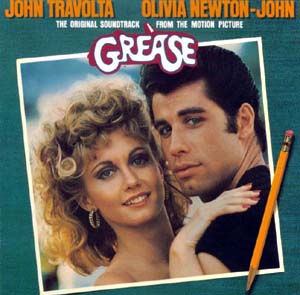
Soundtrack for Grease
I Wore My Album Out

I loved the movie Grease when I was a teenager. My cherished movie soundtrack album wore out, as needle tracks embedded themselves deeper into the shiny, black vinyl. I even played Olivia Newton John’s part as Sandy, in a condensed version with my high school mates.

In the privacy of my bedroom, and a handful of times on the stage, I belted out Sandy’s song of undying love for Danny, Hopelessly Devoted to You. With adoration pulsing through my vocal chords, I too, felt the passion of forever romance.

And today, that’s how I want to feel about Jesus. I want my heart to thump with anticipation every time I hear His voice, smell His scent, brush against His presence, taste His goodness, and see His glory. Though I tremble when I’m near Him, I want to wildly, passionately, and bravely chase after Him for more.

Sandy & Danny at Sunset - Grease
This is my Hopelessly Devotional

Like Sandy in the movie, I ultimately want to transform myself, so at the end, I look more like Him, and less like me. I want my devotion to shine from the inside out, so the whole world knows, I am hopelessly devoted to Him.

Today, I probably wouldn’t watch Grease if it weren’t for nostalgia. As I’ve grown in my desire to please God, I realize there are parts of the movie that don’t honor Him. But when I do allow myself to indulge, I see nuances explaining my draw to the magic of Grease, way back when. The same nuances draw me to intimacy with Jesus. I am hopelessly devoted.

But what exactly does devote mean? According to one dictionary, it’s defined this way. To give all or a large part of one’s time or resources to (a person, activity, or cause). 

This definition makes me pause. Am I giving all or a large part of my time or resources to Christ? Am I offering Him the best of my energy, talents, and love?

Often I think I do, I want to, but deep down, I know I fall short of an active, hope-infused devotion. My vocal cords aren’t pulsing with passion, the way they should.

Danny & Sandy -- Grease
Flying into Forever Romance

Thankfully, Jesus isn’t as fickle as John Travolta, when he played Danny in Grease. Christ is not impacted by peer pressure. He cares little about my outward appearance. His interest in me isn’t self-serving. He loves me enough for both of us. His desire is to meet me in the clouds, where He and I will truly fly away into our forever romance.

As I write this, I can close my eyes, and see us. Jesus and me, in a magical moment, strolling through heaven.

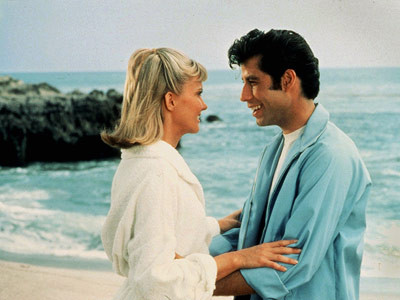
Danny & Sandy on the Beach, Grease
Hopelessly Devoted to Magical Moments with Jesus

I’ll cling to his arm, lay my head on his shoulder, and breathe deeply of his scent while we walk. He’ll stop and turn, so we’re face-to-face. He’ll lift my chin.

Totally engaged, I’ll get lost in His smiling eyes, while I belt out our song. He will know, I’m Hopelessly Devoted to You.

Is there a special song, movie, or memory that offers a unique vision of your intimate moments with Jesus Christ?

A Note to Young Writers: Honor Your Obscurity

woman praying--parodic

In the last month, I spent time with two younger women, both of whom had just released their first book. Sarah and Andrea are both fine writers whom I expect will continue to write and publish books. In the short time I had with each of them, I found myself dumping all my writing and marketing advice, talking about websites, blogging, Facebook, twitter. But I forgot to say the most important thing of all: honor your obscurity.

Very few young writers, musicians, artists value their obscurity. For good reason. We know if we’re to be published in any form, we need an audience, a sizeable audience. We know that most of the time we have to find that audience before that first book contract even lands on our desk. And once it does, and the book is out, we’re tasked to keep racking up bigger numbers. But how do we catch the eye and ear of a world that so often chooses the flippant, the crude, the gaudy spectacle over the good, the authentic, and the true?  If we’re the praying sort, we may resort to prayer, remembering the words another writer made famous a few years ago,

“O, that you would bless me and enlarge my territory! Let your hand be with me, and keep me from harm so that I will be free from pain.”

(Oh, dear Jabez, I want to say. How did you get away with that prayer?)

But we do it too, I suspect. The artists’ version would go something like, “O, that you would bless me and enlarge my platform, increase my followers, expand my twitter peeps and keep me from publishing harm so I will be famous, free from the pain of falling out-of-print.”

woman praying--parodic

I can write this prayer because I know these desires. An hour ago I was on a nationally syndicated radio show, and I find myself, now, against my better will, glued to numbers, trying to measure “impact.” While guiltily number-stalking, a stranger writes me on Facebook immediately after the broadcast and asks how he can become a writer and speaker, like me. (He’s in his twenties and he hasn‘t written anything  yet . . .)   Someone else writes to ask me how to build a fan base for her blog.

I do have advice: if you want others to read you and listen to you, you must listen to others. Do for others what you want them to do for you. That will not make you famous; that will make you better informed and more humble.


man reading2

And second, fame is not what you think. Admittedly, I am not the best source here. My moments of “fame” are modest and sporadic. But I still know this: it isn’t what you think. It’s often over in a moment. It brings more responsibility than freedom. And if you’re not careful, it can pollute or paralyze your writing. I have a friend whose first book shot to the New York Times bestseller list.  His agent, his readers, his global fan base now hold their collective breath for his next book. “How do I write under this weight?” he asks me. He has so many others he must now heed and please.

“Honor your obscurity” is another way of echoing Bill Roorhbach’s charge to “honor your apprenticeship.”  Value these months, years of laboring toward your best work with fewer listening in than you would like. This quiet is your wilderness, your blessing. Here you will sharpen your art. You will lean closer to the sounds around you, for the fragile people who haunt the forests you watch, for the small voice that whispers names you didn’t know.

Enjoy the purity of your efforts, making art and worlds and essays out of the sheer love of words, of theatre, of longing and of hope. Enjoy it now before a woman or a publisher sits down beside you filling your notebook with a thousand necessary tasks, few of which have much to do with why you began writing in the first place.

Finally, what do you imagine fame will bring you? For me (and for many writers I know) I hope mostly to be able to keep on writing, to keep using “that talent which is death in me to hide,” as John Milton writes. If you’re doing this now, pouring life into the truest sentences you can make, you’re already famous.

woman writing journal

Already Loved: Encouragement for This Writing Life

file9431319827916Another rejection. My agent gently relayed that though my dream publisher had said “yes” to a proposal all the way up the chain of command to the last committee, they finally decided to nix it.

As I hung up the phone, tears spilled down my cheeks. Two years of canceled book contracts, low sales figures, and repeated “thanks but no thanks” emails had left me discouraged, frustrated, and confused. Writing—and the marketing tasks necessary to be a professional writer—now seemed like drudgery, not play. No matter how many marketing rules I tried to follow, my efforts failed.

I felt like a failure, too.

I still believed God wasn’t through using me. But I couldn’t help but wonder, Will I ever get another book contract? And what happens if I don’t? Is God trying to tell me something?

Later that day, I sat at my desk, playing a computer game with my three year-old son. As Jackson sat in my lap, I kissed his ear and inhaled his little-boy scent; a combination of milk, grime, and chocolate. Nearby sat a copy of my first book, which I had referred to earlier in the day for a radio interview. Jackson looked at the illustration of a frazzled mom on the cover and asked, “Is that you?”

“No, sweetie,” I said, “but I wrote that book. See, mommy’s name is on the cover. It says, ‘by Dena Dyer.’ “

“Oh!” Jackson said, grinning up at me. “I love Dena Dyer!”

Stunned, I blinked back tears. “I love you, too,” I murmured.

After a few minutes more at the computer, I found a quiet corner and prayerfully pondered Jackson’s simple expression of love. He didn’t care if I published books or not. He simply loved me for me. He loved me the way God does.

In all my disappointments, I had thought more about selling books than surrendering my heart. It was painful to admit that somewhere in the midst of trying to serve Jesus, I’d become goal-driven instead of God-driven. I seemed to care more about what the publishing powers-that-be thought than what my Heavenly Father thought.

Satan is crafty. He takes our God-given talents and twists them into temptations. Gradually, my calling had become an idol. Who I was became less important than what I did.

“Lord, I’m sorry,” I prayed, crying for the third time that day. “My heart is so full of sin. I know you couldn’t care less how many books I sell. You just want ME.”

In the weeks and months to come, as I asked God to help me believe the truth of His unconditional acceptance, I began working freely and joyfully again instead of writing just to be published. God continued to close some doors, and another book proposal was rejected, but He gave me other opportunities–ones I hadn’t even known to pursue.

The truth is, though, I will probably always have a tendency to think I must perform to be loved. So I’ve ask God to whack me upside the head (as we say here in Texas) before I get too far off track.

If experience is any teacher, He’ll be faithful to do just that.

(This article first appeared at The High Calling. Used by permission) 

Hello? Who’s Calling?

Businessman talking on cell phoneOne of my favorite stories in the Bible involves hearing a call, but not knowing where it came from.

Young Samuel is learning the ropes of serving God when he hears a call in the night and assumes it is Eli, his mentor. Obediently, he runs to the old man and says, “Here I am; you called me.” (1 Samuel 3: 5) Eli denies calling Samuel, and only after it happens a third time, does Eli realize that God is the one doing the calling, at which point he tells Samuel how to answer. Following Eli’s instruction, Samuel responds to God and enters into conversation with the Lord.

There are three reasons I love this scripture so much: 1) like Samuel, I don’t always recognize who is calling me;  2) it reassures me that I get more than one chance to get it right; and 3) when I finally do get it right, God doesn’t hold my slowness against me, but launches into conversation.

I’ve also learned that this is a great way to understand my writing career – it takes discernment, effort and openness to write what God gives me, and thankfully, He’s very, very patient with my slowness!

Discernment can be a journey in itself.

I’ve always been a writer. But it wasn’t till I was pursuing my master’s degree in theology that I felt the urge to write books, and specifically, fiction. I remember telling one of my instructors about this new desire, and how odd it was for me, a trained journalist and researcher, to suddenly feel like I should write a novel. Her response was that I should not dismiss the urge, that God speaks through fiction as well as nonfiction. I tucked the idea away, thinking it was momentary insanity…until three years later, when another instructor told me I should write a book.

“But I don’t know what to write – I have so many ideas I’d like to explore,” I confessed to him.

“Then pick one and get to work,” he told me.

I chose the concept of vocation, and wrote my first book, a short theological reflection on Christian vocation. I enjoyed the work and the book was published. It felt right, and it felt safe. Nonfiction, I could do.

But I still felt the draw to write fiction. One day, I decided to give it a try when a friend told me I told great stories about my kids. Since I loved mysteries, I chose that genre, and surprised myself with how immersed I became in the writing. I felt like it was what I was called to do.

In my experience, God does speak to us through others, even when we’re not listening very well. Samuel was lucky – he had Eli to help him discern God’s voice.  In our lives, I believe we have help, too, but we have to be open to those messengers of discernment, because they can come in many forms and voices, and they can be very persistent (thank goodness!). After all, it took Eli three times to recognize God’s call for Samuel.

Who helps you discern the call of God in your writing life?

Facing a Fickle Crowd?

When Jesus finished telling these stories, he left there, returned to his hometown, and gave a lecture in the meetinghouse. He made a real hit, impressing everyone. “We had no idea he was this good!” they said. “How did he get so wise, get such ability?” But in the next breath they were cutting him down: “We’ve known him since he was a kid; he’s the carpenter’s son. We know his mother, Mary. We know his brothers James and Joseph, Simon and Judas. All his sisters live here. Who does he think he is?” They got their noses all out of joint.

But Jesus said, “A prophet is taken for granted in his hometown and his family.” He didn’t do many miracles there because of their hostile indifference. (Matt. 13:53-58 MSG)

Do you ever want to run and hide from criticism or rejection? If you’ve ever spoken to a crowd, taught a small group, written for publication, or communicated your faith in any way, you may have faced a fickle crowd. And you might identify with this story from Matthew 13.

I noticed a few helpful truths in this passage.

  • Jesus used stories to communicate.
  • People praised Him at times.
  • People also criticized Him.
  • Jesus stayed in tune with His audience.
  • Jesus moved on, when criticized.

Facing criticism and rejection. Reading the account of how Jesus handled this crowd reminds me of an event from my past.  

When my close friend, Sara, invited me to her Sunday School class, I hesitated, uncertain if I would fit in. But since her friend, Glenda, taught the class, I agreed to visit.

Hoping I found the right place, I slipped in the door and scanned the room for a familiar face. No one seemed to notice that I had entered. I found a seat close to the door, in case I needed to make a quick exit. I fiddled with my purse, hoping my insecurity would not be obvious.

I got up the nerve to survey the room again, and my eyes met Glenda’s cold stare. I looked back down at my purse, pretending to search for something, as I questioned myself. Am I in the right place? Is this a closed group? Have I done something to offend her? Maybe I’m reading her wrong.

As I fought the urge to escape, I gripped the edge of the cold, metal seat and leaned forward just as Sara walked in the door. Her warm smile calmed my nerves. And as she sat down in the empty chair next to me, I found the courage to stay.

Pleasing people? After several painful interactions with Glenda over the next few months, I listened to some sound advice from my husband Dan: “Some people just aren’t going to like you.”

What seemed to be common sense to Dan, took me by surprise. Up to that time, I believed that I could always find some way to make people like me. I had been successful at pleasing people most of my life—until I met Glenda. She decided that she wasn’t going to like me. Why? Who knows? I could do nothing, but forgive her and move on.

Facing a new year. I realize that I will always face fickle crowds. And I am still tempted to try to make them like me. But the Bible assures me of God’s unconditional love.

For I am convinced that neither death nor life, neither angels nor demons, neither the present nor the future, nor any powers, neither height nor depth, nor anything else in all creation, will be able to separate us from the love of God that is in Christ Jesus our Lord. (Rom. 8:38-39)

I also hope to remember the example that Jesus gives us in Matthew 13 the next time I face a fickle crowd. So, as I prepare to meet the challenges of a new year, I plan to …

  • Continue to tell the stories that matter most.
  • Offer thanks for the praise I receive.
  • Ask for God’s help to deal with criticism.
  • Stay in tune with my audiences.
  • Move on, when criticized.

 What helps you, when you face a fickle audience? 

Awaiting the Unexpected

Christmas star“For to us a child is born, to us a son is given…” Isaiah 9:6


What a joyful event we will celebrate in just a few more days! As I have every year for as long as I can remember, I’ve spent these December weeks busily preparing for Christmas. I bake the holiday breads and Christmas cookies my family loves. I deck the halls with our traditional decorations, hang the stockings, trim the tree, wrap the presents. I spend extra time in prayer, stash bills in the bellringers’ buckets, and listen for the cherished carols that herald the day of our Redeemer’s birth.

I know how to prepare because I know what to expect, and what a blessing that is!

But the Israelites to whom Jesus came were expecting a different kind of messiah. Instead of a baby in a manger, they were waiting for a political leader, a king who would rally the troops, drive out the Roman overlords, and establish an earthly nation. Only the shepherds in a field were privy to a miraculous birth; summoning the courage to open their hearts to the words of angels, they followed a star to go to Bethlehem, where they found the Lord himself. Instead of a political ruler, they adored a Child who assures us, “Behold, I make all things new.” (Rev. 21:5)

I think that’s what births are about – making things new. Whether it has been the literal birth of one of my own five children, or the beginning of a new phase in my life, these events change what I have previously known, and often have shattered the expectations I had beforehand of what the birth would bring. I’ve learned that the richest – and holiest – experiences result when I’m open to whatever God brings me, and that, thankfully, God will never be limited by my own  expectations of what I think should be.

As a writer, this same courage to open my heart to God’s leading has shaped my writing career. I studied and trained to write scholarly works of spirituality, but instead, I’ve found a niche in humorous cozy mysteries, of all things! The journey and the rewards I’ve experienced have far exceeded anything I could have imagined, bringing me a rich new life I hadn’t anticipated. I’ve learned to toss out my own expectations, and instead, enjoy what God creates anew for me.

In these final days before Christmas, as I wait again for Jesus to be born in that stable, I pray that each of us will take a moment from our well-loved rituals of preparation to courageously open our hearts, and, without any expectation, receive what God has in store for us.

“…And he will be called Wonderful Counselor, Mighty God, Everlasting Father, Prince of Peace.” Isaiah 9:6

May your Christmas make all things new!

Do your expectations prevent you from seeing something totally new and unexpected?

His Words, Not Mine

Insecurity was a daily battle for me as Book One slowly unfolded. Sentence by sentence, page by page, the words and story poured from me. I tasted fear with my characters, laughed at their jokes, cried in their heartbreak.

You never write a book without pouring yourself into every facet. As Ernest Hemingway said, “There is nothing to writing. All you do is sit down at the typewriter and bleed.” It’s a lot easier said than done, isn’t it? My insecurities constantly surfaced: You can’t do this. No one will want to read this. It will never get published. Just stop now.

But I had a story to tell.

So I began every writing day with this prayer: Your words, Father. Not mine. And slowly, red turned to black on the page until I typed the final words: THE END. Sweetest thing ever written.

Insecurities equal self-focused writing. It was time to refocus. But before I could do anything, I first had to remember that this was not my story to tell. In Exodus 4:10-11, Moses receives a command from the Lord to go and speak to Pharaoh. His insecurities came out full force, and he complained to the Lord. I mean, Moses literally gave every excuse in the book. “Oh, my Lord, I am not eloquent, either in the past or since you have spoken to your servant, but I am slow of speech and of tongue.”

I love the Lord’s response in the next verse: “Then the Lord said to him, ‘Who has made man’s mouth? Who makes him mute, or deaf, or seeing, or blind? Is it not I, the Lord? Now therefore go, and I will be with your mouth and teach you what you shall speak.’”

Who made your mouth, writer? Who gave you hands to type, eyes to observe, and a brain for creative thinking? Wasn’t it the Lord? What idea can you claim on your own? What dream has come to fruition without His hand in the midst of the journey?

Write in faith, knowing that the Lord will use it for His glory if He has truly called you to this career. Success as the world defines it is rarely success as the Lord defines it, but He will use this gift in ways you will never see and understand. Your job is to be obedient. Write.

Every time your hands hover over the keys, remember Who made your mouth. Get your heart right and commit every word to Him. As the words flow onto the page, remember the One who stirred the stories in your heart and the characters in your mind in the first place.

“…for out of the abundance of the heart his mouth speaks.” Luke 6:45b

As writers, we pour ourselves into every story, but they are stories we ultimately can’t take credit for. When I finished my first book, I looked back at the journey and couldn’t believe the result. 85,000 words. Countless hours. So much prayer. I have no idea where it all came from, but He Who called me to this field is faithful.  I will be faithful to do this as long as He allows. All the credit goes to Him. I never could have finished alone.

As I begin the next book and the next, I will continue to pray the Lord gives me the words that others may need to hear, the stories that will tell of the hope, dreams, and adventure that come from following a good God. Will you join me as we commit our writing journeys to the master Author?

“Let the words of my mouth and the meditation of my heart be acceptable in your sight, O Lord, my rock and my redeemer.” Psalm 19:14

Deep into NaNoWriMo

Every author knows that it’s National Novel Writing Month – thirty days dedicated to flexing our writing muscles and whipping out 50,000 words of an original manuscript. The idea is to give ourselves permission to pursue our writing passion with all our hearts, minds, and laptops in a frenzy of creative expression and production.

What a great idea!

What unfettered freedom to write!

What joy!

What planet are these people from?

Like most authors I know, writing a novel gets sandwiched in between a part or full-time job, parenting, spousing, volunteering obligations, pet maintenance, cooking and cleaning, and – oh yes! – occasional opportunities to sleep. So, at least for me, while NaNoWriMo sounds like a fabulous idea, that is, unfortunately, all it will ever be for me – an idea, not a reality. During the month of November, while other lucky authors suspend every claim on their time and energy to immerse themselves in writing bliss, I’m still teaching college sophomores how to construct a grammatically correct sentence, walking the dog at least twice a day, cooking dinner for my husband and me, doing laundry, answering emails, and maintaining personal hygiene. Until I can figure out how to do all that AND write at the same time, NaNoWriMo will continue to be an elusive dream, and I will go on wondering what it would be like to write a novel in thirty consecutive days.

Note that I wrote ‘consecutive’ days.

That’s because I do write a novel every year in thirty days. The days are just not back-to-back, or consistently eight hours of effort, but all in all, it ends up being around the same amount of ‘work.’ In other words, I write when I can. Some days, that ‘writing’ may actually be hours of mental plotting while I’m otherwise physically engaged (can you spell ‘spring cleanup’?) or it could be an uninterrupted ten-hour words-pouring-out-of-me marathon when I forget to eat (easiest to do when hubby and kids are out of town). I have, at least twice, written the first chapter in a methodical manner, sitting down to my laptop for four hours a day. But then it’s been weeks, or even months, before I get back for Chapter Two. As I often excuse myself to those who ask, I was trained as a journalist, and I work best under pressure, but as an example of writerly discipline, I stink.

It works for me, though. I find that downtime between chapters, or even mid-chapter, gives me time to play with my story, working out different arcs or conflicts. My writing breaks allow my characters to form more completely in my mind, often without my interference. And sometimes, my story takes turns I never would have predicted, thanks to the people or events I encounter while I’m in the middle of slowly, erratically, crafting a story.

Write a novel in a month?

If you can do it, go for it.

Me? I’m simmering stew, along with story plots. The really good stuff takes time, you know.

How’s your NaNoWriMo going?