
If Ever There Was A Time For Writers . . .

269665_10200995681632023_245803796_n
*****

“It is the miraculous language that drags me back into its delicious kingdom again and again . . . meticulously chosen words . . . I want to enter this kingdom, with such desperation, I am willing to die for it . . . And to enter a book, to let my life course out and stream past me, is to, in a  small way, die.”

On Reading, by Cynthia Cruz, via The Rumpus, 4/29/2013 

*****

If ever the world groaned for hope, it is now.

If ever the world needed writers, artists, poets, and musicians, it is now.

Even a glance through centuries past testifies to the power of artists, those sage interpreters of the soul, to draw hope from the detritus of despair and unveil rainbows from the bleak abyss of injustice.

And so, if God has called you to write, He has called you to deliver His people from this present darkness.

If that sounds like a big job, it is.

If that sounds like it’s too much for your feeble pen to handle, it is.

Because only a Savior can sand down the sharp edges of pain. Only a Savior can sweep darkness away with a great exhale which leaves in its wake a symphony. Only a Savior can deliver us.

So what’s a writer to do?

First, like the brown, peeling bulbs we tuck into the earth in the fall, don’t be afraid to plant the seemingly worthless and ugly. God is smitten with the beauty we allow Him to create with the broken, insignificant and useless parts of our selves. Keep writing, even if there’s no tangible payback or reward. Be faithful with little, and He will be faithful with making much of whatever meager loaves and fishes we lay at His feet. Spring comes, dear one. Spring comes.

Second, take time to celebrate Sabbath. Renew your mind and stretch your imagination by reading a book outside your usual genre, or a book in the Bible you haven’t considered in a while. And as you do, pray God gives you eyes to see and ears to hear what He wants for His lost ones. Look for ways to infuse His whispers into your stories.

Third, if you feel stuck, dig deeper. Press into the words you pen, and let them press into you, that they may make an unmistakable imprint of redemption and hope upon the reader by the time the last page is turned.

Make people want to enter not just any kingdom, but God’s Kingdom, breaking into the world by the surrender of your pen today.

*****

    “I spoke to the prophets,

gave them many visions
and told parables through them.”

Hosea 12:10 (NIV)

*****

How can you let God lead you more in your writing life? In what ways can you more fully surrender your pen for His glory? 

*****

Amy writes words of hope for a hurting world. Look for her debut novel, How Sweet The Sound, coming March 1, 2014 from David C. Cook.
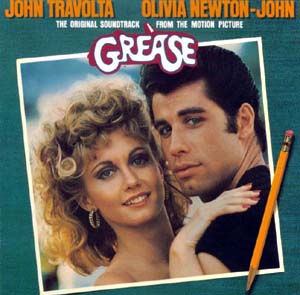
Hopelessly Devoted to You

Soundtrack for Grease
I Wore My Album Out

I loved the movie Grease when I was a teenager. My cherished movie soundtrack album wore out, as needle tracks embedded themselves deeper into the shiny, black vinyl. I even played Olivia Newton John’s part as Sandy, in a condensed version with my high school mates.

In the privacy of my bedroom, and a handful of times on the stage, I belted out Sandy’s song of undying love for Danny, Hopelessly Devoted to You. With adoration pulsing through my vocal chords, I too, felt the passion of forever romance.

And today, that’s how I want to feel about Jesus. I want my heart to thump with anticipation every time I hear His voice, smell His scent, brush against His presence, taste His goodness, and see His glory. Though I tremble when I’m near Him, I want to wildly, passionately, and bravely chase after Him for more.

Sandy & Danny at Sunset - Grease
This is my Hopelessly Devotional

Like Sandy in the movie, I ultimately want to transform myself, so at the end, I look more like Him, and less like me. I want my devotion to shine from the inside out, so the whole world knows, I am hopelessly devoted to Him.

Today, I probably wouldn’t watch Grease if it weren’t for nostalgia. As I’ve grown in my desire to please God, I realize there are parts of the movie that don’t honor Him. But when I do allow myself to indulge, I see nuances explaining my draw to the magic of Grease, way back when. The same nuances draw me to intimacy with Jesus. I am hopelessly devoted.

But what exactly does devote mean? According to one dictionary, it’s defined this way. To give all or a large part of one’s time or resources to (a person, activity, or cause). 

This definition makes me pause. Am I giving all or a large part of my time or resources to Christ? Am I offering Him the best of my energy, talents, and love?

Often I think I do, I want to, but deep down, I know I fall short of an active, hope-infused devotion. My vocal cords aren’t pulsing with passion, the way they should.

Danny & Sandy -- Grease
Flying into Forever Romance

Thankfully, Jesus isn’t as fickle as John Travolta, when he played Danny in Grease. Christ is not impacted by peer pressure. He cares little about my outward appearance. His interest in me isn’t self-serving. He loves me enough for both of us. His desire is to meet me in the clouds, where He and I will truly fly away into our forever romance.

As I write this, I can close my eyes, and see us. Jesus and me, in a magical moment, strolling through heaven.

Danny & Sandy on the Beach, Grease
Hopelessly Devoted to Magical Moments with Jesus

I’ll cling to his arm, lay my head on his shoulder, and breathe deeply of his scent while we walk. He’ll stop and turn, so we’re face-to-face. He’ll lift my chin.

Totally engaged, I’ll get lost in His smiling eyes, while I belt out our song. He will know, I’m Hopelessly Devoted to You.

Is there a special song, movie, or memory that offers a unique vision of your intimate moments with Jesus Christ?

Getting Better—As a Writer and As a Person

I am trying to teach the students in my novel workshop how to read as writers. The goal is to learn how novelists do their craft—how they integrate exposition into a scene, how they move in and out of the foundational tense into others, how they make us believe in a character, how they get us interested in a conversations, what they include, what they leave out.

DIN_CR~2“Pay attention to what’s working, some specific thing you like, and then try to articulate that as a more broadly applicable strategy toward some narrative end,” I keep telling them.

It’s slow going. My students can identify what they like, but they struggle to see whatever it is outside the context of that particular novel. Or, as the literary critics they’ve been trained to be in their other English courses, they notice symbols or metaphors or some unusual word and then write in their reading journals, “I want to use more symbols in my writing” or “I want to use more impressive diction,” and I am so seized up in apprehension of the heavy-handed artsyness of their next chapters that I dread reading them.

Every once in a while, though, one or the other of them has an electrifying insight, and everyone sees it and gets it and wants to do whatever it is, and my fears about being a terrible teacher are becalmed.

In class yesterday, we talked about one such insight that Sarah wrote in her reading journal: “STRATEGY: Don’t drag characters from point A to point B. Have changes take time. Have them want to do one thing but back out at the last second. Make them change their mind and turn back around to go right back to where they started.”

“Wow! What a good observation!” I said in class. “Why is a slow change, two steps forward and three steps backward, so much more effective in fiction than an instantaneous change, do you think?”

“Because it’s more believable,” one student offered.

“But why?”

“Because it’s how we change in real life,” someone else said.

That’s certainly how it’s been throughout my spiritual life. Reading scripture or having a conversation or listening in church, I’m confronted with some failing of mine and see, very clearly, how I might address it, and I’m resolved—no, genuinely eager—to take action and become a better person. Two steps forward. Then, months or sometimes weeks or only days later, I find myself failing in precisely the same way, having forgotten all my eager plans for improvement.

Or, I’m looking something up in my Bible—the same old, falling-apart one I read for the first time twenty years ago—and I come upon an emphatically underlined passage and a note from me to me scribbled in the margin in the excitement of some forgotten moment of revelation. I knew once exactly how to fix me, evidently, but then, just, never did.

As Paul complains, “I do not understand what I do. For what I want to do I do not do, but what I hate I do” (Romans 7:15 NIV). It upsets him—and I share his anguish—so much that he repeats it again and again. “I have the desire to do what is good, but I cannot carry it out” (Romans 7:18), he wails. “I do not do the good I want to do, but the evil I do not want to do—this I keep on doing” (Romans 7:19).

Thank God for Jesus, and that’s Paul’s point here.

But there is another hope I want to consider today, and it is this: Change—however slow, however miniscule, however hesitant and hobbled by failure—does happen. Because of Jesus, we are, as Paul also promises, “being transformed into his image with ever-increasing glory” (2 Corinthians 3:18).

Strategy by strategy, attempt by attempt, failure by failure—so gradually that we ourselves may not even notice—we believers in the One God Sent are advancing, with ever-increasing glory, into the perfect people we all want to be.

Hello? Who’s Calling?

Businessman talking on cell phoneOne of my favorite stories in the Bible involves hearing a call, but not knowing where it came from.

Young Samuel is learning the ropes of serving God when he hears a call in the night and assumes it is Eli, his mentor. Obediently, he runs to the old man and says, “Here I am; you called me.” (1 Samuel 3: 5) Eli denies calling Samuel, and only after it happens a third time, does Eli realize that God is the one doing the calling, at which point he tells Samuel how to answer. Following Eli’s instruction, Samuel responds to God and enters into conversation with the Lord.

There are three reasons I love this scripture so much: 1) like Samuel, I don’t always recognize who is calling me;  2) it reassures me that I get more than one chance to get it right; and 3) when I finally do get it right, God doesn’t hold my slowness against me, but launches into conversation.

I’ve also learned that this is a great way to understand my writing career – it takes discernment, effort and openness to write what God gives me, and thankfully, He’s very, very patient with my slowness!

Discernment can be a journey in itself.

I’ve always been a writer. But it wasn’t till I was pursuing my master’s degree in theology that I felt the urge to write books, and specifically, fiction. I remember telling one of my instructors about this new desire, and how odd it was for me, a trained journalist and researcher, to suddenly feel like I should write a novel. Her response was that I should not dismiss the urge, that God speaks through fiction as well as nonfiction. I tucked the idea away, thinking it was momentary insanity…until three years later, when another instructor told me I should write a book.

“But I don’t know what to write – I have so many ideas I’d like to explore,” I confessed to him.

“Then pick one and get to work,” he told me.

I chose the concept of vocation, and wrote my first book, a short theological reflection on Christian vocation. I enjoyed the work and the book was published. It felt right, and it felt safe. Nonfiction, I could do.

But I still felt the draw to write fiction. One day, I decided to give it a try when a friend told me I told great stories about my kids. Since I loved mysteries, I chose that genre, and surprised myself with how immersed I became in the writing. I felt like it was what I was called to do.

In my experience, God does speak to us through others, even when we’re not listening very well. Samuel was lucky – he had Eli to help him discern God’s voice.  In our lives, I believe we have help, too, but we have to be open to those messengers of discernment, because they can come in many forms and voices, and they can be very persistent (thank goodness!). After all, it took Eli three times to recognize God’s call for Samuel.

Who helps you discern the call of God in your writing life?

Awaiting the Unexpected

Christmas star“For to us a child is born, to us a son is given…” Isaiah 9:6

What a joyful event we will celebrate in just a few more days! As I have every year for as long as I can remember, I’ve spent these December weeks busily preparing for Christmas. I bake the holiday breads and Christmas cookies my family loves. I deck the halls with our traditional decorations, hang the stockings, trim the tree, wrap the presents. I spend extra time in prayer, stash bills in the bellringers’ buckets, and listen for the cherished carols that herald the day of our Redeemer’s birth.

I know how to prepare because I know what to expect, and what a blessing that is!

But the Israelites to whom Jesus came were expecting a different kind of messiah. Instead of a baby in a manger, they were waiting for a political leader, a king who would rally the troops, drive out the Roman overlords, and establish an earthly nation. Only the shepherds in a field were privy to a miraculous birth; summoning the courage to open their hearts to the words of angels, they followed a star to go to Bethlehem, where they found the Lord himself. Instead of a political ruler, they adored a Child who assures us, “Behold, I make all things new.” (Rev. 21:5)

I think that’s what births are about – making things new. Whether it has been the literal birth of one of my own five children, or the beginning of a new phase in my life, these events change what I have previously known, and often have shattered the expectations I had beforehand of what the birth would bring. I’ve learned that the richest – and holiest – experiences result when I’m open to whatever God brings me, and that, thankfully, God will never be limited by my own  expectations of what I think should be.

As a writer, this same courage to open my heart to God’s leading has shaped my writing career. I studied and trained to write scholarly works of spirituality, but instead, I’ve found a niche in humorous cozy mysteries, of all things! The journey and the rewards I’ve experienced have far exceeded anything I could have imagined, bringing me a rich new life I hadn’t anticipated. I’ve learned to toss out my own expectations, and instead, enjoy what God creates anew for me.

In these final days before Christmas, as I wait again for Jesus to be born in that stable, I pray that each of us will take a moment from our well-loved rituals of preparation to courageously open our hearts, and, without any expectation, receive what God has in store for us.

“…And he will be called Wonderful Counselor, Mighty God, Everlasting Father, Prince of Peace.” Isaiah 9:6

May your Christmas make all things new!

Do your expectations prevent you from seeing something totally new and unexpected?

The Holy Work of Writing

Every year I host a faculty essay reading at my university for our collective entertainment. At the beginning of the semester, I choose and cajole a dozen colleagues from across the curriculum to write personal essays on a shared subject. Then, sometime around Thanksgiving, I invite the rest of the campus to come hear them read the resulting essays aloud. It’s always a fun evening, everyone feeling proud afterward of what they accomplished.

Though the selected essayists have composed entire dissertations of scholarly writing, most have never set out to write for entertainment alone, so getting them to do it necessitates pep talks from me along the way as well as a fair amount of collaborative back-and-forthing between them and the trusted readers I encourage them to seek out. When they report to me on how it’s going and, afterward, on how it went, my colleagues are bashful and sincere and loveably modest as at no other time in my interaction with them.

“I got my daughter—she’s in high school—to read through it and make sure it made sense,” a grizzled professor of engineering tells me.

Another tells me how, in the course of writing about a Picasso painting her autistic son loved but she didn’t, she kept asking him questions and managed, through these exchanges, to get a rare glimpse of the world from his perspective.

Yet another colleague makes an appointment with me after the reading to work on improving his essay even more. He takes away from our discussion an argumentation skill that he is still bringing up in meetings years later: that you can’t convince someone of a truth unless you show it.

That’s the part of the event I like the most—my colleagues’ accounts of the process of composition. It’s so thrilling to watch seasoned writers grow into better writers through the humbling practice of sharpening iron on iron. Hearing the essays read aloud—every one of them so good!—and then witnessing the enthusiasm with which their audience applauds their achievement—yes, very good!—confirms what I am always telling my students: that, we humans having been made in the image of our creative God, our practice of creativity is as holy as the exercise of any of God’s other traits. And as pleasurable.

It often makes me feel a little guilty that my work, both as a teacher of writing and as a writer myself, is so enjoyable. It hardly seems like work at all, much less holy work, as I have come to think of it. But when we write well—when, through our words on a page, we interest and engage an audience in what is true and lovely and admirable and excellent—we are performing the work of God.

When asked what God’s work is, Jesus says, “to believe in the one he sent” (John 6:29). Writing, and teaching others to write, helps me to believe ever more confidently in the One God Sent—through whom, says John, “all things were made; without him nothing was made that has been made” (John 1:3 NIV). Good writing recreates, in words, what has been made through the Word and offers it up to others for their contemplation and enjoyment. What work could be more sacred?

No Angry Rejection

Rejection—we’ve all experienced it. Some days, it seems to roll off our backs; and on others, we feel as if a knife just pierced our vital organs.

Maybe you’ve been shunned by a friend, coworker, or employer. Perhaps you’ve experienced an even deeper-cutting rejection by a spouse or a loved one.

As a freelance writer, I experience rejection of my ideas and projects on a regular basis. At times, it’s hard not to take the “no’s” personally. When I was trying to break into the book market (something that took five years of learning, growing, praying, and waiting—after several years of writing articles and stories for freelance markets), the multiple rejections got to me after awhile.

Even though I believed I was called to write, and felt obedient to God by pursuing that call, major discouragement set in for me when three of my favorite publishers turned down a nonfiction book proposal in one week. Ouch!

My husband, friends, and family encouraged me to keep going. And I wanted to—but my “fight” was running out. The rewards of risk just didn’t seem worth it anymore.

Then God gave me a gift—a passage from Eugene Peterson’s The Message (1 Thessalonians 5:9–24), at the precise moment I needed it. I hope it will minister to you as it did to me:

“God didn’t set us up for an angry rejection but for salvation by our Master, Jesus Christ…So speak encouraging words to one another. Build up hope so you’ll all be together in this…Be cheerful no matter what; pray all the time; thank God no matter what happens…The One who called you is completely dependable. If He said it, he’ll do it!”

Isn’t that awesome? Those verses remind me, first, that God is up to great things behind the scenes. He will never fail. That truth allows me to trust in His timing and to thank Him–yes, even for rejections. After all, as James Lee Burke once said, “Every rejection is incremental payment on your dues that in some way will be translated back into your work.”

Second, trusting in God’s timing and faithfulness builds up my hope, so that I can get back into the ring of life and keep fighting—for relationships, for a vibrant life, and for the ministry God has chosen for me.

Third, online and offline groups–like this blog–allow those of us who share a passion for writing to speak encouraging words to one another, so that we can press into our calling. In unity, without jealousy or envy, we can cheer each other on. Complete trust in the One who made us causes us to know that all Christian authors have a role to play, and that every single bit of success is good for the Kingdom.

Fourth, God’s complete acceptance makes me willing to keep living life fully, even when it’s risky. Though friends, family members, or publishers may reject me, Jesus never will.

I can rest in that.