The Hidden Benefits of Reading

I have a confession to make. Sometimes I read in order to avoid writing. There. I said it. I read at stoplights often enough that my children have to point and say, “Green. Green! GREEN!” in increasingly frantic tones, just before the rude non-reader honks come from the cars behind us.

I read while I wait for my children and while I brush my teeth. Just last week, I read on my daily walk. While passing my oldest daughter’s home, I understand that she pointed out the window in disbelief. “Nick!” she called to her husband, “Is that lady really reading while she’s walking?! Oh. It’s my mom. Why am I even surprised?” Once, I even read 43 pages while in the dentist’s chair.

As it turns out, my reading habit might be one of the best things I can do for my writing.

Read to Inspire

We all know there’s nothing like losing yourself in a book whose pages are so magical, they fairly turn themselves. We look up and are surprised to find it’s not raining – after all, it was pouring in the story.

Start noticing which phrases delight you. Stop a moment and think about why they do. Chances are, it’s because this book unpacked a suitcase of fresh word choices, analogies, and dialogues. The clichés have left the building and we’re thrilled!

Read to Motivate

When I read about Stephen King being able to paper his bathroom with rejection slips, I am motivated. When I recall that both Stephen King and John Grisham had wives who believed in them (the infamous Carrie was fished out of a trash can by King’s wife; Grisham and his wife self-published his first novel when he couldn’t find a publisher. They sold it out of the trunk of their car; today, they are laughing their way to the bank), I count myself blessed to have a spouse who is my biggest fan.

Knowing that 80-something publishers rejected The Wizard of Oz and that Nicholas Sparks was a drug rep, putting out juice and donuts for yet another hospital sales pitch when he got the call regarding his mega-deal for The Notebook, I am reminded that there’s something to be said for both perseverance and the chance for a modern day fairytale. Hey – it’s a book! Anything can happen.

Read to Learn

I’ve been 40 for 7 years now and I still don’t know all there is to know about anything, much less everything.  So, when I embarked upon writing my first novel (after seven non-fiction books), I began to read even more fiction. I gulped down dialogue kings and drama queens. I devoured women’s fiction, swallowed romantic suspense, snatched up crime novels marinated in mystery, snacked on current secular best sellers and wolfed down articles, chapters, blogs, and books on the art of writing itself.

I’m currently serving myself a buffet of historical fiction; my master’s degree is in American history. As a full-time high school teacher and the mother of four blessings who also love to read, I’d love to write historical novels someday. As a writer, I take note of what works and what doesn’t. As a history lover, I treasure authors whose research renders their prose not just lovely, but accurate. As a police chief, my husband does the same for authors who justly portray the world of law enforcement.

Read for Fun

Make sure reading doesn’t become just another chore. Don’t be a book snob – read because you love that author, that genre, that time period, that gift for dialogue. Curl up on the porch swing, in the hammock, by the fireplace, or at the stop light, and savor.

And remember, since books foster dreams, there’s nothing wrong with dreaming someday it will be YOUR book someone is reading just for fun!

“Would You Like to Meet the Author?”

"Soapdish" photo from www.lazydork.com
“Soapdish” photo from http://www.lazydork.com

There’s a funny scene in the movie “Soapdish” that depicts a depressed soap opera actress, played by Sally Field, getting her recognition fix. She goes in dark sunglasses to a shopping mall with her best friend, who suddenly shouts “Is that who I think it is?”

Everyone around them stops, the actress removes her glasses, and she is immediately thronged by fans, all wanting an autograph. She smiles, graciously greets her admirers, coos at babies, and regains her self-confidence.

This has never happened to me. Not the depression part–every writer gets the blues in the face of the enormity of the writing endeavor. But I’ve never had crowds of people clamor for my autograph–not in a bookstore, and certainly not in the middle of a shopping mall.

I did have a moment recently, however, that brought this scene to mind in a good way.

My husband and I were playing hooky, taking a weekday afternoon to stroll through the Minnesota Landscape Arboretum, which happens to be about five minutes away from our home. The Arb has carried my books for several years now in its gift shop, and I’ve made a few book signing appearances there, but I’m by no means an author who is recognized by the general public. After touring the gardens, my husband and I headed into the gift shop for our usual browsing, and while I inspected some lovely sweaters and ceramic dishes, he went into the book section to see my books on display.

A moment later, I heard his voice from across the aisle.

“Would you like to meet the author?” he asked a woman who was standing in front of the display, one of my books in her hand. “She’s my wife.”

Say no, I willed her. Sporting my heavy parka, my hair doing its dry electricity bush thing, the last thing I’d expected was to be called upon to meet a reader.

“I’d love to,” she replied, turning in the direction he was pointing out to her, which was straight at me.

I slapped on my ‘meet-my-reader’ face and smiled as my husband ushered her over. We shook hands and I introduced myself, then asked her if she’d read any of my books.

“No, but I’ve heard about them,” she told me. “So I thought I’d give one a try.”

We chatted a bit more, I offered to sign the book in her hand, and after a few more minutes, she left to pay for her book at the register.

“Do you feel like the actress in the shopping mall?” my husband asked, referring to the movie we’d both enjoyed many times over.

“Yes and no,” I replied. “Yes, in that I was recognized, thanks to you,” I added, punching him lightly in the arm, “and no, in that I wasn’t feeling the need for attention to refuel my artistic career. But it was fun to give a new reader a nice surprise she didn’t expect.”

Actually, I hope I do that every time readers pick up one of my books: I want them to get a nice surprise.

Without the dry electricity hair bush thing, though, thank you very much.

Reflection on the Writing of Books

After a conversation with a Catholic friend the other day, I got to thinking about the nature of revelation. My friend and I believe the same exact good news—that God orchestrated his son’s human birth and death and coming back to life so that we humans could live forever—but we come to it so differently: my friend through tradition mainly, beliefs passed down and solidified over the centuries since Jesus’ time, and I mainly on the basis of what Jesus’ friends and their followers wrote down long after he left them.

If my friend and I were to argue the superiority of our respective views—which we do not, being content to share the essence of our faith, if not the minutiae of how we came to embrace it in the first place—we would soon reach an argumentative impasse. My friend’s sources are certainly older, since the passing down was already happening when Jesus still walked among us and words still dropped from his tongue and people around him were still being amazed by the miracles he performed in their midst. I would argue that, while my sources are centuries younger, they were surely more authoritative for having been written down rather than left to a millennia-long game of telephone, in which the message changes, often comically, every time it’s passed from mouth to ear. He would surely counter that mindless adherence to an ancient book produces its own, often comical, misunderstandings about God, and I would have to agree. And so it would go. If, that is, we lowered ourselves and risked our friendship to argue in this way. But, as I say, we don’t.

It struck me in thinking about this non-argument, though, how crucial a role words and books do play in my faith—even though, as the apostle Paul rightly asserts, “since the creation of the world God’s invisible qualities—his eternal power and divine nature—have been clearly seen, being understood from what has been made” (Romans 1:20 NIV). Even small children, incapable of reading, can know God—as I did when I was little—just as non-literate believers have throughout the centuries.

Faith, in other words, does not have to depend on written words. And yet, for many of us—for me—it does. Or, perhaps not faith itself but faith growth.

And although my friend might argue that my dependence on specific words and passages of scripture surely limits my capacity to believe, I am confident that, in the main, the Bible enlarges my faith, challenging me to see and hear and inhabit the world differently than is my wont and to recognize God in it more readily. So, too, do other books. Something about words, written down, demands reflection.

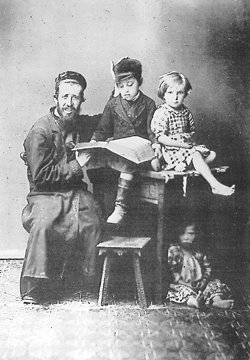
A melamed (teacher) and his students in 19th century Podolia

So, it seems to me, we writers of books have a significant role to play in the furthering and nurturing of faith. And, though God is bigger than anything we or the biblical writers of old can convey, bigger indeed than the Bible itself, we have a rare responsibility. We govern unseen cities already, through our words, and tutor the very children of God.

Hashtags can help….

So…. What’s a #Hashtag?

How can a simple #hashtag help me to promote my book?  Well in many, many ways.

#Confused?

First lets define what exactly you are looking at…. #pleasehelpme.

You probably first saw them on Twitter, that is where a #hashtag originated.

It’s a simple marker of sorts.  #Hashtags over the last year have migrated from Twitter to Instagram, and Pintrest. #clever.

A #hashtag is a marker of sorts that drives you to people’s posts, and drives people to your posts. You can click on any #hashtag and it brings up all other posts with that same tag in… simply put, if you want to promote your book to strangers, a #hashtag will be one of the best tools you can use for social media platforms that utilize #hashtags.

What topics are important to you? Make a list of words that are important to you selling your book.  What words describe your book? How can you find like-minded readers, by strategically #hashtagging words that are specific to you! #buildingabrand #books. If you know what SEO is, Search Engine Optimization, #Hashtags work.

Some simple rules for #hastagging. Never put spaces between words or the #symbol. Use words that are relevant to your tweet/pin/pictures.  A great way to find more followers is to use hash tags on both sides. You do it and other people do it in searches as well….  Find people that are #hashtagging things that you care about and get involved in their conversation. #smartthinking.

Here is a simple straightforward article in the Twitter Help Center, which could help you.

Remember, that #hashtags are fun.  Don’t over use them, but do use them to find like-minded readers.  It could open many doors for you… people will find you and you will find people.  #hashtags  #winning.

Creative Venue Planning

If bookstores are the only place you’re signing and talking about your books, then you’re missing the boat.

Perhaps even literally.

In the last year, in addition to bookstores, I’ve talked and signed books at gift shops, diners, book club gatherings, Rotary Club breakfasts, libraries, senior community dinners, and summer festival booths. Since my novels are about a bird lover, I’ve also signed books at bird feeding supply stores and an annual birding meeting, not to mention an international owl festival, a regional hummingbird celebration, and the National Eagle Center. At every venue, I’ve sold more books than I have at any bookstore signing, not to mention the new readers I’ve found and the publicity such events generated.

So how do you pack your calendar with venues that will work hard for you? The answer is Creative Venue Planning, and here’s my three-step recipe:

  1. Look past your story, and instead, brainstorm your book’s topics. Like trying to identify keywords or tags for a blog, pulling out the topics, and even specific characters, in your book can lead you to new audiences and venues. Since my protagonist began birding as a child, I give talks about the importance of nature education for kids at family-oriented programs. A restaurant I included in one book happily hosted a signing for me, and displays my books in a prominent place. HINT: Does one of your characters run a small business? Your local Rotary Club or Chamber of Commerce might be delighted to have you come speak to them about how that plays into your novel. Many groups are eager for new ideas and personalities to book for their meetings. Find a link between them and your work, and you’ve got a foot in the door.
  2. Research opportunities. What groups in your community need speakers? My current goldmine is senior living communities who have busy activity calendars for their residents. Since many of my readers are older and enjoy birdwatching, speaking at these venues is a perfect fit for me. I’ve learned that many communities have on-site book clubs, too, and having an author (you!) available to join a gathering can mean a shortcut to your book being selected for reading. HINT: Would you be willing to talk to a high school class about something related to your book? Teachers are generally thrilled to have a guest speaker, and while you may not make any sales in the classroom, you can bet on word-of-mouth publicity (and perhaps a small fee from the school field trip budget!).
  3. Pick up the phone. Nothing beats personal contact when it comes to booking events at creative venues. Find the right person to ask (research on the internet or by phone) and prepare a short, convincing, sales pitch as to how they’ll benefit from your visit. Offer to email your photo, a brief bio, and talk description for their use in promotion. Take your bookmarks to hand out, and books to sell and sign.

What’s on your creative venue plan?

Top 5 Self-Editing Tips: Intention

In my first post last month on the topic of the Top 5 Self-Editing Tips, I covered in detail how a novel is structured and how you can be more aware of how to build the structure of your novel.

This month, let’s concentrate on an aspect of self-editing that writers rarely hear much about:  intention.

Merriam-Webster’s Collegiate Dictionary defines intention as “(1) a determination to act in a certain way: resolve; (2) import, significance; (3) what one intends to do or bring about.”

The definition of intention includes other topics, but for our purposes, we can examine the synonyms for intention and determine how we might find intention in a piece of writing, whether fiction or non-fiction. Synonyms: intent, purpose, design, aim, end, object, objective goal.

Once you finish your first or second draft, ask yourself, “Did I fulfill my overall intention for writing this piece, and did I achieve my intention in each scene or section?”

Whoa! That sounds like a tall order, doesn’t it? You might be thinking, how long am I supposed to spend on an edit? The answer: as long as it takes. Because if you have not fulfilled your intention in writing your book, then how can your reader know what you were trying to say?

Let me make this a little simpler by starting with a chapter or even a part of a chapter. Did you intend to make your character unsympathetic in this scene? If not, then you have not communicated the soul of your character to the reader. You have not fulfilled your intention. The reader might even think, “Marsha would never say that. Why is she being so rude?”

On a greater scale, your story or your non-fiction book should have an over-arching aim or goal. It is the road that connects you to the reader and pulls the story along. Yes, even a non-fiction book is more successful if it tells a story that persuades your reader to believe in what you’re writing about.

Your road will twist and turn in a novel, but you, as the author, should always keep the goal in mind. You don’t want to tell your reader up-front what your intention is, but you should know where you’re headed. If you take readers down a rabbit trail and nothing of significance happens, they will soon stop following you through the brush.

Only you know what you want to achieve in your book. If you’re leading your reader down a “road less traveled,” the trip may be leisurely or it may zip along. You may travel on a super highway, on a country lane filled with potholes, or you may walk with your reader down a garden path.

But if you veer off that highway/road/path just because you have a sudden inspiration, your book may be filled with pointless arguments (non-fiction) or characters who pop out of nowhere to deliver a useless piece of dialogue (fiction).

My intention in this post is not to say that plotters are better writers than pantsters. You can write your book as you please, but if you know your beginning and where you aim to end—intention—then the journey will be that much sweeter.

To be continued…

How will you self-edit your novel or non-fiction book to make sure your intention is clear and that you have achieved your goal in every chapter? 

Top 5 Self-Editing Tips: Structure

Writing is rewriting, and rewriting is self-editing. “But isn’t that the job of the editor after I’ve made the sale?” No. Some writers think running spell-checker is self-editing. Not so much.

“But won’t rewriting my work edit the life out of it?” No, but it will catch the eye of an agent or editor as a well-written manuscript and may lead to a sale.

Obsessive editing during the writing process will destroy your work. However, after you’ve written the first draft, gain some distance and perspective on your manuscript by setting it aside for a few weeks or a couple of months. Now it’s time to rewrite.

Here are my top 5 self-editing tips in their order of importance for polishing your work to a high sheen.

  1. Structure: Think of the structure of your work as an arched bridge spanning a great river. If the contractor takes short cuts (such as using less cement, steel, or fewer bolts) because she’s bored with the process and rushes to the end, the bridge is weakened and will collapse.  The same holds true for both ends of the bridge. If too much cement is used at either end of the bridge, it will collapse from the added weight.

For the purposes of this post, I’ll concentrate on the structure of novels. If the structure of your story is solid, the reader will continue to turn the pages until the ending scene.

The material of the structure is comprised of the elements of the story arc (the basic story thread) held in place by a beginning, middle, and end. Pretty simplistic, huh? Yet the three-act structure has worked since Aristotle’s days whether you write plays, scripts, short stories, or novels.

Sydney Harbor Bridge

Some authors maintain they have a four-, five-, six-, or even eight-act structure. I maintain if you break down the parts of their story arcs, you will discover classic Aristotelian structure.

Using the bridge analogy, a car drives onto the bridge. This is the point in the novel when you can lose a reader in the first page or two. I’ve thrown many a book (or manuscript) on the pile beside my bed if nothing happens right away. The author might as well have written “blah, blah, blah-blah, blah.”

A novel that piques the reader’s interest starts as far into the story as possible. I don’t want to know that the protagonist’s parents left him stranded in a snowstorm when he was a toddler and that’s why he’s terrified of snow (or abandonment). That’s back story. The story should begin with stasis (a state of equilibrium) and then the main character, pressed with conflict, reveals her goal.

One of my favorite movies is Indiana Jones and The Raiders of the Lost Ark. The story throws you into the action, and the back story―Indy’s character, profession, the setting, and the antagonist―are revealed as Act 1 plays out.

As the story progresses into the middle (Act 2) and the bulk of the novel, you should have rising and falling tension as your protagonist encounters numerous obstacles or crises.

The main turning point, or big surprise, comes in the middle of the novel. By this time the reader believes he has the story figured out. You need to turn his assumptions on their head. The major turning point should be such a shock that no one sees it coming. It should keep your reader up at night turning pages.

The crises continue. Will he? Won’t she? Oh, no! What will happen to this character your reader has invested her time in? Will everything turn out all right? How will the story ever end on a happy, satisfying note now?

Tension mounts and we reach another major turning point before we head into the final third act. Every turning point should be a surprise to the reader.

The crises are unrelenting until we reach the climax halfway through the third act. The protagonist faces off against the antagonist. The clash of the titans ensues. A woman faces her attacker or her paralyzing fear. The antagonist is not always a person. A man pushes his wife out of the path of a stampeding herd of cattle. Will he live? You get the picture.

Tie up all the loose ends of your storyline in the denouement―the final resolution of the plot or story arc. Is your ending satisfying? Does the main character live happily ever after? If you live and write in America, trust me, she better if you want to succeed as a professional author. Americans are eternal optimists.

To be continued…

How will you self-edit your novel to make sure your structure is strong enough to carry your storyline through to the end?

Photo credit: Sydney Harbour Bridge with the Opera House in the background by Ian.

Revolution, not Resolutions

So, how are you coming on those New Year’s resolutions?

(Are those crickets I hear?)

Yeah, me too.

That’s why I’ve been thinking about doing away with the whole resolution thing (or “thang,” as we say here in the Lone Star State). Instead, I’m praying for a revolution. After all, without God, I wouldn’t be able to accomplish anything…even getting out of bed in the morning.

I’m greedy this year, but in a good way. I’m greedy for more of His presence, more answered prayers–not just for me, but also for all those who are hurting–and more of His words in my ear, on my lips, and in my mind.

I’m asking God…

  • To take my thoughts away from the markets and focus them on stewardship. I truly want to honor Him with my writing. This means (gulp!) that I’ll need to ask for His strength to be more disciplined. When He gives me an idea, I need to turn off the television, put down the latest decorating magazine, and write–without worrying about how the piece will fit into a publisher’s plans. Oh, God, help me stop obsessing over markets and contracts and instead be faithful to write the things you want me to write.
  • To help me be content. I’ve always been goal-oriented…to a fault. Too often, my ambitions led me off-track. Instead of being led by the Spirit, I’ve been driven. And since I’m being honest, I’ll admit that I have compared my blog stats/Amazon numbers/speaking schedule to other writers and felt insecure–or, worse, envious. I’ve browsed bookstore shelves and gone from admiring to coveting. I’ve admired another writer’s website and wished it were mine. Oh, Father, forgive me. Help me to know the secret Paul talked about–of being perfectly fine right where you’ve placed me….whether on bestseller lists or in remainder bins, in Barnes and Noble or on my blog, on a designer site or a “homemade” masterpiece. You have given me so much! Help me to count my blessings instead of my bills. In the midst of economic uncertainties, may I covet nothing but your peace.
  • To fill my heart with simple joys. Too often, I get mired in the past (Should I have Twitter-ed that? What did he think of my idea? Did I mess up my career for good this time?) or the future (Will I make enough $$$ for us to have a real vacation this year? What’s my editor going to say?– and–How in the world will I find time to write when I actually get the contract?!). What I really need to do is 1) take a deep breath and 2) let ordinary miracles bowl me over, preferably every five minutes. Frederick Beuchner wrote, “Life itself is grace.” So are used bookstores, computers, and online friends.  Abba, remind me to read and write more deeply. Prod me to study and meditate on scripture, instead of just quoting from it for my latest WIP. Rip my blinders off so I can appreciate every connection and blessing you’ve given on this path you’ve ordained for me.  
  • To show up and show off. I once had a music director who prayed a version of this during Wednesday night choir practice. He believed that we should spend as much time talking to God together as we did rehearsing…and boy, was he right. This same director invited anyone to sing in “his” choir–church member or atheist, bank president or convenience store clerk. Many who came out of their love for music–or just pure curiosity–stayed week after week, and their lives were inevitably changed. They showed up, and God showed off. Lord, never let me forget that I can do nothing without You. In You, and You alone, I move and live and have my being. You are my source, my guide, and my goal. Please show up and show off in my career, family, and relationships. Do what you do best, Lord. 

A few years ago, I led worship at a ladies’ retreat. The speaker was wise, peaceful, and totally centered on Jesus. I wanted what she had, but I guess I was afraid to ask God for such a faith (maybe I knew it would be costly).

After dinner one night, she and I were discussing the books I had written (my first three books had come out, but then I received a ton of rejections and was sure my career was over), and she mentioned that she was considering writing a book based on her retreat material.

“I’d love to write more books,” I admitted, “It’s a passion of mine. But I can’t get another contract, and I don’t have the money to self-publish. It’s really discouraging!”

She looked at me and smiled. The next words out of her mouth went straight to my egocentric heart and lodged there, like a stubborn splinter.

“I don’t need a contract,” she said. “I just need more of Jesus.”

I’ve been working that out ever since.

A How-To for Meeting Editors

Book acquisitions editors are some of the busiest people I know and the most elusive. If they admit what they do for a living, people want to send them their grandmother’s self-published poetry or a best friend’s novel that she wrote in high school.

They aren’t flashy dressers. They don’t talk about publishing trends in the checkout line. And at parties, if someone asks them what they do for a living, they mumble and then wave at an imaginary friend. “Nice meeting you,” they say before darting to the other side of the room.

Then how can a writer catch a break? Ah, my dear contestant, you must know the secret lives of editors…not bees. Following are ways to meet an editor:

1. Make friends with other writers, especially those who have published at least one book.

They’ve made the leap, and many are willing to give you advice or help you achieve your dreams. Attend their workshops at writers’ conferences, listen carefully, and ask thoughtful questions. Learn the craft of writing and how to market a book while you write your manuscript.

Published authors know editors, and if you’ve written a manuscript that other authors like, they’ll be more willing to give you a recommendation or an endorsement.

2. With your polished manuscript in hand, query an agent.

Make sure to read an agent’s submission guidelines before you approach them, or pitch your project to an agent at a writer’s conference.

Attend the best conference you can afford. One of the perks of attending a conference is that you can request an appointment with an agent. Agents know editors, and they know whether your manuscript is ready to be published. Listen to their advice, and rewrite your manuscript if necessary. An agent can be your best ticket to meeting an acquisitions editor.

3. Acquisitions editors attend writers’ conferences as well.

They set up appointments with agents, and they take 15-minute appointments with conferees. Sometimes they will agree to critique your manuscript for a fee.

4. Attend workshops taught by editors at writers’ conferences.

Editors teach a variety of workshops that vary from character development to plot development to self-editing. They will tell you what kinds of projects they’re looking for so that when you get your chance to meet an editor, you’ll be prepared.

5. Attend meetings of a local writers’ group.

If the group is large enough, they will invite published authors to speak, and through the friendships you make with authors and other members of the group, you can support each other through the process of becoming a published author. If you don’t have a local writers’ group, consider starting one.

Finally, what’s the best way to meet an editor? Keep writing and improving your craft until someone takes notice of you. Editors love fresh, unique voices. You could be the next American Idol of the publishing world.

Finding a Publisher: 10 Steps to Success Part One

If you are a first time author and looking for a publisher, you need to know several facts about the book publishing business. It’s a big ocean to dive into, and remember: there are sharks. Like any kind of business, and book publishing is a business, there are people who want to make a quick buck out of naive and vulnerable authors, so avoid them at your peril.

Step 1 – Write the book. Publishers are not really interested in ideas. They want to see proof that a would-be author has the skill, the stamina and the discipline to finish the job. Publishers expect that a novel should be about 80,000 to 100,000 words long and, taking an average, that’s about 300 pages.

Step 2 – Before you send your MS to a publisher, have the courage to show your creation to someone who will give you an honest assessment of your writing. Don’t ask your spouse or best friend because they are not the best people to give you an honest report. Your local librarian might be a good place to start. It’s a harsh truth, but unfortunately the writing world is overcrowded with writers who have great expectations of themselves but have little talent.

Step 3 – Okay, you have written a book, and your honest critics say it is brilliant and should be published, well done! Now is the time to do some hard work trawling through the books, internet sites and writers groups who can aid you in your search and provide professional help and good advice.

In the UK there is a very useful publication called The Writer’s Handbook, and it is up-dated every year. The editor Barry Turner has done much of the leg work for you, and his handbook really is a useful and complete guide to agents, publishers, editors and copywriters.

I am sure there must be a similar publication in the USA, so go out and get your own copy. I know it seems daft, but you need to know your own book, what genre it is and even what sub-genre it falls into. Next get a highlighter pen and work your way through the handbook and mark out those publishers who publish novels similar to your own. Be meticulous in this exercise, for it will save you time in the long run. It’s a total waste of time sending your romance story to a publisher who only publishes science fiction. Read the small print carefully.

Step 4 – Having got your list of prospective publishers then check out the minutiae of the submission guidelines. Many publishers will not accept unsolicited MS. So do not waste your time, money and effort sending your MS along to one of these companies. When they say they don’t accept unsolicited MS, they mean it, and they probably have their own arcane reasons for this rule. 

Step 5 – There are many publishers who do accept ‘unsolicited’ MS especially from new authors, in the hope they are going to sign-up the ace in the pack and that might just be you.

Your publishers list may be getting shorter by now, but this is good because you are refining your search, and with every step you are closer to finding the right publisher for you.

What are some steps that you took to find the best publisher for you (if you have one)? What are steps that you need to take to find a good publisher for you and your book (if you don’t have one)?