The 15-Minute Writer, Part 4: Brain “Rules” for Writers

file0001052648856 (1)Busy authors and authors-in-training need all the brainpower we can get. (Especially us writer-moms; I’m convinced that some of my brain came out with each of my two children!)

Therefore, I listened VERY closely during a recent writers retreat as John Medina, author of Brain Rules, spoke about brain science, and how it can help writers become more productive.

Before we begin, we need to realize that there are no real “brain rules” for creatives. “I’m guessing as to what will help your creativity and output, according to the brain research that’s out there,” Medina told us. With that caveat in mind (pun intended), here are a few practical lessons I gleaned from the two hour-long sessions he led.

First, our ability to be creative is directly related to feeling safe. Our minds are instinctual; therefore, we need to find a place to write where we don’t feel threatened emotionally, creatively, or physically. Maybe it’s a coffee shop where the server knows our favorite drink, or a corner of our home where we can thoroughly relax.

Try this: ask yourself: where can I create without someone interrupting and/or discouraging me? Journal for fifteen minutes about this, or spend that time setting up a more nurturing space.

Second, we need to sleep to learn. Medina says, “We not only rehearse what we’ve learned as we sleep; we also rehearse what we don’t know, and try to solve it.”

Try this: do you have writer’s block? Work on your problem manuscript two hours before bed. Need to finish something within a few hours? Set a timer, and take a refreshing 15-minute nap.

Third, we all have times of the day when we’re most productive. Medina calls these natural body rhythms “chrono-types,” and he encourages authors to pay close attention to them.

Try this: work when you’re most creative. Are you a lark (morning person)? Set your alarm to write before work or school. Are you a might owl (night person)? Write after the kids are in bed. Maybe you’re a hummingbird (afternoon person). If so, try to write during your break at work, even if it’s only for fifteen minutes.

Fourth, exercise boosts cognition and buffers against the negative effects of stress. Medina cited a study which looked at two groups of people as they transitioned through the aging process. The active group suffered less depression and dementia, retired later in life, surrounded themselves by family and friends, and aged beautifully. The sedentary group aged “terribly,” according to Medina. “They endured depression, anxiety, medical problems, loneliness–and they looked old.”

He then mentioned a study in which soldiers exercised before and after Chinese language lessons. “There was a one hundred percent change in cognitive function when the soldiers exercised before trying to learn Chinese,” he said. “Other studies show that if you keep up regular exercise for three years, you actually improve memory!”

Try this: Medina vows that five aerobic sessions of 30 minutes per week is all it takes to get the massive brain benefits from exercise. Those sessions can also be two smaller ones (say, 15 minutes). He also says that your mental “sweet spot” will occur right after you exercise. So schedule a short exercise session right before your writing time. Your brain–and your body–will thank you!

Read part one, two, or three of this series.

Generating Buzz Through Book Reviews

beeOptimizing buzz from book reviews can be an key part of your book’s overall marketing campaign, so it’s important to make time for it, even if you’re like me and writing isn’t your primary day-job. 

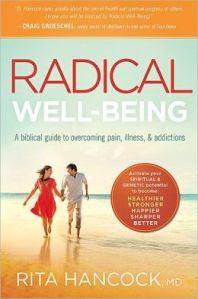
Allow me to share a few tips that helped me get SIXTY-THREE book reviews and interviews for my new book, Radical Well-being, while suffering only a short-term, reversible case of utter exhaustion. Yay!!

(1) Establish your platform and develop relationships on the Internet long before you ask people to review your book.

When you pitch to book reviewers, it helps if you already have an established presence on the Internet and elsewhere. That’s why you need as many of these as possible (I included links so you can see what mine look like): an author website, Facebook fan/author & book pages, an Amazon.com author page, at least ten positive reviews on your book’s Amazon.com page, a Pinterest page, a Linked-In profile, a video book trailer on Youtube (see my latest book trailer, for example), a Twitter account, a blog (I actually created an interactive forum for discussion about my diet book–with a blog embedded in it), an Internet talk radio show, a newsletter or e-zine, magazine articles, and as many TV and radio appearances as possible. Don’t necessarily shoot for perfection on your Internet pages before you publish them. Just get your pages up and running. You can improve them gradually, over time, if need be.

(2) Pitch to every reviewer you can, and do it early.

I started collecting names and contact information for book reviewers, columnists, newsletter producers, and bloggers in my specific niche about six to nine months before the official launch date for Radical Well-being. As soon as the reviewers responded with interest, I asked if they would accept an electronic version of the book when it became available. If the answer was “No,” I put them on a separate list to receive a bound galley copy (a rough version of the book).

(3) Ask your publisher for an electronic version of your book to send to reviewers early. Also, get the cover art to include with the book file.

Almost half of the sixty-three people who agreed to review my book were willing to accept an electronic copy. The copy was watermarked by the publisher to deter widespread bootlegging. Attach the book’s cover art, a short author bio, and a book synopsis to the book file when you email it to reviewers, and send sample interview questions if the blogger wants to run an interview about you, as well. Bloggers love it when you suggest questions they might want to ask you.

(4) Try to coordinate reviewers to publish on the day of your book’s actual launch date.

Start well in advance. Otherwise, you won’t allow your reviewers enough time to read your book and write their reviews before your launch date! I had to scramble in this regard, as my publisher unexpectedly moved up my book’s release date by two months! Yikes! To help my publicist get the galley copies out in time, I actually printed out cover letters and mailing labels and snail mailed them to her. That way, all she had to do was put the galleys in the envelopes, insert my signed cover letter, affix the mailing label, and send them off. It wasn’t necessary for me to do that, but it freed her up to get me more media hits than I could get on my own, so it was worth the effort on my part.

(5) Solicit radio interviews well in advance of your book’s launch date, if possible.

You don’t have to be a major author to get radio spots. Try for Internet radio! Some hosts with smaller audiences may be eager to have you on. The nice thing about radio is you can PRE-record shows, thus freeing yourself up for other buzz-building activities on your launch date. Plus, you don’t have to get all dressed up or travel far from home like you do with TV. As a side note…. when you pitch to radio producers, keep in mind they get hundreds of pitches a day. Odds are high they won’t make it past your email’s subject line if it’s boring, so write one that’s enticing! My subject line read, “Christian IvyLeague MedDoc/radio guest/author w/ unlimited FREE Kindle diet book downloads for ALL ur listeners, Jan8-12.” Yes, you read that right. I offered my first book, The Eden Diet, entirely FREE, in exchange for a chance to talk about my second book, Radical Well-being. (By the way, you can have my diet book for FREE, too, if you want it. It’s FREE on Kindle through January 12, 2013. Just follow the link above, which I shamelessly worked into this point. Do you see what I did there? Use every opportunity!)

(6) Make marketing opportunities for your book anywhere possible.

The launch date for my new book, Radical Well-beingA Biblical Guide to Overcoming Pain, Illness, and Addictions, was YESTERDAY!!!! Thus, I wrote this blog entry ahead of time and strategically set it aside for publication today. As you can see, preparing promotional material in advance is critical if you want to achieve optimal buzz around the time of your book’s launch.

(7) Send reminders to your reviewers and radio hosts.

Don’t expect everyone who promised you a review or an interview to necessarily remember your release date. In fact, just assume they already forgot. Send them a “thanks again for agreeing to publish my review on [insert launch date]. May I provide any further information to facilitate your writing the review?” Many reviewers responded with a “I’m so glad you reminded me…” or “Would you mind reminding me again in two weeks? I have a lot going on right now.”

(8) Thank your reviewers with back-links to their reviews. 

It’s only courteous! And it’s good for relationship-building. Keep in mind that you might write another book someday and might therefore solicit reviews again from these bloggers! As for me, I intend to publish “thank you’s” and back-links in the February 2013 edition of Dr. Rita’s Christian Health Newsletter, which goes out to over 3400 subscribers. I also posted thank you’s to my reviewers on Facebook and elsewhere.

As you can see, it isn’t easy to create buzz for your new books, but starting early, working hard, and establishing good cyber-relationships certainly helps. A little bit of OCD doesn’t hurt, either.

Do YOU have info to add, here? If so, I’m all ears! What additional advice do YOU have regarding how to solicit and coordinate book reviews and interviews to optimize book buzz? Any and all comments are appreciated!

Blessings from Dr. Rita!

The Jealous Writer

Are You a Smart Writer?

Confession time. I have a problem with writer jealousy. It’s not a serious case, but enough that it requires energy and effort to keep it at bay.

As a child, I was known as The Smart One. But like most who want what they don’t have, I preferred any of these titles, The Cute One, The Funny One, or The Sweet OneAlas, I wasn’t gifted with any of those labels. And I allowed my thoughts over what I wasn’t to overshadow the gift of who I was.

As a woman, I know discontent. Over my hair color, body shape, shoe size, and the shade of my eyes. Insecurity reeks a crushing blow to productive energy. I’d love to recapture the minutes and hours of my youth, spent on wishing I looked more like someone else. I could reinvest my lost time in doing something meaningful.

Are You a Funny Writer?

As a professional author, I too battle the green-eyed monster. When I read an eloquent beauty, a humorous author, a sweet wordsmith, or a creative powerhouse, I often wish I wrote like them. I tremble in the shadows of a thick plot, riddled with mystery, nuances, and intrigue. I covet the ability to paint rich landscapes, where every small touch blends to perfection. I feel sad that I can’t make readers belly laugh like my hysterical peers. My heart’s desire is to embellish dialogue with verbs so strong that the reader forgets where they are as soon as they climb into the story. 

Are You a Sweet Writer?

But there’s hope for a jealous writer like me. 

  • Through age, I’ve learned it’s okay to be me, as designed by God. The child in me couldn’t see the benefit of my unique outlook on things. But now I know if the building’s burning down, pretty, funny, and sweet won’t get you out.
  • Through maturity, I’m learning to appreciate my gifts. I am who I am, and so are the irrevocable qualities others see in me.
  • I’m a serious student by nature, and can’t help sharing God-inspired knowledge and wisdom. Like a sponge, I absorb and release.

    Are You a Cute Writer?
    Are You a Cute Writer?

I don’t know if I’ll ever get past reading a hilarious story, and wishing I could write like its author. But I resolve to remember that just as an arm can’t do an ear’s job, neither can I write what someone else is called to. I may always long to write a great novel, but not until I finish the current race set before me.

Jealous writers who allow themselves to wallow won’t have time or energy to produce their own good work. I am a professional, aged-to-perfection, mature author. This is how I choose to focus my thoughts, so I can create the projects I’m uniquely qualified for. After all, if I don’t write them, who will?

Do you ever struggle with writer’s jealousy?

Write From the Truth of Who You Are
Write From the Truth of How You are Wired

Noli Me Tangere

This painting is entitled ‘Noli Me Tangere’ and was painted by the Russian artist Alexander Ivanov in 1835. It depicts the moment when Mary Magdelene recognises Jesus outside the empty tomb. The Latin inscription translated is ‘Do not touch me!’ Jesus forbids her strongly to lay her hands upon him, but why?

Is there some mysterious process in action going on here, as yet unfinished, whereby Jesus’ body is undergoing change from his former humanity back to his eternal divinity? I do not think that this is the case. I think the answer to understanding this portentous moment is instead to be discovered not in Jesus, but in the state of his beloved disciples at this time.

In the darkness of night the soldiers of the Sanhedrin, with weapons drawn, came to arrest Jesus. Judas’ kiss of betrayal sparked off a violent reaction in the followers of Jesus, encamped with him at the garden of Gethsemane. The grove of olives became suddenly a place of pandemonium, as soldiers took hold of Jesus, as Peter and the other disciples tried to prevent his arrest. Other followers of Jesus, in fear of their own lives, fled. So fearful was one young man’s response that he ran away naked, leaving his clothes in the hands of a surprised soldier.

Later on, during that fateful night of Jesus’ arrest, trial, and flogging, the disciple Peter, Jesus’ most outspoken defender, vehemently denied that he ever knew the Son of God and not once, but thrice, said to his accusers, “I do not know him!”.

The disciples, almost to a man, were scattered abroad. Afraid for their own lives, they hid themselves away, whilst their Lord was brutally being beaten, broken, and finally crucified on the Roman Cross. They were all terrified.

What then happened to them? Between the time when they dispersed so easily, running away like cowards, and the moment after the resurrection, they somehow became men and women victorious in their faith.

Afterwards, they were now profoundly prepared to stand up for Jesus in the face of violent opposition. No longer did they fear for their safety or even for their own lives.

The same adversaries who had only days before crucified Jesus were now persecuting his followers.

A momentous, phenomenal, and very personal transition occurred in their hearts, one which galvanised their faith in Christ. The metamorphosis was not in Jesus, but in the disciples. Jesus is the same yesterday, today and forever.

Look again at the painting above. Why did Jesus forbid Mary to touch him? It is as Mathew Henry says in his commentary of the Bible. Mary was ready, on encountering the risen Christ, to express her joy by affectionately embracing him. The original Greek translation of the passage in the Gospel of John does not use the word ‘touch’ but instead uses a far more revealing word in the context of this meeting. It is not ‘touch’ but ‘cling’ that is forcefully employed here.

Jesus says to Mary ‘Do not cling to me.’ In other words, she must not be familiar with him as she was in former times. She is not to dote upon his bodily presence, but is now to be in spiritual communion with the risen, resurrected Christ.

Of course, at this time she cannot fully comprehend his meaning, for the Holy Spirit had not yet come.

Mary was trying to cling on to her former joy in her relationship with Jesus. But soon she was going to experience a far more profound and eternal joy.

As Christians we can look upon the cross and be grateful for God’s mercy and know that we can have true salvation and be reconciled with the Father because of the staggering sacrifice that Jesus made for us, by enduring the pain of crucifixion and taking upon himself the sins of the whole world.

We need to move on from the cross and ask ourselves what is the difference between Jesus the Man and Jesus Christ, resurrected? To live the ‘resurrected life,’ we must focus all our attention on the resurrected Jesus and let go of Jesus the man, just as Mary was bidden to do.

The disciples underwent an awesome life-changing alteration when they perceived the resurrected Christ. They came to know that Jesus was not just a godly teacher, not merely the Jewish Messiah, but rather that he was, incontrovertibly…God! A truth they had not understood before when they had walked and talked with him. At Pentecost, after Jesus had ascended to the Father, the disciples all received the Holy Spirit. Their transformation from mere disciples of a Rabbi to believers in the Son Of God was complete.

Everything they had been taught from the lips of Jesus suddenly became mind-blowingly, irrefutably real. All their fears vanished, their confidence in him was made new, and their spirits were fearless.

They had become, by the grace of God, Christians… little Christs. They had been given the responsibility of taking the message to the entire world: that Jesus Christ has risen, is our Lord and Saviour, and is seated beside the Father in Heaven. They were now profoundly ‘in Christ and He in them.’

The Power of People Watching

“How vain it is to sit down to write when you have not stood up to live.”
Henry David Thoreau

FFISummer092253Almost four years ago, I stood in an apartment parking lot with twenty-three strangers from all over the country. We made awkward conversation, silently sizing one another up and wondering how people so different would ever survive a semester together.

That summer was the best of my life with some of the most unique personalities I’ve ever had the privilege to know. In class, we studied personalities, strengths and weaknesses, character, opinions, and worldview. I knew how each person reacted in the midst of passion, anger, joy, or grief. I knew struggles and victories. Our common denominator was a desire to lead and a heart for the Lord.

And I had to know my characters the same way.

Through these people and because of that summer, I had ideas to propel me into my first book. My characters took on the physical traits and personality of one of my roommates. My supporting characters share names in common with some of the guys.

The best characters are the ones the reader can relate to as a close friend, soul mate, enemy, or victim. The best stories emerge from the people, places, and experiences around us.FFISummer090523

Spending night and day with these people for two months taught me the beautiful complexity of people’s stories. It also taught me the depth of people. The best stories come from people watching, from intimately engaging in life, and embracing the good and bad.

As I work on my current WIP, I watch the people around me. I study emotional reactions, goofy quirks, language patterns, clothing style, facial expressions, and character. Slowly, my characters take shape on the page. Fair warning: if you are in my vicinity, one of your odd habits may make it into my book.

As writers, we tend to isolate. Or at least some of us do. We are content to people watch without interacting. Big problem. As Thoreau said, writing is flat if the writer has not lived.

Get out of your chair. Abandon your laptop. Spend time with friends and family. Sit at your favorite park or Starbucks. Take a note pad and record people’s conversations. Listen to the words they use, how they form sentences. Interact with the guy behind the counter or the people walking their dogs. Engage them in conversation.

Live and live well. Abundantly and fully. Engage with people intimately, not for the sake of a story or character, but because every person we cross paths with has a story that can teach us something about life and the Lord and yes, even writing.

People are weird and quirky and complex. We all have different personalities and reactions. People are full of surprises and opinions. Fashion your characters that way, too. God created people in His own image. Fall in love with them. Embrace the uniqueness. Embrace your uniqueness. Then write with eyes wide open, heart full, and a mind overflowing with memories to make your stories rich.

Have you people watched lately?

Goals?!?

NewYearDayIt’s that time of year where we set goals to make up for the mistakes we made the previous year grow as people. Isn’t that really what New Year’s resolutions are all about? Giving up some of those vices (like eating too much chocolate) for better health or starting down a path toward a dream we’ve held maybe too privately close because speaking it out load would actually mean we would need to do something about it.

Hmm . . .

I have to confess . . . I do make New Year’s resolutions every year. I can’t say that I’m all that good working on them but I still try. Maybe less than doing a New Year’s resolution, I believe in goal setting. I think it keeps us active in this life to be shooting for something . . . whatever it might be in your world. But I’ve learned some things along the way about setting goals that might help you achieve your goal(s) this coming year.

1. Have an overall dream (I’m going to finish my novel!) but then set smaller goals along the path.

For YEARS, I said I was going to finish my book but until I sat down and divided up that elephant into smaller achievable steps, it didn’t happen. What would get you there? Sometimes it’s hard to know HOW to actually do the work of finishing a novel so here’s what I’ve found and I’m not a super-speedy novelist.

Writing 1,000 words a day (when I’m not doing a 12 hour nursing shift) is fairly easy. Writing 2,000 words a day is my general maximum before my brain starts to meltdown. This word count should happen in about three hours (if you stay off social media and generally know what you’re going to write about.) Aim to write 20,000 words/month. Really, that’s just 10 days staying completely on task and getting 2,000 words on the page. Four months of JUST doing 10 days of 2,000 word counts and you have a first draft! Don’t edit yourself. Just get the words on the page. You can’t edit an empty page. And now you have an 80,000 word NYT Bestseller document that will need a lot of work–but you DID IT!

2. Make the goal realistic for you and your life.

I’ve been working out with a personal trainer for a couple of years. I needed to lose some weight (a lot!) and knew I needed the accountability of another person to help me do it. I am almost to my goal and my trainer would like a much faster process than me. He set a CRAZY weight loss goal for December (hello, Christmas cookies) and in my mind I said, it’s not going to happen. And so, it didn’t happen. I did, though, achieve the smaller goal I set for myself. If what I outlined above makes your eyeballs glaze over, cut it in half or one quarter but just get started.

3. Have an accountability person.

It really does help. I’m not talking about a critique partner though those are good, too. What you need is just someone in your corner (thanks, Casey!) who will keep tabs on you and your goal. Send you an e-mail to ask if you’re making progress. Celebrate your victories by posting lots of these (!!!!!!!!!!!!!!) on Facebook.

4. Don’t give up.

I was a person who used to give up easily. If I ate bad one day, the whole month could be shot. Everyone has bad days and doesn’t meet their goals. My trainer confessed to me just today about eating handfuls of chocolate covered raisins, pizza AND french fries which made me a little too joyful inside BUT he’s already back in the gym. When you fall off the path . . . the next day . . . sit back down and get back to it. Life happens but don’t let it run you over.

5. CELEBRATE!

As you’re traveling down whatever goal path you’ve set for 2013, celebrate the small achievements (making that monthly word count goal) and the big achievement (Yes, I DID finish that novel!) with lots of chocolate and responsible drinking exercise and then do it again.

Set another goal.

So, what about you? What’s one goal, writing or otherwise, that you have for 2013? How are you going to achieve it?

WordServe News: December 2012

Exciting things have been happening at WordServe Literary!

As the year comes to a close, we’re so very grateful that WordServe Authors released 83 books in 2012, and signed 80 book contracts for nearly 119 books to release off in the future.

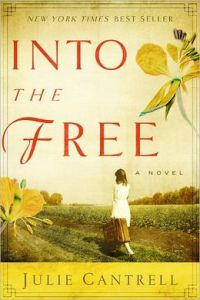
IntotheFreeJulie Cantrell had the agency’s first New York Times Bestseller in many years with her book Into the Free. It also garnered a starred review in Publisher’s Weekly. A rarity.

We had several books climb over the 100,000 copy mark:

* The Secret Holocaust Diaries of Nonna Bannister, written by Denise George and Carolyn Tomlin (Tyndale)

* The Devil in Pew Seven by Rebecca Alonzo, with James Pence (Tyndale)

* My Flight to Heaven by Dale Black (Bethany)

* Edge of Apocalypse by Tim LaHaye and Craig Parshall (Zondervan)

* Linspired (adult and YA book together) by Mike Yorkey (Zondervan)

And we’ve had several authors show up on national shows:

* Rebecca Alonzo on Dr. Phil (twice)

* Lauren Scruggs appeared on several shows in November at the launch of her book, Still Lolo.

These WordServe authors signed their FIRST BOOK CONTRACT in 2012:

* Anita Agers-Brooks (Leafwood)
* Leigh Ann Bryant (Authentic)
* Deb DeArmond (Leafwood)
* Rebecca DiMarino (Revell)
* Jan Drexler (Love Inspired)
* Michael Hidalgo (IVP)
* Heather James (Kregel)
* Amanda Jenkins (Tyndale)
* Caesar Kalinowski (Zondervan)
* Heather Larson, with David and Claudia Arp (Bethany)
* Tracie Miles (Leafwood)
* Jerry and Caroly Parr (Tyndale)
* Christina Powell (IVP)
* Rachel Randolph, with Becky Johnson (Zondervan)
* Tina Samples (Kregel)
* Lauren Scruggs (Tyndale)
* Amy Sorrels (David C. Cook)
* Mandy Stewarad (David C. Cook)
* Janalyn Voigt (Harbourlight)
* Jeremy & Jennifer Williams (Thomas Nelson)
* Tricia Williford (WaterBrook)

These WordServe authors had their FIRST BOOKS published through a traditional publishing house:

* Julie Cantrell, Into the Free (David C. Cook)
* Arnie Cole, Unstuck (Bethany)
* Katie Ganshert, Wildflowers from Winter (WaterBrook)
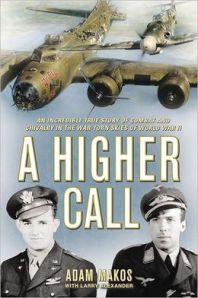
* Adam Makos, A Higher Call (Berkley Caliber)
* Jay Pathak/Dave Runyon, The Art of Neighboring (Baker)
* Zeke Pipher, Man on the Run (Howard)
* Lauren Scrubbs, Still Lolo (Tyndale)
* Helen Shores and Barbara Shores Lee, The Gentle Giant of Dynamite Hill (Zondervan)
* Jordyn Redwood, Proof (Kregel)

So all in all, we had lots to celebrate!

New January Releases

WhatJesusSteve Addison, What Jesus Started.

******************************************************************************************
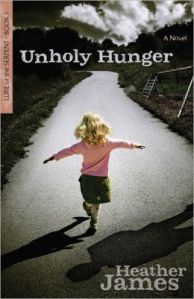
UnholyHungerHeather James, Unholy Hunger, her debut novel!

******************************************************************************************

RadicalDr. Rita Hancock, Radical Well Being

******************************************************************************************
AHigherCallAdam Makos, A Higher Call

******************************************************************************************
JustWhatDoctorRick Marschall, Just What the Doctor Disordered

******************************************************************************************
TheRiverGilbert Morris, The River Palace

******************************************************************************************
DilemmaOlivia Newport, The Dilemma of Charlotte Farrow

******************************************************************************************
GreatStoriesJoe Wheeler, Great Stories Remembered #1, audio (eChristian)

******************************************************************************************
StinkyJoe Wheeler, Stinky: The Skunk Who Wouldn’t Leave (Pacific Press)

******************************************************************************************

New WordServe Clients

Several new clients have joined the WordServe stable with Alice Crider as their point person, but we’ll report more on that next month.

New Contracts

Christina Powell signed with Intervarsity Press (IVP) for her first book. The book is tentatively titled Question your Doubts. It explores the many roots of doubt experienced by both believers and nonbelievers, providing a corresponding response of faith from the rare perspective of a Harvard-trained research scientist who is also an ordained minister. (SF)

What can we help you celebrate?

Facing a Fickle Crowd?

When Jesus finished telling these stories, he left there, returned to his hometown, and gave a lecture in the meetinghouse. He made a real hit, impressing everyone. “We had no idea he was this good!” they said. “How did he get so wise, get such ability?” But in the next breath they were cutting him down: “We’ve known him since he was a kid; he’s the carpenter’s son. We know his mother, Mary. We know his brothers James and Joseph, Simon and Judas. All his sisters live here. Who does he think he is?” They got their noses all out of joint.

But Jesus said, “A prophet is taken for granted in his hometown and his family.” He didn’t do many miracles there because of their hostile indifference. (Matt. 13:53-58 MSG)

Do you ever want to run and hide from criticism or rejection? If you’ve ever spoken to a crowd, taught a small group, written for publication, or communicated your faith in any way, you may have faced a fickle crowd. And you might identify with this story from Matthew 13.

I noticed a few helpful truths in this passage.

  • Jesus used stories to communicate.
  • People praised Him at times.
  • People also criticized Him.
  • Jesus stayed in tune with His audience.
  • Jesus moved on, when criticized.

Facing criticism and rejection. Reading the account of how Jesus handled this crowd reminds me of an event from my past.  

When my close friend, Sara, invited me to her Sunday School class, I hesitated, uncertain if I would fit in. But since her friend, Glenda, taught the class, I agreed to visit.

Hoping I found the right place, I slipped in the door and scanned the room for a familiar face. No one seemed to notice that I had entered. I found a seat close to the door, in case I needed to make a quick exit. I fiddled with my purse, hoping my insecurity would not be obvious.

I got up the nerve to survey the room again, and my eyes met Glenda’s cold stare. I looked back down at my purse, pretending to search for something, as I questioned myself. Am I in the right place? Is this a closed group? Have I done something to offend her? Maybe I’m reading her wrong.

As I fought the urge to escape, I gripped the edge of the cold, metal seat and leaned forward just as Sara walked in the door. Her warm smile calmed my nerves. And as she sat down in the empty chair next to me, I found the courage to stay.

Pleasing people? After several painful interactions with Glenda over the next few months, I listened to some sound advice from my husband Dan: “Some people just aren’t going to like you.”

What seemed to be common sense to Dan, took me by surprise. Up to that time, I believed that I could always find some way to make people like me. I had been successful at pleasing people most of my life—until I met Glenda. She decided that she wasn’t going to like me. Why? Who knows? I could do nothing, but forgive her and move on.

Facing a new year. I realize that I will always face fickle crowds. And I am still tempted to try to make them like me. But the Bible assures me of God’s unconditional love.

For I am convinced that neither death nor life, neither angels nor demons, neither the present nor the future, nor any powers, neither height nor depth, nor anything else in all creation, will be able to separate us from the love of God that is in Christ Jesus our Lord. (Rom. 8:38-39)

I also hope to remember the example that Jesus gives us in Matthew 13 the next time I face a fickle crowd. So, as I prepare to meet the challenges of a new year, I plan to …

  • Continue to tell the stories that matter most.
  • Offer thanks for the praise I receive.
  • Ask for God’s help to deal with criticism.
  • Stay in tune with my audiences.
  • Move on, when criticized.

 What helps you, when you face a fickle audience? 

Are Reader Questions Helpful?

Freedigitalphoto.net Reading Club

After my first avid reading friend told me she had made a vow not to read fiction until the end of the year and hoped by then her desire to read fiction would be gone for good, my thought was, I would never try to convince my friend she should read fiction if she has a conviction against it. I know my life would be very dull without fiction.

Because I could see a reason to relieve any guilt other Christians might have about reading fiction, I became interested in the discussion questions in the back of some of my Christian friends’ novels. They always seemed to reveal the author’s motives in writing that particular story. The questions bring out the growth in the characters as they lived through the events of the story, and as they became better people.

In asking around about lessons on writing reader questions … what type of questions to ask, I learned some of my author friends are required to write the questions but admit they never read them and don’t know why they are asked to provide them.

I never found those lessons. So, I’m not sure how I did it, but I came up with 9 questions for the back of my book.

Last week a writing friend stopped in. I had one proof copy of my book left. A few years back she was writing fiction and it was awesome. Her words take on a lyrical quality. In fact she wrote the most awesome story I have ever read about the murderer Barabbas who was spared crucifixion at the time our Lord was sacrificed for our sins. So I know at one time she understood the place of Christian fiction in our lives.

She took the book knowing it was fiction, but thinking she could read it—for me. And she did give me some points and suggestions for three different changes, which I appreciated. But she couldn’t get past chapter eight because to her it read like a romance. And she had decided a few years ago that reading romance stories were not good for her mind. In fact she has not read fiction at all for several years. So of course she never made it to the discussion questions. I did not know my friend had quit reading fiction when I asked her to read it. And I did not try to convince her to finish it.

Earlier, my sister read a PDF copy of this story, and her words to me were: “Thank you for letting me read your book. At first I thought, ‘Oh dear, this is a Harlequin Romance’—but as the story progressed I realized it wasn’t. I cried when [unnamed character] died. I was on the edge of my seat while Birdie was running through the tunnel. I could picture it all. You have several subplots that make it interesting, but more important, you have several messages about Christian living.”

I’m still trying to come up with a basic template for discovering how to write the best discussion questions for any given book. Do you have any suggestions?

A Few Christmas Thoughts On Marketing

VIVITAR DIGITAL CAMERA

Would you trust a Christian?

How about a Puritan?

A Quaker then?

On cold winter mornings before I head out, I love a bowl of hot steaming porridge oats, with a dash of maple syrup.

With this in my belly, I am ready for anything the day may throw at me…well, at least until the mid-morning coffee break.

Look at the image of the Quaker man on the box. He’s adorable, trustworthy, decent, a law-abiding citizen. His smile is certainly reassuring. Admiring his rosy cheeks? Well, he could be Santa Claus.

His face says it all. Buy my products and you’ll feel as good as I look!

a pic of quaker%20oats%20man

I was in my local supermarket recently, when my keen eye spotted a bargain. I saw an offer on the shelves that was just too good to miss. A double-size box of my favourite porridge oats, with twice the usual contents, for a knock-down, give-away price of 30% below normal cost. My hand flashed out quicker than lightning. The big box was in my cart. The next day, ready for breakfast, I broke into my double-sized box of….what? I was shocked, then embarrassed at being so gullible. I trusted the Quaker man to deliver on his promise. What I got was, yes, a double-sized box, but inside it was 60% air! The actual contents came up to the level (take a look at the first picture) of the top of the wooden post.

As we head towards to the Christmas season when billions of dollars change hands, maybe we should all take a step back and reflect upon the potential of marketing and its ability to persuade us to buy products that patently don’t live up to the advertising.

Just for the sheer sake of it, I did a trawl through Bible Gateway to check if the following words and phrases ever appeared in the Bible.

Marketing, Selling, Sales Strategy, Search Engine,

Keywords, Customer Centric, Optimization.

You guessed it. None of them have a place in the Good Book. As writers, of course, we need marketing to get our message out there and reach communities, whether they be local or global. But we need to be discerning and careful to avoid the trap of believing and buying into the same secular trickery that sells anything to everyone. We should not be inveigled by the World, the Flesh and the Devil. Not be seduced to sell our sacred message by secular means.

I have often pondered this: What would I say, if God said these words to me?

”Fred, your book is great, but it will only sell one copy. The person who reads it will be changed and will become my servant and take the Gospel to millions of people all around the world, and all because he read your book. Alternatively, I can have your book sell millions of copies, you will be rich beyond your dreams, but only a few will be saved. My son, it’s your free choice.”

What do we ultimately want from writing books? Fame and fortune? Or to be walking in God’s will?

Of course, the Lord has a strategy to communicate his message to the world. Undeniably, he uses the power of the Word to get the message across to the greatest number in the most effective way. And he uses great orators to reach the lost, but persuasion is not their business. Their business is communicating the truth about the Son. The way God markets his message turns human wisdom and cleverness on its head.

When God wanted to free the Israelites from Pharaoh’s tyranny he sent a guilt-ridden, reticent, stuttering, fearful man called Moses to get the job done.

When God wanted to proclaim the coming of Jesus Christ he used an eccentric wild man, dressed in animal skins, eating locusts and honey in the desert.

When God wanted to save the world, he sent his all-powerful and eternal Son to be born naked in a stable for animals. As a human child he was vulnerable, weak, dependent and unable to live without his mother and father’s protection and care.

When God wanted to reconcile us to him, he allowed his Son be crucified, killed on a cross of wood, dying as a common criminal rejected and alone.

I wonder what the top marketing gurus and the best advertising companies would have come up with, if God had asked them to create a package to ‘sell salvation to sinners?’

They might have come up with a great sales strategy and a winning message to achieve customer optimization, perhaps throwing in an unforgettable slogan, an amusing jingle too… yet somehow, like the Quaker box of porridge oats I bought, I think it would fallen short, been so much air and less substance. I think their sales plan would have missed the target, somehow betrayed the truth, don’t you?