Craft of Writing

“Craft – an activity involving skill to produce something by hand” says my newly installed Oxford English Dictionary. The origin of the modern word ‘craft’ is to be found in the Old English word ‘craeft’ which combined the concepts of skill and strength together.

If there was companion dictionary, like the expanded translation of the Bible, then we might reach a better understanding of our topic, like this for our opening definition:

“Craft – an activity [worthwhile human endeavour] involving skill [proving one’s dexterity, competent, virtuous, masterful, graceful] to produce [make, invent, fabricate, construct, fashion, create] something [worthy, honest, valuable] by hand.

When we focus on those activities which involve hands, there is also an intrinsic underlying meaning, a deeper meaning.  For instance, if you are a shipwright, a builder of boats, then you surely are using your craft to make something that is fit for purpose.

If you are a fisherman then you need to trust your boat. The boat builder knew that when he designed and built the boat, it would need to have numerous good qualities, you could even say ‘virtues’, that the boat users would need to rely on implicitly. It would need to be watertight, buoyant, stable, robust and strong enough to weather the worst storms and most of all it needed to be safe to protect the lives of the fishermen. When Jesus said to Simon-Peter, ‘Go out into deep water and cast your nets again’, the scriptures record that the nets began to break because they were so full of fish and the boats began to sink under the load. But sink they did not, for the boat-builder had done his job well. He had built a fishing boat that would not just take a big catch, but would stand up to a miracle.

Boat%20fishermen

Is there a craft of writing? I believe there is but it’s not what the textbooks say it is. It’s not the kind of skill you can simply learn and then apply. Not a mere crafting of words to make them sound good when read or spoken aloud. Not just a clever way of stringing sentences together or paraphrasing speech and drama to create an interesting story. Nor is it a means to earn lots of money. You can’t serve two masters.

No, it’s much more than all these things.

The key is in the picture shown above.

Simon-Peter, Andrew, James and John were all expert fishermen. They had good solid boats in which to fish on Galilee but Jesus saw something more than just the simple dexterity of their hands. He saw a dormant skill that was in their hearts and souls, a skill that was profound and could be used in the kingdom of God.

As writers, are we satisfied making good catches? Showing off our skills and craftsmanship so that others will applaud our artistry? Or are we like the disciples standing in the boat, willing to listen to Jesus and be obedient to him, and answer the calling of the Kingdom of God?

Our skill and craftsmanship is a God-given gift and as communicators we should always ask if our writing is fit-for-purpose and of great worth and value to the Kingdom of Heaven here on earth. Don’t settle with being a craftsman of the word, let the word craft you into being a disciple of the Lord

Hopelessly Devoted to You

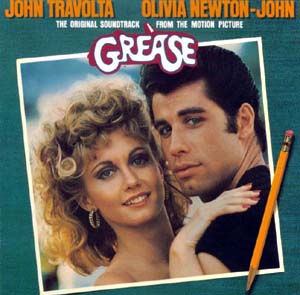
Soundtrack for Grease
I Wore My Album Out

I loved the movie Grease when I was a teenager. My cherished movie soundtrack album wore out, as needle tracks embedded themselves deeper into the shiny, black vinyl. I even played Olivia Newton John’s part as Sandy, in a condensed version with my high school mates.

In the privacy of my bedroom, and a handful of times on the stage, I belted out Sandy’s song of undying love for Danny, Hopelessly Devoted to You. With adoration pulsing through my vocal chords, I too, felt the passion of forever romance.

And today, that’s how I want to feel about Jesus. I want my heart to thump with anticipation every time I hear His voice, smell His scent, brush against His presence, taste His goodness, and see His glory. Though I tremble when I’m near Him, I want to wildly, passionately, and bravely chase after Him for more.

Sandy & Danny at Sunset - Grease
This is my Hopelessly Devotional

Like Sandy in the movie, I ultimately want to transform myself, so at the end, I look more like Him, and less like me. I want my devotion to shine from the inside out, so the whole world knows, I am hopelessly devoted to Him.

Today, I probably wouldn’t watch Grease if it weren’t for nostalgia. As I’ve grown in my desire to please God, I realize there are parts of the movie that don’t honor Him. But when I do allow myself to indulge, I see nuances explaining my draw to the magic of Grease, way back when. The same nuances draw me to intimacy with Jesus. I am hopelessly devoted.

But what exactly does devote mean? According to one dictionary, it’s defined this way. To give all or a large part of one’s time or resources to (a person, activity, or cause). 

This definition makes me pause. Am I giving all or a large part of my time or resources to Christ? Am I offering Him the best of my energy, talents, and love?

Often I think I do, I want to, but deep down, I know I fall short of an active, hope-infused devotion. My vocal cords aren’t pulsing with passion, the way they should.

Danny & Sandy -- Grease
Flying into Forever Romance

Thankfully, Jesus isn’t as fickle as John Travolta, when he played Danny in Grease. Christ is not impacted by peer pressure. He cares little about my outward appearance. His interest in me isn’t self-serving. He loves me enough for both of us. His desire is to meet me in the clouds, where He and I will truly fly away into our forever romance.

As I write this, I can close my eyes, and see us. Jesus and me, in a magical moment, strolling through heaven.

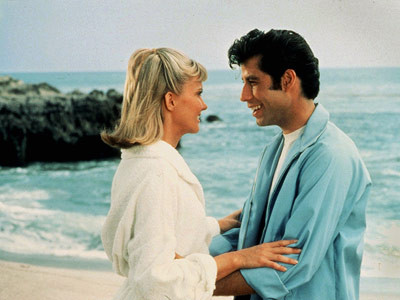
Danny & Sandy on the Beach, Grease
Hopelessly Devoted to Magical Moments with Jesus

I’ll cling to his arm, lay my head on his shoulder, and breathe deeply of his scent while we walk. He’ll stop and turn, so we’re face-to-face. He’ll lift my chin.

Totally engaged, I’ll get lost in His smiling eyes, while I belt out our song. He will know, I’m Hopelessly Devoted to You.

Is there a special song, movie, or memory that offers a unique vision of your intimate moments with Jesus Christ?

Plain, Ordinary, or Beautiful?

14737877_s

Once I made the mistake of creating a heroine who wasn’t loveable because she didn’t forgive until the end of the story. Although her black and white thinking was true to character in her particular setting, it made her unappealing to the modern, more open-minded reader. Some who couldn’t relate blasted her in reviews.

Observation: Characters can be too realistic.

While she needs to stay true to her personality type, a good heroine breaks out of the norm for her particular setting from the get-go.

Because writing is a creative process, the rules are loose to allow us to create a unique voice. It’s a painful process to learn what works through our failures. After a dozen novels, workshops, and self-help studying, I still blunder my way along. At the end of each novel, I find myself vowing, Wow, I’ll never do that again. No more prologues for me—but that’s a topic for another day.

Under deadline, I write and juggle life. But between contracts, I study, plot, fret, and find more time to doubt myself. As you might have guessed, I’m currently developing characters. While fretting over my next heroine, I asked myself, what would help her connect with readers on page one and throughout my manuscript? This thinking led to another observation. Let me explain.

Growing up as a Mennonite, I call myself a plain-vain gal.

I was raised on humble pie and continue to strive for humility. But you know how it goes when somebody says you can’t have something. So if I’m honest, I have a craving for beauty and admiration. When I read, I enjoy living-escaping through beautiful, gutsy heroines. Most of my heroines have been lovely on the outside.

But since I’m wallowing in character fret-mode, I polled my Facebook followers with the following question:

Do you prefer a beautiful heroine or a plain one?

Every single response was plain, except for a few who didn’t care. Really? I expected the comments about inner beauty, but I was shocked they demanded plain on the outside. I expected mixed preferences.

For sure, they want a heroine who overcomes the ordinary. I’m still processing this information so I ask you…

…Is inner beauty or character strength more visible on a plain heroine?

As an example, Katharine Hepburn comes to mind, and I did a follow up blog post about using her as a character on plain girl romanticizing.

I’m conforming to my followers’ preference. Like most authors, I cut photos for each character and study them as I write. Here’s the plain-Jane photo I’ve chose for my WIP.

heroine 2

She’s really growing on me. I’m convinced I’ll make her shine. And hopefully make her smile too.

All of my responses were from women. I wonder: men, would you respond differently? But as a romance author, I’m writing for women. Or was this a genre thing (Amish readers ages 34-55)? Would it have been different for younger readers?

And what about our heroes? In secular romance novels, heroes are often dark and brooding with wicked pasts. It’s up to the heroine to bring out the good and change him. In Christian novels, the growth is often attributed to God. But what kind of heroes are Christian women seeking? Have you done any polls?

From my own experience, my favorite hero was my last one. He was ordinary looking. On a scale of one to ten, he started below zero with the heroine who remembered him as gawky and pesky from college. I developed his inner strength and found myself drawn to him more than my good looking heroes.

On book covers, publishers often hide the heroine’s face. But writers must describe character attributes.

So what do you think? Does it really matter how they look?

Or is it all about the writing?

A Note to Young Writers: Honor Your Obscurity

woman praying--parodic

In the last month, I spent time with two younger women, both of whom had just released their first book. Sarah and Andrea are both fine writers whom I expect will continue to write and publish books. In the short time I had with each of them, I found myself dumping all my writing and marketing advice, talking about websites, blogging, Facebook, twitter. But I forgot to say the most important thing of all: honor your obscurity.

Very few young writers, musicians, artists value their obscurity. For good reason. We know if we’re to be published in any form, we need an audience, a sizeable audience. We know that most of the time we have to find that audience before that first book contract even lands on our desk. And once it does, and the book is out, we’re tasked to keep racking up bigger numbers. But how do we catch the eye and ear of a world that so often chooses the flippant, the crude, the gaudy spectacle over the good, the authentic, and the true?  If we’re the praying sort, we may resort to prayer, remembering the words another writer made famous a few years ago,

“O, that you would bless me and enlarge my territory! Let your hand be with me, and keep me from harm so that I will be free from pain.”

(Oh, dear Jabez, I want to say. How did you get away with that prayer?)

But we do it too, I suspect. The artists’ version would go something like, “O, that you would bless me and enlarge my platform, increase my followers, expand my twitter peeps and keep me from publishing harm so I will be famous, free from the pain of falling out-of-print.”

woman praying--parodic

I can write this prayer because I know these desires. An hour ago I was on a nationally syndicated radio show, and I find myself, now, against my better will, glued to numbers, trying to measure “impact.” While guiltily number-stalking, a stranger writes me on Facebook immediately after the broadcast and asks how he can become a writer and speaker, like me. (He’s in his twenties and he hasn‘t written anything  yet . . .)   Someone else writes to ask me how to build a fan base for her blog.

I do have advice: if you want others to read you and listen to you, you must listen to others. Do for others what you want them to do for you. That will not make you famous; that will make you better informed and more humble.


man reading2

And second, fame is not what you think. Admittedly, I am not the best source here. My moments of “fame” are modest and sporadic. But I still know this: it isn’t what you think. It’s often over in a moment. It brings more responsibility than freedom. And if you’re not careful, it can pollute or paralyze your writing. I have a friend whose first book shot to the New York Times bestseller list.  His agent, his readers, his global fan base now hold their collective breath for his next book. “How do I write under this weight?” he asks me. He has so many others he must now heed and please.

“Honor your obscurity” is another way of echoing Bill Roorhbach’s charge to “honor your apprenticeship.”  Value these months, years of laboring toward your best work with fewer listening in than you would like. This quiet is your wilderness, your blessing. Here you will sharpen your art. You will lean closer to the sounds around you, for the fragile people who haunt the forests you watch, for the small voice that whispers names you didn’t know.

Enjoy the purity of your efforts, making art and worlds and essays out of the sheer love of words, of theatre, of longing and of hope. Enjoy it now before a woman or a publisher sits down beside you filling your notebook with a thousand necessary tasks, few of which have much to do with why you began writing in the first place.

Finally, what do you imagine fame will bring you? For me (and for many writers I know) I hope mostly to be able to keep on writing, to keep using “that talent which is death in me to hide,” as John Milton writes. If you’re doing this now, pouring life into the truest sentences you can make, you’re already famous.

woman writing journal

How to Get Started Writing: Hamster Wheels and Hurdles

type lettersOf all that a writer can and should do—how, actually, does one get started?

It would be possible, in assembling writing advice from just a handful of the people who are giving it, to come away with the impression that making it in this business requires doing everything all the time.

You must, people say, build and maintain a platform. Start or re-start your website. Pin to boards. Make things that other people will pin to boards. Attend conferences and conventions. Join groups. Pitch ideas. Hone your message. Know your audience. Study writing books. Edit incessantly. Post blogs. Find a writing schedule that works. Tweet and re-tweet updates about all of this. Plus string tens of thousands of words together and hope somebody will see fit to make a book of it. That’s just phase one.

Phase two is its own hamster wheel. With a book in publication you must, people say, promote like crazy. Speak at events. Do interviews. Pursue interviews. Write accompanying articles. Track reviews. Deal with disapproval. Build friendships with booksellers. Have catchy marketing stuff. Improve on sales. Aim for bestseller lists. Figure out your next project. Pin, post, platform-build, edit, update, and speak some more. Promise to tweet and re-tweet, always and forever.

The general question: Who can possibly manage all that?

The specific question: How, possibly, can I?

The general answer is that likely nobody can manage it all, when trying all of it at once. The other answer is that you, specifically you, can work toward all of this by doing so incrementally.

You will not start out on bestseller lists. You’ll begin at the beginning, with the whole unrelenting shebang left to do. Tweet This

There will be potential failures and rejections at every corner and turn. But if you begin—if you sit at a computer or a typewriter or even a small slip of paper, and if you start putting words down and then keep putting words down, you will be writing. Often it is as simple as that.

hurdleHere is a personal example. After having published three books by 30 (two as author, one as collaborator), late last year I didn’t have a single writing project to speak of. I wasn’t sure I wanted any, because being submerged in the mire again—see above paragraphs—seemed exhausting. Other concerns demanded my focus and time too, namely: my husband was on a seven-month combat deployment to Afghanistan, we had moved our lives across the country twice in less than a year, and I had just given birth to a baby, our first. Some days, accomplishing just laundry and dishes seemed out of my league.

But I knew that God had given me a love for writing and the opportunity to publish. He was percolating words in me that I wanted to put down. So on one harried morning, I dared draft an article query. On another day I bravely emailed some book ideas to my agent. It was just a baby toe stepped back into the pool, but from where I stood it was the all-important start, a jump at the big, looming hurdle.

That was trajectory, finally, and in a matter of weeks and months I was actually writing again: ideas flowing, plenty of potential projects on hand, a few materializing, and even (always miraculously) another book contract waiting in the wings. Perhaps more importantly, I was learning to chip away at this job, little by little, reminding myself that it would not be accomplished in a single swing. The laundry and dishes were waiting longer than before, but I figured I could deal with that.

Have you wondered, frustrated, how to get started writing? The solution can be as simple as a little trajectory. Tweet This

Stop trying to figure out how to start writing; instead, start. Aim at a goal and have the courage to start imperfectly and incompletely. As you get a handle on one area, add another. You will likely surprise yourself with all that can be attempted and accomplished. Writing is far more doable when you’re doing it.

Traveling Light

I used to take a small suitcase full of books when we traveled. If you are a reader like I am, you’ll know that it’s difficult now days because the airlines want to cut down on the amount of luggage they accept on flights. And now husband likes to fly Charley on cross country trips and then I really have to pack light.

Traveling with Charley
Traveling with our small plane “Charley”

So what would you do to pass the time on a long flight? 

Husband began to notice people using e-readers. He investigated them and told me to purchase a kindle2 for Mother’s day one year.

Now my Kindle is old, and the on/off button is wobbly. I don’t know how much longer it will last. Should I replace my Kindle with a Kindlefire? Or one of the many other e-readers available?

I downloaded the kindle app on Husband’s iPad2. But honestly? I still preferred the screen of the kindle2. It was easier on my eyes. But I used his iPad2 for other things. And when the new iPad came out, we ordered it. Let me tell you, the new retina display is wonderful. On the kindle app, I was able to choose an ivory screen. Reading on the iPad is wonderful.

In fact I now download non-fiction books to study the craft of writing, marketing, social networking, and many other interests. It was hard for me to actually study on the kindle2 and I rarely use it anymore.

So naturally, when brother-in-love wanted to know what kind of an e-reader to buy his wife to take to Florida, I knew just what to recommend. Husband and I raved about the virtues of the iPad and how we used ours for many things. And, we said, it makes a wonderful e-reader. Problem solved. What’s not to like?

It turns out sister-in-love is not interested in all the bells and whistles. She doesn’t want to learn to use email. She doesn’t want to learn to surf the internet. She never uses the computer at home.

There is no one size fits all solution to any problem. And an iPad makes a pretty expensive e-reader if you know you will never use it for anything else.

Instead of extolling the virtues of the iPad, I should have investigated the actual need. It’s the only way to give truly helpful advice. And we finally recommended the basic kindle.

Brother-in-love took his wife shopping. She could purchase any e-reader she wanted. And guess what she picked out? You got it, the basic kindle.

You can be sure the next time someone asks my advice, I will ask more questions, to help find the best solution for them. Which might not be the best solution for us.

Do you have an e-reader? How did you choose?

WordServe News: February 2013

Exciting things have been happening at WordServe Literary!

On the final post of each month you’ll find a list of Water Cooler contributors’ books releasing in the upcoming month along with a recap of WordServe client news from the current month.

The biggest news is our own Sarah Freese gave birth to a baby boy, Mason. They say writing a book is like giving birth, but I think the comparison breaks down a bit…if you’re the one actually giving birth! Congrats, Sarah! Now…back to work.

New Releases

WhatASonCheri Fuller released What a Son Needs From His Mom (Bethany House)

***********************************************************************************************

wishingonwillowsKatie Ganshert released Wishing on Willows (WaterBrook)

***********************************************************************************************

husbandlistenRick Johnson released How to Talk So Your Husband Will Listen (Revell)

***********************************************************************************************

Jordyn Redwood released Poison, book #2 in her “Bloodline Trilogy” (Kregel)

***********************************************************************************************

permissiongrantedMargot Starbuck released Permission Granted (Baker)

***********************************************************************************************

forsakendreamsMaryLu Tyndall released Forsaken Dreams, the first book in her new “Escape to Paradise” trilogy (Barbour)

***********************************************************************************************

MarianoRiveraMike Yorkey and Jesse Florea released Playing with Purpose: Mariano Rivera, the future Hall of Famer from the New York Yankees (Barbour)

***********************************************************************************************

New WordServe Clients

During the Super Bowl, a storyline grew about Colin Kaepernick, the San Francisco 49er’s starting quarterback. He had been adopted and his faith and family were being talked about, including his birth mother. His birth mother, Heidi Russo, had contacted our agency a few days before and quickly signed in. Margot Starbuck is writing her memoir You’ll Do Great Things, and Alice is circulating it to publishers.

New Contracts

Marcus Brotherton signed with Tyndale to collaborate with a Seattle-area pastor on a book called The Presence.

Tim LaHaye and Timothy Parker signed with Thomas Nelson to write Revelation: Clear and Simple, a chapter-by-chapter explanation of the last book of the Bible.

Margot Starbuck and Jeremy Jones signed with Focus on the Family to publish devotionals called Kingdom Women and Kingdom Men (respectively), using content from Tony Evan’s books of the same name.

Mike Yorkey and Marcus Brotherton signed on with Barbour to do Playing with Purpose: Nascar about Christian race car drivers.

What We’re Celebrating!!

A Higher Call by Adam Makos was able to stay on the New York Times hard cover bestseller list all through the month of February. It rose as high as #6 on the print list. The WWII story also made the NPR hard cover nonfiction list for 4 weeks, Publisher’s Weekly list, as well as USA Today.

Helen Shores Lee and her sister Barbara Shores, authors of The Gentle Giant of Dynamite Hill (Zondervan), appeared on “The 700 Club“.

Carol Barnier flew to Colorado Springs to tape an episode for Focus on the Family for her book Engaging Today’s Prodigal (Moody). One episode turned into two! It should air in March.

Jordyn Redwood got a starred review (her second!) in Library Journal for her new novel, Poison. That’s a pretty rare event, so it’s big news when it happens.

Carolyn McKinstry was on “The Today Show” to talk about Black History and her book, While the World Watched (Tyndale), the story of her losing her 4 girlfriends in 1963 to the 16th Avenue Baptist Church bombing in Birmingham, Alabama.

What can we help you celebrate?

Already Loved: Encouragement for This Writing Life

file9431319827916Another rejection. My agent gently relayed that though my dream publisher had said “yes” to a proposal all the way up the chain of command to the last committee, they finally decided to nix it.

As I hung up the phone, tears spilled down my cheeks. Two years of canceled book contracts, low sales figures, and repeated “thanks but no thanks” emails had left me discouraged, frustrated, and confused. Writing—and the marketing tasks necessary to be a professional writer—now seemed like drudgery, not play. No matter how many marketing rules I tried to follow, my efforts failed.

I felt like a failure, too.

I still believed God wasn’t through using me. But I couldn’t help but wonder, Will I ever get another book contract? And what happens if I don’t? Is God trying to tell me something?

Later that day, I sat at my desk, playing a computer game with my three year-old son. As Jackson sat in my lap, I kissed his ear and inhaled his little-boy scent; a combination of milk, grime, and chocolate. Nearby sat a copy of my first book, which I had referred to earlier in the day for a radio interview. Jackson looked at the illustration of a frazzled mom on the cover and asked, “Is that you?”

“No, sweetie,” I said, “but I wrote that book. See, mommy’s name is on the cover. It says, ‘by Dena Dyer.’ “

“Oh!” Jackson said, grinning up at me. “I love Dena Dyer!”

Stunned, I blinked back tears. “I love you, too,” I murmured.

After a few minutes more at the computer, I found a quiet corner and prayerfully pondered Jackson’s simple expression of love. He didn’t care if I published books or not. He simply loved me for me. He loved me the way God does.

In all my disappointments, I had thought more about selling books than surrendering my heart. It was painful to admit that somewhere in the midst of trying to serve Jesus, I’d become goal-driven instead of God-driven. I seemed to care more about what the publishing powers-that-be thought than what my Heavenly Father thought.

Satan is crafty. He takes our God-given talents and twists them into temptations. Gradually, my calling had become an idol. Who I was became less important than what I did.

“Lord, I’m sorry,” I prayed, crying for the third time that day. “My heart is so full of sin. I know you couldn’t care less how many books I sell. You just want ME.”

In the weeks and months to come, as I asked God to help me believe the truth of His unconditional acceptance, I began working freely and joyfully again instead of writing just to be published. God continued to close some doors, and another book proposal was rejected, but He gave me other opportunities–ones I hadn’t even known to pursue.

The truth is, though, I will probably always have a tendency to think I must perform to be loved. So I’ve ask God to whack me upside the head (as we say here in Texas) before I get too far off track.

If experience is any teacher, He’ll be faithful to do just that.

(This article first appeared at The High Calling. Used by permission) 

Writing a Trilogy

For those of you starting on your writing journey—there are two realms of publishing. The ABA (the American Booksellers Association) and the CBA (the Christian Booksellers Association.) The ABA publishes what would be considered secular novels and the CBA publishes Christian or “inspirational” books. Publishers generally fall under one of these two categories.

Book #1 Bloodline Trilogy

CBA publishers like trilogies. And there is good reason for this. If you can hook a reader on one, they’ll likely buy the rest. There is an inherent marketing value to producing a series. I’ve not quite seen this trilogy trend in the ABA though there are beloved characters (James Patterson’s Alex Cross, Lee Child’s Jack Reacher, and Sue Grafton’s Kinsey Millhone to name a few) that monopolize more than a few books but are not quite designed as self-enclosed three-book sets.

When Proof was first contracted, it was proposed as a trilogy. The publisher didn’t like the first proposed sequels and asked for different plot lines in the subsequent titles, which I provided. Even after that, they still contracted only the first. In a twist and turn of God fingerprinted events, they ended up contracting the trilogy a few months after the initial offer.

Book #2 Bloodline Trilogy

However, having not ever written a trilogy, there are a few things I would do now when planning a series that I thought could benefit future trilogy authors.

  1. Each book stands alone but should be connected to the others: It’s nice for readers if they don’t have to read one book to understand the others but is also nice if certain characters/themes carry through all the books for those sticking with you. This can be challenging because a little information will have to be given (in a creative way) to readers to both clue them in to the previous story(ies) and also serve as a nice reminder to those picking up the next book who may have read the others—considering books release six to twelve months apart.
  2. Book #3 Bloodline Trilogy
    Book #3 Bloodline Trilogy

    Timelines are important: I know—this should have been uber-obvious to me, right? But consider some things that can seriously mess up your timeline—like characters getting pregnant. You have to then backtrack to the time of conception and make sure all story plots support it. Add to that a hostage story (Poison) that deals with younger children that then need to be aged seven years, and a teen pregnancy (yes, I did all of this!) and it can be challenging to make sure all events line up. Graphing out the timeline is a seriously good idea. And then keep it to refer back to until the book is actually in print.

  3. Avoid absolute characterizations: In Proofone character commented that another one never sweats (and it was a blazing hot day and he was in SWAT gear.) It was more to relay how calm the man was under pressure. Well, in Poison, my editor reminded me how often this character was now sweating and how I said in book #1 that he never did. It’s just like a test—never, all, and always are not good picks or preludes to character traits.
  4. Provide a circular moment for the reader: What is a circular moment? It’s something (an event, an emotion) that happens in the beginning that is revisited at the end of the novel that shows how the character has changed. For instance, in Proof, the lead detective, Nathan Long, carries a list of “unforgivables”—acts that he literally writes out that he can’t get over emotionally. There is some forgiveness for Nathan at the end of the first book but it ultimately doesn’t fully happen until the end of Peril, the third book in the series. So each book needs a moment like this as well as the series.

What about you? Do you have tips for planning a trilogy?

Getting Better—As a Writer and As a Person

I am trying to teach the students in my novel workshop how to read as writers. The goal is to learn how novelists do their craft—how they integrate exposition into a scene, how they move in and out of the foundational tense into others, how they make us believe in a character, how they get us interested in a conversations, what they include, what they leave out.

DIN_CR~2“Pay attention to what’s working, some specific thing you like, and then try to articulate that as a more broadly applicable strategy toward some narrative end,” I keep telling them.

It’s slow going. My students can identify what they like, but they struggle to see whatever it is outside the context of that particular novel. Or, as the literary critics they’ve been trained to be in their other English courses, they notice symbols or metaphors or some unusual word and then write in their reading journals, “I want to use more symbols in my writing” or “I want to use more impressive diction,” and I am so seized up in apprehension of the heavy-handed artsyness of their next chapters that I dread reading them.

Every once in a while, though, one or the other of them has an electrifying insight, and everyone sees it and gets it and wants to do whatever it is, and my fears about being a terrible teacher are becalmed.

In class yesterday, we talked about one such insight that Sarah wrote in her reading journal: “STRATEGY: Don’t drag characters from point A to point B. Have changes take time. Have them want to do one thing but back out at the last second. Make them change their mind and turn back around to go right back to where they started.”

“Wow! What a good observation!” I said in class. “Why is a slow change, two steps forward and three steps backward, so much more effective in fiction than an instantaneous change, do you think?”

“Because it’s more believable,” one student offered.

“But why?”

“Because it’s how we change in real life,” someone else said.

That’s certainly how it’s been throughout my spiritual life. Reading scripture or having a conversation or listening in church, I’m confronted with some failing of mine and see, very clearly, how I might address it, and I’m resolved—no, genuinely eager—to take action and become a better person. Two steps forward. Then, months or sometimes weeks or only days later, I find myself failing in precisely the same way, having forgotten all my eager plans for improvement.

Or, I’m looking something up in my Bible—the same old, falling-apart one I read for the first time twenty years ago—and I come upon an emphatically underlined passage and a note from me to me scribbled in the margin in the excitement of some forgotten moment of revelation. I knew once exactly how to fix me, evidently, but then, just, never did.

As Paul complains, “I do not understand what I do. For what I want to do I do not do, but what I hate I do” (Romans 7:15 NIV). It upsets him—and I share his anguish—so much that he repeats it again and again. “I have the desire to do what is good, but I cannot carry it out” (Romans 7:18), he wails. “I do not do the good I want to do, but the evil I do not want to do—this I keep on doing” (Romans 7:19).

Thank God for Jesus, and that’s Paul’s point here.

But there is another hope I want to consider today, and it is this: Change—however slow, however miniscule, however hesitant and hobbled by failure—does happen. Because of Jesus, we are, as Paul also promises, “being transformed into his image with ever-increasing glory” (2 Corinthians 3:18).

Strategy by strategy, attempt by attempt, failure by failure—so gradually that we ourselves may not even notice—we believers in the One God Sent are advancing, with ever-increasing glory, into the perfect people we all want to be.