Editing Tips

 Books aren’t written, they’re rewritten. Including your own. It is one of the hardest things to accept, especially after the seventh rewrite hasn’t quite done it… Michael Crichton

The workshop leader looked over the group—a motley crew of aspiring and published authors seeking to learn. She arched her eyebrow and said, “The purpose of your first draft is to get the crap out. Then you can go back and write the book.” Okay, I thought, that’s an interesting way to look at it. And it actually freed me to write better.

I’ve also learned that each draft has crap in it. The goal is to have less and less in each revision. Even today, I’ll pick up my published novel, Journey to Riverbend, and see things I would change. And the published version is the eighth draft.

ScissorsOver the years, people have asked me, “What’s the best way to edit?”

I don’t think there is one best way to edit. Each writer will develop his own way of editing, mostly though trial and error.

My editing process has evolved as I’ve written more, studied the craft, and learned to test approaches and keep the ones that work.

When I write, I begin the day by reading what I wrote the day before. I look for typos, adverbs, passive tense, glaring POV issues, and grammar. This also helps me get back into the flow of the story.

On Saturday, I print out the pages for that week and do a deep edit of the week’s writing, polishing and refining, cutting scenes, re-working dialogue, correcting inconsistencies from the plot or character.

I use critique partners and group as I’m working on the story, incorporating their input as I Writinggo along.

Once the first draft is finished, I put it away. For a minimum of three weeks. If any thoughts come to me about the book, I put them in a folder until later. I send the story out to beta readers. At this point, I find I need at least two people to read the entire book and give me feedback to specific questions.

After three weeks, I pull out the manuscript and have my computer read it to me. And then I rewrite the story, incorporating input from the beta readers.

The second draft goes through almost the same process as the first, generally more quickly. And then it gets rewritten.

Editing is kind of like washing your hair—lather, rinse, repeat. Over and over.

There are two books I think are immensely helpful in this process: Self-editing for Fiction Writers by Renni Browne and Dave King. And, Write Great Fiction: Revision and Self-Editing by James Scott Bell.

What techniques have worked best for you in your editing? What resources would you recommend?

Just Look at Me: Encouragement for the Highly Distractible Writer

file000551198693 (1)

When my sons were toddlers, they were so easily distracted (look: a squirrel!) that I often knelt down and gently placed my hands on their cheeks to help them listen.

“Look at me,” I’d say, waiting until their eyes met mine. Then I asked them, “What did Mommy say?”

Lately, I’ve felt God kneeling down, kindly pressing His hands to my cheeks. “Look at me,” He says. It’s not only a call to attention, but to single-minded devotion.

“Yes, Lord, ” I reply, taking my eyes off Facebook, Pinterest–even the Wordserve Water Cooler–and focusing on Him.

I feel Him kneeling down when I get jealous about other writers’ accomplishments; when I spend too much time clicking and too little time praying; when my tendency to compare Facebook “likes” and Twitter followers distracts me from the reasons I write.

Last week, I let Satan discourage me. Look at that author, he said. She’s your age and has written twice as many books as you have. Plus, she has a radio show, and her speaking resume is much better than yours. 

I started to get insecure, until I remembered the Lord’s hands on my cheeks. “What did I say?” He asks.

“Just look at me,” I respond.

I get it, Lord, I really do.

However, it’s hard to keep my focus when I am required to use social media for my part-time editing job. Plus, our post-recession world of high technology and low discretionary income means that book publishers’ marketing budgets are shrinking, while editors’ expectations are rising.

Sigh. This business is not always good for a highly distractible author…and yes, the apple does NOT fall far from the tree. (Look: a new webinar on building your tribe!)

I know I’m not the only author who struggles with this. Or at least I hope I’m not. So, let’s lean in and focus on our Parent’s eyes for a second.

“Do you hear what I’m saying?” God says.

When we spend time with Him, and hear His perspective on this crazy profession He’s called us to, we realize that He has uniquely called each of us to a highly specialized path.

I don’t have to be like anyone else. Although God calls me to work diligently at my craft and creatively tell people about my books (not for my glory, but His), I shouldn’t obsess about numbers, lists, or honors. All that leads to a place called “Crazy-ville.” And trust me, I can get there on my own.

My fellow scribes, God is calling me–and you–to be faithful and obedient:  “But seek first his kingdom and his righteousness, and all these things will be given to you as well.” (Matt. 6:33)

Just look at me, He says, and write what I’ve told you to write. Write out of the overflow of our relationship, and trust me for everything else.

As a friend says, “God’s got this.” We can trust Him. After all, those heavenly hands on our cheeks are nail-scarred…from His scandalous, all-consuming love for us.

The Best Advice I Could Have Given Myself

SignatureCountry artist Brad Paisley released a song in 2007 titled “Letter to Me,” in which he gives his teenaged self advice for the future. It makes me think about what I would have advised myself thirty years ago when I began my freelance writing career. So, with a tip of my own cowboy hat to Brad, here’s my letter to my younger self!

Dear Jan,

I am you thirty years from now, and I want to give you some advice about writing.

  1. Get a day job. You are never going to be on Oprah talking about your bestseller. (Oprah is a person with a very influential talk show in the future. She has a book club, and Tom Cruise jumps on her sofa. Enough said.) Accept the fact that your writing habit will never financially support you. Fortunately, your husband will, so be sure to say “Yes” when a guy named Tom proposes to you. You’re going to think he’s just trying to cheer you up because your car’s water pump broke down, but he’s serious. DO NOT LAUGH IN HIS FACE, because he will never let you forget it. (Although it will make a great blog post. A blog is …never mind. You’ll find out later.)
  2. No matter what you think, your first and second book manuscripts are trash. Really, they are. It would be nice to just skip writing them altogether to save time and effort, but if you don’t write them, you won’t write your third book, which will find a publisher. Just thought I’d let you know.
  3. You’re going to meet a woman named Belinda. Don’t ever tell her you’ve written a book, because even though she’s going to be one of your best friends, she’s going to drive you crazy with her constant stream of ideas for books SHE wants to write. If she ever brings up that she’s thinking about writing a book, immediately change the subject. (You can thank me later.)
  4. Write a YA romance series about a vampire and a high school girl. Believe it or not, it will sell and launch a publishing trend. I’m serious.
  5. Speaking of serious – stop taking yourself so seriously. There are many, many writers out there. The bad news is that you have to compete with them for contracts. The good news is that the writers you meet will absolutely enrich your life, if not your pocketbook. (Reread #1 above.)
  6. Don’t give up writing. You will get published. You will also get rejections, but that’s part of the package, so get over it and get it out of the way. It will give you more time to write and more confidence in your writing. Writing is your gift, so enjoy it, develop it, invest time and effort in it, and it will reward you in ways you can’t even begin to imagine.
  7. Finally, if you ever have a chance to buy stock in a company named Apple, you might want to do that.

Love you!

Jan

What advice would you give your younger self?

The Joy of Categories

From actual query letters…

“I’ve got a novel that’s sort of a historical fantasy magical realism.”

GregsBooks“My new nonfiction is for everyone. And when I say everyone, I mean everyone. There’s nothing as good or like it on the market. It should be stocked at the front of the store in the ‘bestseller’ section.”

“The graduation gift book I’m proposing will be the kind of book retail will stock all year around.”

One thing new (and sometimes veteran) authors don’t understand is that every book must have a recognizable category. The queries for books listed above have none. The moment you go outside of a known category, retail doesn’t know what to do with it. They don’t know where to stock it; they don’t know how to describe it to their customers. In short, they won’t know how to sell it. And that’s the point of writing books you’d like people to read . . . to sell them.

It starts with what is known as a BISAC code. It’s those few words on the back of the book that give retail and consumer a clue as to what the book is about. Every book gets a maximum of three. Here are the categories from the Book Industry Study Group:

ANTIQUES/COLLECTIBLES
ARCHITECTURE
ART
BIBLES
BIOGRAPHY/AUTOBIOGRAPHY
BODY, MIND & SPIRIT
BUSINESS & ECONOMICS
COMICS & GRAPHIC NOVELS
COMPUTERS
COOKING
CRAFTS & HOBBIES
DESIGN
DRAMA
EDUCATION
FAMILY & RELATIONSHIPS
FICTION
FOREIGN LANGUAGE STUDY
GAMES
GARDENING
HEALTH & FITNESS
HISTORY
HOUSE & HOME
HUMOR
JUVENILE FICTION
JUVENILE NONFICTION
LANGUAGE ARTS & DISCIPLINES
LAW
LITERARY COLLECTIONS
LITERARY CRITICISM
MATHEMATICS
MEDICAL
MUSIC
NATURE
PERFORMING ARTS
PETS
PHILOSOPHY
PHOTOGRAPHY
POETRY
POLITICAL SCIENCE
PSYCHOLOGY
REFERENCE
RELIGION
SCIENCE
SELF-HELP
SOCIAL SCIENCE
SPORTS & RECREATION
STUDY AIDS
TECHNOLOGY & ENGINEERING
TRANSPORTATION
TRAVEL
TRUE CRIME

Handy dandy, but did you notice there are only TWO categories for fiction: Fiction and Juvenile fiction.

When you toddle over to Barnes and Noble, here are the categories you’ll find as you browse the aisles:

Fiction Books & Literature
Graphic Novels
Horror
Mystery & Crime
Poetry
Romance Books
Science Fiction & Fantasy
Thrillers
Westerns

Children
Ages 0-2
Ages 3-5
Ages 6-8
Ages 9-12
Teens

Non-fiction
African Americans
Antiques & Collectibles
Art, Architecture & Photography
Bibles & Bible Studies
Biography
Business Books
Christianity
Christian Fiction
Computer & Technology Books
Cookbooks, Food & Wine
Crafts & Hobbies Books
Education & Teaching
Engineering
Foreign Languages
Game Books
Gay & Lesbian
Health & Fitness
History
Home & Garden
Humor Books
Judaism & Judaica
Law
Medical & Nursing Books
Music/Film/TV/Theater
New Age & Spirituality
Parenting & Family
Pets
Philosophy
Politics & Current Affairs
Psychology & Psychotherapy
Reference
Relationships
Religion Books
Science & Nature
Self Help & Self Improvement
Social Sciences
Sports & Adventure
Study Guides & Test Prep
Travel
True Crime
Weddings
Women’s Studies

Not bad. A little bit more descriptive in fiction, which is helpful, but if you wanted to find “historical fiction,” for example, you have to browse a few thousand books and hope you bump into a title that screams “historical” from the spine.

How about at a Christian bookstore? At a local Mardel, here is what we found:

Bible Reference
Bible Studies
Biography
Christian Living
Commentaries
Counseling
Devotional
Fiction
General Interest
Gift Books
Health
Marriage & Family
Men
Prayer
Seasonal
Software
Spanish
Spirit-Filled Life
Teen Interest
Women

Again, ONE designation for fiction. (Really? Do they really NOT want to sell novels?)

And then there are award categories. Here are the categories for the “Christy Awards,” the yearly fiction awards:

Contemporary Romance
Contemporary Series (sequels and novella)
Contemporary Stand Alones
First Novel
Historical
Historical Romance
Suspense
Visionary
Young Adult

The American Christian Fiction Writers (ACFW) has their own set of categories for determining the “Carol Awards”:

Debut
Long Contemporary
Long Contemporary Romance
Long Historical
Long Historical Romance
Mystery
Novella
Romantic Suspense
Short Contemporary
Short Contemporary Suspense
Speculative Fiction
Suspense/Thriller
Women’s Fiction
Young Adult

The INSPYs (Bloggers Awards of Excellence in Faith-Driven Literature) has yet another set of categories:

Romance
Literature for Young People
General Fiction
Speculative Fiction
Mystery & Thriller

The ECPA has their Gold Medallion Awards in these categories:

Book of the Year
Bibles
Bible Reference
Children
Fiction
Inspiration
New Author
Non-fiction

If all of this seems confusing, well, I suppose it is. When in doubt take comfort that you don’t have to pick from the Amazon.com categories. Just try to find three categories to mention!

The point is, each book gets three known categories on the back. Choose wisely in your proposals, but also try to choose broad categories so your book will get the most amount of exposure. And please, for the love Ernest Hemingway, don’t make up a category and call yourself a “pioneer.” Don’t implore the agent to think “outside the box.” Don’t call publishers “short-sighted non-creatives.” Just pick some categories and color inside the lines. We’ll all be happier.

Have you ever been confused about categories? How did you solve your dilemma?

Are You In the Mood?

When you’re writing a book, you have a purpose. You want to speak to your readers’ emotions, bring them into your story world, and show them ideas that may change their lives.

There are many ways to do that, and one is to be purposeful in expressing the mood of your story.

The mood is different from your setting, theme, plot, or other elements of a story. The mood is the overall feeling your reader gets from your story. It can be happy, tragic, hopeful, desperate, fearful, serene…and everything in between. Your book will have a general mood that permeates your entire story, but each scene may have its own mood, also.

How does a writer convey mood?

There are a couple of very good ways.

First is your choice of words. Consider this excerpt from “The Prodigal Son Returns”:

ImageFrom the simple white house nestled behind a riotous hedge of lilacs to the looming white barn, the Stoltzfus farm was the image of his Grossdatti’s home, a place he thought he had forgotten since the old man’s death when he was a young boy. A whisper of memory rattled the long-closed door in his mind, willing it to open, but Bram waved it off. Memories were deceptive, even ones more than twenty years old. They covered the truth, and this truth was that he had a job to do. Grossdatti and his young grandson remained behind their door.

I tried to convey the feeling of nostalgia in this paragraph, so I chose soft words like “nestled,” “farm,” “home,” “whisper,” and “memory.” As the paragraph reached its end, I wanted Bram to shake himself back to reality – at least his version of it. So I used harsher words like “rattled” and “truth.”

Read your paragraphs aloud, listening to how the words sound. What feeling do they convey? It isn’t only the meaning of words that speak to your readers – the sound does, too.

A second way to convey mood is in the construction of your sentences. Longer sentences set a softer, quieter tone, and shorter, choppy sentences convey a sense of urgency or danger.

Here’s an excerpt where I was trying to show a peaceful summer afternoon:

Once the family buggy was gone, the farm settled into a quiet that Ellie seldom heard. The early summer sun was hot, and the cows had all sought the shade of the pasture. One pig’s grunting echoed through the empty barn, keeping rhythm with the thump and clatter as he rubbed against the wooden planks of the sty.

Ellie wandered to the lilac bushes that surrounded the front porch of the big house, and she buried her face in the blossoms. They were nearly spent, but the scent still lingered. On either side of the front walk Mam’s peony bushes held round pink and green buds. Another day or two, and they would burst into bloom.

The sentences in these paragraphs are complex, with dependent and independent clauses. They are designed to slow down the reader’s pace and feel the mood of Ellie’s afternoon – hot, languorous, and even lazy.

Contrast that with this excerpt:

Kavanaugh’s lip curled in the sneer that was his trademark. “No cop is going to take me.”

The snub nose of Kavanaugh’s gun steadied as the gangster’s finger tightened on the trigger. Bram shot at the same time. His body jerked as Kavanaugh’s bullet hit his chest, and he fell into blackness.

The sentences here are shorter, choppier. Shorter sentences speed up the action and heighten the tension. The mood becomes urgent, dangerous and suspenseful. Interspersing longer sentences with shorter ones can draw out the tension even further.

So, have you thought about the mood of your book? It can be as elusive to pinpoint as your voice, but once you identify it, using these techniques can help you enhance it and will increase the depth of your readers’ experience.

If Ever There Was A Time For Writers . . .

269665_10200995681632023_245803796_n
*****

“It is the miraculous language that drags me back into its delicious kingdom again and again . . . meticulously chosen words . . . I want to enter this kingdom, with such desperation, I am willing to die for it . . . And to enter a book, to let my life course out and stream past me, is to, in a  small way, die.”

On Reading, by Cynthia Cruz, via The Rumpus, 4/29/2013 

*****

If ever the world groaned for hope, it is now.

If ever the world needed writers, artists, poets, and musicians, it is now.

Even a glance through centuries past testifies to the power of artists, those sage interpreters of the soul, to draw hope from the detritus of despair and unveil rainbows from the bleak abyss of injustice.

And so, if God has called you to write, He has called you to deliver His people from this present darkness.

If that sounds like a big job, it is.

If that sounds like it’s too much for your feeble pen to handle, it is.

Because only a Savior can sand down the sharp edges of pain. Only a Savior can sweep darkness away with a great exhale which leaves in its wake a symphony. Only a Savior can deliver us.

So what’s a writer to do?

First, like the brown, peeling bulbs we tuck into the earth in the fall, don’t be afraid to plant the seemingly worthless and ugly. God is smitten with the beauty we allow Him to create with the broken, insignificant and useless parts of our selves. Keep writing, even if there’s no tangible payback or reward. Be faithful with little, and He will be faithful with making much of whatever meager loaves and fishes we lay at His feet. Spring comes, dear one. Spring comes.

Second, take time to celebrate Sabbath. Renew your mind and stretch your imagination by reading a book outside your usual genre, or a book in the Bible you haven’t considered in a while. And as you do, pray God gives you eyes to see and ears to hear what He wants for His lost ones. Look for ways to infuse His whispers into your stories.

Third, if you feel stuck, dig deeper. Press into the words you pen, and let them press into you, that they may make an unmistakable imprint of redemption and hope upon the reader by the time the last page is turned.

Make people want to enter not just any kingdom, but God’s Kingdom, breaking into the world by the surrender of your pen today.

*****

    “I spoke to the prophets,

gave them many visions
and told parables through them.”

Hosea 12:10 (NIV)

*****

How can you let God lead you more in your writing life? In what ways can you more fully surrender your pen for His glory? 

*****

Amy writes words of hope for a hurting world. Look for her debut novel, How Sweet The Sound, coming March 1, 2014 from David C. Cook.

Around The Block With Writer’s Block

do-not-write-in-this-spaceSome people say that writer’s block is what gets the housework done, but if that were true, my house would sparkle and shine.

My vitamins would be alphabetized from A to Zinc, my nightstand drawer would contain no crumpled tissues of questionable provenance, and the frisky lint bunnies behind the dryer would now be reproducing in the rubbish bin.

For me, writer’s block doesn’t get the housework done, but it is what keeps the Internet humming along. And I don’t only turn to the Internet as a writer’s avoidance behavior, either. Hanging out online may prolong the blocked condition somewhat, but if I give the Web even half a chance, it eventually provides the cure I so desperately crave.

First, of course, there’s Facebook. Like other writers, I’m lonely. Ye Olde Writer’s Cave is dank and dreary and its stalagmites stab at my soul. But scrolling through my news feed–replete with photos of gregarious dogs who say funny stuff, sullen cats pictured splayed across Other Writers’ Keyboards, and videos of friends’ new grandbabies–brings me to my senses fast. There are worse things than loneliness.

Like wordlessness. And booklessness. And publisherlessness. Oh, my.

If Facebook somehow fails to snap me out of writer’s block, I click over to Pinterest. Within seconds, I’m immersed in a fantasy world of exotic locations, bohemian wardrobes, hunky men (some of my Pinterest friends are edgy with their pinning!), gorgeous homes, and just desserts.

It’s the desserts that get to me, if anything on Pinterest can. I’ve read that even viewing a luscious treat can cause–in some susceptible individuals–an insulin response with corresponding weight gain.

Let’s just say I’m highly susceptible.

When I literally feel my bottom-in-chair growing larger while innocently viewing the ingredients list for yet another bacon-intensive appetizer, I know I’m a site closer to loosening the block’s grip on me. One more stop on the Internet and I’ll be home free and back to cranking out another chapter.

I know exactly where to go, too.

If I truly can’t find two words to put together, my fingers click over to Craigslist, the piece de resistance in breaking the back of writer’s block.

Now, not just any category on Craigslist will do. I skip the ads for RVs and energy-deficient major appliances and ancient treadle sewing machines. I have no use for the personal ads, and discussion forums about dying and haiku aren’t really my thing.

Instead, I wallow in the hundreds of jobs on offer, immerse myself in the positions I could be applying for that might surreptitiously scratch my writer’s itch, that might anesthetize the pain I experience when I’m not doing my real job. The job I’m meant to do. Putting down glorious words, one after the other, preferably in the best possible order.

Can I hope to find employment as satisfying as writing is on a bad day, a job that could truly replace my need to write?

I pass over the ad for an exotic dancer for bachelor parties, but not without thinking of that Facebook poster that shows two gals dancing—one young and agile and the other old and clumsy. The captions read, “How You Think You Look” and “How You REALLY Look.”

Then I skim this heading: “Bilingual Interpreters Wanted! Spanish and Many Other Languages!” But somehow “many other languages” seems like Triglingual Interpreters Wanted. Or perhaps Quadlingual or Quintlingual, not that it matters. I only speak English with a smattering of adorable French phrases thrown in, mostly on the topic of finding the salle de bain closest to my train’s platform.

Being reminded of my obsession with locating the bathroom (in as many languages as necessary) draws me to another ad, this time seeking a participant in a medical study about urinary incontinence. It offerers $1200 compensation for time and travel expenses, plus a generous Depends allowance. I shake my head in dismay.

“You’re all wet,” I say to myself, a victim of my own dry wit. “These jobs aren’t for you. Maybe you should start with finishing this blog post, and then see what happens next?”

Before I shut down Craigslist, my eyes fall on one last ad.

“Surrogate Mothers Needed! Earn $28,000 and Up!!!!!” I feel a visceral (if latent) nurturing instinct flow through me while reading the job description. The money is certainly tempting, but then it hits me. They’re probably looking for someone with a uterus. There’s always a catch.

So that settles it. I’m a writer, and getting caught in a bad job won’t fix that. Only writing will. Once again, the Internet’s cured me of a vicious case of writer’s block.

This time, I hope, for good.

Do you suffer bouts of writer’s block? Any cures you’d like to share?

Why Ignoring Your Author Brand is Career Suicide

Have you heard the term branding? Does it make you want to reach for the remote and turn the channel? If so, you’re not alone. Author branding has a lot of writers confused. It did me.Why Ignoring Your Author Brand is Career Suicide

I first thought author branding was something your publisher did for you when your first books came out. Then, I thought it was a cool author tag line or slogan. And while part of both the previous statements are true, they’re not your author brand.

Knowing your author brand will help you promote yourself before, during, and after your book releases. Your author tag line is what evolves from your brand, not the other way around.

What is an author brand? An author brand is the unique combination of personality and passion you bring to products or services based on your actual or potential abilities. Your author brand won’t look like anyone else’s, because no one else has your insights and perspective to offer to the world.

Why do I need an author brand? Knowing your author brand lets readers, agents, and publishers know immediately what they’re going to receive from you and your writing. In this fast paced world, people won’t take the time to dig through the many books, websites, and blogs to find what they’re looking for. If it isn’t apparent immediately, they’ll move on.

Think about your favorite authors. You know exactly what you’re going to get from their books. It’s the reason you purchase their newest release, read their newsletters, and like their Facebook pages. They deliver on the promise of their brands.

But, I don’t need to develop my author brand until I have a book contract. Wrong. You’re already branding if you have a website, blog, or are on social media sites. Every post, tweet, and blog post is a reflection of you and your brand, even if you don’t know it.  It’s important to understand your brand from the moment you declare yourself a writer.

Your brand will help you develop your website, book proposals, manuscripts, articles, and newsletter. It will help you focus and go deeper in order to reach your audience better. It’s something you should embrace and not put off a minute longer.

Your brand will also aid you when creating visual images for your website and social media pages. For example, my author tagline (developed from my brand), is Inspiring Your Faith and Pioneer Roots. I created this image for my author Facebook page this past week. Branded Facebook Cover for Melissa K. Norris

Do you see how the pioneer roots is enhanced not only in the images, but also ties into the title and cover of my non-fiction book, Pioneering Today? The cabin picture also works for the historical fiction portion of my writing. Your brand should be an umbrella for all you do.

Developing your author brand isn’t something we can completely cover in one blog post, but don’t worry. I’m not giving you this admonishment and leaving you alone. My agency sister and business partner, Janalyn Voigt, and I have created a FREE author branding workbook to walk you through the steps. You can snag your copy at TriLink Social Media Mentors.

What are some of your favorite authors? Can you identify what their brand is, or the promise they always make with their work? What is unique about you and your writing?

WordServe News: April 2013

Exciting things have been happening at WordServe Literary!

On the final post of each month you’ll find a list of Water Cooler contributors’ books releasing in the upcoming month along with a recap of WordServe client news from the current month.

New Releases

TestedArnie Cole and Michael Ross Tempted, Tested, True (Bethany House)

****************************************************************************************
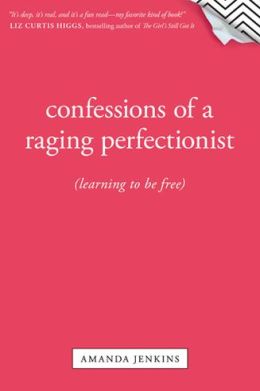
ConfessoinsAmanda Jenkins Confessions of a Raging Perfectionist (Tyndale House)

****************************************************************************************
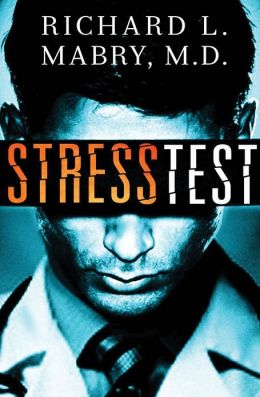
StressTestRichard Mabry Stress Test (Thomas Nelson)

****************************************************************************************
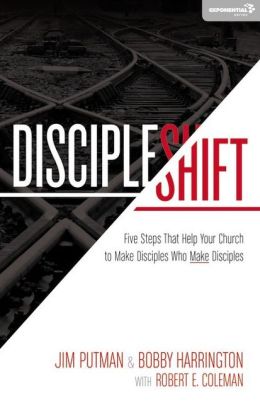
DiscipleshiftJim Putman with Marcus Brotherton Discipleshift (Zondervan)

****************************************************************************************

New WordServe Clients

Jennie Atkins signed with Sarah Freese. Excited to have her join our other wonderful WordServe authors!

New Contracts

Judy Morrow signed with Regal Publishing for her devotional titled Listenings.

Keith Robinson signed with Regal Publishing for his non-fiction book titled Is Anybody Out There? 

Rachel Moore signed an ebook contract with Cook Communications for her novel titled Language of Sparrows.

Barb Stoefen signed with Zondervan for her memoir titled A Very Fine House: A Mother’s Story of Love, Faith and Crystal Meth

Mike Yorkey signed with B&H Publishing to write the story of Tampa Bay Devil Ray infielder Ben Zobrist, along with his wife Julianne, who is a budding Christian singer.

Dr. Kara Powell from the Fuller Youth Institute signed with Zondervan to write The Sticky Faith Guide for Your Unique Family.

Michelle Griep signed an ebook contract with Cook Communications for her novel, A Heart Deceived.
.

What We’re Celebrating!!

Julie Cantrell is a finalist in the “new author” category for this year’s Christy Awards for her debut novel Into the Free.

Jordyn Redwood for her debut novel Proof, which was a ForeWord Reviews finalist for religious adult fiction.

And Julie and Jordyn both made the Inspy Award Short List for their debut novels.

Maureen Lang’s book Bees in the Butterfly Garden hit the ECPA fiction list again, this time at #6.

A Higher Call by Adam Makos continues to stay on the New York Times hard cover nonfiction list, having made it in the top-15 every Sunday in April.

Thank you to Writer’s Digest magazine for naming the WordServe Water Cooler one of their 101 best websites for writers for 2013. We are honored!

What can we help you celebrate?

Are You a Good Literary Citizen?

ID-10032339

Are you a good literary citizen?

I’ll never forget it. I was probably eight or nine years old, and my family had gotten up early to get a spot in the front for the Blossom Time Parade in a neighboring town.

This was a big deal. Every year, thousands of people from Southwest Michigan gathered, anticipating a show of marching bands, fire trucks, homecoming queens, and buckets of candy thrown out to kids scurrying in retrieval around the pavement like ants.

The year I recall was an extra-big, super duper deal, because “Samantha”–the youngest child from the quasi popular 1980 sitcom Gimme a Break!–was scheduled to appear.

Now, I wasn’t a big fan of Gimme a Break!, nor did I think Samantha was the best child-actor of my youth, but she was going to be there, in my small town parade, and I loved to act in school, and every time I thought about meeting a real life star, a firecracker lit and crackled in my gut. I pushed my way to the front of the crowd at the parade, armed with a glittery pink pen and my diary.

Samantha waved and smiled as she sat on top of a cherry red Corvette. And then it happened. The car paused in line, waiting for the parade to continue, and a swarm of preteen girls crowded around Samantha, holding out pictures and paper for her to sign. My legs took off, and before I knew it, I was there too, in the swarm, buzzing, waiting for my turn to ask for an autograph.

Once most of the girls got their autographs, the car started to move. Panicked, I held out my diary to Samantha as her handler winked at me and said, “Surely we have time for one more.”

My heartbeat skipped.

“No! We don’t have time for any more,” Samantha hissed, pushing my diary towards my chest. Her eyes met mine coldly. “I’m done.”

The driver switched from the brake to the gas. I watched Samantha creep forward in the parade, once again smiling and waving to her adoring fans.

Who knows what was going on with Samantha. Everyone has bad days. But I have to admit, I was one disappointed, disenchanted little girl.

I decided that if I were ever fortunate enough to do well at something I loved, I’d be sure to be kind.

Fast forward more years than I care to admit, and I’m pleased to announce that time and again, as a new author, I’ve encountered kindness and generosity in the literary world.

What is a good literary citizen?

This is my definition: a person who supports creativity, who esteems work, and helps others grow in their craft. It’s a person who buys books (and lots of them!) and networks on behalf of authors and writers she or he admires.

I think about Samantha when authors share their knowledge of writing and publishing with me. I think about Samantha when I witness someone farther down the publishing road give a nod and a hello to another starting out.

I hold out my diary and these kind souls take my glittery pen and jot me a note. “Congratulations! Keep going! Try this agent. Sure, I’ll review your work.” Or even this: “I can’t help you now, but all the best to you!”

I don’t take it for granted. People in the publishing world are busy. There is no reason why some should respond to my letters or emails with such goodwill, but they do. And I learn that sure, there are Samanthas in the world. But that’s okay. There are also authors and writers who do their best to help strong work rise to the surface for all to enjoy.

There are people who value being good literary citizens.

Not every author or writer can help. Not everyone will care to help. But of course, everyone can pass on a measure of goodwill as another pursues her dreams.

And we can do it with kindness for the sake of our literary world.

*In an effort to pay it forward in the literary world, I am doing a daily author interview and book giveaway (from writers who happen to be mothers and write about it) the week of May 6th, leading up to Mother’s Day. Drop by to hear from great authors such as Shauna Niequist, Jennifer Grant, Kate Hopper, Claire Bidwell Smith and one more (waiting on a confirmation :)). Find out more at www.gillianmarchenko.com.