WordServe News: May 2013

Exciting things have been happening at WordServe Literary!

On the final post of each month you’ll find a list of Water Cooler contributors’ books releasing in the upcoming month along with a recap of WordServe client news from the current month.

New Releases

*************************************************************************************************

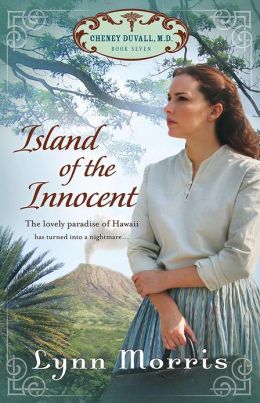
IslandoftheInnocentIsland of the Innocent by Lynn Morris, number 7 in the repackaged “Cheney Duvall, M.D.” series.

*************************************************************************************************

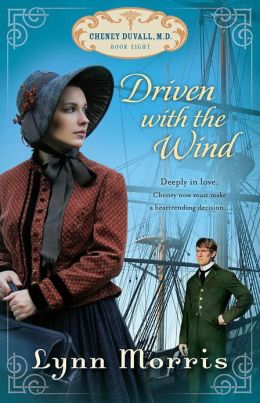
drivenbythewindDriven by the Wind by Lynn Morris, number 8 and the final book in the series.

*************************************************************************************************

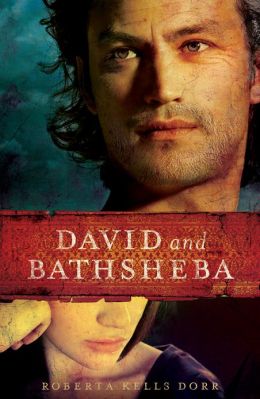
DavidandBathshebaDavid and Bathsheba by Roberta Kells Dorr (Moody). This is the first in a series of biblical novels that are being repackaged by Moody for a new generation of readers. Roberta died several years ago, but her novels were so well written and well-researched, they were deserving of a new life in e-books and the trade.

*************************************************************************************************

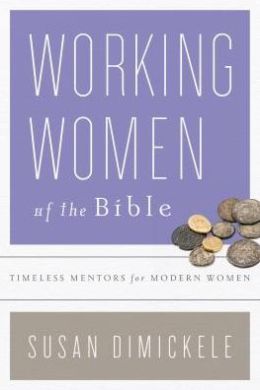
workingwomenWorking Women of the Bible by Susan DiMickele (Leafwood)

*************************************************************************************************

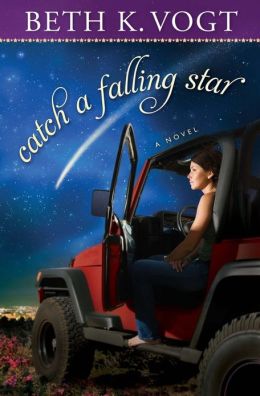
CatchAFallingStarCatch a Falling Star by Beth Vogt (Howard)

*************************************************************************************************


New Contracts

Joe Wheeler has signed 3 new books with Pacific Press to continue the “Christmas in My Heart” series. These books will be numbers 23, 24, and 25…the longest running series of Christmas stories ever published.

Cheri Fuller has signed with Bethany House Publishers to write What a Daughter Needs in a Mom. This will compliment her recently published book, What a Son Needs in a Mom.

Mike Yorkey signed with Destiny Image to write the next health and wellness book for Jordan Rubin.

Jonathan McKee has signed with Barbour to write a book for teen boys, The Wise Guy’s Guide to God, Girls and Google.

What We’re Celebrating!!

Jan Drexler’s The Prodigal Son Returns is #37 of 100 romances through RWA. This is Jan’s second week on the list; her book debuted at #95, so it is definitely moving on up!

Jillian Kent has her second novel in The Ravensmoore Chronicles, Chameleon, getting some noteworthy buzz. It finaled in the Fiction-Romance Category in the Inspirational Romantic Mystery/Suspense category. And it’s also finaled in RWA’s Daphne du Maurier Contest. Congratulations, Jillian!


LinkedIn for Writers (Build a Social Media Platform)

Linked In for Writers via @janalynvoigt for Wordserve Water Cooler
This is a pin-friendly image!

When deciding where to focus online, most writers veer toward Facebook, Twitter, and Pinterest. Developing a presence at those sites can be a great idea. However, with 250 million users worldwide, LinkedIn carries a clout all its own. Chances are you think of LinkedIn as a network for job seekers, and while it does function in that capacity, it offers other benefits to writers.

Reach Readers

Although LinkedIn’s focus is business-to-business, don’t discount it as an avenue to reach readers. I personally experienced a spike in book sales after putting the word out on LinkedIn about DawnSinger (Tales of Faeraven 1). The link I posted had a lot of shares, which means my network kicked in to help. As members of my network shared my update to their networks, they increased its impact exponentially, creating additional exposure for my book. This is social networking at its best. Just remember that giving more than you receive will help you tap its power. (It’s also a great way to live.)

Extend Your Network

LinkedIn allows you to introduce yourself to those in the networks of your network. This can be a powerful tool for growing your sphere of influence. Be careful about approaching agents and editors this way, though. It’s best to send them a contact request after an in-person meeting.

Give and Receive Endorsements

LinkedIn lets you easily endorse people you respect for their professional skills. This also means that others can do the same for you. While you can request that others endorse you, use this tool wisely. If people don’t know you or your work, don’t send them an endorsement request.

Discover Who Views Your Profile

It’s fun to click a sidebar link and discover who has recently visited your profile. While those who upgrade to a professional account receive more information, even those who use a free plan can see a few names. As an example, recent visitors to the LinkedIn profile for Janalyn Voigt included a librarian, another author and speaker, a digital publisher, a barbershop manager, and a Los Angeles-based writer and editor. In the past I’ve also caught a film producer and agent checking out my profile. These people can represent contacts you may want to follow up with.

Link Your Blog

LinkedIn’s blog link tool enables you to feed your blog to your LinkedIn profile. This helps you brand while giving your blog additional reach.

Automatically Update from Twitter

Feed your Twitter updates to LinkedIn. Go to settings to enable this feature.

Conduct Polls

Use the LinkedIn polls application to gain insights that can help you determine what to write, how to promote, and where to find your target audience. You can integrate your LinkedIn polls to Facebook or Twitter and also embed them in your website.

Improve Your Website’s SEO

Be sure to include a link to your website and/or blog in your profile. Garnering links back to your blog from high-authority sites helps raise its visibility in search engines. A good search-engine ranking means that when people search the internet for keywords within your topic, your site shows as close as possible to the first page of their results. This is known as search engine optimization, or SEO.

Focus on Business

One of my author friends centers his online social networking at LinkedIn more than at other sites. When I asked him why he prefers LinkedIn, he answered that it’s all business. Since he’s had to break himself of an online gaming habit, this makes sense for him. LinkedIn’s business focus extends even further than not featuring games, and that’s good news for writers in a lot of ways. On LinkedIn you don’t “friend” or “follow” people, you add them into your network. Having an established network means that you can connect on a strictly-business level with (to name a few) publishing professionals (such as agents and editors), experts in fields you need to research, technical experts who design websites or make book trailers, and other authors willing to cross-promote.

Join Relevant Groups

LinkedIn is another place to connect with others on topics of interest to your author brand. You can also participate in groups of writers to talk shop. As an example, I’ve used LinkedIn groups to compare notes with other writers in an effort to discover where to focus promotional efforts. A simple search on LinkedIn will turn up groups to consider joining. If you’re new at writing, you may want to check out a post that gives details on 20 sites of interest to aspiring authors.

Follow Publishing Houses and Agencies

Use the follow companies LinkedIn feature to keep tabs on publishing houses and agencies. As a bonus, you can see how you are connected to these companies, which can give you contact leads.

How to Proceed with LinkedIn

Start by creating a free account, and then fill in your profile completely, using targeted keywords (see the section, above, on improving website SEO). Once you’ve done this, send invitations to connect with all your contacts and concentrate on growing your network in the ways mentioned throughout this post. I’m sure you’ll agree that LinkedIn is a powerhouse for writers.

Memoir Writing: Scene, Summary, and Musing

Photo/KarenJordanWhat is a memoir? “I had to look up the definition of a memoir before I wrote my entry for this contest,” one writer confessed to me.

“Congratulations!” I responded, acknowledging her award.

This writer’s research paid off. Plus, she chose an inspiring, true story from her life, and she engaged her readers with a meaningful message using creative nonfiction techniques.

Being a judge of the contest entries, I also noticed that some of the other aspiring and experienced writers needed to do a little research before they wrote a memoir. So, I’m sharing here some of what I’ve learned as a memoirist.

My road to memoir writing started with enrolling in a class on writing for publication while in college. But I really didn’t hear the term “memoir” much until I took nonfiction writing classes a decade later.

One of my favorite professors at the University of Arkansas at Little Rock, Dr. Sally Crisp, recommended a very helpful book on that subject by another writing teacher, Judith Barrington. Barrington describes her book, Memoir Writing, as a “practical guide to the craft, the personal challenges, and ethical dilemmas of writing your true stories.”

Defining memoir. Since I’m knee-deep in writing a memoir with my daughter Tara, I needed a refresher course. Here’s my own memoir checklist.

  • Focused theme or topic. William Zinsser discusses the memoir in his book On Writing Well. “Memoir isn’t the summary of a life (like autobiography); it’s a window into a life, very much like a photograph in its selective composition” (136).
  • Narrative. Memoir tells a story about certain people, places, or events from the writer’s personal life.
  • Reflection. The writer’s thoughts and beliefs about the events are a vital part of  the memoir.
  • Conversation. The narrative voice reflects on her thoughts and feelings in an intimate, conversational, and honest manner.

Creative NonfictionThe memoir tells true stories using creative nonfiction techniques.

  • Contains all the elements of fiction.
  • Moves back and forth in time.
  • Requires believable dialogue, based on truth.
  • Switches from scene to summary to musing.

Photo/KarenJordanScene, Summary, and Musing. Musing takes a vital role in the memoir. But scene and summary provide two useful ways to move through the narrative.

Judith Barrington describes the memoir’s characteristics of scene and summary in cinematic terms. I’ve often used photographic terms to describe the editing process.

  • Summary. Here the writer focuses on the panoramic view. This may include numerous details, but examines the person, place, or event from a distance. For this viewpoint, I imagine myself taking a photo of a sunset or sunrise over a lake with my long-distance camera lens.
  • Photo/KarenJordanScene. For this macroscopic view, you zoom in for a closer look at your story and focus on a particular point of view or incident. Consider using some dialogue to illustrate your scene or another descriptive device to describe an intimate detail of that moment. In photography, I change my lens and focus for a closer view of a child or the reflection over the lake.
  • Musing. I visualize this characteristic of a memoir as the microscopic view, zooming in on the writer’s intimate feelings and thoughts. The reflective voice of the writer expresses her feelings and thoughts at the time of the event. She might choose to express her current understanding or the wisdom that she gleaned from her personal experience. For instance, I love to capture the memories by the lake close to my home–the awesome sunrises and the poignant moments with my grandkids. It reminds me to record the stories that matter most to me as a gift for the next generation.

Storytelling. In memoir, the writer tells a true story from her life, using her best creative nonfiction skills. As you examine your memoir for revisions, focus on your areas of strength and weakness. Do you tend to focus on summarizing your story rather than zooming in on some important scenes? Have you reflected on what a certain person or event means to you or what you’ve learned from this experience?

I challenge you to work on the weaker elements of your memoir. Your story will become stronger and even more meaningful, as you examine your scene, summary, and musing.

Photos/KarenJordan

What helpful insights could you offer about memoir writing?


Some Thoughts on the Fabrication of Stories

Last week my Bible study class was reading in 2 Peter about false prophets, of whom, as Peter warns his listeners, “In their greed these teachers will exploit you with fabricated stories. Their condemnation has long been hanging over them, and their destruction has not been sleeping” (2 Peter 2:3 NIV).

Of course, as a creative writing professor currently leading a novel workshop—that is, teaching eager students how to fabricate stories—and as a writer currently engaged in writing a novel of her own, I shivered a bit.

He means a different kind of story, I consoled myself, as the class question-answered through the passage. He’s not talking about fiction writing, the passage makes clear, but about preaching, about spreading “destructive heresies, even denying the sovereign Lord(2 Peter 2:1 NIV).

Still, I couldn’t stop thinking aboutVan Reymerswaele--The Moneychanger and His Wife the uncomfortably commercial side of the writing world in which I am involved. How the buying and selling of books necessarily engages our—i.e., writers’, agents’, publishers’, marketers’, publicists’—greediness: to get more media exposure, to sell more books, to make more money. And, we Christian writers are, in effect, preaching, aren’t we? I worried. The Holy Spirit was at work, I feared, forcing me, as always, to look again, think again, before proceeding.

Just then, one of my classmates confirmed my fears by reading from his version of scripture the same passage about greedy story-fabricators: “And through covetousness shall they with feigned words make merchandise of you” (2 Peter 2:3 KJV). Isn’t that what we seek to do in our blogging and signing, platform-developing and tribe-building? I confronted myself. Turn our readers into merchandise sold?

The self-promotion demanded of us writers has always disturbed and embarrassed me. Deep down, I genuinely believe that, if a book is good, it will sell itself. But, the publishing world sages are quick to remind me, if a book’s not out there for people to see and read, no one will know it’s good. My efforts as an author stretch thin between these two pillars of writerly wisdom.

No answers here. Just puzzles, some worries, and a bit of scripture—fodder for reflection, I imagine, among fellow writers bent on being transformed into the image of the One God Sent.

The Memoir and the Robin

978512_28037870

I sit in the living room, my laptop in front of me, open, alive, waiting for my fingers to type.

But I don’t. I can’t seem to think of one true word, let alone one true sentence. Papa Hemingway would not be impressed.

Thud… Thud…

My eyes follow the thud to the window that looks out to our chipped blue porch and the Japanese maple in the front yard. Within a month, leaves will bud. Eventually a glorious rust-colored blanket from the tree will shelter the porch.

Thud.

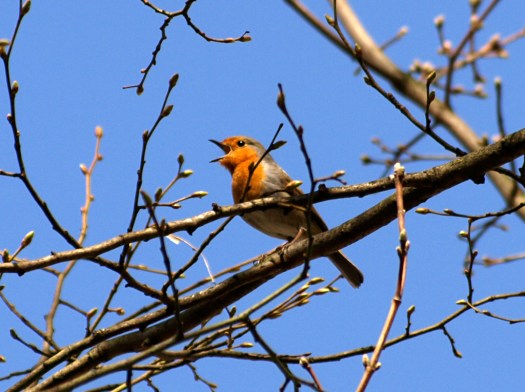
A robin flies into the window. She backs up, bewildered, and returns to her perch on a bare branch of the Japanese maple.

“Oh, you poor bird. I understand. I’ve hit my head against my reflection more than once in my life.”

The robin seems to catch her breath, and she’s off again, flying towards the window, searching for someone in the smudge filled glass. Herself? A lover? What does she want, and why doesn’t she learn her lesson? There’s nothing there for her but a hard, cold surface that will cause her pain.

And still, she flies into the window. Again and again and again.

Thud… Thud … Thud …

I watch her as I sit on our comfy, worn leather couch with a hole in the right seat cushion, the buzz of the laptop the only noise–that, and the recurring thud of the bird.

On writing memoir

As a memoirist, this happens, this hitting my head against a hard surface, when I get too introspective with my work. I am the writer, and the narrator, and the main character, and sometimes my roles mingle to the point of self-obsession and confusion. My desire to be perceived well, and to reach my personal predestined truth in the story turns me into a robin, fixated on my reflection, attempting time and again to break into something bigger than me, but really only hitting my head against a hard surface.

Annie Dillard says that you have to take pains in a memoir not to hang on the reader’s arms, like a drunk, and say, “And then I did this and it was so interesting.”

Thud.

The robin has banged her head against our window for three days. I’ve tried to deter her by closing the curtains and opening the window a bit, but to no avail. She returns every few moments, unaware that if she just shifts her focus there is a whole world to fly into and discover.

If a memoirist’s goal is for people to esteem her, to like her, to want to be like her, it will show in the work. The writing will fall flat, come across as inauthentic, and showy.

No, the memoirist should write for discovery. According to Andre Gide, a French author and winner of the Nobel Prize in literature in 1947, one doesn’t discover new lands without consenting to lose sight of the shore for a very long time.

A good memoirist is open to her story’s agenda. She participates with the reader, and diminishes the importance of her role for the sake of the universal truth found in her words.

“On the outskirts of every agony sits some observant fellow who points,” says Virginia Woolf. I would add that every good memoir has a point outside the visceral domain of the writer starting out. Our job is to bring ourselves and our readers to that point. Instead of a writer playing tour guide, the memoirist should rather find herself on the journey in the words. Then she will be able to fly right and free for discovery, and most assuredly get herself and her readers somewhere she would not have found on her own.

What I Want on my Pizza

…or in my queries.

The hubby and I have been eating a lot of pizza lately. Namely because it is rather okay to eat when cold, and new babies often necessitate cold-food eating. My favorite pizza is Hawaiian–Canadian bacon and pineapple. Yum! Although, I won’t turn my nose up at pepperoni or mushroom and black olive. Still, even the thought of a Hawaiian pizza makes me drool a little bit.

Similarly, while a well-written query letter is edible, there are certain queries that make me pay a bit more attention, that make me email the author back asking for a partial, a proposal, or even a full manuscript.

I have had several conversations with authors about what stands out to me when I am reading through the slush pile. Sometimes it’s a certain spark–something in the tone of the actual letter. Or sometimes it is in the fantastic writing, itself–the story, a certain character, the beautiful language. However, there are also a few tangible things that really impress me, as well.

1. Numbers Both online and in person. In other words, platform. An author needs to be connecting online via Facebook, Twitter, Pinterest, Instagram, his website, his blog, his online newsletter, etc. If all of those overwhelm you, pick two or three that you can grow consistently. Start with ten minutes a day. He also needs to be speaking (and keeping track of how many people attended each event) as well as writing for print publications. If the author is a nonfiction writer, then he needs to focus on non-fiction articles. If he is a novelist, then aim for literary journals.

2. Names I often request a partial or a full if the author mentions that a certain celebrity or high profile person is willing to endorse her book. If that person has the endorsement included in the email, then I am even more impressed. Obviously, most of the endorsements come after the book already has a publishing house, but it never hurts to have those connections ahead of time.

3. kNowledge 🙂 When authors mentions things I like, information gleaned from my biography, I take a closer look at their query letter. I don’t mean that you should be a creepy stalker for the agent you are interested in (that would probably have the opposite effect), but you should research the agent. Know what she wants to read; know what interests her.

4. Names Oh, I mentioned that one before? Spell the agent’s name correctly in the query letter. My name has an ‘h’ at the end. I have rejected authors because they spelled my name incorrectly. All right, I am not that cruel–I did read through the query letter before rejecting, but it did nothing to gain brownie points, and speaking of brownies…

5. Nuts I don’t like nuts in my brownies, but I do like chocolate chips. So, you know, if you really want me to take a look at your query, be sure send me some. I’m kidding. Kind of.

Just like most people will eat any kind of pizza, every person has his/her favorite. Each agent has certain things that he looks for in query letters, but building your platform, connecting with high profile people, and doing your research about that particular agent will definitely help your query letter stand out among the hundreds in the slush pile.

Questions: What tips/tricks have you learned to help your query letter shine? Did they work? What hasn’t worked for you?


Would You Write A Book Without an Outline?

You probably wouldn’t drive across the country without a map.

You probably wouldn’t cook Thanksgiving dinner without recipes.

Would you write a book without an outline?

The practice of outlining a book in detail takes an enormous amount of discipline. Focusing on the infrastructure of the story is a whole different ball game than writing in free form and letting things evolve as they may. My first book was a result of rambling writing sessions, often resulting in superfluous content which ended up being taken out of the story. Although it was fun to just write and see what happened, it seemed there had to be a more effective method out there, one that would result in a greater yield with less exertion. Most writers have other jobs, and when it comes to writing time, every moment is precious.

Some writing coaches suggest that creating a detailed outline is the most important part of book writing, and the part where most authors struggle. Writers may spend weeks or even months on the outline alone, to provide some frame of reference for how detailed the outline can be. Writing a book is a project, not unlike building a house. There is the foundation, there are the walls, the flooring, the roof, etc. Only when the skeleton of the house is in place can homeowners enjoy working on some of the more aesthetic features of the home – picking out colors, the yard, creating curb appeal, you name it.

A project manager friend who has been intrigued by the writing process asked how my latest book was coming along. Our casual conversation at a wedding evolved into something else when I mentioned being stuck halfway through the book. The project manager asked if she could help me in going back to the drawing board and getting serious about planning it all the way to the end. I started sending her samples of my content and images of people that remind me of my characters. She would go through what I had written so far against our burgeoning outline and provide feedback: “I don’t think the character would say that on page 73,” or “When are the characters ever going to make it to Barcelona? You said that they have been saving up their mileage points for the trip,” etc.

At first I wondered if it had been a little premature to share my work with someone else. She had questions that were not always easy to answer, such as why I chose one title over another. Each time I had to explain an aspect of the story, it helped me figure out how to convey metaphors and messages with much greater clarity. After a few short weeks of this exchange, we finalized the outline. It’s all been downhill from there. Writing to an outline hasn’t seemed restrictive at all. It’s been like driving with a navigational system in the car, so you can better focus on the traffic, the scenery and the passengers.

Compass and Bible
Writing can be a very solitary profession, but creating an outline is a great opportunity to collaborate with others, should you desire to do so. It’s a lot easier to get someone to read an outline than to read a manuscript of 120,000 words or so. If you can have the feedback given to you in a postive way by someone who can deliver it in a manner that makes you comfortable, then your writing will become that much better for having another pair of eyes review it. Having to discuss and explain your work, your ideas, and your story line can be pretty awkward in the beginning. However, writers have to do it eventually anyway, so why not start from the get go?

Writers, do you sit down and just write, or do you use a more formal approach?

Writing In Every Season

485045_10101344113008718_1557147312_n

I don’t know about you, but as a writer, I struggle with managing my time.

I work full time. Serve in my young adults ministry. Belong to a community group. Spend time with my family. Juggle a writing contract. Spend free time with friends. Find time to work out. Sleep somewhere in there.

For those of you who have children, I’m sure this list is much longer. Somewhere in the middle of juggling that mess, I hit seasons of extreme burn out and discouragement. Everything seems to pile on at once, and ultimately my writing suffers.

I once heard that it is vital for a writer to be mentally, spiritually, physically, and emotionally healthy. To be honest, I don’t know how that is humanly possible. I am rarely completely healthy in a couple of these areas at a time, and healthy definitely hasn’t described me the past few months.

In January, I received a three-book contract. I couldn’t express my excitement! But, it went down hill from there. Work demanded all my time, I wrecked my car, edits came in right as I hit the most demanding couple of weeks on the job, and conflict rose in several friendships. With all the stress, I lost my appetite and my ability to sleep. Talk about unhealthy in every area.

I wondered how I could possibly finish the edits. I couldn’t concentrate. Creativity escaped me. But I stubbornly kept plugging away. Signature

Then something clicked. My broken emotions began to pour into my character’s painful moments to a greater degree than they ever had before. Not only did I understand what the editor was requesting, but I finally felt like I could pull it off and be proud of the result!

The Lord used my weak moments to breed creativity. 2 Corinthians 12 says, “But he said to me, ‘My grace is sufficient for you, for my power is made perfect in weakness.’ Therefore I will boast all the more gladly about my weaknesses, so that Christ’s power may rest on me.”

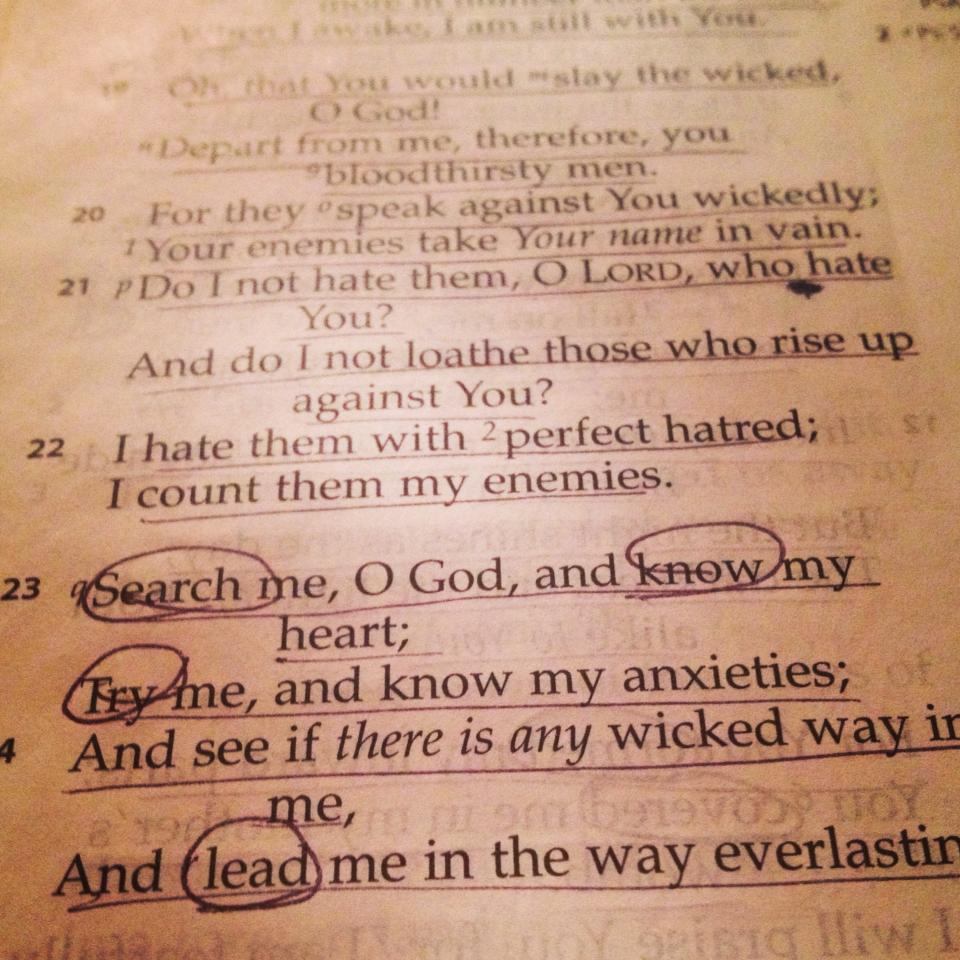
Thankfully, the call and standard of a writer is not to be healthy but faithful. In times of emotional struggle, the Lord uses that brokenness to translate a truth someone can relate to in my writing. I love what the psalmist said in Psalm 139, “Search me, God, and know my heart; test me and know my anxious thoughts. See if there is any offensive way in me, and lead me in the way everlasting.” If God knows our hearts inside and out, surely He can make beautiful writing flow from the inward parts of who we are, for His glory and the good of others.

Just as we labor to create a masterpiece, Jesus is in the process of molding us into His image. Sometimes He uses desert seasons to chip away excess. Sometimes He uses the mountain tops to create epic scenes. But He uses every piece of our story for His glory. We are never disqualified as writers when we can’t get it all together. Trust, obey, and write. Those messy seasons may just be used to encourage a reader, creating a mountain top moment in their life.

The one who calls you is faithful, and He will do it.” 1 Thessalonians 5:24

What areas do you need to focus on in your own life to be healthy? How has the Lord used rough seasons in your writing?

Live It Before You Write It

Often, I try to shortcut beyond my own abilities. Nowhere is this more true than with writing.

As a non-fiction author, I lean toward meeting felt needs in storied, practical, and spiritual ways. These days, every time I recognize a lack in life, my mind immediately draws a rough book, article, or blog outline. Maybe I can help someone else, I think.

There’s just one little problem. Sometimes I haven’t taken the time to live past my own lack. Impatiently, I rush beyond God’s desire to finish a beautiful work in my situation, and start sharing with others before I’m done living it out. I scribble my pitiful solutions onto a page. Too often, I forget to ask my Mentor what He thinks about what I just said.Nonfiction Half-Baked Ingredients

Like taking a cake out of the oven fifteen minutes before it’s done, my projects are half-baked when I rush them to my agent, to a magazine editor, or onto my blog platform. And because I’m still too close to the circumstances, the topic is too hot to handle.

Slowing down, and allowing God to add His special flavor deepens the richness of my life, and my work. Most often, this happens when I follow His timing, and don’t pull writing topics out before they are ready.

  • These are projects I want to write.
  • Need to write.
  • But the time isn’t right.

While I wait for the chemistry of those ideas to solidify, there’s plenty of other things to work on. I have life experiences already baked and cooled. But changing writing topics is like changing cake flavors. It requires putting some things away, and laying out a whole new list of ingredients. So how do I make sure I don’t mix things up in the process?

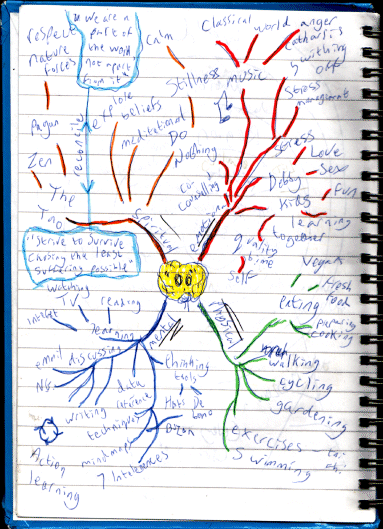
Mind Mapping ImageSpending a mere fifteen to twenty minutes helps me realign my thoughts into an organized fashion appropriate for the topic I need to focus on. One of my favorite brainstorming techniques is Mind Mapping. This process is simple, fast, reduces distracting thoughts, and moves me into a heightened creative flow. It pulls buried memories from the dark pantry of my brain.

Writing effective non-fiction often means living through a subject before you write about it. And Mind Mapping takes what we learn and develops those lessons into a teachable format. It ensures we won’t forget to relate any important part of the process to our readers.

Mind Maps enhance our memories and help us present concise non-fiction book projects. Mixed, baked, and cooled until the end product is just right. Showing readers what we lived, before we wrote.

Marketing by the Dozen

marketing]My next book, (which for our purposes here shall henceforth be spoken of as “The Faith Book” because it remains untitled), will release from Random House/Waterbrook early 2014. My dear editor, our own super agent Greg and his fantabulous wife, myself, and every friend and stranger I can pigeon-hole for a title discussion are in the throes of finding that elusive title. Oh, yes, I’m something of a bore about it. Feel free to run if you see me coming.

The mission is simple, and familiar to my fellow non-fiction authors. When my target audience sees this book on the shelves, he or she needs to connect with it, feel the need to purchase it, shove aside the huddled masses that have been awaiting its release, and hoof it to the checkout stand in record-setting speed. Whoa. I must have wandered into a daydream. Back to the real world and your regularly scheduled post.

The reality here is that “The Faith Book” will be vying for attention scraps among countless of those big dog authors, not to mention scores of worthy books, new and old, from authors of every other genre, gracing the shelves. If funds allowed, and they don’t, I would hire an outside publicist with the energy level of Richard Simmons and the marketing skills of whoever is behind Justin How-Did-That-Happen Beiber to beat the drum for it. Instead, I will send it out into the world and recommit to living by my own Happy Dozen Marketing Commandments:

– I will help Waterbrook’s in-house publicist to help me by remembering that I’m only one of many authors she has been assigned and I will remind myself that any media contacts or leads I can gather or pass on to her will help maximize her time, and thus my book’s exposure.

– I will design and mail out postcards for “The Faith Book” to AT LEAST the bookstores that hosted signings for my last book and as many more as I possibly can.

– I will maintain a current database of the stores that graciously welcome me in for a signing and I’ll try to be prompt about following up with thank you notes.

– I will interact with the public as much as possible at book events and do my best to see each individual before me instead of a group. Everyone has a story and every event is an opportunity to capture new ones.

– I will have material (book marks, business cards, etc.) to hand out at book signings so potential book buyers can feel comfortable walking away to consider the purchase instead of being put on the spot to purchase the book.

– I will call radio stations and ask if they are interested in doing giveaways of my book and I’ll consider it a good investment for the trade-off in airtime.

– I will attend as many book festivals as physically possible to connect with readers and writers.

– I will continue to make every effort to see that my weekly newsletter is entertaining and informative, keeping in mind that this is my way of giving back to the All Things Southern community.

– I will not use social media selfishly. Communication, by definition, is a two-way street. My readers are people, not numbers, and they deserve to be treated as such.

– I will support my fellow authors. (Towards that end: Dear author friends, please contact me if you would like to guest on my blog at All Things Southern.)

– I will do readings at area libraries. Their patrons may not buy books, but they are readers. As writers we have a shared responsibility to promote reading.

And number twelve of my Happy Dozen:

– I will enjoy my life while I’m promoting my work, knowing that I am living what I first dreamed many years ago as a little girl perched in the top of my reading/writing mimosa tree. I am a writer and I will be grateful for that privilege.

Hugs,
Shellie