Writing Aversion Disorder

I am currently suffering from writer’s block—or, to use a term more descriptive of how it actually feels on the rare instances when it seizes me, Writing Aversion Disorder (WAD), an ailment of much more serious proportions than mere blockage. Pointless No Entry sigh--James YardleyIt’s not just that I can’t think of anything to say or don’t like what I do say or even that the words are there but just won’t emerge from my brain or fingers onto the virtual page. Rather, I’m incapable of even approaching my computer. The thought of writing nauseates me.

As such, I’m late posting this month, which has surely not endeared me to the tireless and underappreciated editors of this blog. We’re supposed to set our posts two weeks early to give them time to look our writing over before letting it loose into the blogosphere. I feel bad about my sloth. I can’t help it, though. I’m in a bad way.

It should be good writing time for me. As a professor, I have summers off, and, with both daughters occupied with faraway internships, I’ve had big writerly plans this summer. I’m right in the middle—the most exciting part, where all the narrative strands start coming together—of a novel-in-progress, and my goal, before WAS set in, was to get ’er drafted by summer’s end.

Now my goal is to do anything but write. Read. Relearn “Minuet in G Minor” and “Für Elise” from my year of piano lessons as a child. String beads from stashes I found in my daughters’ rooms to make gaudy bracelets for myself and them. Play Spider Solitaire on my new phone. (My brother recently clued me in on how to Control-Z back to a game’s beginning to avoid wrecking my win-percentage.) Clean my deceased mother-in-law’s house down the road. (I’m not joking: I spent all day yesterday there, sorting, tossing, soaping, scrubbing.) Weed my garden out in the hot sun.

Raised bed--photo by SrlI was thinking about this problem as I crouched, hands in the dirt, today, and it occurred to me that, while I usually love working in the garden, even weeding, I’m also overcome on occasion by Gardening Aversion Disorder (GAD)—surely related to WAD. So, with no other blog post in view, I decided to examine what triggered my GAD episodes for anything that might illuminate and, ideally, solve my current dilemma.

Here’s what I came up with: I suffer from GAD when tasks or trips have taken me away from the garden for bit and, upon my return, everything has gotten out of control. Vegetables need harvesting, many having overgrown their tastiness. Itchy weeds carpet the gravel paths between the beds. Sand fleas have made lace of my eggplant leaves; my bean vines are encrusted in ants; my tomato plants are speckled with big black beetles. I know I have to regain control but don’t know where to start.

The answer to my own question—where to start—is to not ask it in the first place. Don’t look, I tell myself. Just leap! Whatever task I choose, my gardening soul has learned to believe, will be more productive, more creative, than wallowing in indecision.

Maybe I don’t want to write, I speculated, because I’ve lost control and uncertain where to start in reclaiming it. And, indeed, as soon as I thought these words, I knew them to be true. That little lightbulb of insight was all I needed.

Perhaps, I thought—or hoped, or both—I need to quit trying to figure what part to work on next and just do whatever comes to hand.

And somehow, having just that much—that little—of a plan sent me back to my desk to dash off this post and then leap back into story.

Scenes From a Street Fair

Writers, have you ever participated in a street fair?

I recently had the opportunity to represent local authors through Read Local San Diego at the Encinitas Street Fair. The total cost of the booth for a couple of days was $300.00, broken out into time slots for authors to utilize at the price of $25.00 for a two hour period. Considering that literally thousands of people attend the annual Encinitas Street Fair (situated two blocks away from the Pacific Ocean), it was clearly a cost effective way to gain exposure in the community. 

Parking nearby was out of the question. My husband was good enough to drop me off near the booth, using back roads to weave in and out. Realizing this would be the case, I took a roller bag with wheels to carry my books, a desk easel to display my books at the booth, several pens, a pad of paper, and a set of business cards. As far as the number of books, they suggested at least five, so I brought twenty. Next time, I’ll go with around forty or fifty. I pre-signed the books with a “hope you enjoy the read” type message, so I could quickly fill in people’s names and the dates and facilitate the process.

There were three other authors at the booth with me. We had two six-foot tables, with two authors per a table. “Oh, you’re here,” my table mate said when I arrived about five minutes before our shift began. “I was about to take over your table space.”

I became acquainted with him and the other three authors in my shift. At first, none of us were sure of how to engage the throes of people walking by our booth. One author called to people like a carnival barker, offering a chance to win one of his books if people would fill out a slip with their email and mailing addresses. Most folks, there with the intention of being out for a stroll and buying no greater purchase than a funnel cake, weren’t too receptive to this approach. The four of us did some brainstorming and giveaways seemed to be the way to go in this environment. I gave away free signed copies, asking for an honest review on Amazon in lieu of payment. That seemed to go over pretty well. In each book, I placed a business card with my contact information on one side and my book cover on the other side.

Next to our booth was a fifth local author, a gentlemen of a certain age who writes for the Young Adult market. He has quite a following and teenagers kept coming by throughout the day to say hello to him. He has nineteen books to his credit and required his own booth. He is an adjunct professor at a local university and asked if I would like an opportunity to speak and / or teach. The street fair was proving to be a good opportunity to interact not just with the public, but with like-minded authors.

Street fair

During the slow moments of the shift, our group compared notes and talked shop. An elderly man in the group who was intimidated by social media went home with an education about how to use Twitter. One lady needed a reasonably priced editor and received a referral. Another writer needed a graphic artist referral for book covers, and was given several suggestions. I became familiar with the San Diego Writers Guild and started looking into their upcoming meetings.

We also worked as a team, which was fun. If someone approached an author whose book wasn’t their cup of tea, then there were four other writers of very different genres available to meet. Several authors had huge display posters with the covers of their books. They said these can be ordered online, and all one has to do is send in the content and a digital file. We learned that coffee and books and wind are not a very smart combination. We learned that a roll of duct tape is imperative in order to fix issues such as crooked signs or tent tables that needed more infrastructure. Bringing a box of pens and having a way to make change is also advised.

All in all, a street fair is probably not going to yield thousands of sales, unless the fair specifically focuses on books. Most people going to a street fair may not have books on the mind, but it is a wonderful networking opportunity, and you just can’t beat the exposure for the price. You may want to check out street fairs and rental booths in your own area, because people really do like to support local businesses, including their local writers and authors.

Have you had any experience with street fairs or book expos?

Any suggestions on how to best leverage this kind of marketing approach?

What Does Your Hero Yearn For?

I’m not talking about story goals here. This is something deeper, more at the core of his being. James Scott Bell writes about this in his book Conflict & Suspense.

The hero may not even realize it’s present. It’s something he doesn’t have but yearns for. Businessman Running with UmbrellaBell defines yearning as a desire for something without which the person feels incomplete. And he may not even be aware the yearning is there until a story event triggers a response based more on the yearning than on the event itself. This could lead to behavior, an overreaction or under reaction, that makes little sense to the other characters and to the hero himself.

This yearning is in your hero’s history, perhaps something from his childhood. Whatever it is, it predates the story. When he comes into the story, he’s already carrying trouble in the form of this unfulfilled yearning. This gives you all kinds of possibilities for unpredictable actions by the hero as the unspoken yearning influences his behavior and relationships with others.

man prayingFor example, say your hero yearns for a strong father figure because his father left the family when the hero was a boy. In your novel, he might have a hard time seeing the antagonist as the villain because he develops a strong emotional attachment to the man early on. As the villain is slowly revealed, the hero rebels against what he sees and may even attempt to shield the bad guy, defend him, rationalize his behavior. Or he may feel betrayed which can send him down another path in the story

Next time you feel stuck with your hero, dig deeper into his history. See what unexpressed yearning he’s hiding from himself—and from you.Now the tension and potential for a tragic outcome is heightened as the hero’s yearning, and resulting idolization, of the villain conflicts with the reality of who and what the villain really is.

Four Promises for Facing Self-Induced Pressure or Deadlines

Photo/KarenJordan“And you will know the truth, and the truth will set you free” (John 8:32 NLT).

Sometimes I feel like I can’t breathe because of self-induced pressure or someone else’s expectations of me. And at times, I get tired even thinking about trying to follow through on all of the commitments that I’ve made as a freelance writer.

But I know that “God didn’t go to all the trouble of sending his Son merely to point an accusing finger, telling the world how bad it was. He came to help, to put the world right again” (John 3:17 MSG).

So, when I finally sit down and bring my feelings to the Lord, I remember His promises of freedom, strength, provision, and peace.

Freedom from judgment. Romans 8:1-2 reveals the promise that there is no condemnation to those who are in Christ Jesus.

With the arrival of Jesus, the Messiah, that fateful dilemma is resolved. Those who enter into Christ’s being-here-for-us no longer have to live under a continuous, low-lying black cloud. A new power is in operation. The Spirit of life in Christ, like a strong wind, has magnificently cleared the air, freeing you from a fated lifetime of brutal tyranny at the hands of sin and death (MSG).

Strength for our weakness. God also promises to give me His strength in my weaknesses. In 2 Cor. 12:9-10, I read,

My grace is enough; it’s all you need. My strength comes into its own in your weakness. Once I heard that, I was glad to let it happen. I quit focusing on the handicap and began appreciating the gift. It was a case of Christ’s strength moving in on my weakness. Now I take limitations in stride, and with good cheer, these limitations that cut me down to size—abuse, accidents, opposition, bad breaks. I just let Christ take over! And so the weaker I get, the stronger I become (MSG).

Provision for our needs. And did you know that God also promises to provide all that you need in Christ Jesus? “And this same God who takes care of me will supply all your needs from his glorious riches, which have been given to us in Christ Jesus” (Phil. 4:19 NLT).

Peace through prayer. So, if you’re struggling with self-induced pressure or fighting a battle with judgment or condemnation, I encourage you to stop what you’re doing for just a moment and voice your fears and needs to God. He promises to provide His peace through prayer.

Don’t fret or worry. Instead of worrying, pray. Let petitions and praises shape your worries into prayers, letting God know your concerns. Before you know it, a sense of God’s wholeness, everything coming together for good, will come and settle you down. It’s wonderful what happens when Christ displaces worry at the center of your life. (Phil 4:6-7 MSG)

How do you deal with your self-induced pressure as a writer?

Cha-cha-changes…

A lot of changes in social media this week….
Sit down, buckle up and hold on for the ride….

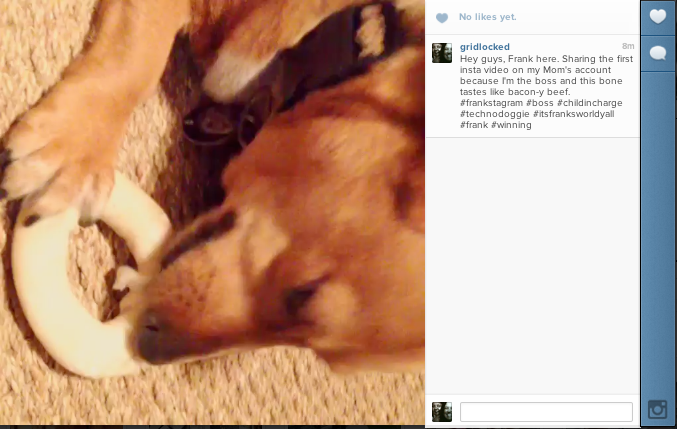
Instagram has now updated its application to include videos.
Everyone can see them, but if you have an older Android phone, you will have to wait to be able to join in the fun. This could be interesting to the future of Vine. You get to choose a filter and make your video a bit more interesting then just a regular video. The maximum time is 10 seconds for one of these gems.
Check out Frank's Instagram video here... http://instagram.com/p/azfDD4OxC9/
Check out Frank’s Instagram video here…
http://instagram.com/p/azfDD4OxC9/

It can be hard to follow the updates with so many changes in social media happening so often, so where is the best place to find info on these updates?

For updates on Instagram, I read their blog. http://blog.instagram.com/ . It’s super informative and they have great information. Also make sure you are following Instagram on your account. http://instagram.com/instagram . And one more place you can check is http://instagram.com/press/. This is all their press releases and information. Instagram (in my humble opinion) is the best creative social media outlet, and so fresh for marketing ideas.

Summertime Social Media.

New to Facebook this week is #hashtags. Facebook has borrowed, or maybe stolen, Twitter’s business model with hashtags and video clips. Still confused about them? You can go back and read my blog on hash tags here… Hashtags are a VALUABLE tool for advertising and marking things that people can easily find. You can now search things on Facebook with hashtags. This will help you market and find like minded people. Its a great tool. Your Instagram videos can also be shared on Facebook as well.
Hope you are all having a great summer… and now as you document it on Facebook, you can hashtag it all and upload videos of your activities on Instagram…. (he he he!).
__________________________
Follow Ingrid on Instagram and Twitter!
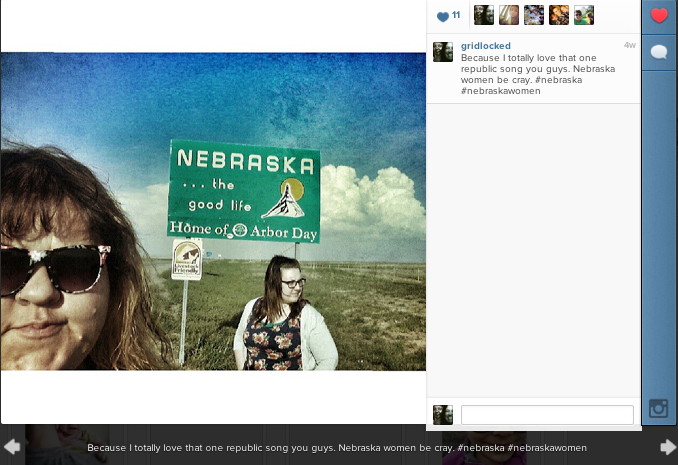
Ingrid on Instagram. www.instagram.com/gridlocked

Ingrid Schneider is WordServe’s resident Marketing Maven. With a specialty in social media, Ingrid loves helping authors find and manage an online tribe of readers. After spending the last 15 years managing and marketing restaurants, people, and businesses, Ingrid knew that helping people market themselves via social media and online platforms was a passion and something at which she excelled. Now doing social media marketing for some great-named authors, Ingrid also loves to imagine that she is a secret agent, because she can’t disclose

with whom she is working. (Believe us when we tell you that Ingrid handles some big names, but for anonymity’s sake, we can’t disclose this TOP SECRET information.) Imagination and creativity is something Ingrid is serious about and loves to incorporate into her work with her clients.

Shameless: How to Fail a Book Signing (but Not the Writing Life)

“Art is born out of humiliation.”  W.H. Auden

I had a fantastically unsuccessful book signing in a big box store not long ago. (Yes, signings still occur, despite the takeover of social media.) Afterwards, licking my wounds, I turned to a book on my own shelves, Mortification: Writers’ Stories of Their Public Shame. In it, Margaret Atwood, Rick Moody, Billy Collins and a constellation of such literary brights offer up the most companionable ignominies and embarrassments. (Fittingly, I bought the book used, online, for a penny.) My own parade of humiliations that night were paltry next to theirs. Still, couldn’t I do better?

Two weeks later, an Internet search on “book signings” confirmed my suspicions. According to several book signing experts, I did indeed do everything wrong. First, I missed the Webinar on “The Seven Steps to Turn Yourself into a Celebrity.” In another  article, I violated nearly every one of thirteen steps, beginning with, “Decide, in advance, what sort of clothing you want to be seen wearing by your reading public.”  (Did I do this? No.) Step #6 advised bringing along a printout of your manuscript for fascinated readers. (Really?)  My most egregious error was the last step: my failure to inform the store managers that I would be the bookstore’s official greeter while I was there. Nor did I walk around with several copies of my book introducing myself to everyone in the store, as he advised, pressing my own books and bookmarks into their astonished hands.

I would rather demonstrate the wonders of Balinese kitchen knives through the Christmas season at Walmart than resort to such tactics.

We all know we need to successfully promote our own work. But when we sacrifice leisure, sleep, money, and most costly of all, time with our families so that we can write, none of us makes these difficult choices to be stalkers or hawkers with a leer and a bookmark. We write because we believe in our deepest-down spirit that God has called us to keep naming the world. We write to serve a meal to the famished, to dress the wounds of the betrayed and lonely. We write to offer hope and a story to the depressed. We write to offer clear thinking in a muddled marketplace. We write in humility, in insecurity, in desperate prayer.

And when our book releases, shall we then don our best barracuda suit, polish our teeth, slick back our hair and begin the hard, shiny sell, suctioning ourselves to every unfortunate person who innocently wanders into a bookstore? Did any of us sign up for this?

Let’s take a breath. We don’t need to sell. We don’t have to sell out or sell ourselves short, or sell our own snake oil. We need to offer. We’ve just spent two to three years composing, listening for God; we do indeed have something to offer. We offer our work, and, more importantly, we offer ourselves. In all of our promotion, we need to think, how may I serve others? How may I serve my readers? We might end up giving books away—a lot of books. We might do some speaking gratis. We might end up on the short end of the accounting sheet. We might end up praying with a stranger. But at the end of the day, the year, the decade, we’ll count it differently:

We got to give. We got to give more than we knew we possessed. We got to be part of a global conversation. We got to know new readers, who taught us more than we knew. We got to pray for strangers who became friends.

Don’t listen to “sell-a-ton-of-books” schemes when they violate who you are and what you’re to be doing in this world. Go ahead and “fail” a book signing if you must. Be a real writer, without shame.

Showing Vs. Telling

Let me first say I am hardly an expert on show versus tell—every writing teacher’s admonition for every storyteller out there. In fact, I was quite shocked when another author said she was taking notes on some passages in Poison because she thought they were good examples of showing. I am still hoping she will tell me exactly which ones they were so I can admire my own amazing work because I was that surprised.

ActorShowing versus telling can definitely be learned (after all, I did it and was never an English major) so don’t go over the writer’s cliff Thelma and Louise style if some of these points don’t hit home. I am still learning the more advanced points myself and that’s a mark of a true writer—always desiring to learn more.

The concept of showing could also be described as Deep POV. I think these concepts are honestly interchangeable. So if you hear one—think of the other.

The first (and really good) piece of advice I got on showing was to write my scenes as if I was filming a movie. How would I describe what was on the screen to a reader without stating the obvious?

For instance: He was angry. This is telling. It doesn’t leave any room for the reader to use their imagination. Now, more showing. Her husband swore at her and spittle hit her face seemingly to mark a target for his fist to punch her in the jaw. See the difference? I haven’t said the word “angry” at all, but does this man seem fired up?

While editing, you’re likely telling if you name the feeling. He was mad, sad, fearful…etc.

A great tool I’ve used to help me show more visceral reactions is The Emotion Thesaurus. There is also a website by the same author called The Bookshelf Muse. It gives specific bodily actions for tons of different emotions. Use this as a starting point to generate ideas and then improve them for your own manuscript.

Another tip to help show instead of tell is to phrase things as questions. Telling: She wondered if her attacker was walking behind her. Showing: The echo of footsteps matched her high heels as they clipped down the pavement of the dark alley. Was it him? Was it the man who nearly killed her with a quick slash of a knife across her throat two years ago? The one she presumed was now sending her all those threatening letters—just like before. Now he was free.

To show more, add a visceral reaction from the woman from the emotion she is likely feeling which in this instance would be fear.

The echo of footsteps matched the quickened pace of her heart as she broke out into a run down the dark alley. Instinctively, her hand covered the thick scar as a shield from both the memory and the act. Was it him? Was it the man who nearly killed her with a quick slash of a knife across her throat two years ago? The one she presumed was now sending her all those threatening letters—just like before. Now he was free.

I know—future editor. How can she run with her hand set on her throat? Just to illustrate a point. Edit at will.

Also, don’t feel like you have to do this in the first draft. The first draft is all about getting the words on the page. Showing can be added in subsequent editing phases that you do before the manuscript goes to an agent or publisher, but don’t get too hung up on trying to do a lot in the first draft until it becomes more natural for you.

This is just the beginning. There are many more techniques that can be used so keep working at it and you’ll have the reader sitting inside your character in no time.

What are some techniques that have helped you show vs. tell?

Praying Psalm 23 for Writers

Sheep
Sheep (Photo credit: Wikipedia)

The Lord is my Shepherd:  Sheep are stubborn, fearful, and crowd followers, like people. We need a shepherd to lead us. We must surrender our life and work to God.

Lord, you are my Shepherd. I place myself and my words under your authority.

I shall not want: God is all sufficient. When we trust God to provide for us, we can let go of the wants of ego. He redefines success.

Lord help me to want what you want for me and for my work.

He makes me lie down in green pastures: Writing is endless and the refreshment of rest and renewal is essential.

Help me find the balance of work and rest.

He leads me beside still waters: We know the difference between our own exertion and divine filling when the words flow like gentle waters.

Lead me to inspiration and fill me to overflowing with your words.

He restores my soul: We are strongest in the areas where we have been healed.

Restore my spirit, Lord. Heal me that I may heal others.

He leads me in paths of righteousness for his name’s sake: He provides that daily connection that guides us in the truth, as we write–for His glory, not ours.

Help me always to know the truth and to remember that I do my work for your glory, not mine.

Even though I walk through the valley of the shadow of death, I will fear no evil, for you are with me. Your rod and your staff, they comfort me: We give deeply of ourselves and our experiences, making us vulnerable and easily hurt. We fear exposure and criticism and we receive it, but we don’t need to fear it.

Protect my heart, Lord.  Help me to be bold in my work and not to fear criticism.

You prepare a table before me in the presence of my enemies; you anoint my head with oil: God gives us provision in the midst of our problems and he continues to protect us.

Thank you for your provision. Anoint my head to protect me from the small things – the annoyances and thoughts that distract me.

My cup overflows: Every good gift comes from God–the good days, the letters and notes of encouragement from readers, the joy of seeing a life change because of the words He has provided.

Thank you, Lord, for this work and the abundance in life with you.

Surely goodness and mercy shall follow me all the days of my life. And I shall dwell in the house of the Lord forever: It is not for this world that we write. It is for eternity.

Lord, accept the offering of my words. Use them as you will.  Lead me, provide for me, protect me. I will follow.   

Amen

Betsy Duffey and Laurie Myers: The Writing Sisters

http://www.WritingSisters.com

Risking Rejection

Why are we afraid to fail? Often because we believe rejection exposes a gap in us. It points to something we don’t want others to see. It confirms what our suspicions tell us.

We aren’t acceptable.

As writers, we risk rejection from many different sources. Projects and people alike can make us feel unacceptable, and throw us into a pit of paralyzing despair. Any one of a myriad of things have the power to make us give up on our writing dreams. If we let it.Definition of Rejection

  • Literary agents can reject us.
  • Booking agents can reject us.
  • Publishers can reject us.
  • Editors can reject us.
  • Endorsers can reject us.
  • Influencers can reject us.
  • Reviewers can reject us.
  • Media can reject us.
  • Readers can reject us.
  • And through Self-deprecation, we can reject ourselves.

So how can you empower yourself to feel acceptable when rejection says you’re not?

Author Jim Stovall
Jim Stovall’s Blindness Didn’t Hold Him Back

Challenge your own viewpoint. Take a 180 approach and look at this specific moment as your personal catalyst for change, improvement, and a call to do better work. Jim Stovall, a blind author and movie maker, knows rejection well.

You’ve GOT to watch the video on his link to see what he says about giving up. Here’s a quote to give you a hint of the amazing story you’ll want to hear. “That big dream would not have been put inside of you if you didn’t have the capacity to achieve it.”

Author John Grisham
John Grisham’s Tenacity Made the Difference

Another powerful example of tenacity in the face of rejection comes from an author most of us recognize. Internationally acclaimed novelist John Grisham. He understands what it feels like to fail in front of professionals, but he chose to learn from his mistakes, and keep on keeping on.

Finally, I would be remiss if I didn’t remind you of the greatest victory that came from the greatest rejection of all. A book that was denounced, fought against, and even after publication, faced efforts to utterly destroy it. But yet, the words inscribed inside changed the world, and made it a better place. The book I refer to is The Bible. Aren’t you glad God didn’t give up.

So the next time you get a rejection letter, phone call, email, or text, remember these three things.

Anita Brooks Walking Bridge Photo
Is Success Waiting Around Your Corner?

1. The capacity to make your big dream reality is already inside of you.

2. Rejection prepares us for great things in the future, and reminds us to stay humble when we arrive there.

3.  Just because a few people fight against your efforts doesn’t mean you won’t come out victorious.

Maintain a teachable attitude, then act with integrity, humility, and tenacity. This is your big dream. Take courage, and don’t let anyone convince you it’s unacceptable. Risking rejection can turn that big dream of yours into something real. But only if you don’t give up too soon.

The Best Marketing Tool

Authors are constantly on the lookout for the best marketing tips and ideas. We want to get our books in the hands of as many readers as possible. This isn’t always just from the monetary end either; most authors I know truly believe in the message of their book. They believe it will help people and have a true desire to enrich the lives of their readers.The Best Author Marketing Tool

But sometimes it seems every where we turn, someone’s spouting a new marketing trick. I can’t remember how many posts and articles I’ve read about marketing. Some of the ideas are great, like the Hope and Trust Chronicles put on my by some of my favorite authors.

Then there are the not so great ideas, like buying fake Twitter followers. It’s not all about the numbers; it’s about connecting with people. Purchasing fake followers is a misrepresentation in my opinion.

The best marketing tool you have is you. The content you write and how you interact with people on your website, your social media sites, and in person is the most influential marketing you will ever do. Because if you do this with sincerity, passion, and genuine caring, your readers will talk about you.

And there is nothing that carries more weight than word of mouth. Think about it. You’re trying to decide between purchasing two books and your best friend comes up. She points to the book in your right hand. “You have to buy this book. It’s the best book I’ve read in years. And the author’s website has these amazing behind the scenes looks and a free e-book you can download. I’d loan you my copy, but I already gave it to my mom, and you shouldn’t wait until she’s done with it. It’s too good not to start today.”

Which book are you going to purchase? The one with the prettier cover, or the one your friend is raving about?

Invest in your readers. They’re real people and worth your very best. And if you invest in them, don’t just look at them as numbers, they’ll invest in you.

And that’s the best marketing tool a writer can have.

What are some great marketing efforts you’ve seen? What is the best marketing tool you’ve used? What’s a marketing endeavour you’d never do again?