Just Ask

The other day, while waiting on the phone before a live radio interview about my latest book, I prayed from my computer screen the Psalm that I had assigned myself as part of a memorization project a friend and I had embarked on. Our goal was not to memorize all the Psalms—that would be too hard—but just to acquaint ourselves with the gist of each one and memorize a favorite verse. Mine, from Psalm 2, was verse 7, in which the unspecified psalmist says, “I will proclaim the Lord’s decree: He said to me, ‘You are my son; today I have become your father’” (Psalm 2:7 NIV).

Interviews stress me. There’s no predicting what the host will ask. Sometimes they haven’t read the book, so I spend the whole interview trying to untangle what it’s really about from what the host thinks it’s about based on the title or cover material. Other times, they’ve read the book but have specific questions about parts of the book I’ve forgotten. Add to that the time constraints! A typical radio interview lasts only ten or fifteen minutes, including breaks for commercials and station identification. Invariably there’s a final question that begins, “In the thirty seconds before we break, can you explain …”

The worst part of radio interviews is that I’m very picky about how I say what I say—which is why I’m a writer and not a speaker. As a writer, you can revise your thoughts, or delete them entirely. In an interview, you’re committed to whatever crazy business emerges from your mouth in the moment.

Or maybe an even worse part of radio interviews is my general antipathy to self-promotion. Why can’t I just write, I wail inwardly, and leave that part of the publishing process to someone else?

To calm myself, I imagined the Father actually speaking the words of the Psalm to me: “You’re my daughter; today I have become your father.”

Frank Weston Benson--My Daughter Elizabeth
F. W. Benson–My Daughter Elizabeth

What a thrilling thought! The God of all creation as my actual parent.

When I got to God’s invitation in the very next line, though, I faltered: “Ask me, and I will make the nations your inheritance, the ends of the earth your possession.”

Whoa, I thought. The Bible notes must be right. The unidentified “I” of the passage must be David or some Davidic king or even Jesus himself. Anyone but me.

“But you write books,” I sensed or imagined the Father saying. “Just ask. I’ll give you nations of readers.”

Asking for that was too awful to imagine—however much I might want it. I couldn’t pray the words, not even in the secrecy of my mind.

Just then, the radio host’s voice intervened. Ten minutes later, I hung up.

I was still thinking, That went okay. I didn’t embarrass myself that badly, when the host called back to thank me personally.

“I’m sure people everywhere have said this,” she said, “but your books really minister to me.”

People everywhere. Answers to my prayers rarely come so immediately or unambiguously. Or maybe they do, but I return so quickly to not expecting God to respond that I don’t notice when he does. Or maybe I don’t really dare to pray with abandon—and thereby reveal to my own Father what’s really in my heart.

Why Bother?

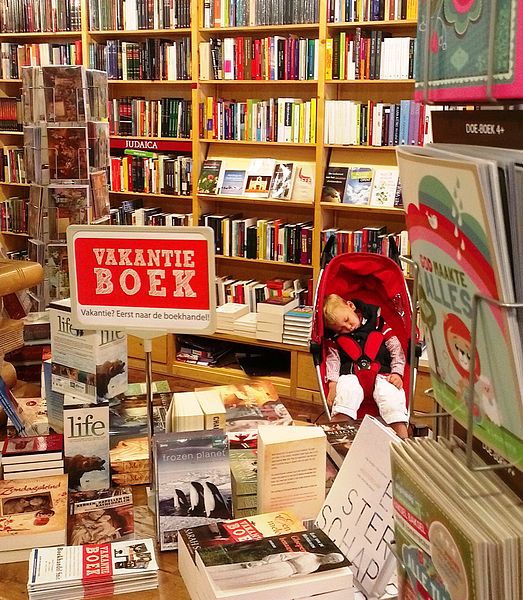
Sleeping_at_the_bookshop_crop“Times are bad. Children no longer obey their parents, and everyone is writing a book.” –Cicero (Roman statesman, died 43 BC)

“Maybe I shouldn’t even bother trying to get published,” said a writer I met at a writers conference with more than 700 women in attendance. “There’s a lot of competition, and you have to work so hard to build a platform, come up with a fresh concept, and write well. It all seems so hard.”

Have you ever had thoughts like this? As an agent, I’ve even had them myself. After all, there are more experienced agents out there—some who’ve been agenting for decades. Though I don’t have to worry about developing a national speaking platform, I do have to be known. It’s in my authors’ best interest for me to cultivate relationships with publishers and editors. I may not have to come up with a fresh concept, but I do have to recognize one when it comes across my desk. I also have to write well enough to interest an editor in a book proposal.

Why should any of us bother? In the world of book publishing, it seems like it’s all been done before, in one way or another. And then there are the numbers of books being published. Did you know that between the years of 1880 and 1980, there were about 40,000 books published in the English language? That’s 40,000 books in one hundred years. Then, between 1980 and 1990, about 40,000 books were published—in ten years. In 2011, more than two million books were published in the English language (counting both print and ebooks). With all that competition, it’s easy to get discouraged.

What happened to increase book production like this? Most people think it was the internet, and that’s certainly part of it now, but initially it was due to the fact that personal computers went critical mass in the 1980s. Word processing got faster, printing became more frequent, and distribution of printed materials sped up. It seems there is more supply than demand now.

If “it’s all been done” already, why would anyone bother writing one more book? Interestingly, statistics show that 80% of Americans feel compelled to write a book. That’s more than 200 million people. And thanks to modern technology, anyone can publish a book any time they want. Currently, there are 1,748,230 book titles available on Amazon! In order to be found there, you have to write well, develop a fresh concept, and build a platform.

It’s true that doing all of that isn’t exactly easy. But hasn’t life been hard since Adam and Eve left the Garden of Eden? Sometimes hard things are worth the effort. Here are a few reasons you should (we should) bother trying to get books published.

  1. People love to read. As long as there are readers who will pay money to read, publishers will publish books.
  2. Only you will say it your way. If all the problems in the world were solved, we wouldn’t need another book. But all problems are not solved, and you may have a message that will make a difference for someone who is struggling. Yes, there is a book for every problem you can think of, but not every book says what you would say or says it the way you would say it.
  3. Somebody will. Problems aside, if the world didn’t need another story, people would stop reading and watching movies. But the world is still hungry for stories, and people will always want the experience of a new story. Somebody will write the stories people will love to read, so why not you?
  4. Your heart says so. If you feel called to write a book, and you don’t do it, you’ll never know what could have been. The world will never know what you have to contribute if you don’t write. So follow your heart.

Maybe you won’t get a traditional book publishing contract. Maybe, if you’ve been published, you won’t become a bestselling author. But maybe you will. Your book may reach the multitudes, or it may bless only a handful of people. Why bother? Because your heart longs to know the difference your words will make in the world.

Question: Are you willing to do what it takes to find out what difference you’ll make?

Being a Published Author Won’t Make Me Happy (And How I know That)

As I finished grad school, I began writing about my experience. I wrote about what I wished I had known earlier in life. I wrote about psychological tools that heal people. In summary, I wrote about pain and what healed that pain. One day, while sitting in a coffee shop, I decided I was going to write a book about all this. So let’s see, it only took eight years to figure out how to find an agent, query an idea, write a proposal, change my idea, change my agent, and finally write the book once it sold. And only eight years of full time engagement in social media, blogging, and marketing. Only eight years of researching and learning through writing and speaker events. That in addition to my real job as a Licensed Professional Counselor and part time professor at a local university.

Getting a book published is difficult.

20130314-_MG_7882So the idea of seeing boxes of books on my front doorstep feels both surreal and monumental. It’s a huge accomplishment that I will celebrate with a party, in a red barn, with twinkly lights. There will be music, friends, food, and revelry. But I know that a published book won’t bring me happiness.

A few days ago I was talking to a friend who has authored over 40 books. I told her I knew that having a published book would not make me happy. She seemed surprised and wanted to know how I knew that ahead of time. I told her I thought it was because I had done so much research on the topic of happiness. I understand what poor judges people are at knowing what will bring them happiness and what won’t.

Striving authors need to know that a published book won’t make them happy. Here’s why:

  • People have a happiness set point. Fifty percent of happiness is genetic, ten percent is based on life circumstances, and forty percent is within our power to effect. For instance, Americans will put themselves in debt for decades thinking a dream home, boat, or car will make them happy. But the new wears off within a few days because of an effect called hedonic adaptation. Most people don’t understand that the lotto winer and the paralyzed person will bounce back to their prior happiness level within a few months of their changed life condition.
  • The joy is in the journey. I’ll never forget what my friend Zeke Pipher said when his book released. In essence, “Whether this book sells or not, it won’t define my worth, happiness, or success.” He went on to describe his faith and his relationship with his wife and children, saying those were the reasons for his joy. Zeke should know. His mom wrote an international best-seller. She soon found that the harried pace of traveling and speaking made her miserable. There’s an interesting research study that found when people were randomly beeped, and told to write down what they were doing and how happy they were, folks were happiest while in the creative state of “flow.” Flow is when you are fully absorbed in an activity, so much so that you lose sense of time. Numerous studies have shown that it is the striving, not the achieving, that makes us happy, especially when our goals are realistic, flexible, valued by the culture, authentic, non-materialistic, and not negatively impacting other parts of our lives.
  • The more we attain, the more we want, and this negates our increased happiness. Professor Sonja Lyubomirsky in her newly released book, The Myths of Happiness, explains that aspirations are misleading. We attain more, so we want more, and the wanting makes us feel bad. Crazy huh? She concludes that we shouldn’t expect less but that we should simply not allow our desires to continue escalating to the point where we end up feeling entitled and convinced that we would only be happy if we got more and more of this or that.
  • Relying on external rather than internal validation makes us unhappy. Some people think they will be happy based on other people’s opinions of their success. But, when we ask ourselves the question, “How good (successful, smart, prosperous, ethical) am I?” the people who rely on an internal rather than external objective standard are happier. There will always be someone wealthier, more attractive, thinner, more popular, and more talented. Therefore, relying on other people’s opinions rather than our own is a recipe for misery. In short, goals which cause growth, make us feel competent, and connect us to others are the ones that make us happy. Goals that make us strive to be rich, famous, popular, or powerful make us unhappy. (I wrote more about this over here at Michael Hyatt’s blog.)

*I orignially wrote this post just before my book released in March 2013. It’s true, having a published book has not made me any happier than I already was. I feel a sense of achievement and gratitude, but I’m glad I knew it wouldn’t make me any happier than I already was.

Think about the last big milestone you achieved.

How long did the happiness last?

I Told You So

IMG_38701_edited-1

Some of the most well meaning people told me to wait to write until I get older. No way a twenty-something can write what people want to read. You don’t have enough real world experience. This is a pipe dream.

The reality of writing a book is that this is a tough job, tough business, and not everyone succeeds. So often the people in our lives have the best intentions as they quietly attempt to redirect us. They don’t want us to be disappointed, experience the sting of failure, or struggle through pain induced by rejection.

Thank goodness the Lord has different plans. I’m thankful for those who attempted to redirect me. I’m thankful for the countless friends and family members who consistently encouraged me. Both groups helped me trust the Lord more. I imagine Him smiling down with a little chuckle and saying, “I told you so.”

I am under qualified in life experience, but I serve a big God. If fisherman can become world changers, so can I. I love what the apostles say in Acts 4:20, “As for us, we cannot help speaking about what we have seen and heard.” So let’s turn that into writing advice:

1)   Write what you know.

I know the heart of young adults to make a difference and dream big. I know the pitfalls that come with learning this adult life. I know the struggles of my parents to raise kids and find a new dynamic with adult children. I know my grandparents’ joy as they pour into us and take the “friend and counselor” role because they’ve already done the parent thing.

I know the south. I know Texas. I understand different personality dynamics. I know how girls think. With a younger brother, I’ve been around guys enough to know how they react and respond.

Bam. I can take all that and craft characters, scenes, problems, and story lines. Imagination takes care of the rest.

2)   Write what you want to learn.

In the course of writing my first book, I wanted to learn more about the SEALs, Haiti, and living in the deep south. (Yep, my brain is random.) So I set my book in Alabama with a trip to Haiti and a Navy SEAL love interest. I might recommend starting out with something slightly more familiar for a first novel, but I rarely pick the easy avenue when I start a project. So here we are!

I traveled to Haiti, made friends with a SEAL, and peppered my Alabama friend with questions and requests for pictures. I worked to become an expert. I’m still a long way from perfection, but I can now speak with a working knowledge on these topics.

3)   Write from your passions.

Three things impact my writing heavily:

– Characters that dream big

– Life as an adventure

– Hope that is found in Christ

I believe we serve a big God who loves to do big things with everyday people. I believe every day is an adventure crafted by the Master Storyteller. And I believe every story ends with hope because of Christ. Forget this post-modern idea that you live and die and that’s it. We were created for something more, and my stories wrestle through hard issues that don’t always end perfectly but always end with Christ. With that fueling me, passion informs every word I write.

I don’t have to understand life, the universe, and everything. I understand my world and snapshots of the world around me. I write what I know. I write what I want to learn, and in doing so, my world expands to fuel my next novel. I write what I’m passionate about, which changes and grows constantly.

Now, I’m telling you that you can do it. You can achieve your writing dream. There were many moments when I doubted this dream would come true. But if the Lord has called, He will bring it to pass. Keep writing. Keep growing. Keep networking.

One of these days, when you get that first contract in the mail, know that you heard it here first: I told you so!

Speaking Out of the Silence

There are so many voices competing with each other: internet, news shows, even churches. “Follow me … read me … put your faith in my politics or spiritual outlook or life theme.” There are times I hate to add one more entry to the chorus.

When I was a girl living in Africa, street hawkers lined up selling their wares. To compete with others on the crowded street, they’d call out. “Over here, Madam! I have the best one, perfect for you! I will make you a special price!” Sometimes, they would even grab my arm. It was understandable; making a living in Africa was uncertain. But the vendor I was most likely to visit was the one standing quietly by his stall. He seemed less overwhelming.

Etale_de_fruit_en_rue

When I visit my social media sites, I sometimes feel like those overly-aggressive vendors. If I want to get the word about my novel out, I do have to speak out. But I still think the answer lies in silence. To write a novel, what did I do? I took long walks alone, letting ideas ruminate and grow. I sat at my computer, sometimes just staring into empty space, letting characters’ voices take shape. I listened, and a story worth writing grew.

By the same token, when I pray, I don’t feel the need to shout at God and wave for His attention (usually). I sit with His Word and let it speak. I sit quietly in prayer and it’s then I sense His presence.

I think of the many saints and heroes and poets who turned off the noise and worries of their day so they could spend time alone with God, an hour or hours of their day. The apostles, too, even with all they had to accomplish, took hours to pray, to listen. Then, when they spoke, it wasn’t just more noise. They had something so worth hearing that people stopped what they were doing and listened. People came to them. Now I’m not saying our prayerful marketing will put us in a category with the apostles or make us the next Mother Teresa.

I am saying that if we speak from a place of pressure, that place where we have to get the word out, and we’re stressed about it, in combination with all of the other pressures – writing, work, family, finances – the desperation will show, and we’ll be that aggressive street hawker. On the other hand, if we spend time in silence, letting our marketing ideas well up from a place of peace and strength, it’s going to come across differently. Quiet confidence has its own language.

If we take time to listen our ideas might be fresher. If we call attention to our books after prayer, we’re more likely to feel in our bones that God holds our writing destinies and general good in His hands, and people will feel less bombarded. They’ll feel like it might be safe to stop by and see what we’re selling.

By all means, speak about your writing. But speak out of the silence.

Is One Really a Lonely Number?

solitaryRecently I Netflixed a National Geographic documentary called Solitary Confinement. Don’t judge. It’s cheaper than scrapbooking and far less carcinogenic than sun bathing. Bonus: it made me think…

Is writing really a solitary career?

There are a lot of myths surrounding the mysterious lifestyle of a writer, numero uno being that it’s a lonely existence. There sits Mr. Scrawny Writer, all jittery on java, banging away at a keyboard in a room devoid of humans, an alien probe his only hope of contact. Ever. Poor, lonely author.

What a fat lot of bunk. Writing involves a whole village of people right from the get go. Let’s take a peek at who lives in the grassy huts surrounding Mr. Writer.

Critique Partners

Think partners in crime. Usually a crit buddy is another writer who can point out your foibles…like using too many big words like foibles.

Agents

I like to think of my agent as a cheerleader. She looks great in a mini-skirt and whoa baby, can she belt out a cheer when I need to hear one.

Editors

Whether they’re wearing a macro, proofreader, or acquisitions hat, these people are a writer’s best buddies. Fact: a writer cannot see the forest for the trees—or is it trees for the forest—or…wait a minute. Is there an editor in the house?

Marketers

Steel-toed boots are nice and all, but how many doors of opportunity can an author realistically stick his foot in? These villagers are worth their weight in gold.

Reviewers

Seriously, who believes an author’s 5 star review of their own book? It’s a staggering number: zero times zero. Networking with reviewers is vital to credibility, plus they’ll sometimes take you out for lunch.

Bookstore Owners

Most writers already have a relationship with the nearest bookstore owner because guess what—writers read.

Librarians

While some authors shun cozying up to a knock-kneed four-eyed librarian because, hey, they’re lending books that could be earning a royalty, I say a librarian is beneficial to embrace. These are the frontline soldiers, able to shoot your book to the forefront of the public spotlight. If you’re a writer, feed, nurture, and love a librarian today.

Readers

Call ‘em your tribe. Think of ‘em as your audience. Your peeps. Homeboys, if you will. Yes, an author may be squirreled away for the better part of a year, diligently writing a story, but then for the rest of eternity (or as long as your contract allows, whichever comes first) these are the people who will become your lifelong fans…or enemies, depending. Still, readers let a writer know what they think.

And these are just a few off the top of my head. Writers develop all kinds of crazy relationships with their cover designers, conference speakers, the UPS driver, yada, yada. Now that you’ve been educated, next time you hear someone say writing is a solitary vocation, you can confidently shake your head and say “Unh-unh.”

WordServe News: July 3013

Exciting things have been happening at WordServe Literary!

On the final post of each month you’ll find a list of Water Cooler contributors’ books releasing in the upcoming month along with a recap of WordServe client news from the current month.

New Releases

IfShoeFitsSandra Bricker, If the Shoe Fits (Moody Publishers)

*****************************************************************************************

WoundedWomenDena Dyer and Tina Samples, Wounded Women of the Bible (Kregel)

*****************************************************************************************

WeLaughBecky Johnson and Rachel Randolph, We Laugh, We Cry, We Cook (Zondervan)

*****************************************************************************************

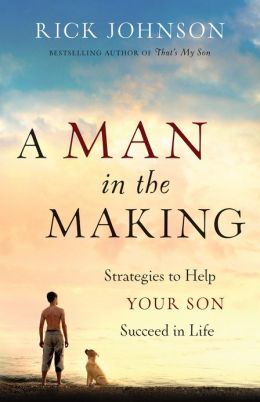
AManMakingRick Johnson, A Man in the Making (Revell)

*****************************************************************************************

PrayingGod'sWordKathi Lipp, Praying God’s Word for Your Life (Revell)

****************************************************************************************

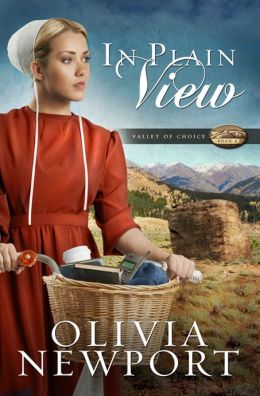
InPlainViewOlivia Newport, In Plain View (Barbour Publishers)

*****************************************************************************************

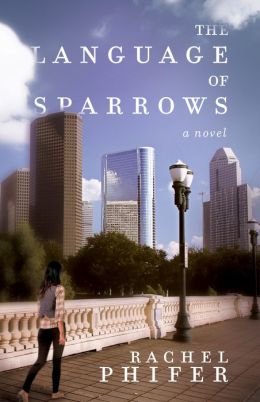
LanguageRachel Phifer, The Language of Sparrows (David C. Cook)

*****************************************************************************************

New Contracts

Rick Lawrence signed with Kregel Publishers for a book called Skin in the Game, an inspirational and biblical guide to pursuing the Kingdom.

Caesar Kalinowski signed with Zondervan Publishers for Big is Small, Fast is Slow…and Multiplication Wins the Day, a book for pastors and leaders on rethinking and implementing a church planting approach bent on slow growth and high investment in people.

What We’re Celebrating!!

Becky Johnson and Rachel Randolph got a very nice review in Publisher’s Weekly for the new book, We Laugh, We Cry, We Cook.

“Johnson, author of a number of books, on subjects ranging from family humor to brain science, and Randolph, her grown daughter, team up in this quirky memoir with recipes. Johnson, diagnosed with Inattentive ADD, is scatterbrained, sloppy, and disorganized, while Randolph likes her ducks in a row. “Organization was my form of teenage rebellion,” writes Randolph, while her mom admits that during those years, the smoke alarm often served as the dinner bell. Johnson is a self-proclaimed bacon and butter lover; Randolph is vegan. The authors toss anecdotes back and forth throughout the folksy chapters, sharing stories of a loving family in which “hospitality is a way of life.” Between slices of life, the mom-daughter duo offers an eclectic array of recipes (main entrees, sides, appetizers, soups, desserts, etc.) ranging from spicy puttanesca sauce to cashew queso and roasted corn bean salsa (Randolph lives in Texas, while Johnson resides in Colorado). Recognizing that many contemporary families, like theirs, include members with varying dietary preferences and needs, the authors provide instructions on how to alter recipes to please and appease vegetarians, vegans, and the gluten-free. Amusing, endearing, and spiced with a close mother-daughter bond, the authors interweave their humor and cooking advice with sincere gratitude for the blessings of breaking bread with family and friends.” –Publisher’s Weekly

What can we help you celebrate?

The Writing Life: A Super Balancing Act

I’ll let you in on a little secretI’m a tad imbalanced. My family might use the word ‘super stressed’, my husband, at times, ‘super crazy’. It’s okay, because I know they love me, and it’s true, I do have a tendency to take things on…in excess. I used to attribute it to the expectation that modern women have superhuman abilities to scale relationships, home, health, career, and all their future hopes and dreams in a single bound, but that’s a cop out. The world has figured out we’re mere mortals, and I’m fairly certain I’ve got my priorities and goals straight most of the time. I’ve come to realize it’s more about me wanting to feel in control. I want to manage all my needs and wants with those superhuman powers. I want to do it all, and I want it done now (or, better yet, yesterday).

Image courtesy of Jeroen van Oostrom/freedigitalphotos.net

I think a lot of writers may secretly be like this. They’ll try to crank out the first draft of a novel with the speed of a silver bullet. They’ll read a seven-book series in as many days. They’ll manage their day job like a star reporter at the Daily Planet, and still make time for their secret (writing) identity. They’ll devote themselves to the needs of their family, friends, and home with the efficiency of an evil genius plotting the destruction of Metropolis (but with better intent, I hope). They’ll pretty much do anything they put their mind to, as long as they focus on it maniacally. As in…like a maniac.

Hey, at least we give it our all, right?

Image courtesy of Elwood W. McKay III/freedigitalphotos.net

I’ll keep telling myself that. Meanwhile, failure to achieve balance among the important things in life can become our own personal kryptonite.

Are those of us plagued with this plight destined to live lives of extremes, or will we ever find a nicely balanced, happily-ever-after?

As I think about this, Colossians 3:23-24 comes to mind: “Whatever you do, work at it with all your heart, as working for the Lord, not for human masters, since you know that you will receive an inheritance from the Lord as a reward. It is the Lord Christ you are serving.” 

I wonder, if I stop and remind myself why I’m doing something, will it help me be more selective? If I’d focus on doing some of the same things, but for the right reasons…not for my own vanity or because I feel pressured into it, not because I fear stopping will keep me from ever starting again, not because I’m told it’s what successful people do, and not because it’s supposed to define who I am, would I be more present in the moment? Would there be more joy in the work I undertake? Would I be a happier person overall?

Just maybe it will help me keep the bigger, digitally formatted, wide-screen, blockbuster motion picture in mind. And that, to me, is more powerful than a locomotive.

What about you? How do you stay balanced when you start to feel overwhelmed by the commitment you make as a writer?

Three Requirements for Christian Writers to Consider

Photo/KarenJordan

… The right word at the right time—beautiful! (Prov. 15:23 MSG).

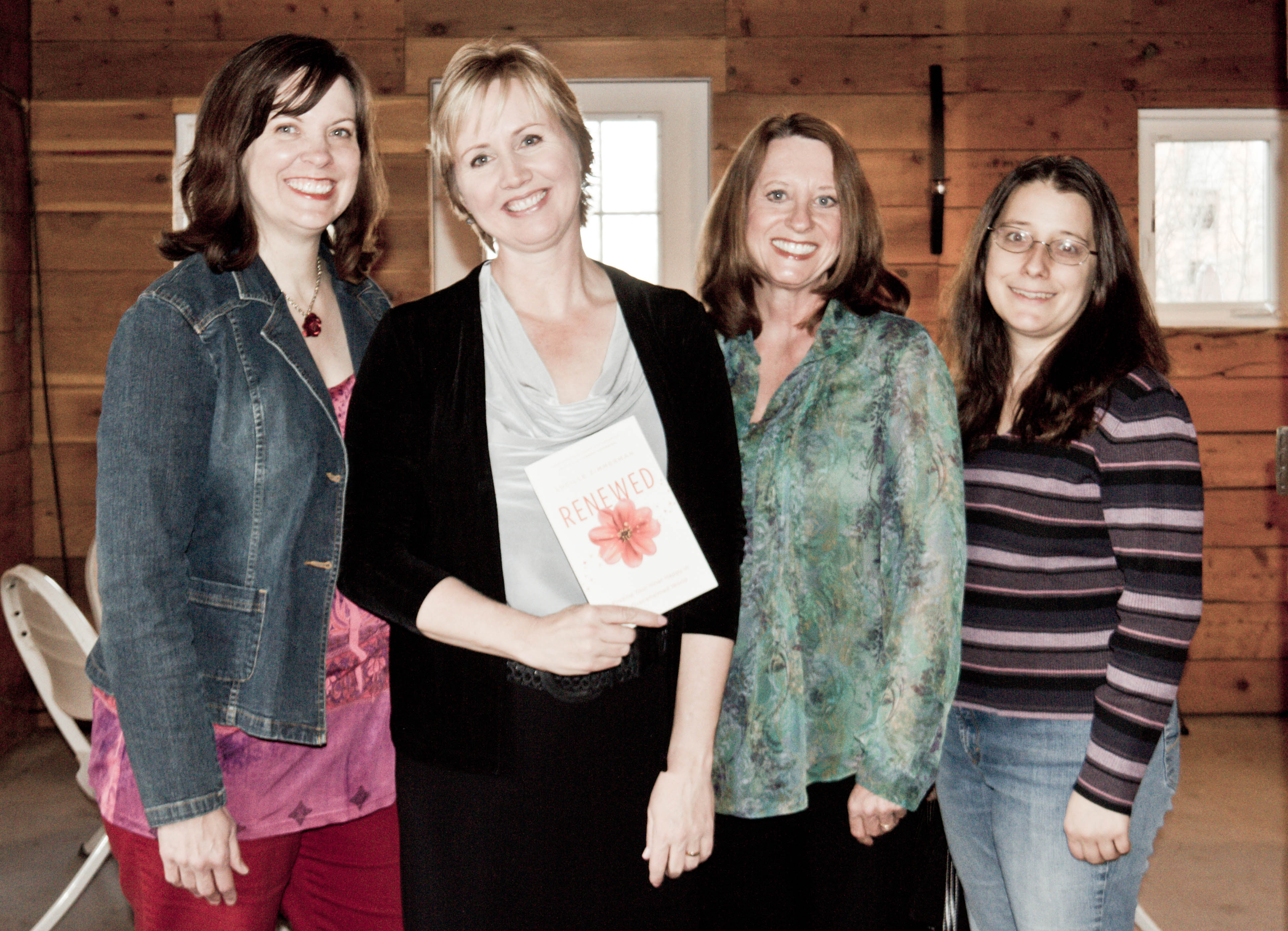
I opened the book package at my mailbox and read the title, Renewed: Finding Your Inner Happy in an Overwhelming World

Renewed. I need to read this book today, I mused. 

But my “to do” list interrupted my daydream of relaxing in my recliner, enjoying a tall glass of iced tea, and reading Renewedby WordServe author, Lucille Zimmerman.

Renewed

I placed my copy of Renewed on the end table next to my chair and revisited my checklist. Speaking engagement? Check. Four Bible studies for newsmagazine? Four checks. Blog post? Maybe tomorrow. Three book proposals? Question mark. Post for WordServe Water Cooler? Oops. Just breathe … I guess the book proposals go on hold again. Drat.

Responsibilities. After a few minutes of brainstorming about my WordServe post, the phone rang. “Mom, do you have two large suitcases that the boys can borrow for next week?”

Next week? I cringed with this pressing reminder of my commitment to keep my youngest two grandchildren in Texas, while my daughter attended church camp with two of her older boys.

Requirements. When I return to my computer, I’m drawn to Renewed again, desperate for a word of encouragement and a sense of renewal. As I read the first chapter on self-care, Renewed offered the exact words that I needed for that moment. Later, a reference to Micah 6:8  reminded me of a question that I had failed to ask earlier as I struggled with my other commitments.

And what does the Lord require of you? To act justly and to love mercy and to walk humbly with your God. (NIV)

Did I read that right? Only three requirements? 

  1. To act justly.
  2. To love mercy.
  3. To walk humbly with God.

Maybe I should check out another translation. 

But he’s already made it plain how to live, what to do, what God is looking for in men and women. It’s quite simple: Do what is fair and just to your neighbor, be compassionate and loyal in your love, and don’t take yourself too seriously—take God seriously. (MSG)

Relief. I breathed a sign of relief, as I read the answer again. Then, I whispered a prayer of thanks to God for the healing power of His Word, the encouragement of my writing friends, and the gift of His call to be a writer.

In all my prayers for all of you, I always pray with joy because of your partnership in the gospel from the first day until now, being confident of this, that he who began a good work in you will carry it on to completion until the day of Christ Jesus. (Phil 1:4).

Lord, give us the courage to listen and obey Your Word.


Photo/KarenJordan

YouTube/CastingCrowns (Courageous)

What recent encouragement have you received from God’s Word or gleaned from another writer’s work? 

What Is a Beta Reader, and Why Do We Need Them?

bigstock-Magic-Book-5034701How exciting. Your manuscript is finished. You have edited it. Had it critiqued by writers you respect. Possibly even had it edited by a freelance editor. It’s time to shoot it off to your agent or publisher. Right?

Not so fast. Your grammar may be immaculate. Every i is dotted, every t is crossed, and you are sure you watched your ps and qs. But don’t forget the most important part of the process. The beta reader.

Beta ReaderDear Reader of my novel …,

What does an author expect/hope for from a beta reader? The story resides in my mind for so long that I reach a point when I need readers to tell me if I’ve said what I think I have. You are a very important part of the editing process. If you feel your suggestion can make the book better, easier to read, and more understandable, please elaborate.

  1. Did the prologue and/or first chapter make you want to read more?
  2. At the end of each chapter, were there unanswered questions that made you want to flip the page and keep reading?
  3. Did you relate to any of the characters? Did you see character development in the major characters? Which character needs more work?
  4. Did you stay interested until the end? Where did your interest lag?
  5. Did you find a place where you were confused? Help me find and fix that.
  6. Did the ending give closure? Do you feel it satisfied the needs of the story?
  7. Is this a book you could recommend to your reading friends?
  8. Did you recognize a spiritual thread running through the book? Too much? Not enough? Explain.
  9. Did you find any plot holes that need to be fixed? A scene that doesn’t fit with this version of the story? (This happens in editing when we delete a subplot but don’t catch all the loose threads of the no-longer-needed part of the story.)

As an author, I need to know more of the story than I put on the page. This helps me know the characters and why they act as they do. But it might not belong in this story.

As a beta reader, try to look at the big picture. If you see typos, feel free to note them, but don’t worry if you miss them at this stage of the game. Thank you. You are valuable and I appreciate you.

What type of person makes the best beta reader? The answer to that question is: “It depends.” Common wisdom says not to ask your relatives. Common wisdom says to ask a reader of the genre you write. Each author will learn by trial and error.

bigstock-Businessman-Reading-Book-4821928Who was the first beta reader I asked to read my latest manuscript? My brother-in-love. A man who doesn’t read fiction. Why? Because he read my first book, read every word. Pointed out important plot holes, and recommends my book to others.

By the way, he still doesn’t read fiction. He prefers “real” books. But he offers to read mine because he has so much fun finding the plot holes.

Q4U: What is your experience with beta readers?