Do You Think I’m Insecure?

OLYMPUS DIGITAL CAMERAI usually feel pretty good about myself when I wake up—for the five minutes I refrain from looking in the mirror. That’s when the voices start: “Your thighs have more dimples than a Shirley Temple look-alike convention!” they say, or “What kind of eighties-wannabe haircut is that?”

Then I take my older son to school and notice the work-outside-the-home moms, all coiffed and stylish. The voices deride my writer’s wardrobe of jeans and T-shirts. Later, my fingers poised at the keyboard while my trusty cup of java grows cold beside me, I hear the little demons again: “That paragraph stinks. How are you ever going to keep getting published if you write stuff like that?”

When I pass through the living room and kitchen to go to the bathroom, the hisses continue: “The kitchen counter is filthy. And when was the last time you dusted?” By the time I grab a mid-morning snack, I’m already defeated, and it’s only 9:30 a.m.

Sigh.

I don’t know who said it, but I believe it’s true: Insecurity is the devil’s playground. Or maybe battleground is a better word. His weapons attack from every side and inevitably leave a wound.

file3991282945508Those of us who struggle with perfectionism find it especially difficult to remember that we are wholly loved by our infallible Heavenly Father. It’s a constant war to not let the “How do I measure up as a parent/writer/Christian?” questions run away with my emotions—and my peace.

Maybe you can relate. If my hunch is right, a lack of security is epidemic. And let’s face it: We have plenty to be concerned about. There are our figures, finances, future, and families—just to name a few.

Recently, while at the grocery checkout line, I noticed the headline on a women’s magazine: “Eat right, get fit, get organized, and relax.” Who are they kidding? I barely have time to take a decent shower each day, let alone have a perfect body or a spotless house. And relax while trying to keep it all together? Ha!

So I’ve decided to go on the offensive in this war on my thoughts and emotions. First, I’m going to stop letting the world’s standards rule my mind. With God’s help, I will tune into His Word and turn off the chatter from social media, print media, and television. I will bathe myself in His approval and love, knowing that while pursuing good health is wise, Jesus cares more about the size of my heart than the size of my jeans (can I get an AMEN?).

Second, I’m going to remind myself regularly that the career I have is God-given, and He controls the future. I don’t need to compulsively check my Amazon stats or fret about future book contracts. Instead, I must focus on fine-tuning my craft and being a good steward of the gift of words with which God has entrusted me.

Similarly, I can rest assured that God knows I am doing the best I can as a mother to two strong-willed, energetic boys. He’s the only perfect parent, and I can turn to Him in my frustrations and foibles. I can lean on Him and learn from Him, trusting that He will fill in the gaps my husband and I will ultimately leave.

The bottom line is this: when I focus on His kingdom, He takes care of the rest. 

Bit by bit, the whispers of doubt and defeat fade. Peace overtakes insecurity, and I can concentrate on living moment-by-moment in His grace. Microsoft Word - Grace_Race-v2.docx
You know what else? I’m betting that since Jesus was a carpenter, He doesn’t mind a little dust.

(This post was adapted from “Grace for the Race: Meditations for Busy Moms,” published by Patheos Press.)

How NOT to Query An Agent

icon-364244_640Working for a literary agent definitely has its moments of hilarity. My most recent reason to LOL? I was pitched to.

Yes. Me. The administrative assistant. And here is the crazy part: I was pitched a manuscript to an email address that really isn’t common knowledge. And on top of that: I don’t get the query emails. Those go to a completely different person.

So why did it come to me, you ask?

I have no idea. Which prompted this post: how NOT to query a literary agent. Sharpen your pencils; get out your note pads, this is going to be riveting (and maybe save you the embarrassment of making common, amateur mistakes).

  • You hear it everywhere. You’re about to hear it here, too: READ THE SUBMISSION GUIDELINES ON OUR WEBSITE. Yes, I just used almost every function on the Word program to emphasize that statement. Seriously, all your problems will be solved if you take a few minutes to get these facts straight. When you do, you’re a sight for sore eyes for those of us who receive the queries (or shouldn’t receive the queries as the case may be…).
  • Don’t put your entire chapter outline/back cover copy/reasons why you wrote this story in the query letter. Take an hour (or two) and Google query letters. Figure out how to write a good one. Have a critique partner give it a once-over (at the least). This is the first impression you’ll make. It needs to be a good—GREAT—one.
  • Don’t tell the agent that you are going to be “the next NYT bestseller” or “Nicolas Sparks” or “Janet Oke”. Yes, these points just came through in a query letter that landed in my inbox. If you are going to claim to be the next hot name, please be sure to at least spell it correctly.
  • Don’t tell the agent that you need them to publish their book. Um, excuse me, but duh. Be humble when you approach an agent. They have a ton on their plate. Usually many, many authors whose books and careers they manage. Reading your synopsis takes a chunk of time out of their day. Realize that it’s not all about your needs and frame the tone of your query accordingly.
  • Don’t give your life story. The reason why you wrote the book. The story behind the story. Don’t go there. Stay away. The agent doesn’t care. Now, if he/she picks up the book, reads it, signs you to their agency and you become friends, well, then yes, you probably will tell them the why behind the book. But right now you’re not BFFs; you’re strangers. You wouldn’t walk up to a handsome stranger-dude at a cocktail party, stick out your hand, and tell him all about your dog dying when you were four, would you? Of course not. Don’t do that to the agent you are querying, either.

Yes, that’s a lot of don’ts. Believe it or not, these all came out of a query letter I should have never gotten this week. So: read the guidelines. Write a pithy, word-catchy query. Have a great product to share with the agent. Be humble. Be patient. Email the right person and you won’t become an illustration on some agent’s blog anytime in the near future. 😉

Multiple Author Events – Yes or No?

Smiling Group of ProfessionalsAs a writer, the weight of book promotion falls on my own shoulders. Since that gets tiring, I’m always looking for ways to maximize the results of the events I do: my current goal is to market smarter, not just harder.

So when a writer friend told me about the great attendance and good sales she experienced at a multiple author event at a book store, I decided to give it a whirl with both of my book lines. That meant gathering other authors who’ve written about dogs (so I could promote my girl-meets-dog memoir Saved by Gracie) and collecting another crew of authors who’ve written about birds (to expand the audience for my fictional series, Birder Murder Mysteries).

This is how it played out:

National Dog Day. I broached the idea for a National Dog Day Night to a local independent bookstore, and they jumped at the concept! I offered to recruit authors to attend, and the store agreed to stock the books, set up chairs and a microphone, and do publicity. They even partnered with a local dog rescue group for more publicity and support. Luckily, three well-known writers with dog books live in my area, and they readily agreed to participate. We all thought it was a smokin’ idea…but only five people showed up. What went wrong? Personally, I attributed it to the lovely summer weather; I myself would have chosen to be outside with my own dog, rather than inside with authors.

My big score, though, came from meeting the other authors, one of whom asked for an excerpt from my book to run in her monthly newsletter that goes out to thousands of readers. I made a hot contact even if the event fizzled.

For the Birds Night. I took this idea to a local Barnes & Noble and again, the events manager thought it was a winner. This time, it was a monumental headache for me to pin down the authors – talk about a flighty bunch! Not that any of them are absent-minded – it just took me a while to catch all these bird-chasing authors between their travels and professional obligations, not to mention the multiple email addresses so many of them use. I managed to round up five of the original ten that I contacted, and even then, I had one drop out at the last minute due to health issues, and one drop in who’d forgotten to confirm with me months earlier.

The event itself, though, was a big hit! We had over 20 people attend, a lively discussion ensued, and every author was signing several books by the end of the evening. Our B&N hostess invited us back for a spring event, and said her district manager had expressed interest in us taking our event to other stores.

After organizing two group events, my conclusion is that it’s worth the effort in terms of both book promotion and author networking. Upfront sales might be disappointing, but as one more tool in your marketing toolbox, I highly recommend giving it a try.

And keep some aspirin handy.

Have you participated in multiple author events? What was your experience?

The Sound of Silence

Hear that sound? No? That’s because it is the sound of silence. The kind of inexplicable, almost supernatural, silence that expands to fill the void left in the wake of a tornado or an eardrum-shattering fireworks display or, in this case, the Christmas season.

prayer and contemplationMuch is made of the fact that Christmas is a time for peace, for reflection on Christ and the greatest gift ever given–his life, death, and resurrection. In reality, though, if they happen at all, those moments of reflection are generally stolen ones, snatched here and there in the midst of rushing through crowded shopping malls, cooking and cleaning madly before friends and family arrive, and squeals of delight as children tear paper off of gifts spilling out from under the Christmas tree.

All good things. Martha things. Things that should be and need to be done. But things that can so easily distract us from the Mary thing. Sitting and listening. Meditating on the words of Scripture. Contemplating the wonder of some of the most profound and stirring words of all, “And the Word became flesh and dwelt among us” (John 1:1).

Emmanuel. God with us. What an incredible, almost incomprehensible thought.

And not one we can only contemplate at Christmas, thankfully. It is in this time, in the deep silence that follows the noise and (mostly) joyful rushing around and checking off of lists and the general chaos and confusion, this almost supernatural time of stillness, hibernation, and rest, that we are finally able to find minutes, sometimes hours, for uninterrupted, undistracted contemplation.

On the words of Scripture. And on the words given to us as a treasured gift, not to hoard but to give, to share, to continue to pass along the powerful message that the Word dwelt among us. That the Word dwells among us. Not just in Bethlehem, not just at Christmas, but here, now, in the silence and stillness that follows the often frenzied celebration of his birth.

So as we enter into this, a new year, a clean slate, an endless stretch of possibility and potential, may the words of our mouths and the meditation of our hearts be acceptable to him. And may the words he gives us to share with others bless them and draw them back to his presence every day of the year ahead.

Let us continue to share the message of Christmas. That hope came when there was no hope. That light came into deep, impenetrable darkness. That joy came into sadness, grief, and loss. It came two thousand years ago. And it comes today when we are finally still enough to know that he is God. When we stop long enough to listen, to meditate, to contemplate and, in the silence, unwrap, discover, and experience for ourselves the greatest gift of all.

The Word with us.

Comfort for the New Year

Photo/KarenJordan“He comforts us in all our troubles so that we can comfort others. When they are troubled, we will be able to give them the same comfort God has given us” (2 Cor. 1:4 NLT).

A New Year offers new opportunities and challenges. As I sense the needs around me, I often think, “What can I do to help those in need?”

Sometimes it’s hard to know how to respond. In fact, some people may say,”the devil is in the detail,” inferring that there’s some mysterious secret hidden in the details. That term comes from the original phrase “God is in the detail,” which reminds us that the details are always important.

Discovering the mysterious details of how to help others requires wisdom. And God promises to guide us in this discovery process. But He wants us to ask for HIS help first.  “If you need wisdom, ask our generous God, and he will give it to you … ” (Jms. 1:5 NLT).

Seek God first. The Lord promises to provide the guidance we need throughout our lives. Psalm 32:8 says, “I will guide you along the best pathway for your life. I will advise you and watch over you” (NLT).

God often uses my experiences—good and bad—when I seek Him for direction in helping others. At times, He prompts me to share small things—like prayers, concerns, and a listening ear.

When my friend, Kathy, struggled with vertigo following her cancer treatments, I felt helpless to help her since she lived in another state. And I knew the misery of vertigo. When Kathy mentioned that she could not even read her Bible, I was able to read scriptures to her by phone.

Later, Kathy told me, “Your calls helped me survive my cancer treatments.”

Listen. In Matthew 11:15, Jesus asks His disciples, “Are you listening to me? Really listening?” (MSG).

As we seek God and ask questions, it’s important to listen for the answers. Sometimes instead of listening to God, I’m tempted to offer unsolicited advice to friends and family.

Have you ever received a gift that you didn’t want or need? Awkward! Our unsolicited gifts might actually offend instead of blessing others. Perhaps they need godly advice, not just a hasty opinion or thoughtless response.

Ask questions. I also ask questions when I’m trying to discern how to encourage others. What matters most to them? How can I discern how to help? What helped me when I faced a similar problem? What do I wish someone else had offered me when I faced my last crisis?

John 14:26 promises, “… the Advocate, the Holy Spirit, whom the Father will send in my name, will teach you all things and will remind you of everything I have said to you” (NIV).

Tell the stories that matter most. As a Christian writer, I never want to lose sight of the needs of my audience. Author Anne Lamott offers this advice: “Write the books you really wished were out there in the world.”

During a crisis, I look for resources to help me find solutions for my current needs. Encouraging words heal my soul when I’m desperate for answers. And I’m grateful for the writers who have poured their lives into helpful devotionals and books for those troubling days.

So, “… even if I am being poured out like a drink offering on the sacrifice and service coming from your faith, I am glad and rejoice with all of you” (Phil. 2:17 NIV).

As you plan your projects for the New Year, consider offering some words that could help meet the needs of others.

“… Words are powerful; take them seriously” (Matt. 12:36 MSG).

Can you think of a book that helped you through a crisis?

Failure Analysis

frame-541745_1280Whenever the New Year rolls around everyone gets caught up in the newness of a potentially fresh start. Many are busy fashioning resolutions or, the new trend, picking a word to focus on for the rest of the year. Commit. Encourage! Lose weight. Oh wait, that’s two words.

It’s known that New Year’s resolutions don’t last very long at all. People who go to the gym know this in spades. Come January, you have to stand in line until someone gives up a piece of cardio equipment. However, in just a few weeks, it will be like crickets chirping again and those aerobic instructors would be happy if crickets did show up to their classes so they’d have someone to teach.

I think in current American society, examining failure is passe. First of all, no one is a failure! Every child gets a trophy. Every child is equally good at everything. Authors are happy to post negative reviews on their Facebook page, not to say, “This person had something valid to say about my novel and I’m going to learn from it,” but rather as proof of how idiotic the reviewer was. Other authors gripe and complain when their book covers get nominated for “Worst Cover” awards. I don’t know. I’ve seen some of those covers and those just might be valid nominations.

Is this really learning? What is the value in learning from our mistakes?

I think we need to get back to not dismissing failure out of hand. My own reasons for failure are, if I’m honest, rarely external. They’re internal. I am the reason I failed.

Let me give one example everyone can attest to: weight loss. I’m not at my goal weight. I haven’t been for years. Why is that? I actually go to the gym regularly. Typically, three days a week. I don’t eat out often. Why am I not a size 4? Or, even a single digit size?

How many times have you heard these excuses? I’m too busy. It’s hormones. Gym memberships are too expensive. I’m big boned! It’s my thyroid. It’s genetic. Everyone in my family is overweight.

What are the real reasons? I’m lazy. I don’t want to cut refined sugar out of my diet. Soda is my one  bad habit (and therefore I should keep it). It’s been a long day–I deserve (insert sugary, decadent treat here).

The reason we’re falling short on all our good intentions is largely because we haven’t accepted the reasons we’ve failed at them in the past.

Why isn’t your book published? These days, there is no reason why you can’t get your words out there with indie publishing. You literally cannot have an excuse.

So what’s holding you back?

What I encourage you to do at the beginning of this year is look at that big dream you’ve been holding onto with everything in you and do an honest analysis of why you haven’t achieved it yet. I challenge you to first list five things that pertain to yourself.

So, if you’re brave, in the comments section share your unachieved dream and give a short failure analysis. How will you change these items to get closer to your dream by the end of 2015?

I think that will be better than picking a new resolution.

Christmas Need List

I was out shopping and feeling a little overwhelmed by the financial pressure of the holiday season. Organizations begging for donation money. My shopping list for friends and family and my own Christmas want list.

Christ's Birth In A StableDo you ever get that way? I deserve this because: (list reason here.) It’s not at all financially responsible or Christ-like but I was in one of those moods as well.

Perhaps you’ve had a year like our family has where you’re hemorrhaging money around every corner. Two children in braces. Hubby needing dental work. Crowns (the dental ones) are expensive! The house needed painting. Before we knew other things were going to break, we built a roof over our deck which we’d put off for years. Then cars broke down. The garage door broke. The dog broke– well, got sick and that mysterious hum vibrating our house whenever someone took a shower meant the water heater was on its last leg.

It just seemed like everywhere we turned– we were signing big checks for things that weren’t vacations at Disney.

I’m in my car, thinking through all these things when my own children came to mind. This is probably the first year they’ve been anxious and uber-excited about buying gifts for other people. Their allowance couldn’t stay in their pockets long enough. It was fun to see them pick just the right things for people of our family. Though, they did soon figure out that those “good prices” generally meant “small quantity” but I digress.

This has been a year where I’ve seen my two children grow in their giving spirit. Over the summer, my girls and several neighborhood children were putting up lemonade stands almost every weekend. They collectively earned close to $90.00 and decided to donate it to St. Jude’s Children’s Hospital. It was definitely one of those proud mommy moments.

Look at these children I’ve raised. How generous they are with their money!

Then, a little bit of the Grinch seeped into my heart when analyzing the reason for their generosity.

Of course they can be that generous with their money because they know their father and I will take care of all their needs. 

And then one sentence spoke into my mind breaking the silence of my car.

Do I not do the same for you? 

I’m not one to hear God’s voice all the time. These moments are truly rare for me but I felt a conviction deep in my soul. Of course, God does provide for our every need but how often do we recklessly apply that principle, like my children, to our every day lives? How quick are we to completely drain our bank accounts to a worthwhile charity and be completely at peace with it because we know that God will provide for us?

I know I don’t but it got me thinking about ways that I could begin to stretch myself to do these things.

Christmas is really about getting every need fulfilled. There was an unrepairable distance between God and ourselves until Jesus came along.

What is it you need for Christmas? Is it unconditional love? Friendship? Grace? Mercy? Forgiveness?

That’s what was sleeping in the manger.

My hope for you this Christmas is that you, too, can have a moment where the Christmas spirit speaks to you in a way like this.

This year, the Water Cooler will be taking a blog break until January 2nd to give our authors and volunteers focused time with God and their families.

Speaking for all of here at the WordServe Water Cooler– we hope and pray you have a wonderful, blessed Christmas!

WordServe News: December 2014

Exciting things have been happening at WordServe Literary!

On the final post of each month you’ll find a list of Water Cooler contributors’ books releasing in the upcoming month along with a recap of WordServe client news from the current month.

New Releases

Deb DeArmond released her second book, I Choose You Today with 9781426787966_p0_v4_s260x420Abingdon Press.

***********************************************************************************************
9780310331018_p0_v2_s260x420

Becky Johnson and Rachel Randolph released their second book together, Nourished with Zondervan publishers.

************************************************************************************************

Kyle Idleman with agency client, Jeremy Jones released 40 Days to Lasting Change with9780781412681_p0_v2_s260x420 David C. Cook publishers.

*************************************************************************************************

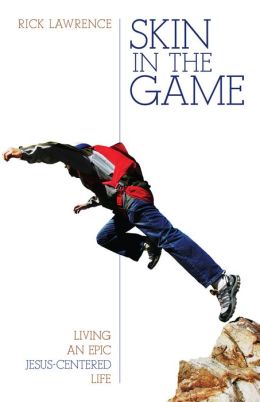
Rick Lawrence with Kregel publications, released his latest book, Skin in the Game. 9780825443596_p0_v1_s260x420

*************************************************************************************************

Roger and Kathi Lipp  re-released with Harvest House publishers Happ9780736955737_p0_v2_s260x420y Habits for Every Couple. Previously titled The Marriage Project. 


New Contracts

Deb Coty Deb’s signed a contract for a cookbook with Barbour Publishing as a companion to her book, Too Blessed to Be Stressed. Greg Johnson, agent of record.

Sara Davison signed a three book contract for a fiction series with Ashberry Lane. Alice Crider, agent of record.

Paul Kent signed with Worthy Publishing Group for a Star Wars devotional, due out at the same time as the 7th Star Wars film next December. Greg Johnson, agent of record.

Amy Sorrells signed a two book contract for two new fiction titles with Tyndale Publishers. Sarah Freese, agent of record.

New Wordserve Clients!

Husband and wife duo, Jim and Lynne Jackson signed with Alice Crider.

What We’re Celebrating!!

Jan Dunlap’s memoir Saved by Gracie, and her Birder Murder Mystery titled Swift Justice, have been nominated for the 2014 Minnesota Book Awards in two different categories: Saved by Gracie in the Memoir/Creative Nonfiction category, and Swift Justice in the mystery genre.

PicMonkey Collage

Two Words of Advice: Stop it!

newhartWe were going around the room, introducing ourselves at a recent writers workshop I was leading, when one of the attendees got negative about herself.

I listened to this woman — a two-time winner of our Metaphors Be With You contest — explain why she wasn’t making as much progress on a memoir as she would have liked.

Most of it had to do with her inadequacies.

I couldn’t take it anymore.

“Stop putting yourself down,” I said. “You’re a good writer and you need to stop thinking otherwise.”

I proceeded to explain to her and the 15 others why one of the first ways we sabotage ourselves as writers is to look down on ourselves.

“For starters, writers need two things,” I said. “The confidence to believe they have something to say to the world and the humility to let others help them say it better.”

Instead, too many people write — and live — quite the opposite: with little sense that they’re worthy to be heard or with little openness to accepting help along the way.

As we discussed negativity, another workshop participant chimed in with a reference to an old TV sketch in which comedian Bob Newhart plays a psychiatrist. He listens to a woman’s problem — “I have this fear of being buried alive in a box” — and offers her a two-word solution:

“Stop it!”

Stop worrying about being buried alive in a box.

I love it. In fact, when it comes to advice, you could do a lot worse than offering people those two words — “Stop it!” — and two others: “Start it!”

“Start it,” as in take a risk. Begin your project, even if you believe it might fail. Try something new, even if it might feel awkward at the start.

“Stop it,” as in quit thinking you’re unworthy. Quit sabotaging your success because someone long ago told you you weren’t good enough. Quit believing the inner lie that you’re inferior.

Frankly, you can’t get to the “start” without the “stop.” Or so says Christian-based author Henry Cloud, whose book Necessary Endings (HarperCollins, 2010) I recently read.

Cloud, who mainly writes for a business audience, suggests “stop it” is about more than an attitude. It’s about action — or, more precisely, our unwillingness to take it when necessary.

“In your business and perhaps your life, the tomorrow that you desire may never come to pass if you do not end some things you are doing today,” he writes.

But, some might say, stopping things can be hard.

Habits. Addictions. Relationships.

It’s easier just to stay the course. To not confront the norm. To not risk.

Easier. But seldom better.

“Endings,” Cloud argues, “bring hope.”

Frankly, I’d never thought much about that until a friend recommended the book and I gave it a read. I tend to be in a constant “add” mode. But, Cloud argues, sometimes you need to subtract. Prune. Say goodbye to something in your life — and, yes, in some cases, someone.

Can it hurt? Almost always. But, he argues, there’s a difference between “hurt” and “harm.”

Last week my mother moved out of the house she’d lived in for nearly half a century. It was difficult saying goodbye. But the payoff will be a simpler existence that better fits her life today. It hurt, yes, but to stay could have brought harm, she figured; it was too much house for someone who is 87 years old and slowing down.

It took courage to make the change. But, in sailing terms, to stay moored to sameness simply because change can be challenging is to miss the glories of the wind in your sails.

At the end of the day, my workshop student — the one lamenting not being good enough — offered a piece in the voluntary read-aloud session. The class’s enthusiastic laughter and applause affirmed what I’d felt myself: her story was among the best of the bunch.

I hope she’ll look back on this day as a new start — a new start only made possible by her first being willing to stop.

Facebook: Friend or Enemy?

Facebook. So what IS it about marketing on Facebook that makes us all cringe? I know I’m not the only one who wants to forget about it and get to work writing my next book!

But after a couple of valuable appointments with marketing gurus at the ACFW conference in September, and after reading last month’s post by Casey Herringshaw, I started looking at Facebook a little differently. It is part of our lives, and it can be a valuable asset to our writing careers.

Here are some things I’ve learned:

  • Treat both your author page and your personal page the same. Both of them are seen by your readers and potential readers. Once you’re a published author, you don’t have a private life on the internet. If you aren’t published yet, act as if you are!
  • Stick to your brand. I write historical romance books. Most of them are Amish, with a foray into a western being published by Love Inspired next year. On my sepia horse and buggyFacebook author page, I share Amish tidbits plus a fun picture of cowboys once in a while. That’s what my readers expect, and I try not to disappoint them! And yes, when I have news about one of my books, I’ll post about that, too. But that kind of post is rare.
  • Post regularly. Some authors use a service like Hootsuite to schedule their Facebook posts, but I’ve found that I like to fly by the seat of my pants when posting on my author page. I try to post at least once a day, only because that drives up traffic. Regularity is a key to reaching larger numbers of my readers.
  • Understand that even if you aren’t a public figure now, you will be. (At least 040that’s the goal, right?) As you’re sharing all about your dogs, grandchildren or passion for hang-gliding, don’t forget to insert a layer of protection between you and your reading public. Certain things need to be kept private. You can give your readers quite a bit of information about your life – and let them feel like they know you – without divulging every detail.
  • Be friendly. Whether on your personal Facebook page or your professional one, the personal distance you need to maintain shouldn’t keep you from giving your readers9780373282777_p0_v1_s260x420 a genuine smile of welcome when they drop by. Let your voice shine through. Be inviting. Make them want to spend time with you in your books.
  • Be professional. Facebook is not the place to air dirty laundry, complain about or celebrate political events, or argue theological differences. Never, ever complain about your spouse, children, in-laws, bosses, or co-workers. And never, never, never (can’t say enough nevers!) complain about or divulge information about editors, agents, or anyone else in the writing business. What appears on the internet has a horribly tenacious way of sticking around.
  • Be a good neighbor. Don’t you love when your peers share your latest status with all of their friends? Especially when you’re trying to pull readers to your latest blog post or publicize the sale price on one of your books? Do the same for them.

Sometimes I think of Facebook as a necessary evil, one of the many things we need to negotiate in order to be successful in this modern life. It won’t last forever, but as long as it’s around, we should use it to our advantage. And meanwhile, enjoy it!