Paying It Forward — It’s Never Too Late to Start Writing

It’s my birthday as this publishes, so I think today is a great time to tap into a subject many aspiring and experienced writers wrestle with. Am I getting too old to publish?
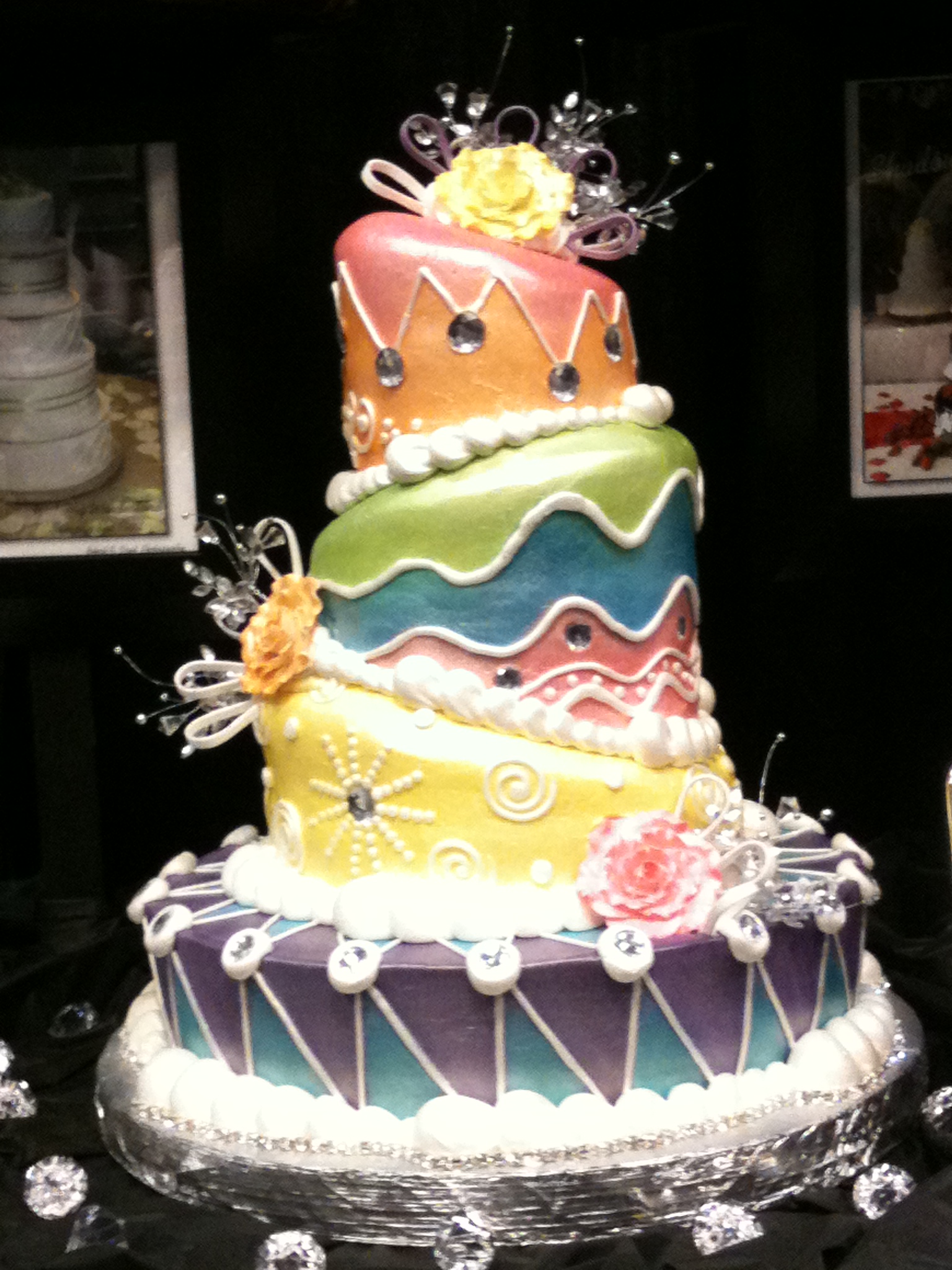
Colorful Birthday Cake
A Colorful Life Makes Colorful Prose

This week, I met a fabulous ninety-two-year-old woman named, Gloria. Before arriving in America, Gloria, along with many of her friends and family, falsely believed the streets in the United States were made of gold. I think they had us confused with Heaven — which America definitely is not.

Gloria’s first husband brought her to the United States when she was a young woman. The only English words the onyx-haired beauty with raven colored eyes knew were, “Hello,” “Thanks,” and “Goodbye.” Yet, with her baby son, she braved a storm-tossed sea on an ocean liner bound for her land flowing with milk and honey. However, as often happens in life, her milk curdled and her honey soured.

Shortly after their arrival, Gloria found out she was pregnant a second time. Her husband panicked and left. She and her family never saw him again, and her sons grew up not knowing their father.

For several years, the single mother raised her sons as best she could in abject poverty. But Gloria, not a woman easily beaten down, learned English, got a job in a local bank, and worked her way up the ranks. By the time she retired more than forty years later, through hard work along with savings and investments, Gloria was a wealthy and influential woman in her Iowa community.

This ninety-two-year-old powerhouse is still impacting others, and will again this December, when she goes on a mission trip to Africa. She knows it’s never too late to make a difference.

I learned most of her story by devouring Gloria’s self-published memoir. Talk about a fascinating and motivating read. I found myself speaking out loud to some of the pages.

“You poor thing.”

“Spot on, Gloria.”

“I didn’t know that.”

“How did you survive?”

“So that’s your secret.”

I laughed, I teared up, and I thought: If Gloria could make it through her situations, then I can face my fears and do the things I’m compelled to pursue.

But then another thought niggled my brain. What if Gloria hadn’t written her book? If she hadn’t shared her story, her family and the world at large would miss out on ninety-two years of revelation, inspiration, and motivation.
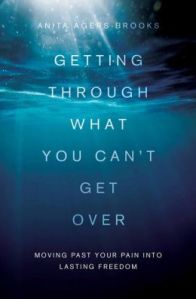
Getting Through What You Can't Get Over
My Way of Paying It Forward

Like a fine wine, writers get better with age — let’s face it, the more life we’ve lived, the more we have to offer. Deeper insights, decisions tempered with wisdom, balanced viewpoints, lessons learned, and the list goes on.

If we inspire or motivate one soul, if we can help someone face their pain and cry healing tears, or laugh out loud when they’re experiencing difficult moments, I think we should at least try. It’s the ultimate example of paying it forward. This is the very reason I wrote, Getting Through What You Can’t Get Over.

If we justify not putting words on the page or excuse ourselves due to age, then we hoard our gifts and steal from others. No matter how old we are, if we are writers, we should write. It’s never too late to start writing…whether for the first time, or for the first time on a new project. No matter how many birthdays we celebrate, we have something to offer.
Evaluating a Writing Career When Life is Busy, Complex, or Just Plain Hard

If yowatchu’ve read many writing blogs you’ve seen the advice: writers write, period. They write because they can’t help it. They write through thick and thin. And if they’re not writing, they probably don’t have what it takes to be a Real Writer.
Maybe. On the other hand, nobody has to write. Writing is compelling. It may even be a calling. But no one is chaining you to your laptop. You can walk away from a writing career. And sometimes walking away is the right choice (at least temporarily).

There is a cost to pursuing a writing career when the timing isn’t right, and it can be steep. There are a few reasons to consider delaying a writing career, or walking away entirely.

When life sends an emotional tsunami your way, consider taking a break. Louise DeSalvo, author of The Art of Slow Writing, wrote through her sister’s suicide and a variety of other hard knocks, but when she was diagnosed with cancer, to her surprise, she couldn’t put pen to paper. Divorce, death of a loved one, catastrophic illness and the like can leave even the most determined writer too numb to write, not just for a few weeks, but for a year or two. If writing is therapeutic, then by all means, write. But if your creative well is dry – and it might be – give yourself permission to take a sabbatical. Chances are, your publisher will understand once you explain the situation.

When your phase of life is not conducive to writing, consider delaying your writing career. If you have kids at home, are you able to give them enough undivided attention while you write, market and do whatever it takes to make a living from your writing? When they think of you, are you a back slaving away at the laptop or someone there for them to confide in, cuddle with and ask for help? You won’t get a second chance to be a mom or dad, but you might get a second chance at writing once your kids are independent.

If you have a day job, are you able to devote yourself to your work, or is half your mind mapping out stories instead of doing what you’re paid to do?

I understand what keeps drawing you back to writing. Seeing characters and storylines take shape, falling into the words, going into that writing zone – there’s an exhilaration to it that doesn’t exist in “real life.”

But you can always blog, write short stories and vignettes, or spend years writing a book at a more leisurely pace. Consider putting aside marketing and seeking publication until there’s time. You may even find those years of leisurely writing add up to something incredible. The Far Pavilions, The Help and The Thirteenth Tale all took five to ten years to write. Time gave the stories extra layers, which is likely what made them bestsellers. And some bloggers have unwittingly developed a large following. Once they were ready for primetime, they had that elusive platform publishers are always looking for.

Last, consider whether writing is helping you avoid something that needs your attention. I hate to say it, but many writers are so determined to write because they’re avoiding something – social anxiety, unhappy families, addictions, character vices and mundane lifestyles. For all of the challenges of writing, it seems easier than trying to fix a deeply flawed life. But please hear this: healing your life is far more important than anything you will ever write. It will be difficult and scary and will take at least as much time as it took to become a proficient writer. But in the end, changing your own story may be your true calling and offer the most joy.

Oh Yeah, It’s Not About Me

Praise for my work is as difficult for me to handle well as rejection. In a different way, of course. Praise doesn’t crush my self-esteem, destroy my confidence, and send me to bed with a carton of Ben & Jerry’s Chunky Monkey ice cream. But it has the potential to be just as destructive.

woman prayingPraise for my writing can go straight to my head.

Don’t get me wrong. I love it. But sometimes I love it a little too much. Occasionally I take the very dangerous turn from loving it to needing it. Craving it, even. I collect the glowing adjectives carefully and methodically, like rookie baseball cards, and store them away in my mind to bring out in times of flagging faith in my writing ability.

I forget that this isn’t about me. That I didn’t give myself the gift. I didn’t invent imagination. I didn’t come up with the ideas for the stories. I’m not my own source of creativity. And my glory is not the intended result of any of the above.

It is all from him and for him. This is supposed to be my mantra. I’m having it engraved on a piece of jewelry as we speak. To remind me why I do what I do. How I do what I do.
And I need to be reminded, constantly.

Christians have long found themselves in a quandary over how, when and to whom to extend praise. As a kid, I attended many churches where the congregation refused to clap after a performance. The idea, I assume, was to impart to the musician that he or she should not expect to receive any kind of affirmation or reward for using their talents. God alone should receive the praise.

I understand the sentiment. But even as a kid I had trouble seeing how the awkward silence following a performance, the deliberate withholding of an expression of gratitude and pleasure, truly glorified God.

On the one hand, as believers we are to support and encourage one another, and to give the workman his due. On the other hand, it is true that every gift and ability we have is a gift from God and is intended for his glory and not our own.

I wrestle with this tension, and I suspect I am not alone. Yes, I enjoy and appreciate receiving affirmation of my work and in affirming the work of others. And yes, I believe all glory belongs to God without whom I am nothing and can do nothing. Can these two truths be reconciled?

Only when, through the grace of God and the working of the Holy Spirit, I am able to examine the attitude of my heart and the motivation behind my work to ensure both are pure.

If my sole purpose for writing is to share the stories he has given me in order to bless others and draw them to him, I can in good conscience accept the affirmation from someone that the blessing has been received.

And when I do, I will thank God for the gift he gave me and for the privilege of using it to bring him glory.

What I Really Want To Say

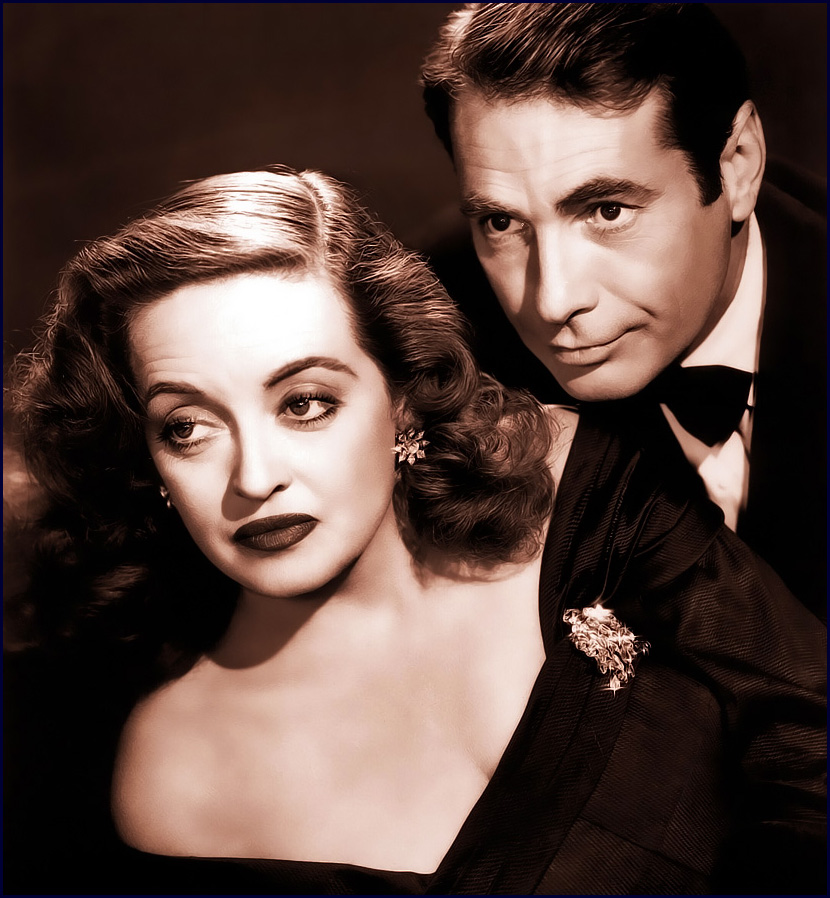
http://classicfilmsreloaded.com/all-about-eve.html

I’m sure these things never happen to any of you other authors, so forgive me while I vent for a bit among you, my friends and colleagues.

(Not that you have any choice. I mean, we all voluntarily signed up for this crazy business of writing books, so it’s part of the unwritten code that we have to put up with each other’s rants now and then. “Fasten your seatbelts, it’s going to be a bumpy night,” as Bette Davis famously says in All About Eve.)

Scene #1

Filled with good intentions, I agree to mentor a local high schooler who wants to become a writer. I attend the mentor orientation program and lay out goals for the semester, based on the profile and paperwork the student has submitted. At our first meeting, the student informs me that she already has her novel’s first three chapters completed and that she wants to know what publisher she should contact. She explains why her book will eclipseTwilight and expects me to help her become the next Stephenie Meyer.

What I want to say: “Believe me, if I knew how to be the next Stephenie Meyer, I wouldn’t be here helping you. I’d already be the next Stephenie Meyer.”

What I really say: “It would be a good first step to check your spelling since I can see five mistakes right here in the first paragraph.”

Scene #2

I agree to speak at a local aspiring writers’ workshop about my decades-long writing career, the need to understand the business of publishing, and how I finally landed my first book deal with a traditional publisher. After my presentation, I invite questions. The first one I get is, “Have you considered self-publishing? It’s really fast, and I’ve already published several books.”

What I want to say: “Good for you. How many copies have you actually sold and why are you here, then? Did you not hear anything I just said? ”

What I really say: “Good for you. Traditional publishing isn’t for everyone, that’s true.”

Scene #3

I’m standing in line to order my favorite hot tea at the local coffee shop when I see an acquaintance who waves me over to her table. I get my tea and go to say hello. My friend introduces me as a writer to the woman seated next to her, at which point the woman launches into a lengthy description of the book she’s thinking about writing. My eyes glaze over, my smile freezes on my face, and I feel the heat from my tea seeping through the extra layer of the cardboard holder and into my fingers.

What I want to say: “I really don’t give a rip about the book you want to write. I don’t even know you. I just wanted a cup of my favorite tea.”

What I really say: “Nice to meet you. Gotta run.” And I promise myself to make my own tea at home for the rest of my life.

Okay, I’m done ranting. Thanks for listening. I feel so much better. I’m going to go make my tea now.

Your turn. Any rants you want to share?

U R a Writer (So Write What You Know)

“Everyone’s talking about the Victoria’s Secret fashion show  … how this one girl wore this multi-million dollar outfit …. and how amazing they all are ….”

Books

The lights in my daughter’s eyes dash in the night.  We are up too late, pillow talk, chewing on all things girl: how it’s hard to admit when we are wrong, how friend hurts run deep, how some girls seem to get everything they want … and does that mean happiness?

We are treading the waters of the life I’ve known. It is from this pain that I have written — the pain of feeling like I was never enough

We talk about the real stuff: how love is all the soul really needs; how persevering through the thick of life makes a woman beautiful; how honor and respect are the prettiest adornments we can wear.

We learn the hard way, because the longing to be beautiful is within us, and because Jesus is and always will be the utmost answer on anything Beauty.

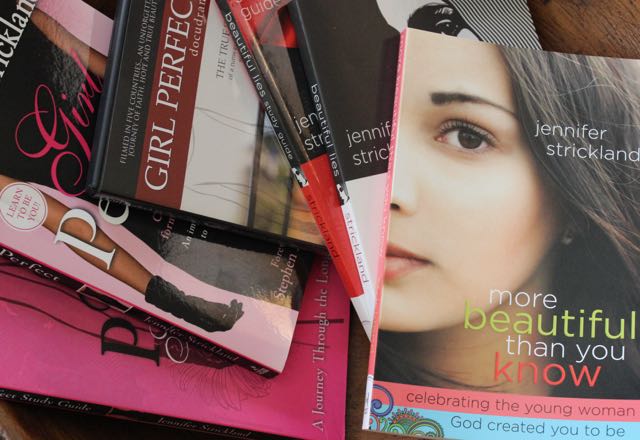
When I wrote More Beautiful Than You Know, I wrote to the girl I used to be; the girl my daughter now is; and the girl who was at my house yesterday, the one who didn’t want to take off her shirt to go in the pool because she stated bluntly, “I don’t have a bathing-suit body.”

I wanted to jump out of my skin and hold her — cup her heart and heal it — flood truth into the blood in her veins so that she would know she is More Beautiful Than She KnowsI wanted her to define beauty in her generosity, in her laughter that fills the sky, in her eyes which pool with humility and honor. I wanted to redefine beauty for her, in her, through her.

And I will ask my daughter if I can give my book to her friend Bella, the one named Beauty who thinks she’s not. Because I wrote it for her, because of her, and because one time I stood being measured by a line of judges against another girl and her bathing-suit body beat mine. That was the last time I felt good enough in a bikini, I’ll tell you that.

We write what we know. Write from your pain. Your core pain. The more you do, the more the wound will heal — and it heals best when it becomes healing to another.

I guess there is still a scar there, because when Bella only eats fruits and vegetables while the girls with “bathing-suit bodies” guzzle sweet tea and potato chips, I want to make a big banner of my book’s cover and hang it over the pool. I want it to say, “Bella: YOU ARE MORE BEAUTIFUL THAN YOU KNOW.”

I know this blog should teach you something about marketing or managing your writing schedule or turning posts into promotion, but today, I just want to challenge you to write what you know, and write for one person who could be changed by your story. Write for Bella. Write for me. Write for the one you see in your mind’s eye who needs healing from the thing that hurt you.

Do that.

And then, do that again. And again. And again.

One day, that person you wrote for, might be sitting at your kitchen table eating vegetables — or about to jump in your pool and fill the sky with laughter.

Your friend,

Jen

Delightful Drudgery

Three cheers for the delightful drudgery of the writing life!

Hip hip hooray! Hip hip hooray! Hip, hip… what was that? Hit the brakes, Hemingway.

Wouldn’t delightful drudgery be an oxymoron? Yes, I suppose so but I can’t think of anything that more perfectly describes the process of putting words on a page.

Writing is delightful.

Writing is drudgery.

Writing is delightful drudgery and I’m equally familiar with both.

backspace

I know the drudgery of wearing the letters off my backspace key waiting for a sentence or two to show up that’s even a tad worthy of remaining on the page. And I know the delightful feeling of having thoughts tumble out until they almost seem to be writing themselves. Yet another irony of the writing life is how often those two experiences meet in the same bottom-in-chair sessions.

But, here’s the thing. I’ve decided we’re the better for it, that the delight is sweet precisely because we’ve been given the gift of staring that drudgery down, and we can’t have one without the other. And now, I’m not just talking writing anymore…

Someone once said that life is mostly about showing up. Maybe. That might be true, if voting present is the ultimate goal. But for any who want more, God gives opportunities not only to show up to life, but to put our heads down and our shoulders to the plow of whatever tasks He has given us. Not once, but over and over again we’re blessed to ignore the barren landscape and accept the drudgery that feels futile–until that day.

Until that day the seed of our very hard thing germinates and begins to sprout and we pause to wipe our brows and glance down, only to stand shell-shocked at the early shoots reaching up to meet us.

Isn’t this delightful drudgery thing something like what Christ did when He wrapped Himself in our skin? He showed us how to do the everyday things, day after day, until that one glorious day when He set everything right and reconciled us to His Father and ours on the cross. All those days He spent traipsing this earth in dusty sandals was worth it to Him because He knew He was up to more than what the casual observer could see.

This is what lights my word fire. When we refuse to begrudge the drudgery, we get to taste the delight.

Tell me about that hard thing you’ve stuck with that brought delight when all was said and done?

Dangerous Curves Ahead

You hear a lot in writing circles in regards to the pursuit of publication—just persevere. Keep at it. You’ll get there.

DangerousCurvesI heard this a lot when I was going for my ultimate job in nursing. I really wanted to be a flight nurse. After I got the required experience, I began the application process—something like seven interviews later I still didn’t have a flight nursing position.

I’ve spent lots of time theorizing why and I still would love to do this job, but in my heart I think it’s not going to happen. It’s just not God’s will for my life no matter how much I desire it.

It may not be popular to talk about quitting the pursuit of publicaton on a writing blog. But then ER nurses rarely do what’s popular—we do what’s necessary. I was pursuing flight nursing when I was supposed to be serving God writing. Maybe you’re pursuing publication when God has another dream for your life that will impact people more than what you’re pursuing right now.

But just how do you know? I’ve been obsessed with learning God’s will. I often say I wish I’d wake up with a gold note card on my pillow with the answer, but it is never that easy.

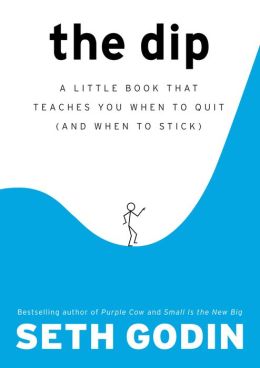
TheDipAll truth is God’s truth no matter who writes it. Isn’t that an amazing statement? I think I found some of God’s truth in a little (literally—it’s seventy-six half-size pages) book called The Dip by Seth Godin.

In the beginning, he makes some pretty profound statements. The phrase all of us learned, “Quitters never win and winners never quit,” is profoundly wrong. Godin says winners quit all the time.

“They just quit the right stuff at the right time.”

The trouble is telling the difference. The dip refers to the process of learning when you’re taking on a new project you’re excited about—like novel writing. The dip is that moment you wonder why you started to write the book. You don’t think you can pull it off. You’ll never finish it.

If you can push through these moments of the learning process, then extraordinary benefits accrue to the tiny minority of people who are able to push just a tiny bit longer than most.

But, Godin states, the opposite is also true. Extraordinary benefits also accrue to the tiny minority with the guts to quit early and focus their efforts on something new.

Again—it’s telling the difference.

To help, Godin discusses three curves.

1. The Dip: The valley of learning. Successful people don’t just ride out the dip. They lean into it. Push harder—changing the rules as they go. Part of knowing you’re on the right path is that you do get small amounts of positive reinforcement along the way. You final in a contest but maybe don’t win it all. You get positive comments from an agent and/or editor.

2. The Cul-de-Sac: This is where you work and work and nothing much changes. For me in my nursing career—I have never gotten any promotion I ever applied for—in twenty years! Honestly, you would think I was the worst nurse ever. I’m actually a very strong nurse but something has kept me stuck. If that hadn’t happened I would have never pursued publication where the doors opened much easier for me. But perhaps this is the pursuit of publication for you. You’re in the cul-de-sac.

3. The Cliff: It’s a situation you can’t quit until you fall off and the whole thing falls apart. The example Seth gives here is cigarette smoking. Cigarettes are highly addicting, but you do get a good feeling even though it’s detrimental to you—which, in the case of smoking, could be lung cancer and then death.

Godin hypothesizes that The Cliff and The Cul-de-Sac both lead to failure and it’s best to quit these pursuits early and move on to the thing you’d be successful at. That thing for which going through the dip would be worth it.

I would never tell anyone to stop writing—ever. Writing is a creative outlet that soothes the soul and spirit. It can ease tension, stress and frustration because spilled words on the page is cathartic. But—the pursuit of publication is a whole other animal. It takes time, money, resources, and sleep.

And perhaps God is calling you to do something else.

What dream have you had where you’ve persevered through the dip and had great success? On the flip side—is there something you’re pursuing that perhaps you are considering quitting and why? Good things to think through.

All italics are quotes from Seth’s book. I hope you’ll take the time to read it.
This blog first appeared at Seekerville. I hope you’ll check it out!

WordServe News: June 2015

Exciting things have been happening at WordServe Literary!

On the final post of each month you’ll find a list of Water Cooler contributors’ books releasing in the upcoming month along with a recap of WordServe client news from the current month.

New Releases

Bryan Bishop, researcher with Youth With a Mission, released Boundless with Baker 9780801017162_p0_v2_s260x420Publishing

***********************************************************************************************

Arnie Cole and Pam Ovwigho released in partnership with GoTandem9781630583736_p0_v1_s260x420 Resources, Managing Your Family’s High-Tech Habits.

************************************************************************************************

Rebecca DeMarino released her second book in The Southold Chronicles with Revell, To 9780800722197_p0_v3_s260x420Capture Her Heart.

************************************************************************************************

Greg Johnson and Michael Ross released in partnership with GoTandem Resources, 10 Reasons to Stay Christian in High School9781630583750_p0_v1_s260x420 


*************************************************************************************************

Jonathan McKee with Danette Matty released The Skinny on Volunteers with Group 9781470720858_p0_v2_s260x420Publishing.

*************************************************************************************************

Bill Myers released his nonfiction title with Barbour Publishing, The Jesus Experience. 9781630589899_p0_v2_s260x420

*************************************************************************************************

Michael Ross and Brian Doyle released in partnership with GoTandem 9781630583743_p0_v2_s260x420Resources, Words that Heal.


************************************************************************************************

Michael and Tiffany Ross in partnership with GoTandem Resources released 101 Ways 9781630583729_p0_v3_s260x420to Strengthen the Parent-Child Connection.


New WordServe Clients

Matthew Mellema and Julie Parker signed with Wordserve Literary!

New Contracts

Larry Dugger signed with Charisma for his book, The Other Side of the Wilderness. Due out in Summer 2016

Karen Jordan signed with Leafwood Press for her debut nonfiction book, tentatively titled, Words that Change Everything. 

Jim Putman signed a three book contact with Baker Publishing, the first book releasing in the Fall of 2016.

Linda Znachko signed with Kregel publishers for her memoir, 13 Hours that Changed My Life. Due out in Fall of 2016.

Planning a Book Release Party

I’ve said it once and I’ll say it again, an author does much more than just write. In fact understanding this was my biggest learning curve once I penned my John Hancock on my first contract. You are a writer, editor, marketer, publicist, your own biggest cheerleader, and your own worst critic. Not to mention the fact that you have multiple voices talking to you at one time as you write. Don’t worry…that’s normal. Kind of.

Book Release Party - Shadowed Kariss Lynch
This year, I added “party planner” to my growing writing resume as I prepared for the release of Shadowed just two short months ago. When Shaken released in 2014, my friends planned a sweet party to celebrate. This year, it was my turn to grab the wheel. Only I had no idea where to begin! But like all things in this writing journey, the learning curve is steep, the lessons memorable, and the end result rewarding.

The release party doesn’t have to be stressful! Here are some tips I picked up along the way.

1. Choose a theme.

I planned two different parties with the help of loved ones. I wanted to theme the parties, so I selected decorations and small touches according to the audience. Since some of the major moments in Shadowed are centered around sunsets and the ocean and an opening scene with fireworks, I found decorations that flowed like water and paper décor that resembled the pop of color bursting in a dark sky. It was a fun way to set the stage. For the second party, we decided to go with simple and elegant to fit the audience coming. We chose a room lined with windows overlooking downtown, decorated a center table with roses, set up a sidebar with refreshments, and left an open space for mingling and signing books.

2. Delegate the details.

I still didn’t pull this off on my own. In fact, I had a moment where I almost threw in the towel. But friends and family came to the rescue. Friends volunteered to bring refreshments and plastic ware that fit the beach theme. Others donated door prizes like Fossil watches and a hand-lettered quote from Shadowed framed beautifully. Another friend set up a photo booth complete with reading glasses and chalkboards that represented different plot twists. Party-goers could grab their favorite pair of reading glasses, a chalkboard with their favorite plot twist, and enact the scene on camera.

3. Send the invite.

Gather those around you who weathered the journey with you. Those who sat through the tears and endless plot conversations, the ones who left meals on your doorstep, or talked you off the ledge when you wanted to quit. Let them celebrate this win with you! As excited as your readers will be, these people will be even more excited for you, and let’s be honest, you couldn’t have reached this accomplishment without them. Then, encourage them to bring their friends, friends who may just be curious about you as an author, who may just want to come for the party, and who may just walk away as fans of your work. Use Facebook or Evite to send a mass message so that folks can easily respond

4. Remember the journey.

Don’t forget to hit pause in the craziness and excitement Shadowed Kariss Lynchand remember. Remember from whence you’ve come. Remember the winding road that led you to this point, the road that seemed to never end and had too many bumps to identify. Remember that writing is your calling. Remember the One who gave you the story in the first place.

5. Celebrate!

Bask in the joy of completion, of your baby entering the wide, wide world. Ask a couple of your confidants to keep an eye on the refreshments and remind people to turn in their tickets for door prizes, then cut loose and celebrate. Share your heart, speak of the journey, talk about the story, smile, laugh, sell books, giveaway a few, and praise God for the gift of completion, of release day, and all He taught you along the way.

When all is said and done, clean up, sleep up, then hit the desk. You’ve got another manuscript to finish.

Struggling with Your Book Manuscript? Just Write!

Photo/TaraRossHow’s that book you’re NOT writing coming along?

I must admit, writing a book is not at all what I expected, even though it’s been my dream for a long time.

I did refer to it as a goal at one point, but someone corrected me by informing me that “goals have deadlines.” So, I suppose it’s just been a distant dream for me—until now.

Now, I DO have a deadline. So, I guess my dream graduated to become a goal. Yay!

Hold on! Why am I so happy? Did I say deadline? Yikes!

In his blog post, “The Totally Boring Process of Writing a Book,” Jeff Goins wrote about his struggle with writing a book.

I think Goins wrote this article just for me.

Wait … did he say “boring”? Why, yes—I think he did! So, what do you think?

Observer. I know some students who NEVER finished writing their master’s theses or doctoral dissertations! They completed the course work for their degrees, compiled volumes of research, but they never turned in their final papers, failing to complete their degree requirements.

I’ve also known a few professors and ministers who used their entire sabbaticals to do research, but they never finished their books. Such wisdom—still packed away and waiting in an obscure files somewhere.

Recently, I listened to several historical fiction writers confess their ongoing struggle, of not beinging able to moving from the research phase of their writing to actually finishing their books.

One writer friend completed a book that she’s been working on for 25 years. TWENTY-FIVE YEARS! Oh, she’s written other books. But this prize was tucked away for safe-keeping until her other projects were finished.

Is this a common problem for writers? I think so.

But who am I to judge other writers? I’ve been collecting research on my book for a decade. That’s why I’ve been so stalled in this phase of the writing process, gathering 10 years worth of research from every nook and cranny of my home and computer files.

Question. So, how do you break away from your research and graduate to writing?

My writing friend, Kathy, shared some wise advice she gleaned from a writers conference: “Put your bottom in the chair, and stay there until you meet your goal for the day.”

So, I wish I had the answer. Perhaps it’s simply these two words—JUST WRITE!

How do you transition from research to writing?