So You Want to Write a Book

photoHave you ever experienced that awkward “oh” followed by the nodding of the head and a slight pitying glance cast your way right after you tell someone you are writing a book? Maybe it’s just me. But it happened more often than not when I shared this little secret of mine: I wanted to be an author. But not only did I want to be, I was trying to be.

Now that my third book will soon hit shelves, those pitying looks have changed to looks of surprise and some pretty fun conversations. I continue to get contacts from friends, friends of friends, and strangers asking, “How do I write a book? Will you help me?” Originally, this overwhelmed me. A lot goes into writing a book. Where do I even begin to teach this? How do I know who will be dedicated to pursue this to the end? Major shout out to the mentors who took time to teach me. The sad truth is that not everyone who wants to write a book or says they are writing a book will ever finish it or see it published.

So how do you avoid falling into this category of a “wanna-be” or “wish-I-had?” No formula is perfect, but this worked for me and this is what I give people who ask me how to start. I had a lot of missteps. I spent a lot of money on training and books. Lost a lot of sleep. Cried a lot of tears. Wondered if I could really do this. Fell in love with characters and settings. But the bottom line is…I tried. And I’m still trying. My writing journey is still a work in progress. But I am always willing to help those who try. My guess is, if you are taking the time to read this, on some level you are serious about making your dream a reality.

  1. How bad do you want this?
    • Know that this is a long journey. How bad do you want it? Have others affirmed this gifting in you (other than your mom)?
    • Ask why this story should matter to others.
  2. Learn how to develop a story.
    • Buy books. Take classes. Do writing exercises. Join a writing group.
    • Write a couple of short stories. Study dialogue, plot, character development.
  3. Brainstorm your idea.
    • Determine what research needs to take place
    • Buy books on the topic/Check out the library
    • Write down your ideas/get something on paper
  4. Start writing.
    • Most companies won’t look at your work until you are finished. Finish the book. Write, rewrite, write again.
    • When you are finished, research publishers that print in your genre. Look into agents that represent your genre.
    • Purchase tools on writing a book proposal.
    • Pray; and be ready for rejection. If this is something you really want and others have affirmed, then keep going
  5. Connect with other writers in your stage.
    • Local writer’s groups are a great beginning, and there are also some online!
    • Develop relationships with people who love story.
    • Ask people to critique what you have, and request honest, tough feedback. Then change your work accordingly.

Prayer + Passion + Perspiration = Success

Keep writing!

Letter to the Spouse of a Writer

Dear Spouse of a Writer,

Please let this letter serve as a note of gratitude. Though you committed to support this journey, I realize your spouse’s growing career might not look like what you imagined. Within six months, any dreams of grandeur probably transformed into desires for normalcy.

At this point, you might feel frustrated.

Let’s face it, your writing spouse’s hours aren’t always that great. Early starts or late runs are often on the schedule. Deadlines might mean sacrificing a date night on occasion.Old Typewriter

You probably question whether the lack of sleep is worth it, or if they’ll ever sit still and watch a movie with you again. And what’s up with the constant pecking on the keyboard?

Do they have anything to say that people want to hear? (Other than family?)

What is the goal?

Money? Can you actually make money at this writing thing?

Why would anyone pour their heart, their energy, their time, and their soul into something so hard? And why would any spouse in their right mind continue supporting it?

Let me give you three powerful reasons it benefits you to cheerlead your spouse’s crazy dream.

  1. Not only did you and your spouse become one according to the biblical definition of marriage, but your role as cheerleader, coach, and sometimes counselor, means you play a direct role in the creative process. Your spouse cannot reach their full potential without you on board. A happy writer is a thankful writer, and a thankful writer wants to give back. In other words, there is definitely something in it for you.
  2. A marriage is not whole if each partner is not given the ability to explore their healthy passions. How would you feel if your spouse tried to take away the things that made you want to get out of bed in the morning? Maybe you’re driven by golf, fishing, shopping, painting, running, or food. Whatever it is that spurs your energy — liken it to how your spouse feels about their writing. For me, reading is my obsession, while writing is my compulsion. Telling me not to write is like telling me not to breathe. By feeding our healthy passions, we are more fulfilled, energized, and interesting.Getting Through What You Can't Get Over Book Cover
  3. The payoff isn’t always calculated in dollars. If one reader is touched, their lives made better, or even saved, no amount of money compares. I’ve received emails from two readers of my latest book, Getting Through What You Can’t Get Over, who said they didn’t commit suicide because of what I wrote. Though I realize we have to put food on the table, and I work hard to do my part, I remind my husband often, “Writing is about souls more than sales.” By supporting your spouse’s desire to write, you could indirectly motivate another human being, brighten their day, inspire them, or even save their life. You and your spouse together can make a difference.

So to all the spouses of writers out there, thank you for what you do. You are the unsung heroes. Though you are often unacknowledged, you are not unnoticed. We couldn’t change the world one word at a time if you didn’t let us bounce them off of you first. We need your voice of wisdom discreetly influencing what we write.

Signed,

Another Grateful Writer

A Novelist Who Writes Non-Fiction Blogs

writing-828911_640

I love story. I love picking up a book and sinking into a character’s journey. Experiencing life and emotion through another’s perspective.

Becoming a novelist was a natural progression for me. Books became my escape from the loneliness and pain as a sensitive introvert in a family that didn’t know how to do relationship or life well. I longed for the love and connections I drank in each week as I watched Little House on the Prairie–wishing so much that I could be Laura Ingalls (though with Mary’s hair). I wanted to be loved with the depth and passion of a father like Charles Ingalls.

Fast forward many years and many choices that brought more scars to my heart. The emotional pain kept me crying out to God for relief. For help. For freedom.

And so started a journey in which God began restoring my soul. Healing brokenness and deep wounds. Bringing joy and peace. And the more healing I received, the more aware I became of the enemy’s tactics against us—God’s precious, broken sheep. And the stronger my passion to help others find the freedom I so craved when I was deep in the pit of hopelessness and shame.

So while I write fiction novels, I blog about freedom and hope.

God has gifted many of us with the power of words.

Not all are called to wield the power of words in the same way. But each of us is uniquely gifted to shine light into our patch of His garden. To hold the light high so lost and hurting sheep can find their way home.

My passion is that none would be lost. And that those who aren’t lost—those who believe in Jesus—don’t live as prisoners of war. Locked behind the enemy lines of hopelessness and fear, defeat and despair.

So many of us present smiling facades. The greater the success, the more invested we tend to be in hiding our brokenness behind shiny walls. Walls that imprison rather than protect.

Our world has evolved from front porch sitting and conversing to a place where technology is replacing face-to-face interaction.

We are designed to be seen and known and accepted in all our flawed beauty. Without that, our souls slowly shrivel while our public (and Facebook) smiles get brighter.

My desire is to encourage people to see beyond their intellectual understanding that Jesus died so we can live as overcomers, and helping them take the steps to live that as their reality. Making the promises of God a tangible daily experience rather than verses we quote but have no real belief in.

God’s desire is that we live in His promises, that His fruits fuel and flow through us. And my hope is to shed light on how to step into all that God has for us, how to kick the enemy and his lies to the curb so we become fully who He designed us to be—His spotless bride.

Spelunking and Writing in the Deep Dark

When my husband was in college, he and a group of friends went spelunking in an undeveloped cave called Devil’s Icebox near Columbia, Missouri .

Unbeknownst to them, while they spent hours exploring the 6.25 miles of underground passages, it had started raining. When they attempted to return to the entrance, through a narrow tunnel so low they had to meander like snakes on their bellies, they noticed the water was rising. Forced to grope for breaks in the rocks in the tunnel’s ceiling, they were able to gasp for breath in the air pockets.

All the flames in their carbide headlamps became drenched in their scramble to get out of the narrow section and save their lives.

Their lights extinguished.

spelunking

Carbide headlamps or acetylene gas lights were popular with cavers at the time for the bright white light they produced. Unfortunately the flint system–like a lighter–needed to be kept dry.

My husband and his friends, having survived the narrow section, found themselves stranded in utter blackness.

And the water was rising.

Eventually one of the girls in the group found one dry corner on her shirt collar. They dried the flint, lit the lamps and exited to safety.

Despite that experience, my husband still enjoys exploring deep underground caves, corkscrewing his body through narrow passages and entering the unknown.

Me? Not so much.

But I have been in the Deep Dark. My Deep Dark has been cancer.

Perhaps you have your own difficult place.

In the Deep Dark we find ourselves in unknown passageways wondering how in the world we are going to turn on our lights and find our way home.

In the meantime we wrestle in darkness.

Darkness of the unknown. Darkness of our deepest fears. Dark nights of the soul.

Where we wonder where God is in it all.

I have waited on a doctor’s examining table and known the deep darkness. I have sat at a dining room table holding hands with my parents after hearing the diagnosis of my mom’s stage four and heard Dad pray to “our God who is in control.” And I wanted to shout, “God is in control?”

The Deep Dark is a place for shouting. A place for questioning. A place of fumbling for the light.

As writers, one of our challenges is to explore the Deep Dark and take our readers with us as we plunge the depths. One of our most difficult responsibilities is to put into words what people are afraid to whisper in the shadows.

But we don’t leave our readers there.

With our pens … with our pencils … with our keyboards … we craft light in the passages to lead our readers home, home to a God who sees in the dark.

“If I say, ‘Surely the darkness will overwhelm me,
And the light around me will be night,’
Even the darkness is not dark to You,
And the night is as bright as the day.
Darkness and light are alike to You.”  Psalm 139:11-12 NASB

So grab your carbide headlamps. It’s time to go spelunking!

Five Reasons to Write a Book 

Writing a book takes time and effort. Since everyone works with a mere twenty-four hours in a given day, the decision to invest resources into writing a book is a choice to diminish the time and energy available for other pursuits in a writer’s life.

Not every book will soar to the top of the bestseller’s list. Most authors will need to keep their day jobs. However, writing a book is a worthwhile pursuit. While each person will have a different motive for stringing words together to create a published work, here are five good reasons to write a book:

1. Reach more people. Before I launched into the lengthy process of preparing a book-length manuscript, I wrote articles for magazines and journals. These publications often had circulations of more than 200,000 readers. However, a book can reach people worldwide. An article in a magazine reaches a targeted audience, but a book can journey into the hands of varied and unexpected readers.

2. Speak to future generations. A book that lives in the carefully controlled environment of a university library can delight readers who are the contemporaries of your great grandchildren. You preserve your knowledge, insights and ideas when you publish a sturdy book printed on alkaline paper.

3. Offer a resource for your audience. If you are a speaker, you probably have fielded questions from audience members wanting to dig deeper and learn more after your talk, message or sermon. Perhaps you have given people a list of books written by others as reference material. Publishing a book provides you with a perfect resource to recommend–one that agrees with your views in all areas.

4. Organize your knowledge. If you teach, speak or write articles, you probably have amassed a body of knowledge in a given area. Writing a book allows you to integrate and organize your knowledge around a theme. Your book can become a starting point for creating new talks, lectures, or sermons or a focus for interviews and future articles.

5. Develop and clarify your ideas. Nothing forces you to clarify your thinking like writing. You may understand a concept so well that your knowledge feels automatic. However, when you need to break an idea down and explain it to others, you often discover gaps in your own knowledge and weaknesses in your logic. The discipline of writing will make you better understand your field and help you define your values and opinions. You will become your own first reader and beneficiary of the content within your book. In turn, you will have the satisfaction of having shared your best ideas with others.

What additional reasons motivate you to write a book?

An Interview with Best-Selling, Christy-Award Winning & Wordserve Author, Marcus Brotherton

Marcus-Brotherton-Feast-For-ThievesAs interviewed by James Shupp, Author of “Who Killed My Church?”

What prepared you to be a writer?

My father was a minister and my mother was a journalist. So I grew up in a world filled with “thoughts about God,” writing, and books. I always loved putting my thoughts on paper and expressing myself through the written word. Then in college and graduate school, I studied theology and journalism. After graduation, I spent eight years as a youth minister and then made a fairly sharp career switch to work for a newspaper. It wasn’t very glamorous work. I was a general assignment reporter and wrote about everything from school bus strikes to murders to the new pastor in town—a smattering of community life. As a journalist, you learn how to parachute into the middle of a situation, ask the right questions, and write fearlessly. I had to write and edit a thousand words a day. In that situation, you can’t sit around waiting for inspiration or allow yourself to suffer through writer’s block. You just have to do it. It was a great training ground.

You began writing non-fiction. What was it like to enter the world of fiction?

I found the process of writing a novel to be much more difficult. It took longer. You have to write well and string sentences together in a way that helps the story flow. You also have to create the story world and answer these questions: Who are these people? Where do they live? Why are they there? Who are they interacting with? What do they talk like? What do they do with their free time? In a novel, you have to create the structure of a book. You need to know how to build action sequences and bring them to a sense of resolution and relief. I finally got smart along the way and began reading “How To” books. For three years, I read everything I could on the subject. After throwing away my first three novels, I wrote Feast for Thieves. From start to finish, it was a ten-year process.

How does a storyline present itself?412130
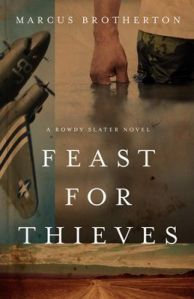
First comes the idea, then it’s a combination of mathematical outlining and imaginary mind play. I had always begun with an outline for my non-fiction books. But with fiction, I just wanted to sit down and be free to enter a state of right brain immersion. In Feast for Thieves, I finally resorted to outlining, which proved to be really great. It gave me a sense of where the story was going and provided the big picture. So if I wanted or needed to change something, I didn’t have to rewrite the whole story. It can be disheartening to throw away large chunks of your story, but with outlining that doesn’t happen much. Therefore, you save a lot of emotional energy working this way.

How do you connect emotions with your characters?

It begins with the process of immersing yourself in the characters. I ask myself the questions: If I was this person, what would he say? How would she respond? What emotion is he feeling? Can I picture a time in my own life when I felt that same emotion? How did I respond? So at the end of any day, it’s a real rollercoaster. You’re feeling happy, scared, sad, apprehensive, even rage—all the strong emotions that you connected with while writing.

How do you power through frustration as a writer?

Frustration can derail you. I think it’s okay to be in that state for a time. Sometimes you come to the end of a project, and it doesn’t work out for you. Then you sit for a while, not knowing what’s next. Some people have five- and ten-year plans. That’s never worked for me. I believe what gets you through the frustration as a Christian writer is finding the answer to the question, “What is the Lord telling you to do?” It’s being content in the angst or the not knowing or in the question. The question is part of the journey.

What is the role of self-esteem in writing?

Here’s a tweetable: “Writing is a performing art with all the insecurities that go along with that.” Once you publish a book and get it out there, that’s your permanent record and it follows you around for the rest of your life. In these days of instant Amazon critiques, everyone’s a critic. People can be every combination of very gracious to very ruthless, particularly if they disagree with you, which does happen. When a critic nails you, you always have to ask yourself the hard questions: “Is any part of this criticism valid?” “Can I learn anything of value from this critique?”

Hemingway talked about handling negative reviews. He compared it to sitting in a winter cabin next to a crackling fire in the woods. In the distance, you hear the howling of wolves. The satisfaction is in knowing that you’re safe. You have published, and that’s something that the wolves don’t have.

What fears or insecurities do writers deal with?

I think every writer wonders, “Do I really belong here?” This is not a profession where people hold the door open for you and say, “Welcome.” This is a profession where all the doors are closed and you have to knock quite loudly and long just to enter. When you finally walk through the door—into that party—it’s hard to believe you’ve made it. A sense of humility with your readers about this is a good thing. Sometimes people classify me as a military historian, simply because I’ve written so many books about the soldiers of WWII. But I’m always quick to point out that I’m not a historian. I didn’t train to be one, and I have a high degree of respect for those who did. I’m a journalist and a storyteller. That’s the party I want to be invited to.

How did you come up with the title, Feast for Thieves?

At one point, we had about two hundred options on the table. I chose this one as a layered title. This first layer comes from the Book of Isaiah where the prophet talks about how salvation is a feast—a wonderful bounty. “Come and dine” is the message of Chapter 55. The second layer of my title originates from the crucifixion. When Jesus was crucified on the cross, He hung between two thieves. I love how He offered this same feast to both—a feast of mercy, grace, peace, love, and joy. One accepted the Lord’s offer, and this is what I call, “The first feast for thieves.” The good news is that this feast is still available for us today. It’s a lavish banquet. The table is spread with great food, and the feast is still free.

Did the characters in Feast for Thieves become real to you?

I felt in the process of writing “Feast” that my imaginary characters became friends of mine. It’s like when you read a really good book and come to the end, you’re kind of sad. Because you know that the story doesn’t continue for these people. In my book, I wanted to have more adventures with my characters, but I knew this particular story was finished.

When you won the Christy Award, what went through your mind?

It was great. I didn’t come here expecting to win. I’m just honored to be at the party. One thought, however, really sums up this whole experience for me. In the writing industry, you hear so many “nos.” In fact, you get used to hearing the word, No! This happens over and over again, and you have to learn how to power through. You have to keep going and remain optimistic. Last night I heard a “yes.” It’s a strange and unusual word to hear in the writing industry, and yet, what a great sound to hear. Finally, at last, “Yes!” But you don’t want to get too used to it, because the next day you have to go back to the canvas and start painting all over again.

Who was the first person you texted, tweeted, or emailed after you won?

I texted a picture to my wife and kids. They were all happy. Also, we have some great friends that I texted. One is our prayer warrior support who had been praying for this moment. My dad and other family members who live in Canada were following online. They let out a cheer and sent me an email. This morning I had breakfast with my college journalism professor from twenty-five years ago. I didn’t know he was here, but it was great to reconnect and reminisce about the journey.

As a journalist, if you interviewed yourself, what would be the angle of the story?

I think it’s interesting that a guy who used to be in the ministry is now a writer. Frederick Buechner talked about how he was a preacher/writer. He wanted to communicate “thoughts of God” to a receptive audience through the vehicle of writing. I want to communicate the ministry of Jesus Christ through the art of writing. That’s my calling.


Do You Want to Change The World?

signing declarationWriters can be agents of social change.

I was reminded of that truth after hearing a keynote address at a conference for animal humane workers. The speaker, Amy Mills, CEO of Emancipet, discussed the importance of social change to transform communities in order to improve our treatment of animals. But her words could also be applied to what traits writers need to cultivate to do their job well; in fact, I felt that Amy’s characteristics of social change makers accurately described many of the writers I know. Here are Amy’s six key traits; do you see yourself in any of them?

Social change makers:

  1. Collaborate across sectors. In my own writing, be it the fiction of the Birder Murder Mysteries or my best-selling memoir Saved by Gracie, I draw from many fields of expertise. My sources are birders, dog owners, psychologists, trainers, sociologists, scientific researchers, conservationists, biologists and historians, to name just a few. To be effective, writing has to draw from the world of knowledge.
  2. Are inclusive. Writers want their message to reach wide audiences. To do that, we keep an open mind about who might benefit from our work, and we rejoice when a new market presents itself as one that we might engage productively.
  3. Build empathy. For any piece of writing to succeed, it has to appeal to the heart of the reader. Having something meaningful to share is the first step of the writing process.
  4. Choose curiosity over judgment. The best writers try to see the world with fresh eyes to uncover what is true. Judgment can shut down avenues of investigation that might just lead to new revelations that will transform myself and my readers.
  5. Check assumptions. Writers make careers out of questioning assumptions. Sometimes, we even turn them upside down in the course of our creative process and/or production. The result is new perspectives and new ideas that can often improve readers’ personal or public lives.
  6. Learn from those they serve. Whether it’s hearing about new conservation efforts to protect bird habitat, or effective approaches to increasing animal adoption, or the need for more transparency about mental illness, every bit of research I’ve done for my books has not only taught me more about the world and the people and creatures in it, but how I myself can better connect with and serve my readers by passing along what I have learned. On a regular basis, I hear from readers about the ways my writing has affected them, and it guides me as I plan my next project. Without that feedback, my writing lacks focus, not to mention effectiveness.

Given these shared characteristics of writers and social change makers, I find myself considering my own work as a potential agent for change in the world; I won’t be the first author to do so, nor the last. “The pen is mightier than the sword,” may have come from the pen of English author Edward Bulwer-Lytton in 1839, but it expresses a timeless truth.

What will your pen accomplish today?  

WordServe News: September 2015

Exciting things have been happening at WordServe Literary!

On the final post of each month you’ll find a list of Water Cooler contributors’ books released this month along with a recap of WordServe client news.

New Releases

9781426711619_p0_v6_s192x300


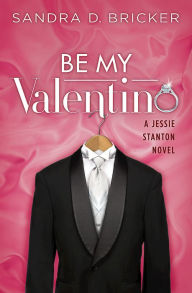
Sandra D. Bricker released Be My Valentino with Abingdon Press Fiction.

Book 2 of the Jessie Stanton series, Be My Valentino follows Jessie after the truth about her husband’s double life has been exposed. Struggling to grow her business and manage her feelings for a new love interest, Jessie finds herself in the middle of an intriguing mystery and a relationship that could end in disaster.


9781434709073_p0_v1_s192x300

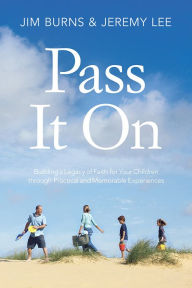
Jim Burns & Jeremy Lee released their new book, Pass It On: Building A Legacy of Faith for Your Children through Practical and Memorable Experienceswith David C. Cook.

Parents often experience a “freak out” moment when they realize their children’s view of God will primarily come from what they learn at home. But while the idea of strategically passing down our faith can seem intimidating, the annual “Rites of Passage Experiences” contained in Pass It On make it easy for your family to celebrate milestones from kindergarten through high school graduation.


9781634094788_p0_v2_s192x300

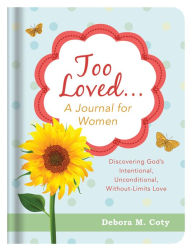
Debora Coty  released her companion journal for her popular book Too Loved to Be Lost: Too Loved…a Journal for Women.

Created for women needing the loving assurance of a heavenly Father who forgives and accepts–“quirks, meltdowns, zits, and all”– the journal includes the complete text of Too Loved to Be Lost and offers simple, practical steps to help you revitalize your spirit and your faith.


Seven-front-cover-med-file


Sara Davison released The End Begins (Book 1 of The Seven Trilogy) with Ashberry Lane.

After a series of terrorist attacks in 2053, martial law has been declared in Canada and the military has taken over. When a radical Christian group claims responsibility, Christians find their freedoms severely restricted. As a romance blooms between a young Christian woman and an army captain, their uncertain future is threatened by forces far beyond their control.


9780373283286_p0_v2_s192x300


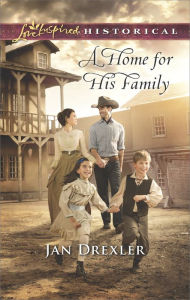
Jan Drexler released her third Love Inspired Historical, A Home for His Family

Set in the Dakota Territory, the book follows Sarah, a pretty schoolteacher, as she helps a newcomer struggling to raise his orphaned nieces and nephew. Sarah’s. Her childhood as an orphan taught her that opening her heart to love only ends in hurt. Yet helping this ready-made family set up their ranch only makes her long to be a part of it—whatever the risk.


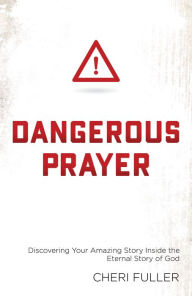
9781634091152_p0_v3_s192x300Cheri Fuller released Dangerous Prayer with Barbour Publishing.

Dangerous prayers happen when you turn your all over to God and offer yourself as a living sacrifice (Romans 12:1). They don’t take you to a comfortable, easy place; they test you, stretch you, and take you where you wouldn’t have chosen. They change not only your life but the lives of other people. In her new book, Cheri illustrates—from Bible times to today—what happens when God’s people pray dangerous prayers.


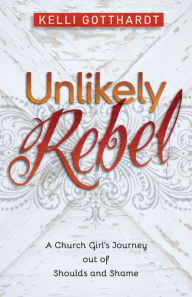
9780825442285_p0_v1_s192x300Kelli Gotthardt released her first book, Unlikely Rebel, with Kregel Publications.

Between the desire to please God, the need to feel valued, and the compulsion to make everyone around them happy, women often find themselves denying their desires. It’s safer to stay in the life of “shoulds,” even if it means being spiritually and emotionally disconnected. But that’s not the abundant life God intends for us! Unlikely Rebel is the story of how Kelly, a pastor’s wife and “good girl,” slowly shed shoulds and shame, learning to love God and love who He created her to be.


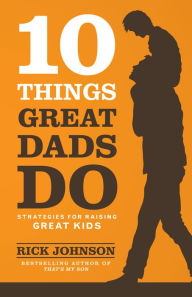
9780800722357_p0_v2_s192x300Rick Johnson released his latest parenting book with Revell Publishers, 10 Things Great Dads Do.

Every father can be a great dad, and this clear and to-the-point book gives them the tools they need to do it well. Rick Johnson offers helpful strategies to enable dads to help their kids find the humor in life; surround their family with healthy friends and role models; communicate clearly with their children; help their kids develop self-esteem and respect for others; and much more.


9780764211362_p0_v2_s192x300Peter & Heather Larson along with David & Claudia Arp have released their parenting
book She’s Almost a Teenager with Bethany House.

A guide to meaningful parent-daughter conversations, this book equips parents to connect with their daughters as they move into the teenage years. Offering practical ways to encourage daughters in their faith and talk about the challenges they face in school and with friends, She’s Almost a Teenager is an invaluable tool for moms and dads everywhere.


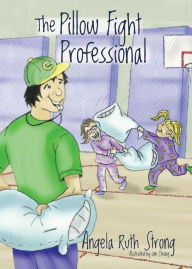
9781941720172_p0_v1_s192x300Angela Ruth Strong released her fourth title in the Fun4Hire series, The Pillow Fight Professional with Ashberry Lane.

A middle-grade novel pack with humor, The Pillow Fight Professional follows Joey Michaels as he trains his sister’s friends to hold their own against older siblings. Encouraging values of faith, forgiveness, and friendship, this latest installment from Angela Ruth is one you can’t miss.


9781400206742_p0_v1_s192x300Bob Welch released 52 Little Lessons from A Christmas Carol with Thomas Nelson
Publishers.

Award-winning author Bob Welch takes readers deeper into the nuances of this classic by Charles Dickens. From the miserliness of Scrooge to the innocence of Tiny Tim, 52 Little Lessons from A Christmas Carol will inspire readers to live for what really matters, not only at Christmas, but all year long.


New Contracts

Debora Coty signed a contract with Barbour Publishing for the Too Blessed to be Stressed Daily Devotional, due out in 2017.

Jordyn Redwood received a contract offer through Love Inspired’s Blurb to Book contest for her novella The Hangman’s Noose.

Dr. David Stoop and Dr. Jan Stoop have signed a contract with Revell Publishers for their book, Smart Love, due out in Spring, 2017.

Tracie Miles signed a contract with David C. Cook for her next book, I Give Up (2017), and a forthcoming title (2018).

Sarah Varland signed a 3-book deal with Love Inspired for her Treasure Point series, for publication in 2016 and 2017.


balloons-25737_640

What We’re Celebrating!

Sara Davison’s The End Begins received a Top Pick 4 1/2 star review from Romantic Times.

Leslie Haskin’s Between Heaven and Ground Zero made the New York Times bestseller list, at #4 in e-book nonfiction.

Angela Ruth Strong’s The Snowball Fight Professional received recognition for excellent craftsmanship at the OCW Cascade Awards in the Young Adult/Middle Grade category. Congratulations!

Six Promises When Words Fail Us

Photo/KarenJordan

What do we do when we don’t know what to say or pray?

Where can we find the words to express our thoughts and emotions?

What can we do when life places us in unbearable circumstances? Where can we go? Who do we run to? What should we cling to when we’re drowning in a sea of our sorrows? And what can we advise others who may be walking through a difficult life crisis?

My younger sister Leslea just endured another health crisis that led to life-threating surgery. My heart aches for my little sister. A single mom of three, Leslea has experienced so many unbearable tragedies and losses in her lifetime–the tragic death of her youngest child, breast cancer, and now major heart surgery. And as her older sister, I often do not know how to respond to her overwhelming needs.

As a writer, my words often fail me when I don’t know how to respond to a difficult issue. And when a friend or family member faces a tragic loss or painful failure, mere words seem inadequate to express my emotions and concerns.

Now, after surviving many trials and crises in my own life, I do know who to turn to when a crisis hits close to home. And I know who I can cling to when I’m overwhelmed by confusion and doubt. I have discovered peace and rest in a storm.

Are you searching for the words to express your thoughts or your faith? God’s Word offers us the promises we need to encourage others.

  1. Help. The Lord promises to help us when we don’t know what to say or pray. “… the Spirit helps us in our weakness. We do not know what we ought to pray for, but the Spirit himself intercedes for us through wordless groans” (Rom 8:26 NIV).
  2. Hope. The Holy Spirit offers promises of hope, even if we never understand why these things happen. “I pray that God, the source of hope, will fill you completely with joy and peace because you trust in him. Then you will overflow with confident hope through the power of the Holy Spirit” (Rom 15:13 NLT).
  3. Assurance. God’s Word provides the assurance that Jesus will bear our grief and carry our sorrows. “He suffered the things we should have suffered. He took on himself the pain that should have been ours” (Is 53:4 NIRV).
  4. Peace. God’s Word can speak peace to the storm ravaging our dreams. And He promises to throw us the lifeline of His Word. “And the peace of God, which transcends all understanding, will guard your hearts and your minds in Christ Jesus” (Phil 4:7 NIV).
  5. Confidence. We can have the confidence to know that in Christ, we will survive. And we can expect Him to provide the power we need to overcome any circumstance in our life if we trust Him with the situation. Healing and hope for the future can be found in Him. “This is the confidence we have in approaching God: that if we ask anything according to his will, he hears us. And if we know that he hears us—whatever we ask—we know that we have what we asked of him” (1 John 5:14).
  6. Rest. In Matthew 11:28-30, Jesus said, “Come to me, all who are tired from carrying heavy loads, and I will give you rest. Place my yoke over your shoulders, and learn from me, because I am gentle and humble. Then you will find rest for yourselves because my yoke is easy and my burden is light” (NOG).

Show, don’t (just) tell! As you tell others of your faith, don’t forget the power of your story. As we share our own faith stories, we invite others to see, feel, and experience what we have experienced.

Are you facing a loss, a failure, a decision, or some other difficult situation? I pray these promises from God’s Word will also give hope to you and others who may be suffering under a heavy burden.

Remember, the Lord knows your needs—even better than you do. He understands. And He wants to assure you of His presence right now and in all the days of your life.

I lift my friends up to you, Heavenly Father. I pray they will give you their heavy burdens. I thank you for your promise of rest and peace.

The Lord answered my prayer about one important concern the weekend before my sister’s heart surgery. Leslea had asked me to take her to church as she prepared for her surgery. She had been unable to attend church for years because of her job schedule. But since she was unable to work, she was free to attend church.

Since I live in a different state than my sister, I prayed that God would lead us to the right church service that Sunday. And the Lord met all of our needs that day with the perfect church, sermon, and worship experience. In fact, the words of a song, “My Heart Is Yours,” expressed Leslea’s prayers in ways I never anticipated.

How has God’s Word helped you through a difficult situation or as you responded to someone else in crisis?

On Zombies

Recently, I’ve noticed a lot of tweets and posts from friends excited about the new television season. Most of them talked about the dramas–obvious favorites. But no one mentioned my favorite:

The Walking Dead.

Here’s the thing. I have a husband and three teenage sons. I have not only missed, but probably never even been aware of, anything remotely pink-tinged or female-oriented that has been popular the last two decades. This includes Downton Abbey (gasp!), Legally Blonde (say it isn’t so!), Glee (I know, right?!), and Dancing with the Stars (oh, the shame!).

Instead, I can recite several monologues–without pause–from the Lord of the Rings trilogies by heart. I can impersonate Batman better than Christian Bale. And I *might have* wept at the new Star Wars 7 movie trailer.

Although the novels I write might be more likely to be read by women, I think my immersion in all-things-male helps my writing. (The exception would be that I tend to kill too many characters off in early drafts. Thankfully, my editors remind me I have to keep a few alive.) While I do binge read within my genre, reading and watching movies outside my genre often sparks my imagination anew, and in turn, helps refresh my writing voice and helps to keep me from writing what’s expected.

Writing what’s expected helps us avoid feeling ashamed of our art. And yet, in the same way you didn’t expect to see a title like “On Zombies” here at the WordServe Water Cooler, writing the unexpected often grabs a reader’s attention.

A favorite resource for many writers is Stephen King’s book, On Writing. Here’s what he says after a teacher accused him of “writing junk” and “wasting his abilities” on horror and science fiction:

“I had no answer to give. I was ashamed. I have spent a good many years since–too many, I think–being ashamed about what I write. I think I was forty before I realized that almost every writer of fiction and poetry who has ever published a line has been accused by someone of wasting his or her God-given talent. If you write (or paint or dance or sculpt or sing, I suppose), someone will try to make you feel lousy about it…”

If King had listened to that teacher, if he had not continued to think and write out-of-the-box stories, we’d really be missing out.

I’d like to challenge you to consider reading or viewing something completely unexpected for a change.

Silence the voices in your head telling you what you should write, and discover what you want to write, what compels you, what compels others in out-of-your-genre work.

In the meantime, I think I’ll go rent a copy of Legally Blonde.