Just Beyond the Manger….

Christmas Eve!001 (2)

Busyness and noise…presents yet to be wrapped…Christmas dinner – has the turkey thawed yet?…the table covered with cookies, frosting smears, and stray sprinkles…and someone – we won’t name names – is singing “Hark the Herald Angels Sing” at the top of her voice.

On top of everything else, if we don’t get a move on, we’ll be late for Christmas Eve service!

Is that cat climbing the Christmas tree again?

#2


                      But…wait…

                                                      …look…

                                                                                                 …listen.

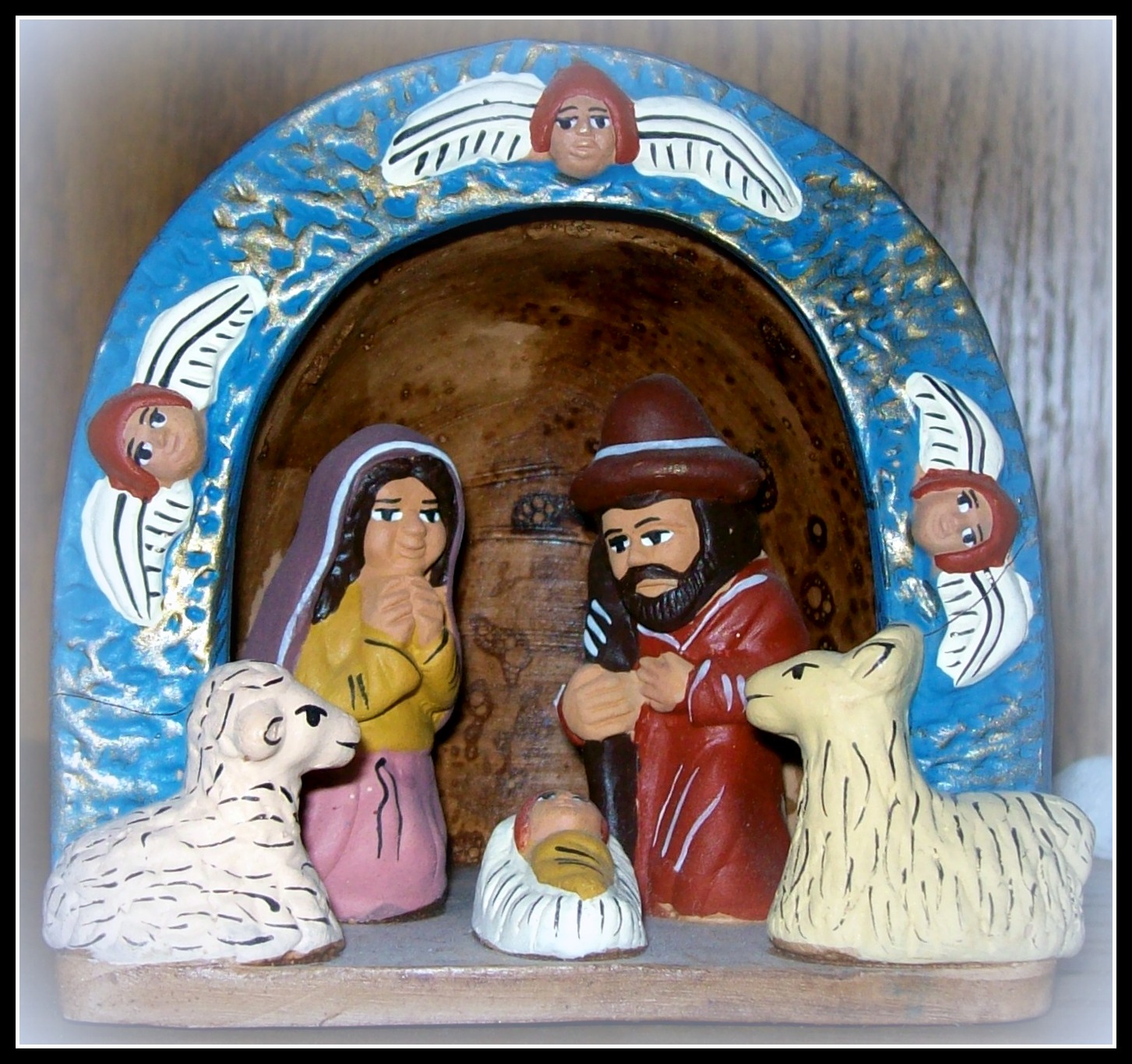
As silent as snowflakes dusting the ground, Christmas comes in pristine whiteness. The babe in the manger, the choirs of angel voices, the shadow of the cross.

008

With painful glory, the promise is repeated. Do you hear it?

Hope is born.

005

Life takes on new meaning.

God enters our lives.

009

A turn of the head and the glimmer of light is captured at the edge of our vision.

God enters our lives in peace, hope, promise, life.

001

Joyful anticipation.

God enters our lives to bring us to Himself.

002

And a baby is born.


Walking Down Memory Lane: Recording Your Legacy Stories

Photo/KarenJordan

What memories do you recall of your hometown?

Christmas always brings back a lot of memories from my hometown, Silsbee, Texas.

My husband Dan and I grew up in the same town in Southeast Texas. So, even though he’s a few years older than me, we share a lot of memories of our hometown. Not only were we both born in that small Texas town, our parents grew up there, too. So, a lot of our relatives and friends still live there. And we still make trips back there when we can.

Fun times. Both of our children were born in Southeast Texas, too. But since we moved away when they were young, they only remember the holidays, summer vacations, and fun times with their relatives there.

Painful moments. Some memories are difficult to embrace–like the death of loved ones or mistakes from our past. But I’ve discovered the importance of recording some of my painful memories, especially since both of my parents are gone now.

Writing down some of those narratives brings healing to my soul. Plus, if I don’t write my family stories down, I know they will be lost forever.

Legacy stories. I should have written down the stories my mother and dad told me long ago. But at the time, I didn’t see any value of recording them.

I still hear those stories from my other relatives when I go back to Silsbee for holidays, weddings, reunions, and funerals. I’m trying to work out a plan for jotting down more of those stories as I remember them.

Certain songs also trigger memories for me. Although I moved from my childhood home several decades ago, Kenny Rogers‘ hit, “Twenty Years Ago,” always takes me back in time, reminding me of my past.

As you listen to the song below, I hope it helps you recall some of the stories from your hometown, too. But be sure to write them down. Someone you love might be blessed by your stories. I also hope you’ll share a story with our readers in the comments below.

YouTube/RareCountry2 (“Twenty Years Ago – Kenny Rogers)

Did this video remind you of a story from your hometown?

For the Love of Writing

Have you ever been around someone who loves Christmas? I can’t quite rival Santa, but I love this season. I love the scent of cider as we decorate the tree and the chaos of Christmas decorations. I love the music, lights, winter clothes, the Christmas parties, and my dad sharing a devotional on Christmas morning. I love time with extended family, laughing and making memories. I love reading the Christmas story and imagining it from the perspective of the people who experienced it. And I love being around people who love Christmas, because their joy is contagious.

It’s the same way with our writing. When we love the story, our readers love it, too. My third book, Surrendered, comes out December 26. It’s the end of a series, the end of an era, the end of a contract, and a beautiful beginning (I hope) to many more stories to come. Under the pressure of deadlines, pursuing a contract, and learning to market, I can forget the joy of this calling. So this month, I’m falling in love with writing again.

Write what you love

Write what you love.

This year, Christmas also comes with a book release. I can’t wait to share Surrendered with readers. I loved crafting the romance that made me swoon, conflict that made me cringe, and action that had me scratching my head to figure out how to rescue them.

Now it’s time to begin again.

I have a couple of different manuscripts going, but I’m also working on one just for me.  A fairy tale. Even if it never sees the light of day, it makes me remember what I loved about my favorite stories as a kid and what I still love about romance, magic, and characters as an adult. The new manuscripts, the ones editors have requested to see are experiencing new life, as well, as I read and remember all that I love about Francine Rivers’s Mark of the Lion series, Karen Kingsbury’s Baxter Family series, and Dee Henderson’s O’Malley series. I look at what other people love about those stories, too. Then I add my own creativity, a new story idea, and something I love is born.

Write because you love it.

It’s taken finishing the Heart of a Warrior series to finally own the fact that I am a hopeless romantic who happens to write romance. But once I fully accepted that, I was able to embrace my new manuscripts in a greater way. I write because I love it, because I have a story to share, because I love bringing a character to life. I love tossing them into trouble and watching them come out shining like gold because they wrestled and emerged victorious. I love writing scenes with courage, heart, and emotion. I write because that’s how God made me. This month, I am writing for the love of the craft and not for the deadline.

Others will love it, too.

It’s important to hole up and remember to write because I love it, to write a heart story, but the beautiful benefit is that even when I close the door to my writing closet and let everything I love and am passionate about spill out on the page, I’m writing something that others will love, too. People connect with emotion, with stories that make them think and dream and imagine. They connect with vulnerability. When I write for me, I  am ultimately writing for them. Out of the overflow of what I have learned as a writer, as a person, as a woman made in the image of Creator God, my experiences, quirks, and imagination pour onto the page and the creativity of the reader is captured.

In this Christmas season, a time of joy and celebration and thanking the God who sent His Son to earth, I’m celebrating in a different way – with the gifts he’s given me. I truly believe when we write what we love because we love it, then others will love it, too.

Christian Writing

writing-828911_640

I originally wrote this at a time when I was heavily involved in fiction writing. Now, as an agent, I am more involved in editing/preparing fiction writing to be sent out to editors. However, I think the discussion is a good one to have within the Christian writing community.

Setting: The 2008 Festival of Faith and Writing. I attended the FFW conference in order to discover answers. With my thesis defense the following weekend and most of my writing within said thesis exploring elements of the Christian faith, I needed to know exactly what it meant to be a Christian writer.

I attempted this discussion within “The Academy”, as I called it then, to little avail. I doubt that I was asking the wrong questions only that other writing believers didn’t have the answers, either.

The keynote speaker at FFW, Mary Gordon, provided her own insights into my queries, “If your primary purpose in life is to be moral, then your primary goal should be to do good works, not to write.” But, isn’t it possible to write moral lessons within one’s stories? Even Henry James would instruct that literature needs to have a “conscious moral purpose”.

Uwem Akpan, the chapel speaker, started his devotional with, “Let us begin as we always do—in the name of the Father, Son, and the Holy Spirit.” I was lucky to start Sundays that way, let alone my writing. I wanted to be a Christian writer, but did I initiate my writing in prayer?

Mary Karr seconded this sentiment by discussing her prayerful approach to writing poetry. I was beginning to question myself as a Christian, not as a writer!

I left the Festival even more unsure of how to enter a writing career as a Christian. Instead, I began focusing on how I had been trained to write within “The Academy”. And, after gaining some perspective, I started to write.

And I started to publish. In secular journals.

Plot: Dun-dun-dun…

So, I have an MA and an MLIS, my stories are getting published, I’ve begun working for a literary magazine, and I’m teaching as an adjunct faculty at a Christian college. I am living the life.

And then, one of those moments happened where I thought to myself, This will make an excellent blog post later!

One of my students asked me, “So, what do you have to do to be a Christian writer?”

After staring blankly in response and flashing back to a moment in graduate school where I had asked one of my professors a similar question, I stared. I am pretty sure that I responded somewhat intellectually and then quickly went back to the lecture, steering as far away from her question, or the answer to her question, as possible.

Character: So, What is My Answer?

And, am I willing to live with the consequences of my answer?

For example, if I say that being a Christian writer is about only writing Christian or even faith-based stories, am I willing to stop writing the stories at which I excel? My mother would appreciate this; I like to think that the journals to which I am submitting would not.

As I wrote in my own blog post later that day, “And, here is the answer I have (to shamelessly plagiarize Augustine): Love God.”

The answer has absolutely nothing to do with writing or publishing (the people at the Festival knew this). As a Christian, everything I do is spiritual, including my writing.

Everything. I. Do. Is. Spiritual.

Language: These are a Few of my Favorite Things!

As a short story writer, I appreciate the art of crafting each individual word. For me, it’s not about the plot—it’s about making every word count. The language is the story!

Instead of focusing on how many times I use “Jesus” or “God” (and, trust me, some secular novels could probably compete with Christian novels in this aspect!) or even incorporating a redemptive theme, I focus on the playfulness of my words.

I’ve mentioned reading stories aloud. I want someone to be able to read my stories and feel something. I want to move someone with my words. Do I want them to accept Christ after reading my story?

Not necessarily (audible gasp inserted here).

Yes, I care about my readers, but my ultimate goal is to write. In my daily life, with the people I regularly interact—at work, at church, at the grocery store—I strive to emulate the love of Christ however that may look.

Within my writing, I strive to be a darn good writer.

And, occasionally, when I am feeling the need to impress Henry, the purpose of my story is intentionally moral.

What does it mean for you to be a Christian writer?

Ten Tips for a Satisfying Radio Interview

The Water Cooler is pleased to host guest blogger Cynthia Ruchti. Welcome Cynthia!


An-Endless-Christmas-cover-e1444403938959

The success of a radio interview is as easy to calculate as the number of baby guppies born in the night. Did listeners rush to their local bookstore to purchase or order the book? Were there more than two people listening? Please, God?

Since God is the only one with answers to those questions about numbers and impact, we adjust our expectations toward satisfying radio interviews.

Is there anything we can do to ensure listeners, interviewers, and the author will end a radio interview satisfied with the process and what was communicated?

Yes.

Oh, you’d like a more detailed answer than that? See midway through the bullet points below.

  • Muzzle the dog. Dogs come equipped with radar-like sensitivity for the most inconvenient time to bark or whine-during a live radio interview. Find an enjoyable place for the dog to hang out or a relatively sound-proofed spot for you to conduct your interview.
  • Choose coffee or tea over an iced beverage. Ice cubes clink. Condensation makes a drinking glass slippery. The plastic on bottled waters squeaks and pops at inopportune times. Even if you’re drinking water, opt for a mug with a large, easy-to grip handle.
  • Disable call waiting on your phone. Any blips or burps, even the technology kind, will temporarily disrupt the interview, which is as serious as interrupting a reader’s immersive experience in your book.
  • Keep a careful record of the contact information, date, time (allowing for different time zones), and details like the radio host’s name, number, and whether you or the program producer calls.
  • Compile your notes, reminders, talking points, bonus topics, and Scriptural connections in one easy-access spot. I use a large foam core board for each book currently considered for interviews. Right now I have an interview board for As Waters Gone By and one for Tattered and Mended: The Art of Healing the Wounded Soul. This week I’ll create a board for An Endless Christmas. There I’ll post potential interview questions/answers, quotes from the book, additional bits of research, two or three statements relating to the book’s theme(s) to which I can turn if the discussion derails, etc. The boards slip behind a chair in my office when not in use.
  • Create sample questions that can’t be answered with a simple (and boring for radio interaction) yes or no.
  • Keep a small notebook nearby to jot connecting point thoughts (and use a pen you don’t have to click or uncap during the interview). Call the host/hostess by name sometime during the interview or refer to a profound, heartwarming, or intriguing statement the host made.
  • Fifteen minutes before the interview starts, make one last trip to the bathroom.
  • Stay others-centered. What interchanges will make the interviewer feel great about having you as a guest? What points of interest will make the audience glad they tuned in?
  • Spend time in God’s Word and in prayer prior to the interview. You’ll enter the interview calmer, refreshed, vitalized, and well-prepared.

What’s your favorite interview tip?

This post originally ran on the ACFW blog and is used here with permission.

Cynthia Ruchti tells stories hemmed in hope through her award-winning novels, novellas, devotions, nonfiction, and through speaking events for women. She draws from 33 years writing and producing a 15 minute scripted radio broadcast called The Heartbeat of the Home. She and her plot-tweaking husband live in the heart of Wisconsin. You can connect with her at cynthiaruchti.com or hemmedinhope.com.

Should I Write Fiction or Non-Fiction?

When I was an aspiring writer, I had no idea whether I should pursue novels, (fictional stories using made-up characters, scenarios, and plots), or nonfiction, (themed projects using real-life examples). So before I signed with WordServe, I wrote a proposal for both.

Juggling a Writing Career and a Day JobWhen my literary agent steered me in the direction of nonfiction, I felt two distinctly different emotions. One part relief, because it’s easier for me encourage, inspire, teach, and motivate through true stories and practical application. But I also felt a twinge of disappointment. After all, it’s a little more fun to make stuff up. Besides, you can get away with things under the guise of imagination, where non-fiction holds you to a strict standard of authenticity.


Mark Twain once said, “It’s no wonder that truth is stranger than fiction. Fiction has to make sense.” He also said, “Fiction is obliged to stick to possibilities. Truth isn’t.”

Today, I’m much more comfortable in my true writer’s skin. Occasionally, I still feel the old pull to write novels, and who knows, maybe someday I’ll do it for fun, but for now, I recognize that I am on the right path. I was made to inspire through nonfiction. But it doesn’t mean I have to give up story-telling…as a matter of fact, for me, stories enhance the topics I am drawn to write about.

Maybe you understand my dilemma. If so, perhaps these bullet points will provide clarity. After all, facts help us make informed decisions.

Fiction

  • Defined by Merriam-Webster as written stories about people and events that are not real. Literature that tells stories which are imagined by the writer; something that is not true.
  • Many readers are drawn to the escape of make-believe story, becoming passionate followers of characters.
  • You can hide truth in a fictional account.
  • There is an increased opportunity to sell two to three book deals as a fictional series.
  • There are fewer speaking platforms to engage with readers, and introduce them to your work.
  • There are fewer fiction publishers available to buy your books.
  • You must write the entire book before submitting it to publishers.

Nonfiction

  • Merriam-Webster describes nonfiction as writing that is about facts or real events. All writing that is not fiction.
  • Statistics show the greater majority of dedicated book buyers gravitate to nonfiction.
  • You can use fictional techniques to tell true stories.
  • On average, studies show nonfiction authors are paid more for their books.
  • With effort, you can find a place where groups gather for practically any true subject–and where they meet, a speaker is needed. Most publishers will require speaking platforms from nonfiction authors.
  • Tapping into felt needs sounds easy on the surface, but unearthing fresh subjects a publisher will buy, and a title that draws readers, is almost as tough as writing the book.
  • Though you need only write two to three chapters of your book, a thorough proposal including a solid marketing plan, comparative analysis of similar books, and complete outline with chapter blurbs is required.

Getting Through What You Can't Get Over Book CoverFor me, nonfiction is my natural fit, and reviewing these bullet points confirms my choice. I have a speaking platform. I prefer truth-telling over make-believe. I love to research facts, statistics, and the latest studies. I actually enjoy the challenge of coming up with a fresh approach to an existing issue, while pounding out a unique title.

There are readers for every genre, or those genres would fade away. Thankfully, there are writers to supply the demands. As an author, I must look at where I can do the greatest good, after all, the books I write ultimately belong to readers. I can’t pen it all, so wisdom says, write what I can pen best. In my case, this means nonfiction.

Are you writing fiction or nonfiction? Why is that your choice?


The Writer as Historian

As a college student interested in science, I was drawn to the pursuit of new discoveries, the promises of technological progress, and a fascination with the possibilities of the future. History interested me, but I did not fully recognize the value of this academic field until I acquired two more decades of life experience.

When I started writing my book, Questioning Your Doubts: A Harvard PhD Explores Challenges to Faith, in order to include accurate stories from seasons in my life alongside explanations of concepts and advice, I briefly stepped into the role of writer as historian.

Now, a year after the release of the book, I treasure this role as one of the special privileges of being an author. Here are a few ways in which authors can fulfill this role:

Preserve Places – Change is one reliable constant in life. Buildings undergo renovation, new businesses open up and others close on familiar hometown streets, and development transforms the landscape. Such changes usually fuel progress and keep institutions relevant for new generations. However, no matter how positive the changes may be, change brings loss, too.

When an author describes a place within the pages of a book, he or she takes a snapshot of a place to preserve for the future. Within the pages of a book, time travel is possible, as a reader opens a door into a building now demolished, treads on carpet from a different era, and takes in the chandeliers, paintings, and furniture in a scene that no longer exists.

Such passages do more than stir nostalgia – they help a reader gain insight into a past way of life.

Uphold Values – Somewhere in the rooms of the past described in scenes of a book, a reader can rediscover traditions worth repeating and values worth teaching to new students. Gracious hospitality comes alive in descriptions of exquisite pastries on silver trays shared along with polite conversation.

A reader who dines along with characters in the book may not be physically nourished, but may find encouragement to engage in pleasant conversation and linger longer at the family dinner table.

Record Lessons – Not everything about a previous era is rosy. A writer that captures the truth of a moment in time in a passage records lessons that can inspire change for the future.

Dialogue that exposes attitudes and prejudices that are honest representations of a time and place help readers discern the need for present day improvements. In preserving history, authors encourage progress.

All authors serve as historians at some point in their books, no matter what section of the bookstore will display their works. You can find history in a physics book as surely as you can in a book on architecture.

In what ways have you captured history in your writing?

Got Writer’s Block?

pencil-918449_640It happens to all of us at one time or another. If you’re anything like me, you probably tend to experience “feast or famine” when it comes to putting words onto a page or screen. At times it is hard for my now middle-aged hands to keep up with my brain; and other times, it is frustrating to these same hands to have little, if any, words I can string into sentences that make sense.

If the season I’m in permits me to do so, I use the down times to invest in my own personal growth. I study. I read. I observe. I take notes. I connect with others. This helps me in several ways, but this one way is what motivates me most:

It allows my brain to rest and receive. As writers, we offer so much output that we need to be careful to prevent our own well from drying up. Without investing in our own personal growth and development through relational and educational resources, we minimize our own effectiveness in what we share through our writing.

Most of the time, though, I have some kind of deadline–whether for an event where I’ll be speaking, a blog post I’m writing, a class I’m teaching, or a book I’m authoring. It’s in these situations that I find this one tip helps me get over writer’s block.

The Power of Story

For me, it helps if I can quiet the noise in my inner world long enough to allow a story to come to my mind. It might be a story I’ve read or a story I’ve lived. Either way, there is much to be said about how story inspires.

Consider the following:

“We may live our lives in prose, but it is poetry that we live for. A compelling story can evolve into a narrative that inspires a shared sense of mission. That, in turn can lead to a long and great legacy. That’s the power of story…

As Geoff Colvin explains in his new book, Humans Are Underrated, we are wired for interpersonal connections and put more stock in ideas that result from personal contact than from hard data. Essentially, we internalize stories much better than we do facts.

As proof he points to research that examined expert testimony in a court case. The study found that jurors considered experts that had a personal clinical experience far more credible than those that merely offered an analysis of the relevant facts, even if they were shown that a data driven approach is more accurate. In other words, the jurors needed a story.

Stories are emotional and we are more likely to remember and react to them.”

(For the entire article, written by Greg Satell for Forbes.com, please click here.)

So, if you find yourself struggling with writer’s block, find a quiet place, or do something with your hands that you don’t have to think much through (chores around the house help me), and allow the story to inspire your writing.

As you share the story with your readers, there’s a good chance you’ll connect with them on a personal level in a way that facts alone–regardless of how powerful those facts may be–could never do.

Consider what Curt Thompson, MD has to say in his book, Anatomy of the Soul, in regard to story:

“When we tell our stories or listen to another person’s story, our left and right modes of processing integrate. This is why simply reading The Ten Commandments as a list of dos and don’ts has so little efficacy…Isolating commands for right living apart from their storied context is at best neurologically non-integrating and, at worst, disintegrating. This is why telling our stories is so important.”

Your story is powerful. Refuse to listen to the negative voices inside your own head that tell you differently. There are a whole ‘lotta someones out there who need what only you have the experience to offer. 

WordServe News: November 2015

Exciting things have been happening at WordServe Literary!

On the final post of each month you’ll find a list of Water Cooler contributors’ books released this month along with a recap of WordServe client news.

New Releases

51tnpG+ohPL._SX373_BO1,204,203,200_

Deb Coty released Too Blessed to be Stressed Cookbook with Barbour Books. A guide to stress-free cooking for the busy woman, this book offers delicious recipes that can be prepared in 20 minutes or less. And, to make things even easier, Deb includes dozens of tips to help organize your kitchen, create your grocery lists, and plan your dinner menus. Say goodbye to stressful meal prep!


51HHF1EATPL._SX321_BO1,204,203,200_


Linda Kuhar released Worthy of a Miracle with Leafwood Publishers. Despite a miraculous recovery from a coma, Christian life coach Linda Kuhar still struggled with a question familiar to many: “Am I worthy of God’s love?” This book follows Linda’s journey to accepting and believing in God’s love for her, and helps readers receive that love as well.


51xzqkIIILL._SX331_BO1,204,203,200_

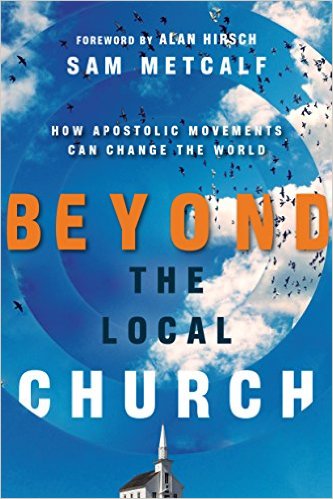
Sam Metcalf released Beyond the Local Churcwith IVP Books.

Though many have given up on the church, this book highlights how God is still raising up vibrant movements of Christians in a vast array of vocations around the world. Metcalf shows how God has always worked through entrepreneurial individuals and organizations that launched out in fresh ways, and affirms the strengths of missional movements to transform nations with the power of the gospel.


Joe Wheeler scan_pic0186published Christmas in My Heart Vol. 24 with Pacific Press. This addition to the beloved series of old-fashioned Christmas stories encourages readers to step back from the dizzying rush of the Christmas season and find serenity in stories that point us back to the lowly stable in a little hamlet in Bethlehem, where a baby was born– and high overhead, a blazing star.


New WordServe Clients

Chris and Karin Conlee, Kim Kimberling,Sandy Silverthorne, and Georgia Varozza joined WordServe as new clients this month. Welcome!

New Contracts

Dianne Christner signed with Barbour Publishing for her next book, Civilizing Clementine, part of the California Gold Rush Romance Collection, for publication in 2016.

Lynne Hartke signed with Revell to publish her book Stupid Strong, on the subject of cancer and the discovery that strength is not found in doing it alone but by being in community and surrendering to a loving God.

Julie Parker signed with BroadStreet Publishing for her new book, Sex Savvy, to be published in spring 2017.

What We’re Celebrating!

Wintley Phipps appeared on the Oprah Winfrey Network show “Super Soul Sunday” to discuss his book, Your Best Destiny. An education activist and founder of the U.S. Dream Academy, Phipps discussed how faith and connectedness can help to create a life of value, meaning, purpose, and fulfillment.

Why I’m Not Posting to this Blog Today

Okay. Here I go. Computer is booted up and ready to go and I am finally going to write that blog post I have committed to sending off at some point today. Nothing like leaving things to the last minute. But I’ve got it together now. I am ready to put words to paper and come up with something brilliant.

social mediaRight after I check my Facebook page to see if anyone has tried to contact me. Hey, new marketing advice from someone I’ve never heard of. Might be the missing piece I’ve been looking for to send my book sales soaring. Yes, I will subscribe to your newsletter. Sign me up.

Okay, back to work. Feeling a little sleepy though. Maybe I should go outside for a few minutes; a little fresh air might clear my head. I should probably take a quick look at the weather site to see what I should expect if and when I get out there. Looks pretty good. Okay, I’ll log out right…  Wait, that headline is interesting. Just going to click on that to see what the article is about. A bear roaming the streets in a town a thousand miles from here? Fascinating. How did they…? Stop. Focus. I’m supposed to be writing that post.

And I will. Right after I check the sports page to read the write-up on the game last night. Yes, I watched the game (what else did I have to do?) and know exactly what happened. Still…

Oh yeah. I need to register for NaNoWriMo and see who else has signed up that I can be buddies with. Preparing to write that novel is consuming far more of my time and thoughts these days than actually sitting down to write the thing would. Which reminds me, I need to do that too. I have a book contract, a looming deadline, another commitment. I have to write the third and final book in a trilogy. I’m going to get started on that soon. Maybe I’ll go back and read the last few chapters of book two in the series to get me in the zone again.

As soon as I send out a quick tweet so my readers know I’m still around and haven’t fallen off the face of the planet. There. Done. My 140-character contribution to the global conversation. Now back to that post.

Wow, that coffee smells good. I’ll just grab a cup to fortify myself so I can really be productive today. Oops. We’re out of cream. Better text a shopping list to my husband. If I take the time to go to the store, this post will never get written.

Okay, I’m back, fortifying cup of coffee in hand. Wait. What’s that notice in the bottom corner of my screen? My anti-virus coverage is about to expire? That can’t be good. I better renew that. Should I stay with the same company? As far as I know, I haven’t had a virus, so they must be all right. I’ll just e-mail my writer’s group and ask who everyone uses for protection. Really don’t want to lose all this great stuff I’ve written—or thought about writing, anyway—just because I didn’t go with the right company. There, I’ve put the question out there. I’ll go back on in a few minutes to see if anyone has responded.

My phone’s buzzing. My husband, responding to my text. Oh yeah. I forgot he has to work late tonight. I guess I better go to the store then.

No problem. I got quite a bit done this morning. Pretty sure there wasn’t anything else too pressing. If there was, it will still be here waiting for me tomorrow, I’m sure.

For some reason, it always is.