WordServe News: April 2016

Exciting things have been happening at WordServe Literary this month!

On the final post of each month you’ll find a list of Water Cooler contributors’ recently released books along with a recap of WordServe client news.

New Releases

georgeJosh Aronson and Denise George released Orchestra of Exiles  with Berkley Books. This compelling biography tells the story of Bronislaw Huberman, the violinist who founded the Palestine Symphony Orchestra and saved hundreds of people from Hitler—as seen in Josh Aronson’s documentary of the same name.

51v21ckDovL._SX347_BO1,204,203,200_Wayne Cordeiro released the NIV LifeConnect Study Bible with Zondervan. Intended to help you grow deeper and stronger in your spiritual life, this feature-packed Bible offers helpful notes and articles, a variety of study tools, and links that direct you to an incredible set of digital resources. At home, online, or wherever you go, connecting with the Word of God is never more than a click, a tap, or a swipe away.

61VwcpvzlKL._SX398_BO1,204,203,200_Debora M. Coty released the Too Blessed to be Stressed coloring book  with Barbour. Encouraging readers to “color your way to calm,” the book offers 45 unique images on quality stock to comfort and inspire through beautiful design, refreshing thoughts, and scripture selections. Perfect for  anyone who enjoys a touch of inspiration alongside their creativity.

51S3bnXfyKL._SX355_BO1,204,203,200_Greg Johnson released If I Could Ask God Just One Question with Barbour. Written for teens, this short, question-and-answer format book offers solid, biblically based answers to teens’ most-asked questions about life, God, the Bible, and faith.


krusenCristóbal Krusen published They Were Christians with Baker Books. With passion and precision, Krusen brings to light the little-known stories of faith behind twelve influential people of history — including Abraham Lincoln, Fyodor Dostoyevsky, Louis Pasteur, Frederick Douglass, Florence Nightingale, and John D. Rockefeller Sr.

41VN6aCurjL._SX331_BO1,204,203,200_Gillian Marchenko published Still Life with InterVarsity Press. This touching personal memoir describes Gillian’s journey through various therapies and medications to find a way to live with depression. Real and raw, Still Life affirms that while there are not always quick fixes, hope remains, and living with depression is still life.

New Contracts

Jonathan McKee signed with Barbour Publishing for his next book, If I Had a Parenting Do-Over, coming in Spring 2017!

Tricia Lott Williford signed a two-book deal with NavPress! The first, Every Confidence, a memoir of the pursuit of confidence, courage, and joy in a world that teaches women to be anything but brave, will release in July 2017.

balloons-25737_640

What We’re Celebrating!

Tough As They Come by SSG Travis Mills and Marcus Brotherton received a Christopher Award in the Books for Adults category. Mills and Brotherton will be honored at the 67th annual Christopher Awards, to be presented in New York City on May 19th, 2016.

Orchestra of Exiles by Josh Aronson and Denise George was featured in the New York Post’s “Required Reading” column.

Dianne Christner’s Covered Bridge Charm reached #9 on the EPCA Fiction Bestseller list!

Tim Maurer, author of Simple Money, appeared on the Today Show to discuss his book and questions about personal finance! You can see the segment here.

When You Know Who You Are, You Know What to Write

public domain; pixabay.com

As writers and communicators, we’ve probably all heard the saying, “Communicate with the listener in mind.” I keep this statement on my desk to be reminded often that I need to be intentional in my writing – intentional to focus on clearly articulating the topic at hand with you – the reader – in mind. When I prepare a live presentation, the same practice applies. Like John Maxwell said in his book by the same title, “Everyone communicates, but few connect.”

If we only write or talk to have something to say, it does little good to anyone. And in a day when seemingly everyone has a platform of some kind, it matters even more that our words count.

Beware getting lost in the practice of communicating with your listeners/readers in mind, though.

In the private practice (counseling, coaching and consulting) my husband and I have, and in my teaching and writing, one of the main focuses of all I do is to affirm and re-affirm to clients, audience members, and readers that everything we do reflects what we believe about our identity. Like Joyce Meyer has often said, “Your DO is not Your WHO.” In other words, you aren’t what you do – either in daily behavior nor in vocation – for better or worse. That reality is hard to remember sometimes, isn’t it?

I have a couple of heroes in my life about whom, over the years, I’ve thought or even said aloud, “I wish I could write like him/her,” or “I wish I could be as funny/articulate/bold/etc as ________________ is.” While learning from others and even emulating others we admire can be a really positive experience in personal growth, we need to be careful that we avoid trying to become another person in our attempts to find success.

No one will bring to the world what you’ve been placed here to offer.

Discovering my identity and then practicing the position of my identity is key to experiencing success (i.e. “the abundant life” Jesus spoke of in John 10:10).

“Your DO is not Your WHO.” – Joyce Meyer

In my book, Why Can’t We Just Get Along?, the main point throughout is that “When you know who you are, you know what to do.” Since this is true in everyday life and relationships, we can trust that it is also true in our vocation. For the purpose of this blog, I’m speaking specifically to writers. If we never discover,  or if we fail to remember who we are, we will lose our unique voices in our writing as we attempt to ‘communicate with the listener(s) in mind’. The pull to be who others want us to be, even well-meaning friends and colleagues, will be too strong to avoid. We may (no guarantees here!) become extremely popular or even write a bestseller, but if it isn’t our voice the readers hear, is it really worth it?

This is a question only you can answer for yourself. For me, it just isn’t worth it.

Readers connect with different writers for as many reasons as there are writers and readers! I love it when I can “hear” the sound of different writers’ voices. Your readers love it when they can hear you distinct voice as well. So, as you’re working diligently on having solid content to share, avoid the pull to share it in someone else’s voice.

“My voice is never much louder than a ripple, but even small voices sound loud when you talk about things that matter.”
Natalie Lloyd, The Key to Extraordinary


6 Questions and Ideas for Your Writing Reflections

Photo/KarenJordan

“[T]ake chances, make mistakes, get messy!” (Magic School Bus)

Do you tend to focus most on your grammar and mechanics when you self-edit? I do.

I want to offer you some questions and ideas that will help to get you out of the “grammar cop” mode and into a more reflective mood.

Writing instructor. I compiled this list of questions as a writing instructor at the University of Arkansas at Little Rock. I offered these questions to my students to help them in their revision process with their papers.

I’m not sure where I got most of these reflective questions. Writing instructors tend to do a lot of “academic borrowing.” If you teach, you know exactly what I mean.

Professional writer. I also try to remember to ask myself the following questions when I’m reflecting on my own work, so I won’t be so critical of my own work. I tend to be a bit of a self-deprecating perfectionist at times.

I offer the questions and ideas to reflect on your work. I hope it will encourage you to tell the stories that matter most to you. So, let me know if they help you. [You can share your thoughts in the comment section below.]

Consider these questions/ideas as you reflect on your next project:

  1. Who do you imagine might be the audience for this story? (Self, parent, child, writing group, etc.) What details did you include for your audience?
  2. What feelings and reactions did you have as you were writing the story? What surprises? What insights? What have you done or what might you do that would capture those feelings, reactions, insights?
  3. What do you think this story means to you? Have you shown what the story means to you in the writing of it? What have you done? Where and what might you do?
  4. Pose questions you wonder about this story or that emerge from this story. What do you need to know in order to complete this story?
  5. How would you revise this story? Write a plan for your revision.
  6. What did you learn about yourself from writing this story? What did you learn about writing from writing this story? What did you learn about writing from reflecting on this story?

What reflective questions do you ask yourself when you revise your work?

Devotional Essentials, Part 3

glasses-272399_960_720

It’s probably no exaggeration to say that millions of people—maybe even tens of millions—use devotionals as a regular part of their Christian walk. And while many of them are re-reading classic works like My Utmost for His Highest, Morning and Evening, or The Real Force—A 40-Day Devotional (sorry, just a little shameless self-promotion there), many others are looking for brand-new readings that speak to their particular interests or needs. Book and magazine publishers, web sites, and churches all regularly produce new devotional material for this large and hungry audience. If you’re interested in writing devotionals, I hope you’ve found this “Devotional Essentials” series helpful. In this third installment, we conclude by discussing the S and T of the TEST I’ve suggested: Effective devotional pieces move from Topic to Example to Segue to Takeaway.

While every aspect of a devotional is important, the Segue and Takeaway are truly vital. If your Topic intrigued someone enough to start reading, you’ve already won a small victory—there are plenty of other devotionals that she could have chosen. Assuming your Examples are worthy of your Topic, the “storyline” of the devotional should keep his attention. But now we get to the devotional’s raison d’être: the biblical tie-in and spiritual point of the whole thing. Done well, your devotional will educate, edify, even excite readers. Done poorly, it may convince readers not to come back.

A Segue is a transition, “made without pause or interruption,” in Merriam-Webster’s definition. How do we move from the Example of our devotional—often a “secular” topic such as a sporting event, a movie scene, or some everyday experience—to the biblical teaching and the ultimate spiritual point, the Takeaway?

The Segue will be vary in complexity, depending on how closely the scriptural information parallels your example. If they’re very close, you might not need any transition at all—the connection will be obvious enough. But in most cases, a Segue should bridge the two ideas. It might be as simple as inserting a phrase like “In a similar way. . . .” Or the Segue may need to be developed over a couple sentences. (If you need more than that to explain the relationship, though, you might be trying to connect the wrong Scripture and story.)

Beware of the too-easy transition. In the “Home Run Kings” example of my last post, it would be easy (but cheesy) to come out of details about Babe Ruth and Hank Aaron by saying, “And Jesus will always hit a home run for you!” Give your devotional more thought (and your reader more respect) by developing Segues that are less obvious and more memorable. While devotionals aren’t a place for deep theological discussion, they can and should challenge readers with some fresh perspective on the Bible.

It’s that Bible teaching that comprises the Takeaway, the point of information or call to action you want readers to remember. As with each part of a devotional, the Bible teaching must be concise—the Takeaway will challenge your skills of condensing material, while staying true to the actual context and teaching of your chosen Scripture. Ideally, the Takeaway ends with a pithy, memorable wrap-up that encapsulates the entire entry and sticks in the mind.

Let’s finish today with a sample devotional that breaks out the elements of the TEST in context:

Topic: Major League Baseball

Example:

He was good enough to reach the major leagues, but not good enough to stay long. Yet he’ll always be good enough in the record books.

Confused? It’s a baseball riddle, of sorts.

The answer is Bill Goodenough, who appeared in ten games for the 1893 St. Louis Cardinals. The 6-foot, 1-inch, 170-pound center fielder was a late-season call-up for the Cards, debuting on August 31 for a squad that would finish tenth in the twelve-team National League.

Goodenough’s statistics were as mundane as his team’s performance that year. In 31 at bats, he rapped only four singles and a double for a batting average of .161. He reached base six other times—equally divided between walks and hit by pitches—stole a pair of bases, and scored four runs. And then Bill Goodenough, apparently not good enough, disappeared from the major leagues.

Segue:

We might play off Mr. Goodenough’s story to encourage people to try a little harder, live a little better, strive a little more to be “good enough” to please God. But that really misses the point.

Takeaway:

The apostle Paul wrote to Christians in Rome that, “no one will be declared righteous in God’s sight by the works of the law” (Romans 3:20). Our good works aren’t what please God—it’s what we believe about the life, death, and resurrection of Jesus. As Paul asked the Galatians, “Did you receive the Spirit by the works of the law, or by believing what you heard?” (Galatians 3:2).

It’s good to do good, but never think that’s your ticket to heaven. Only faith in Jesus makes you “good enough.”

 Where, then, is boasting? It is excluded. Because of what law? The law that requires works? No, because of the law that requires faith. For we maintain that a person is justified by faith apart from the works of the law.

Romans 3:27–28

Thanks for reading. Now go write some devotionals!


Is That a Rattlesnake? – Writing From A Sense of Place

Welcome to my neighborhood. I live in a city, but I like to hike in the surrounding mountains in the Sonoran Desert.

Will you walk with me? 

a pair of cholla

prickly pear

Before we go, I recommend packing the following things:

  1. A small journal and two pens for writing simple notes that can be tidied later. One fast pen. And one slow pen. Just in case.
  2. A phone and a pocket-size camera for taking photos of things to remember, including plants, lizards, insects, and birds that need identifying. And occasionally rattlesnakes.
  3. Water. Plenty of water.
  4. A snack. Writing and walking is always better with something delicious. I recommend a bagel with cream cheese, an orange, and a package of fruit snacks. Shaped like dinosaurs.

I like to leave early in the morning for a hike in South Mountain. We will walk until we find a flat rock with an unobstructed view in the middle of a cholla forest. We wait here for the dawning.

What sentences will you use to describe the horizon? What colors do you see? Orange? Yellow? How can you write about those colors without using those words?

I scribble in my journal:

I look for the planets that are visible this month in the pre-rising light, but only a fingernail moon shines down. The eastern sky is anthemed by the birds as peach caresses the low layer of clouds, veiling the sun until it bursts in a single golden shot. 

A nearby ant hill is a scurry of activity, the residents in a hurry to harvest food before the rising of the molten heat.

A lime green bandaid emblazoned with super heroes lies in the dust.

What is blooming? What is distinct about this season? How will your reader know it is spring without you having to tell them?

The hillside flowers are monochromatic in hue. Lemon-gold poppies. The ditzy-blonde brittlebush that arrives early and stays late. The five-petaled blossoms on the creosote bush are no larger than a penny. No buds adorn the head of the gentleman saguaro, the giant cactus that waits to bloom last every year.

Who shares the morning? What do you hear?

A pack of coyotes join the morning bird song with yips and howls. I smile at the Sonoran Desert chorus but my rust-colored mutt unfurls her tail as she listens, warily, close to my legs.

A dad with three young sons shuffle by.

“How far are ya goin’?” we ask.

“As far as we can get,” the dad answers. They pass us full of adventure and youth-filled zeal, a single water bottle between them.

What do you touch?

A layer of dust coats my shoes. My hands. My khakis. My dog is a four-legged dust mop as she flops at my feet.

To our left is a vein of pink quartz that juts up from time to time throughout the mountain like the backbone of a dinosaur skeleton.

The fruit snacks!! Would you like a red one?

red dinosaur fruit snacks

As I pull out the fruit snacks, I place my foot on a medium-sized boulder. A six-inch black tail disappears under the stone below my shoe. I jump back. A lizard? A snake? I feel no need to investigate.

What would I see in your neighborhood? What is unique about the place where you live? How would you set the scene with a strong sense of place?

Can I walk with you?


Lynne Hartke is under contract with Revell for a 2017 release of a nonfiction book about her experience with cancer. The Sonoran Desert in Arizona serves as a background for much of her writing.


Want to Get Published? A Publisher Needs to See an Author Who Can Write and Promote

Note: This is the last post in a series of four posts: 3 Things a Publisher Must See.

3 things

Let’s say your proposal has convinced an editor that your project has a wildly unique premise. You’ve even demonstrated a viable audience with a felt need.

There’s just one more thing…

You.

The questions a publisher is asking about you, very possibly in this order:

  • Does she have a platform?
  • Can she write?

A publisher needs both.

And this is the difficult bind of many editors—who love great writing, and want to publish great writing—today. It’s not to say that editors don’t ever stick out their necks for someone nobody’s ever heard of who can write really well. They do sometimes.

I’m saying that a publisher’s decision is always a complex one, and the more you can convince them that you have a platform to influence others, the more consideration your proposal will receive.

If you can write compelling sentences that make people laugh and cry, and string those together into a fabulous manuscript, and if your platform is so big that Oprah, Donald Trump and Diane Sawyer want to be your bestie, congratulations.

If one or both of these is not the case, then…

  1. Improve Your Writing
  • Read great books
  • Write every single day, and then write some more
  • Join a manuscript critique group, locally or online
  • Attend a writer’s conference (See one you like from 2015? Google it!)
  1. Build Your Platform
  • Pitch articles to the publications your target reader is reading
  • Develop an audience for your blog by writing consistently and meeting readers’ needs
  • Pursue speaking opportunities—at church, MOPs groups, etc.—in the community
  • Be a great friend on social media by celebrating others’ work

And…be patient.

Very few writers have fairytale stories of wild success with little effort. (Honestly, that was my plan when I started writing. It didn’t work out that way.) Most writers invest time and energy to improve their writing and build an audience.

Cheering you on,

Margot


How to Know ForSureForSureForSure You’re Ready for an Agent

coffee-1128140_960_720

Do you have that first novel completed? Have you been staying up late and getting up early to study and write about a topic you’re passionate about telling the world?

Then it might be time to query a few agents to see if you have what it takes to get their attention. But keep your expectations realistic. New authors are harder to break out than they’ve ever been. And please, don’t blame the agent. We’re just the messenger of what publishers keep telling us.

You’ll need some criteria to go by to determine if you’re ready. Here are a few dozen hints.

First: Know who you truly are…

  1. Someone who has always wanted to write
  2. Someone with a message you feel God is asking you to put to paper
  3. Someone with a message that others have said needs to be put to paper
  4. Someone who can’t wait to get to your computer to create the stories in your head
  5. Someone who reads a lot, both within the genre they write as well as others.

Second: Understand what the book publishing industry is looking for…

  1. The 80/20 principle is alive and well in publishing. Publishers must have the big sellers to stay in business. So 80% of their advance and marketing money will always go to 20% of the authors and books. And if you’re a new author, unless you’re a pastor of a mega-church or you can write like Hemmingway (or better), you’re likely not going to be amongst the 20%.
  2. Because of the loss of browsing retail, publishers can’t find readers, so they expect authors to find them. They want authors with built-in audiences ready to buy. That’s why they are less willing to take risks on unknown/debut authors, preferring known quantities instead of new voices. If I had 200 new authors to speak to, there would be perhaps 5% who will ever get published traditionally. Not because they can’t write. Not because they don’t have a compelling message. It’s because they still have an information gap about what it takes to get published and be successful at it.
  3. Great writing. They want authors who are sold out to getting honest critique. They want a book with a clear vision/message, and an obvious audience (felt need). They hope authors are willing to study the craft of writing, attend conferences, willing to join and participate in critique groups or have a critique partner. Most of all, they want authors who have “come to play.” They’re working on building audiences; they’re invested in their own marketing and they have a plan to grow. Publishers and agents want more than one book. They want to grow with you and your career.

Third, what motivates you…

  1. Money. Okay, that’s not terrible. Would C.S. Lewis have written The Chronicles of Narnia for free? Provision—whether it’s today’s manna or retirement’s manna–motivates us, and it’s not evil. However, if this is your ONLY motivation, you have to ponder whether God will bless it. You also have to recognize that it’s harder than ever to make a living as a writer today, and that the days of six and seven-figure advances (with a few exceptions) are largely gone.
  2. Legacy. Publishers don’t care about this unless you’re already famous. Legacy projects get self-published, and that is perfectly fine.
  3. This does not include “ax to grind” books. Please, self-publish those. We can’t sell them.
  4. “I can’t help myself.” Obsession is a good place to be, but not if you’re sacrificing your health, family, bank account and soul to do it. Your obsession should pass the “sniff test” by those who know you best. Just because you feel “God has told me” to do this, doesn’t make that statement true. Obsessions MUST be confirmed by several people in your life before you give them wings in a big way.

So, with all of this in mind, here’s how to know “forsure-forsure-forsure” you’re ready for an agent.

For sure…

  • You have something inside of you that must get out. A novel, a message, a memoir, a brand. When I started FaithHappenings.com two years ago, I was like a dog with a bone. My excitement did border on obsession.
  • You’ve put at least half of the book on paper–the whole book if you’re a novelist. (With novels, it’s not how you start, it’s how you finish.)
  • You understand that traditional publishing is a business and you won’t question their motives if they reject your work. People DO know more than you.
  • You feel God’s pleasure in your efforts to communicate what you want to share.
  • You can’t wait to get to your computer.

For sure, for sure…

  • You know your motivation. It doesn’t have to be pristine, you just have to know what it is.
  • You know your book will get published no matter what. You are going to do this! Start traditionally if that is a goal, but not let that stop you from doing what’s needed to publish independently, if you have to.
  • Someone has said that your message, life story or writing is above the curve. But even so, remember this: Perhaps one person per state ever makes it to the major leagues in each year. The pyramid is very small at the top in any professional endeavor.
  • You are patient with the process and want to trust an industry professional to help guide your book/career. Once you think you know more than they do, turn off the tap on traditional publishing. And this is fine. Some are wired to be control freaks. Go with it. Don’t drive yourself and an agent/publisher crazy if you want to control every step in the process.

For sure, for sure, for sure…

  • You have 5,000 to 10,000 “followers” (blog, Facebook, Twitter, Instagram, Pinterest, etc.) Further, you are convinced—and you hereby solemnly swear to not complain—that you must help any publisher you go with—traditional or your own efforts—FIND READERS.
  • Twenty people who don’t know you well have seen your book/writing and they’re not adding much more to it. You hear the term “great writer” from several different people.
  • You know your genre, your audience, your message—you have FOCUS!!!
  • You have a great proposal that answers the publisher/agent questions. If you don’t, get the agent’s proposal template. We all have one. Work hard on it. Don’t have typos, and follow directions! There are too many other people vying for an agent or editor’s attention for them to waste time on a proposal that doesn’t meet the basic requirements listed.
  • Read three book marketing books. And then in your proposal, give the agent five pages of marketing ideas you KNOW you can do.
  • You have counted the cost:
    • Family/Time
    • Money
    • Inevitable rejection and bad reviews, perhaps even the “ten mean church ladies” who write scathing letters and reviews on nearly every book they see.
  • You know you have “come to play.”
  • You know what five agents/agencies you want to be with. Get to know what they have represented. (You aren’t sending your proposal out en masse to every agent whose email address you can find.) Of these five, take the first one who says yes. Realize that you may not get the top guy, but the reputation of the agency is what you’re after.

If you can check off nearly all of these criteria, you’re forsure, forsure, forsure ready.

Planning for Pansters: Writing a Novel without an Outline

I envy those writers who outline their whole novel before they even begin chapter one. They sit down at their computer, begin typing and already know what they’re going to type. A little expansion here, a little fleshing out there. There’s no fretting as they try to pick out their story’s path one step at a time.

O boy, do I wish ….

But no, I’m a panster (as in I write by the seat of my pants). I’ve tried outlining, but except for a handful of scenes, I simply cannot tell what needs to happen in a story until I start writing in my characters’ voices. One scene leads to the next.

But as J.R.R. Tolkien famously said, “All those who wander are not lost.” If you’re a panster, trust yourself to discover your novel’s path as you write it. A little wandering is likely to give the story a few surprise twists. There are, however, a few tips that will shine a light on your path though, so you don’t get so far off the track that you have a mess on your hands when you’re done.

Tolkien

Keep your premise firmly in mind as you write each scene. It may take you a hundred pages to truly discover where your story is going, but you should have a strong premise from page one, and each scene should build and deepen that premise in some way. Follow tangents as you wish, as long as you keep this in mind, and you’ll still have a coherent story in the end.

Before you write, choose two or three comparable novels to the one you intend to write as loose guides. That is, select novels you’ve read that have the type of structure and audience you’re aiming for. The goal isn’t to copy other plots, but to give you solid ideas for your story’s structure as you go.

Know what your characters’ goals are and put obstacles in their way. In every scene. Don’t be shy. Stir up the waters and create lots of trouble for your characters. Ultimately, if you write most scenes to make your reader worry, you’ll end up with a story that stays on track.

End each scene with a hook. This may simply mean that you’ve moved your character and his or her goal further apart. But anything that makes your reader want to read on will do (i.e., a mystery that is laid out in the last paragraph). Incidentally, ending on a hook may make it easier for you to know where to start when you come back to the computer as well.

Aim for the finale. Although I don’t outline, I generally have a fairly strong image of the catastrophe at the end, that great battle that makes it seem all is lost, but ultimately brings the character to his or her reward. If you know the finale, you’ll faithfully build to it.

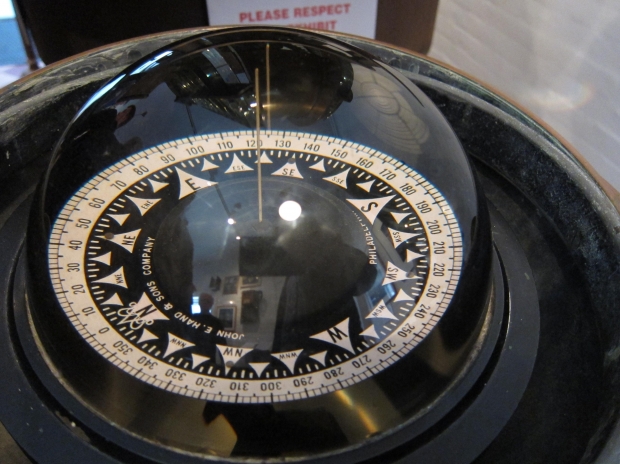
compassIf you follow these guidelines, you don’t need an outline to make sure your story stays on route. But what about coming up with the story itself when you have no outline to refer to?  

Last but not least, leave time for your story to stew. If you’re not following an outline, you must give your muse time to dream up new scenes. For me, that means taking long walks or doing mindless activities (dishes or laundry) alone, while my mind drifts. When I let my unconscious mind free, I usually find images or snatches of dialogue that will take me through the next scene or two.


Becoming Social Media Savvy

Social Media Sign Web Globe
The World of Social Media

If you want to become a published author in today’s world, you need to embrace social media. Some aspiring authors may be very comfortable with social media and already have a large and successful online platform. However, many people preparing to write their first book may have a platform established in another way, such as through teaching, speaking, or published articles, and the world of social media may be foreign to them.

Here are a few tips for new authors looking to expand their social media presence:

  1. Consider your overall social media needs. Most new authors have careers in addition to their writing. While in many cases your writing may be an outgrowth of your career, sometimes the social media needs of your career may conflict with the social media needs of your writing platform. Consider how you can achieve a workable compromise between the two. Perhaps you work in a career where a limited social media presence based solely on professional accomplishments would be ideal. However, your writing platform may thrive if you develop a more personable social media presence that lets your readers share in some details from your daily life. Maybe you can connect with work colleagues on a platform such as LinkedIn, while using Twitter, Facebook, Goodreads, Instagram, and Google+ to connect with readers. Find what works for you, and modify your social media presence as necessary.
  2. Create layers of social media connection. Before deciding to become an author, you may have used social media as a means of connecting with friends and family. Now you find that your literary agent and your publishing house want you to connect with readers through social media. Connecting with readers requires a public social media presence. However, privacy controls on social media sites such as Facebook allow you to keep your posts to friends and family private while creating new posts for the general public. Using privacy controls, you can create layers of social media connection, sharing photos of your children with close friends and family members while sharing photos of book-signing events with the whole world. You might want to create a Facebook page with all posts public to connect with readers, while using your Facebook profile to connect with friends. However, consider leaving some posts from your Facebook profile public for readers who find you through a Facebook search.
  3. Adapt your social media strategy to stay current. All social media sites are constantly changing, especially platforms such as Facebook, where signs around the company’s campus remind employees that “this journey is only 1% finished”. After a major update on one of your social media sites, check privacy settings, and revisit your approach to social media. Is there a great new feature that you should start using? Should you publish more videos, or schedule posts for a different time of day? As an author, your journey in the world of social media is only 1% finished. Learn from your past experiences on social media and the wisdom of other writers, and create fresh content using new tools and the latest technology.

What tips do you have to share with other writers on becoming social media savvy?

WordServe News: March 2016

Exciting things have been happening at WordServe Literary this month!

On the final post of each month you’ll find a list of Water Cooler contributors’ recently released books along with a recap of WordServe client news.

New Releases

Jacket JPGBruce Main re-released Why Jesus Crossed the Road with FaithHappenings Publishers. Tracing the life of Jesus, Main challenges readers to become “road-crossing Christians”—people who see border-crossing as a spiritual discipline essential for authentic transformation, both in their own lives and in the lives of those they meet along the way.

simple moneyTim Maurer published Simple Money with Baker Books. This no-nonsense guide to personal finance distills complex financial concepts into understandable, doable actions to help readers simplify their money decisions, budget major expenses, craft a workable retirement plan, reduce and eliminate debt, and more.


51XRemJ98JL._SX322_BO1,204,203,200_Margot Starbuck and David King released Overplayed: A Parent’s Guide to Sanity in the World of Youth Sports with Herald Press. Starbuck and King offer good news for Christian parents stressed out and stretched thin by the demands of competitive youth sports, with practical advice on how to set good boundaries and help kids gain healthy identities as beloved children of God, both on and off the field.

584492Robert L. Wise released Bible Lands with Barbour Books. This beautifully illustrated guide to the history, culture, geography, and key sites of the Bible transports readers to the land of Abraham and Sarah up through the founding of Israel, the coming of Jesus, and the journeys of Paul. Wise helps readers use geography to gain a better understanding of the places and events that form the greatest story ever told.

51bAjzombTL._SX436_BO1,204,203,200_Joe Wheeler released My Favorite Prayer Stories with Pacific Press. This third book in Dr. Wheeler’s Favorite Stories Collection affirms that prayers are not meant merely to supply our wants–although God does grant a surprisingly large number of such prayers– but, rather, they are meant to deepen our friendship and companionship with our Maker.

New Contracts

Jared Patrick Boyd signed with InterVarsity Press for the publication of his book, tentatively titled “Spiritual Formation of Children,” offering parents practical tools for engaging with their child in practices designed to nurture the experience of God in prayer.

New Clients

P. K. Hallinan, Bob Hedenstrom, and Christopher deVinck signed with WordServe this month.

balloons-25737_640

What We’re Celebrating!

Julie Cantrell’s The Feathered Bone was named a 2016 Winter Okra pick, an honor given by SIBA for “Great Southern Books, Fresh Off the Vine.”

Deb Coty’s Too Blessed to Be Stressed Cookbook received the 2016 SIBA Pat Conroy Cookbook Prize!