Six Hurdles to Becoming an Author

When I attended my first writer’s conference in 2006, I thought I’d pitch an agent or editor and sell my book on the spot. After all, my college professor used my papers as good examples for her class, so these writing professionals were sure to read my work and sing the Hallelujah Chorus, right? Interviews on Good Morning America, Oprah’s Book Club, and a Pulitzer Prize would be sure to follow. Money would rain from the heavens. I was 28.

I’ll be 40 this year. I’m older, wiser, more experienced, and yet I’ve never met Oprah.

So let me step in as your coach and tell you how this really works.

  1. You have to write a book. I started many books before I finished one. And I probably only finished because I’d paid for a conference and needed something to sell to all those editors who I thought would come knocking. Editors or not, this is probably the hardest hurdle to clear. You don’t know you can leap over it until you do. So set that deadline for yourself, make the time, and feel free to write crap. Because this manuscript will likely be considered a false start anyway.I Got Nothin'
  2. Find a critique partner. Now because I’m the kind of person who takes off before the pistol is fired, I did have an editor request my manuscript after this conference and an agent sign me on the basis that I had an editor interested. This story didn’t get published though (thank goodness), and the most valuable thing that came out of my first conference was my critique partner. She got me back on track and trained with me. We moved at about the same pace and agreed to read each other’s manuscript. I not only learned a lot from her, but she ended up starting a publishing company which eventually published my Fun4Hire series. This is one of the coolest things about the writing community. Meeting all those famous authors is exciting, but it’s even more exciting to help your friends succeed.

    20170824_154228
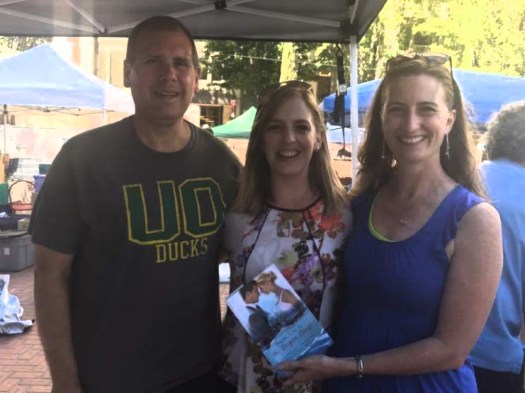
    I named characters Christina and Dave after my first critique partner and her husband.
  3. Enter contests. Christina and I both finaled in contests. This is great encouragement to keep going when it feels like your words will never see the ink of a printing press. It also looks good in a cover letter and can include great feedback. Often these contests are judged by your dream editor. You’ll be scored on exactly what they like or don’t like about your work. And sometimes, if they like your work enough, as in the case of the Harlequin contest I entered, they’ll give you a contract and publish it.

    Book Signing
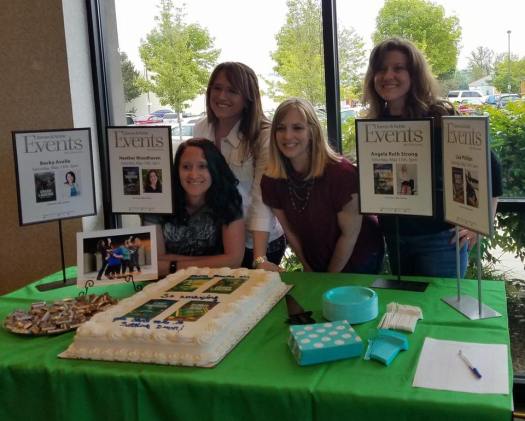
    Almost all of Team Love on the Run sold manuscripts through a Harlequin contest!
  4. Submit. Now I didn’t include “reading” as one of the six hurdles because normally if you want to be a writer, reading is no hurdle. It’s more like cheering from the stands. That being said, READ and research your favorite books to find out who sold and edited them. That’s probably who you should to submit your work to. Agents and editors know what they want, and you are wasting time if you send them something outside their interests.

    Angela and Editor
    My editor Miralee Ferrell is hard to keep up with.
  5. Get rejected. This is like shin splints. You don’t feel the pain unless you push yourself. Now you can commiserate with the rest of us. Feel free to keep count of your rejection letters or recycle them so your next rejection letter can possibly be written on the same fibers. Whatever you do, be proud. You’re writing isn’t perfect, but that’s okay. It’ll never be perfect. What matters is you’re working hard to beat your last time. Get up and keep going.

    Me and Mark Twain
    Even Mark Twain’s WAR PRAYER was rejected. He said, “I don’t think the prayer will be published in my time. None but the dead are permitted to tell the truth.”
  6. Network. To some of you, this hurdle might be even harder than getting rejected. It’s like being interviewed after you lost a race on television. But you have to get in front of an audience to build what editors like to call a platform. It can be through social media, blogs, websites, radio, magazines, or newspaper. You are your own front man. You exude the the passion that pours into each of your stories. People want to read what you have to say because you inspire them.

    Why Christian romance- (2)
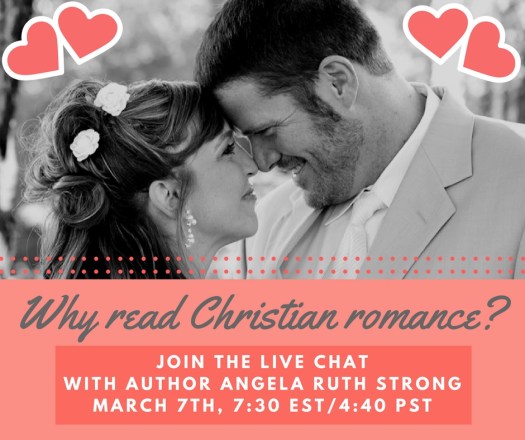
    People who know me know I’m passionate about healthy relationships and that I believe love can change lives. Also, it’s fun.

If you continue to improve your performance and don’t give up, you increase your chance of crossing the finish line into publication. All I’m going to say here is that selling your first manuscript won’t be anything like you imagine it to be. It will be better.

There you have it. Though you should also know that on average it takes seven years to win a book contract. And then you face a whole new set of hurdles.

Is it worth it? Only if you can relate to Eric Liddell in Chariots of Fire when he says, “I feel God’s pleasure when I run.”

He never met Oprah either.

Oprah
Photoshop is probably the closest I’ll ever get.

Behind every writer…

I used to think that successful novelists and writers did all their own work; from conception to final manuscript, the individual author did it all, including research, editing, writing coach, spiritual director, personal trainer (writing a book is like a marathon in many ways!) and project manager. Then I started reading author acknowledgments at the ends of books and realized that it took almost a whole village of assistants for an author to be successful!

And so, since I am committed to transparency in my career, I confess that I, too, rely on a staff to help me produce books. Let me introduce you to Team Jan:

Eddy is my editor. His sharp eyes don’t miss much. In fact, he may be the most demanding editor I’ve ever had. After I’ve slogged and wrestled with a heartfelt devotional or a chapter of plot twists, he often wipes out what I have done with one (paw)stroke on the keyboard, requiring me to attack the material again. And without fail, I have to admit, the second version is always better. He teaches me that patience, diligence, and revision make a better writer out of a good one. I just wish he’d stop shedding so much on the keyboard.

Michael is my personal trainer. He knows that too much sitting stagnates the body and mind, so he insists on frequent breaks from writing to both tone my muscles and clear my thoughts. There’s nothing like a competitive game of tug-of-war with a 75-pound dog to take your mind off character development, and Michael makes sure I sweat through several rounds every day. Afterwards, I’m more than ready to bring a focused mind to my writing project. Or else I take a nap.

Gracie is my spiritual director. We start every day with a walking meditation and prayer that helps set my priorities for the day. Many of my best pieces of writing result from the inspiration I find while in her company; her ability to live intensely in the moment motivates me to pay attention to details in the world around me. Sometimes, she points me to hidden pathways, inviting me to stretch my horizons of experience, which then influence my writing. I try to be open to those new directions, although the one that unexpectedly dumped me into a muddy gully was not one of her better ideas.

And finally, there’s Otis, the perfect project manager. When I’m stressing about a deadline, he calms me down by modeling relaxed behavior, reminding me that too often, I’m the one putting pressure on myself to perform. His easy-going nature encourages me to take my career with a proverbial grain of salt – or in his case, with a couple of Purina Kitty Treats – because in the big scheme of things, writing is just one facet of my life. Like every good project manager, Otis knows the value of balance…and the value of a good belly rub every now and then.

Who’s on your team?

Making Connections as a Writer

Business People Meeting Corporate Digital Device Connection Concept

In my previous post, Connecting with People at Conventions, I discussed how writers can connect with people at various convention events such as exhibit hall displays, main sessions, workshops, luncheons, and receptions. While meeting people in person provides great opportunities for a writer to reconnect with key individuals as well as make new friends, most of the time writers need to communicate with people at a distance. Here are some ideas for connecting with people through technology.

  1. Magazine and Journal Editors – Even after you have written a book, keep writing articles for magazines and journals. You will find that writing these shorter pieces helps you pursue fresh ideas as a writer and keeps your name in front of readers. If you have met editors at writer’s events or conventions, send them an email to follow up on potential writing opportunities. If you discussed potential topics with an editor in person, send a query for an article that fits the publication’s current needs. If you have not already done so, connect with the publication through social media, liking the page on Facebook or following the account on Instagram, Twitter, or other social media sites. These social media connections will assist you in determining what articles are most suited to the publication and how a finished article will appear online.
  2. Agents and Publishing House Editors – If you are seeking to publish your first book through a traditional publisher, you most likely will need to communicate with a publishing house through a literary agent. During the publication process, your literary agent will give you suggestions as you hone your book proposal (nonfiction) or manuscript (fiction), so you want to find an agent who understands and enjoys books in your genre. If you have met a potential agent in person, follow up with a letter sent through email introducing your background (education, professional interests, previous writing experience) and a one-paragraph description of your potential book. If the agent is interested, the next step will be a scheduled telephone conversation to verify that the agent’s interests align with yours. After you sign a contract with your literary agent, he or she will communicate with publishing house editors until you sign a publishing house contract.
  3. Bloggers and Readers – If you have connected with bloggers and readers at conventions or speaking engagements, use social media to maintain the connection. Comment on blogs, guest post, and interact with readers through your social media accounts. Make sure you end each presentation at a workshop or speaking engagement with a slide providing your social media contact information. Focus on maintaining the social media connections with individuals and organizations whose values and focus match your readers. However, welcome connections that expand your reader base. Be aware that articles on the Internet can be taken out of context, especially with the passage of time, so use caution when deciding whether or not to write a guest post for a particular blog or agree to an interview.

How do you use technology to connect with people as a writer?

WordServe News August 2017

Exciting things have been happening this month at WordServe Literary!

On the final post of each month you’ll find a list of Water Cooler contributors’ recently released books along with a recap of WordServe client news.

New Releases

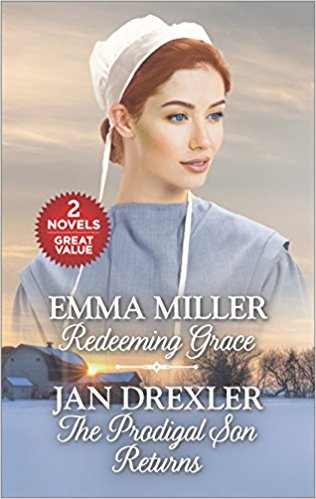
Jan Drexler’s The Prodigal Son Returns was re-released by Love Inspired as part of a 2-book package along with Emma Miller’s Redeeming Grace. In Drexler’s tale, a criminal’s trail has brought FBI informant Bram Lapp to Ellie Miller’s Indiana community. Now he’s posing as the kind of man he once hoped to be—someone who might be worthy of Ellie. Enjoy these two sweet novels about second chances at an Amish happily-ever-after, now available as a single package!

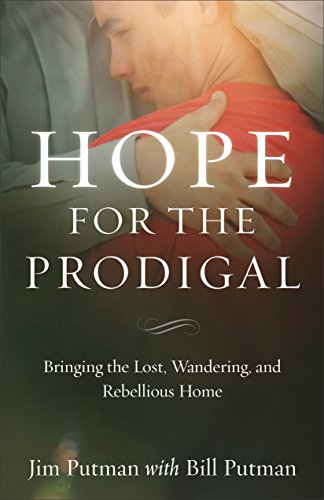
Jim and Bill Putman’s Hope for the Prodigal was released by Baker Books. With wisdom that comes from personal experience, Jim and his father, Bill, offer brokenhearted parents and loved ones hope for their prodigals. A prodigal son himself, Jim has also found himself in the role of the prodigal’s father when his own son rejected the faith. This family’s powerful story of restoration, along with solid biblical truths and practical advice, will inspire, motivate, and equip readers to go after their lost sheep with acts of love and service.

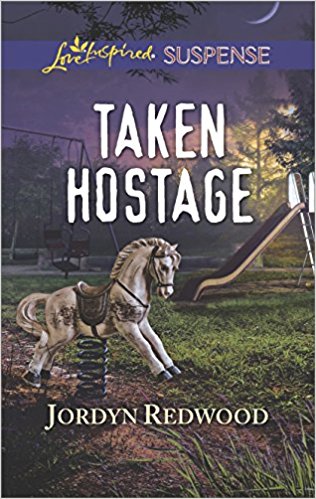
Jordyn Redwood released Taken Hostage with Love Inspired Suspense. When neurosurgeon Regan Lockhart’s daughter is kidnapped, the abductors want to make a deal for the little girl’s life. If she wishes to ever see her child again, Regan must hand over the virus she uses in a radical cancer treatment. Can bounty hunter Colby Waterson prevent this from happening–and save his sister in the process?

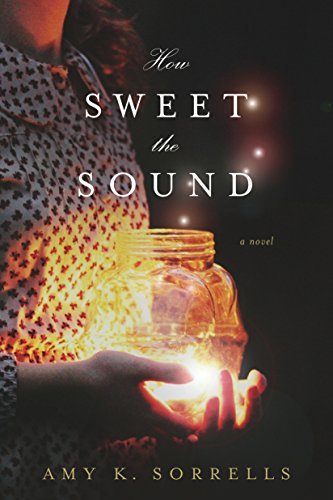
Amy Sorrells‘ book How Sweet the Sound was re-released by Tyndale. This lyrical novel, set in the Gulf Coast, considers how behind the gentle facade of white pillared porches and acres of cultivated pecan orchards, family secrets can smolder. Redemption, grace, and forgiveness take center stage as old secrets and sins are finally brought to light.

New Contracts 

Cara Whitney signed with Thomas Nelson to publish Unbridled Faith, a devotional based on country living accompanied by color photographs featuring horses and other country images.

Angela Hunt and Bill Myers signed a 3-book deal with Regnery. The first book, God Stories, will be published in 2018.

Barbara Scott signed a 3-book deal with Mountain Brook Ink for The Reluctant Bride series. The three books, Dreams of My Heart, Love of My Heart, and Desires of My Heart, will be published in 2018 and 2019.

Linda Thompson signed a 3-book deal with Mountain Brook Ink. The first of the series, The Plum Blooms in Winter, will publish in January 2019.

Mary Davis signed a 3-book deal with Mountain Brook Ink for her series The Quilting Circle. The first installment will be published in July 2018.

Marjorie Jackson signed with Barbour for the publication of The Devoted Life: A Girl’s Guided Creative Journal. A follow-up to her first book, Devoted, it will publish in late 2018.

Jonathan McKee signed with Barbour for his next book, The Bullying Breakthrough. It will publish in early 2019.

Kara Powell signed a 2-book deal with Baker Books for Unleashed, which will publish in 2020, and a second untitled book to publish the following year.

Bob Welch and Dick Fosbury signed with Skyhorse Publishing for The Wizard of Foz, the never-before-told story of Dick Fosbury, a failed Oregon athlete whose new high-jump style ultimately helped him win a gold medal in the 1968 Olympic Games in Mexico City and revolutionized the event so completely that no jumpers today use any other style but his.

New Clients

Dr. Donese Worden and Rev. Anthony Thompson joined WordServe Literary this month. Welcome!

What We’re Celebrating

Mandy Harvey, who along with WordServe client Mark Atteberry is the author of Sensing the Rhythm (due out from Howard Sept. 27), made it to the semifinals of America’s Got Talent! The singer-songwriter has been deaf since 2006, yet she has perfect pitch and kept pursuing music via her ability to feel vibrations. Her incredible story is detailed in the book, available for pre-order now.

The God We Draw Our Readers To

“Your book really helped draw me closer to God.”

Are there any more thrilling words for a Christian author to hear? That is, after all, our ultimate goal, isn’t it? To point our readers to God?

That is certainly the reason I write. Because God gives me the stories and I want to be obedient in writing them down to the best of my ability and to do what I can to get them into the hands of readers. Not for my glory, so they can know me better, but for His glory, so they can know Him better.

So yes, that feedback thrills me like no other. And it also terrifies me like no other. Because it compels me to ask myself: Is the God my story has just drawn someone closer to the one true God? Or have I allowed my incomplete, in-a-mirror-darkly comprehension of who God truly is, as well as my preferences, my biases, and all cultural influences, to shape my understanding of God and therefore cause me to present an inaccurate picture of who He is?

mirror darkly

“The book I just read might be controversial, but it drew me closer to God, so it must be all right.”

I can’t tell you how often I have heard this from fellow believers. And it tears at my heart every time because it brings me back to another question that haunts me: If the words I write draw my reader closer to a god that is not the one true God of the Bible, haven’t I done more harm than good? And, even more frighteningly, will I now be held responsible for leading this reader—who trusted my words, my theology—astray even a little?

Matthew 12:36-37 says, “I tell you, on the day of judgment people will give account for every careless word they speak, for by your words you will be justified, and by your words you will be condemned.”

As one who has been appointed a steward of words, these verses challenge, convict, and sober me. If the feedback I have received has been honest, my writing does have the ability to influence and shape the ideas and beliefs of others. According to these verses then, will God not hold me accountable for the words I use while claiming, by virtue of the fact that I call myself a Christian author, to represent and portray Him through my stories?

Consciously or unconsciously, readers turn to Christian writing to help them with three things: to begin to comprehend who God is, to understand who they are in relation to Him, and to decide how that relationship, once rightly established, should inform their actions and reactions, as well as their words and thoughts, in the midst of whatever situation comes along in life. And all of this happens (ideally) as they read our stories and witness how these truths are lived out by the characters on the pages of our books.

Which brings me to another soul-searching question: Am I even capable of depicting this God—whose thoughts and ways are so much higher than mine—accurately, when the voices of the culture I am immersed in, of special interest groups, government leaders, the media, and countless other influences are so strong?

smallness of man

The answer is no. Not without the help of the Holy Spirit. Not without a solid knowledge of Scripture. Not without prayer. A lot of prayer. Prayer for guidance, for the words to write, for the ability to block out the relentless noise of the world around me pounding in my ears every moment of every day so that I can hear the still small voice. The voice of love. The voice of truth. The voice of the one true God of the Bible.

May that God be the one our words draw others to every time they read them.

Conversations on the Page

The longer I write, the more I realize my best work comes when I use my voice just as I would if I were sitting across from the reader in a relaxed setting. I’m actually imagining you and I chatting together right now, as I pretend we are enthralled in a deep, funny, poignant, or otherwise stimulating conversation.

As an author, seeing my readers in my mind helps me brush away the distractions that hinder me from offering my purest thoughts and most creative ideas — the ones with potential to help, encourage, and inspire people. These are my motives for writing after all.

By personality, I’m a think-out-loud kind of gal, so I’ve discovered a few different ways of exploring thoughts on a particular subject.

  • Schedule time with a friend or family member to discuss the topic in depth.
  • Interview an expert on the point.
  • Record my thoughts into a device, as if I’m talking with someone — then listen back.

What I’ve learned is that conversations across the table translate into great conversations on the page. No matter the method I use, it’s the epiphanies, the insights, and the knowledge born from conversations with real people that provide transformational information I can share with readers of my books.  Some of my best received work is when I write in such a way that the reader almost feels as if they are eavesdropping.

But a true conversation, especially a stimulating one, is a two person event. Listening is as important as speaking. Having a conversation on the page requires paying close attention to the real people in your life and who cross your path. How can we make sure we’re writing on the topics people want to hear? How can we ensure our fictional stories resonate with elements of truth?

By listening with intent.

  • Pay attention to the dialogue between other customers in restaurants.
  • When interviewing, do not dominate or speak over the person you are interviewing.
  • Practice strategic listening when watching TV shows or streaming your favorite program. Not so you can steal their lines, but so your muse can be inspired with new, creative ideas.

In reality, conversations take place all around us in our every day comings and goings. When we become intentionally present and aware, what we hear in our every day lives become relevant conversations on the page, making our messages important to a reading world. After all, it’s living we write about.

What brings out your voice? Does it happen in the presence of other people? When you are alone and listening? Does your best thinking happen out loud or in silence? 

SaveSave

Sifting and Winnowing

Photo/KatenJordanMy heart pounded as I braved my re-entry into my writing space. I simply did not want to work on another uninspired blog post. Why, I didn’t know. But I knew I needed to identify the source of my resistance to what I’m passionate about—writing.

From my office chair, I scribbled a few forced phrases—those anticipated first and necessary words. The ones I demanded myself to write. It was a painful hour.

Even though they were interesting, they weren’t satisfying. And I grieved once again for inspiration that would give me life—meaningful thoughts flowing from a grateful heart. But the words I produced were stale and stodgy. Would anyone be blessed by reading them? I thought not.

The next morning, I awoke to another day of blank pages. So I confessed to my husband, Dan, “I’m really struggling with the blog posts I should have already written.”

“Why? What’s the problem?”

“I routinely commit to writing about things others have requested, and I never get to work on things that really matter to me.”

“Like what? Give me an example,” he asked.

Dan listened carefully as I voiced a litany of excuses. Then, he responded, “Maybe you need to do some ‘winnowing.’”

“Tell me what you mean.” I knew what the word “winnowing” meant, but I wanted to hear his thoughts.

“Have you ever seen an illustration of someone threshing wheat?” He shared several photos after searching the Internet.

“You mean, like sifting?” I knew Dan was right, but I hadn’t figured out how to climb out of my writing rut.

He said, “All words are not equal. And like grain, where the husks have to be separated and discarded. To produce the best dialogue and story, the worthless ideas must be winnowed out.”

Sifting. I listened to the Daily Audio Bible during my morning walk. From the book of Judges, I listened how God gave Gideon instructions for choosing warriors to fight with him.

You have too many warriors for Me to allow you to defeat the Midianites. As it is now, the people of Israel would just deny Me the credit and claim they had won the victory on their own. So go out and tell your army, “Any of you who are afraid and trembling are free to leave Mount Gilead.” (Judges 7:2-3 VOICE)

The scripture reminded me of my earlier conversation with Dan.

After Gideon reduced his army, the Lord told him. “You still have too many warriors. Take them down to the water, and I will sift them for you. When I say, ‘This one will fight for you,’ he will go with you; but when I say, ‘This one will not fight for you,’ then he will not go’” (Judges 7:4 VOICE).

As I listened to the passage being read, the word “sift” took on new meaning for me. I knew the Lord was teaching me about “winnowing” and “sifting.” I also recognized I could take my notebook “down to the water” and ask the Lord to help me “sift” through all of my writing and speaking commitments. The neighborhood lake was the perfect place for solitude.

Winnowing. After lunch, I took a brisk walk to Lake Cortez with my pen and paper, with my heart prepared for “winnowing” my writing options, sifting and discarding those that didn’t seem right for me.

One-by-one, I reviewed my current writing commitments, praying what was most important would emerge as my next writing effort.

Recently, I read this encouraging word from the book of James:

If you don’t have all the wisdom needed for this journey, then all you have to do is ask God for it; and God will grant all that you need. He gives lavishly and never scolds you for asking.

The key is that your request be anchored by your single-minded commitment to God. Those who depend only on their own judgment are like those lost on the seas, carried away by any wave or picked up by any wind. (James 1:5-6 VOICE)

I’m so grateful when God gives me his guidance and help. Some days I make decisions and commitments without even considering Him. But as I listed all of my plans that day, it became clear which projects and events I needed to abandon and pursue.

I instinctively knew which stories mattered most. And I also understood what genre of writing I wanted to pursue. So, I had the courage to resign from writing about things and issues that undermine my creativity and leave out elements of my faith.

I’m not sure what I will write next. But for now, I will continue to ask the Lord to help me sift through all of my projects and plans and allow him to impress my soul about what choices to make.

How do you “winnow” through your life and work? What sifters do you use when choosing what matters most to you and is worthy of your time and energy?

Scripture taken from The Voice™. Copyright © 2008 by Ecclesia Bible Society. Used by permission. All rights reserved.

Is Your Email Inbox Overflowing?

I recall when my husband and I first got dial-up internet with an email service. Now and then, an email would pop into our inbox. We’d cull through the few emails, respond as needed, and move on.

I also remember when I first established an email address for my writer website. Again, emails trickled in, and I was happy to read each and every word that came my way.

Those days are long gone.

Email inbox showing 179 unread messages
Photo credit: ©adimas

Perhaps they’ve passed for you too. When you start getting a bunch of email, it’s exciting because it means you’re reaching people. Isn’t that what you want your words to do? Don’t you want many readers?

Yes, but that increase in email also means you probably can’t read every word. Or at least you can’t respond personally and extensively to each and every email.

As a person involved in ministry, I feel terrible when someone pours out their heart and soul, telling me their personal story and asking for my help, and I simply can’t answer like I want to. This has been a difficult shift for me. Especially when I know how wonderful it can feel to get a personalized return email from someone you contacted.

But I also know that if I did answer each and every email with the care and attention it deserves, I wouldn’t be able to write more books or even blog posts. I’d spend day after day counseling people one by one through email.

And that’s not the mission God gave me.

Jesus dealt with this same press of needy people. Sometimes He stopped and interacted with them, but sometimes He stepped away so that He could stay focused and pursue His primary mission:

“When Jesus saw the crowd around him, he gave orders to cross to the other side of the lake” (Matthew 8:18).

“And after sending away the crowds, he got into the boat and went to the region of Magadan” (Matthew 15:39, ESV).

“Yet the news about him spread all the more, so that crowds of people came to hear him and to be healed of their sicknesses. But Jesus often withdrew to lonely places and prayed” (Luke 5:15-16).

Do you feel guilty about the emails sitting in your inbox? About the people who desire or demand your time when you just don’t have it to give?

Yes, we need to let God interrupt our work when He wants something done. But all those emails in our inbox aren’t necessarily God’s calling for us. He has given us a mission of writing, whether in fiction or nonfiction, and that is the primary way we reach people for Him.

When I remember my Lord’s calling above all, I can keep my eyes on where He wants me to work. And I can trust that the Holy Spirit will lead those in need to other resources, because I’m definitely not the only one who can help. We exist in a Body of Christ, and I am just a finger.

In the meantime, I send out canned responses to thank people for their emails, explain what my response policy is, and encourage them to seek local help if they need Christian counseling, mentoring, or pastoring. And then, I write more blog posts and more books, praying these resources will answer some of those questions and help the marriages I long to help.

How do you approach your overflowing email inbox? How do you stay on mission?

Why designing a website will make you a better writer

Would you like to have an editor on hand 24/7 for all your blog posts? Does the idea that you could make every post a writing gem (even those you compose at 2 am as you desperately try to meet a deadline) appeal to you?

No, I’m not launching myself as a post editor trying to drum up business, nor am I encouraging you to sign up for yet another writing workshop.

I have a different suggestion: teach yourself to build a website.

I don’t have time! I don’t know how! I’m a technology idiot!

I know that’s what you’re saying because that’s exactly what I said a month ago, before I finally knuckled down and did it: I taught myself how to build a website without learning any coding. Today, I’m no expert at it, but I do have a simple website that meets my needs. Most importantly, though, the experience of building it helped me do four things:

  1. finally understand and apply some of those elusive internet concepts (like SEO)
  2. fully utilize blog tools like tags and readability
  3. boost immediacy and responsiveness of my site through personal administration
  4. eliminate fees to another party to maintain/update my website
You are not alone

The best news about achieving these things is that I had free help. You don’t have to struggle through the learning part alone. Videos walking you through setting up a website abound on the internet. Since my old website was already WordPress, using WordPress was an easy choice for my new site. After sampling a few videos, I settled on this one, because it has a companion site with the whole set of instructions printed out! (No more panicking because I couldn’t keep up with the video! Yay!) Likewise, as I learned about plug-ins, I watched additional videos to guide me. Trust me, if you want to do something on your site, there’s a video for it.

24/7 blog editing

This is one of the coolest things I’ve learned to apply. Because I uploaded Yoast SEO plug-in, I get a readability analysis as I write blogs. This handy program tells me when my sentences are too long, when I need to break up paragraphs, and when my vocabulary is too difficult for most readers. It even reminds me to use active, instead of passive, voice, and encourages the use of transition words for smoother writing. By heeding the readability ratings, I improve my writing skills (no matter what time of the night/early morning it may be!). Who knew that cranking out blogs could actually make substantive changes in the way you write?

Granted, building your own website isn’t for everyone, and I won’t hold it against you if you prefer to pay someone to take on the headache of creating your internet storefront. If you’re willing to give it a try, though, I know you’ll find a new perspective on how you write and how your website works.

Anybody want to share your own website designing experience?

WordServe News July 2017

Exciting things have been happening this month at WordServe Literary!

On the final post of each month you’ll find a list of Water Cooler contributors’ recently released books along with a recap of WordServe client news.

New Releases

Jared Boyd released Imaginative Prayer with InterVarsity Press. When we lead our children through guided times of imaginative prayer, they can experience a connection with God that transcends mere Bible knowledge or doctrinal content. This book provides six units of weekly guided imaginative prayer on themes such as God’s love, loving others, forgiveness, God as king, and the mission of God; providing a yearlong experience of spiritual formation for children ages 5-13.

Jim Burns and Doug Fields published The First Few Years of Marriage: 8 Ways to Strengthen Your “I Do” with David C Cook. In this follow-up to Getting Ready for Marriage, Burns and  Fields offer a practical guide designed to help newlyweds build a strong foundation for a marriage that will last a lifetime. Along with explaining the traits of a healthy marriage, it helps couples rekindle romance, fight fair, and deal with stress, the challenges of the first baby, and much more.

Patricia Lee released An Anchor on Her Heart with Mountain Brook Ink. McKenna Nichols, a young wife abandoned by her husband in favor of his work, is left alone to raise their autistic child. She promised to love him until death parted them. But when circumstances drive a wedge into their marriage and Dane chooses to escape what life has dealt them, how long can she be strong?

Craig Selness released Living with Pain without Becoming One with Worthy Publishing. With his own chronic pain ailing him, pastor Craig Selness writes about pain using a Biblical perspective on living well. The good news of the gospel is that we can continue to do good — to be kind and gracious and loving and hopeful — despite physical struggle. This book will encourage anyone who hurts or loves someone who does.

New Contracts 

Dianne Christner signed with Barbour to publish The Marmalade Belle, part of the Southern Belle Brides collection, for publication in 2018.

Christian George signed with B&H Publishing to publish The Lost Poems of C.H. Spurgeon in 2019. Taken from some of Spurgeon’s earliest writings, which were lost to history for nearly 160 years, these poems are now revealed to the public for the first time.

Fred Sievert signed with BroadStreet to publish Grace in any Crisis, featuring inspiring, real-life stories of how people have sought, and found, God’s grace through faith in Jesus Christ, often resulting in miraculous relief from their pain and suffering and a driving passion to return that grace in Christian service to others.

New Clients

Sharon MacArthur and Nicole Phillips joined WordServe Literary this month. Welcome!

What We’re Celebrating

Martha Bolton received a Golden Scroll Merit Award for Fiction for The Home Game (FaithHappenings Publishers). The award was announced at the annual Golden Scroll Banquet, sponsored by the Advanced Writers and Speakers Association (AWSA) and held at the Hilton Plaza Hotel in Cincinnati, Ohio on June 27, 2017.

Margot Starbuck also received an AWSA Golden Scroll Merit Award for He Knows Your Name. Her book with David King, Overplayed, received a Silver Scroll Merit Award. And He Knows Your Name was honored again by the National Indie Book Awards as an Excellence Award Finalist. Congrats, Margot!