The Marriage of Art and Business: Match Made in Heaven?

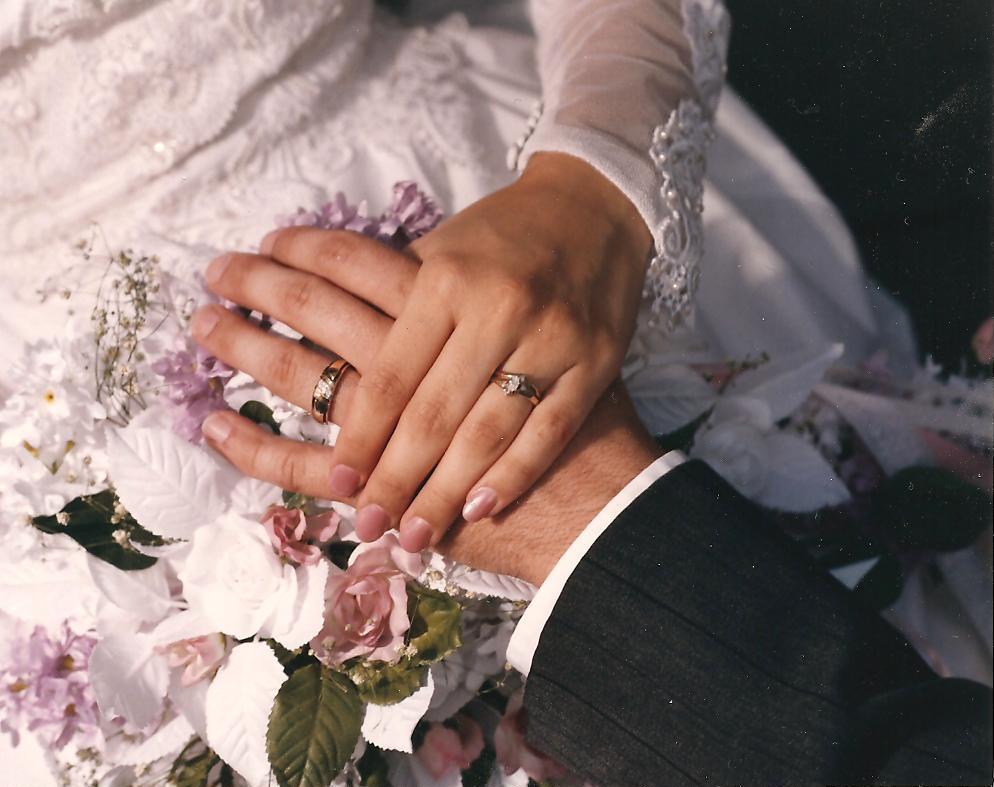
photo source: author & husband

Ah, the bliss in human romance! That meeting of eyes which awakens destiny. Those flutters of the heart when looking upon one’s beloved. That first fleeting brush of skin against skin … that inviolable first press of lips to lips.

Am I the only cynic with the audacity to note that romances of the fictional persuasion tend to end just before or soon after the altar with a vague “happily ever after”?

Not so in the real world. Here, sly Romance drives opposites to unite themselves in marriage, then dances laughingly into the shadows to watch the eruption of vinegar joining baking soda, one eyebrow raised as bubbles fizzle in a spewing mess.

“Writing a book is an adventure. To begin with, it is a toy and an amusement; then it becomes a mistress, and then it becomes a master, and then a tyrant. The last phase is that just as you are about to be reconciled to your servitude, you kill the monster, and fling him out to the public.”
~ Winston Churchill

You no doubt visit here because you are enraptured by the romance between Writing and Publishing. Could the differences between women and men possibly be more pronounced than those between art and business?

Writing plumbs the depths of all things horribly beautiful and paints them with deft strokes, that someone might look upon the canvas and see what the artist has seen—might know what the artist knows.

Writing then casts longing eyes at Publishing. Publishing appreciates Writing’s beauty, gazing upon her often, in every lovely form she takes. Ever the pragmatist, Publishing knows his survival depends on Writing’s inner strength. Writing willingly dresses herself to please Publishing, who holds the stronger hand in the relationship. She is determined to make herself irresistible enough to garner his proposal of marriage between her art and his business.

Writing and Publishing are both aware that the promise of a storybook marriage upon which millions will smile also holds the risk of being consumed in the anguish of rejection. And though neither Publishing nor Writing sets out to cause the other pain, their marriage is destined to experience all the agony and the ecstasy common to any marriage between opposites.

Unless the LORD builds the house,
those who build it labor in vain…
It is in vain that you rise up early and go late to rest,
eating the bread of anxious toil …
~ Psalm 127:1-2 (ESV)

In romance between man and woman, the wise will ask if God smiles upon them—certainly before tying the knot and hopefully well before longing glances are permitted to grow into full-fledged courtship. Failure to do so can result in everything but “happily ever after.”

As we writers consider the marriage of opposites between writing and publishing—the union of art’s beauty and business’s pragmatism—it behooves us to know with certainty that the Lord Himself is playing Matchmaker.

Q4U: Whatever your relationship between art and business at the moment, what helps you determine when you write as only art (or ministry), and when you believe that God is leading you toward marriage of art and business?

WordServe News Update and New Releases

Exciting things have been happening at WordServe Literary!

In the final post of each month you’ll find a list of Water Cooler contributors’ books releasing in the upcoming month along with a recap of WordServe client news from the current month.

December New Releases

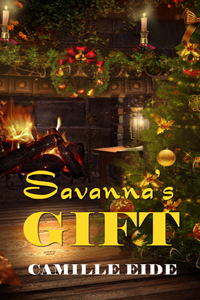
Savanna’s Gift

by Camille Eide*

Christmas Contemporary Romance (novella)

White Rose Publishers

• • •

Bestseller News

ECPA November 2011 List

Erica Vetsch*A Log Cabin Christmas, a nine-author novella collection that includes Erica’s story, “Christmas Service,” hit #25 on the ECPA (Evangelical Christian Publishers Association) Multi-Channel Bestsellers list.

CBA Fiction Bestseller List for December

Erica Vetsch*A Log Cabin Christmas, a nine-author novella collection that includes Erica’s story, “Christmas Service,” hit #11 on the CBA (Christian Booksellers Association) Fiction Best Sellers list.

• • •

Contract News from Greg

Denise George landed her book A Woman’s Right to Rest with Leafwood Publishers. A life-message for Denise (former pastor’s wife whose husband, Timothy, now leads a seminary), the book will be published in August.

Patty Kirk has the distinction of being the first client for whom I’ve sold the same book THREE times! The Gospel of Christmas (15 Advent Essays) was originally under contract with Thomas Nelson. It got purged in. . .the purge. Then resold to Guideposts, but when Guideposts bought Summerside, “thoughtful” books went out the window. Rights returned. “Keep the money.” So they returned this book AND another, Easy Burdens. Both completed books were sold to InterVarsity Press. I’m pretty sure both will be published. (Now how do I report all this in Publishers Marketplace?)

We sold audio rights to Tantor Media for WWII vet and “The Pacific” character Sid Phillips’s book You’ll Be Sor-ree! Tantor Media moves fast. The audio book can already be ordered on Audible and pre-ordered on Amazon.

Other News from Greg

Rebecca Alonzo is scheduled to be on Dr. Phil Friday, December 9th. This will be a “must record” program. Her book The Devil in Pew Number Seven (Tyndale), the true story of a small-town mafia man terrorizing her pastor father’s church, her mother’s murder by a hit man, and ultimately her family’s disintegration, has been selling well.

An appearance on CNN for multiple days gave the Dr. Phil producers an idea: What if we brought in Rebecca and her brother…and the man who was the actual shooter (hired by the devil in pew seven), for a first time meeting since the shooting more than 30 years ago? They found the shooter, and the meeting happened on air. Forgiveness is the point of the book, and I’m told (by collaborator Bob DeMoss, who was there) that it was a very powerful show.

Rebecca's husband, Kenny; Dr. Phil; Rebecca; Rebecca's brother, Daniel

• • •

Contract News from Rachelle

Sandie Bricker* – Abingdon – “Quilts of Love” series

Barbara Cameron* – Abingdon – “Quilts of Love” series

Mary Davis* – Barbour – a novella as part of a collection

Lisa Jordan* – Love Inspired – Lakeside Family, a sequel to her just-released debut novel, Lakeside Reunion

Sandra D. Moore* – Abingdon – “Quilts of Love” series

• • •

Other News from Rachelle

Christian Retailing chose Billy Coffey’s* Paper Angels as a “TOP PICK” for November.

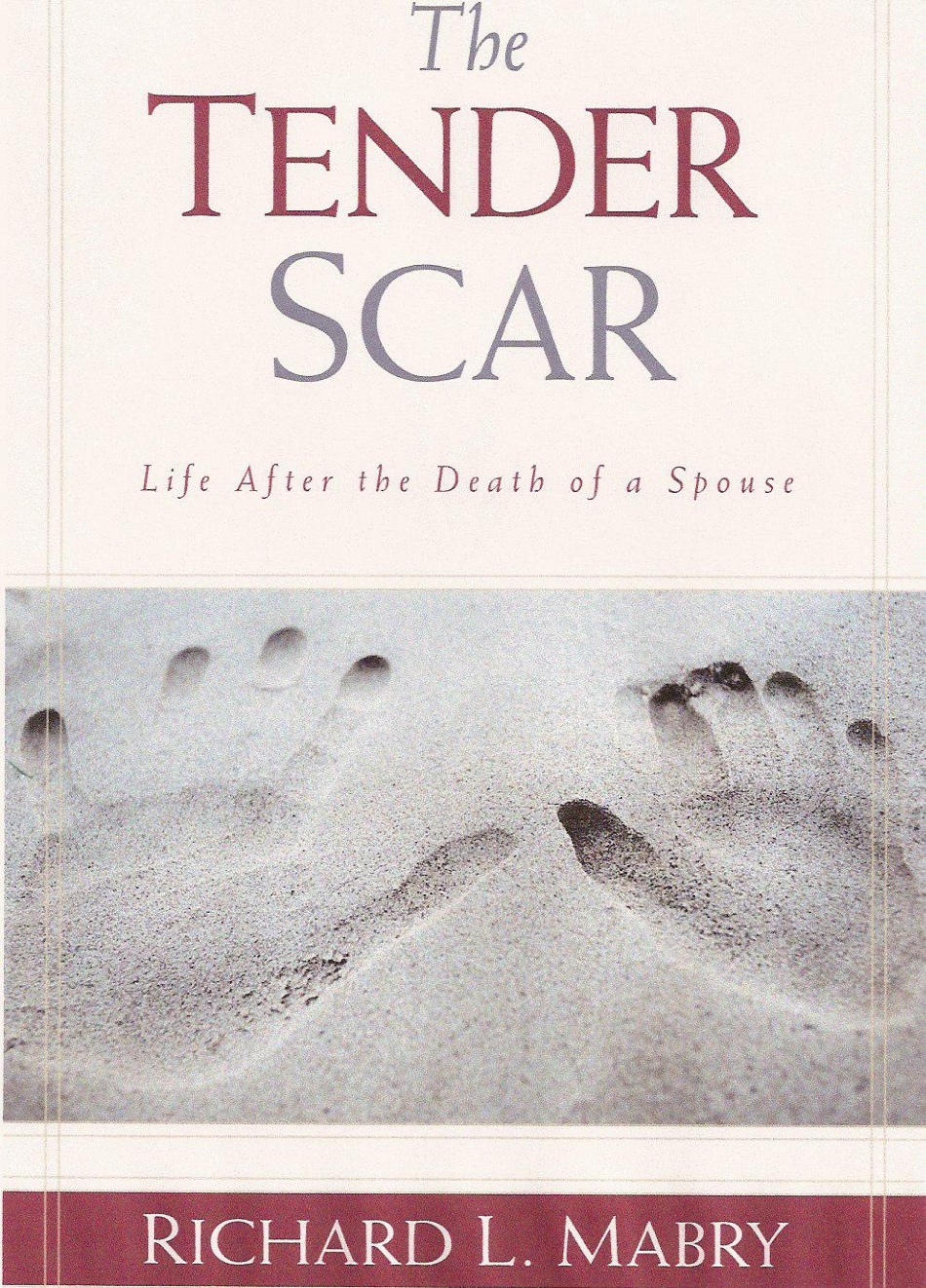
Clients Sandra D. Bricker*, Billy Coffey* and Richard Mabry* all got reviews in Library Journal this month. Billy’s is a starred review!

(* = WordServe Water Cooler Contributor)

• • •

That’s our good news for the month.

Please share yours in the comments so we can celebrate with you.

• • •

Post Author: Keli Gwyn

I write inspirational historical romance. My debut novel, A Bride Opens Shop in El Dorado, California, will be released July 1, 2012. I live in the heart of California’s Gold Country. My favorite places to visit are my fictional worlds, the Coach factory outlet store, and Taco Bell.

Four Ways to Engage Fiction Readers


From listening to my readers and following book reviews, four key topics repeatedly surface. While they’re not new ideas, they contain basic value in creating fictional worlds.

Readers wish to be swept away from their normal reality.

If readers wish to be swept away from their normal reality, our fiction has to contain something compelling or unique. This element must be intentional, not just something we hope for in our writing. And it should be identifiable. It can be an unusual setting or a fresh plot idea. Or how about an uplifting theme or a unique friendship? In order to offer something fresh yet appealing, I find it helpful to identify my readers and understand my genre.

Not only that, once we’ve swept readers off their feet, we must protect their experience by keeping them airborne—in their fictional world. They trust us not to let them come crashing back to earth without warning. Good writing remains invisible while creating a safety-net of lasting and vivid impressions. In other words, we must be careful not to do anything to draw them out of the story and ruin their fictional experience.

Readers need their emotions engaged and gratified.

 In order to engage and gratify readers’ emotions, we must create fascinating characters with whom they can identify—because they are looking for an emotional connection with the story. Our stories, and especially our endings, must not leave them up in the air, but provide emotional satisfaction and resolution. Again, we target the emotions associated with our genre. Suspense readers are looking for the adrenalin rush. They enjoy a short fall as long as they land safely in the end. Romance readers need to set their feet back on earth with a contented sigh.

Readers expect a takeaway.

 Readers also expect a story takeaway. When they have to come back to reality, they want something to take with them to enrich their everyday lives. It can be a spiritual theme that gives them hope in the real world. For a mystery, it might be an unexpected and intriguing twist. In women’s fiction, it might be a distinct image that provokes further thought or action—such as a family that solves their problems around the dinner table. While we foremost entertain, it’s this lingering takeaway that lives on inside our readers’ minds and excites them to spread the word about our stories. It compels them to follow our works.

Readers want to know more about authors.

Readers want to connect with us. It’s humbly amazing, and it’s the source of our greatest blessings. There’s something very intimate in the breath of story, the giving and taking that goes into the entire fictional experience. As authors, we’re sensitive beings who delight in the wonder and fear of it. And so we gladly leave our signature—a link for readers to interact with us or find out more about our writing.

What else? What do readers want from fiction?

Publicity Photos

I don’t know about you, but having my picture taken is not one of my favorite things to do. And yet, when you have a book contract, it’s one of the requirements asked of you by your publisher. There was a time, long ago, when I believed myself somewhat photogenic, but then came the extra pounds, the graying hair, the wrinkles and crows feet–need I go on?

So began my journey of trying to determine what I wanted for an author photo. Did I want a formal pose against a basic background, or did I want a more casual look? Inside or outside? Props such as a desk or books? Should I lose weight first? What should I wear? Is it really important to know which color looks good on me when I have all these other things to worry about?

I didn’t have the extra funds to hire an image consultant, but I knew what colors made me feel good–and that’s one of the best ways to determine which color season you are and what color palette works for you. Click here for more information on determining your seasonal color. Once I had this figured out, I searched through my closet for the perfect outfit and considered make-up and hairstyles that would give me a natural look, yet call out to people and say “Look at Me–This is who I am.”

Another step included studying my favorite author sites. What sort of pictures did they use and how many shots did they have taken? Did they hire a professional photographer or do it themselves?

If you own a quality camera or know someone who does that has the prowess to take great photos, you can save money doing it yourself. But a professional photographer will understand light and shadow and can also work magic on those little “imperfections” I mentioned earlier, so you might want to keep that in mind as well. No matter what, you’ll need to be sure the pictures are taken in high resolution, jpeg, or tiff images, with a 300 dpi or more. All of this jargon seemed foreign to my ears, but not to those in the publishing world.

Loaded with the answers needed, I managed to get an author photo I’m satisfied with. Because I wanted to carry forward my Country at Heart theme, I chose to have my picture taken outside, wearing a casual jean jacket that helped define who I am as an author.

Next time, I’ll move on to the next marketing challenge–creating a book trailer. Until then, enjoy the moments  . . .

The Hero Within

In a writer’s world we are the masters of the pen (actually a computer keyboard, but that didn’t sound as cool). We create complicated characters through various techniques and tell them what to do.

But then they take on a life of their own and begin to tell us what the story is about. This can be quite fascinating, like sitting at a movie, watching the story unfold. Other times it’s frustrating because these life-like characters make bad choices or behave poorly (there’s always at least one), resisting our intended purposes for them.

When I think of writing in these terms, my thoughts drift to our Creator, and I wonder if God sees us in similar fashion. Aren’t we like His characters, created with His purpose in mind? Yet we have free will and the ability to choose poorly, or wisely.

God gives us that room, though I know we must frustrate him terribly at times. The Israelites certainly did. (Aren’t we still Israelites at times?) But part of the joy I experience in writing a powerful scene with my characters is seeing them grow and embrace God’s love and truth. There’s a sense of victory there even though these characters exist only in my head.

I remember as a kid imagining these scenes where the heroine (usually me, of course!) persevered and made this huge impact or discovery. I walked into the sunset as a new inspiration to my fellow underdogs (the theme of many teen movies).

The funny part of all this is, the longer I write and study the books and movies that are popular, the more I find a universal theme there—of a nobody discovering they have some kind of special gift that helps them save the day. A gift that comes from somewhere outside them and suddenly this feels-like-a-nobody character blooms into someone unique.

Now the amazing part. It’s a story theme that’s existed for thousands of years. The one I like best? The one in the Bible.

Jesus was just an ordinary carpenter. He didn’t look like much to those who resented and envied Him. He didn’t appear a whole lot different from the men He walked with. He started out as a nobody in the eyes of those around Him. But to know Him was to know He walked in greatness and humility.

He walked this earth like a man, yet within He holds a power to “save the day.” And every person who knows Him.

His is the story of the ultimate Messiah, the one true Savior of the world. He was and is the true Hero of the story—of the world and of our lives.

And the absolutely mind-blowing final part? He lives in us, changing us from nondescript nobodies to uniquely gifted individuals created to fit into a true story.

His story.

Organizing Your Non-Fiction Writing

Non-fiction Writer Friends,

Do you wake up with brilliant ideas for your writing, but struggle with the outline when you sit down at your computer?

I do.

When I have an idea for a book, I grab a piece of paper and draw a circle with the main idea in the middle and the spokes become all the topics I could use to fill in the book.

Once I begin, my writing becomes haphazard. First, I start telling stories, and then I try to convey strong ideas by inserting subtitles and explanations around my stories. Often it seems like I’m going backwards, trying to fudge an outline around my stories. If you’re thinking this is a path to frustration, you’re right.

Sometimes I wish I had a simple and clear method for outlining each chapter.

Two months ago, I attended a speaker training led by speaker and comedian Ken Davis. Previously the workshop was called Dynamic Communicators Workshop, but now Ken is teaming up with Michael Hyatt, Chairman of Thomas Nelson Publishers, and they have renamed the workshop The SCORRE Conference.

At this workshop, what I learned about speaking easily translated into my writing. The SCORRE method gave me an easy template for both. Attendees of the SCORRE Conference are taught how to pick one of two choices for their talk: It will either be enabling or persuasive? It can not be both.

The reason for the choice is because it forces you to distill your talk into a single objective and forces you to stay on track. This is important because 75% of people leave a presentation with no idea of what was communicated. Even sadder, 50% of speakers cannot articulate the objective of their talk.

With my new strategy in mind, I went back to my previously written chapters so I could clean them up and make them purposeful. As I read my first chapter, I wondered, “Is this a persuasive chapter or an enabling one?” To make things more confusing, I came across a quote attributed to Zig Ziglar:

“All great books convey the HOW and the WHY.”

For awhile I wrestled with the direction. Should I have my book be a WHY or a HOW? Should I make each chapter contain a WHY and a HOW? Was there a way to incorporate Zig Ziglar’s quote and adhere to the SCORRE method?

As I prayed, the answer appeared. The bulk of each chapter was a persuasive speech — It answered the question WHY.  But, at the end of each chapter I had tips for implementing the chapter ideas — these became the HOW.

I think I finally came up with a really good way to organize my non-fiction book.

(Just to clarify, if I were giving a speech, I would still pick a HOW or a  WHY, not both)

What about you? How do you organize your non-fiction writing?

*A few years ago I bought Ken’s book Secrets of Dynamic Communication. The book was helpful, but to be honest I did not implement his method until I attended this workshop. Now that I’ve learned the method, it’s all I’m going to use. There is a SCORRE conference coming up in April in Rome, GA and another one back in Vail, CO next October. I highly recommend writers attend.The accommodations were deluxe, the coaches were supportive, the opportunities for networking were immense, and the learning was easy due to the skill and humor of Ken and his associates. I’ve been to many speaker conferences but this was by far the best.

Happy Thanksgiving from the Water Cooler Family to Yours

Photo by Tom Gill

Thanksgiving has always been a great time for Americans to reflect on what is going right in their lives.

There are other moments throughout the year like our birthday or the upcoming New Year’s holiday that lend themselves to the same moment of gratitude.  However, this holiday asks the same question with a wonderful twist.

Instead of what might be the usual, what-about-me, we’re asked to remember others, especially those who can’t be with their families like our servicemen and women stationed all over the world and in harm’s way in Iraq and Afghanistan. That gives all of us a moment to step out of ourselves and remember what really matters to us.

For many of us it’s the people seated at the table right around us, and we get to say directly to them on Thanksgiving day just how much they mean to us. But there are also many others who touch our lives every day, and mean so much to us for their unflagging support and cheers of encouragements, who are scattered all over the world.

For the writers at the Water Cooler that includes you.

All of us at the WordServe Water Cooler want to take a moment to say thank you to everyone who has joined in our fun. Thank you for taking the time to share your thoughts and feelings here at the blog on the rollicking, fast-paced world of writing, publishing and marketing. We have all grown to feel like one big family.

For writers, who spend a lot of their career waiting to hear from editors or critics or booksellers, it’s a very special and sometimes rare gift to create such a supportive community. We look forward to all of the great conversations, book news, writing tips, and platform building to come.

A great big thank you as well to our agents at the WordServe Literary Agency, Greg, Rachelle and Barbara for all of your guidance, hard work and for always going that extra mile. We are all very grateful. Happy Thanksgiving everyone!

This Business of Story

Fall Road Olivia Newport
photo by Lorri Nussbaum http://www.keeperscards.com

“Noveling.”

On the day that I’m writing this, I’ve typed the word novelist several times and it keeps coming out noveling. “I’m a novelist” comes out “I’m noveling.”

Well. There’s something arresting there, especially since I decided long ago to write about “this business of story.”

I love stories. I read stories. I write stories. I live stories, with plot and character conflicts disassembling my tidy life plans every day. I share stories when I go deep in conversation with friends or walk beside them through their dry valleys. The fact is I see bits and pieces of stories flung around my ordinary day.

Dialogue. Humor. Moods. Obstacles. Disappointments. Faith gone dark. Determination. Overcoming. What it is that binds me to story?

My meanderings around this business of story take me to some dead ends and some scary places.

• Can I sell stories? We’ll find out when my contracted books start releasing.

• Can I survive the story of the storytelling industry, which seems to have a new cliffhanger every week?

• Can I shape stories? What am I contributing to the lives of people I care about?

• Can I sustain myself with stories? Can I make a living as writer? Can I carve out the time to feed my soul with the fruit of writing even if I don’t make a penny?

I tend to want to be at the end of stories. As a novelist I want to write stories that keep readers turning pages to get to the end. But I also want to know how things turn out in my own life story. What will be the payoff for my efforts, whether it be in relationships, ministry, or the next manuscript?

Almost every month, though, someone in my book group turns to a page to read aloud a striking passage that stills my hurrying. Mentally my tongue sloshes around trying to slurp up the wisdom and craft dripping from the words I hear. One exquisite paragraph, the precision of one sentence, even just one delicious word—story mingles in the writer’s choices, and zest lingers long after the book is closed. How could I have missed those morsels in my own reading? It’s a reminder to me of the splendor of being on the way somewhere, rather than being at the end of the story.

This business of story is about seeing life through a lens of story. We capture life within the words we wrestle onto the page. The meaning of moments comes into focus when the time is ripe.

As much as I want to understand the business of story to make a living as a storyteller, I want even more to understand the business of living a good story.

So I am “noveling” after all. I may just hang onto that accidental word.

How is your noveling going?

Note: On the day this posts, I’ll be driving across four states to be with extended family on Thanksgiving for the first time in six years. I’ll be on the lookout for free wi-fi along the way to check in with comments. Even if I’m late to the discussion, though, I hope you will find richness in conversation.

Tension or Frustration?

There was this book I read recently that made me all kinds of frustrated. My inner growl came out. I found myself skimming through the last third of the story, rolling my eyes, muttering things like, “Come on, already!”

Which got me thinking.

As writers, we talk a lot about the importance of tension. Heck, Donald Maass says we better have it on every single page. So the question begs to be asked.

What’s the difference between tension and frustration?

Is there one?

When I think of frustrating books, two titles come to mind. Both are best-sellers.

Harry Potter and the Deathly Hallows

New Moon (the second book in the Twilight series)

These books frustrated me for the same reason. Which involved the disappearance of a beloved character for a much-too-big chunk of the story.

Yet they are incredibly popular novels and much-loved by readers. Including me. So is frustration a mute point? Should we go for it?

I don’t know….

Frustration has to be one of the most annoying emotions. And I’m not sure annoyance is something we should ever aspire to do to our readers.

Tension. Good.

Frustration. Not so good.

The first brings readers to the edge of their seats. The second makes them want to light the book on fire.

So how do we embrace the first and avoid the second?
s
Avoid drawing things out for an eternity.
Yes, we want to prolong tension. But not to the point of frustration. Sometimes, best practice involves giving the reader what they want, then hooking them with something else.
s
Keep popular characters in the story.
Don’t make a beloved character disappear for too long. Unless absolutely necessary. But even then, you risk the wrath of your reader.
s
Sprinkle in moments of gratification.
Sure, maybe you can’t have your hero and heroine get together until the end, but that doesn’t mean you can’t throw in some chemistry-laden tender moments between the two. There needs to be a positive correlation between frustrating moments and gratifying ones. The more frustrating a novel may be, the more gratifying moments we better include.
s
Make the ending uber satisfying.
And I do mean uber. Like ultra uber. Especially, especially, especially if our stories lend themselves to frustration. The more frustrating a novel, the more satisfying the ending better be. Because even if we frustrate our readers, they will forgive us anything in the world if we satisfy the heck out of them at the end. Just like I forgave Stephanie Meyer the minute Bella hurled through the crowded square of Volterra and catapulted herself into Edward’s stone-cold arms.
s
The book I brought up in the beginning? The ending wasn’t as satisfying as it needed to be to soothe my frustrated nerves. So it left a bad taste in my mouth. Despite the good writing and character development.
s
When I think of a team of writers who have figured out this whole tension/frustration dichotomy, my mind automatically jumps to Vampire Diaries. They are experts in magnifying the tension without causing frustration. Which is why I love the show so very much. I even wrote a post about it: Tips from Television.
s
Let’s Talk: What do you say about frustration? Is it okay to frustrate readers? Is there a book that frustrated the heck out of you, but you still love it to pieces?

*Photo by Ellie Goff

Dear Jon: A Story of How NOT to Build a Platform

I’d been blogging for just over a month when one morning in the shower I was struck with a fantastic idea: I would email Jon Acuff to ask if he would guest post on my blog.

Brilliant! Why hadn’t I thought of this sooner?

I couldn’t dry off fast enough. I threw on my sweats and zipped downstairs to my computer, where I composed the request in a flurry and hit send. I even suggested to Jon that I would guest post at his place, if he would prefer that (I’m accommodating that way, you know).

If you don’t know Jon Acuff, he’s the author of the books Stuff Christians Like and Quitter. When I emailed him he hadn’t yet published his highly successful Stuff Christians Like, but his blog by the same name was wildly popular. At the time he had thousands of followers and received more than 100 comments on each post.

I, on the other hand, had exactly two followers (one — my husband — if you don’t count me).

I did know one thing for sure, though, and that was the fact that I needed to build a platform if I had any hope of landing an agent and publishing my book. After all, that was why I launched the blog in the first place, and I was determined to make this platform-building thing happen. The book was written; I assumed I had the hard part done.

Jon Acuff had a mega-platform. I had none. So the perfect solution, I figured, was to lure some of his readers over to my place, where they would be wooed by my stunning prose and become fans of my writing forever.

Voila! Instant platform, right?

You can probably guess what happened.

For starters, Jon Acuff politely declined my tantalizing offer. The fact that he responded to my email at all speaks volumes about his character. He kindly mentioned that he didn’t typically write guests posts or feature guest posts on his blog (something I would have known, had I been reading his blog for more than two weeks), and then he said this:

“Just write what you know from the heart, Michelle, and people will read it.”

I wasn’t pleased with his response. In addition to the intense shame I felt for proposing such a ludicrous idea, I was dismayed that there wasn’t a quick fix, a magic bullet, to platform-building.

“Write what I know?” I thought. “Write from the heart? What the heck is he talking about? There’s got to be a better way.”

As it turns out, Jon was right; there is no magic bullet for platform-building. There is no quick and easy way to build a following overnight, because the fact is, blogging and other social media are not simply about luring readers to our words, they are about building a genuine relationship with those readers.

And that takes time. And it takes genuine writing — writing from the heart, you might say.

I’ve been blogging for just over two years now. I still don’t have a mega-platform, but I do have something I never expected. I have online friends. 

People come to read my posts, yes, but many of these readers are also people with whom I have a genuine relationship.  We visit each other’s blogs and leave encouraging comments. We retweet each other’s posts. We offer support and advice to each other via email. And when I have the rare opportunity to meet some of these people in person, we continue our conversation face-to-face, as if we know each other well.

Because we do.

Despite the fact that I die a little every time I think about my foolish email to Jon Acuff, I don’t regret that I sent it. Jon graciously taught me an important lesson about this business. In the end, it’s not as much about the platform as it is about the people.

So what about you? Do you have any mortifying platform-building stories? And what have you found to be the key to successful platform-building?