What Does Easter Mean to You?

Here it is– midnight MST. I’ve survived twelve+ hours in the ER on a Friday night, full moon (it must be!), holiday weekend. For those of you familiar with emergency departments you know I listed those out because it meant we got our tushes kicked a little bit. Not enough staff. Too many sick kids.

I am tired. I get home…

And. There. Is. No. Post.

Which means there is no happy new post for you… our trusted friends, our fabulous readers. I’m thinking– no one is going to notice. It’s Easter! Anne’s post was amazing and can hang out all weekend. This will be unedited and full of typos (can I wake Sarah up to have her proofread?)

But then, something stops me from shirking my responsibility. I start thinking I really should step in and write something– substitute for the person who was supposed to post. And I really don’t want to right at this moment in time. My warm bed is sweetly calling my name.

However, the thought of substitution comes to the forefront. Now, I’m not one to clearly hear God’s calling. I would possibly dare say I’m tone-deaf. I’ve prayed for God’s Will to be left as a gold note card on my pillow for me in the morning. For me, God’s voice is more like a subtle whisper in a hurricane that I have a hard time tuning in. What I have learned though is sometimes these instances (like no blog post) are orchestrated by God to create opportunities for other things, and I’m wondering if this forgotten post was left open for me to write to bring the thought of subbing for someone else to mind.

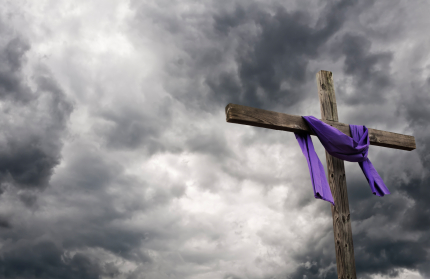
This is what Easter means to me. Christ as substitution. His death as a covering for my sin so that if I believe in what He did as He hung on a cross, nails through his hands and feet, a crown of thorns on his head– one of the most painful deaths a human can suffer– I can have the glory of heaven.

Grace. Mercy. Innocence hung for me…

So, maybe my foray into writing my novel, which led me to an appointment with Greg Johnson, which led him to take me on as a client, which (for some strange reason!) led him to ask me to help run this blog was meant to culminate in this one moment in time where the Easter weekend post was empty (like the tomb was in a few short days) so I could write about the thought of substitution and what it meant for me…

And what it means for you…

May you have a blessed Easter.


Success and Spiritual Warfare

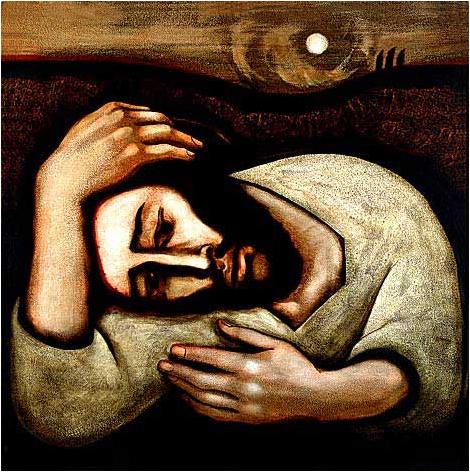
"Christ in Gethsemane" by Michael O'Brien

Today, Good Friday, we remember the great cost paid for our lives.

And [Jesus] said, “Abba, Father, all things are possible for You. Take this cup away from Me; nevertheless, not what I will, but what You will.”
~ Mark 14:36 (NKJV)

When our Savior pleads with His Father in Gethsemane, exactly what does “the cup” contain? Jesus has already given His word that He will accept the contempt and degradation, scourging and crucifixion, and the death required by bearing sin, horrific as these all are. The cup evidently contains something far worse, so terrible that Jesus Himself wishes to avoid it.

I believe “the cup” contains sin’s monstrous, consummate penalty—isolation from God as He turns away from the one bearing sin (Matthew 27:46).

We who are Christ’s will never taste of that cup. The veil is torn asunder, and we have sweet fellowship with God, to our everlasting gratitude and praise.

I shall not die, but live,
And declare the works of the LORD.
~ Psalms 118:17 (NKJV)

Christian authors declare faith in penning everything from theological resources to respectable entertainment, inspirational devotion to suspenseful adventure, history to romance. Our works usually combine such elements, for we use all possible means to connect with readers and build up their faith.

Would we expect success to go unnoticed by our enemy?

Whatever else is shared and learned about writing, publishing, marketing, etc., the substantial spiritual warfare that many authors experience should also be noted. The wider our sphere of influence becomes, the more important it is to prepare ourselves for spiritual attack.

The devil will use anything he can to diminish our spiritual vitality and fruit. Among his weapons are:
• deceit or distortion of truth
• distractions
• conflicts or division / separation among believers
• strong temptation to fall into immorality
• inflated feelings of success and pride
• discouragement or overwhelming feeling of failure
• depression, confusion, or other mental impairment
• contempt from impersonal critics
• betrayal by personal friends
• attacks on reputation or unfounded accusations
• unusual stress in health, finances, and relationships
• terrifying demonic presence, perhaps via nightmares

I unhappily confess that although I’d waged and won smaller spiritual battles, my strength faltered when the fight became fierce. I had lost top fitness, gradually spending more time serving the Lord and less time in simple fellowship with Him. I was then blind sided by the intensity of an all out spiritual attack, which occurred on the heels of publishing successes.

Just as we acquaint and train ourselves with the publishing resources made available to us in order to succeed, we do well to acquaint and train ourselves with the spiritual armor made available to us through the price paid at Calvary.

I write to you, young people, because you are strong, and the word of God abides in you, and you have victory over the evil one.
~ 1 John 2:14

Today we remember the great cost paid for our lives—and we may think of our lives as the goal for which Christ died.

Our lives, rather, are the means for a greater end—fellowship with God. And fellowship with God is what drives our spiritual fervor, empowers our spiritual gifts, and wins our spiritual battles.

Q4U: Have you experienced spiritual attack, concurrent to your successes? How have you overcome?

© 2012, Anne Lang Bundy

In Praise of Small Publishers

Like every writer, I dream of signing a contract with a big publishing house that will bring all its resources to launch my book onto the bestseller lists.

So far, it’s still a dream.

The reality I’m enjoying, however, is being published by a small regional press, which is giving me many of the satisfactions of being a published author without the pressure of big-time publishing. In fact, I regard my association with my current publisher as not only a great way to continue to develop as a writer, but also as a hands-on business apprenticeship which is preparing me for that future leap into the big leagues. Yes, working as a small press author means the royalties are slim, but for me, the benefits are huge.

If you haven’t considered finding a small press for your work, here are some things I’ve learned that you might find interesting and appealing about working with a smaller publisher:

  1. Small presses have very specific audiences and categories. That means you have to really define your own audience as you write your book. The benefit to this task is that your writing will be tighter and more focused, which will do three things for you: 1) improve your book; 2) target a publisher who wants this kind of book (thereby improving your chances of landing a contract!); and 3) give you a clear idea of who the readers are to whom you’ll be marketing the book upon publication.
  2. Small presses have limited resources to help you market. While this was initially a negative for me, I am now grateful that I assume primary responsibility for this very important piece of the publishing journey. I’ve learned to develop publicity contact lists, explore marketing opportunities, and pursue networking to land speaking engagements, which is a key to success for authors. Another plus here is that as a one-person marketing machine, I can react quickly to opportunities with an immediate ‘yes!’
  3. Timelines can be shorter with a small press. I can phone my publisher and talk directly to her, getting the answers I need or the extension of a deadline. I get the editing comments back, make revisions as needed, and see a final proof shortly thereafter; I can finish my book in June and have the launch party in September (not that I recommend such a tight schedule, but it has happened!). That means no long waits to see my books in print and get reader response.
  4. I work closely with the book designer, so I’m always happy with my book’s front and back covers. I’ve heard from many authors with big publishers that they have little to no input on what their book will look like; I love having a voice in those decisions!

The bottom line is that publishing with a small house can keep you closer to the publishing process in each of its stages, providing you with an education and experience that can only benefit your future career success.

Are any of you working with small presses? Care to share the joys of doing so?

My Top Five Writing Retreats

Cedar Key, Florida
A Breath of Fresh Inspiration

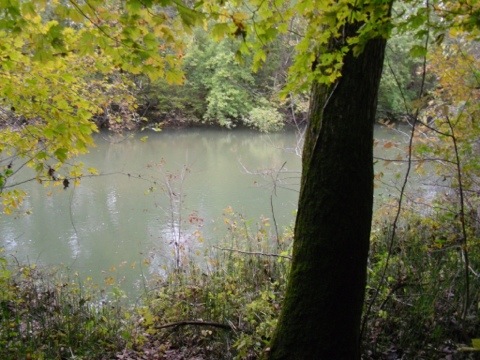
The great outdoors inspires me as a writer, especially in a setting by a river or lake. Water trickling over rocks, breeze-swayed evergreens, birds serenading from treetops, and rainbow-hued flowers. The scent of earth perfuming the air.

My muse comes alive in God’s created paradise. Especially for a cave-dweller like me.

Coming from a resort management background, I’m blessed with insider information about great getaways. There are affordable places around the country, to fuel a writer’s creative juices. Where magical meets practical.

So lean in close, and I’ll whisper a few secrets about my top five writing retreats.

5) Mohican Adventures — Loudonville, Ohio
Amenities & Attractions: Cabins, RV campsites, small lake, Miniature Golf, Go-Karts, Canoe Trips, Horseback riding, wooded area and hiking trails, Wi-Fi (extra fees)
Special Notes: The rolling hills around Loudonville bear the mark of Amish influence. I feel like I’m in a by-gone era when I drive through centuries-old quaint towns. And yet, the resort offers modern convenience.

4) Ozark Outdoors Riverfront Resort — Leasburg, Missouri
Amenities & Attractions: Cabins, motels, condos, RV sites, wooded hiking trails, canoe, raft, kayak, and tube trips, Wi-Fi in designated areas.
Selling Points: I love the choice of three different rivers to roam. This immaculate resort is tucked into lush Ozark hills, twenty minutes from the closest town. Bald eagles often fly overhead, nesting atop trees and massive bluffs in the area.

3) Adventures Unlimited — Milton, Florida
Amenities & Attractions: Historic rental homes, riverside cabins, zip-line, canoe, kayak, and tube trips. Wi-Fi in designated areas.
Writer’s Attraction: How can I resist rooms with names like The American Poet’s, John James Audubon, William Faulkner, Dr. Seuss. Ernest Hemingway, Margaret Mitchell, and Mark Twain? Each unit in the Schoolhouse Inn boasts books and memorabilia for the author it represents. The rocking chairs and swing, on the southern wrap-around porch, allow me to write in a setting fit for the masters.

2) River & Trail Outfitters — Knoxville, Maryland
Amenities & Attractions: White-water rafting, kayaks, tubes, near the landmark village of Harper’s Ferry, WV and the C&O Canal trail, perfect for bikes or an energizing walk.
Creative Triggers: This place feeds my hunger for history and love for America. Located near the confluence of Maryland, Virginia, and West Virginia, rich stories of our nation’s heritage wait around every corner. Access to the Potomac and Shenandoah Rivers, puts me on the same hallowed waterways our forefathers traveled.

1) Voyageur Canoe Outfitters — Boundary Waters Canoe Wilderness Area, Minnesota
Amenities & Attractions: Rustic cabins, tent camping, outfitted lake trips by canoe or kayak. Secluded areas to make you feel like you have the whole territory to yourself. A distant moose or bear sighting thickens your plots.
Magnetic Draw: Leave no trace — more than a tag-line, here it’s a way of life. I feel like Lewis or Clark, pioneering new frontiers, while watching water trickle off my paddle. Challenging portages cause blood and oxygen to pump to my brain, spurring new imaginations. I call this place Boundary Energy.

Quieter Times & Lower Prices for all resorts: April, Early May, Late September, October, Tuesday through Thursday in summer.

Writers often need quiet space, and outdoor writing retreats offer a breath of fresh inspiration. No matter where you live, there’s probably an economical resort close by. Take advantage of off-peak periods to sweeten the price. But then again, you could pitch a tent in your own backyard.

Where do you retreat to sharpen your focus? How do you concentrate on projects?

Leasburg, Missouri
Meeting the Muse in God's Creation

The Tale of Two Book Covers

One of the most exciting things you’ll get to do as a published author is decide on your book cover. For a long time, your novel may have just been black words on a white page, but a book cover is the pretty packaging that is used to attract readers and get them to purchase your novel. Several thoughts on marketing/branding become important during this process.

Most publishers will allow you to provide input into the book cover. Before my cover was designed, they asked me for some directions. This is what I provided for instructions.

1. Different from what is normally seen in CBA fiction. Who doesn’t want to stand out?
2. Dark imagery/suspenseful/intriguing: dark colors, creepy feel, etc…
3. Not overtly medical. Above all else– this was most important to me. This may be confusing to some as it is a medical thriller (of which I am very proud!), but the reason behind that direction was that I’m not sure I will always write medical thrillers, and I wanted to reach the wider suspense/thriller audience.

Here were the two choices I had:

When I got these from the marketing director I was stunned! I loved both for different reasons.

Here were some of my thoughts.

I loved the cover with the menacing killer, and he actually looked just like the villain in my own mind. How could they possibly have done that? I’m a risk taker, and that cover definitely appealed to that side of my personality. My first thought was: Even Ted Dekker hasn’t done anything this scary. Can I pull it off? Is it wise to have something this risky as a debut cover?

Why was it risky? Well, this is where some marketing comes into play. The largest segment of book buyers (even for suspense) is women. Is a woman going to pick up the book with the evil, scary dude on the front? If she does, would she keep it in her hands or plop it right back on the shelf. Was it safer– maybe smarter would be the better term– to use a cover that will accomplish what I wanted but still attract those who are most likely to buy the novel?

I was fortunate because I got these draft covers just before I left for the ACFW conference last September and was able to get the opinion of lots of people on which one they liked the most.

There was one clear winner.

Another interesting thing that happened was a couple of people commented on the size of my name on the front cover. I got the sense that maybe they thought I might be “too big for my britches” as they say. I found that sentiment a little fascinating as it certainly wasn’t something I had insisted on but wondered if there was an unspoken code of name size that once you sold a certain volume of books– then your name could be in large print.

Which cover do you think I picked and why? Do you think an author needs to “earn” their name being in large print?

Click here for the answer and leave a comment here and at Redwood’s Medical Edge. I’ll be drawing a winner from the comments section of both blogs for a copy of Proof!  Drawing will be Saturday at midnight, April 7th. Winner announced at Redwood’s Medical Edge April 8th.

Cover Art by the amazing Nick Richardson.

Writing is a Muscle, Flex it

    Sometimes I have to remind myself I’m not Ernest Hemingway, allowed to take hours at a time sipping aperitifs and people watching in Paris before I muster the requisite inspiration to sit down and write something. My goodness, if I did that and my husband subsequently found out, he’d feverishly protest the abundance of chicken nugget nights that seem to bottleneck when I get close to a deadline.

On the first manuscript I completed, however, I remember only writing when I felt like it. It took me two years to finish. And when it was summarily dubbed “Good, but not quite there,” I responded in a few ways. First, there was the shaking of my fists in the air. Second, there was the stint of self-loathing. (Which as a writer, I feel I have a natural right to exhibit, prancing back and forth, moaning, as if I’m original in my pain.) And third, an issuance of a new battle cry: I will never waste that much time again.

Two years of my life back then was the difference between a head of my own black hair, and a bottle of L’oreal Black Midnight to cover the greys that had suddenly popped up. When I began working on my next manuscript, I forced myself to work every day, for a set amount of time, or a set amount of words.

In my day job as an attorney, I have no problem writing piles and piles of drivel . . . I mean, well thought, and well-argued points of law . . . in a quick, methodic manner. Shouldn’t I be applying the same work ethic to a manuscript? And when I did, I wrote 120,000 words in just over two months. Of course, I have to give some credit to the story being an easy tell, but I give more credit to the fact I determined to make it a work task rather than a pipe dream.

I wanted to develop a rhythm with my writing, a habit if you will, that would self-execute even when—get this—I didn’t feel like it. And sure, sometimes I had whole pages that looked as presentable and appetizing as the floor of a gas station bathroom, but that has happened on occasion when I was trying my best.

When you train a muscle to work, when you exercise it daily and watch it tone and tighten, there’s this mental assurance that the next big set of weights—the next writing task ahead—is within your range. Further, if you work those muscles hard enough, they’ll keep working for you, burning for you, long after you put the weights down. They’ll even keep you going on days when you don’t feel like working at all.

Bottom line is that writing doesn’t come and go in these magical, muse-driven spurts, as if some wayfaring pixie is sprinkling special dust and making you transcend. It’s a muscle begging its owner to use and improve upon it. Getting it to its optimum is going to take you gritting your teeth. You may even have to pop out a neck vein here and there.

And once that’s done, you can pull out the Hemingway routine during your next vacation or when you’re trying to be aloof for your friends. That’s always a fun gig.

WordServe Literary News

Exciting things have been happening at WordServe Literary!

On the final post of each month you’ll find a list of Water Cooler contributors’ books releasing in the upcoming month along with a recap of WordServe client news from the current month.

 New Releases

More Beauty, Less Beast  Deb Coty’s new release with Barbour Publishers about “Transforming Your Inner Ogre.”

Engaging Today’s Prodigal Carol Barnier’s first release with Moody Publishers to help parents find hope if their child is away from the faith.

The Surrender  Book #3 in “The Last Cavaliers” series by Gilbert Morris with Barbour Publishers.

New WordServe Clients

Dawne Beckel, while born and raised in Ohio, traveled across the nation searching for inspiration and adventure. Before settling on a B.S. in Marketing, she pursued an English degree from The Ohio State University. In March of 2012 she received her M.S. in Marketing & Communications from Franklin University. Dawne combines her deep love of history and passion for writing to create enchanting Christian historical romance works. You may also find her operating her cooking blog where she shares recipes from her Italian roots, and she currently serves as the Marketing Director for Zumba Wild. (Agent: Sarah Freese).

Andrea Boeshaar has been writing stories and poems since she was a little girl; however, it wasn’t until 1991, after she became a Christian, that she answered God’s call to write exclusively for the Christian market. Since then Andrea has had more than 25 novels published as well as numerous novellas and nonfiction pieces. She has served on the Advisory Board of American Christian Fiction Writers (ACFW) and is one of the organization’s co-founders. In addition to her own writing, Andrea is a certified life coach and helps writers organize, prioritize, set goals, and work toward publication. Currently, she is working on her new Civil War historical romance series, Melodies of War. For more about Andrea, visit her website at www.andreaboeshaar.com. (Agent: Barbara Scott)

Deborah DeArmond is a highly experienced and sought after executive coach, trainer, speaker, and facilitator, having worked in marketplace ministry with audiences at all levels across a broad spectrum of industries and organizations. She is an expert in the fields of leadership, communication, relationships, and conflict resolution. Deborah owns DeArmond and Associates, dedicated to helping others build successful solutions to the challenges they are facing. Deb is also the co-founder of MyPurposeNow.org, a website for Christian women 50+. Deb’s debut non-fiction project is titled Related by Chance, Family by Choice: Moms and Loving the Girls Who Married Our Sons. (Agent: Barbara Scott)

Jan Drexler, with her Anabaptist upbringing and ancestral ties to the Amish church, brings a unique understanding of Amish traditions, doctrine, and theology to her writing. Her ancestors were among the first Amish immigrants to Pennsylvania, fleeing intense religious persecution in Europe in the 17th century, and then continuing west, arriving in northern Indiana in the mid-1800’s. Their experiences are the basis for her stories. Jan is a debut author and has written her first Amish novel titled Love Bears All Things. (Agent: Barbara Scott)

Christina M. H. Powell, Ph.D., is a writer trained as a biomedical research scientist at Harvard University. She is also an ordained minister and public speaker. She conducted her doctoral research at the Dana-Farber Cancer Institute and Harvard Medical School. After receiving her Ph.D., she performed research in the fields of bioinformatics and genetics at Harvard Medical School with a concurrent appointment at Massachusetts General Hospital, ranked the number one hospital in the country. As an undergraduate, she was named one of Glamour Magazine’s Top Ten College Women. She has written extensively on bioethics and contemporary issues. Currently, she is writing her first book, Question Your Doubts: Discovering and Developing Authentic Faith, which explores the many roots of doubt while offering a corresponding response of faith to everyone whose heart struggles with unanswered questions. (Agent: Sarah Freese)

Donna Schlachter is a debut fiction writer, although she has published two gift books previously. To date she has completed five full-length novels and a novella. She is currently writing another full-length contemporary romance and a historical novella. Her current project is titled Counterfeit Honor. (Agent: Barbara Scott)

New Contracts

Deb Coty signed a new contract with Barbour Publishers for another book of felt need devotionals. With a working title of Fear, Faith and a Fistful of Chocolates, the book will help women reel in the fear that so easily entangles them. (Agent: Greg Johnson)

Rick Johnson has agreed to write two new books for Revell, the first A Couple’s Guide to Romance. (Agent: Greg Johnson)

Tracie Miles signed a contract with Leafwood Publishers for her debut non-fiction work titled Stressed-Less Living: Finding God’s Peace in Your Chaotic World. Tracie is an international conference speaker for the popular and rapidly growing ministry known as Proverbs 31 Ministries and a monthly contributor to the Proverbs 31 Ministries Encouragement for Today devotions, which reach a half of a million people each day. (Agent: Barbara Scott)

Joe Wheeler has signed with Howard Publishers for a book of short stories about Abraham Lincoln during the Civil War Years. The book will be timed for release with the 150th Anniversary of Lincoln’s Gettysburg Address. (Agent: Greg Johnson)

Jeremy and Jenny Williams have signed with Thomas Nelson to tell their story of A Season of Courage. Jeremy played college football, married his sweetheart and eventually started a family. One child was born with spina bifida, then Jeremy was stricken with Alzheimers–while still in his 30’s. While in a wheel chair, battling the effects of his dibilitating disease, his team won the State Championship in Georgia, and he was named National High School Coach of the Year. Extreme Home Makeover eventually did a show for them and built them a new home, but a docudrama was also produced and will soon be available (http://seasonofalifetime.tv/). (Agent: Greg Johnson)

What We’re Celebrating

Barbara Scott is in attendance at the Mount Hermon Christian Writers Conference in Northern California from March 29 through April 3, where she is meeting with numerous editors and WordServe clients, as well as teaching afternoon workshops titled “What to Expect From an Agent” and “Follow Market Trends to Advance Your Career.”

Julie Cantrell’s book, Into the Free enjoyed a very strong February and early March, hitting the New York Times Bestseller list and, for three consecutive weeks, the USA Today’s Top-150. It continues to be among the top sellers at Amazon.com in ebooks for fiction.

What can we help you celebrate?

Creating Characters with Personality

My characters didn’t always have personality.

In blind date jokes, the matchmaker skirts around the topic of a candidate’s looks and plays up their wonderful personality.  It was the reverse situation for my characters.  According to an editor, they had the looks, even the quirks, but no personality.  I was mortified to discover I had cardboard characters. I didn’t understand how it could be possible when I had developed a character notebook filled with descriptions, pictures, and imaginary back story.

I might have stayed in denial if my editor hadn’t challenged me to study personality typologies.

I quickly discovered by using type theories that someone else had already done all the work. I didn’t have to dream up any more character bios or answer a hundred silly questions about what my characters would do in various situations. I dreaded those kinds of exercises.  But I loved research. In a sense, this was researching my characters. All I had to do was find a key piece, and all the other pieces fell into place. I didn’t have to force myself to do something I didn’t enjoy. I found the process fascinating.

Now all my major characters have designated personalities which drive their actions and dialogue, and create tension and plot. I use a popular personality typology called the Enneagram. If you’re interested, personality TYPE helps are as easy as Googling personality typology.

First I look at my story premise to see what will be expected of my heroine. Then I examine the Enneagram chart’s short summaries to see which type will allow her to perform what’s required for the story. After reading more about her type, it’s easy to match her personality or purposely clash her personality with other characters by setting all their personality types. Some typologies even recommend matches, especially in the love and occupation departments. Back story practically writes itself because there’s also a section devoted to childhood.

Once you set a character’s personality TYPE, the story unfolds in a more believable way. That doesn’t make it predictable. It deepens it.

During writing when things aren’t clicking like they should, we often tear into our plots. But uncooperative characters may actually be the culprits. Before they can enhance the story, they must be equipped with personalities that will move the plot forward.

A roller coaster slowly climbs to its peak. In the same way, a story builds toward its climax. Imagine what would happen if the occupants of the roller coaster jumped out, swung from the scaffolding or pushed the coaster off its track.  It might be perversely entertaining at first, but the ride would be ruined. Readers expect characters to stay on track, so the story’s climax is thrilling and fulfilling.

I use the Enneagram at the beginning, when the story gets in trouble, and before I start edits.

While personality typology works for me, it’s not the only way to get the job done. What method do you use?  Just for fun, do you know your personality type?

Confessions of a Rhetorical Rapist

Before I ever published anything, I wrote mostly for myself. As an outlet for new discoveries about God or myself or the world. Or a place to struggle through matters of faith or relationships or parenting and work through past traumas. Sometimes, I wrote to vent.

I wrote in short, lots of things I was unlikely to say openly. Not secrets, exactly, but still things that might upset people if they knew. My mother’s brain tumor back when I was a teenager and my parents’ subsequent divorce and the lingering dysfunctions it caused in my family, for example. Or my early marriage struggles with my mother-in-law.

Writing was a way to move troubling matters out of the part of my brain that wakes in the night and worries into a more neutral medium where I could store them, reconsider them, ponder them in my heart.

In any case, when I assembled my first batch of writings for publication, I found I had a job before me: to somehow unsay things that might upset the people I wrote about.

From my publisher’s perspective, it was a legal matter. Although libel—misrepresenting the truth with malicious intent—is hard to prove, invasion of privacy is not. And I was amazed to discover how often I invaded others’ privacy in the stories that make up my memoirs. A friend’s cancer journey mentioned in one of my essays, for example, and a funny conversation about faith I had with a blind man I met on a bus became privacy right minefields.

My editor said I had three choices: cut the offending material, get releases from the people I was writing about, or alter names and details to make them unrecognizable. For that first book I used mostly the first two strategies—reluctantly, I must admit, and complaining all the way. This is ridiculous! How can this be necessary?…

If you can figure out a way to cut out the problematic part and still get your point across, that’s probably the best solution. Also the most painful. But cutting generally improves writing. (This blog post started out 1000 words longer, and, trust me, it’s better this way.) As my husband likes to point out, no one ever leaves church saying, “Boy, that was a great sermon—just wish it had lasted half an hour longer!”

The second solution—getting releases—was the most repugnant to me. Lots of work composing release letters, getting them signed, going to the post office! (I generally avoid all work that involves a post office.) Worse: The person might, after all that work, say no. Worst of all: They’d know I had invaded their privacy. Kind of like rhetorical rape, when you think about it. And I’d know they knew. And we’d all feel bad about it.

Surprisingly enough, everyone I asked said yes, although one person wanted to remain nameless. The guy on the bus, though—whose business card I found in my bag later, which enabled me to contact him—stipulated that I had to use both his names to be sure people recognized him. People are frequently flattered to make it into someone’s book.

Nowadays, I use mostly the third solution: changing names and details. I avoid a lot of topics from the get-go that I think may upset people. But then, if I absolutely need to tell some story that has potentially sensitive material in it, I give those involved new names and professions and hometowns and often a sex change operation.

Bottom line it’s illegal—not to mention a potential violation of the Golden Rule—to play fast and loose with others’ laundry. (Was that a mixed metaphor?) But avoiding it is no big deal.

How have you had to revise your writing in order to respect others’ privacy?

A Mean Delivery

I’ve spent the past few weeks doing the unthinkable: scrubbing unwanted birthmarks, surgically altering dangling participles and mutated paragraphs off my newborn. Manuscript, that is. But it feels every bit as painful as though it were one of my children that is running circles around me, hanging out underneath my elbows even as I type.

An occasional deep sigh runs out of me like flipping the pancake syrup bottle over too quickly. This is my baby.

Its inception was 7 years ago as I spoke at a conference and heard so many stories about this issue. I wanted to reach them with fiction.

Its conception began a year later. But starting actual labor was harder; I much preferred the slow incubation and the relative safety of my baby being hidden from other eyes. I tolerated the creeping pace of false of labor and welcomed the wussy labor pains, preferring to box the baby back up and allow it to grow some more until the mood struck/it was convenient to write/I was having a good hair day.

And then my book club/accountability girls decided it was time for Pitocin. “Let’s speed this thing up,” they chorused. “You’ve written other books and had them published. Get on it!”

“But those were non-fiction,” I protested. “I don’t know if I can share this one.”

Ignoring me, they chose my novel as the November book, thereby forcing me to have it completed by October 30th.

They loved it. It was inexpressibly joyful to have actual readers discussing opinions and for me to be able to explain my thoughts. “That surprised me, too!” And it did. Sometimes my characters took over.

Then my baby went to the NICU with Sarah Joy Freese. She was so gracious in her admiration. No plot problems or character problems, a rarity in a first-born. BUT…there were changes to tweak, tighten and thrill. Some things had to go the land of the unwritten for the sake of pacing.

That’s a lot of pressure for someone who’s not yet been out of the isolette! But I’m learning this process of birthing a different sort of baby. When the changes are completed, it will go from the nurturing NICU into the hands of the ruthless publishers.

And instead of a decent score on the Apgar scale, I’d settle for naming it “Published.” The last name could be, “Best Seller.”

How is your baby doing?