Top 5 Self-Editing Tips: Structure

Writing is rewriting, and rewriting is self-editing. “But isn’t that the job of the editor after I’ve made the sale?” No. Some writers think running spell-checker is self-editing. Not so much.

“But won’t rewriting my work edit the life out of it?” No, but it will catch the eye of an agent or editor as a well-written manuscript and may lead to a sale.

Obsessive editing during the writing process will destroy your work. However, after you’ve written the first draft, gain some distance and perspective on your manuscript by setting it aside for a few weeks or a couple of months. Now it’s time to rewrite.

Here are my top 5 self-editing tips in their order of importance for polishing your work to a high sheen.

  1. Structure: Think of the structure of your work as an arched bridge spanning a great river. If the contractor takes short cuts (such as using less cement, steel, or fewer bolts) because she’s bored with the process and rushes to the end, the bridge is weakened and will collapse.  The same holds true for both ends of the bridge. If too much cement is used at either end of the bridge, it will collapse from the added weight.

For the purposes of this post, I’ll concentrate on the structure of novels. If the structure of your story is solid, the reader will continue to turn the pages until the ending scene.

The material of the structure is comprised of the elements of the story arc (the basic story thread) held in place by a beginning, middle, and end. Pretty simplistic, huh? Yet the three-act structure has worked since Aristotle’s days whether you write plays, scripts, short stories, or novels.

Sydney Harbor Bridge

Some authors maintain they have a four-, five-, six-, or even eight-act structure. I maintain if you break down the parts of their story arcs, you will discover classic Aristotelian structure.

Using the bridge analogy, a car drives onto the bridge. This is the point in the novel when you can lose a reader in the first page or two. I’ve thrown many a book (or manuscript) on the pile beside my bed if nothing happens right away. The author might as well have written “blah, blah, blah-blah, blah.”

A novel that piques the reader’s interest starts as far into the story as possible. I don’t want to know that the protagonist’s parents left him stranded in a snowstorm when he was a toddler and that’s why he’s terrified of snow (or abandonment). That’s back story. The story should begin with stasis (a state of equilibrium) and then the main character, pressed with conflict, reveals her goal.

One of my favorite movies is Indiana Jones and The Raiders of the Lost Ark. The story throws you into the action, and the back story―Indy’s character, profession, the setting, and the antagonist―are revealed as Act 1 plays out.

As the story progresses into the middle (Act 2) and the bulk of the novel, you should have rising and falling tension as your protagonist encounters numerous obstacles or crises.

The main turning point, or big surprise, comes in the middle of the novel. By this time the reader believes he has the story figured out. You need to turn his assumptions on their head. The major turning point should be such a shock that no one sees it coming. It should keep your reader up at night turning pages.

The crises continue. Will he? Won’t she? Oh, no! What will happen to this character your reader has invested her time in? Will everything turn out all right? How will the story ever end on a happy, satisfying note now?

Tension mounts and we reach another major turning point before we head into the final third act. Every turning point should be a surprise to the reader.

The crises are unrelenting until we reach the climax halfway through the third act. The protagonist faces off against the antagonist. The clash of the titans ensues. A woman faces her attacker or her paralyzing fear. The antagonist is not always a person. A man pushes his wife out of the path of a stampeding herd of cattle. Will he live? You get the picture.

Tie up all the loose ends of your storyline in the denouement―the final resolution of the plot or story arc. Is your ending satisfying? Does the main character live happily ever after? If you live and write in America, trust me, she better if you want to succeed as a professional author. Americans are eternal optimists.

To be continued…

How will you self-edit your novel to make sure your structure is strong enough to carry your storyline through to the end?

Photo credit: Sydney Harbour Bridge with the Opera House in the background by Ian.

On Becoming an Artist

“Red boathouse at sunset” by Karen L. Macek

Last year, I realized something that changed the way I look at myself and my writing.

I am an artist.

Over the course of my writing career, I’ve called myself many things: journalist, essayist, columnist, editor, reporter, researcher.  (I’ve also called myself other names at times, like stubborn, stupid, crazy, and masochist – especially when I’ve struggled to meet writing deadlines.) When I began writing fiction a few years ago, I added the descriptors of novelist, author, plot architect, and starry-eyed dreamer.

But artist?

Not in a million years.

For me, ‘art’ always referred to visual or performance genres. Art is the domain of my sister when she paints beautiful marsh landscapes in oils on canvas. Art is my daughter bringing a character to life on the stage, or playing haunting melodies on a flute or piano, or throwing clay on a wheel to transform it into a smoothly shaped bowl. Art is the creation of something new and tangible, and though I produced countless pages of words, I just never felt it rated as ‘art.’ I didn’t use paints, or clay, or costumes or musical instruments; my tool was a word processor, and my product was all in my head. And, with any luck, the heads of my readers.

Galley material, yes, but gallery worthy?

Not even close.

As far as I was concerned, writing was simple information management – collecting information, fitting it together (coherently, hopefully), and passing it on to readers. Whether it was just reporting the facts or organizing disparate information into a mystery novel, it was all about language skills and communication. Not Art with a capital “A.”

But then one day I was helping my daughter fill out a personality inventory, and I came across a section that listed occupations. I looked for the usual category of ‘Writer,’ but couldn’t find it in any of the traditional places I expected to see it. Instead, it was lumped under the category of “Art.”

The longer I thought about that label, the more I realized that what I do when I write truly is Art. Like any painter or musician or sculptor or actor, I look at the world around me and then translate my own experience of it into a new form, a personal, one-of-a-kind articulation of what is, or might be. I have a vision of life that ‘colors’ my representation and allows me to penetrate the surface of what I see to get at the heart of what lies beneath. Maybe my lens of choice is humor, or inspiration, or romance, or fantasy, but whatever it is, it helps me bring a freshness to my subject that is the essence of artistic endeavor.

I create with words, and not only is it my calling, but my sacred trust.

And now that I understand it that way, I guess I shouldn’t be surprised that I’m an artist. After all, my Father is too, you know.

Do you consider yourself an artist?

WordServe News: May 2012

Exciting things have been happening at WordServe Literary!

On the final post of each month you’ll find a list of Water Cooler contributors’ books releasing in the upcoming month along with a recap of WordServe client news from the current month.

New Releases

Proof by Jordyn Redwood (Kregel)

Dr. Lilly Reeves is a young, accomplished ER physician with her whole life ahead of her. But that life instantly changes when she becomes the fifth victim of a serial rapist. Believing it’s the only way to recover her reputation and secure peace for herself, Lilly sets out to find–and punish–her assailant. Sporting a mysterious tattoo and unusually colored eyes, the rapist should be easy to identify. He even leaves what police would consider solid evidence. But when Lilly believes she has found him, DNA testing clears him as a suspect. How can she prove he is guilty, if science says he is not?

****************************************************************************************************

New WordServe Clients

Judy Gordon Morrow is a lifelong lover of words and has published poetry, articles, song lyrics, and devotionals. Her first book dealt with pregnancy loss, followed by nine gift books. In her prior “word-lover jobs,” she served as a school librarian, newspaper copyeditor, and nonfiction editor at Multnomah Publishers. She speaks at events for women and writers, sharing her passion for the Word and words. Judy is called Mom by three sons and two daughters-in-love and Grandma by one (soon to be three). Judy lives in a charming mountain community in northeastern California, where she savors small-town living. (Agent: Barbara Scott)

New Contracts

Anita Agers-Brooks, a debut author, signed a contract with Leafwood Publishers for her non-fiction book titled First Hired, Last Fired: How to Become Irreplaceable in Any Job Market. Anita manages approximately seventy employees at one of the largest river resorts in the country. She speaks annually at the National Professional Paddlesports Conference and also teaches at their national business school. She is a speaker for the National RV and Campground Association and the Missouri RV and Campground Association. Anita is a speaker on circuit with Stonecroft Ministries, an international speaking ministry for women, and a member of the National Association of Christian Women in Business, Women in Business, National Association of Women Business Owners, and the Christian Writers Guild. She is a graduate of Christian Leaders Authors and Speakers Seminar and is a certified Training Facilitator, Communications Specialist, and Personality Trainer. Check out her blog at www.freshstartfreshfaith.wordpress.com.  (Agent: Barbara Scott)

What We’re Celebrating!!

Pamela Binnings Ewen’s book The Moon in the Mango Tree published by B&H has won the Eudora Welty Memorial Award given by the prestigious American League of Pen Women in their 2012 Biennial Letters Competition. (Agent: Barbara Scott)

Barbara Scott and Sarah Joy Freese attended the Colorado Christian Writers Conference this month. Both Barbara and Sarah met with some aspiring writers, several editors, and current WordServe authors. Barbara presented two workshops at the conference including How to Impress an Agent and Branding. Marlene Bagnull, the conference director, is such a blessing to authors, editors, and agents. Although the days were long, the experience really served as a ministry to all who attended.

What can we help you celebrate this month?

Shocking You Softly

I was once that kid on the playground telling my little friends every bleeped out word in the universe. To be fair, however, I didn’t really know what I was doing. This is elementary school we’re talking about, and my parents were naïve, or remiss at best, not thinking I was cataloging everything.

I’m sharing this because I find myself in a constant tug-of-war of what I can and cannot say in Christian publishing. To be clear, I am not an advocate of swear words. I am a reformed potty-mouth, and I intend to keep my writing free of curse words. To me, that is one of the many beauties of Christian publishing—untainted prose.

However, I can’t stop thinking that Christian publishing is in some sort of shifting paradigm, where two radically different generations are trying to see the whites of each other’s eyes.

Case in point: A beloved friend and fellow Christian author once urged me to take my work into mainstream publishing because the essence of my voice might upset some. She was speaking directly to my inclusion of certain words such as “sucks” and “stupid.”

I didn’t see the big deal at first. Now, however, I’ve been thoroughly acquainted with the big deal. It even locked me in the closet, took away my dinner, and told me to shape up if I ever wanted to see the light of day again. (Kidding. The edit wasn’t that painful.)

I’m not saying I wish to convert everyone to accept or speak my language, but the truth of the matter is I’m a born and bred Southern California girl, raised on MTV and the gag effect of adverbs. Totally.

I get that my style is too much for some, and that’s OK. One writer can’t please everyone. I’ll definitely have my niche, and I’ll walk away with the coziness of being honest to myself and with what I’m conveying to others.

As an example of the real Heather, consider this snippet of dialogue between my husband and me:

Husband: “Don’t you just love the sunset? All the colors coming together like a symphony God is orchestrating, telling us to enjoy ourselves and gaze at something beautiful.”

Me: “Eh. My back hurts. Are we done here? I feel like tacos. You feel like tacos?”

So yeah, if sunsets bore me, you can probably guess how painful it is to pretend me talk fancy.

I once tried writing an entire book the way I thought others would expect me to write. It sucked. And, it was stupid.

Even if it makes people cringe, I can only write the way I know how. That’s a good enough starting point for me. What else would you expect from a Southern California girl who gives up sunsets for tacos?

Have you had to modify your writing to make it work in Christian publishing? Do you regret it, or are you happy that you will be able to reach your audience more effectively?

The Best Resource to Build Your Author Platform

Are you so sick of the word platform you want to throw all wooden boxes into a huge bonfire?

Everywhere authors turn we hear about the importance of author platform. Many pre-published authors have no idea how to go about building a successful author platform. You just know that you need one.

Even seasoned authors know we need to keep adding planks to our platform, making it larger every day.

I was one of 100 people recently chosen to participate in the launch of Michael Hyatt’s new book, Platform: Get Noticed in A Noisy World.

This in itself was pure genius. Every one wants the invitation to the private party, we want the behind the scenes all access pass. To read the call out, here’s the link to Michael’s invite. Did you notice it’s not just about what you can do for him, but what it will do for you?

That is the number one lesson from this book. Everything you put in front of your readers, from blog posts to social media updates, must provide value to them!

Michael really knows how to take this to the next level. Here’s the link to his Platform book page. He breaks down the benefits his book provides to the reader. Many books, or book pages, fail to spell out what the purchaser will get from reading them.

This book doesn’t just tell you a few key points or things to do, it teaches you. Michael provides numerous links to extra info and also gives tons of examples. I’m a visual learner, so this is key for me.

God has been reminding me that it’s not about me. And the same is true in all aspects of our lives, as both authors and human beings. I ultimately write for God’s glory, and adding glory for Him is what’s all about. Remember to always add value, in everything we do.

What are ways you can add value to your book? How can you add value to the readers of your blog? How has an author added extra value for you?

Here’s an added value if you haven’t already read 7 Tips for Self-Editing Your Novel with Promotional USB Drives Before we can create a platform, our content must be amazing.

Three Ways to Focus on Editing for the Web

“Real writing begins with re-writing” (James A. Michener).

I began blogging in 2008, and I’ve visited many websites to determine the most effective way to communicate online. I developed a helpful web-editing checklist below from my research for a writing workshop using three photographic terms—the panoramic, macroscopic, and microscopic viewpoints.

Panoramic View. Begin the editing process by determining the overall, or broader view, of contents and evaluating your audience, purpose, context, and the design elements.

  • Read aloud from the reader’s perspective (not the writer’s).
  • Find main point and sub-points. Can you summarize your piece easily?
  • Examine benefits for reader (take-away value).
  • Use appropriate fonts (not fancy or distracting to your content).
  • Use subheading in boldface type to introduce more points.

Macroscopic View. Take a closer look at paragraphs, word usage, and tone.

  • Place main topics near beginning of each paragraph and sentence.
  • Limit each paragraph to one main idea.
  • Use shorter units of text with more breaks.
  • Use an introduction for a “teaser” paragraph (preview for content).
  • Avoid long texts that break content into several pages.
  • Provide a brief summary or table of contents hyperlinked to each section for text over 500 words. Use lists, hyperlinks, and extra white space for a long document to break up dense patterns of text.
  • Avoid slang, jargon, and inappropriate humor.
  • Use nondiscriminatory language (e.g., bias based on gender, race, ethnicity, religion, age, sexuality, disability).
  • Use common words (appropriate for target audience).
  • Avoid vague words.
  • Use key words to describe the site in the first 50 words of text.
  • Build verbal bridges to connect text (transition).
  • Use action verbs rather than passive.
  • Incorporate single links into content (embedded into the text).
  • Make short, bulleted lists of links.
  • Use “Find Out More” links, when details are needed.

Microscopic View. Zoom in on the elements of grammar, mechanics, and punctuation.

Self-editing should distance you from your piece, so you can examine it without the emotional attachment. You can see your actual words, rather than just intentions. Consider these final ideas to help you edit for the web.

  • Create style sheet/guide with some common problems, to avoid repetitive research of the editing rules (e.g., grammar, mechanics).
  • Find someone to read and edit your work (e.g., critique group, another writer).

Remember: “You write to discover what you want to say. You rewrite to discover what you have said and then rewrite to make it clear to other people” (Donald Murray).

Image(s): FreeDigitalPhotos.net

Do you have any tips for editing for the web?

Goodreads

Here is some Social Media just for authors and just for readers. You are probably thinking, “Am I dreaming?”

No! It does exist, and it is an amazing place to devote time and energy. This little heaven for authors is called Goodreads. Goodreads has approximately 4.6 million users. While it may not seem to be as grand as Facebook’s 800 million users, these 4.6 million users are just on Goodreads as readers!

Goodreads is a place people go to only to think about reading. What an awesome concept. There are no random pictures of kids, like on Facebook, pictures of things you can’t afford like on Pinterest. Instead, there are readers, some virtual books shelves, and people talking about BOOKS!  Think about this as Facebook just for authors and their audience.

What are some of the things that you can do on Goodreads?  You can create an author page that “fans” can share with others.  Within Goodreads, you can also start pages specifically for your book. ( I do not encourage people to start book pages on Facebook, just fan pages.  But on Goodreads, you can have both, and they link back to your author page.)  It’s designed just for you, the author. You can easily chat with your readers, add video clips, and link it to your Facebook and/or Twitter pages.

I recommend to authors that they spend money on Facebook, programming a page with their books, so it directs them to buy the author’s books. If you are an author with many books, start a store on your fan page. Goodreads does this for you! (Score!) If your book is on Amazon or Barnes and Noble, it is automatically connected to Goodreads.

Goodreads is super user friendly and very intuitive.  When you sign in, there are tips and tricks that are posted on their pages everyday.  It will give you more ideas and walk you through the site.  This makes it very easy to learn and be more adept in controlling the site. Have fun with this site, and don’t just put your books on it, but really get involved. Dialogue with friends, readers, and other authors.

These were my three tips from Goodreads when I signed in today.

My personal favorite thing on Goodreads is their quote section.  You can add quotes from your book or quotes from your favorite author. I love to search the quotes by words and topics. There are no ads with these quotes, and it is such a great resource for writing. Quotes are also a good way to promote yourself!

Goodreads is definitely a top social networking site for authors.

Go here to start your adventure as a Goodreads author. Also, here is some great information about how to effectively utilize all that Goodreads has to offer: Using Goodreads to Promote Your Books

Have you been using Goodreads to promote your writing? How so?

How to Plot by the Numbers

Plotting By the NumbersShow, don’t tell. Watch your participial phrases. Don’t head hop. Whatever you do, stay within manuscript length recommendations. For a writer scrambling to keep up with all the dos and don’ts, the writing profession can seem full of arbitrary rules. And when someone breaks said rules and goes on to win awards, it’s tempting to follow suit. One standard you shouldn’t buck, however, is a publishing house’s word-length requirements.
Why? Shouldn’t you let your story tell itself without regard for its length?

If you will be the one footing the bill, you’re free to make your manuscript whatever length you prefer.  But if you hope a publisher will pay to produce your book, it’s important to understand that additional pages cost extra money, and not just in terms of paper and ink. It takes several editors (who are on the payroll) to review and guide you in polishing a manuscript. Proofreaders don’t work for free either. If your last name is Tolstoy or Michener you might get away with submitting a beefy manuscript. The rest of us need to keep the bottom line in mind.

Book stores base the number of copies of a particular title to order on standard widths. If a publisher fails to adhere to these widths, it throws off a bookstore’s shelving efforts. Besides this, writing your novel shorter or longer than genre readers expect can negatively influence their buying decisions.

Aren’t these considerations crass? What about your inner artist?

Your inner artist will recover, and you’ll even grow as a writer from keeping to practical guidelines.

But how on earth can you tell how long a novel will be until you’ve written it?

You can’t know entirely, but I’ve developed a method that helps me write to a specific length. Even if you’re a seat-of-the-pants writer and allergic to plotting, my technique may help you. Here’s a screen shot of one of my working calendars. CS stands for my current novel, and the number represents the scene I’ll write that day. (I number them in my plot outline.) I find it helps to include upcoming deadlines and events as well. The DS represents DawnSinger, the first novel in my epic fantasy series, Tales of Faeraven. The Renewal mentioned was a conference I attended.

Sample Scene Calendar

1. Estimate your desired word count. If you don’t know what that might be, read publishers’ submission guidelines at their sites. As a starting point, here’s an agent-maintained list of word count guidelines. Find the happy middle ground in a given range. That way you can guard against running too-short or too-long.

EXAMPLE: A publisher gives the range of 80,000-100,000 words for a historical romance. The middle ground to aim for is 90,000 words.

2. If you already know the average number of words you write per scene, use that figure. If you don’t know this number, write the first 50 pages of your book, then estimate the average number of words per scene. You can also base your figures on 1,500 words per scene, but eventually, you’ll want to check your own average against this figure and make adjustments as needed. It’s okay to round your numbers.

EXAMPLE: Approximately 12,500 / about 8 scenes = 1,500 words per scene

3. Divide your average words per scene into your desired total word count. The answer is the number of scenes to brainstorm.

EXAMPLE: 90,000 / 1,500 = 60 SCENES

4. Develop your plot to include the number of scenes you should write for your desired total word count. Write just a few sentences to describe each scene. This keeps you from bogging down while plotting and gives you a flexible guideline you can easily adjust as you write.

What’s next?

To learn more about my system of plotting, read How to Plot a Novel in Three Acts at my Live Write Breathe site.

Are you more of a plotter or a seat-of-the pants writer?

How Input Affects Output

I felt it sneak around the edges of my concentrated efforts. My lashes blinked faster. My lids now fought when I struggled to lift them off my eyes. A light sheet of brain-fog settled over my mind.

Afternoon fatigue had arrived. And it threatened to keep me from writing the scene on the screen before me. How would I finish without falling asleep?

Too often, I fight a common battle when I finally get a few snippets of time to write. But instead of grabbing a caffeine loaded, sugared up, fattened calf kind of snack, I’ve found a few quick solutions that allow me to treat my body with the respect it needs to function at optimal efficiency.

1) Eat nutritious vegetables or fruit. In particular, I’ve found the following have fabulous energy boosting properties for my body chemistry. Literally within seconds, I can feel a renewed focus and am able to write well. My faves include, red, orange, or yellow peppers, V-8 juice, grapefruit, oranges, watermelon, tomatoes, sweet potatoes, cucumbers in vinegar, cantaloupe, and celery.

Fruits & Veggies Energize Writers
Fresh Veggies and Fruit Energize

2) Get out in the sun. A few minutes of vitamin D rich sunlight is just the ticket to get my blood pumping and my thoughts racing.

Vitamin D Wakes Writers Up
Sunlight – Natural Inspiration

3) Drink water. When writing, we often don’t want to interrupt our thoughts, so dehydration is a big problem for many writers. Most people assume they need caffeine when exhaustion strikes — in reality, dehydration is often the culprit behind your fatigue. Science shows that water wakes us up.

Hydration Hydrates our Brain Cells
Water Wakes Writers Up

4) Take a nap. Though I fight it, sometimes a ten minute nap works miracles. A few moments of shut-eye gets me going again. (I find I need to set the alarm on my phone, so I can actually nod off. Otherwise, my fear of over-sleeping keeps me from getting the rejuvenating rest I need).

Naps Help Writers
Nap Time for Writers

5) Go for a walk. I plan this powerful method of staying alert into my writing schedule. It’s part of the formula I follow to get words on the page. Having an intended break gives me something to look forward to and pushes me past the humps. A good walk gets my blood flowing, my muscles heated, my cells active, and my thoughts fired up.

Walking Wakes Writers Up
Walking Stirs Creativity

6) Take prayer and Bible reading breaks. A few minutes spent with the Master Author infuses me with energy and inspiration. Nothing like purpose to light me into action.

Prayer and the Bible Inspires Writing
Pure Inspiration

Before fatigue wraps itself around me like a constricting serpent around its prey, I need a plan to fight back. I find the list above gives me exactly the input I need to affect my output in positive ways.

Here are some other great tips to help you battle afternoon fatigue.

What ways do you battle exhaustion when it threatens to hinder your writing?

Find Your Writing Passion


Some writers try their wings to see if they can make it as writers. They give it a year, five years, maybe even ten, thinking if they aren’t published by this time they will give it up. Why waste your time, energy, and money on such a hard and often thankless occupation? If you can quit writing, DO IT NOW now, and put yourself out of your misery.

Others write because we must. Writing helps us think and remember information. Writing helps us generate ideas and organize our thoughts. We write to make sense of the world.

What is your passion?

What is something you alone can share?

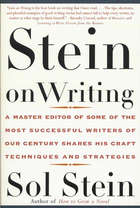
A lesson from page 210 of Stein on Writing, used with permission from Sol Stein:

“I ask you to imagine yourself on a rooftop, the townspeople assembled below. You are allowed to shout down one last sentence. It is the sentence that the world will remember you by forever. If you say it loud enough, everyone in the world will hear you, no matter where they are. What one thing are you going to say?”

Is your sentence one that could have been said by any person you know? If so, revise it until you are convinced no one else could have said that sentence.

When you have reworked your original sentence, consider these additional questions:

Is your sentence outrageous? Could it be? Is your sentence a question? Would it be stronger as a question?

Would the crowd below cheer your sentence? Can you revise it to give them something they’d want to cheer?

Suppose the person you most love in all the world were to strongly disagree with your sentence. Can you answer his or her disagreement in a second sentence?

Has your second sentence weakened your first? It usually does. If so, make it stronger than the first.

You now have the option of choosing one of the other sentences. There may be value in combining and condensing them.

You look down and see only one person, your greatest enemy, who says, “I didn’t hear you. Would you repeat that?”

Can you alter your sentence so that your statement will be enemy-proof?

Suppose you found out that the only way to get your message across would be if you whispered your sentence. How would you revise it so that it would be suitable for whispering?

Look at all the versions of your sentence. Is there a prior version that is actually stronger than the last? Can the virtues of one be embodied in another? And most important, which sentence now strikes you as the most original, the one least likely to have been written by someone else?

This exercise will direct you to a theme or expression of a theme that is uniquely yours.

Q4U: Most writers are introverts. If this is true for you, what subject will prompt you to talk or write?