When Good Writers Go Bad

Recently I listened to a thought provoking sermon about how to tell when good leaders have gone bad. The lesson was universally applicable because we all have leadership opportunities at some point in our lives. Whether it is leading a major corporation, mentoring a student or babysitting, we are providing guidance. As writers, we have an incredible opportunity to lead others. Here is my spin on that lesson, exploring several traits that indicate a writer may have gone to the Dark Side:

A Big Ego

Being an author means creating a platform, and selling yourself and your product. At some point, you may begin to believe your own press. The praise feels great and after a while, you get used to it. Then, when it does not come readily, we wonder why. Although some of the most acclaimed writers of all time had healthy egos (Steinbeck, anyone?), focusing on how the writing might benefit others is much more inspiring to readers. Someone asked me this week, “Do you write to feel powerful and  make the characters do whatever you want?” I told her my writing stems from a desire to entertain. She looked baffled and said she would probably become addicted to the control over the story and other readers. It’s easy to see how authors could get wrapped up in the ‘power’ aspect of writing, if they were so inclined–but that’s not what inspires people.

Isolation

Alone time is a necessity for many writers who can’t focus with others anywhere in their vicinity. However, the more time we spend alone, the more we rely on our own judgement. The feedback from trusted advisors is invaluable, but if one is operating in a silo, that may not seem necessary. Excessive isolation can be dangerous, it keeps writers from being in touch with their audience, as well as with other writers with whom they might partner. Actor Jonah Hill has commented on how much easier it is to write with other comedians. Woody Allen has expressed that people are willing to help a writer in the creative process, as long as the author has put in the time to get a project close to being fully baked. Although there is nothing wrong with self-reliance, no person is an island. If you have it available to you, why not seek wise counsel?

Us/Them Mentality

When fellow authors enjoy success, we can either be happy for them or turn pea green with envy. We may console ourselves with the sentiments that so-and-so is only popular because they write scandalous material, or because they are friends with ‘the guy behind the guy’ at Google. Writing is a tough business to break into, and it’s understandable to feel jealous of our successful colleagues–but why not leverage them instead, and even adopt their principles for success? Author communities (i.e. WordServe Water Cooler) are committed to the prosperity of all. In this and similar organizations, writers help each other with social media support, comments on postings and general assistance in spreading the word around. It’s a huge relief when others help take up our causes. Disinterest in helping others only results in hurting oneself.

If you see yourself in any of these traits, don’t despair.  We’ve all been there at one point or another to some extent. The idea is to identify our symptoms and course correct to ensure we are keeping ourselves honest. As writers, we need to lead our followers somewhere worthwhile.

Have you ever experienced any of the above? How do you think the writing journey might change an author over time?

Who is My Reader?

Marketing Your Debut Novel Part III

I’ve been doing a series on marketing your debut novel. You can find Part I and Part II by clicking the links.

Briefly, Part I focused on growing your tribe/social media and Part II was about the comparable books section of your book proposal.

In this installment, I’m going to continue on the pre-contract phase of the writer’s life by focusing on another troublesome aspect of the book proposal–the AUDIENCE SECTION. (Cue your choice of scary music.) This section goes before the overall marketing plan that you will design to help the publisher get the word out about your book.

A publisher wants to see that you know who your potential reader is. Are you savvy enough to figure it out? This audience section will help your publisher know how to market your book and how to best reach the reader you’ve identified.

For instance, a novice book proposal writer would say something like: “Proof will be loved by ALL people ages 18-102.”

Really? Everyone? That’s not very discerning. You may not understand your potential readers very well and this will be troubling for the publisher.

EVERYONE is not going to like your book. That’s just fact. And you will waste time trying to market the book to everyone. Did you know the largest group of Christian fiction buyers is women, mostly between the ages of 30-50? In fact, this morsel of truth may translate to the general fiction market as well which are those books published by the ABA. You can watch this fascinating interview with CJ Lyons and Lee Child as they discuss that women purchase most books.

So, when you’re working on this section of your book proposal, think hard about who will be attracted to buying your book. Are they men or women? College educated? What age are they? What do they watch on TV? How popular are those TV shows?

What follows in quotes is my audience section in the book proposal for Proof. For those of you who are not aware, Proof is a medical thriller/police procedural. Equal parts of both. Some romance but not 50/50 romance like a true romantic suspense novel should be.

“Those likely to buy Proof are career men and women age 25-45 who are fans of medical/police procedural television shows and novels. ER ran for 15 seasons and during its first ten years was consistently a top ten show. House, currently in its seventh season, averages 10 million viewers. The DNA mystery in Proof will attract people who watch CSI, as well. CSI has three television shows in its franchise.

Suspense novels with a heavy medical edge do well in fiction markets. Mainstream writers like Robin Cook, Tess Gerritsen, Michael Palmer, and Kathy Reichs consistently hit the New York Times bestseller list. Furthermore, Lethal Harvest by Cutrer and Glahn was a Christy Award finalist. Candace Calvert’s Critical Care was a 2010 Carol Award Finalist. Proof will appeal to these readers.”

What’s been interesting in hindsight is that Library Journal suggested my novel to those who were fans of Robin Cook. Several reviews have specifically mentioned the show CSI as well as Law and Order SVU and Grey’s Anatomy. I carefully marketed the book to those I thought it would appeal to, and ultimately they are indeed the ones who’ve loved the book.

What do you think? Have you tried to write an audience section of a book proposal? How easy or hard was it? What advice helped you write this section?

What Writing Fiction Taught Me About Human Nature

I used to think I knew all about right and wrong, good and evil, heroes and villainsIt was all black and white to me. When I bothered to think of it at all, I pretty much knew how to bucket things and, I’m sad to say, sometimes people. Then I started writing, and I figured every character central to my plot would be a good guy or a bad guy, an ally or an obstacle. I quickly learned that wasn’t the way to build a character-driven novel. All-good or all-bad characters are flat, boring, and unrealistic. No one wants to read about them, and it wasn’t fun to write about them, either. I realized, like real people, characters must have a little of both in them.

Image: FreeDigitalPhotos.net

This concept was easier for me to grasp with my heroes. After all, if a hero doesn’t start out flawed in some way, how can they ever hope to grow? This was something I embraced early on in my writing. The fundamental change that occurs when a hero is tested through a series of internal and external obstacles is half the fun of writing, in my opinion. The villain was a bit trickier. Even understanding no one is perfect, it’s easy to fall into the trap of pointing a finger at a blatant wrong-doer and summing up their person as ‘bad’.

As I spent more time delving into the psyche of my villains before casting them in a story, I realized who they are is more than what they want, their flawed reasoning or perspective, and even what motivates them to do the terrible things they sometimes do. Villains, like real people, can have a backstory wound too.

What is a backstory wound?

Image: FreeDigitalPhotos.net

One of my favorite resources for character-driven plots comes from Martha Alderson, often referred to as the Plot Whisperer. A backstory wound can be anything impressionable in the character’s past that interferes directly with their success at achieving their goal. It’s worth pointing out this isn’t always something you’ll reveal to your readers, but it’s something the writer should know. Essentially, backstory wounds are how characters sabotage themselves, whether they’re aware of it or not. Heroes have them, and villains have them. (Don’t we all, really?) The main difference is, at the end of the story, the hero has changed somehow to overcome their backstory wound to the extent they can achieve their goal, whereas the villain hasn’t.

But they could.

Villains have the same capacity to grow and change as heroes have.

Image: FreeDigitalPhotos.net

When I realized that little nugget, I was able to start writing better villains, and I also had a slightly altered view of human nature; I became a little more understanding. Like our characters, real people face conflict and make choices every single day—choices often colored by their own backstory wounds. The fights we pick, the words we say, the grudges we release, the big dramas and little thoughts and actions that shape us every day—these help us grow in character…or not.

I still have my views on right and wrong. However, now I try not to assign those characteristics to people, but rather to their behavior at any given point in time, often framed by the choices available to them.

What about you? What has writing (or reading) taught you about human nature?

Media Training 101: How to Create an Outstanding Promotional Video for Your Book

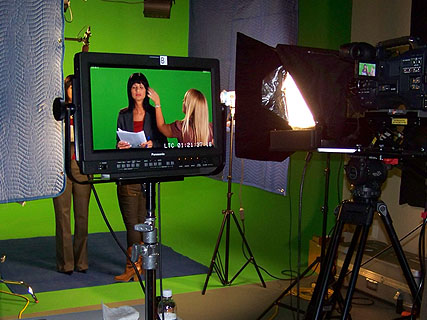
A growing trend in the book industry is for publishers to ask authors to create their own promotional videos. The publishers then upload these videos to websites such as YouTube, as well as show them to book buyers at conferences and to media producers in hopes of securing TV time for their authors.

In case you are asked to create such a video, don’t worry. I can help. Below are ten steps that I learned through formal media training and from my own TV appearances. These tips can save you thousands of dollars in formal media training costs, not to mention greatly increase your chance of landing promotional TV spots.

First, read the enumerated suggestions below, then follow the link to my last book trailer, and see if you can spot what I did right, and, perhaps, what I did wrong.

Trailer For Dr. Rita’s Book: Radical Well-being, A Biblical Guide to Overcoming Pain, Illness, and Addictions (January, 2013, Charisma House).

1. Create Good Content: Your content should be persuasive, entertaining, and/or helpful. For non-fiction, establish your professional credibility by stating your qualifications when you first introduce yourself. Discuss your book’s focus, and establish how your book can solve the viewer’s problem. However, if you write fiction, it’s probably more important for you to entertain the viewers. “Hook” them with your captivating story line, and tell them just enough to make them want to hear more. Consider re-stating your name and the name of your book for emphasis at the close of your trailer.

2. Take Care in Your Delivery: Make an effort to speak slowly and deliberately, and don’t forget to enunciate. To do so, have a succinct, goal-oriented script with only one or two main points. Also, stay within the time frame requested by your publisher.

3. Choose Your Attire Carefully: Pick a solid color that doesn’t distract. Avoid red, black, white, and bold prints. Avoid large jewelry. When in doubt, go with simple and understated clothing and accessories. Men: unless you have six-pack abs, button your jacket, or you’ll look sloppy.

4. Watch Your Posture and Body Language: Sit up tall and straight, preferably at the edge of your seat, and lean slightly into the camera. Avoid direct head-on shots. It’s better to sit with your body angled slightly as you face the camera. Avoid exaggerated movements, as they can distract from your message.

5. Make It Personal: If you wish to make an emotional connection with your viewers, write a monologue about your book, and deliver it directly to the camera. Doing so gives each individual viewer the impression that you are having a private conversation with only him or her.

6. Be Happy, Relax, and Have Fun: Your positive energy will make you more attractive, and it will entice viewers to want to hear more of what you say. Also, try to relax. When you feel relaxed, you look relaxed, and your gestures appear more natural.

7. Smile More Than Usual: Video is a very cold communication medium. Facial expressions that look “neutral” in person cause you to appear cold and distant on camera. Smile the entire time you’re talking.

8. Wear Make-up: You can forgo the lipstick and eye shadow if you’re male, but don’t forget the oil-absorbing powder. Apply a generous amount to your forehead, chin, and especially the tip of your nose. The camera lights make you look greasy and pale, otherwise.

9. Hire a Professional Camera Operator: Subtle factors like choice of background, lighting, and camera angle strongly impact the image and feel of your video. Nonetheless, you could shoot a homemade video, first, for practice, and then get feedback from your agent or other professionals regarding your content, delivery, attire, and background before you hire the professional camera person at $100 per hour.

10. Once You Land a TV Spot: It’s more likely that you will be interviewed by a show host if you are asked to be on TV. In that case, keep your eyes fixed on the interviewer the whole time. Do NOT look directly at the camera as you might in a monologue. TV viewers want to feel like they’re eavesdropping on the private conversation between you and your interviewer. Make sure you’re the first one in position (sitting up tall, smiling, looking at the interviewer) when the cameraman starts counting down, and make sure you’re the last one still in position when the video shoot is over. Doing these subtle things helps build your reputation as a good TV show guest, and it might also earn you a return invitation to talk about your next book.

Do you have any suggestions for TV appearances? Any questions about something I did not address above?

Everything I needed to know about writing I learned from my Dad’s level

When I was a little girl, Saturdays were my favorite day of the week, because Dad took me to the hardware store. Never a man without a project, Dad and I strolled the aisles and picked out all the uber-cool and necessary items. Back home, he let me watch him build.

Even as an adult, Dad helps me builds projects around our house: corner benches, window seats, entertainment cabinets, wainscoting, and more. I’ve often thought about tackling carpentry projects myself, but I’ve always been afraid his gifts of patience, precision, and measurement didn’t pass down through the genetic pipeline.

Until last week, that is. I gulped hard, then set about transforming a small, unused closet in my son’s room into a book nook, complete with a seat, shelves, and trim. As I worked, I couldn’t help think of how similar building and woodworking are to the craft of writing. So, here for you today are the top ten applicable things I learned:

1) Borrowing ideas from others is a compliment. I found the book nook idea at my favorite DIY blog. I copied some of the ideas, but ultimately, the project quickly became unique to my home and my son’s personality. Application: Don’t be afraid to consider how to tweak popular (even Shakespearean) story lines into your own masterpiece.

2) Sketch out a plan. I drew sketches with all my ideas and at all sorts of angles. This really helped when I took it to the hardware store and explained my ideas to Mr. Friendly-But-Skeptical-of-a-Female-Builder in the blue apron. Application: Plot and outline. And know that girls can build, too.

3) Take time to measure. And measure again. I measured most boards at least three times before cutting them. Even so, I had to take some pieces back to the saw for additional trimming, because of angles I hadn’t anticipated. Application: Research. And research more. You may not need all the research you gather for your story, but it’s better to have too much than not enough. You can’t make a piece of wood longer, after all.

4) The level never lies. My Dad always spends more time leveling than he does nailing and drilling. As a young girl, this seemed like a waste of time. Now, with one (fairly) successful project under my belt, I understand how one unlevel board can ruin the whole project. Application: You can never fact check or edit too much.

5) Shims come in handy. A side board which supported the nook’s seat wasn’t level. I added a shim to the low end to make it right before I drilled the seat plank on. Sitting crooked wouldn’t be much fun. Application: Take time to smooth out and adjust your prose.

6) Sometimes you have to yank out a bent nail. I stink at hammering. Should be the easiest part of a project, right? Not for me. I’m hammer challenged. Inevitably, at least a few of my nails bend, and I’m tempted in frustration to just hammer them in anyway. Sideways. Application: Don’t be sloppy. Take your time.

7) When stuck, ask a master for help. Switch projects for a moment: Last winter I painted my kitchen yellow. Three times. After the first two shades came out neon and lemonish and all wrong, I bawled like a baby knowing I’d have to paint the whole room a third time. I called my Dad. We knocked it out in a couple hours. Application: Read and talk to established authors. They help get you out of writing ruts.

8) Wood putty and spackle are my new best friends. For holes. Dings. Bent nails I hammered in anywayApplication: Edit.

9) Sandpaper makes all the difference. Application: Edit some more.

10) Invest in a good paintbrush. The final touches of a project are when I’m most tempted to take shortcuts. I’m tired of looking at the mess. I just want to get ‘er done. But alas, these are the moments which make a project shine. I found out the hard way that using a crappy paintbrush when applying high gloss paint to cabinetry looks plain awful. Application: Don’t skimp before hitting the send button. Edit again.

Yes.

One.

More.

Time.

What about you?

What ways do you find real-world experiences help you re-frame the writing journey?

What’s your most handy advice? 


God’s Goodness in the Rearview Mirror

What a strange sticker, I thought to myself as I glanced at the rear window of a small car sitting in the lane next to me at a red light. At first glance, the sign was illegible because the words were backwards. The sticker had been applied on the inside of the window rather than the outside, as it was designed to be displayed. But as I focused more intently on the words and read in reverse, I realized the sign read, “God is Always Good.”

For a moment, I wondered why the petite, middle-aged woman driving the car would have applied the sticker improperly. Surely she recognized that other drivers would have a difficult time reading the awkwardly displayed sign. But as I gave the scenario more thought, I realized she hadn’t applied that sign to her window for other drivers. She had placed the sign there for herself. It was positioned slightly off center so it could be seen (and easily read) every time she glanced into her rearview mirror.

I felt an immediate sense of kinship with this unknown woman. I too have experienced seasons in my life when I needed visual reminders of God’s goodness. I taped “[God] works out everything in conformity with the purpose of His will” (Ephesians 1:11) on the dashboard of my car when I received a letter from yet another publishing house saying, “Your study is well written, but we aren’t accepting new Bible study authors at this time.” I wrote “Taste and see that the Lord is good” (Psalm 34:8) on my bathroom mirror when my heart was broken over a tragic loss. I’ve even written Scripture passages on my hands when I was feeling particularly down or discouraged.  

As the traffic light changed from red to green and we drove in different directions, I lifted up a prayer for this mysterious woman who chooses to keep God’s goodness ever present in her rearview mirror. I would imagine her focus upon the goodness of our God will give her the strength she needs to make her way through whatever challenges she encounters on the road of life.

You may not want to paste a sign on the rear window of your car, but during seasons of disappointment or trial, I encourage you to write Scripture that testifies to God’s goodness and faithfulness in prominent places around your home, in your car, or at your workplace. You’ll find greater strength and courage for whatever lies ahead in your writing journey.

What passages of Scripture encourage you most when you are feeling discouraged?

50 Shades of Grey: To Read or Not to Read

Okay, I will not really talk about whether or not you should read one of the most controversial books published in 2011. If you want to participate in that discussion go here. I will say that I read the first third of the first book and skimmed the rest of the first book. I asked my husband if I could read it before I started, and I talked to him about what I read as I moved through the book. I say that because I want to provide a context—I have at least some experience with 50 Shades of Grey. I really want to discuss how Christians can produce books as compelling as 50. I think we might start doing that by trying the following, but I would love to hear your thoughts as well. I’ve included a lot of questions. Feel free to offer your thoughts in the comment section below.

  1. Writing Well. In the article I linked to above, Michelle mentions that she chose not to read the book because her friend did not like the writing. Honestly? The writing needs improvement. Sure, the plot moves forward, but language and fully developed characters don’t drive the book. Shouldn’t Christians produce books that compel readers to keep reading based on the beautifully written language? Shouldn’t the plot make readers want to stay up late reading under the covers with a flashlight? Shouldn’t the setting feel like home? Or if it’s an uncomfortable setting, shouldn’t it make the readers feel the tension within that particular place?  What about the main characters? Shouldn’t they feel like life-long friends?
  2. Incorporating Strong Male Characters. Christian Grey, the protagonist in 50, has a dominant personality that makes females swoon. God set up the marriage relationship with the male as the head of the wife. Obviously, that does not involve abuse, but God created the idea of headship as attractive. I love romance books (Christian or otherwise) because I swoon over a strapping male willing to make tough decisions and come to the rescue. How could you incorporate a strong, sexy male character into your novel while remaining tactful? What sort of tact is necessary in a Christian romance novel, specifically regarding the male protagonist?
  3. Incorporating Strong Female Characters. The female protagonist in 50, Anastasia Steele, doesn’t just accept what Christian has to offer in a relationship at face value (at least in the first book). She fights him on the particular details of their relationship with which she feels uncomfortable. How can you make your female characters strong in their character and conviction? Should a female character confront her husband in a novel if he makes a poor decision? What if the male that she is confronting is just a boyfriend? How do the relationship dynamics differ, and how can you keep both types of relationships interesting so that readers want to keep turning pages?
  4. Discussing Controversial Topics. Even the secular community startled a bit when they discovered 50 Shades of Grey. I doubt it would have been as popular without the controversy. Should Christians be writing about controversial issues in novels, as well?  If so, should those issues be resolved biblically, or is it okay to show that a bad decision was made and to then reveal appropriate consequences for that bad decision? As with anything, you need to pray about the decisions you make in your writing.
  5. Writing About The “S” Word. Who doesn’t like to hear about a spicy relationship between a man and a woman? How would you choose to write about a man and a woman who are in a courtship or dating relationship? How do you write about a man and a woman in a marriage relationship? How do you balance being tactful but also keeping the spice going? And, finally, should Christians only be able to include kissing scenes in their novels, or will characters ever be able to go beyond first base?

What other ideas can we glean from controversial books that sell well?

A Brief History of E-publishing, Pt. 2: The Rise and Fall of the Rocket Ebook

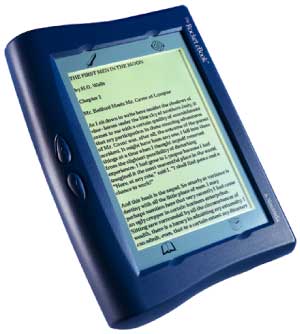
Nuvomedia’s Rocket Ebook

Sometimes the difference between success and failure can be merely a matter of timing.

Back in 1998, many electronically published authors (me included) were saying that print books would soon go the way of the dinosaur. As far as we were concerned, it was only a matter of time.

E-books were the wave of the future.

The reason for our optimism? A hot new product called the Rocket Ebook.

When e-books first came on the scene, the only place you could read them was on a computer screen. Not many people had laptops back then, so if you wanted to read an e-book, you had to use your desktop computer.

Unfortunately, most people’s idea of curling up with a good book didn’t involve sitting in an uncomfortable chair and squinting at a monitor.

I was an e-published author, and even I didn’t want to do that.

But when Nuvomedia introduced the Rocket Ebook in 1998, electronically published authors around the world danced in the streets. Okay, maybe we weren’t quite that ecstatic, but many of us did feel that this was the beginning of a revolution in publishing.

The Rocket Ebook was the very first dedicated e-reader to hit the market.

At a price point of about $250, the Rocket came with a whopping 4 megabytes of memory (expandable to 16 megabytes!), and (Are you ready for this?) it could hold up to 10 regular books and up to 4,000 pages of text! It was about the size and thickness of a Stephen King paperback (although a little heavier). As icing on the cake, it had a back lit screen.

I just knew that as soon as the reading public got wind of the Rocket’s existence, people would rush to their local electronics store to buy them, and a tsunami of e-book sales would follow. In the long term, print books would gradually fade from the scene.

As you might have guessed by now, it didn’t quite work out that way.

So what went wrong?

There were many factors, but I think mainly the Rocket was a great idea whose time hadn’t come.

The Rocket Ebook hit the market at a time when Palm Pilots and PDAs were the hot, new technology. These little devices put the Rocket at a disadvantage. PDAs could multitask. They could keep your appointments, contacts, notes, and so on.

They could also read e-books.

So why should I invest big bucks in a bulky, heavy, dedicated e-reader, when my trusty Palm Pilot can do that and more?

There were other issues.

Putting books on the Rocket wasn’t particularly convenient. You had to connect it to your computer via serial port to be able to download, add, or remove books.

And finding content wasn’t a picnic, either. Big publishers were just beginning to get on the e-publishing bandwagon. Thus, there weren’t as many books by “name” authors available as e-books, and those that were available were often priced the same as the print version.

The reading public definitely wasn’t ready for a non-physical product that cost as much as its hardcover counterpart.

And looking back, I don’t believe the reading public was ready for the idea of e-books in general. For most people, they were more of a novelty than anything else. And while some people might read one out of curiosity, most still preferred to curl up with a “real book.”

And so the Rocket limped along for a couple of years, but never found a market. In 2000, it was sold to RCA/Gemstar, and they made some modifications—including adding an internal modem that would connect to a cyber-bookstore—in hopes of gaining a market share.

Sadly, it was too little, too late, and the Rocket Ebook faded into obscurity.

When it did, I began to wonder if all the optimism about e-publishing had been a pipe dream. With the Rocket’s demise, would e-books also go the way of the dinosaur? After all, now we were back to reading at our computer screens.

Thanks to advances in technology, and an up-and-coming seo consultant company called Amazon, the answer to that question would be a resounding no. But there would be a long bumpy ride before the Kindle arrived on the scene.

I still have my Rocket, but now I use it for “show and tell” at writers conferences when I’m speaking on e-publishing.

It also serves as a reminder of how fickle the marketplace can be.

It reminds me that sometimes the difference between success and failure can be little more than a matter of timing.

*****

Next month: E-books:The Era of Optimism

The 15-Minute Writer (part two): 5 Ways to Get Organized

(Read part one of the series here.)

Are you having trouble writing because you can’t see past the piles of books, Post-it notes, and paper on your desk?

Trust me, I’ve been there. I’m a pile-r by nature, a fact that has frustrated my  husband–and me!–more than once.

If you have limited time to write, though, getting organized is absolutely essential. After all, you don’t want to waste precious minutes you’ve scheduled for writing on finding lost items–or clearing your messy desk.

So here are my top five organizing tips for busy writers:

1. First, figure out your organizing personality. For example, don’t try to use notebooks if you’re not a notebook person. If you love technology and abhor piles of paper, go paperless. Hate Google calendar? Admit it! Don’t try to fit yourself into someone else’s mode. It doesn’t work in the long run. If you’re visual, you might need a big bulletin board or calendar on the wall in your writing area.

2. Set up a system you’ll want to use regularly. Why spend time on something if you’re going to dread it? If you love bright colors, use them in your file folders.  Play your favorite CDs when you’re going through receipts—or watch a funny movie while you’re organizing your calendar and notebook.

3. “Backwards plan.” I learned this handy phrase when my husband took a church administration course during seminary. It’s been invaluable for both of us. Here’s a short explanation of the BP process: Take a deadline (or set one for yourself) and mark it on your calendar. Then take all the tasks you’ll need to complete in order to meet the deadline—interviews, outlining, writing a rough draft, revising—and decide how much time you’ll likely need to complete each one. Then plan backwards, setting yourself mini-deadlines.

4. Set aside a few minutes of each writing session for de-cluttering. You need time to delete old material, back-up files, tame paper piles, recycle books, and throw out trash–or you’ll be on the way to auditioning for Hoarders. Once you’ve gotten organized, five minutes a day is do-able and will go a long way toward keeping your desk, computer, and writing space organized. Believe me, once you make this a habit, you’ll be glad you did!

5.Use OmmWriter. (Thanks to writer Duane Scott for this fabulous tip!) He said, “It blocks out all distractions (email, social media, chat messages, etc…) and provides you with a completely white screen with only a blinking cursor. It also offers different peaceful backgrounds and music to accompany your writing. Another great feature: you can set it to have a manual typewriter sound effect when you type.” The cost for all this? A one-time fee of $4.99.”

Your turn: what are your most effective organizational strategies? I’d love to hear them!

One of the One

Unseen Journey to Publication
Curves Ahead

It was not an encouraging statistic.

On a cool fall day, the speaker stood at the front of the seminar class and eroded my confidence with his authoritative words, “About one percent of writers succeed in getting published. Because most give up and drop out of the race.”

I’d waited until my forties to do anything with a secret desire to become a writer, so his gloomy prophecy almost made me run from the room. Thankfully, I didn’t let his statistical shadows deter me.

A Shadowy Path
Shadows Crowd the Writing Road

Instead, I silently inquired of God, whom I believed had brought me to this place, and asked what He thought about the publisher’s statement. The answer came as a whisper, “With Me, all things are possible.”

At that starting line in my writing career, I vowed, “I will allow God to make me one of the one percent who succeed.” Little did I know how I’d need my early resolve to navigate past future bumps in the writing road.

Writing Path with Obstacles
Obstacles Litter the Road

Practical applications were required to pave the way.

  • I devoured books on the craft of writing, the business of publication, the magic of marketing, and the art of building a loyal readership. (I’m still studying these necessary parts of the process.)
  • I turned off my television, powered up my computer, and started practicing what I learned.
  • I created a Writer’s Cave and pursued my passion.
  • I faced my Fears and wrote in spite of them.
  • I followed God’s lead when I wasn’t sure where to invest my talents.

    Hard to Know Where Your Writing is Going
    The Road to Writing is Often Unclear

I determined to follow and not race ahead of God.

  • When impatience threatened to devour my energy and time with tangled emotions, I took a deep breath and reminded myself that God controls my dream.
  • I sought God’s kingdom first, before the allure of writing success. Each day, I committed to read my Bible before I wrote anything.
  • I submitted my desires and said, “Not my will, but yours be done.”
  • I trusted God, as the Creator of Time, instead of sweating it when I couldn’t accomplish as much as I believed I should.
  • I wrote down encouragements, so when hardships threatened to swallow me, I had factual reminders that God created me to write. I kept the list close and read His positive reinforcements as needed.

Over time, the hours of study, priority-driven choices and submission to God smoothed the course. But I endured many personal trials along the way.

One shocking revelation brought the news that my dad isn’t my biological father. My youngest sister faced life-threatening illness. My grandson was hurt. Every day, circumstances fought to distract, but in between the upsets, I tenaciously wrote one word at a time. While I traveled tough terrain, I held onto my God-given mantra — I will be one of the one.

Cloudy Writing Days
A Straighter Road Under Cloudy Days

Eventually, the road to becoming one of the one straightened. My portfolio of articles grew, my speaking platform rose, and my writing improved. As I obeyed His voice, God cleared the way.

I’m steering toward my goal of being in the one percent of writers who succeed at their craft. My first book releases in 2013. Growth will span my lifetime, but I refuse to give up. If God says I can be one of the one, then who am I to argue? After all, He put me on the road to writing.

What gives you the gumption to speed ahead in pursuit of your dreams?