Fame and Fortune

Twenty-three years ago, when I first began writing a humor column for our local newspaper, my editor told me that I could expect local fame, but no fortune.

Today, I know he was right.

And wrong.

He was right because within a few months of my byline’s first appearance, I had a stranger come up to me at the local ice skating rink and tell me how much he enjoyed my column. Even bundled up in my parka and stumbling around on the ice with my children, he recognized me, thanks to the photo that accompanied my column. I thanked him for reading and promised myself to never leave the house again until I’d at least applied some mascara.

Fame makes so many demands on a writer.

My editor was wrong, however, when it came to the fortune part. True, I received a mere $5 a week for the short column I labored over for days, and no New York book agent or Hollywood scriptwriter came knocking at my door offering me any contracts. My net income from writing is abysmal, I’m still clipping coupons for groceries, and my husband politely refrains from laughing each year when he prepares to file my taxes.

But my fortune has steadily grown over the years and sometimes even surprises me with dividends I didn’t know I’d earned.

My fortune lies in every reader I have reached and in every life I have touched, whether I know about it or not.

This realization came to me especially powerfully a few months ago. I had an email on my author website from a woman I’d never met, asking me if I would give her permission to use my poem in an online anthology she was preparing for young mothers. When she told me the name of the poem – “A Mother’s Midnight Prayer” – I was stunned, since I’d written it 17 years ago, and it had appeared in a monthly magazine to which I occasionally contributed. The woman told me someone had given her my poem to read, and that it had inspired her in the course of many long nights with her own children. She also told me that my poem appeared on several websites for moms, and lo and behold, when I searched  for my own poem, I did, indeed, find it on the web, always with my name attached, and often accompanied by reader comments noting how meaningful they found my poem. One reader even reported that she’d had my poem on her refrigerator door for years, reminding her to cherish the fleeting days of her children’s early years.

To connect with others in our humanity and love – this is why I write, and it’s worth more than any material fortune could hold.

What unexpected dividends have you experienced in your writing life?

Seeking a Revelation

source: Fotolia via MS Office

We’ve all been there—happily plowing through a manuscript when we’re suddenly brought to a squealing halt. Or maybe it comes on gradually, like so much mud solidifying as we try to trudge through until we find ourselves frozen in place, blinking at the ground and wondering what happened.  It could be our outline didn’t foresee all it might have, or we wandered down an unexpected path only to find it’s a dead end. Or perhaps our characters took on lives of their own and staged a coup when we weren’t looking. However we got there, we’re stuck, and being stuck mid-project is no fun. So what’s a writer to do? 

We could ditch the whole thing. Occasionally that is the right answer, but being persistent writerly-types, thank goodness that’s not our first inclination. There are lots of ways to get unstuck which leave us with a better manuscript in the end. Here are my top five:

  • Walk away for at least 30 days. It never ceases to amaze me how insightful this can be. When you’re writing, you’re close to the material. You leave a part of you on the page, and sometimes it’s hard to see the forest for the trees. Many writers know this, and they take frequent steps back from their material in the hopes of approaching it later with a less familiar eye. It’s tempting to think a week or two is sufficient, and sometimes it is. But if you’re really stuck, I highly recommend walking away for a full month to get a truly fresh perspective. That distance can do wonders for improving your writing on the next go-round.
Source: Wikipedia
  • Ask for help. While many writers recognize the value of a critique group for the craft side of writing, I’m surprised how few ask for help with storyline. Asking for help does not make you weak. It makes you resourceful. I recently rewrote the entire end to my novel because an editor thought it predictable. I asked a trusted critique partner for help. She brainstormed with her daughter (this was a YA story) and came up with a slew of possibilities. One contained the thread of an idea I ultimately spun into a much better ending. And let’s not forget the power of prayer. Realizing you don’t have all the answers and asking for guidance from above is simultaneously humbling and empowering. Just remember to let go of any preconceived ideas and be open to whatever form inspiration may take.
  • Print it. This isn’t the first time you’ve heard this, but it works. Seeing your work in print is strangely insightful. You will plainly see things you don’t when looking at it on the computer.
  • Push through. To put it bluntly, give yourself permission to write crap. Knowing the next chapter or two will be ‘throw away’ material is incredibly freeing. It takes the pressure off and lets you work through the block. Not everything you write needs to be brilliant. You’re not going to go with that first or second draft anyway, right? So give yourself permission to make a mess before you refine it all.
  • Read in your chosen genre or non-fiction category. Some writers worry if they do this they’ll either find someone beat them to the punch or they’ll inadvertently pick up another author’s voice or idea. In the case of the former, you’re better off knowing this sooner than later so you can make your story stand out as different. In the latter, you can influence this: you’re a disciplined, creative being, not a machine that regurgitates what you’ve read without your knowledge. The benefits of understanding what’s successful (or not) in your chosen field far outweigh the possible risks. Read—and keep a pencil handy for when the revelation hits.

How do you get through when you find yourself ‘stuck’ during a writing project?

Third Day Give Me a Revelation

Making Dialogue Work

Dialogue is one of the hardest working tools we have because we ask it to do so much. It has to convey information, develop and move the plot, increase tension and conflict all while sounding natural.

Perhaps most importantly, dialogue must engage the reader through revealing our characters. It brings them to life and shows their personalities, their quirks, their goals, and their fears.

The most effective and real dialogue comes when we know our characters as intimately as possible. Whether our story is plot-driven or character-driven, we have to invest the time in writing biographies, character analyses, Meyers-Briggs assessment, journals, interviewing them, and experimenting with how they speak, act, think, and feel. And they’ll still surprise us.

In my first novel, Journey to Riverbend, I had a problem with the story arc of my female protagonist, Rachel. She was a former prostitute who received Jesus. She was also striving to open a dress-making business in a town where many were hostile to her because of her past. It wasn’t until I interviewed her that I learned Rachel was a feisty, determined young woman with numerous questions about her new-found faith, anxieties about her future, and wondering if love could ever be part of her life.

And I discovered her voice changed depending on her situation. She had a business voice she used with customers and an almost child-like awe when she talked about her faith. At times her prostitute “don’t mess with me” voice came into play. When the mayor attempted to get too familiar, Rachel stopped him cold with the whispered line, “I’m making dresses for your wife. I can make her look like a laughing stock while convincing her she looks like Queen Victoria.”

With these new insights, Rachel’s dialogue became stronger, more connected to her emotions at the moment, more realistic. It revealed more of her personality, her dreams, her fears.

Rachel came to life through her dialogue.

Make the time to know your characters. They’ll reward you with stronger personalities and become people that readers will keep turning pages for.

How has dialogue allowed you to develop your characters even further? What have you learned about your characters through dialogue that surprised you?

The Search-and-Find Feature

Over the years I’ve harped at authors never, ever to turn in a first draft. Some writers think the editor’s job is to spiff up their grammar, correct misspelled words, change passive voice to active, eliminate repeated words and phrases, or do laser surgery on their mixed metaphors.

Word travels in publishing circles about whether you’re a professional or you’ve made your living on the backs of good editors. You don’t want to be known as a hack writer.

Hopefully, the electronic tool known as search and find will make your self-editing chore more enjoyable.

  1. Passive voice (one of my pet peeves): Passive voice is created by using a form of be, such as am, is, are, was, were, being, be, or been and followed by the past participle of the main verb, or gerunds comprised of a present participle (ending in “ing”) that functions as a noun. Learn more in Hacker’s Rules for Writers. Search for these words and recast your sentences to make them more active. Examples:

Passive: He was jumping over the cliff into the river below to escape.

Active: He jumped over the cliff into the river below to escape.

  1. Qualifiers: These words clutter up your writing. Sometimes I think writers use them to boost their word counts. Examples: begin, start, started to, almost, decided to, planned to, a little bit, almost, etc. Examples:

With qualifier: Mary felt a little bit out of place among the nouveau riche.

Better: Mary felt out of place among the nouveau riche.

  1. Weasel Words: These words are easy to spot. You can drop them and no one will notice. My high school English teacher told me that if you could replace the word very with the word damn, you didn’t need it. Other examples: really, well, so, a lot of, anyway, just, oh, suddenly, immediately, kind of, extremely, etc. I’m sure you can come up with your favorites.

With weasel words: Suddenly, she stood up and said, “Oh well, let’s retire to the drawing room and just stay out of his way.”

Better: She stood and said, “Let’s retire to the drawing room and stay out of his way.”

  1. Adverbs: I don’t hate adverbs, but they “usually” are unnecessary, especially in dialogue tags. Your prose should communicate a character’s state of mind without using a tag line such as the example below. Use search and find to look for an ly followed by a space or a period.

With adverb: “I’ll kill him,” she said ferociously. (Really?)

Better: “I’ll kill him,” she said.

  1. Extraneous thats or thens: Use the global search-and-find feature for the word that. If you can understand the sentence without it, you don’t need it. You notice I didn’t write, then you don’t need it. Both of these words are over used.

Writing is rewriting, and rewriting involves self-editing. It’s your job to turn in the cleanest manuscript possible to your agent or editor. Use the search-and-find tool to speed up the process.

Can you think of other ways you can employ the search-and-find feature in Word to edit your work?

Perspective

Life came to a standstill, in an instant.
Or did it?

Life moved into slow motion.
Or did it?

Or is this when God escalated life and what living really means?

Or is this when I finally understood what “chasing after the wind”
sings to us in the Book of Ecclesiastes? (Do we really listen and hear what it says?)

It is true life as we knew it stopped on December 3, 2011.
Our daughter walked into an airplane propeller, by accident, and almost died.
Because of this tragedy, we are reminded, once again, of the things that really matter in this life. It again reminds us to think from an eternal perspective instead of our shallow temporal point of view.

I’ve tried to sit back these last 5 months and ferociously attempt to gather my thoughts. There are so many, at times, that my mind wanders aimlessly, and I find myself frustrated trying to capture it all.

How could this have happened? Why did this happen? Were we ready spiritually for such a time as this? Was she? How did we function when we had no idea if our daughter would live or die?

But God continues to calm my spirit  and remind me of eternity. He reminds me that He is Father and of all the good things He has given me.

  • The warmth of my husband’s embrace
  • The relationship I have with my daughters
  • A good night’s rest
  • The Power of the Bible
  • Warm comfy blankets and puffy pillows
  • The comfort of prayer
  • The taste of a good cup of coffee
  • The depth of our friendships
  • The depth of love
  • The real definition of patience
  • What family is really about
  • The blessings of our favorite breakfast spot

So I beg to ask the questions:

Does it have to take a tragedy for us to never take life for granted?
Does it take being forced into a situation to truly trust our King Jesus and live our lives for Him, rather than ourselves?

Keep Those Cards and Letters Going!

balloon bouquetImagine that you’ve just had your first book published, and the Amazon reviews are decidedly mixed. Maybe you’re even getting some downright negative comments about your work, and you just can’t help but take it personally.

Then, at the moment when you’re considering never subjecting yourself to such pain and anguish again, the doorbell rings.

“Somebody thinks you’re pretty special,” says the delivery guy, handing you a balloon bouquet tied together with five pieces of scrumptious Godiva chocolate. “I’ll bet this makes your day.”

It does because the sender isn’t your mom or your spouse (though you’d never turn down their gifts, either). It’s a reader you met first on Facebook and then in person at your book signing. Over time, your relationship has progressed from mere acquaintances to true bosom buddies. And today, no matter who else in the whole wide world she could be thinking of, she’s thinking of you.

How amazing, the way we live and breathe and move in each other’s hearts and minds and souls! And how lovely when we take the time to let each other know.

“I absolutely love your book!” your friend writes in her note. “The story about the mother and son forgiving each other touched a nerve with me—in a good way. You nailed it. Thank you.”

My opening example was necessarily extravagant, which you can blame on my fixation with Godiva. But if you’re wishing right about now that your own doorbell would ring, why not practice the Golden Rule? You, too, can develop the habit of blessing writers with emails, cards, and similar kind gestures.

You are likely already Facebook friends with your favorite authors. You may also follow them on Twitter and communicate via Goodreads. You’re networking with a wonderful group, some of the most generous and sensitive people anywhere. Plus, you’re positioned well to begin supporting, lifting up, and appreciating these folks in easy, tangible ways.

Keep a running list of writers you’d like to bless. When you have a spare minute, choose a name. Have fun putting together a couple of sweet paragraphs in an email, a link on your Facebook page to a blog post the author wrote, a photo of yourself reading the author’s book, or a care package.

Jot down notes as you read a new book, to remind yourself later precisely what you loved about it. Authors especially enjoy hearing from a reader whose life was touched by the work. Instead of saying, “I learned a lot from your book,” say, “I particularly loved your advice on how to romance my husband and am putting it into happy practice!” Specific always trumps general.

Most authors these days are overjoyed to get an enthusiastic Facebook message or email from a reader, but I don’t know a single one who wouldn’t adore a handwritten card or letter. A small gift of special meaning can be memorable, too. I recently found an inexpensive wall hanging with the quote a writer friend of mine had posted on Facebook. I packaged it up and sent it to her with a note of good cheer. She loved it!

Remember, authors aren’t book-cranking machines; they are real live people. Their feelings get bruised. They suffer fatigue, illness, loss, and relationship problems—not to mention suffocating deadlines.

Sometimes, the friendship extended to an author isn’t about a book. Sometimes, we reach out to others in our writing community because of good old-fashioned love. Not long ago, a fellow writer sent me a gift for no reason, except that she saw it and thought of me. I don’t know about you, but even to imagine that a treasured friend spots a plaque with a humorous saying and is reminded of me gives me goosebumps.

So tell me, have you received wonderfully thoughtful notes or gifts from your fellow writers? Any tips you’d like to offer to those who want to keep those cards and letters going?

Antisocial Media

God bless the Internet.

It’s the great equalizer of our time. It has been a tour de force for introverts the world over who feel more confident and less prone to risk behind a laptop than a podium. Marketing no longer is the exclusive playground of handsome and highly articulate extroverts, people that really know how to connect with other people.  A website can have an infinite amount of charm – or at least charm enough not to require a spokesmodel.

How has this been possible? One reason is a fundamental shift in marketing itself and how society sees it. Marketing strategy has evolved from outbound to inbound. An outbound marketing strategy involves actively finding people and making them aware of your product and offerings.  An inbound marketing strategy is about being easy to find. It requires a high level of visibility. If you are invisible to Google, it’s not going to work.

This being said, I recently met with a visibility coach to discuss the next steps for how to continue building a writing platform. It seemed like many bases had been covered, and now I was stuck on how to proceed. After all, the infrastructure seemed to be coming along:

  • Website
  • Blog
  • Writing contest award site
  • Book reviews
  • Smashwords and Amazon purchase links
  • Facebook
  • LinkedIn
  • Pinterest board
  • YouTube radio interview
  • Google Adwords, Google+

I reviewed all of these facets of the marketing platform with the visibility coach. She was glad that some visibility had already been created, but there was still a lot to do. She said that the aforementioned social media sites are tools. Such tools are only part of a marketing strategy’s infrastructure and did not constitute its entirety.

Some of the things I had been putting off on my to-do list started coming back to mind:

  • Determine how many prospective customers would be interested in your product
  • Define that group – Who are they? How old are they? What is their demographic data?
  • Create a buzz among that target profile
  • Identify their buying behavior
  • Develop a message that speaks to that group
  • Become highly visible to that customer group
  • Learn their communication style and preferred methods of contact

The coach said, “I think we need to get you some REAL fans and not just virtual ones.” She kind of laughed a little bit, and I hadn’t realized until then that it was kind of funny. All my supporters are either friends or ones I’ve garnered online.  “Virtual fans are all well and good, but you need to meet and connect with some REAL people, some actual people now. We’re going to move forward with a press release and creating some events.”

The coach could probably tell that I was a little uneasy about the whole ‘events’ thing.  It’s awkward enough pumping up a site with one’s name and picture on it in cyberspace. How could I look people in the eye and do it for real? I would know if they didn’t really want to meet me.  What if someone told me to get lost? What if they said they had already read my book and they thought I was destroying literature or something? Besides, I had never met any of the authors I had always admired. Was that really necessary? Talking about my work with strangers… ugh. It seemed like the worst kind of vanity.

But the visibility coach pointed out something enlightening. When positioning the book and other works to the audience, there is no reason to focus on the author. The focus is on the characters in the book. She said to become the cheerleader of my main characters and pump them up constantly – and to take myself out of the equation. That resonated with my introverted nature, and I breathed a little easier.

Marketing is about telling a story. Who better to market, then, than us storytellers?

The ancient concept of the group storyteller conjures up images of tribes fixated on a speaker, basking in the orange glow of a campfire.  That kind of storytelling is interactive. Actors are storytellers, but of a different sort. They tell stories with their physical beings-not with words.

Writing, as a form of storytelling, can’t be purely antisocial because life and the human experience aren’t antisocial. That’s the whole point. People are trying to connect and feel something.  The Internet has made it very easy to forget that – but people go to the movies and read books for a reason. They are looking to connect. And as uncomfortable as it may be at times, connections just do not belong in the realm of the antisocial.

In what ways have you RECENTLY connected with your non-virtual reader fans? How might you reach out to them, specifically, this week?

WordServe News

Exciting things have been happening at WordServe Literary!

On the final post of each month you’ll find a list of Water Cooler contributors’ books releasing in the upcoming month along with a recap of WordServe client news from the current month.

New Releases

Sifted by Wayne Cordeiro (Zondervan). This was the lead book at the Exponential (church planting) conference in Orlando.

**********************************************************************************************************************************

You’ll be Sor-ree by Sid Phillips (Berkley Caliber). Sid was one of the men portrayed in the HBO series “The Pacific.”  He’s still alive and well and living near Mobile, AL. A very fine Southern Christian gentleman.

*******************************************************************************************************************************

Red Blood, Black Sand by Chuck Tatum (Berkley Caliber).  Chuck was another one of the Marines portrayed in “The Pacific”. He’s also still alive and living in Stockton, CA. Stephen Ambrose called this book (originally self-published in 1995) “Probably the best WWII memoir ever written.”  Chuck’s book served as part of the basis for the 10-Part HBO series.

**********************************************************************************************************************************

The Pursuit of Lucy Banning by Olivia Newport (Revell).

*******************************************************************************************************************************


Playing with Purpose: Baseball by Mike Yorkey (Barbour).

**********************************************************************************************************************************

Always the Designer, Never the Bride by Sandie Bricker (Abingdon).

*********************************************************************************************************************************

Toward the Sun Rising by Lynn Morris (Hendrickson) book #4 in the republished Cheney Duvall series.

**********************************************************************************************************************************

New WordServe Clients

James A. Hall was a successful businessman for many years before working as a vice president with Walk Thru the Bible Ministry. For 15 years, he led their Seminar Division and currently is the Executive Director of a 25-year-old national ministry, Saints Prison Ministry. Some Jungles Have No Giraffes is his exciting memoir that details his amazing and compelling life. From a childhood tarnished because his father was on the run from the law, through his boarding school experiences at a Catholic seminary, to his days as a wealthy businessman involved with the Mafia, and his time spent in prison, the author’s life story reads like fiction, but is true. The miraculous conclusion of this tale again proves that without God life is indeed a jungle. (Agent: Barbara Scott)

Kariss Lynch began her writing career in third grade when she created a story about a magical world for a class assignment. Since then, she has received a Bachelor of Arts in English with a specialization in creative writing from Texas Tech University. Kariss believes her readers should expect a journey. Readers can expect to see the beauty that God creates through broken lives and the adventure that comes when we follow the Lord. We serve a God of big dreams, daily adventure, and lasting hope. Making her home in Dallas, Texas, Kariss recently finished the Craftsman course through the Christian Writer’s Guild. She became a freelance writer and blogger for Demand Media Studios in January 2011. In March 2012, Kariss accepted the writer position in the Communications Ministry at First Baptist Dallas. She is very active with her church and family, is an avid Texas Tech fan, and enjoys photography and swimming in her spare time. (Agent: Sarah Freese)

New Contracts

Terry Brennan signed another contract with Kregel Publications for his next book The Brotherhood Conspiracy, a sequel to Sacred Cipher. Terry is in his 14th year of senior management for New York City nonprofits dealing with homelessness. Prior to his present focus with nonprofits, he had a 22-year career in journalism with the Pottstown (PA) Mercury, winning the Pulitzer Prize for editorial writing while he was editor. His first novel, The Sacred Cipher, was published in 2009. (Agent: Barbara Scott)

Rebecca DeMarino signed a three-book contract with Revell Books for her debut Blue Slate series. The first novel, A Love of Her Own, will be released in 2014, followed by Heather Flower and Pure Patience. A 2011 ACFW Genesis semi-finalist, Rebecca and her husband Tom live in the Pacific Northwest. When not writing, Rebecca enjoys reading, running, gardening, and trying to keep up with her eleven grandchildren. (Agent: Barbara Scott)

Steve Addison signed with IVP for What Jesus Started, a follow up book to his first release onMovements. Steve works with Church Resource Ministries in Austraila.(Agent: Greg Johnson)

Calvin Miller signed with Baker Books for The Vanishing Evangelical, a penetrating look back and forward on what has happened to the Church in the last 30 years, where it’s going, what good and what harm has been done, and what we can learn from it all.  This is the 61st book Greg has represented for Calvin in the last 18 years.  (Agent: Greg Johnson)

Joe Wheeler signed with Howard Books for The Civil War Stories of Abraham Lincoln, a follow up to his book: Abraham Lincoln: Man of Faith and Courage (also with Howard). One of America’s top-three story anthologizers, this is the 74th book Greg has represented for Joe, as well as his 64th short story collection. (Agent: Greg Johnson)

Lauren Scruggs signed with Tyndale Houe Publishers for Still Solo: A Plane Ride, a Horrific Accident and a Family’s Journey of Hope. The book tells the story of losing Lauren losing her hand, her left eye, and becoming scarred for life after a tragic airplane propeller accident in December 2011. It is written with collaborator Marcus Brotherton, and it will be published this November. Also signed was a second book to young girls on body image. (Agent: Greg Johnson)

Jonathan McKee signed with Youth Specialties/Zondervan for More 10-minute Youth Talks, a follow up to his previous book for youth pastors. (Agent: Greg Johnson)

Ken Gire signed with eChristian/Mission Books for Finding God in the Hunger Games, an insta-ebook and follow up trade book on the spiritual themes in the book series and the new movie. The ebook will come out in June!  (Agent: Greg Johnson)

What We’re Celebrating

The Christy Awards committee has announced that Dancing on Glass (B&H Publishing Group) written by WordServe Literary author Pamela Binnings Ewen is one of three finalists in the Contemporary Series, Sequels, and Novellas category. The winner will be announced at a dinner to be held at 7p.m. Monday, July 16, at the Rosen Centre Hotel in Orlando.

Amy Sorrells is the grand prize winner of the 2011 Women of Faith Writing Contest for Comfort and Salvation (now titled Canary Song). Amy is a wife, mother, registered nurse, and blogger, but most importantly, she is a woman of faith and a WordServe client. Recently, Amy received an offer for the manuscript from a well-known publisher. More to come later. (Agent: Barbara Scott)

Sarah Freese attended the Festival of Faith and Writing in Grand Rapids, Michigan, April 19-21. She met with several editors and potential future WordServe authors. Various current WordServe authors, including Patty Kirk, Anne Lang Bundy, Leslie Leyland Fields, and Margot Starbuck, were in attendance, and a few of them presented on panels and led forums. Leslie and Patty’s forum was so full that people sitting in desks and on the floor had to make more room for people to stand around the perimeter of the room! The picture below doesn’t even show the room at its fullest.

What can we help you celebrate?

Trying to Break In? Think Out of the Box!

Photo Credit: © Winterberg | Dreamstime.com

Trying to break into publishing can be daunting, to say the least. For me, it was something akin to scaling the wall of a fortified castle, surrounded by a mote filled with hungry crocodiles.

I tried to break in as a fiction writer for years, first with a young-adult novel, then with a suspense-thriller. Both were well-written and polished. Both received good reviews from published authors. And both had received wonderful, glowing rejection letters, complete with encouraging notes from editors.

“This is great writing. Sorry, it’s not for us.”

“We love this, but we’re stocked up on YA material for the next three years.”

“The entire publishing committee wants to encourage you to keep writing. We feel you have what it takes.”

The first few times you get notes such as these, it is indeed encouraging.

After you get about 30, you begin to wish someone would say, “Hey, pal, don’t quit your day job.”

By May of 2000, I’d been trying to scale the wall of Castle Publishing for six years and had little to show for my effort aside from a stack of rejections and a seriously-bruised ego. For all intents and purposes, I had given up on the idea of ever breaking through and winning that coveted publishing contract. This was especially disappointing, as I had recently resigned my position as a pastor in order to devote my time and attention to prison ministry.

I’d hoped to have a publishing contract in hand by that time because I planned to support my prison outreach by royalties from my books. (Yes, I know that was a pipe-dream, but that story is for another post.)

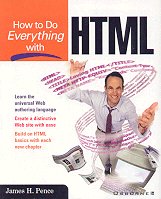
Now that I was officially unemployed, I had to turn my attention to generating some sort of income. My brother-in-law, who teaches computer languages, offered to help by asking me to develop a course in HTML (the language in which Web pages are written). He told me that if I developed the course, he could hire me to teach it. The idea sounded good to me, so I started to research HTML.

During my research I discovered two things. One, HTML was very easy to learn. And, two, most of the books out there were much harder to understand than they needed to be. They were written by “techies” who could communicate well to like-minded people. However, for readers who didn’t grasp the technical aspects of web authoring, these books might as well have been written in Chinese. The more I considered it, the more I saw a need for a book on web authoring written in easy-to-understand language.

I looked at the class outline that I’d just developed, and it looked remarkably like a book outline. I knew that it wouldn’t take much work to further craft it into a book proposal. Over the next few days I wrote a query letter for a book on HTML written “for non-techies by a non-techie.” I sent the letter out to thirteen computer-book publishers.

Out of the thirteen, I received two positive responses.

One was from Osborne/McGraw-Hill.

They liked the idea and asked if I would modify the book to fit a series called “How to Do Everything With…”

Writing a computer book was completely "out of the box" for this non-techie!

I agreed, and within a few months I had my first book contract.

I never intended to be a computer-book author. That wasn’t even on my radar. My plans were to be a novelist. But when I allowed myself to think out of the box and consider a different type of writing, the walls of Castle Publishing came crashing down.

If you’re frustrated with trying to break in to publishing, in what ways could you think “out of the box”?

In the Wrong Place at the Right Time

This may not be the place to admit it, but I’m having an affair. We go on dates, doing things together that we love. Other times we pull down the shades, dim the lights, and cuddle up close. And–dare I admit–sometimes we whisper in agreement about our future.

Yes, I confess, I am having a torrid love affair with books. We were meant to be together. I believe in them; they believe in me. We’re inseparable.

The intimacy of this relationship explains the uncontrollable urge that surfaces each time I finish reading a great book, this impulse to write my own hope-filled book that leads women right to Jesus.

As a new writer, I used to scour the bookshelves coveting the author names on the spines. I traced my fingers across compelling covers and inhaled the new-book freshness as I dreamed of my very own name gracing the art. I envisioned countless days spent whittling my words and learning to be a master craftsman.

Later, as a career writer, I fell into a whole new world. Today’s publishing culture demanded I become an expert not only at writing, but marketing and social media as well. A bit disconcerting to a shy writer who simply wanted to write well.

How could I improve my craft if I had to concentrate on building my platform before I was ever published? How would I offer both a high-concept idea and a stop-you-in-your-tracks platform that agents and publishers couldn’t refuse?

It was time to reconsider. Instead of my name on a book spine, maybe, for now, my place was a magazine byline? While focused on writing books, I couldn’t discount that writing for magazines might help me reach my goal. I couldn’t ignore the platform-building opportunity that freelance writing offered.

While an average book may sell 5,000 copies, the readership of some magazines hits millions. Last month, I wrote a feature for Guideposts that offered me an audience of five million readers. My audience expanded as I cast my writing net a little deeper, a little wider. That article led to about 10,000 hits to my website within a very short period of time and connected me to some amazing new readers and relationships. Oh, and I sold books like crazy.

I didn’t start out with Guideposts, I started regionally. My first published print article was for a women’s magazine in my hometown—monthly circulation about 50,000. But from that article came a couple of joint ventures and writing assignments that led to later features in national and international magazines. Today, I have a healthy following of women with whom I am honored to share hope and inspiration on a regular basis.

Without taking time to go to where my readers were (to build my platform), I imagine my first royalty check would have come from a small base of hardcore fans (all relatives). Not only did writing for magazines allow me the chance to make new connections, but I also honed my craft while cushioning my bank account—not a bad deal overall.

Ready to get started? Here’s a helpful article I found online on how to break into the national magazines.

By the way, feed my curiosity. What book can you not live without?