How Much Wrong Teaching is Too Much?

There is an ongoing debate in Christian circles about whether non-fiction or fiction books are best. Proponents of each, particularly those firmly planted in their perspective camp, tend to be slightly (sometimes more than slightly) disdainful of the other. I have always maintained, however, that this is not an either/or proposition. As every good preacher (including Jesus) will tell you, it’s vitally important to spend time expounding on the Word, but when you launch into a story to illustrate that Word, that’s when everyone suddenly straightens in their seats and becomes even more engaged. Both are needed. The same is true with fiction. In my opinion, if classified as Christian, a story must be firmly rooted in good theology if it is going to have a powerful, lasting impact on the reader.

But is my opinion the right one? If not, it wouldn’t be the first time. And lately I have had ample opportunity to consider how strongly I feel about the stand I have chosen to take on this.

Not for the first time, a massively best-selling book and subsequent movie, classified as Christian, has generated much discussion–even, sadly, heated, public debate–among the body of Christ. One review, posted by a pastor, casually mentioned that, yes, some of the teaching might be, strictly (and biblically) speaking, wrong, but that overall the message was so powerful that it wasn’t really enough to worry about.

bread

That got me thinking. If a book calls itself Christian, how much wrong teaching is acceptable, and how much is too much? Now, I’m not talking about passages of the Bible open to interpretation, or the differences in beliefs between various denominations. I am talking about teaching that is clear in Scripture and that has been affirmed by two thousand years of church doctrine, teaching that in many, if not all, cases, is actually a salvation issue. Wrong teaching, then, for the purposes of this post, is defined as teaching that can be shown in Scripture to be misleading, inaccurate, or just plain not true. Is there room for a small amount of that in a book that calls itself Christian, if the story is good? Can the story ever be good enough or powerful enough to overcome it? Or is a small amount of bad teaching more like what the Bible describes as “a little leaven that leavens the entire loaf?”

In three of the gospels, Jesus tells his followers to “Watch and beware of the leaven of the Pharisees and Sadducees.” (Matt. 6:6) Now, the teaching of the religious leaders of the day sounded good. It certainly sounded like it came from Scripture, and in fact had its roots in Scripture. But somewhere along the way, truths had been twisted to suit the ends of the teachers. In the case of the Pharisees and the Sadducees, that end was to control and oppress the people and to maintain their own elevated status in society.

Jesus didn’t have a whole lot of good to say about that. In fact, he was far harder on those who professed to follow God, yet whose teachings had veered away from the clear truths of Scripture, than he was on thieves and drunkards, prostitutes and adulterers. Can we then conclude that Jesus took wrong teaching, even—or especially—by those calling themselves his followers, fairly seriously? Possibly to the point that any good and right teaching they did present was undermined or even negated?

If you are an author of Christian fiction, how important is it to you to weave good, solid biblical theology throughout your writing? As readers, are you willing to overlook some wrong teaching if the prevailing message of the story is strong enough to overshadow it?

So You Want to Be on Television

So you want to be on television? What outfit should you select? What should you avoid wearing?

Dangling earrings or studs? And how about that red lipstick?

Recently, I was interviewed on our city’s cable station for an upcoming event that involved a non profit where I volunteer. Before the show was taped, I received some helpful hints from the production staff.

1.  Know Your Material.  Interviewers dislike blank air space. If you struggle with speaking extemporaneously, ask if you can have a list of questions ahead of time. If necessary, offer a list of questions of your own.  Practice your answers. If you are talking about your book, look again at your media kit, because interviewers might not read your book, but probably will glance at your press materials.

2. No Plaids and Stripes. Avoid busy patterns or anything that can detract from the message of what you are saying. Are you considering that botanical print covered in roses, chrysanthemums, and daisies? Save that for your next garden party and choose something else from your closet.

3. No to Pastels. White, ivory and pastel fabrics will wash the color right out of you and reflect too much light. Our city’s production staff did not want me to wear black and white together, either, as it presented a contrast problem for the camera. Best colors: medium to bright solids in blue, brown or green.

4. How about footwear? I have filmed at this location several times. At the first filming, my feet were not visible, so at my next filming, I came in flip flops, unaware that the set had been remodeled. I was glad I hadn’t come in pajama bottoms, thinking only my top half would be visible! I have learned my lesson and  I now come prepared from top to bottom!

5. Professional attire? As the saying goes, dress for success. Simple classic styles are best and a jacket or collared shirt helps hide the microphone. For my recent taping, they requested I wear a shirt from the organization I represented. Thankfully, I had one with a collar.

6. How about those dangling earrings? If the necklace, bracelet or earrings are too noisy or too sparkly, leave them at home. Anything that might reflect the lights should not be worn.

7. That favorite red lipstick? Again, no. Red tends to look like it is bleeding on camera (not the look you are going for). Natural makeup is best, but remember that the lights will wash out complexions, so you can wear more makeup than normal. (Just be cautious. Bozo the clown is not the look you are going for either.) The staff will apply powder, if necessary, to reduce shine for men and for women.

8. Cell phone? Ask if someone can take a photo of you on the set and then turn the phone off until after the filming.

9. Body Posture. When the production staff sent me a recording of a recent taping, I noticed that I had sat too comfortably back in my seat. I was also seated between the interviewer and another guest and had turned my head to the left and right, rather than my entire body. Both of these mannerisms added weight to my face and to my middle. For a slenderizing look, it is best to lean forward slightly and, if possible, to turn your upper body (and not just your head) during the interview.

10. Enjoy yourself. You’ve got this! For authors who are more comfortable with the written word, it can be a bit daunting to speak without notes. Remind yourself that you have a message you want heard and be thankful for an open door to a wider audience.

Lynne Hartke’s first book, Under a Desert Sky, releases on May 2 with Revell/Baker Pub.

WordServe News: March 2017

Exciting things have been happening this month at WordServe Literary!

On the final post of each month you’ll find a list of Water Cooler contributors’ recently released books along with a recap of WordServe client news.

New Releases

Mary Davis’s novella, “An Unlikely Hero,” was published as part of The Pony Express Romance Collection from Barbour. Nine adventure-filled novellas revive the period between April 1860 and November 1861 when riders faced daily urgency and danger to get mail across the country via the Pony Express.

Stephen Kuhn released 52 Amazing Things that Became True of You the Moment You Trusted Christ with FaithWords. Once you accept Jesus, your identity is now “in Christ” — but what exactly does that mean? Stephen helps you fully understand your true identity based on God’s love, enable you to walk in His power rather than your own.

Tracie Miles released Unsinkable Faith with David C Cook. Offering hope for women who struggle with negativity, each chapter explores Tracie’s and other women’s personal stories, showing how they rose above their circumstances by transforming and renewing their minds. Despite what storms roll in, hearts anchored in God don’t sink.

Joe Wheeler released My Favorite Life-Changing Stories with Pacific Press. The fourth book in his My Favorite Stories Collection, this volume looks at stories having to do with pivotal moments or powerful experiences in a person’s life.

New Contracts 

Dr. Daniel Amen signed with Tyndale for the publication of Stones of Remembrance, a collection of Scriptures for memorization and meditation as well as tips on using Scriptures for meditation, improving memory capacity, and incorporating Scripture memory into one’s life.

Mark Atteberry and Many Harvey signed with Howard to publish Sensing the Rhythm, Mandy’s story of becoming profoundly deaf at the age of 19 and how she learns new ways to “hear” and sing music, as well as her spiritual journey along the way, for publication in 2018.

Kent Hunter signed with FaithWords for the publication of his book, Who Broke My Church?, in early 2018. Based on a survey of 75,000 churchgoers of all denominations and 1-on-1 interviews, the book offers practical directions for Christians to experience the breakthrough impact every church could make on society.

Andy Savage signed a 2-book deal with Bethany House for his books Making Marriage Make Sense, which considers how good marriage can be when we dare to deal with the one thing that erodes perfection: selfishness; and Making Parenting Make Sense, which will speak to the biblical, practical, and sometimes radical high calling of parenting–equipping moms and dads to navigate the journey without the pressure of perfection.

Joe Wheeler signed with PZZ to publish a Polish edition of My Favorite Angel Stories. 

New Clients

Judy Thompson, Christy Johnson, Jared Frederick, Lionel Hollins, Remy Maaddi, Andrea Gurney, and Matt Rogers joined WordServe this month.

What We’re Celebrating

Outreach Magazine named two WordServe books as Resources of the Year! Adam S. McHugh’s The Listening Life was named the Christian Living Resource of the Year, and Kara Powell, Jake Mulder, and Brad Griffin’s Growing Young was named Church Resource of the Year. Congratulations to our authors!

Additionally, we are pleased to announce that Joe L. Wheeler’s entire backlist is now available digitally as ebooks! Many out of print titles have also been restored to print with paperback editions. You can find them all on Amazon.com, and find out more on Joe’s website: http://joewheelerbooks.com/.

Get Your Work Seen: Tips on Successfully Placing Articles

by Bonnie Kristian

As a writer whose current gigs include weekend editor at The Week and contributing writer at Rare, I was recently asked for tips on how to successfully place articles with publications when you are in the early stages of your writing career. Let me preface this by saying this process will no doubt be different for you depending on your background, professional connections, target publications, and more, but here are some general ideas:

+ As you start writing, think about where you’d like to publish. Pay attention to how those outlets work. What is their tone? How do they structure their headlines? Are they publishing freelance contributors or mostly staff writers? How long are their pieces? Do they have people regularly covering the topics of your own expertise? (Speaking of, don’t try to be an expert on everything. Narrow it down.) What is their turnaround time on time-sensitive stories (i.e. if Trump says something Monday at 10 a.m., are all their op-eds on it published by that afternoon, or will they still be commenting on it through the end of the week?), and will your schedule permit you to match it?

+ Once you’ve done that, make a list of the publications that you like but also that would be a good fit for your writing style and schedule. Find the submission guidelines for those outlets and start sending pitches tailored to their shtick. Nothing will make an editor dismiss you faster than submitting an idea that is obviously a bad fit for their brand. You don’t need to write the full article to send a pitch; just a paragraph with a headline will do. Once you get your foot in the door, this process will become easier, both in terms of returning to editors you know and in pitching to new editors who will be happy to see your publication credits from other credible outlets.

+ Your blog can be useful for developing your own writing style and ideas, but it’s not strictly necessary for your goals as they’re described here. (Personal platform is hugely important for nonfiction book publishing, but many journalists/commentators don’t bother to maintain anything beyond a basic bio page because they do not need to do so.) Magazine and website editors typically do not want to read your blog. You may want to get a couple good posts up which you can link to in your very early pitch emails so editors can get a taste of your writing style if they prefer, but usually they won’t bother. They are much more likely to respond based on the quality of your pitch, because they are under no obligation to publish/pay for the completed piece if it turns out to be crappy.

+ Finally, on the subject of money: Political commentators (as well as those in other arenas) are a dime a dozen. I have been immensely fortunate in working with editors at Rare and The Week alike who are conscientious about paying in a timely and fair manner. That is far from universal. Many major publications will happily take your stuff for free and say your “payment” is the exposure they offer. (Pro-tip: You cannot pay bills with exposure.) At the very beginning, you might have to give your content away to build up your credentials, but be very careful. It is difficult to transform a non-paying relationship into a paying one. My best suggestion is to aim for permalancing gigs, where you are not an employee proper but have an agreement to contribute a given number of pieces per week or month and are paid for them on a set schedule.

This first appeared on Bonnie’s blog, www.bonniekrisitan.com.

Bonnie Kristian recently joined WordServe Literary as a client. A writer who lives in the Twin Cities, she is weekend editor at The Week, fellow at Defense Priorities, and contributing writer at Rare. Her writing has also appeared in Time Magazine, Relevant Magazine, The American Conservative, and more. To find out more, visit www.bonniekristian.com.

7 Reasons To Consider a Study Group for Your Next Book Project

Image/karen jordan.net

In writing, your audience is one single reader. I have found that sometimes it helps to pick out one person—a real person you know, or an imagined person and write to that one. (John Steinbeck)


Need help writing your next book proposal? Try this.

To help me with the research of my most recent nonfiction book proposal, I recruited a group of ladies at my church to walk through each chapter as I developed it. Since it’s been surprisingly helpful, I thought I’d share a few reasons to consider it.

  1. Helps with book launch. This group started meeting during my first book launch. I had just taken them through a study of my book, Words That Change Everything, this past fall. Each week they read a chapter of the book, downloading a copy of my RESTNotes as a guide for our weekly discussions. This meant I added every member to my mailing list, an important step in the platform-building process.
  2. Offers encouragement for book projects. After we finished the book study, the ladies asked me to lead them in another. I told them that I wanted to use material for a book that I’m currently working on. They happily agreed. In fact, they were excited to be part of the writing process with me.
  3. Produces insights from primary audience. Want to understand how to meet the needs of your audience? What better way to do this than to invite them into your writing process? I’ve learned invaluable insights from these wonderful ladies as we brainstormed questions and issues pertinent to my project.
  4. Keeps you on task and organized. Not only has the weekly agenda kept me on task with my book project, this study has been one of the most productive ideas I’ve ever employed as a writer. Each week, I prepared our session using a template that I developed for each chapter. And I did my outside research for each chapter with this class in mind.
  5. Supplies ongoing research in your absence. During the weeks I’ve been out of town for a speaking event or to help my grandkids, I recruited one of the class members to facilitate a discussion of some of the questions that we may have skipped in an earlier class.
  6. Meets fellowship needs of the group. When I returned from a recent speaking event, the group shared what an engaging experience they had getting to know each other even better, as they focused specifically on the questions I had prepared for them. I’ve also created a private Facebook group for our class to help us stay in touch and share insights on our topic with each other between meetings.
  7. Provides potential help with future projects. We still have a few weeks before we complete our current study. But several of the ladies have already asked me which book project we will use next. And I have several to choose from, since I’m working on a few personal and collaborative projects.

In his book On Writing Well, William Zinsser observed, “Ultimately every writer must follow the path that feels most comfortable.”

Right now, while I’m researching my next book proposal, using the help of a study group works for me. So, I want to offer this idea to you, because I love to share lessons I’ve learned and the stories that matter most to me.

Have you ever recruited a study group for one of your works in progress? If so, what did you glean from that experience? Any tips?


7 Great Inspirational Quotes for Writers

Never write at allMaybe you can relate to days like I’ve had. Where you need a dose of inspiration to get you moving — or a swift kick in the fingers. When this happens, I’m grateful for quick, motivational, and uplifting thoughts from other experienced writers.
Maybe the following inspirational quotes will propel you to action, when you feel like shutting down.

  1. “As Kandinsky says, “Everything starts with a dot.” Sometimes the hardest thing in writing a story is where to start. You don’t need to have a great idea, you just have to put pen to paper. Start with a bad idea, start with the wrong direction, start with a character you don’t like, something positive will come out of it.” – Marion Deuchars, illustrator and author of Let’s Make Some Great Art
  2. “Remember that writing things down makes them real; that it is nearly impossible to hate anyone whose story you know; and, most of all, that even in our post-postmodern era, writing has a moral purpose. With 26 shapes arranged in varying patterns, we can tell every story known to mankind, and make up all the new ones – indeed, we can do so in most of the world’s known tongues. If you can give language to experiences previously starved for it, you can make the world a better place.” – Andrew Solomon, acclaimed psychologist and author of Far & Away
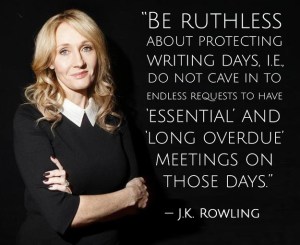
  3. writing-quote-j-k-rowling“First drafts are always horrible and ugly. Don’t worry about that – it’s the same for everyone. Just remember that the first draft is as bad as the book is ever going to be, and if you keep redrafting, one day you will look at your horrible book and realise that you’ve turned it into something actually quite beautiful.” – Robin Stevens, author of the Murder Most Unladylike series
  4. “Growing up I believed only certain people were allowed to write books – namely, fancy literary heirs who had gone to the right school and university. Not people like me. But of course, anyone can write a book. And anyone should, so that we have more diversity of voices in publishing.” – Julie Mayhew, author of Mother Tongue and others
  5. “Always keep a notebook and pen by your bedside. No matter how much you convince yourself you’ll remember that brilliant idea in the morning, you really won’t. Write it down because sleep has a way of giving you ideas and then stealing them right back.” – Swapna Haddow, author of the Dave Pigeon series
  6. Write what others can't say“Write what you want to know more about — the teacher always learns more than the student. Become passionate about the stories you tell and the people you are writing about. Finish your writing day with something that makes you want to know what happens next. Give yourself periods of rest — mental breaks sharpen the mind. And keep writing, especially when you don’t feel like it.” — Anita Agers Brooks, author of Getting Through What You Can’t Get Over and other titles
  7. “You might not write well every day, but you can always edit a bad page. You can’t edit a blank page.” — Jodi Picoult author of My Sister’s Keeper

What are some of your favorite writing quotes? What motivates you as a writer?

“I Want to Write a Book…”

pexels-photo-267586

Occasionally I’ll connect with someone who’s itchy to write. Maybe he wants to start a blog. Maybe she wants to write a book. And this potential writer is itchy to take the right next-steps to do this.

Maybe you’re that potential writer.

Without yet knowing you or your story, here’s what’s in my heart for you and other eager potential writers…

Write

Start. Begin. String words together. Gather your sentences into a meaningful whole.

It’s estimated that 81% of Americans feel they have a book in them and should write it. I don’t know the stat for people who go on to actually write them. I feel fairly confident guessing it’s not 81%.

So by sitting down at your laptop and writing, you’re well on your way.

The thing that makes any legit is…writing.

Work at Your Craft

The best writers work at their craft. There are a number of good ways to do that:

  • Attend a writer’s conference.Writer’s conferences offer great workshops to help you improve your writing. And they often offer opps to network with writers, editors, publishers, and agents. (Here’s a good listing of Christian writer’s conferences, if that’s your bag.) I’m not a conference junkie, but I do believe that there are a host of rich resources available at most writers’ conferences.
  • Join a writer’s group. Gather with writers in your area. Meet face to face to share and critique one another’s work. Or, find an online critique group. Others’ feedback—noticing strengths and offering areas for improvement—is extremely valuable in growing as a writer.

 Before You Publish…Publish

If you’re anything like me, you may secretly hope and believe that the first draft of the book that’s in your heart will become a New York Times bestseller.

Psychological professionals call this “magical thinking.”

If you’re serious about writing, begin to develop an audience.

  • Guest post on a friend’s blog.
  • Start your own blog.
  • Pitch articles to online magazines.
  • Enter a contest.

Though it can be tempting to want to dazzle audiences with that first book, either traditionally published or self-published, there’s a lot to be learned on the journey. Good writing is worth the wait.

Don’t rush.

But do start.

Writing About Suffering

One recent evening, a friend told me about her stepmother’s stage 4 cancer, asking for advice on ways to help her. The next morning, I received word another friend was killed in a car wreck. That evening, a different friend’s granddaughter’s baby was admitted to the hospital in an unresponsive state following a seizure. It was an emotional 24 hours. But one reason these friends talked to me about their issues is that they’ve walked with me through my own.

Lessons Learned

Have you ever noticed that when you’re about to write or teach a spiritual lesson, you walk through circumstances that make you confront your own handling of said spiritual lesson? It happens to me almost every week. I teach a weekly Bible study class and I promise you, whatever the lesson is about, I faced it during the previous week!

There is a good reason for this. It’s called authenticity. Nobody wants to listen to a Pollyanna who has never gone through tough circumstances preach about how to handle them. We all know this, but still it can be so easy to spout platitudes or quote Scriptures that seem to say everything will turn out okay.

The Right Approach

What is the right way to approach writing about suffering? Telling your personal story is a good place to start. Every one of us has faced some level of trauma or grief or physical suffering at some point in our lives. When we dare to talk about our deep hurts, it opens our readers’ hearts to hear the rest of our message because they feel a connection to us. We become real when we become vulnerable.

Reward

Therein lies the rub, as they say. It is terrifying to bare your soul to strangers. I submit to you that it may be the most difficult thing you ever do. It may also be the most rewarding thing you ever do. When I share my struggles with those I teach, an inner tension releases that I previously didn’t even know existed. And the connections I make with my class members are priceless. A bond is created that allows for more receptivity on their part.

Respect

I need to add a caveat here. Some things cannot be shared in a public forum. When there are other people involved who might be hurt or embarrassed, we must keep the situation private. We might be able to refer to it in generic terms, but we can in no way include anything that would identify them. The only exception would be if prior permission is granted.

Transparent Honesty

Readers don’t sit in a classroom with us each week and we’ll never know or hear about most of them. But they will listen to us when they read our message and learn the truth we’ve shared when they know we aren’t just spouting words–that we have lived the truth of what we say.

Do you have a message to share that involves difficulty or suffering? How ready are you to be transparent with your readers?

holzfigur-980784_1280

Write Your Heart Out


write-your-heart-outOutside my window a bird is singing. So long and loud for a tiny bit of feathers. The song is varied and the notes rise and fall, fluid and melodic. Truly he is singing his heart out. Simple and beautiful. The night is gone and the sun is rising. As he sings, I type.

How naturally the notes come to him. Can I claim that innocent posture? Can I let my words fly out, wild and reckless, like he releases his song? Can I claim the natural beauty of his rhythm and cadence in my flow of words and phrases? Can I write as he sings – exuberant, thankful, not concerned with the cares of the fate of the song? Of who will hear it? Of where it will go? Or even of its value?

Now he is silent. The song is finished and he has moved on from the tree outside my window. Perhaps the song is forgotten, released into the world and abandoned. He has moved on to live his life, gathering berries and seeds, feeding his young, feathering his nest. Soon I’ll do the same with my day. Many tasks are waiting.

Tomorrow there will be another morning and another song, and I must trust that there will be more words to type, to release and surrender. The songs must be sung. Words must be written. Simple and beautiful.

Write your heart out.

Betsy Duffey and Laurie Myers WritingSisters.com

In the morning, Lord, you hear my voice. . . Psalm 5:3

the-songs-must-be-sung

WordServe News: February 2017

Exciting things have been happening this month at WordServe Literary!

On the final post of each month you’ll find a list of Water Cooler contributors’ recently released books along with a recap of WordServe client news.

New Releases

61ic0zrs0sl-_sx353_bo1204203200_Christian T. George released The Lost Sermons of C. H. Spurgeon with B&H. For almost 160 years, Charles Spurgeon’s earliest sermons were lost to history. Now, these rediscovered sermons can finally be enjoyed by the millions around the world who admire Spurgeon’s spiritual insights and literary grace. This multi-volume set includes full-color facsimiles of Spurgeon’s original handwriting, transcriptions of his outlines and sermons, and editorial commentary.

jpg_coverLaurie Polich Short published The College Pocket Guide to Dating, Mating, and Waiting with FaithHappenings Publishers. This short, smart guide is packed with answers to questions that many college kids have–but are too afraid to ask. Offering solid truth and experienced insights, it will help every reader make thoughtful decisions in their relationships.

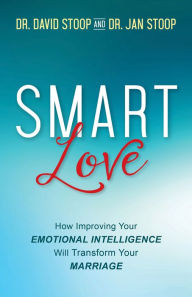
9780800727550_p0_v2_s192x300Dr. David Stoop and Dr. Jan Stoop released Smart Love with Revell. What would happen if you applied the game-changing principles of emotional intelligence to your most important relationship? Drs. Stoop help readers improve their love IQ and transform their marriages with practical action steps and wise counsel.

51fsc40ezgl-_sx314_bo1204203200_Jan Drexler’s A Mother for His Children was re-released as a mass market paperback along with Hannah’s Courtship by Emma Miller, from Love Inspired. Now two heartwarming Amish stories about second chances and the courage to make room for love are available in a single volume!

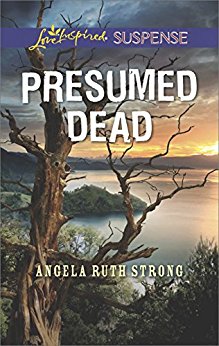
51p65rwysl-_sy346_Angela Ruth Strong released Presumed Dead with Love Inspired Suspense. Framed for a sabotaged military operation, Preston Tyler has allowed everyone to believe he’s dead—until he witnesses someone planting a bomb in his childhood sweetheart’s cabin. To save Holly Fontaine’s life, he must blow his cover. The two are reunited… but will the ultimate betrayal tear them apart for good?

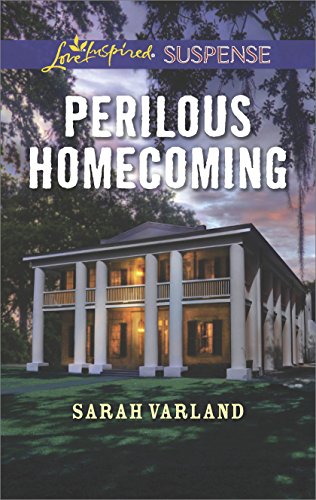
51l1em4ei8lSarah Varland released Perilous Homecoming with Love Inspired Suspense. When former Treasure Point police officer Kelsey Jackson witnesses a murder while back in her hometown, the killer is dead set on silencing her. This riveting inspirational romance involves a murdered museum curator, modern-day pirates, and a handsome marine biologist determined to make up for his past.

New Contracts 

Bonnie Kristian signed a contract with FaithWords for her book 200 Million Ways to Follow Jesus, a readable exploration of the lively theological diversity that stretches back through church history and across the spectrum of Christianity today.

Betsy Duffey and Laurie Myers signed with Gerth Medien for a German edition of their book Love Never Ends, for publication next year.

Suzanne Norquist signed with Barbour for her novella “A Song for Rose,” and Mary Davis signed for “Holly and Ivy,” both which will be included in the Bouquet of Brides Collection.

New Clients

U.S. Senator Tim Scott, U.S. Representative Trey Gowdy, Nigel Dixon, and Jamie Sumner joined WordServe Literary this month. Welcome!