She Never Had a Rejection?

hI once met a woman at a writers conference and, as writers often do, we began sharing what we’d written, what we hoped to improve on, perhaps publications we’d like to write for some day, editors we wanted to meet. The usual stuff. But when I talked about the last rejection note I’d received, this woman got a curious little smile on her face and sweetly said, “You know, I don’t typically say this out loud, but I’ve never ever gotten a rejection. . .not even once.”

That conference was a while ago, so I no longer remember where I hid the body.

But at the time, my snark-o-meter went on full alert, and I found myself thinking dozens of less-than-charitable thoughts.

Maybe she’s never submitted anything. That would sure hold down the rejection letters.

Maybe she’s writing for a very tight niche–like Amish women scuba divers–and she just happens to be one of three writers on the planet with the right contacts.

Maybe (and here’s where I sank to my lowest level of cynicism), maybe she’s sleeping with the editor. That’s because she’s married to him, and together they started a third-rate magazine and she provides 90% of the content with snappy pieces like “You, Ginseng Tea, and a Happier Colon.”

See, I told you I’d reached a new low.

Big sigh. God probably just sent her my way to improve my humility and compassion skills. Apparently I have a ways to go.

Here’s the thing—I think she was being sincere, and was possibly even surprised at her own good fortune. And she may well have written lovely and informative pieces for top-notch magazines. But the problem with her comment is that it’s the writer’s equivalent of winning the lottery. The real truth is, in the world of writing, if you’re not getting rejections, you’re just not in the game.

The publishing industry has a very steep learning curve. For much of it you’ve just got to get in there and start. I’m not saying you should skip the process of researching the publication ahead of time, spelling the editor’s name correctly, and fashioning your piece with their readers in mind. In other words, don’t ignore the process of learning craft and industry. But much of that learning will come from doing, failing, rethinking, and doing again. Almost every published author I know has at least one massive fail to their credit.

A rejection letter can mean many things, but the only sure thing it means is that you sent something in. So instead of seeing it as proof positive that you can’t write, consider other very likely scenarios such as:

  • The magazine had something like it recently.
  • The magazine has something like it already in the hopper and it’s working its way up.
  • The magazine has worked with a particular writer who’s been talking about doing something like this, and they’d rather take a chance on someone who has some history with the magazine.
  • Or maybe the piece was just too ______ [insert word of choice—edgy, tame, academic, casual, ecumenical, evangelical, rural, urban, prissy, intense] for their magazine’s style or their audience.

Learn to embrace rejections. Unless you plan to win the writers’ lottery, there’s simply no way to avoid them. In fact, they’re like a merit badge, proving you’re in the game. I’m not saying you’ll ever come to love them. But you can see them as useful. I, for one, open them, learn from them, and then use them to wallpaper my bathroom.

What about you? Do rejections bring you down, sometimes to the point that they impact your next submission?


The Platform Builder

This single word has the power to kill or kindle a writer’s career. Platform. The term cripples a lot of would-be authors, so their messages and stories never go any further than their minds.

Anita Brooks -- Building a Platform
The Platform Builder — Creates Opportunity One Step at a Time

But a lack of platform mustn’t stop you from writing. If you don’t have a platform, or any idea of where to begin, help is available. All you have to do is ask.

The secret to a strong platform doesn’t lie in desperately trying to nail interviews, endorsements, speaking gigs, or social media fame. A solid marketing foundation requires a balance of pieces, fitted together in time, with patience and supervision.

Teaming up with a savvy Supervisor, someone who oversees the methodology behind building momentum for your message, can set you apart. Someone who works with the design, who schedules the work crew, and takes the worry out of the process. A Leader you can confidently partner with.

I found my Master Platform Builder in the Bible.

His watchful eye keeps creations moving in the right direction.

Without Him, I can wear myself out, hoping to grow my writing endeavors into something bigger than I am. Psalm 127:1-2 says it best:

Unless the Lord builds the house,
the builders labor in vain.
Unless the Lord watches over the city,
the guards stand watch in vain.
In vain you rise early
and stay up late,
toiling for food to eat—
for he grants sleep to those he loves.

In Control -- Anita Brooks
Relinquishing Control to The Platform Builder

Recently, I realized I hadn’t fully submitted my own messages to the guidance of The Platform Builder. And I’m striving to do something about it. Here are a few ways I’m following His direction, as I bend my will, so he can create a unique marketing stage for my work:

  • Start each day asking the Lord to build where I can’t, and to show me where I should invest my energy.
  • Keep good notes as ideas come throughout the day. Create a goal list spurred from this basis.
  • Take courage and stand true to my beliefs, in written word, and in spoken interactions with those I meet along the way. 
  • Implement at least one action item each day geared toward helping The Builder make my goals become reality.
  • Don’t be afraid to reach out. If God is for me, no one can be against. Rejection simply means there’s more to do.
  • Praise God in advance, before results of hard work are evident.
  • Maintain my platform with regular upkeep. Consult my Supervisor to ensure there are no loose boards, bent nails, or weak trusses.
  • Resolve to remain humble and helpful to others when good things do happen. After all, this calling isn’t all about me, it’s all about Him. 

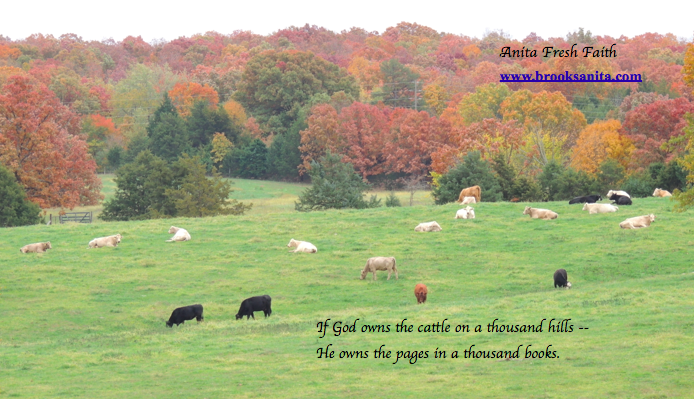
Anita Brooks -- Pages in BooksGod owns every nuance necessary to create otherwise unimaginable opportunities. Amazing things happen when we submit our will to the expertise of The Platform Builder. He is the author of holy introductions, miraculous occurrences, and creative inspirations. He owns everything a writer needs to succeed at screen sharing.

What incredible pieces has The Platform Builder provided for your writing?

His Words, Not Mine

Insecurity was a daily battle for me as Book One slowly unfolded. Sentence by sentence, page by page, the words and story poured from me. I tasted fear with my characters, laughed at their jokes, cried in their heartbreak.

You never write a book without pouring yourself into every facet. As Ernest Hemingway said, “There is nothing to writing. All you do is sit down at the typewriter and bleed.” It’s a lot easier said than done, isn’t it? My insecurities constantly surfaced: You can’t do this. No one will want to read this. It will never get published. Just stop now.

But I had a story to tell.

So I began every writing day with this prayer: Your words, Father. Not mine. And slowly, red turned to black on the page until I typed the final words: THE END. Sweetest thing ever written.

Insecurities equal self-focused writing. It was time to refocus. But before I could do anything, I first had to remember that this was not my story to tell. In Exodus 4:10-11, Moses receives a command from the Lord to go and speak to Pharaoh. His insecurities came out full force, and he complained to the Lord. I mean, Moses literally gave every excuse in the book. “Oh, my Lord, I am not eloquent, either in the past or since you have spoken to your servant, but I am slow of speech and of tongue.”

I love the Lord’s response in the next verse: “Then the Lord said to him, ‘Who has made man’s mouth? Who makes him mute, or deaf, or seeing, or blind? Is it not I, the Lord? Now therefore go, and I will be with your mouth and teach you what you shall speak.’”

Who made your mouth, writer? Who gave you hands to type, eyes to observe, and a brain for creative thinking? Wasn’t it the Lord? What idea can you claim on your own? What dream has come to fruition without His hand in the midst of the journey?

Write in faith, knowing that the Lord will use it for His glory if He has truly called you to this career. Success as the world defines it is rarely success as the Lord defines it, but He will use this gift in ways you will never see and understand. Your job is to be obedient. Write.

Every time your hands hover over the keys, remember Who made your mouth. Get your heart right and commit every word to Him. As the words flow onto the page, remember the One who stirred the stories in your heart and the characters in your mind in the first place.

“…for out of the abundance of the heart his mouth speaks.” Luke 6:45b

As writers, we pour ourselves into every story, but they are stories we ultimately can’t take credit for. When I finished my first book, I looked back at the journey and couldn’t believe the result. 85,000 words. Countless hours. So much prayer. I have no idea where it all came from, but He Who called me to this field is faithful.  I will be faithful to do this as long as He allows. All the credit goes to Him. I never could have finished alone.

As I begin the next book and the next, I will continue to pray the Lord gives me the words that others may need to hear, the stories that will tell of the hope, dreams, and adventure that come from following a good God. Will you join me as we commit our writing journeys to the master Author?

“Let the words of my mouth and the meditation of my heart be acceptable in your sight, O Lord, my rock and my redeemer.” Psalm 19:14

WordServe News: November 2012

Exciting things have been happening at WordServe Literary!

On the final post of each month you’ll find a list of Water Cooler contributors’ books releasing in the upcoming month along with a recap of WordServe client news from the current month.

New Releases

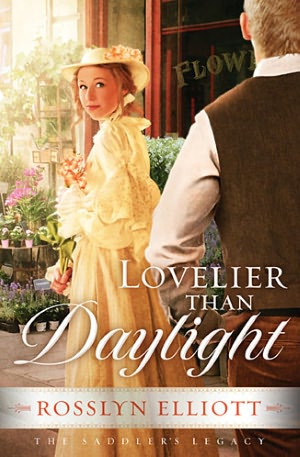
Rosslyn Elliot, Lovelier Than Daylight
*************************************************************************************

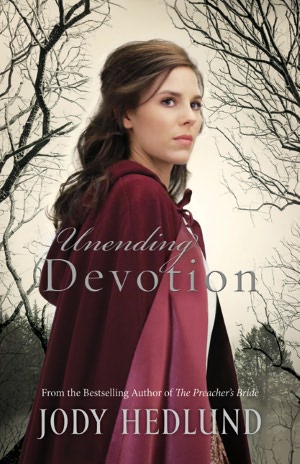
Jody Hedlund, Unending Devotion

*************************************************************************************

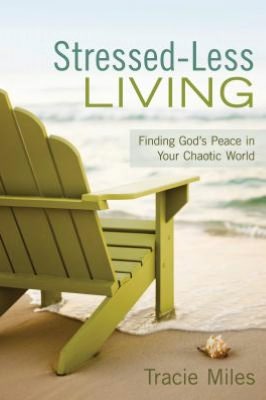
Tracie Miles, Stressed-Less Living

*************************************************************************************

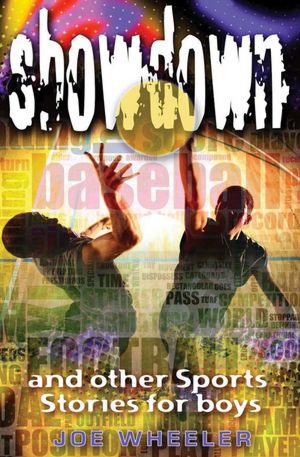
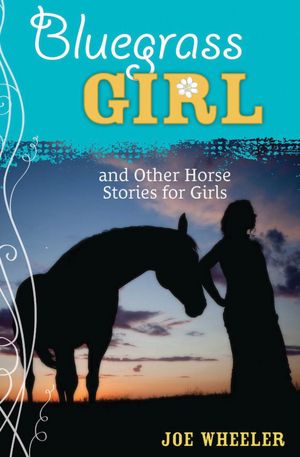
Joe Wheeler, Showdown…And Other Sports Stories for Boys and A Bluegrass Girl…And Other Horse Stories for Girls

*************************************************************************************

New WordServe Clients

Alice Crider has been busy landing a few great authors and potentials…

Keith Robinson, Speaker, Founder/President of Emerge, Inc. www.emergexperience.com

Keith is the founder and president of Emerge, Inc., a non-profit organization with a mission of healing that delivers a message of hope by creating methods that help reach the lost, hurting, forgotten, and abandoned in this generation.  He leads a multi- denominational, multi-church based outreach strategy called the Emerge Experience, combining the efforts of students and local churches to present the gospel to youth and young adults.

His non-fiction project tentatively titled Is There Anybody Out There? touches the deep void in the soul of a generation longing for belonging.

Wintley Phipps

Wintley Phipps is an ordained Seventh-day Adventist minister, world-renowned vocal artist, and innovative initiator of special projects such as the US Dream Academy. He is working on a non-fiction book tentatively titled Eight Secrets to a Better Life.

http://www.usdreamacademy.org/about/staff/wintley-phipps

Kelli Gotthardt, Writer Speaker Catalyst Consultant

www.kelligotthardt.com/

Kelli is writing a non-fiction book, tentatively titled Maxed Out and Wanting More, which is for women who feel spiritually, emotionally, and physically maxed out and yet long to live uniquely as female image-bearers of Christ in the world. Kelli also blogs and does freelance business writing for various companies.

Angela Ruth Strong

Angela is a novelist who studied journalism at the University of Oregon and worked in marketing for Borderline Publishing. She has published articles with magazines ranging from Brio to American Cheerleader to Encounter, and she earned four stars from Romantic Times for the 2010 release of her debut novel, Love Finds You in Sun Valley, Idaho.

http://www.facebook.com/angela.strong.5439

New Contracts

Marcus Brotherton signed with Thomas Nelson as the collaborator with Shawn Hoffman for a novel called Samson.

Laurie Polich Short signed with Zondervan for Finding God in the Dark and an untitled book.

What We’re Celebrating!!

Lauren Scruggs launched her new book, Still Lolo, with some top media. Here is a brief list:

http://video.today.msnbc.msn.com/today/48587195#48587195

http://abcnews.go.com/GMA/video/lauren-scruggs-journey-survivor-propeller-accident-pens-book-17650917

http://video.today.msnbc.msn.com/today/49866663#49866663

http://www.youtube.com/watch?feature=player_embedded&v=bqR_oJiX7FE

http://www.youtube.com/watch?feature=player_embedded&v=g7hZ63Nquhw

http://abcnews.go.com/blogs/entertainment/2012/11/lauren-scruggs-reveals-new-prosthetic-eye-and-hand/

Debora M. Coty was thrilled to recently receive notification that her women’s inspirational books, Mom NEEDS Chocolate (2009, Regal Books), and Too Blessed to Be Stressed (2011, Barbour Publishing), were named as recipients of the coveted Mom’s Choice Award. The “Mom’s Choice Award: Honoring Excellence” gold seal is recognized world-wide as the symbol representing the best in family-friendly media, products, and services that encourage emotional, spiritual, and physical growth.

Rachel Held Evans’ new book, A Year of Biblical Womanhood, made it as high as #18 on the Publisher’s Weekly Ebook Bestseller List, as well as garnering Rachel a number of interviews on national shows, including “The Today Show” and “The View.”

Jodi Hedlund‘s book Unending Devotion debuted #18 on the CBA Fiction bestseller list.

What are you celebrating on your writing journey?

One Hundred Thirty-Eight Points and Bestseller Lists

Have you, like me, been intrigued by the story of Jack Taylor, the Grinnell College basketball player that scored one hundred thirty-eight points in one game? It was so striking that it even caught the attention of some NBA players . . . Kobe Bryant being one.

However, upon looking closer, one realizes that perhaps the performance wasn’t so stellar after all. The team supported his effort to complete this task by letting him rest during defense and setting him up for most of the shots. Evidently, the coach of this team has a “system” designed to get a few of his players record-breaking scoring runs. If you read the link, please forgive the two swear words in the first paragraph, but it was the most detailed analysis of this particular basketball game and why Jack Taylor prehaps broke the record.

Does a coordinated team effort take away Jack’s achievement or not? Hmm….

Jack’s effort (and that of his teammates to get him recognized in that fashion) reminded me of a current marketing strategy that some authors are using to get their titles on the bestseller lists and that basically is composed of narrowing your tribe’s purchases to one week so that the spike in sales causes it to rise on said lists. I have known several authors to employ this strategy–usually coupled with giving away a lot of free stuff. The most notable would be Michael Hyatt, former CEO of Thomas Nelson Publishing.

My question for you fellow wordsmith journeyers: does this make a true bestseller?

First, what makes a novel a bestseller? In my research, these things were mentioned.
1. Good Book
2. Favorable Press (Oprah helps . . . just a little.)
3. Word of Mouth (The purpose of your tribe.)
4. The Subject Matter
5. The Title
6. Marketing Campaign
7. Power of the Internet

But, as this article (though long, it is well worth the read) also outlines, a bestseller happens basically two ways:
1. Selling many copies in a week
2. Selling steadily over months and years though maybe not ending up on any lists

So I wonder, will people begin to scoff at claims of bestseller status from an author employing this strategy? What if their book hits a bestseller list for one week but rapidly falls off and is never seen there again? Or, is it merely good business sense? Here is one blog post that outlines a similar strategy using the Kindle Direct Publishing system and offering the book for free.

My guess is, we’ll begin to take a look at how long the book was on the list. Being briefly on an Amazon top 100 list may become meaningless. Some already say that rising on an Amazon list (particularly the 100 free list) does not a bestseller make even if the author claims that status.

If the buying habits of your tribe can be manipulated strictly for the purpose of tightening sales into a one week period . . . is the novel really a bestseller? And let me claim here and now that I’m not saying I may never try this.

I’m curious to hear your thoughts. What do you think of this marketing strategy? Does it make a novel a true bestseller?

5 Starter Tips On Writing A Memoir

Two weeks ago I was invited to speak to my daughter Zoya’s fifth grade class about writing memoir.

http://www.stockfreeimages.com/

Tip #1: Don’t do it!

If you want to write a memoir, be forewarned: readers love them but publishing houses are hard pressed to sign them. Of course, that doesn’t mean that memoirs don’t sell, but it does mean that memoir writers must work on platform building, and strengthening tribe readership, as they write. It can be daunting but it is essential. When you get to the book proposal part of your journey, you need to prove to publishers that your story will sell.

Tip #2: Don’t lie!

Possibly one of the reasons why publishers don’t want to buy and publish more memoirs is because several books deemed “memoir” in the past few years have been found out to be more fictional. Lying to create a good memoir taints the whole industry. You may not be able to remember your life’s story verbatim. That’s OK. Feel free to take some creative allowance building scenes and retelling conversations at pivotal points in the book. Just make sure everything you write about actually happened.

Tip # 3: Don’t rush!

Memoir books and teachers concur that in order to write a good memoir one must have perspective. In order to gain perspective, especially when writing about our lives, we need time and distance from the events which we hope to convey in a way that resonates with the reader. If a person hasn’t allotted enough time in her life to reach some sort of understanding or conclusion regarding the events of the memoir, she will be hard pressed to point and prod readers to universal truths that will apply to their lives.

Tip #4: Don’t assume!

Don’t assume your story will carry the writing. As was mentioned in Tip #3, a memoir, although about your life, is really about/for the reader. C.S. Lewis said that we read to know we are not alone. The memoir must connect with the reader. There needs to be a mingling of worlds, where a person reading your words stops and wonders how you knew so much about him.

Tip #5: Don’t wait!

If you want to write a memoir, don’t wait to learn all you can about memoir writing. My two best pieces of advice to the young memoirists in the fifth grade were: 1) write, even a little bit, every day, and 2) if you want to write and be good at it, be a voracious reader.

What are your thoughts about memoir writing? What’s been a favorite memoir that you’ve read?

The Blessing in a NO

Ever feel like you just can’t catch a break? Nothing seems to be going your way? Have you ever heard no so many times it starts to lose its meaning? Welcome to the world of writing.

In the last three years, I have heard no so many times that I have learned to laugh and look for the next open door. When I first started hearing no it was a foreign concept to me. All my life I worked hard for what I had – job, grades, academic standing – and then I put one foot into the real world, and for some reason none of my achievements carried much weight. Crazy how that works, isn’t it? But it took a series of closed doors to teach me the blessing in no.

  • Applied to grad school at Texas Tech – No
  • Applied to 11 other grad schools (About the eighth letter, I started laughing instead of crying.) – 11 No’s
  • Moved back home and applied for A LOT of jobs – A LOT of No’s
  • Wanted to move out of state – No
  • Applied for more jobs and internships – More No’s
  • Submitted my book for publication – A lot of silence (which equals a “no” in the publishing world)

Starting to get the picture? No started to lose its meaning. But the more I heard that dreaded word, the more I began to find my way. Know what happened when I stopped trying to make things happen and allowed the Lord to direct my steps? A lot of those no’s became yesses in directions I never would have explored.

  • Got an acceptance letter to Focus on the Family Institute in the same month I was rejected from Tech. The Lord changed my life. – Yes
  • Found a freelance writing position two days after my most recent job rejection. – Yes
  • Attended a writers conference and was accepted into a writing course with a mentor doing the exact same thing a graduate degree in writing would have given me for an eighth of the cost. Found Christian authors to encourage me. – Yes
  • Attended another conference and found agents and editors who are interested in my book. At least I’m on the right track. – Yes

The Lord began to open doors to all the things I had been pursuing, except He determined the direction and the timing! It turns out that I’m in pretty good company. In the Bible:

The Lord told Abraham to leave everything He knew and travel to a land He would show him.

Abraham prayed for a child, and the Lord said no until Abraham was so old it seemed impossible, and then the Lord blessed Abraham with Isaac, the promised child.

Jonah didn’t want to go to Nineveh to preach. He ran away but the Lord said no to Jonah’s direction. He sent a whale to swallow him and then spit him up on the beach near Nineveh. It changed that city.

Mary probably expected to go into her marriage a pristine virgin. The Lord said no to that plan. She was still a virgin, but she was shamed by her people with a child, who turned out to be the Christ child – the One who changed the world.

My no’s seem pretty insignificant in the grand scheme of things. The Lord used redirection in the Bible for His glory and the good of His people. There is blessing in this dreaded word.

In his heart a man plans his course, but the LORD determines his steps. (Proverbs 16:9).

I follow my own way so much. But the Lord wants to tell me YES. He just wants to do it in His own time and in His own way. Just as He has been faithful in all His covenants and promises in the Bible until now, I know that He will be faithful to answer my no’s with yesses in far better ways than I could. They never look like what I thought or planned. They are always, always better.

Trust Him with your no’s. Embrace closed doors. They are blessings in disguise! He is so FAITHFUL!

Deep into NaNoWriMo

Every author knows that it’s National Novel Writing Month – thirty days dedicated to flexing our writing muscles and whipping out 50,000 words of an original manuscript. The idea is to give ourselves permission to pursue our writing passion with all our hearts, minds, and laptops in a frenzy of creative expression and production.

What a great idea!

What unfettered freedom to write!

What joy!

What planet are these people from?

Like most authors I know, writing a novel gets sandwiched in between a part or full-time job, parenting, spousing, volunteering obligations, pet maintenance, cooking and cleaning, and – oh yes! – occasional opportunities to sleep. So, at least for me, while NaNoWriMo sounds like a fabulous idea, that is, unfortunately, all it will ever be for me – an idea, not a reality. During the month of November, while other lucky authors suspend every claim on their time and energy to immerse themselves in writing bliss, I’m still teaching college sophomores how to construct a grammatically correct sentence, walking the dog at least twice a day, cooking dinner for my husband and me, doing laundry, answering emails, and maintaining personal hygiene. Until I can figure out how to do all that AND write at the same time, NaNoWriMo will continue to be an elusive dream, and I will go on wondering what it would be like to write a novel in thirty consecutive days.

Note that I wrote ‘consecutive’ days.

That’s because I do write a novel every year in thirty days. The days are just not back-to-back, or consistently eight hours of effort, but all in all, it ends up being around the same amount of ‘work.’ In other words, I write when I can. Some days, that ‘writing’ may actually be hours of mental plotting while I’m otherwise physically engaged (can you spell ‘spring cleanup’?) or it could be an uninterrupted ten-hour words-pouring-out-of-me marathon when I forget to eat (easiest to do when hubby and kids are out of town). I have, at least twice, written the first chapter in a methodical manner, sitting down to my laptop for four hours a day. But then it’s been weeks, or even months, before I get back for Chapter Two. As I often excuse myself to those who ask, I was trained as a journalist, and I work best under pressure, but as an example of writerly discipline, I stink.

It works for me, though. I find that downtime between chapters, or even mid-chapter, gives me time to play with my story, working out different arcs or conflicts. My writing breaks allow my characters to form more completely in my mind, often without my interference. And sometimes, my story takes turns I never would have predicted, thanks to the people or events I encounter while I’m in the middle of slowly, erratically, crafting a story.

Write a novel in a month?

If you can do it, go for it.

Me? I’m simmering stew, along with story plots. The really good stuff takes time, you know.

How’s your NaNoWriMo going?

Overcoming Your Speaking Fears to Market Your Books

Overcoming Speaking Fears
Writers as Speakers — Welcome Your Audience

Does terror of speaking in front of crowds threaten to paralyze your writing career?

Imagine a large stadium filled to capacity. The announcer introduces the main speaker. The audience claps and cheers. Adrenaline pulses in a flood through your veins. You approach the podium in slow-motion, while your legs beg to run away as fast as they can.

You arrive at the center of the stage, open the presentation slides on your electronic tablet, even as you pray you don’t make a fool of yourself. Your mouth opens, at the same time the heel of your hand brushes the edge of the tablet, knocking it on the ground. The clatter echoes across the hushed platform. Your fingers tremble as you lift the darkened screen. You scan the crowd in front of you; noticeable fidgeting causes a contagious rustle. You clear your throat, offer a half-smile, and scramble to remember what your notes said.

Once again, your lips part, but instead of a greeting, a guttural growl boomerangs through the microphone. 

Is this a nightmare for anyone but me?

These days, whether writing non-fiction or novels, authors need to work twice as hard as public speakers to market their books. 

But why do our minds threaten to sabotage us when we stand in front of smiling faces, in a sea of expectant people clamoring to hear the messages we’ve waited to share? Are we doomed to fail when panic replaces our passion? What goes on inside our brains?

Though I agree with most people who rank public speaking in their top five worst fears, there are tips I’ve learned to help reduce my anxiety.

1Study your material intently.

2Practice in front of a mirror.

3Read the Bible. This simple answer saved me in the past, when anxiety medication, panic inhibiting techniques, and other methods failed to help me move past fear. I discovered that immersing myself in God’s Word calmed my frazzled nerves.

4Follow sound advice. The Anxiety Coach offers practical instructions to settle emotions that threaten to keep you from spreading your message.

5Wear comfortable clothing. Function along with your fashion.

Water -- How Input Affects Output

6Get serious about laughter. Humor relaxes emotions, body, mind, and spirit. Watch a funny program immediately before leaving to speak. Read a riotous book or article. Listen to a comedic CD or download on your way to the presentation.

7. Thirty minutes before speaking, drink water to hydrate your vocal chords, brain cells, and emotional sensors. Water is a miracle drug. (Thirty minutes should allow your body time to shed waste, so you can visit a restroom before taking the stage.)

8. Prior to walking onto your platform, breathe in slowly through your nose, count to ten, and release slowly through your mouth. Repeat twice, so you follow the process a minimum of three times.

9. Prayer walk to the front of your audience.

10. Don’t make a big deal out of flubs. Remember, most audiences won’t recognize mistakes, so carry on, or make light of it. Besides, mess-ups make us more human to observers.

Speaking is part of the modern writing model, but no need to worry. You can overcome and share with confidence.

How do you take courage in the face of public speaking fears in order to promote your books?

Overcoming Fear to Market Your Book
Promote Through Speaking

Building the Perfect Brand

I recently attended a branding seminar for authors and wanted to share best practices with the WordServe Community. Here are 4 Sizzling Secrets to Branding You and Your Book from speaker Liz Goodgold, Branding Expert for www.RedFireBranding.com:

1. WIIFM: What’s in if for me?

Your audience wants to know what they are going to get out of buying and reading your book. Sell a benefit or a result – think in terms of a call to action. Will your reader learn a skill, come away with increased knowledge, or be entertained? Knowing your endgame is a huge part of selling the benefits and the results.

2. Consistency is Key

Brands have to be consistent. In-N-Out Burgers always taste the same, and they have since the forties. That is consistency at its finest.  Your audience is looking for that kind of consistency. Once you have established your brand it’s important to stay with it. Think in terms of household names like Chicken Soup for the Soul, or the ‘Dummies’ do-it-yourself guides or perhaps the Mars and Venus books. For writers who tackle random subjects without a real sense of continuum, Liz recommended that the books should still appear consistent with regards to style, size, type, and font. Branding by color is a popular way to go.

3. Book Title – Easy Recall

A well-branded book title is catchy and simple to recall; it also carries over easily from one book to the next. In hindsight, my book, Gumbeaux, was probably not the perfect title as it can be considered difficult to pronounce. However, I have the opportunity, based upon Liz’s learnings, to title my next book: “Rancheaux” or something with a similar suffix. The suffix could work as well for me as “itos” does for Doritos, Cheetos, Tostitos, etc.

4.You Are the Brand

You are not building a book, but an empire. Don’t create a website that is only useful to promote a single book unless you are positive you’ll never write another one. It should be fluid enough to support your blog, sales channels, books to come, a potential series, etc. Check out the websites of your favorite authors and notice how they position themselves not just as writers, but as brands. Use jargon that resonates with your writing platform. You are the brand – not your book – so think big.

How are you building your brand?