Showing Vs. Telling

Let me first say I am hardly an expert on show versus tell—every writing teacher’s admonition for every storyteller out there. In fact, I was quite shocked when another author said she was taking notes on some passages in Poison because she thought they were good examples of showing. I am still hoping she will tell me exactly which ones they were so I can admire my own amazing work because I was that surprised.

ActorShowing versus telling can definitely be learned (after all, I did it and was never an English major) so don’t go over the writer’s cliff Thelma and Louise style if some of these points don’t hit home. I am still learning the more advanced points myself and that’s a mark of a true writer—always desiring to learn more.

The concept of showing could also be described as Deep POV. I think these concepts are honestly interchangeable. So if you hear one—think of the other.

The first (and really good) piece of advice I got on showing was to write my scenes as if I was filming a movie. How would I describe what was on the screen to a reader without stating the obvious?

For instance: He was angry. This is telling. It doesn’t leave any room for the reader to use their imagination. Now, more showing. Her husband swore at her and spittle hit her face seemingly to mark a target for his fist to punch her in the jaw. See the difference? I haven’t said the word “angry” at all, but does this man seem fired up?

While editing, you’re likely telling if you name the feeling. He was mad, sad, fearful…etc.

A great tool I’ve used to help me show more visceral reactions is The Emotion Thesaurus. There is also a website by the same author called The Bookshelf Muse. It gives specific bodily actions for tons of different emotions. Use this as a starting point to generate ideas and then improve them for your own manuscript.

Another tip to help show instead of tell is to phrase things as questions. Telling: She wondered if her attacker was walking behind her. Showing: The echo of footsteps matched her high heels as they clipped down the pavement of the dark alley. Was it him? Was it the man who nearly killed her with a quick slash of a knife across her throat two years ago? The one she presumed was now sending her all those threatening letters—just like before. Now he was free.

To show more, add a visceral reaction from the woman from the emotion she is likely feeling which in this instance would be fear.

The echo of footsteps matched the quickened pace of her heart as she broke out into a run down the dark alley. Instinctively, her hand covered the thick scar as a shield from both the memory and the act. Was it him? Was it the man who nearly killed her with a quick slash of a knife across her throat two years ago? The one she presumed was now sending her all those threatening letters—just like before. Now he was free.

I know—future editor. How can she run with her hand set on her throat? Just to illustrate a point. Edit at will.

Also, don’t feel like you have to do this in the first draft. The first draft is all about getting the words on the page. Showing can be added in subsequent editing phases that you do before the manuscript goes to an agent or publisher, but don’t get too hung up on trying to do a lot in the first draft until it becomes more natural for you.

This is just the beginning. There are many more techniques that can be used so keep working at it and you’ll have the reader sitting inside your character in no time.

What are some techniques that have helped you show vs. tell?

Risking Rejection

Why are we afraid to fail? Often because we believe rejection exposes a gap in us. It points to something we don’t want others to see. It confirms what our suspicions tell us.

We aren’t acceptable.

As writers, we risk rejection from many different sources. Projects and people alike can make us feel unacceptable, and throw us into a pit of paralyzing despair. Any one of a myriad of things have the power to make us give up on our writing dreams. If we let it.Definition of Rejection

  • Literary agents can reject us.
  • Booking agents can reject us.
  • Publishers can reject us.
  • Editors can reject us.
  • Endorsers can reject us.
  • Influencers can reject us.
  • Reviewers can reject us.
  • Media can reject us.
  • Readers can reject us.
  • And through Self-deprecation, we can reject ourselves.

So how can you empower yourself to feel acceptable when rejection says you’re not?

Author Jim Stovall
Jim Stovall’s Blindness Didn’t Hold Him Back

Challenge your own viewpoint. Take a 180 approach and look at this specific moment as your personal catalyst for change, improvement, and a call to do better work. Jim Stovall, a blind author and movie maker, knows rejection well.

You’ve GOT to watch the video on his link to see what he says about giving up. Here’s a quote to give you a hint of the amazing story you’ll want to hear. “That big dream would not have been put inside of you if you didn’t have the capacity to achieve it.”

Author John Grisham
John Grisham’s Tenacity Made the Difference

Another powerful example of tenacity in the face of rejection comes from an author most of us recognize. Internationally acclaimed novelist John Grisham. He understands what it feels like to fail in front of professionals, but he chose to learn from his mistakes, and keep on keeping on.

Finally, I would be remiss if I didn’t remind you of the greatest victory that came from the greatest rejection of all. A book that was denounced, fought against, and even after publication, faced efforts to utterly destroy it. But yet, the words inscribed inside changed the world, and made it a better place. The book I refer to is The Bible. Aren’t you glad God didn’t give up.

So the next time you get a rejection letter, phone call, email, or text, remember these three things.

Anita Brooks Walking Bridge Photo
Is Success Waiting Around Your Corner?

1. The capacity to make your big dream reality is already inside of you.

2. Rejection prepares us for great things in the future, and reminds us to stay humble when we arrive there.

3.  Just because a few people fight against your efforts doesn’t mean you won’t come out victorious.

Maintain a teachable attitude, then act with integrity, humility, and tenacity. This is your big dream. Take courage, and don’t let anyone convince you it’s unacceptable. Risking rejection can turn that big dream of yours into something real. But only if you don’t give up too soon.

Writing Life Lessons

photoNo matter what stage I’m at in the writing journey, whether it’s researching, plotting, writing, or editing, I continue to learn. Currently, I’m in my last round of edits for my debut novel, Shaken. Man, has it been humbling. I don’t claim to have all the answers to this writing journey, but here are a few tips I’ve learned from trial and error. Like my novels, I’m always a work in progress.

Paint a scene

This seems like a no-brainer, right? I thought it was, too. Except sometimes I don’t write all that is in my head. Thank goodness for an editor who reads the story and asks me to fill in the holes. Use the senses. Again, you would think this is obvious, but too often we forget. In my second book, I open with a beach scene. Can my reader smell the smoke from the bonfire, taste the salt in the air, feel the whip of the sea breeze, hear the lap of the waves, see the fireworks exploding? If not, I need to keep crafting.

Make connections

Link scenes, events, and characters. As my granddad told my brother when he came home from college late one night, “Account for yourself!” Make sure all your elements are accounted for, and again, not just in your head. If a character just spoke yet the scene ends and they are nowhere to be found, make sure there is a clue to the reader of where they went and when they exited the conversation. Again, these should be obvious, but sometimes when I focus on the story line at large, I forget these important little details that further immerse the reader in the story.

Books are not movies

I tend to see my book playing out like one of Nicholas Spark’s movies – sweeping, southern, and characters that tug at your heart. Except, books are not movies. What a viewer can take in in a few seconds of a new scene takes a lot longer to paint in a book. The best movies come from books that paint vivid scenes. Think the party scenes in Gatsby where Fitzgerald describes the house and guests in great detail. If you don’t know what I’m talking about, stop reading this right now and at least read those scenes.

Kill your “darlings”

This is a lesson one my college professors shared with me, and regardless of the time passage, it doesn’t get easier. First, let’s define “darlings.” It is any piece of your story that you are attached to that does not ultimately propel the story forward. You may think a scene is epic, but will your readers care? Does it demonstrate an irreplaceable character quality or scene that is essential to your reader’s knowledge of the story line? Is your attachment greater than the reader’s? If yes, then don’t be afraid to kill that “darling.” Your story will be better for it. Trust me, I know it’s painful, but strike with your red pen and make the page bleed.

You’ll never be completely satisfied

photo copyStop looking at the blinking cursor. Save and send. Your story will never be perfect. If you are waiting for that, choose a different career. I emailed my mentor a couple months ago and told her I thought my story sucked and I wanted to start from scratch. She laughed (I could sense it over email), and told me that it was great for where I’m at now. The next novel will be better than the first, and the third better than the second. If you know you have done all you can do right now, then allow yourself to be satisfied with the results and send that sucker. I still find mistakes in my short stories from college, and I couldn’t count how many times I have edited those pages. But I’ve also increased in my ability and my knowledge since college. I’ll focus on doing my best now and realize that I’m always growing.

What writing tips have you picked up along the way?

Five Things I Learned About Writing/Marketing from Dr. James Dobson

First things first:  Yes, I met Dr. Dobson.In real life. And, yes, he was kind and wise and funny and smart and everything I expected him to be and more. I flew up to Colorado Springs in April, 2013 to be a guest on Dr. Dobson’s Family Talk radio show. In the studio, we chatted about families, about writing, about my books, and then recorded 3 1-hour segments to air on June 5-7, 2013. (Click here to see where you can listen in.) And, in the process, I not only gained invaluable insight on motherhood, marriage, and family from one of the most amazing theological minds of our generation, but I also learned about writing as well. Here’s what I took away from this meeting.

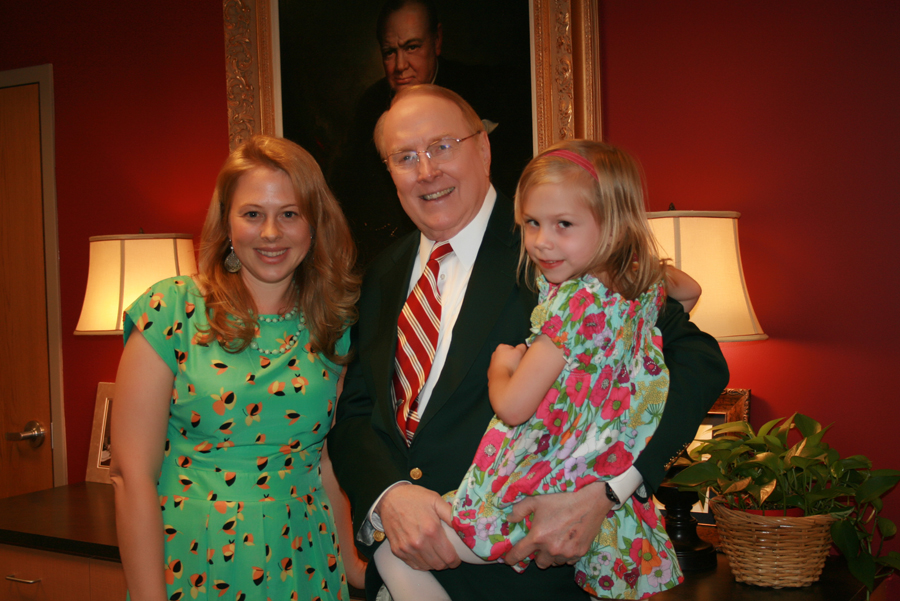
Dobson1. Actions Speak Louder Than Words.  Dr. Dobson’s life’s work and focus has always been on helping Christ-centered families. And I don’t think anyone in the world would argue with me if I said that he has passionately and wholeheartedly given his career to this goal. This is a great thing. I have to admit that part of me expected our visit to be something like a college-course lecture. Instead, he pulled my five-year-old daughter onto his lap and talked to her. And he showed me without saying a word that he values children and family and motherhood in a way that goes beyond words. I learned that if I want to talk the talk in my writing and on my blog, I had better be willing to walk the walk.

2. Listen With Open Ears.  Dr. Dobson knows his stuff. The guy is legendary—well-read, well-educated, well-just-about-everything. And the truth is that I knew there was nothing I could’ve said to him about parenting or motherhood that he a) didn’t already know and b) hadn’t already covered in his own writings. But Dr. Dobson listened to my words wholeheartedly and willingly—even on topics that we didn’t necessarily see eye-to-eye on. He showed me respect by looking me in the eye and allowing me to voice my opinion. And I left in awe of his incredible wisdom and kindness. No wonder he has made such an impact on our world! He is willing to listen with open ears and to show respect with a gentle kindness—even to those who are “below” him in status or who have different opinions than he does.

3. Don’t Be Afraid to Put Yourself Out There.  I wish I could tell you that I did something to earn myself a spot on Dr. Dobson’s radio show. I wish I could tell you it was on my merit, that I did something extraordinary, that I am an amazing radio speaker, that my writing is just that inspiring…but I can’t. Because the truth is that I did nothing. I threw myself out there by having my publicist send my book to Family Talk’s studio…in 2011. From there, God worked behind the scenes to inspire the right producer at the right time to pick up the book. As authors, we have to do everything we can to get our books “out there,” but after writing and marketing five books, I’ve learned that God is the one who opens those doors. We just have to be willing to walk through them.

4.  Don’t Be Afraid to Ask.  I was thrilled the day I got the call from Dr. Dobson’s producer that I was going to be on his show. And I knew it was an important break in the marketing campaign for my new books. But I had also made myself a promise way back when my oldest was born: I was never going to let my career take me away from my kids for an extended amount of time. And while I desperately wanted to go on the show, I also struggled to decide if was a good idea to leave home for three days at the end of the school year. I prayed and picked up the phone and asked the producer if I could bring my daughter along. And she bent over backwards to make it happen. They reserved a room for me with two beds. They helped me book airline tickets. They found me a big-enough rental car. And the entire staff at Family Talk showed my daughter incredible kindness and love while we were there. My point? Don’t be afraid to ask. I know it wasn’t easy for them to have a five-year-old in the studio, but it was important to me. Dr. Dobson’s organization lived up to their reputation of being advocates for family by helping me make it happen.

5.  Be Willing To Be Flexible.  I went into Dr. Dobson’s studio with the expectation that we were going to record one hour-long segment. I walked out having recorded three. We had a flow going and had so much to talk about that we just kept recording. The studio session took much longer than expected and…shockingly…we got stuck in a snowstorm afterwards (a snowstorm in April? Apparently this is normal only in Colorado). Anyway, writing and marketing is an inherently liquid task—and only by being flexible to roll with the changes—ups, downs, twists, and turns—will we be able to see and succeed in the long-haul.

What have you learned about writing from other (famous) authors or radio personalities?

**************************************************************************************************

Erin MacPherson is the author of The Christian Mama’s Guide series.  She’s also a mommy blogger, amateur chef, and (very) amateur runner.  She blogs at www.christianmamasguide.com.

Dare To Wander Off Trail

IMG_0550 copyWhen my wife is away at the coast or on a quilt retreat, it’s the go-to movie I watch alone: A River Runs Through It, Robert Redford’s masterpiece of the equally masterful book by Norman Maclean about fathers and sons and fly-fishing — and the deeper things beyond.

As we honor fathers this month (June 16), I do so with the admission that my dad, who died nearly 17 years ago, was not a perfect man. (Nor was I, of course, a perfect son.) While watching River the other night for perhaps the tenth time, however, I finally figured out who my father was: Paul Maclean, the younger brother played by Brad Pitt. Flawed — he dies in a gambling dispute — but, as Paul’s father said of him, “beautiful.” An artist with a fly rod. And despite obvious shortcomings, kind-hearted with a sort of rough-hewn integrity. A lover of family and a despiser of bait fishermen, politicians who ignored the environment, and motorcycle riders who rode illegally on wilderness trails.

When I wrote Cascade Summer: My Adventure on Oregon’s Pacific Crest Trail, my heart kept pulling me toward memories of my father that I felt compelled to include. But my mind kept saying: Don’t go there. It’s too dangerous. It’s too personal. Stay on the main trail, pal. 

I’m glad I listened to my heart and wandered off the trail — figuratively and, as you’ll see in a moment, literally. Writing is an act of courage. And part of courage is being real with readers, being real with ourselves, and being real about our loved ones.

Whenever I want to wimp out about telling something personal, I remind myself that of the 2,000-plus newspaper columns I’ve written, almost without exception the ones eliciting the most reader response have been personal ones that tugged on readers’ emotions. The ones where I got real. The ones where I shared a vulnerability — my regret, for example, of having accepted $1 to play two-square with a kid who had no friends back in elementary school. As an adult he committed suicide, making me wonder how his life might have turned out if people like me had simply said, “Forget the buck. You serve.”

Tom Hallman, a Pulitzer Prize-winning reporter at The Oregonian in Portland, puts it best:  “Feelings are more important than rules … Make the reader feel something. Writers are insecure. Every time we draft a story that includes emotion, we’re crawling out on a limb. Our insecurities tell us to crawl back to safety, but doing so eliminates the story’s heart and soul — what makes the story work. Emotion lives in nearly everyone, though it’s sometimes asleep. The writer must awaken it.”

So, in the end, I’m glad I included the anecdote about wandering off trail, through the forests of the Cascade Mountains ten years after my father’s death, in an attempt to find Comma Lake. As a teenager, I had scoured the woods with my dad, looking for that lake. It appeared on maps but there were no trails to it. And we’d never found it.

But, alone, a decade after he was gone, I did. I wanted to whoop and holler, but it didn’t seem right amid a quiet punctuated only by a few birds and bleached-white trees rubbing against each other in death. On the dried mudflats, I made my way up the comma—a writer literally in his element—toward the lake’s center.

I had thought of bringing something to leave in honor of my father, but he was big on leaving a camp better than you found it, so I nixed that idea. I looked around. A half dozen softball-sized stones lay scattered near me. So, I built him a poor-man’s pyramid. I knew by October, the lake would fill from autumn rains. By November, the monument would be encased in ice and covered in snow. Regardless, it would be my little reminder: we were once here. We found Comma Lake — my father and I.

Sons, I believe, cut wide swaths for their fathers. At church men’s retreats and marriage workshops, I’ve heard men lash out at their fathers, but nevertheless pine for their respect — even after the old man is gone. Indeed, it is a strange dance between fathers and sons. Part of us vows to never be the man he was, part of us feels quietly proud when we realize that, in some ways, we are.

In the final scene of A River Runs Through It, the story’s narrator, Maclean, now an old man, fishes the river and thinks, “I am haunted by waters.”

As men, we are also haunted by our fathers, whose approval seems as important to us now as it did when he watched us catch our first fish. But as writers, we cannot be haunted by the thought of trying to explore such complicated relationships.

As Hallman suggests, if we’re not crawling out on the limb, we’re not writing in the heart spot from which readers are reading. So, if you feel the branch start to bend, don’t panic. You’re where you need to be.

The Great Commission? – Redeeming Mankind through Fiction

Scientists, engineers and technological inventors, and business entrepreneurs say that humanity is on the cusp of a new wave of human creativity.

brain-power1

Instant communications are now possible via the web bringing literally thousands of minds together from all over the planet at one moment in time, discarding the limitations of geographical locations. Embryonic concepts and ideas, when shared on the global net, can result in brave new inventions with mind-blowing rapidity. Human thought can coalesce in a way that mimics the micro-world of biology by using chip technology. These synaptic pulses, occurring every second of the day and night in the global-brain, produce millions of new ideas and fresh concepts that have never before been thought of.

Laying the disciplines of science and technology aside, the same suppositions can be transferred to literature and writing. The impact of words via the global village has never been more fertile or dynamic in its capability to influence individuals, cultures, and nations. The power of the word is here and now.

Word%20power

Human endeavor is forging new boundaries, breaking out of the box of tradition and orthodoxy. We are thinking differently now–not just laterally, that’s old hat–in a way that resembles six dimensions. The equivalence of string theory and quantum mechanics is being applied to the arts and humanities, not only to science.
New thinkers are ditching personal labels. I am not just a scientist, not just a physician, not just an explorer of space, but much, much more. Exclusive thinking is out and inclusivity is in.

My own fields of interest are sufficiently broad to give me a big start in this arena. As an engineer with an academic university degree, I thought differently than my colleagues. I was a renaissance man. I brought my philosophic and artistic mind to solve engineering problems and conversely I used my engineer’s mind to help with the practical aspects of my own chosen art, writing.

For human advancement, we normally rely on non-fiction literature, factual manuals, scientific treatises, and political polemics. But consider that works of fiction, although essentially different to non-fiction in targets and goals, can nevertheless have a profound effect on shaping mankind.

When you read good fiction, there is a vital empathy between writer and reader. The reason it works for only one writer and millions of readers is that the empathy can be uniquely strong. It’s like a romance. Hands touch, eyes meet, and hearts converge as one beating heart.

The reader’s intimacy with the fiction tale, with the characters, with the drama, is both private and public. The reader becomes part of the plot. His or her mind is inextricably linked at a very deep level of consciousness. Whether the action is serious or comical, solemn or trivial, life or death, it is the precious human interaction occurring at the core of the exchange process of reading and being read.

The ideas expressed in the story, the emotions felt by the characters and the reader, the human landscapes travelled through are powerful persuaders, albeit whether obvious or subliminal.

My brand phrase ‘Redeeming mankind through fiction’ now makes important sense.

My faith mission as a Christian writer is to carry out the great commission that Jesus gave his disciples to take His message, the Gospel, to every corners of the world.

I was recently given a ‘word’ from the Lord. It was simple yet profound.

“As the Holy Spirit is intimately involved in the writing of your books, so the Holy Spirit will be profoundly involved when someone reads your book. The Holy Spirit will speak to the reader’s heart and truth will be imparted.”

I have already received testimonies from people who have read ‘Light of the Wicked’ and, deeply affected by the story, have gone on to search for God and salvation. For them it has been more than just entertainment; it has been a way of coming to know a God they thought did not exist.

Christian writers have an awesome responsibility not to just create entertaining books but to share the very gospel, not by preaching at the reader but by allowing the quality of the story to bring the reader into the presence of the living God. The reader, by coming into contact with a story that reflects God’s truth and life, is entering into a heart-to-heart conversation with the Lord himself via fiction. There’s a paradoxical truth.

power%20of%20words%202

WordServe News: May 2013

Exciting things have been happening at WordServe Literary!

On the final post of each month you’ll find a list of Water Cooler contributors’ books releasing in the upcoming month along with a recap of WordServe client news from the current month.

New Releases

*************************************************************************************************

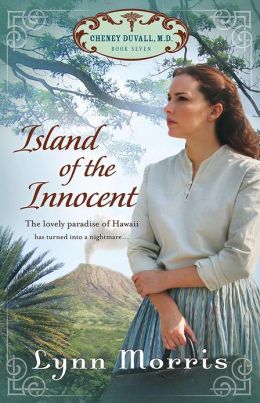
IslandoftheInnocentIsland of the Innocent by Lynn Morris, number 7 in the repackaged “Cheney Duvall, M.D.” series.

*************************************************************************************************

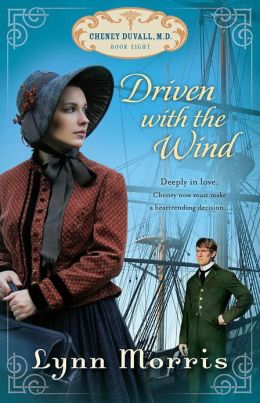
drivenbythewindDriven by the Wind by Lynn Morris, number 8 and the final book in the series.

*************************************************************************************************

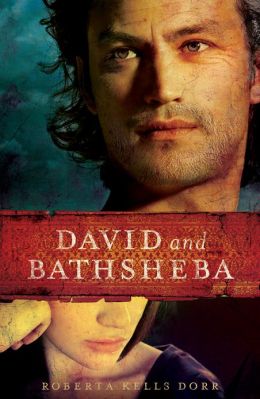
DavidandBathshebaDavid and Bathsheba by Roberta Kells Dorr (Moody). This is the first in a series of biblical novels that are being repackaged by Moody for a new generation of readers. Roberta died several years ago, but her novels were so well written and well-researched, they were deserving of a new life in e-books and the trade.

*************************************************************************************************

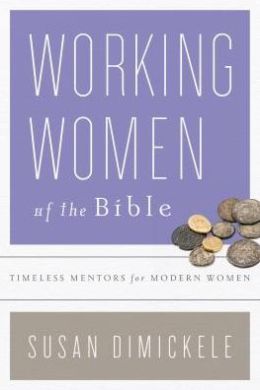
workingwomenWorking Women of the Bible by Susan DiMickele (Leafwood)

*************************************************************************************************

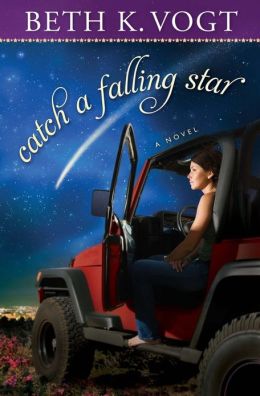
CatchAFallingStarCatch a Falling Star by Beth Vogt (Howard)

*************************************************************************************************


New Contracts

Joe Wheeler has signed 3 new books with Pacific Press to continue the “Christmas in My Heart” series. These books will be numbers 23, 24, and 25…the longest running series of Christmas stories ever published.

Cheri Fuller has signed with Bethany House Publishers to write What a Daughter Needs in a Mom. This will compliment her recently published book, What a Son Needs in a Mom.

Mike Yorkey signed with Destiny Image to write the next health and wellness book for Jordan Rubin.

Jonathan McKee has signed with Barbour to write a book for teen boys, The Wise Guy’s Guide to God, Girls and Google.

What We’re Celebrating!!

Jan Drexler’s The Prodigal Son Returns is #37 of 100 romances through RWA. This is Jan’s second week on the list; her book debuted at #95, so it is definitely moving on up!

Jillian Kent has her second novel in The Ravensmoore Chronicles, Chameleon, getting some noteworthy buzz. It finaled in the Fiction-Romance Category in the Inspirational Romantic Mystery/Suspense category. And it’s also finaled in RWA’s Daphne du Maurier Contest. Congratulations, Jillian!


Memoir Writing: Scene, Summary, and Musing

Photo/KarenJordanWhat is a memoir? “I had to look up the definition of a memoir before I wrote my entry for this contest,” one writer confessed to me.

“Congratulations!” I responded, acknowledging her award.

This writer’s research paid off. Plus, she chose an inspiring, true story from her life, and she engaged her readers with a meaningful message using creative nonfiction techniques.

Being a judge of the contest entries, I also noticed that some of the other aspiring and experienced writers needed to do a little research before they wrote a memoir. So, I’m sharing here some of what I’ve learned as a memoirist.

My road to memoir writing started with enrolling in a class on writing for publication while in college. But I really didn’t hear the term “memoir” much until I took nonfiction writing classes a decade later.

One of my favorite professors at the University of Arkansas at Little Rock, Dr. Sally Crisp, recommended a very helpful book on that subject by another writing teacher, Judith Barrington. Barrington describes her book, Memoir Writing, as a “practical guide to the craft, the personal challenges, and ethical dilemmas of writing your true stories.”

Defining memoir. Since I’m knee-deep in writing a memoir with my daughter Tara, I needed a refresher course. Here’s my own memoir checklist.

  • Focused theme or topic. William Zinsser discusses the memoir in his book On Writing Well. “Memoir isn’t the summary of a life (like autobiography); it’s a window into a life, very much like a photograph in its selective composition” (136).
  • Narrative. Memoir tells a story about certain people, places, or events from the writer’s personal life.
  • Reflection. The writer’s thoughts and beliefs about the events are a vital part of  the memoir.
  • Conversation. The narrative voice reflects on her thoughts and feelings in an intimate, conversational, and honest manner.

Creative NonfictionThe memoir tells true stories using creative nonfiction techniques.

  • Contains all the elements of fiction.
  • Moves back and forth in time.
  • Requires believable dialogue, based on truth.
  • Switches from scene to summary to musing.

Photo/KarenJordanScene, Summary, and Musing. Musing takes a vital role in the memoir. But scene and summary provide two useful ways to move through the narrative.

Judith Barrington describes the memoir’s characteristics of scene and summary in cinematic terms. I’ve often used photographic terms to describe the editing process.

  • Summary. Here the writer focuses on the panoramic view. This may include numerous details, but examines the person, place, or event from a distance. For this viewpoint, I imagine myself taking a photo of a sunset or sunrise over a lake with my long-distance camera lens.
  • Photo/KarenJordanScene. For this macroscopic view, you zoom in for a closer look at your story and focus on a particular point of view or incident. Consider using some dialogue to illustrate your scene or another descriptive device to describe an intimate detail of that moment. In photography, I change my lens and focus for a closer view of a child or the reflection over the lake.
  • Musing. I visualize this characteristic of a memoir as the microscopic view, zooming in on the writer’s intimate feelings and thoughts. The reflective voice of the writer expresses her feelings and thoughts at the time of the event. She might choose to express her current understanding or the wisdom that she gleaned from her personal experience. For instance, I love to capture the memories by the lake close to my home–the awesome sunrises and the poignant moments with my grandkids. It reminds me to record the stories that matter most to me as a gift for the next generation.

Storytelling. In memoir, the writer tells a true story from her life, using her best creative nonfiction skills. As you examine your memoir for revisions, focus on your areas of strength and weakness. Do you tend to focus on summarizing your story rather than zooming in on some important scenes? Have you reflected on what a certain person or event means to you or what you’ve learned from this experience?

I challenge you to work on the weaker elements of your memoir. Your story will become stronger and even more meaningful, as you examine your scene, summary, and musing.

Photos/KarenJordan

What helpful insights could you offer about memoir writing?


Some Thoughts on the Fabrication of Stories

Last week my Bible study class was reading in 2 Peter about false prophets, of whom, as Peter warns his listeners, “In their greed these teachers will exploit you with fabricated stories. Their condemnation has long been hanging over them, and their destruction has not been sleeping” (2 Peter 2:3 NIV).

Of course, as a creative writing professor currently leading a novel workshop—that is, teaching eager students how to fabricate stories—and as a writer currently engaged in writing a novel of her own, I shivered a bit.

He means a different kind of story, I consoled myself, as the class question-answered through the passage. He’s not talking about fiction writing, the passage makes clear, but about preaching, about spreading “destructive heresies, even denying the sovereign Lord(2 Peter 2:1 NIV).

Still, I couldn’t stop thinking aboutVan Reymerswaele--The Moneychanger and His Wife the uncomfortably commercial side of the writing world in which I am involved. How the buying and selling of books necessarily engages our—i.e., writers’, agents’, publishers’, marketers’, publicists’—greediness: to get more media exposure, to sell more books, to make more money. And, we Christian writers are, in effect, preaching, aren’t we? I worried. The Holy Spirit was at work, I feared, forcing me, as always, to look again, think again, before proceeding.

Just then, one of my classmates confirmed my fears by reading from his version of scripture the same passage about greedy story-fabricators: “And through covetousness shall they with feigned words make merchandise of you” (2 Peter 2:3 KJV). Isn’t that what we seek to do in our blogging and signing, platform-developing and tribe-building? I confronted myself. Turn our readers into merchandise sold?

The self-promotion demanded of us writers has always disturbed and embarrassed me. Deep down, I genuinely believe that, if a book is good, it will sell itself. But, the publishing world sages are quick to remind me, if a book’s not out there for people to see and read, no one will know it’s good. My efforts as an author stretch thin between these two pillars of writerly wisdom.

No answers here. Just puzzles, some worries, and a bit of scripture—fodder for reflection, I imagine, among fellow writers bent on being transformed into the image of the One God Sent.

The Memoir and the Robin

978512_28037870

I sit in the living room, my laptop in front of me, open, alive, waiting for my fingers to type.

But I don’t. I can’t seem to think of one true word, let alone one true sentence. Papa Hemingway would not be impressed.

Thud… Thud…

My eyes follow the thud to the window that looks out to our chipped blue porch and the Japanese maple in the front yard. Within a month, leaves will bud. Eventually a glorious rust-colored blanket from the tree will shelter the porch.

Thud.

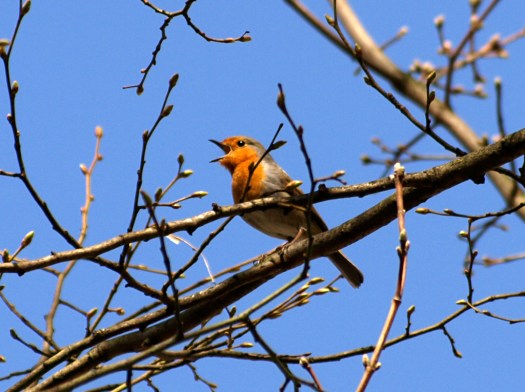
A robin flies into the window. She backs up, bewildered, and returns to her perch on a bare branch of the Japanese maple.

“Oh, you poor bird. I understand. I’ve hit my head against my reflection more than once in my life.”

The robin seems to catch her breath, and she’s off again, flying towards the window, searching for someone in the smudge filled glass. Herself? A lover? What does she want, and why doesn’t she learn her lesson? There’s nothing there for her but a hard, cold surface that will cause her pain.

And still, she flies into the window. Again and again and again.

Thud… Thud … Thud …

I watch her as I sit on our comfy, worn leather couch with a hole in the right seat cushion, the buzz of the laptop the only noise–that, and the recurring thud of the bird.

On writing memoir

As a memoirist, this happens, this hitting my head against a hard surface, when I get too introspective with my work. I am the writer, and the narrator, and the main character, and sometimes my roles mingle to the point of self-obsession and confusion. My desire to be perceived well, and to reach my personal predestined truth in the story turns me into a robin, fixated on my reflection, attempting time and again to break into something bigger than me, but really only hitting my head against a hard surface.

Annie Dillard says that you have to take pains in a memoir not to hang on the reader’s arms, like a drunk, and say, “And then I did this and it was so interesting.”

Thud.

The robin has banged her head against our window for three days. I’ve tried to deter her by closing the curtains and opening the window a bit, but to no avail. She returns every few moments, unaware that if she just shifts her focus there is a whole world to fly into and discover.

If a memoirist’s goal is for people to esteem her, to like her, to want to be like her, it will show in the work. The writing will fall flat, come across as inauthentic, and showy.

No, the memoirist should write for discovery. According to Andre Gide, a French author and winner of the Nobel Prize in literature in 1947, one doesn’t discover new lands without consenting to lose sight of the shore for a very long time.

A good memoirist is open to her story’s agenda. She participates with the reader, and diminishes the importance of her role for the sake of the universal truth found in her words.

“On the outskirts of every agony sits some observant fellow who points,” says Virginia Woolf. I would add that every good memoir has a point outside the visceral domain of the writer starting out. Our job is to bring ourselves and our readers to that point. Instead of a writer playing tour guide, the memoirist should rather find herself on the journey in the words. Then she will be able to fly right and free for discovery, and most assuredly get herself and her readers somewhere she would not have found on her own.