Conquering the Blank Page

For most professional writers, the incessantly blinking cursor on the computer screen functions like the blank sheet of paper reminiscent of unfinished homework. This nagging reminder of the writing task awaiting completion dares the writer to rise to the challenge. On days when the needed word count looms large and inspiration falls short, I have learned to pull out my writing bag of tricks to make progress. In this bag, I keep different elements of writing. Selecting the right elements helps me conquer the blank page.

iStock_000027717935Medium

Here are the elements I keep handy in my writing bag of tricks.

Factual Information

When I am not sure how to begin writing a particular passage, I start by listing the factual information relevant to what I will be writing. Often when creating this list, I discover that I need to check a source or gather additional information. Once I have the information entered onto the page, I create an outline and sort the information into its proper place.

Dialogue

While the importance of dialogue in creative writing goes without question, nonfiction writers also should consider the place of dialogue in their passages. Dialogue between two characters adds action and excitement to a scene, drawing the reader into the story more effectively than descriptive language alone. Dialogue also forces shorter paragraphs, helping the reader move forward rapidly and read with greater ease.

When you need to illustrate a point, consider using dialogue, even if the dialogue simply conveys the thoughts going through one person’s mind. A few sentences of dialogue can serve as an ice-breaker for a section of nonfiction writing explaining a concept or offering instruction. Pepper sections of factual information with a few tidbits of dialogue and the blank page will begin to fill!

Sensory Language

Long sentences filled with too many adjectives and adverbs can bog down a reader, but a few well-chosen words that appeal to a reader’s senses can make a paragraph come alive. In everyday life, we form memories that encode the sights, sounds, smells, tastes, and textures we experience. Help your readers enter into the world of your book by supplying them with information that appeals to more than one sense. Instead of appearing dull, your factual information will sizzle with delectable style.

Transitional Phrases and Structuring Elements

By now, your blank page is nearly full. To polish what you have written, make sure that the connections between the various elements of writing are clear and smooth. Use words that convey a sense of order such as first, second, and finally. In addition, weave your thoughts together by picking up a key phrase from one paragraph and carrying it into the first sentence of the subsequent paragraph.

Each project and style of writing requires a different combination of writing elements, but if you think in terms of adding these elements one by one and then stitching them together, you will be well on your way to completing the writing task of the day.

What approaches work for you when you need to conquer the blank page?

Marketing Book #3 in a Series – Part Three

Three months into this marketing plan, I’ve been able to avoid a nervous breakdown, work on the edits for The Aleppo Code, and Kregel Publications is about to launch its spring marketing for the fall releases. Now is the time to pick up the pace.

SocialMediaI’m still working the basic plan:

Social Media:

  • Twitter – Daily
  • Facebook Page Posts – Daily
  • Blog Posts – Weekly
  • LinkedIn – Change Profile Monthly

Newsletter – Send out at least one Newsletter each month:

(One of my goals for the newsletter as we get closer to the launch is to use contests or other vehicles to tie the three books together as THE JERUSALEM PROPHECIES series … accelerate the idea of people thinking of them as a series.)


March – Contest: Guess two of the main scene locations used in The Aleppo Code. Some of the scenes in the first two books were The Collector’s Club and the Humanities and Social Science Library on Bryant Park, NYC; The Western Wall and Zechariah’s Tomb, Jerusalem; St. Anthony’s Monastery, Egypt; Cairn T, Loughcrew, County Meath, Ireland.

April/May – Tie in with Kregel Back List promotions.

June – Contest: What is The Most Powerful Weapon the world has ever seen?

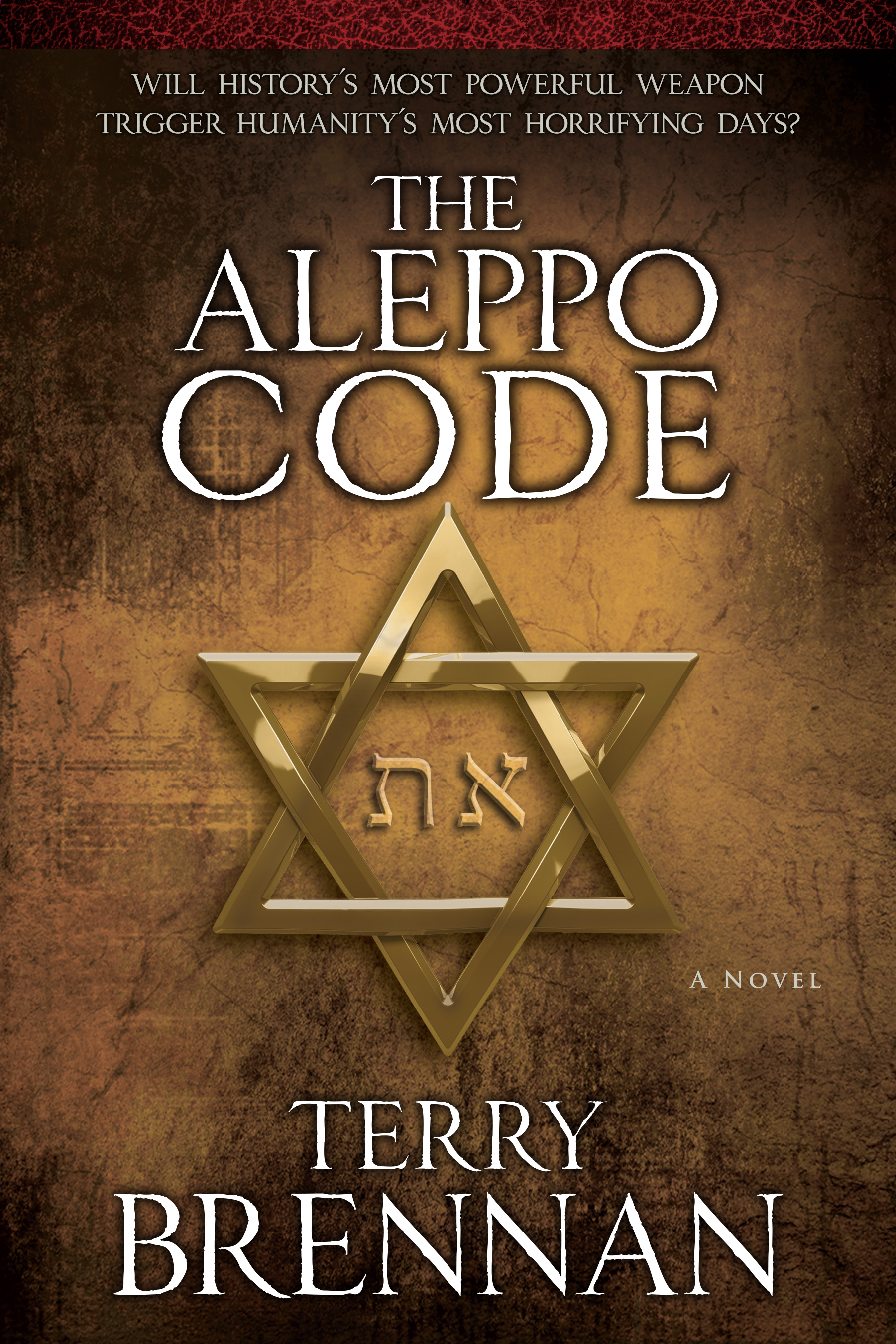
July/August – Unveil the cover of The Aleppo Code.Aleppo Code Cover

September – Promote the coming E-Book promotion from Kregel.

October – Launch date for The Aleppo Code – create some tie in to ‘Midnight Madness’ … at midnight of launch day, the first 12 people who send me an email get a free autographed copy of The Aleppo Code.

Tasks For Me to Tackle:

  • Keep my website and Facebook Author page active and current.
  • Schedule out-of-town speaking engagements for May through December, particularly in those areas where I show higher readership; (This one is a reach, but it’s worth a try.)
  • Engage services of a marketing consultant to increase my standing and visibility as an ‘expert’ speaker on events in the Middle East.
  • In the summer, begin purchasing advertising on Facebook (Goodreads? Other outlets?) and discuss with Kregel and marketing consultant how to get the most impact and best results from these ads.
  • As the launch date gets closer, recreate some of the Guerilla Marketing that I did in New York City prior to the launch of The Sacred Cipher … plaster subways and Metro North trains with The Aleppo Code postcards … when the books show up, visit every B&N in New York City area, hand out post cards, autograph the in-store books, talk to store staff about placement.
  • In September/October schedule local speaking engagements/book signings including local libraries, churches, etc.
  • Arrange in advance for on-line interviews and any other interaction I can have with bloggers, reviewers, podcast producers, etc.
  • Tasks For Kregel to Tackle:
  • Continue to actively market the new series title – THE JERUSALEM PROPHECIES – in all possible outlets.
  • A place we stumbled during the launch of The Brotherhood Conspiracy is that the reviewers on the blog tour were different than the ones used for The Sacred Cipher. Many of the early reviews started “I wish I had known this was a sequel …” For that reason, setting up an effective blog tour for The Aleppo Code is critical.

(One of the great commitments Kregel has agreed to is to strengthen the blog tour for the Aleppo Code. Under consideration is a blog tour that provides all three books for the reviewers, so they can follow the story arc of the series.)


  • Implement a Back-List promotion to drive people to book stores.
    • Create E-Book promotion for both The Sacred Cipher and The Brotherhood Conspiracy prior to the launch of The Aleppo Code.

I’ve learned a few things from creating this marketing plan and then trying to implement it. One, this marketing stuff takes a real commitment – and a lot of time. Two, it’s worth it. And, three, the work doesn’t end once the book is launched. Great … when do I get some sleep?

Have you ever developed a marketing strategy like this? What was the most successful thing you did?

Marketing Book #3 in a Series – Part Two

How to Breathe Life Into A Back-List

MarketingI’ve never been much at the marketing side of this writing business … and I was born in the wrong generation to be adept at social media.

But I knew I had to do something out of my comfort zone. My first book, The Sacred Cipher, is still going strong after five years. Sales for its sequel, The Brotherhood Conspiracy, are disappointing. With the third and last book of the series, The Aleppo Code, due for an October launch, I needed to get to work.

So I proposed a year-long marketing plan to my publisher, Kregel Publications, and asked for their support and participation. This is what I proposed for the first three months:

The Marketing Plan – December thru February:

  • Social Media:
    • Twitter – Daily
    • Facebook Page Posts – Daily
    • Blog Posts – Weekly
    • LinkedIn – Change Profile Monthly
  • Newsletter – Send out at least one Newsletter each month (I currently have over 1,000 active email addresses in my mailing list and cull it after every mailing). A regular newsletter proved to be very valuable in creating buzz for the first book:
    • December – Announce the name of the series – THE JERUSALEM PROPHECIES series; Promote the October launch of the third installment; create a giveaway offer for Conspiracy and promote it in Facebook posts and on website.
    • January – Run a contest – What will be the section titles for The Aleppo Code?
      • Put all contests up on my website and on my Facebook Page – blog post and Tweet about them;
    • February – Additional clues for the section titles contest; Promote Kregel’s month-long Book Giveaway promotion on Goodreads.com.

What Was I Willing to Do?

  • Tasks for me to tackle:
    • Look for ways to expand my marketing reach – Connect with other CBA thriller writers to cross-promote … Follow 10 journalists on Twitter … Follow 10 thriller writers on Facebook – friend them and follow them (all in progress).
    • Begin sending personal messages to my 500-plus Facebook “Friends”.
      • Ask them to “Like” my Facebook Author page and be a follower on Twitter.
      • Write 50 posts per month for 10 months leading up to Aleppo Code launch.
      • Get them all done at least 30 days prior to Aleppo launch, if possible.

Authors on Facebook

(As of January 27, I have written personal Facebook messages to 186 of my 507 Facebook “friends”, asking them to click on the link and “Like” my Facebook Author page. My “Likes” have increased from 134 to 209, up 71 in the last week – 545% from the previous week )


What Was I Asking Kregel to Do?

  • Tasks for Kregel to tackle:
    • There is no obvious link connecting the first two books into a series. I asked a lot from Kregel to help create that linkage.
      • Redesign the E-Book covers to add THE JERUSALEM PROPHECIES to the cover … or add a tag line under my name on the cover, “Author of …”
      • Create “Back Ads” in each book promoting the others … or add thumbnails of the book covers to the bottom of the back cover.

(A lot of these requests were not practical. The marketing staff at Kregel explained that it would be too confusing to make changes to the covers of the E-Books on Amazon or Barnes & Noble but not be able to make any changes to the printed books already in circulation. But they did agree to create Back Ads (pages inside the books promoting the other books in the series) in The Aleppo Code and – if it goes to another printing – in The Sacred Cipher. – Terry)


  • I also asked Kregel to implement an E-Book promotion in February for both The Sacred Cipher and The Brotherhood Conspiracy. During an E-Book promotion in January of 2014, Cipher hit #2 and Brotherhood hit #6 in all E-Book sales on Amazon for that week. Wow! Let’s do it again.

(The entire E-Book promotion I asked for in February has been moved back to coincide with the launch of The Aleppo Code. The marketing staff at Kregel explained that there is a law of diminishing returns with E-Book promotions. They did one a year ago for both books and believe postponing the E-Book promotion until the fall will benefit all three books.)

February 6th: Accelerating the Pace Down the Stretch.

Marketing Book #3 in a Series – Part One

When I saw the marketing plan that Terry Brennan had put together for book #3 in his series, I knew others had to give it a long look. This plan has some remarkable forethought to it. It’s aggressive, thorough and … I think it’s going to work to help create awareness of his new book, as well as move copies of his previous book. If you’re a traditional or independently published author who has or will have a trilogy, keep this post handy.

–Greg Johnson, President, WordServe Literary

When a Series Didn’t Start That Way

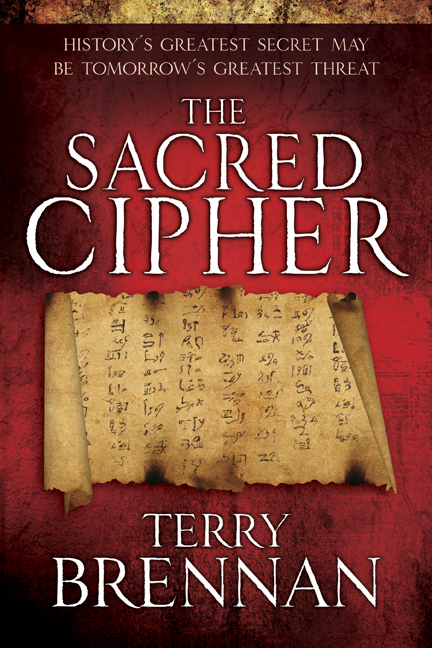
Sacred Cipher CoverI’ve been fortunate and blessed to have two novels published and a third one on the way. The Sacred Cipher, published in 2009, has done well. It appears the book may soon go to a third printing and today, five years later, people are still picking it up – and posting their reviews on Amazon. The sequel, The Brotherhood Conspiracy, was released in 2013. It got a great review in Publisher’s Weekly and better reviews on Amazon than Cipher. But sales have lagged.

One reason is that I was very ill at the time of Brotherhood’s launch (I’m fine now, thanks). Another is that neither I, nor Kregel Publishing, knew this would be a three-novel series. It just started out as one book. So it wasn’t marketed as a series and Brotherhood hasn’t benefited from the “pull” that Sacred Cipher generated.

Since I have a personal stake in the success of these books, and a lot of years invested in them, I want to do everything I possibly can to promote the increased sales of The Sacred Cipher and The Brotherhood Conspiracy, particularly in anticipation of the launch of The Aleppo Code in October – the third and last book of the series.


How Do I Connect These Books?

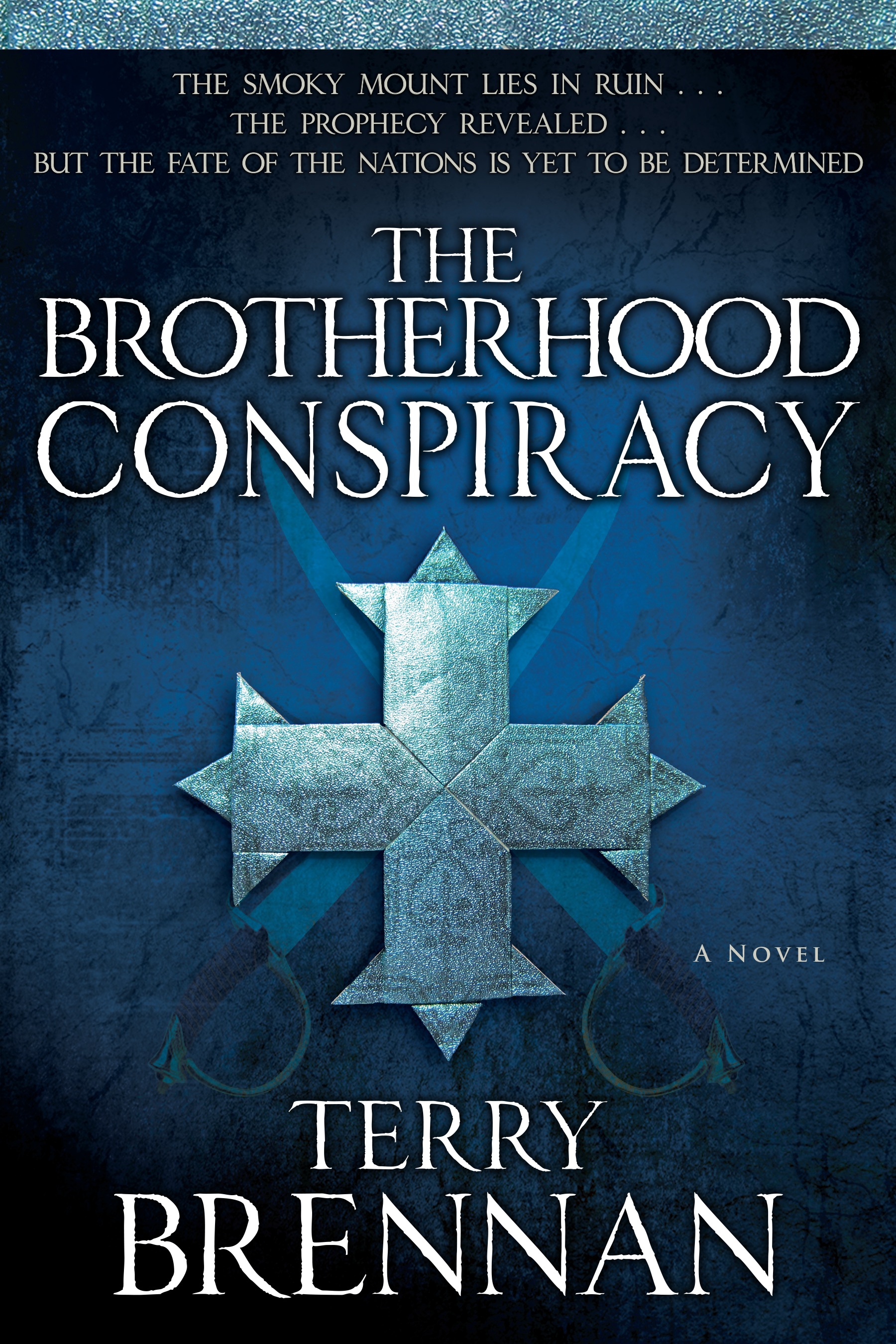
Brotherhood ConspiracyI created for myself an aggressive one-year marketing plan starting in December, 2014. The plan includes a month-by-month listing of what I will do to help accelerate the sales of the first two books, including a commitment to create a consistent social media presence, to produce a monthly newsletter (I have over 1,000 active email addresses in my mailing list) and to personally undertake a series of other marketing initiatives over the next year.

I included in that plan some requests for Kregel to join in this marketing effort. The team at Kregel has been wonderful to work with over the past several years and I deeply appreciate all they have done to support and promote my books. It’s been a great partnership and, because of that relationship, I believed it was acceptable to include some requests for additional support from Kregel.

Essentially, the requests of Kregel fell into two buckets:

  1. What can we do to link the books together as a series to create some momentum and expectation in the short-term for The Aleppo Code launch next fall?
  2. And what additional promotional effort is realistic for Kregel to invest in marketing the first two books over the next twelve months?

There’s No Harm in Asking!

I was thrilled when Kregel responded to this marketing plan, and my requests, with four major initiatives they were willing to undertake:

  1. The Jerusalem Prophecies series title has been added to the ONIX data feed that Kregel provides to Amazon, Barnes & Noble, etc. for the book’s online pages and will be used in all promotions.
  2. Kregel will create an E-Book promotion for both The Sacred Cipher and The Brotherhood Conspiracy just prior to the launch of The Aleppo Code.
  3. Kregel will implement a blog-tour for The Aleppo Code launch – but they are also considering a blog tour that provides all three books for the reviewers, so they can follow the story arc of the series.
  4. Kregel will also run a “back-list” sales special for the first two books during the October launch.

I’m told this is an unusual step for a publisher to take to invest promotional resources into back-list titles. Bless them that they did. Now it’s up to me to implement and fulfill the elements of the marketing plan.

Yikes!

February 4th: What the first three months of the plan look like.

WordServe News: January 2015

Exciting things have been happening at WordServe Literary!

On the final post of each month you’ll find a list of Water Cooler contributors’ books releasing in the upcoming month along with a recap of WordServe client news from the current month.

New Releases

Daniel Allen released his second book, Summoned, with IVP Books. 9780830836871_p0_v2_s260x420

*************************************************************************************************

Jim Burns and Doug Fields released the workbook companion to their book Getting9780781412186_p0_v1_s260x420 Ready for Marriage with David C. Cook publishers.

************************************************************************************************

Michelle Griep released a regency novel with Barbour Books, Brentwood’s Ward. 9781630586799_p0_v1_s260x420


************************************************************************************************

Kate Hurley released her debut nonfiction with Harvest House Publishers, Cupid Is a 9780736962261_p0_v2_s260x420Procrastinator.


***********************************************************************************************

What We’re Celebrating!!

Deb Coty’s Fear, Faith, and a Fistful of Chocolate won an Illumination Book Award: Shining a Light On Exemplary Christian Books!

How to Avoid the Second-Book Slump

How to Avoid the Second-Book Slump @JanalynVoigtWriting, like marriage, is an odd mixture of passion and duty. The same writers who speak of “falling in love” with a story complain about “having to” edit it. Some marriages are easier than others, and that’s also true of books. Some pearls make it to publication with few edits, but often, by the time a novel reaches readers, its writer is sick of working on it. Given these conditions, it’s not surprising to learn that the second book in a series frequently disappoints readers. Preventing this from happening to your second book requires a look at this syndrome’s causes.

Time Frame  

A debut novel usually benefits from years of labor as its author polishes it over and over in order to land a contract. But a second novel, when contracted from a synopsis and likely written in a matter of months, doesn’t go through as strenuous a process.

Solutions:

  • Simply being aware of this as a problem is half the battle. Commit to giving your second book your all, just as you did with your first.
  • Before you submit your second manuscript, make sure you put it in front of a number of “eyes.” Accept knowledgeable critiques, remarks from beta readers, and/or paid editorial advice.

Interruptions

A writer often has to set aside writing the second book in a series to work on edits and/or promotion for the first. While necessary, interruptions stifle the creative flow. Most writers find returning to a cold manuscript difficult.

Solutions:

  • Have all books in a series written before you submit them for publication. Previously, writers held off on writing a second book until the first had sold. This made sense because publication usually went through traditional publishers. These days it’s harder to win that traditional contract but easier to become published. Take this advice if you would hire an editor and independently publish your work, should it fail to land a traditional contract.
  • Learn to write your first draft quickly so that, by the time edits for the first book hit, you’re ready for them.
  • Dedicate part of your day to writing and part to editing, with a break in between. Your brain will learn to readily switch gears.

Conflicting Emotions

During edits, writers must face, accept, and overcome their own weaknesses. The angst this causes can attach itself in the writer’s mind to the series itself. To draw a parallel from marriage: While undergoing marital counseling , it can be hard to remember first love.

Solutions:

  • Go back over your notes or read earlier entries in a writing journal to remind yourself why you love this series.
  • Reconnect with your novel’s theme, which you hopefully drew from one of your passions.  Prayer and meditation can help.

Eroded Confidence

It’s common knowledge that artistic people are their own worst critics, and that’s certainly true of writers. As a result, while dealing with edits it’s easy to lose confidence and take fewer risks with the second book, which can rob it of zeal.

Solutions:

  • Re-read any endorsements or encouraging comments you received for your first novel.
  • Remind yourself that your publisher believes in you enough to work with you.
  • Give yourself permission to dream about what could happen in your story. Don’t censor your ideas, but simply write them down. And when you go back over your brainstorming session, be wise but bold.

Creative Desire  

When the passion in a marriage fizzles, it’s tempting to look elsewhere for fulfillment. In the same way, when a writer loses that loving feeling for a project, other tempting ideas can siphon creative energy and distract attention. This has an adulterating effect on the work at hand.

Solutions:

  • Rather than ignoring new ideas, write them down (briefly) and save them for later. This keeps them percolating on the back burner until you’re ready for them.
  • Stir your passion for the work at hand by dreaming about the story, exploring the nuances of its characters, and mentally writing the next scene.

If you follow these steps, you’ll soon recapture your passion for your series.

Can you suggest some other ways to revive your writing mid-series?

How to Avoid the Second-Book Slump was first published at Live Write Breathe, Janalyn Voigt’s website for writers.

The Cheater’s Guide to Building Your Author Platform – Part 3

Marketing

Building Your Author Platform

To be a successful author, you need to think differently. Within your gut, an uncontainable passion burns. Your passion is to change the world.

Steve Jobs was a person who changed the world by promoting Apple products. I am typing this blog on my Mac with my I-phone 6 by my side. Watch this marketing video clip where Steve Jobs challenged a company to think differently:

Marketing is about values. In this noisy world, your message is a clarion call of what you stand for. Be clear about who you are and what you are about. Where do you fit in the world? More specifically, where do you fit in your niche?

Rejection is Your Friend

One of our main marketing mistakes is to try to be too general. We fail to touch anyone’s life because we are trying to touch everyone’s life. We “like to be liked.” We don’t want to be rejected.

There is already a beat of the drum that your soul marches to. There are other’s who feel the same way you do. They are your “tribe” and you all march to the beat of a different drum. Before you find your tribe, you will likely find rejection from people who don’t hear what you are hearing or see what you are seeing.

A friend of mine, Tracey Mitchell wrote Downside Up (page 15). She wrote this about rejection:

1. Rejection acts as a personal conductor, carefully arranging who and what qualifies for your future.

2. Rejection is a friend who witholds no secrets, exposes all enemies, and closes every wrong door.

3. Rejection is a golden opportunity to better understand God’s love, human relationships, and gifts of encouragement that lie within you.

Think differently about rejection. The closed door of rejection to your message prevents you from wasting your precious time with people who “don’t get you.” Smile at rejection as your friend.

I had a friendly conversation with a woman representing a publisher at the National Religious Broadcasters (NRB). I shared with her that my background was pastoral ministry. She then asked what my denomination was. When I said “The Foursquare Church” she quickly said, “I won’t be able to publish your future books.”

I sincerely thanked her for her honesty and then asked, “Why?” She then said, “Our constituents do not believe in women pastors and they are closed to Pentecostal Denominations.”

I was so thankful for her blunt honesty. I knew that this was not a publishing house that I would publish any of my future books with.

Fearless Marketing: Take the Risk and Get the Word Out

Fearlessly market to your tribe. Instead of spending time trying to get people that you already know to be interested in what you are doing, throw your net on the other side of the boat and find those who identify with your voice. Here are a few specific tactics to build your tribe and market your message.

Click the Picture for Instant Access to Free Ebook

1. Free Give Away Write a simple ebook and put it on the front of your website or at the end of your blog. You give it away for “free” when they type in their email address. The secret of the email address is that this person who is on your site may be a tribe member. Follow up with them with future blogs and products. Don’t worry about the perfection of your ebook. Click the picture for an example of one of my free ebooks.

2. Building Partnerships Are you spending time building relationships with others who are influencers? I had the privilege of sharing a meal with Dan Miller and his wife Joanne at a conference. As we built a relationship, Dan asked me to speak at the 48 Days Cruise that he is leading in February 2015. Michael Hyatt and his wife Gail are also speaking as well as other influencers.

Click Picture to Find out More about The Influence Cruise.

You never now where one relationship will lead you. Be intentional about networking. Invest in conferences and events where you will meet and learn from people who are impacting others. In fact, I want to invite you to sail to the Caribbean with me on The Influence Cruise. (Click the picture above to find out more information).The relationships that you build on these type of events can become joint-venture partners in the future.

3.Getting the Message Out Get outside of the box of being a traditional author who waits to be discovered. You have a message, so develop your message in such a way that you have additional products to offer your tribe. If they already love what you stand for, chances are they will appreciate other teaching and resources that you provide.

marketing building your platform
Click to view “Exploring Ephesians” Course


Here is an example of an online course that I have developed called “Exploring Ephesians.” As a course set up on Kajabi Next, it continues to be a source of encouragement to everyone who takes it. Sign up today to see the example of what I have done, then develop your own course. I’m sure you can do an even better job!

A Final Opportunity We are all learners. When God first spoke to my heart “to engage” in building a platform for the books He was calling me to write, I needed to take baby steps. Wherever you are on your journey as an author, let’s connect.

Let me know if I can help you in any way. Leave a comment below, or find me on social media. Let’s make Jesus famous as we share His message which will change the world.


Refusing the Writer’s Call

Refusal of the call questis a common element of great stories, fictional or historical. The hero is called to a quest, but, initially, he balks. He says, whether through word or deed, “I’m not big enough for this task.” Or maybe just, “I’ve got better things to do than sacrifice myself for that.”
From Jonah getting on a ship sailing in the opposite direction of Nineveh to Bilbo Baggins telling Gandalf that all he wants is a nice tidy hobbit house with tea served on time, heroes have been trying to escape the call since mankind has been telling stories around the fireside. And for just as long, the stories have been winning the hero over to the adventure.

Why? Few of us see ourselves as heroes. We know we’re not up to the task, whatever the task is, and we’re right. We’re not big enough, strong enough, brilliant enough or good enough for the task at hand. And yet, deep in our souls, we know God made us for more than having our tea on time.

In all good stories, the hero finally accepts the call. After trying to outrationalize his call, Dietrich Bonhoeffer takes on the role of hero as he boards what is likely the last ship home to Nazi Germany, a ship that takes him ultimately to his death.

Having been elected to archbishop because he is quiet and conservative, expecting to make no waves in an El Salvador on the brink of civil war, Oscar Romero finally accepts that he must speak out, as he stands over the bodies of two murdered priests.

Paul accepts what he must do as God calls his name in a flash of heavenly light.

Little Samuel answers God on the third call in his small child’s voice: “Speak, for your servant is listening.”  Not knowing, of course, that he was accepting a lifetime mantle as prophet.

We writers refuse our call, too. Sitting down at the computer and typing out a page is such a small thing, right? It’s tiny in comparison to the heroes that have been written about. And yet, it feels daunting.

There’s the courage it takes to face a fresh scene. Will it be beautiful or fall flat? It’s as if it’s a test of everything inside you.

And there’s the courage it takes to call yourself a writer. The voices are insistent. How many times have you told yourself that you should just concentrate on being a parent, give your talents to your church and your job, and live a peaceful, ordinary life? You don’t have time for this story? Or more likely, you’re not talented enough for the story you want to write?

But if God made you to write, you’re going to be restless until you do. You can play the role of Jonah, and get on the ship going in the opposite direction and fight it out with the big fish. Or you can accept that being brilliant and big-hearted enough for the story is not what’s at stake. If God made you for this writing quest, he’s planning on equipping you as you go. Sit down at your computer and get started.

How a Non-Writer Like Me Got Published (Part I)

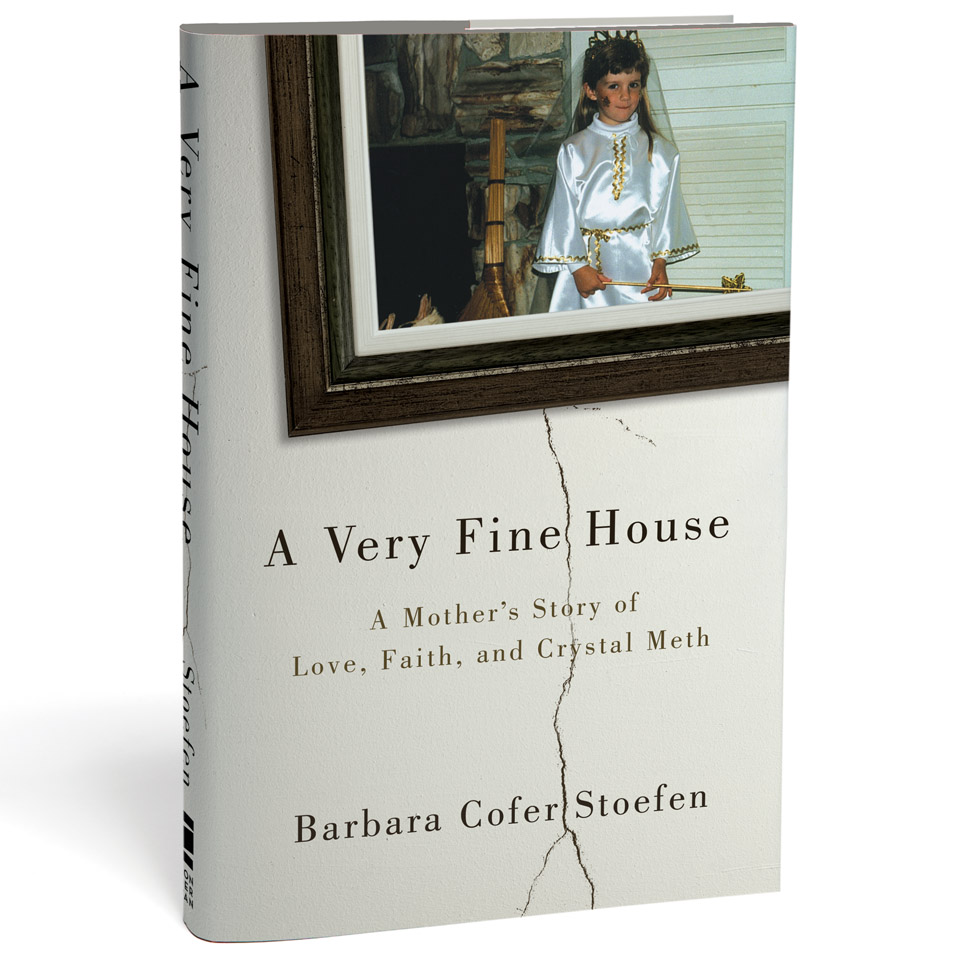
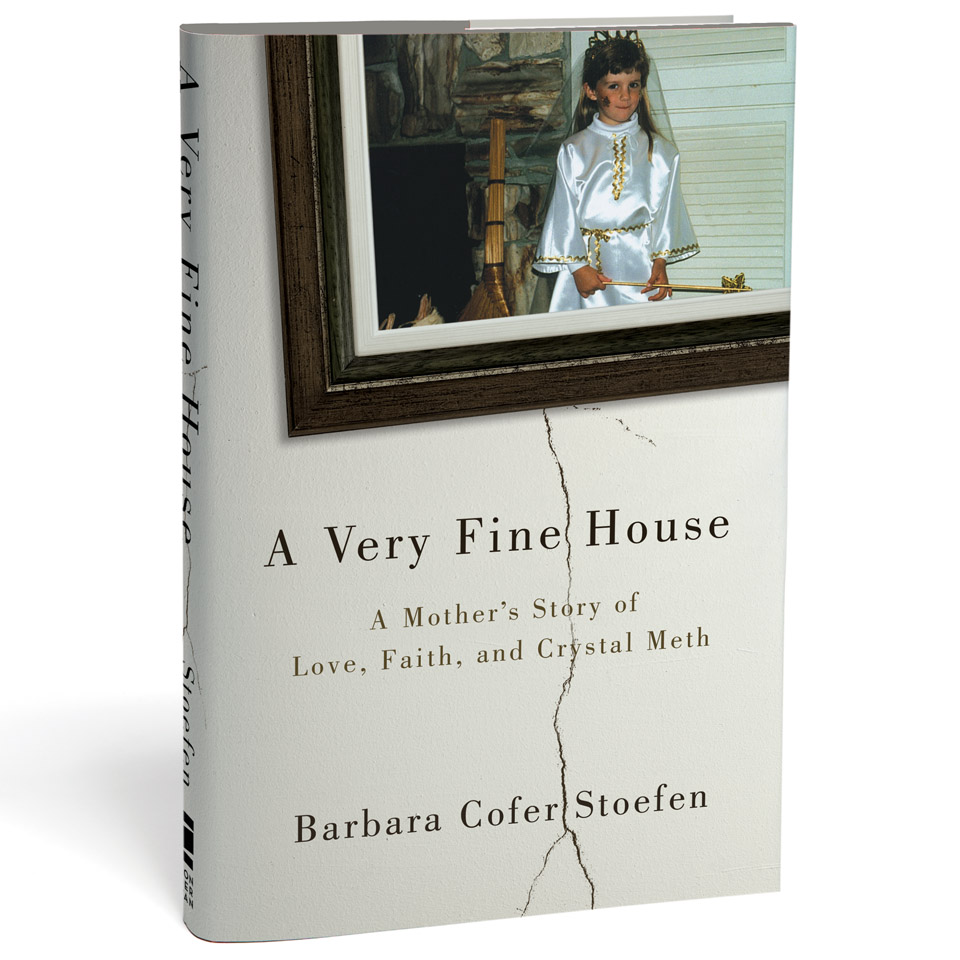
I never aspired to be a writer. Truly. In fact, Mr. Johsen, my high school senior English teacher, once said to me, “Cofer, you will never graduate from college because you can’t write!”

grunge image of a fieldI also never really aspired to write a book. Seems most everyone who survives trying times hears from well-wishers the old adage, “You ought to write a book.” And many of us believe that we could… but never do.

Writing didn’t become a consideration in my life until, uh, well, God and Oprah suggested it. This happened during the height of the recession when my physician recruitment business of twenty years was struggling to pay the bills. Exasperated, I turned the computer off early one business day and shifted my attention to the Oprah show. A discussion was underway about women who had founded new businesses, many starting in a basement or garage. Mrs. Fields was among those featured, as was the creator of Spanx.

I was surprisingly inspired and then on my knees. “Lord, please show me a new way to be in the world. I’m likely too old to start a new business, and the garage is already full, but please weigh in if you have any ideas. What can I possibly do at this age to augment the business I already have?”

I was unprepared for the answer I received about ten days later. It was mid-morning on a Friday and I was alone in the house. The stillness was unnerving. I leaned on the door jam of my office and faced the darkened expanse of the room. I dreaded entering. The only thought in my head was the ever-present drone, get to work. And then it happened. I heard The Voice. It was that commanding “voice within my own” that William P. Young so beautifully describes in his book, The Shack. I’d heard it before.

“Write a book about the gifts you were given.”

Huh? God, is that you? Write a book… really?

I’d never written anything more than a decent consumer complaint letter, and yet I just heard God tell me to write a book. Like I knew how to do that.

But the nudge was unmistakable.

I knew too what He meant by “gifts.” I often thought of as gifts the lessons learned through my daughter’s addiction and recovery. Even at the moment when Annie broke into our house and literally stole the family jewels, the opportunity that event provided for intervention seemed a gift. Maybe the judicial system would stop her from killing herself with drugs.

If I was indeed to write a book, I first needed my daughter’s permission to share our story. Then in sustained recovery from drug addiction, Annie would be both antagonist and heroine in my memoir. Telling an authentic story would require vulnerability on both our parts, as well as a willingness to reveal some very private details from our lives. Were we ready for that kind of exposure?

Annie’s response was wholehearted. “Go for it, Mom!” I didn’t know at the time she was secretly musing, isn’t that precious? Mom thinks she’s going to write a book.

So the new entry on my daily To Do list became “write a book.” I mean, how hard could it be, right? I already knew the story, so I figured I could crank something out in a couple of months. Uh-huh. I really was that clueless.

My writing began one night at 10:00. I’d promised my husband not to take valuable time away from our business day in order to pursue my newest folly, plus late night hours also provided a peaceful quiet. The time was guilt free. Settled in with a cup of tea, I faced the blank Word document on the computer screen before me…and silently prayed.

Okay, God. Now what?

(Stay tuned for Part II about finding a voice, and the will to keep going.)

Was there something that happened to you that got you on the writing path?

Revising Aloud

Tihamér_Margitay_Exciting_story“Reading aloud,” I’m always telling my writing students, “is the best way to revise.”

I encourage them—sometimes require them—to find read-aloud partners or start writing groups in which they take turns reading their work aloud.

“Hearing your sentences spoken lets you know whether they’re clear and natural-sounding—whether someone actually could speak them,” I explain. “And it doesn’t work to read to an empty room. You need a warm body, a listener, to complete the communication. Speaking is, after all, a collaborative act.”

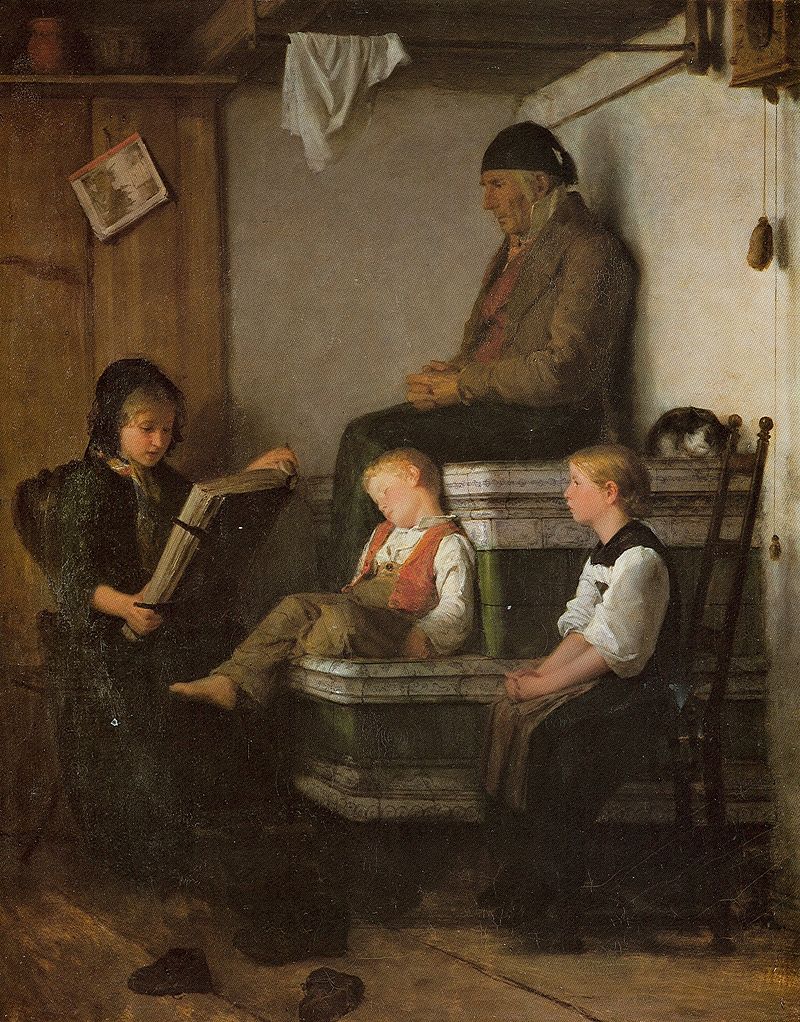
Finding that read-aloud partner is easy at college, where everyone’s engaged in writing all the time. Outside the college setting, though, finding someone willing to listen can be a challenge.800px-Anker_Sonntagnachmittag_1861 People are busy. Few have time to sit still for an hour while some verbose writer drones on. That’s how they’ll imagine it when you propose reading to them. We Americans have lost—or never had—the habit of listening to people read. We had only the shallowest tradition of serial novels, released chapter by chapter as Dickens’ novels were and read to the whole family at fireside. And no comfy pubs—without blaring TVs—like the one where C. S. Lewis, J. R. R. Tolkien, and their writer buddies hung out, drank beer, and read their work to one another. Writers who give public readings these days will tell you it’s hard to get even close friends to attend. Our lives are too busy for read-alouds.

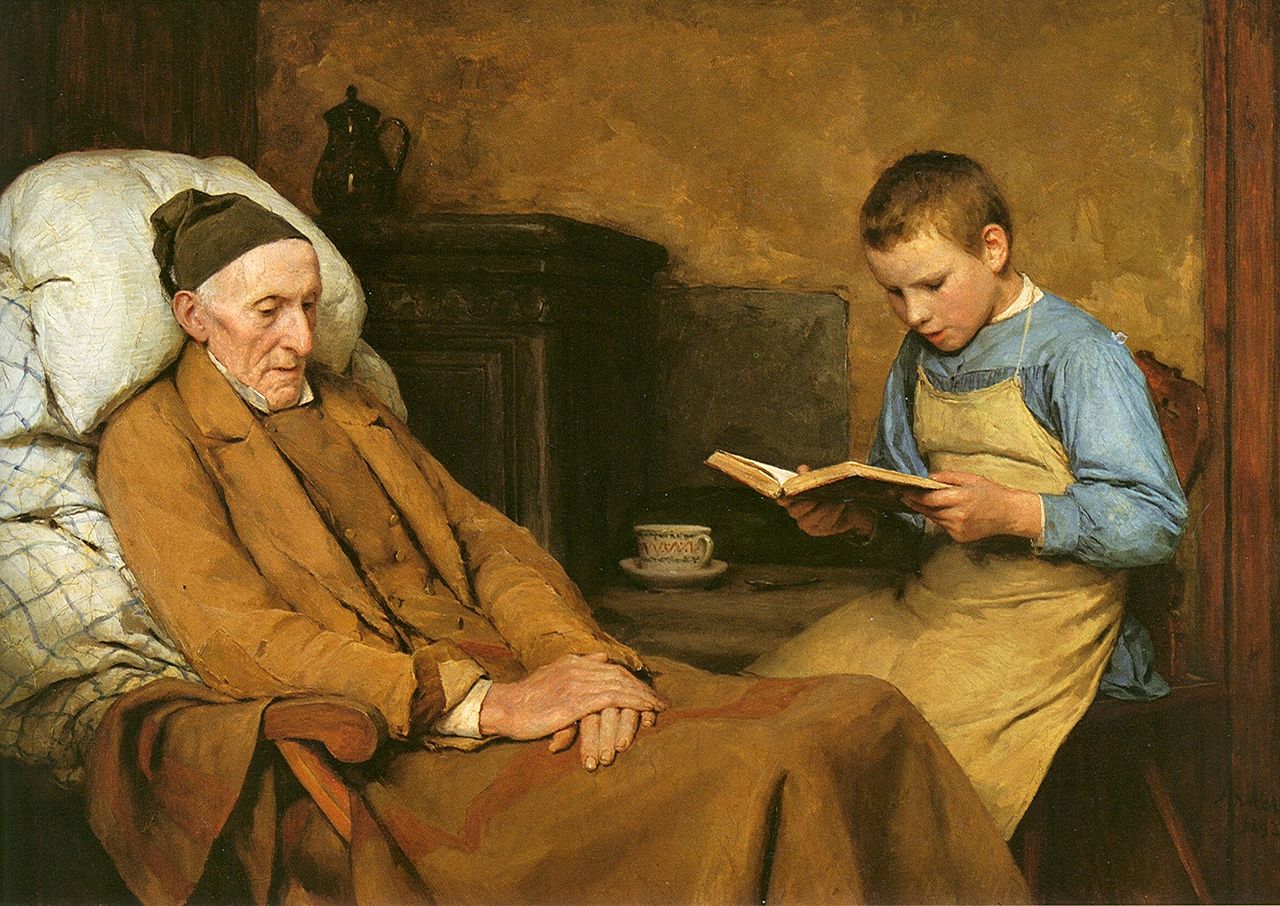
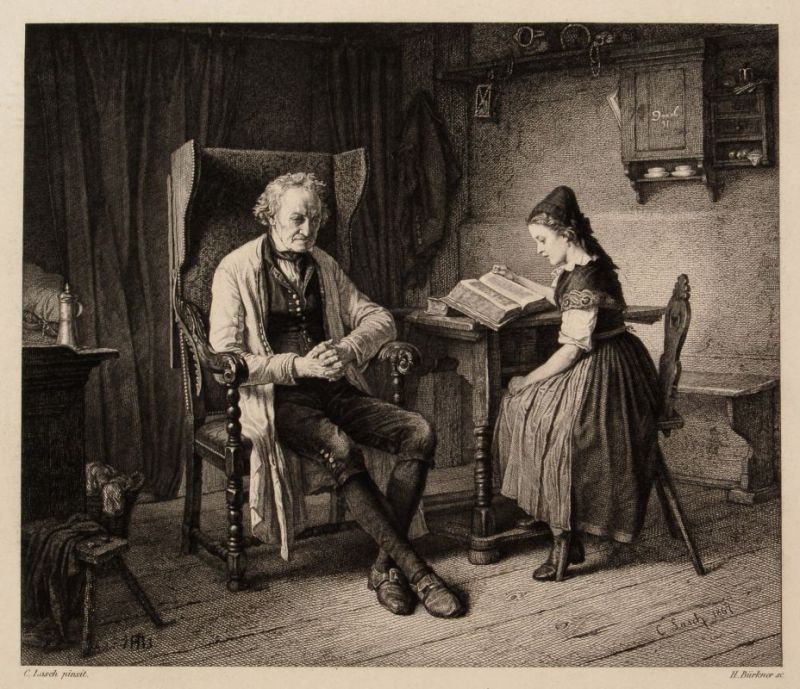
I often recommend to writer friends that they make use of the lonely people in their lives: shut-in relatives, kid-imprisoned friends who wish they had a grownup to talk to, recently retired colleagues with time on their hands. 1280px-Anker-_Die_Andacht_des_Grossvaters_1893It sounds terrible, this “making use” of others, taking advantage of their neediness to assuage your own, but in my experience such mutual exchanges not only helped my writing but also transformed intended acts of mercy—“I should spend more time with my mother-in-law,” I was always telling myself—into pleasurable time together, which we both looked forward to. My mother-in-law not only got longed-for company but also felt needed; I got my warm body but also genuine enjoyment, without having to chide myselfHugo_Bürkner_Lesestunde (usually in vain) to, as Paul recommends, “give what you have decided in your heart to give, not reluctantly or under compulsion, for God loves a cheerful giver” (2 Corinthians 9.7 NRSV). The mutual benefit, I found, guaranteed that cheerfulness, for both of us—because attentive listening and being listened to can’t help but nurture relationships.

My daughter Lulu has been on semester break from college for the past month, with a couple more weeks to go. It’s tricky having a grown daughter home that long. We’ve long since put our Christmas CDs away, but I’m still in the throes of Bing Crosby’s parental prophecy for the season: “And Mom and Dad can hardly wait for school to start again!”

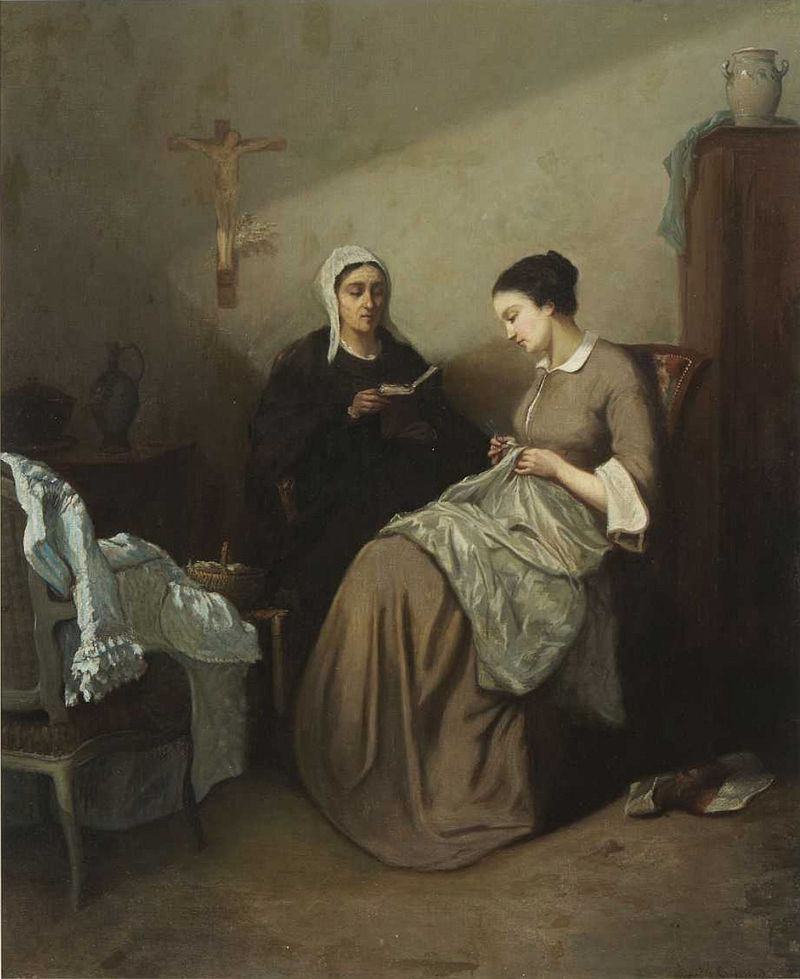
Luckily, Lulu’s engrossed in the final revision stages of her senior project—a hundred-Amédée_Guérard_Bibelstundepage translation of and critical introduction to an East German book—and I’m busy trying to cut 30,000 words from a novel before sending it out, so we have tasks to distract us from the inevitable mother-daughter combat. Also, since we’re in about the same place in our revisions—where what we need most is to hear them aloud and find out if they work—we’ve established a read-aloud schedule: I read her a couple short chapters during her late breakfast, and she reads me one long chapter while I trim vegetables for dinner.

I can’t say it’s the perfect exchange my mother-in-law and I had. Lulu doesn’t end my readings, as my mother-in-law always did, with “That’s the best thing you’ve ever written!” And, as a writer and teacher of writing, I give more critical feedback than Lulu really wants. But our reading fills two hours of our day with mostly pleasurable, mutually beneficial work. More importantly, the listening involved gives us both practice, at this complex juncture of our parental-filial journey, in navigating our new relationship as related but separate adults. As peers, in other words. Equals. Reciprocally heard, appreciated, and loved.