Christian Writing

writing-828911_640

I originally wrote this at a time when I was heavily involved in fiction writing. Now, as an agent, I am more involved in editing/preparing fiction writing to be sent out to editors. However, I think the discussion is a good one to have within the Christian writing community.

Setting: The 2008 Festival of Faith and Writing. I attended the FFW conference in order to discover answers. With my thesis defense the following weekend and most of my writing within said thesis exploring elements of the Christian faith, I needed to know exactly what it meant to be a Christian writer.

I attempted this discussion within “The Academy”, as I called it then, to little avail. I doubt that I was asking the wrong questions only that other writing believers didn’t have the answers, either.

The keynote speaker at FFW, Mary Gordon, provided her own insights into my queries, “If your primary purpose in life is to be moral, then your primary goal should be to do good works, not to write.” But, isn’t it possible to write moral lessons within one’s stories? Even Henry James would instruct that literature needs to have a “conscious moral purpose”.

Uwem Akpan, the chapel speaker, started his devotional with, “Let us begin as we always do—in the name of the Father, Son, and the Holy Spirit.” I was lucky to start Sundays that way, let alone my writing. I wanted to be a Christian writer, but did I initiate my writing in prayer?

Mary Karr seconded this sentiment by discussing her prayerful approach to writing poetry. I was beginning to question myself as a Christian, not as a writer!

I left the Festival even more unsure of how to enter a writing career as a Christian. Instead, I began focusing on how I had been trained to write within “The Academy”. And, after gaining some perspective, I started to write.

And I started to publish. In secular journals.

Plot: Dun-dun-dun…

So, I have an MA and an MLIS, my stories are getting published, I’ve begun working for a literary magazine, and I’m teaching as an adjunct faculty at a Christian college. I am living the life.

And then, one of those moments happened where I thought to myself, This will make an excellent blog post later!

One of my students asked me, “So, what do you have to do to be a Christian writer?”

After staring blankly in response and flashing back to a moment in graduate school where I had asked one of my professors a similar question, I stared. I am pretty sure that I responded somewhat intellectually and then quickly went back to the lecture, steering as far away from her question, or the answer to her question, as possible.

Character: So, What is My Answer?

And, am I willing to live with the consequences of my answer?

For example, if I say that being a Christian writer is about only writing Christian or even faith-based stories, am I willing to stop writing the stories at which I excel? My mother would appreciate this; I like to think that the journals to which I am submitting would not.

As I wrote in my own blog post later that day, “And, here is the answer I have (to shamelessly plagiarize Augustine): Love God.”

The answer has absolutely nothing to do with writing or publishing (the people at the Festival knew this). As a Christian, everything I do is spiritual, including my writing.

Everything. I. Do. Is. Spiritual.

Language: These are a Few of my Favorite Things!

As a short story writer, I appreciate the art of crafting each individual word. For me, it’s not about the plot—it’s about making every word count. The language is the story!

Instead of focusing on how many times I use “Jesus” or “God” (and, trust me, some secular novels could probably compete with Christian novels in this aspect!) or even incorporating a redemptive theme, I focus on the playfulness of my words.

I’ve mentioned reading stories aloud. I want someone to be able to read my stories and feel something. I want to move someone with my words. Do I want them to accept Christ after reading my story?

Not necessarily (audible gasp inserted here).

Yes, I care about my readers, but my ultimate goal is to write. In my daily life, with the people I regularly interact—at work, at church, at the grocery store—I strive to emulate the love of Christ however that may look.

Within my writing, I strive to be a darn good writer.

And, occasionally, when I am feeling the need to impress Henry, the purpose of my story is intentionally moral.

What does it mean for you to be a Christian writer?

Should I Write Fiction or Non-Fiction?

When I was an aspiring writer, I had no idea whether I should pursue novels, (fictional stories using made-up characters, scenarios, and plots), or nonfiction, (themed projects using real-life examples). So before I signed with WordServe, I wrote a proposal for both.

Juggling a Writing Career and a Day JobWhen my literary agent steered me in the direction of nonfiction, I felt two distinctly different emotions. One part relief, because it’s easier for me encourage, inspire, teach, and motivate through true stories and practical application. But I also felt a twinge of disappointment. After all, it’s a little more fun to make stuff up. Besides, you can get away with things under the guise of imagination, where non-fiction holds you to a strict standard of authenticity.


Mark Twain once said, “It’s no wonder that truth is stranger than fiction. Fiction has to make sense.” He also said, “Fiction is obliged to stick to possibilities. Truth isn’t.”

Today, I’m much more comfortable in my true writer’s skin. Occasionally, I still feel the old pull to write novels, and who knows, maybe someday I’ll do it for fun, but for now, I recognize that I am on the right path. I was made to inspire through nonfiction. But it doesn’t mean I have to give up story-telling…as a matter of fact, for me, stories enhance the topics I am drawn to write about.

Maybe you understand my dilemma. If so, perhaps these bullet points will provide clarity. After all, facts help us make informed decisions.

Fiction

  • Defined by Merriam-Webster as written stories about people and events that are not real. Literature that tells stories which are imagined by the writer; something that is not true.
  • Many readers are drawn to the escape of make-believe story, becoming passionate followers of characters.
  • You can hide truth in a fictional account.
  • There is an increased opportunity to sell two to three book deals as a fictional series.
  • There are fewer speaking platforms to engage with readers, and introduce them to your work.
  • There are fewer fiction publishers available to buy your books.
  • You must write the entire book before submitting it to publishers.

Nonfiction

  • Merriam-Webster describes nonfiction as writing that is about facts or real events. All writing that is not fiction.
  • Statistics show the greater majority of dedicated book buyers gravitate to nonfiction.
  • You can use fictional techniques to tell true stories.
  • On average, studies show nonfiction authors are paid more for their books.
  • With effort, you can find a place where groups gather for practically any true subject–and where they meet, a speaker is needed. Most publishers will require speaking platforms from nonfiction authors.
  • Tapping into felt needs sounds easy on the surface, but unearthing fresh subjects a publisher will buy, and a title that draws readers, is almost as tough as writing the book.
  • Though you need only write two to three chapters of your book, a thorough proposal including a solid marketing plan, comparative analysis of similar books, and complete outline with chapter blurbs is required.

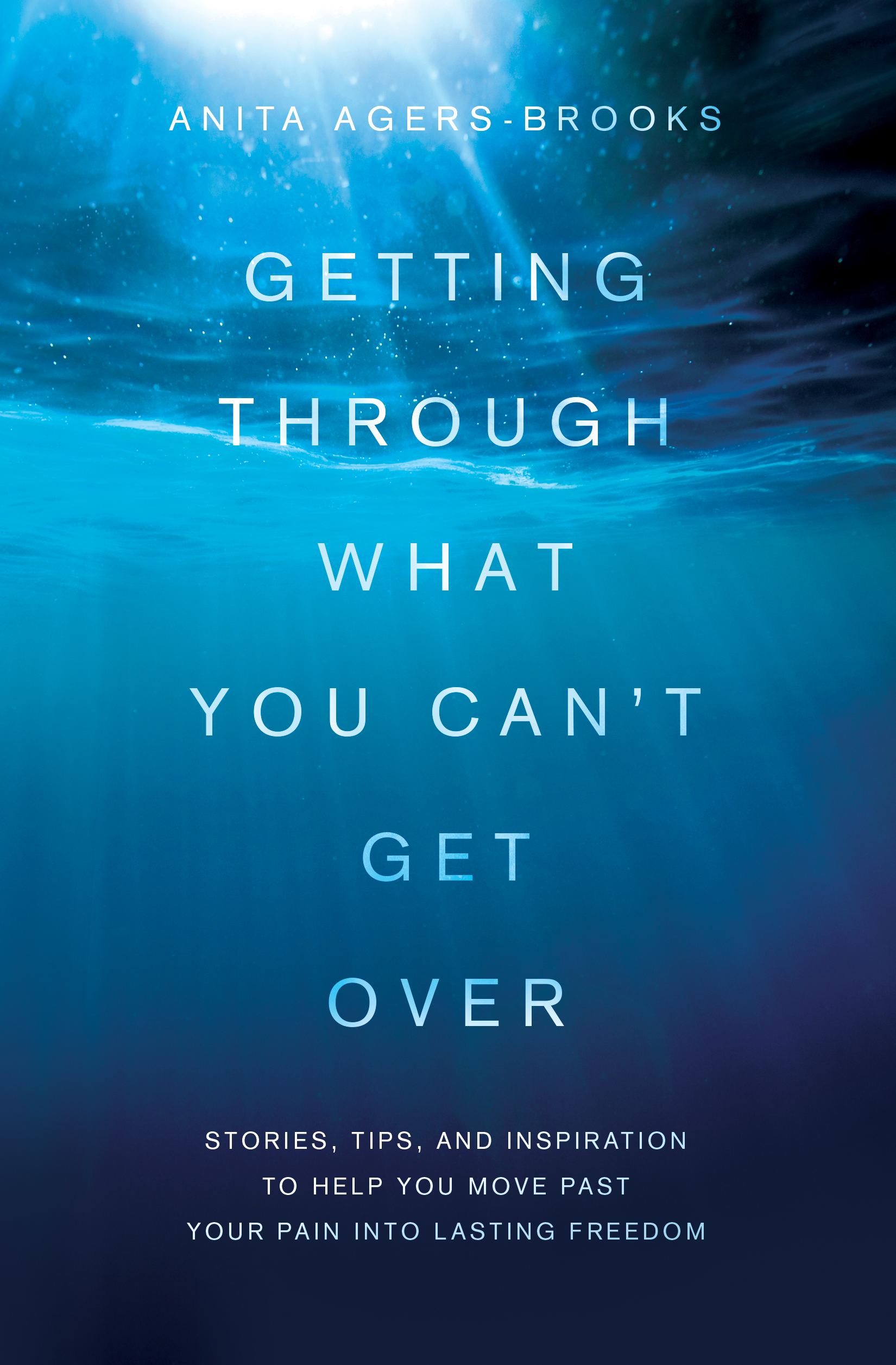
Getting Through What You Can't Get Over Book CoverFor me, nonfiction is my natural fit, and reviewing these bullet points confirms my choice. I have a speaking platform. I prefer truth-telling over make-believe. I love to research facts, statistics, and the latest studies. I actually enjoy the challenge of coming up with a fresh approach to an existing issue, while pounding out a unique title.

There are readers for every genre, or those genres would fade away. Thankfully, there are writers to supply the demands. As an author, I must look at where I can do the greatest good, after all, the books I write ultimately belong to readers. I can’t pen it all, so wisdom says, write what I can pen best. In my case, this means nonfiction.

Are you writing fiction or nonfiction? Why is that your choice?


The Writer as Historian

As a college student interested in science, I was drawn to the pursuit of new discoveries, the promises of technological progress, and a fascination with the possibilities of the future. History interested me, but I did not fully recognize the value of this academic field until I acquired two more decades of life experience.

When I started writing my book, Questioning Your Doubts: A Harvard PhD Explores Challenges to Faith, in order to include accurate stories from seasons in my life alongside explanations of concepts and advice, I briefly stepped into the role of writer as historian.

Now, a year after the release of the book, I treasure this role as one of the special privileges of being an author. Here are a few ways in which authors can fulfill this role:

Preserve Places – Change is one reliable constant in life. Buildings undergo renovation, new businesses open up and others close on familiar hometown streets, and development transforms the landscape. Such changes usually fuel progress and keep institutions relevant for new generations. However, no matter how positive the changes may be, change brings loss, too.

When an author describes a place within the pages of a book, he or she takes a snapshot of a place to preserve for the future. Within the pages of a book, time travel is possible, as a reader opens a door into a building now demolished, treads on carpet from a different era, and takes in the chandeliers, paintings, and furniture in a scene that no longer exists.

Such passages do more than stir nostalgia – they help a reader gain insight into a past way of life.

Uphold Values – Somewhere in the rooms of the past described in scenes of a book, a reader can rediscover traditions worth repeating and values worth teaching to new students. Gracious hospitality comes alive in descriptions of exquisite pastries on silver trays shared along with polite conversation.

A reader who dines along with characters in the book may not be physically nourished, but may find encouragement to engage in pleasant conversation and linger longer at the family dinner table.

Record Lessons – Not everything about a previous era is rosy. A writer that captures the truth of a moment in time in a passage records lessons that can inspire change for the future.

Dialogue that exposes attitudes and prejudices that are honest representations of a time and place help readers discern the need for present day improvements. In preserving history, authors encourage progress.

All authors serve as historians at some point in their books, no matter what section of the bookstore will display their works. You can find history in a physics book as surely as you can in a book on architecture.

In what ways have you captured history in your writing?

Got Writer’s Block?

pencil-918449_640It happens to all of us at one time or another. If you’re anything like me, you probably tend to experience “feast or famine” when it comes to putting words onto a page or screen. At times it is hard for my now middle-aged hands to keep up with my brain; and other times, it is frustrating to these same hands to have little, if any, words I can string into sentences that make sense.

If the season I’m in permits me to do so, I use the down times to invest in my own personal growth. I study. I read. I observe. I take notes. I connect with others. This helps me in several ways, but this one way is what motivates me most:

It allows my brain to rest and receive. As writers, we offer so much output that we need to be careful to prevent our own well from drying up. Without investing in our own personal growth and development through relational and educational resources, we minimize our own effectiveness in what we share through our writing.

Most of the time, though, I have some kind of deadline–whether for an event where I’ll be speaking, a blog post I’m writing, a class I’m teaching, or a book I’m authoring. It’s in these situations that I find this one tip helps me get over writer’s block.

The Power of Story

For me, it helps if I can quiet the noise in my inner world long enough to allow a story to come to my mind. It might be a story I’ve read or a story I’ve lived. Either way, there is much to be said about how story inspires.

Consider the following:

“We may live our lives in prose, but it is poetry that we live for. A compelling story can evolve into a narrative that inspires a shared sense of mission. That, in turn can lead to a long and great legacy. That’s the power of story…

As Geoff Colvin explains in his new book, Humans Are Underrated, we are wired for interpersonal connections and put more stock in ideas that result from personal contact than from hard data. Essentially, we internalize stories much better than we do facts.

As proof he points to research that examined expert testimony in a court case. The study found that jurors considered experts that had a personal clinical experience far more credible than those that merely offered an analysis of the relevant facts, even if they were shown that a data driven approach is more accurate. In other words, the jurors needed a story.

Stories are emotional and we are more likely to remember and react to them.”

(For the entire article, written by Greg Satell for Forbes.com, please click here.)

So, if you find yourself struggling with writer’s block, find a quiet place, or do something with your hands that you don’t have to think much through (chores around the house help me), and allow the story to inspire your writing.

As you share the story with your readers, there’s a good chance you’ll connect with them on a personal level in a way that facts alone–regardless of how powerful those facts may be–could never do.

Consider what Curt Thompson, MD has to say in his book, Anatomy of the Soul, in regard to story:

“When we tell our stories or listen to another person’s story, our left and right modes of processing integrate. This is why simply reading The Ten Commandments as a list of dos and don’ts has so little efficacy…Isolating commands for right living apart from their storied context is at best neurologically non-integrating and, at worst, disintegrating. This is why telling our stories is so important.”

Your story is powerful. Refuse to listen to the negative voices inside your own head that tell you differently. There are a whole ‘lotta someones out there who need what only you have the experience to offer. 

WordServe News: November 2015

Exciting things have been happening at WordServe Literary!

On the final post of each month you’ll find a list of Water Cooler contributors’ books released this month along with a recap of WordServe client news.

New Releases

51tnpG+ohPL._SX373_BO1,204,203,200_

Deb Coty released Too Blessed to be Stressed Cookbook with Barbour Books. A guide to stress-free cooking for the busy woman, this book offers delicious recipes that can be prepared in 20 minutes or less. And, to make things even easier, Deb includes dozens of tips to help organize your kitchen, create your grocery lists, and plan your dinner menus. Say goodbye to stressful meal prep!


51HHF1EATPL._SX321_BO1,204,203,200_


Linda Kuhar released Worthy of a Miracle with Leafwood Publishers. Despite a miraculous recovery from a coma, Christian life coach Linda Kuhar still struggled with a question familiar to many: “Am I worthy of God’s love?” This book follows Linda’s journey to accepting and believing in God’s love for her, and helps readers receive that love as well.


51xzqkIIILL._SX331_BO1,204,203,200_

Sam Metcalf released Beyond the Local Churcwith IVP Books.

Though many have given up on the church, this book highlights how God is still raising up vibrant movements of Christians in a vast array of vocations around the world. Metcalf shows how God has always worked through entrepreneurial individuals and organizations that launched out in fresh ways, and affirms the strengths of missional movements to transform nations with the power of the gospel.


Joe Wheeler scan_pic0186published Christmas in My Heart Vol. 24 with Pacific Press. This addition to the beloved series of old-fashioned Christmas stories encourages readers to step back from the dizzying rush of the Christmas season and find serenity in stories that point us back to the lowly stable in a little hamlet in Bethlehem, where a baby was born– and high overhead, a blazing star.


New WordServe Clients

Chris and Karin Conlee, Kim Kimberling,Sandy Silverthorne, and Georgia Varozza joined WordServe as new clients this month. Welcome!

New Contracts

Dianne Christner signed with Barbour Publishing for her next book, Civilizing Clementine, part of the California Gold Rush Romance Collection, for publication in 2016.

Lynne Hartke signed with Revell to publish her book Stupid Strong, on the subject of cancer and the discovery that strength is not found in doing it alone but by being in community and surrendering to a loving God.

Julie Parker signed with BroadStreet Publishing for her new book, Sex Savvy, to be published in spring 2017.

What We’re Celebrating!

Wintley Phipps appeared on the Oprah Winfrey Network show “Super Soul Sunday” to discuss his book, Your Best Destiny. An education activist and founder of the U.S. Dream Academy, Phipps discussed how faith and connectedness can help to create a life of value, meaning, purpose, and fulfillment.

Writing about Thanksgiving and Food

Photo/Jordan

If you decide for God, living a life of God-worship, it follows that you don’t fuss about what’s on the table at mealtimes … (Matthew 6:25 MSG).

Food, food, food! Why does everyone make such a big fuss about food during the holidays? I’m always focused on food! Either I’m overeating, dieting, or trying to feed someone else. I can’t remember one day of my life that I didn’t focus on food at some point.

So, how can my worries about food help my spiritual focus? Over the years, I’ve discovered that my hyperfocus on food is often a warning sign for a much deeper problem than just trying to meet my physical needs.

Needs. While we were seminary students, I first learned how my own worry about food could actually motivate me to seek deeper spiritual insights.

At seminary, we lived on a much lower income than most of our family and friends. Often we didn’t have enough money for the food we needed for our family.

Miracles. God used that problem to capture my attention, and I saw Him provide in miraculous ways for some of my friends. Groceries would be left on their doorsteps. Money for food would arrive in the mail. Or they would discover some random source of free food, like day-old bread or vegetables discarded from the grocery’s produce department.

Tips. Intrigued by my friends’ stories, I began to ask to God to help me find ways to deal with our food needs. And I discovered many tips for stretching my food budget with recipe ideas and coupons. My friends and I found that we could all stretch our food budgets by sharing our resources. When we gathered together for a meal, each family would bring their menu contributions.

Manna and quail. In Exodus 16:4, “God said to Moses, ‘I’m going to rain bread down from the skies for you. The people will go out and gather each day’s ration. I’m going to test them to see if they’ll live according to my Teaching or not’” (MSG).

I joked about identifying with the Israelites in the wilderness as God provided manna and quail for them to eat. But as I experienced God providing for my own family, like He did for His children in the Old Testament, I searched for more answers to my everyday problems in the Bible.

Traditions. Before my seminary days, I never thought about asking God to provide for my family’s needs, especially our food. Yes, we taught our children to express their thanks before our meals. But my prayer of thanks usually came after I had purchased groceries and prepared our meals.

So, I examined our mealtime prayers and Thanksgiving blessings. Could they simply be a family or religious tradition? Had I ever offered my mealtime prayers with a heartfelt gratitude for God’s blessings?

Diets. I still struggle with worry and my spiritual focus on food from time to time. Even now, as I try to eat a healthier diet, I realize that I must stop and ask God for direction every day–sometimes moment-by-moment–as I seek answers to my problems and needs.

As I prepare to enter into this season of Thanksgiving once again, I pray that I will remember this promise from God’s Word.

… The Lord is near. Do not be anxious about anything, but in every situation, by prayer and petition, with thanksgiving, present your requests to God. And the peace of God, which transcends all understanding, will guard your hearts and your minds in Christ Jesus. (Phil. 4:5-7 NIV)

What stories about food come to mind as you prepare for this Thanksgiving season? Have you recorded them?

When is it Good to Indie Publish?

When I first began going to writers conferences around 2003, vanity publishing (where you pay someone to produce your book) was considered only a dire writer’s avenue to get his poorly written manuscript to the public. These novels were not given any credit by publishing gatekeepers (such as editors, agents and book reviewers.)

PublishVanity publishing morphed into several forms to what is now the indie industry. There are still vanity publishers who will take your money and produce your book. However, indie publishing is where the author becomes publisher– hiring freelance people for all facets of book production but they remain in control of their product.

Over a decade later and the attitude surrounding indie publishing has changed a lot. Though some still hold the above attitude, it is diminishing, and self-publishing is no longer considered the last nail in a writer-wanting-to-be-an-author coffin.

A few years ago, I attended a talk given by well respected literary agent Rachelle Gardner, a self-published author herself whose book highlights traditional vs self-publishing. She gave a talk touting some of the benefits of pursuing self-publishing and in some instances considered it a bonus to an author’s career.

What?!? Yes, that screeching sound was both my feet hitting the brake pedal.

The dizzying pace of these changing attitudes in publishing can leave an author scratching his/her head.

Personally, I’ve seen several close friends pursue indie publishing and have moderate success. By this I mean they earned back the money they invested in preparing the manuscript (for editing, the book cover and interior design) and perhaps have earned a couple of thousand dollars. A smaller minority had great success and went on to further get traditional publishing contracts.

What I’ve determined is that there is a good time and place to consider indie publishing as an author, and here are some of those situations to consider.

1. You have a polished manuscript but it can’t find a home with a publisher. First, I want to qualify what I mean by a polished manuscript. This is much, much more than finishing a rough draft that your mother and friends slobber over. They’re not good book critics because they love you and don’t want to hurt your feelings. It means that it’s been professionally edited, at least twenty people outside of family (and are familiar with books, genre, and good writing) love it, and maybe your agent even shopped it around but it couldn’t find a home. An even better indicator of this caliber of manuscript is that it has finaled in a well-respected writing contest like the Genesis Contest sponsored by ACFW. It takes six to ten years to learn the writing craft and a couple of written books under your belt to fit this definition.

2. There will be a delay in books releasing between your traditional publishing contracts. What I’ve heard and read is that it also takes six to ten years to build a readership. During that time frame, it’s wise to have a book releasing no longer than once a year. Some authors do more—some do less but you want a predictable stream of novels to keep readers’ interest piqued.

3. You are a control freak. Creatives like control over their product. Publishing is not that way. It is a collaborative effort so some of what you love about your creation is going to change. Some people enjoy all aspects of the book publishing process and want to have final say over every aspect—going strictly with their vision. Self-publishing is the best venue for the author to maintain total control. You also have to front all the cost and carry the entire burden as well for marketing and distribution.

4. You want to maintain your rights. When you sign a traditional publishing contract, your book is no longer really yours—in a sense. The publisher owns it in certain formats (maybe even all formats) and most often times will have clauses in your contract on other avenues they have the option to pursue—like hard cover large print rights. Some authors don’t want to give this up but then, as in the above, you’ll also be the one to try and negotiate selling the rights in different formats if you choose.

5. You want to write in other genres. Most often, an agent and traditional publisher are going to encourage you to stick with one genre but few authors I know really want to do that for their entire writing career. These might be good novels to self-publish under a pen name. Even this attitude is changing as well. Many authors I know are writing in multiple genres using the same name and don’t seem to be suffering for it.

6. You want to build volume more quickly to increase income. The flip side of building a readership is how much material you have to offer. When my first novel released, if the reader loved it, there was nothing else for them to read. Now, if they love any one of my books—they have at least two others to choose from. The more books you have, the more options a reader will have to choose and buy another book of yours to read—thus increasing your potential earning income.

What do you think? Have you indie published? Did you consider a success? Would you do it again?

This blog post first appeared at Novel Rocket. Hope you’ll check their blog out!

Three Things I Wish I Would Have Known When I Started Writing

I still remember sitting in that very first session at my first writer’s conference. Nervous. Insecure. Excited. Then the instructor shared that dreaded statistic. It wasn’t good news.

“About one percent of writers succeed in getting published. Because most give up and drop out of the race.”

I felt liking running out of the room into the brisk autumn air. But instead of following my instincts, I stayed — and made a vow to become one of the one percent. I tell that story here.

Extra ExtraSeven years later, I can report good news. I have two published books, First Hired, Last Fired: How to Become Irreplaceable in Any Job Market by Leafwood Publishing, and Getting Through What You Can’t Get Over by Barbour Publishing. A third, (one I was hired to write for someone else), will release in the spring of 2016, a new proposal is on the market, and I’ve contributed in two others. No one is more surprised than me.

Sometimes I still shake my head and give myself a pinch. Am I really a professional author and speaker now? Those dreams I journaled, those goals I put in black and white — are they truly my reality? Why, yes, they are.

It’s hard to believe only a few short years ago I seriously began to pursue my most secret desire. When I started this journey, I didn’t believe in my abilities. If I had, I wouldn’t have waited so long to get serious.

  1. What you have to contribute is just as valuable as what anyone else has to offer. Trust God’s call to write more than you trust your fears and comparisons. Dare to believe.
  2. Do something in regard to writing every day, (except your Sabbath). Research, blog, write articles, outline new proposals, brainstorm titles, interview someone, whatever it is, make sure that six days a week you are making forward motion in your writing career. But don’t discount any of it. Sometimes you will feel as if you didn’t accomplish anything because you didn’t type words into your computer, but if you conducted a new interview, or outlined a proposal, you were productive in your writing. So quit beating yourself up!
  3. Analyze all of the things you learned in past career fields, much of it will transfer to your writing career. I’m amazed at how my background in banking, accounting, marketing, and even manufacturing have given me insights and understanding about the business of professional writing. Nothing is wasted — including the time you spent doing those things. Don’t begrudge your past, express gratitude for its benefits.

Getting Through What You Can't Get Over Book CoverEach day that passes I become more comfortable in my own writing skin. I realize what I am compelled to put on a page can really help others. For instance, we’re now in the most depressing three months of the year, November through January. Getting Through What You Can’t Get Over will make an ideal gift for those who don’t know what to get someone suffering from anxiety, grief, PTSD, or depression. I can now make that statement with confidence, whereas three years ago, I wouldn’t have dared.

I guess what it all drills down to is something we hear many times as authors. It takes perseverance, tenacity, and determination to make it. If I could go back to the beginning of my career, I would encourage my newbie self to keep on keeping on every day. And there’s one particular thing I would add. I’d lean in close, cup my hand over her ear, and then I would whisper, “Never give up, buttercup. In the end, you’re going to make it. You become one of the one.”

Writing and Publishing for a Purpose

John Merritt: Writing and Publishing for a PurposeYEAH!!! There were times when I never thought my book would actually be on bookstore shelves or available online as it is today! It’s been a long and sometimes arduous journey to get Don’t Blink in print. Now that it is, I hope and pray that God will use this book for the purpose intended—to inspire Christians to live life to the fullest, and as a gift to our non-Christian friends who could use a different perspective on what the Christian life looks like.

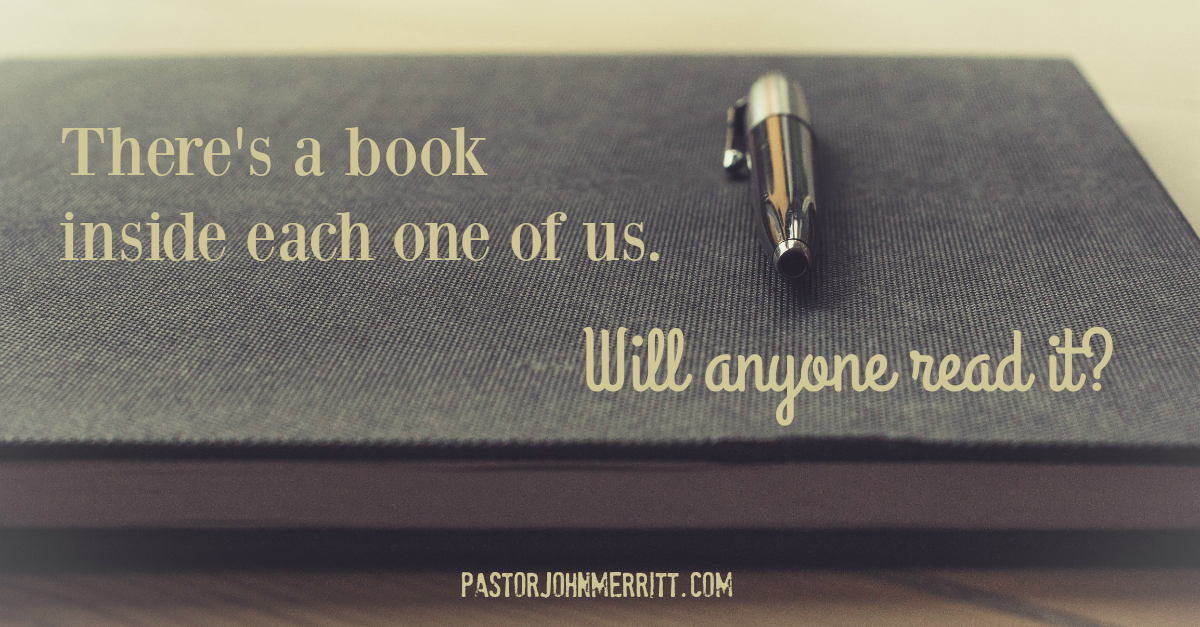
It’s been said that there’s a book inside each one of us. And while this is no doubt true, the big question is: Will anybody read it? I wondered that of my own book. And how do you know if people are reading it and benefiting from it? Ah, this is where social media provides some answers.

I’ve been transparent about my lack of passion for social media—especially my own! And yet, I am finding that this is not only where you get honest feedback but also transparent testimony of the effectiveness (or not) of what you are putting out there. In fact, reading some comments about Don’t Blink on the internet has provided confirmation that God is using this in ways that I had hoped and prayed for.

Here’s an example: After reading the first five chapters of your book, I have to say thank you for rekindling my sense of adventure! I have been dreading writing my company mission statement and personal bio, etc, for my website. You reminded me of my passion for life and to just go for it, with Jesus by my side! What could be better? I think I was getting a little stagnant or complacent. What an invigorating breath of Christ-filled air! After reading “Don’t Blink” poolside this hot afternoon, I dove in for a swim and it was GOOD TO BE ALIVE! I plan on purchasing copies for my father and my friends. Thank you!

I’ve been asked why I wrote a book, and responses like this provide the answer. I knew going into this project that 80% of men don’t read books. While my book has both a female and male audience in mind, I wanted men to find the book readable. So each of the 23 chapter starts with a captivating short story followed by a down-to-earth, real-life application. Seems like the book is keeping the short male attention span engaged—and I love that!

To all of you who have read or plan to read Don’t Blink: The Life You Won’t Want to Miss I thank you. And remember, I wrote it with your non-Christian friend in mind—so please share it. Would make a nice gift for someone you care about this holiday season that is almost upon us.

God’s best to you!

John

Writing: Dreamers, Please Apply

Writers are dreamers. The two activities – dreaming and writing – work together. Of course, writers can be incredibly practical, churning out how-to manuals or crafting detailed textbooks. Writers can plan, strategize and develop logical plots within their stories. At their best, dreamers are innovators and so are writers. They are grounded in reality, even as they reach for what could be. Consider the following three characteristics of writers, and you’ll understand why dreamers need to apply for this job.


1. Idealistic – Even the cynical writer spewing a critique of society on the page is an idealist at heart. If you desire to express your ideas to change the world in some way, if you hope to educate or inspire your readers, if you think you have an insight to share, then you possess at least a touch of idealism.

When you hope to capture the attention of people with the force of your ideas without the benefit of the sound of your voice or the expression on your face, you must be a little idealistic or else you would not bother to try.

2. Futuristic – Writers look to the future even when they write about the past. Of course, science fiction writers take us to the future we have yet to create, often inspiring inventions once technology catches up with their imagination.

However, all writers reach into the future, crafting words to entertain and exhort readers years after the ink is dry on the page. Words can live on as text on the screens of tomorrow and as quotes on social media platforms not yet developed.

If you dream of a better tomorrow and believe you have a positive contribution to make, you just might be a writer.

3. Optimistic – You need faith to be a writer. You must believe that your manuscript will find a publisher, and your book will find an audience. You need to believe you are making a difference when you are spending quality time typing words in solitude.

Writers stay motivated with little feedback, persevering against the odds for the privilege of spreading their thoughts, beliefs and knowledge with others. Writers concern themselves less with making a living than with sharing their life with others.

Writers find the ray of sunshine on the cloudiest of days. They keep a spring in their step even when they feel at a loss for words. They believe in their dreams and the best of writers help others believe in their own dreams, too.

Are you ready to become a writer?