WordServe News: February 2016

Exciting things have been happening at WordServe Literary in the first month of 2016!

On the final post of each month you’ll find a list of Water Cooler contributors’ books released this month along with a recap of WordServe client news.

New Releases

christnerDianne Christner published Covered Bridge Charm with Shiloh Run Press. Set against the backdrop of the Sweet Life Assisted Living Facility in Sweet Home, Oregon, it follows the story of Carly Blosser, a 27-year-old woman who has her own ideas and an independent spirit–two things no Mennonite woman should have–as she works to reunite one of the facility’s elderly residents with her long-lost love.

corey

Barry Corey’s new book, Love Kindnesswill publish next month from Tyndale. Dr. Corey, president of Biola University, begins with a thought-provoking question: When did Christians stop being kind? This powerful book encourages readers to rediscover the forgotten virtue of kindness, and to embrace what it truly means to “do justice, and to love kindness, and to walk humbly with your God” (Micah 6:8).

cotyDebora Coty released Too Blessed to be Stressed: 3-Minute Devotionals for Women with Barbour. 180 uplifting readings pack a powerful dose of comfort, encouragement, humor, and inspiration for women, and take only three minutes of her day. Minute 1: scripture to meditate on; Minute 2: a short devotional reading; Minute 3: a prayer to jump-start a conversation with God.

51XxFU7ScOL._SX326_BO1,204,203,200_

Steve Farrar published Manna with Thomas Nelson. Sometimes, the wilderness is the only place God can get our attention. Through personal stories and applications of biblical lessons, Manna reveals how God specializes in making a way where there is no way–when we feel trapped in financial, emotional, relational, or spiritual wildernesses, God will always lead us out and to the Promised land.

johnsonRick Johnson released Understanding the Man You Love with Revell. Johnson, a relationship and marriage expert, gives an open and honest look inside a man’s world to help wives understand just what goes on inside their husbands’ brains–and how couples can work together toward a mutually satisfying and fulfilling marriage.

i am nThe Voice of the Martyrs, a nonprofit, interdenominational organization that offers practical and spiritual help to persecuted Christians around the world, published I am N, with Bob Welch ghostwriting. Through the inspiring stories of Christians facing Islamic extremists in the Middle East, this book reminds readers that all followers of Jesus have camaraderie with those who are persecuted, and encourages us to deepen our faith in a God who gives courage in a dark and hurting world.

New Contracts

Sue Detweiler signed with Bethany House for the publication of Life-Giving Woman of Prayer, intended to help women replace their common weaknesses with God’s power through prayer.

Cyndy Feasel signed with Thomas Nelson for the publication of Thrown for a Loss, the powerful story of her family’s descent into chaos and darkness after her husband, ex-NFL linebacker Grant Feasel, began to grapple with the devastating effects of CTE. Due out in early 2017.

April Knight signed with David C. Cook for her devotional #scripturedoodle. Part of a two-book deal, #scripturedoodle will stretch readers to explore the Bible creatively through inspiring and interactive illustrations of scripture each day.

New Clients

Kim Dolan Leto, Jack London, and David Rigby signed with Greg Johnson as clients this month. Sally Metzger, Jim Fletcher, Bob and Cheryl Moeller, and Judy Robertson signed with Nick Harrison. Welcome to all our new clients!

National Procrastination Week is Next Week… Or, Um, In a Few Weeks. Yes, For Sure…

This post comes from WordServe author Rick Marschall. Welcome, Rick!

CARTOONIST SKETCHES - Donahey TEENIE WEENIES

There actually IS a National Procrastination Week, as most writers know. Or should know. If we didn’t know, we can count on editors to remind us. Or publishers. Or agents. Or spouses. Or neighbors and strangers who eventually figure why we small-talk with them, obsessively, at odd times.

But there is such an observance, appropriately not on a fixed date, usually in early March. If there were a day, not a week, the most ironic date would be March Fourth – because the dreaded P word has nothing to do with marching forth.

Most of us get tagged as being procrastinators. I have heard of writers who awake at, say, 7:28 every morning, commence writing at 10 a.m., take a 45-minute lunch break, and then write again until 4:30. Usually these writers produce several 900-page books a year, a fact that further confounds me. My guess is that if you are one of those writers, you spend most of your free time physically fending off attacks by crazed fellow-writers – i.e., the majority of us – who congregate at the intersection of Jealous Street and Incredulous Avenue, mumbling about you.

Over the years I have shoved out 74 books and hundreds of magazine articles, as well as uncountable scripts, columns, and blog essays. So I actually have been acquainted with deadlines, and, overwhelmingly, met deadlines.

But I write about that near-universal experience of racing the clock, if not the calendar, at deadline-time. I am wont to call them Last Writes, ha. If the profession invented the word Dead-line, then I can play with the term Last Rites. Enough puns here, because I seriously have a view about Writers’ Procrastination I never have heard advanced by anyone. It is a principle of our process, I think. Let me call this Marschall Law (Sorry, that is the last pun).

Whether we meet deadlines or barely meet deadlines, we assume guilt for the “minutes-to-spare” syndrome. Polite friends call it Procrastination; honest friends might call it Disorganization; harsh observers sometimes call it Laziness. Have you ever felt like pleading guilty to any of these? Have you ever finished a book without silently promising yourself to start earlier, write more, self-edit better, and finish sooner, next time?

Here is the realization I had. You have heard the expression, “Some people work best under pressure.” Some people do. We admire stories of Mozart and Beethoven scribbling scores, orchestral parts, mere moments before a first performance. Of Rodin leaving sculptures half-chiseled. Of Tolstoy’s first draft of War and Peace only running through Chapter 3, and his editor finding “etc…” before he squeezed the rest of the manuscript.

Actually, only the Mozart and Beethoven stories are true. (Otherwise, Tolstoy’s book would be known as War and Piece.) (That’s the last pun.) But most of us recognize that feeling. I have a view that if God, in the fullness of time, had not created Last Minutes, very little in this world would get done.

If it is true that some of us work best under pressure, I think it is logical – and, surely, subliminal – that we create our own pressure. Why do we find ourselves, say, reading instead of writing? Straightening out shelves and files when not necessary? Sharpening pencils, when we haven’t used a pencil since the first Bush presidency? Arranging our sock drawers?

Are we processing the next chapter? Reconsidering a plot thread? Praying for more wisdom (non-fiction) or killing off a different character (fiction) (I hope)?

No… we subconsciously create that inchoate factor, that diaphanous monster, called Pressure. Honestly, it is not really a monster. My best books (the most successful, or best-received, or ones I think have stood up) were produced in pressure-cooker scenarios; when I went total-immersion; when I ate, breathed, slept with The Book.

I could not have done that, in all those cases, if a date-book, instead of a Deadline Panic, had ordered my days. Panic worked, has worked, and I suspect for many creators throughout history, will continue to work. It should not change our working modes – we have all reached the limits of excuses – but can lift the guilt a little.

But somehow, I don’t think anyone will designate a National Panic Day…


rickmarschallphoto-110x165Rick Marschall has indeed written 74 books and hundreds of magazine and newspaper articles. Bostonia Magazine called him “perhaps America’s foremost authority on popular culture,” and trying to maintain that reputation, writes in the fields of history, biography, music, television  history, and children’s books in addition to books, articles, and essays in the Christian field. He has been a political cartoonist, editor of marvel Comics, and writer for Disney. He currently is obscenely late on a manuscript, and while not making light of a writer’s responsibilities, has analyzed writer’s block and creative challenges.

Motivating an Unmotivated Writer

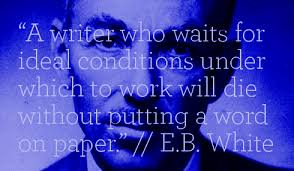
Writing Quote E.B. White I’m going through one of those seasons of life where I’m not feeling motivated. My mind could go in either one of two directions. I could wallow and give up — allowing myself to succumb to fatigue, discouragement, and fear due to circumstances beyond my control. Or I could remind myself that I am an author, and as such, absolutely everything is potential writing fodder. I’m choosing the latter.

Writing is Harder for a WriterTo maintain any productivity, my way of putting words on the page has changed over the past month. For instance, instead of scheduling hours at a time for writing, I’m snatching snippets and seconds. Scrivener is my friend, as I drop ideas, research links, and summaries of real-time happenings for anecdotal use into project files. Life has required I do things differently, but I refuse to let it stop me.

Writing the WorstI’m also offering myself an extra dose of patience and forgiveness. If I expend emotional energy on unreasonable expectations and unhealthy guilt, I will pay for it in wasted physical and mental energy. It’s taken me years to learn this about myself, but now that I know it, I can approach writing with a healthier perspective.

Writing Quote by Stephen KingAnother motivational boost comes from reminding myself that I am a professional. This means I don’t just think about writing, dream about writing, or talk about writing — I do it. A professional writer puts the same integrity, (doing the right thing whether anyone else can see or hear them or not), into their craft as the CEO of a multi-billion dollar company. I refuse to be the amateur Stephen King talks about.

Writing What Others Can't SayMy past and present circumstances are more than writing fodder, they are also qualifiers. My unique experiences qualify me to speak about subjects, while my role as a professional writer enables me to say what others cannot due to willingness or ability. This is why writing is both privilege and responsibility. This thought alone motivates me to action when I feel unmotivated.
In speaking with many of my author friends, I find I’m not the only one who needs the occasional reminder to move my fingers across the keyboard when I feel like pushing buttons on the remote. The truth is, writing is hard under ideal conditions, but it can feel excruciating when life batters you with tough situations. This is where my writing mettle is tested.

  • Am I serious?
  • Will I resolve to follow through no matter what?
  • Can I motivate myself when I’d most like to bury myself in bed and pull the covers over my head?

Writer at WorkThe answer is yes. After all, I am a professional. And professional authors get to work — one intentional word at a time.

Does your writing come easy, or do you require a motivational push to do the daily word grind?


4 Tips for Writing About Sensitive Topics

I write about sex in marriage. Talk about a sensitive and potentially controversial topic. Even the idea of publicly discussing sex in Christian circles can trigger everything from raised eyebrows to scathing rebukes.

4 Tips for Writing about Sensitive Topics

Yet I’ve always believed that if God is willing to bring up sensitive issues, so should His people. How can you address sensitive topics responsibly? Here are four quick tips.

1. It’s not merely what you say, it’s how you say it. Christians can be entirely right about the content of what they teach, and entirely wrong in how they treat others in getting their point across. Presenting truth doesn’t excuse us from commands to be loving, kind, gentle, patient, and self-controlled.

Ask how you’re presenting your points. Are you solely concerned about the issue, or do you consider the people affected? Do you invite conversation or lambaste anyone who doesn’t agree?

If your readers see you as caring about them, they’re far more likely to listen to what you have to say. Keep them in mind as you write.

2. Some react negatively because you poked a personal wound. Sometimes a reader’s hostile reaction isn’t personal. Rather, you unintentionally touched a raw wound.

For example, if I address how most husbands need the emotional connection of sex, I’ll get angry reactions from higher-drive wives whose husbands don’t seem to want sex, from wives whose husbands have been demanding or abusive, from husbands who’ve been refused for years and rant about how I’m too soft on wives, etc. Rather than feeling attacked, I try to show compassion for their difficult situation.

We should present our topic as fairly and lovingly as possible. But if someone freaks out about something you said, remember it may not be about you at all.

3. You don’t owe anything to false teachers. We bloggers know these commenters as “trolls”—meaning people who troll the Internet for articles on a particular topic and leave comments that promote lies and hate. At first, I tried to engage these readers, but nowadays I can spot a troll, or false teacher, pretty quickly. And I don’t put up with it.

It’s not that a writer’s skin isn’t tough. Challenges, debates, and discussion are fine, but if someone promotes false teaching or personally attacks other readers, it’s time to draw a line. Our readership relies on us to present truth and encouragement.

Adopt a comments policy explaining you’ll delete remarks with egregiously wrong or dangerous teaching. Don’t allow false teachers to soil your ministry by giving them a platform.

4. Find a supportive community. I cannot emphasize enough how important it is to find a community who’ll support you when difficulties arise. My marriage author friends provide everything from encouragement to prayer to wisdom. And they laugh with me, which is healing in the face of trouble.

When it comes to writing, people who do what you do are not opponents; they are allies. Befriend them and gain strength from one another.

We can’t dismiss our obligation to share God’s Word boldly (Acts 4:31) and to help struggling people (Psalm 34:18) simply because it makes some in our midst uncomfortable. Your readers, many who’d never leave a comment or contact you, will appreciate your courage to address sensitive topics.

Devotional Essentials, Part 1

devotionals

A well-written devotional can remind readers of key truths of the Christian faith, spur thinking that leads to a positive life change, actually draw people closer to God. A poorly-written devotional? Well, God can use anything for His purposes . . . but let’s consider some ways to “do devotionals right.”

Just think how popular devotionals are—they comprise some of the best-selling and longest-lasting books in the Christian realm (for example, Charles Spurgeon’s Morning and Evening, Oswald Chambers’ My Utmost for His Highest, and Sarah Young’s Jesus Calling), and they represent entire ministries (like Our Daily Bread, The Upper Room, and Living Faith). It’s no exaggeration to say that new devotional material releases every single day, in books and magazines, on-line, and in outlets like church bulletins. How can we best meet the needs of this hungry readership?

I’d like to propose a TEST for you—that’s Topic, Example, Segue, Takeaway. Nail down these four elements, in this order, and you’re on your way to an effective devotional reading. In two blogs to follow, we’ll consider each element in greater detail . . . but we’ll wrap up today with an overview from my own experience.

My full-time job is editing books, but I’ve written or contributed to numerous devotional projects over the years. My most recent is The Real Force—A 40-Day Devotional, published by Worthy Inspired in Nashville. Here’s how the TEST applies to it:

Topic: Star Wars. About a year and a half before the release of Episode VII: The Force Awakens, I envisioned a book drawing parallels between characters, events, and themes in the first six films to characters, events, and themes in Scripture. Happily, a publisher also caught that vision.

Example: Here’s one of the forty in the book—the trash compactor scene of the very first film, later called Episode IV: A New Hope. I give a quick rundown of the rescue of Princess Leia from the Death Star, by Luke Skywalker, Han Solo, and Chewbacca. Escaping from Imperial stormtroopers, the four jump down what turns out to be a garbage chute, ending up in a dank, smelly mess far below . . . and shortly, the walls start closing in. It struck me as a metaphor for life: in a world that’s already scary and dangerous, we sometimes end up in a really tight spot—and, frankly, it stinks.

Segue: Now we turn readers’ attention to God’s Word. In this case, I point out that three Bible characters—Shadrach, Meshach, and Abednego—found themselves in a similar situation. As Jewish men exiled in Babylon, they were already in a scary and dangerous place. And when they chose not to bow to Nebuchadnezzar’s golden statue, they found themselves in a tight (actually a hot) spot, the “fiery furnace.”

Takeaway: What does all of this mean to readers today? God saved the day for S, M & A, but He delivered them through, not from, the flames. I point out that Jesus himself hoped to avoid the pain of the cross (Luke 22:39–42), but “for the joy set before him he endured” (Hebrews 12:2), and that James wrote that “the testing of your faith produces perseverance” (James 1:3). Ultimately, readers walk away with some sympathy and some encouragement: “Tight spots aren’t fun. Sometimes they stink. But God has reasons for them, and He’ll always be right there with us.”

Have some devotional ideas knocking around in your mind? Jot them down and watch for Part 2, as we’ll consider a devotional’s Topic and Example in greater detail.

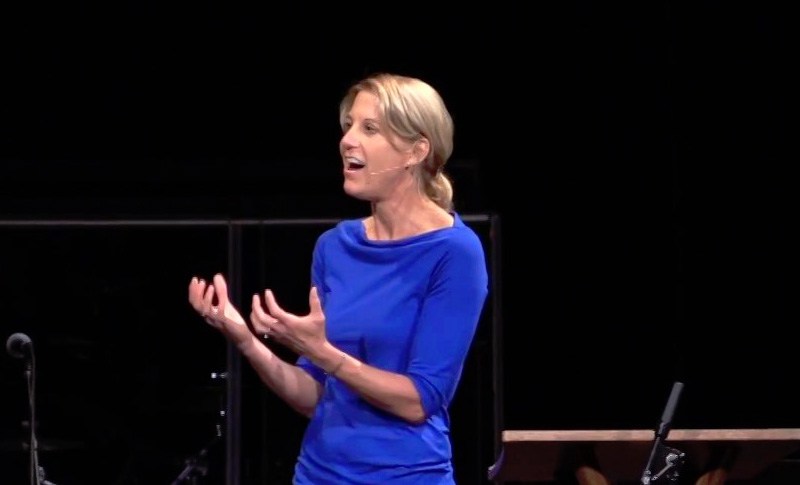
When a Speaker becomes a Writer

VideoPic

When I was asked to contribute to the Wordserve blog, I immediately thought “No.
But almost immediately after the first immediately, something in my heart said “Yes.

The truth is, compared to many other writers, I am under qualified, untrained and rather unconventional in the way I write. Particularly the way I use sentence fragments (and parenthesis) for effect. So the thought of having a lot of trained writers reading my stuff is, well, a bit nerve wracking. (If I was being honest it makes me want to pee my pants.)

However, it strikes me that I may be able to offer an angle on writing from a speaker-turned-writer’s viewpoint that could be helpful. So with that in mind, I decided to jump in.

As far as some background on me, in my 30s, I published fourteen books under my maiden name of Polich. They were “How to” youth ministry books that sold like hotcakes in the audiences I served. However, just before I turned 50, I shifted out of youth ministry, survived a fiancé who broke our engagement to remarry his ex wife, and experienced some new and deeper truths about God; and suddenly, I felt I had more in me to write.

I remember running the idea of moving from the “Youth Ministry” sector to the “Christian Life” sector by my publisher, who met me with the encouraging words, “Good luck with that.

I realized at that moment that switching book genres was not going to be done easily.

But I’m here to tell you it’s not impossible.

By the grace of God, I got hooked up with a great agent (Greg Johnson), a great editor at Zondervan (John Sloan), and was contracted for my first Christian Life book, titled Finding Faith in the Dark. It was my maiden voyage, and it released in 2014. I am currently at work on my second book, tentatively titled “When Changing Nothing Changes Everything” (this time for IVP). It’s due in three weeks, so I’ll keep the rest of this blog short.

I thought I could offer a couple of insights from a speaker-turned-writer’s viewpoint that might be helpful to you. Because when it comes right down to it, don’t many of us do both? The fact is, in today’s “Look at Me” world, holding an audience is a skill all of us need.

Here are three tips I’ve taken from my speaking into writing:

  1. Grab ‘em in the first 3 minutes
    There is a rule in speaking that if you don’t grab the audience in the first three minutes, you have to work triple time to get them back. I think in today’s world with writing, it may even be more true. Your audience can actually leave your book without you ever having to know, which is harder to do when you’re speaking to them. (Unless they’re teenagers and aren’t polite enough to care.) Here’s the point: In today’s blog-reading, book-skimming culture, the first page of your book should be the one you focus on most.
  1. Anchor every truth you share
    This may be more directed more to non fiction authors, but no matter how great your point is, it will be lost if you don’t break it up with something to anchor it. Whether you use an interesting story, a dash of humor, or a poignant quote, you need something to entice them to read on. In speaking, I call this “Keep yourself from becoming boring.” I think in writing, it could be called the same.
  1. End with a pow
    This may feel like too much pressure when combined with point #1, but there is nothing worse than a reader who has stayed with you till the end and gets rewarded with nothing but a re-emphasis of what you’ve already said. Surprise them. Leave them thinking. Say something new. Give them a parting gift.

How you do this of course is all up to you.

And one last thing… if YOU have a voice nudging you to write something that may be different than you’ve ever written before, Don’t give up. There may be people out there who need what you have to write.

For more info, visit http://www.laurieshort.com

The Importance of Dreaming

Ever feel like your writing time has slipped into a series of tasks you are struggling to check off?

1500 hundred words and counting? Check.
Edits? Check.
Social media graphics for the week? Check.
Blog posts written and turned in? Check.
Responded to readers and answered emails? Check.
Laundry, grocery shopping, life things? Maybe check. Kinda.
Maintain sanity? In process.

If we aren’t careful our writing routine turns into a list that can drain our creativity and make us forget why we are writing. I am the queen of time management and boundaries. I have to be in order to prioritize and get things done. But sometimes in the midst of trying to be disciplined and organized, I miss out on the creativity that comes with dreaming. I actually plan time to dream. It’s vitally important to the rest of my list.

Dream a little bigger

Dreaming rejuvenates me.
One of my favorite questions to ask when it comes to writing is “what if.” What if my characters decided to do something totally unexpected? What if my villain surprises everyone? What if I create a setting that puts a unique spin on a scene? What if I created a character that absolutely fascinated my reader? Then how do I do all this?

“What if” is a powerful question, one I don’t ask nearly enough. But when I do, my writing sings more than normal and my creative juices flow.

I also like to story board. I may love words, but I am attracted to powerful visuals. It’s fun to create the scene and cast my characters by scouring the internet for photos that jog my creativity in a greater way. I pin them on a corkboard so that I can see and move them to help craft the story. This helps dream about possibilities. Possibilities are endless in our writing. We just have to seize them.

Dreaming rejuvenates the story.
I like to set a timer and see how many words I can spill on the page before time runs out, but occasionally this depletes my creativity instead of inspiring it. However, when I take time to dream before I start writing, even if I just spend fifteen minutes on a writing prompt, my writing carries a different kind of power and creativity. When I race the timer, my story has quality and quantity. My characters are also deeper and my settings more vivid.

Dreaming rejuvenates the reader.
Letting readers into my brainstorming and dreaming is fun to share with readers. This makes great social media content to excite them and help them invest in the story before they ever hold it in their hands. Inviting them into the dreaming helps them feel like part of the team and part of the journey. If you do this, be prepared to write faster to satisfy their growing curiosity.

Tasks and deadlines are part of writing, but dreaming and enjoying the writing…that’s the most vital part of the journey, for it informs everything else. If you are feeling overwhelmed or stuck, grab a pen and fun notepad, and don’t be afraid to dream a little, darling. I have a feeling you will like the results.

Debut Novels, Reprint Rights, and Movie Deal Dreams

I didn’t know how blessed I was to get my first book deal. Love Finds You in Sun Valley, Idaho came out in 2010. It was part of the Love Finds You series. And because the books were written by a bunch of different well-known authors and set across the United States, my book got swept along with the marketing current.

album 155

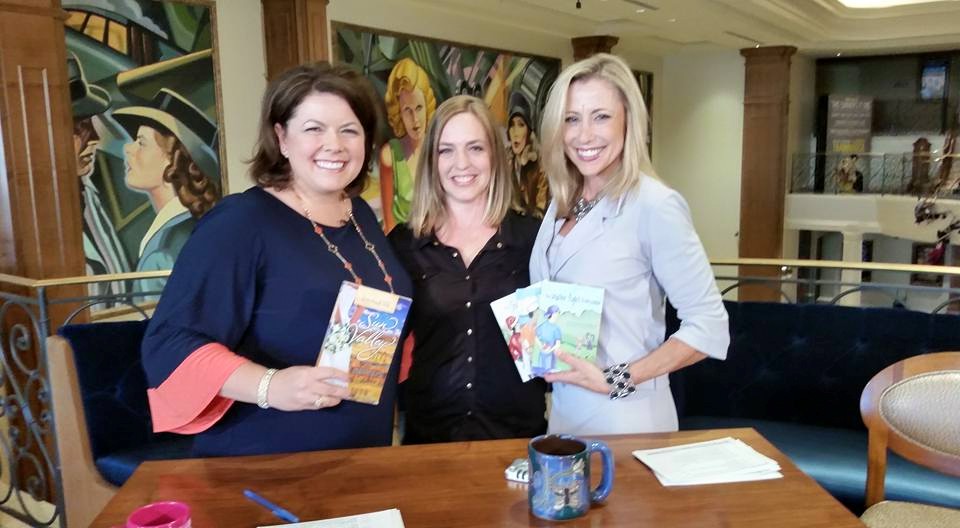
I got to do a television interview.

I had a Costco book-signing.

The novel was featured in the magazines for a Christian bookstore chain.

It was sold in airports.

The hardback edition came out for book clubs.

And now It’s being considered for a MOVIE. When I found this out, I was so excited my husband thought someone had died. Not that I get excited when people die, but I was crying and could barely speak, and he assumed the worst.

Three movies have already been made for the UPtv network. I had a premier party with my writer friends for Love Finds You in Charm, including homemade Amish pastries. Love Finds You in Valentine comes out this month.

I can’t keep from mentally casting actors to play my characters Tracen Lake and Emily Van Arsdale. Especially since Emily Van Arsdale is supposed to be the actress who plays Wonder Woman, and Wonder Woman is releasing in the theaters soon.

The idea of having my debut novel considered for a movie made me want to revisit the story. Then it made me want to write sequels like many of my readers requested. So I got my rights back, and I’m rereleasing the book as the first in my new series titled Resort to Love.

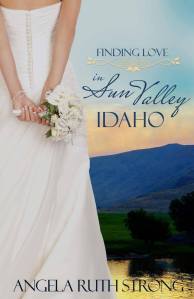
Finding Love in Sun Valley Cover


Finding Love in Sun Valley, Idaho comes out this month. I updated a few things—like how the characters now all have smart phones. And I gave it an epilogue that leads into the following books.

Finding Love in Big Sky, Montana comes out in November. I’m currently writing this one and wish I could throw my responsibilities to the wind so I could go write in a cave until it’s done because the ending is going to be so good!

Finding Love in Park City, Utah comes out in the spring of 2017. This one I’ve plotted, but I’m still researching the location. I’m spending the end of January in the mountain town and attending the Sundance Film Festival. Remember how I said my main character in Sun Valley is an actress? It fits.

I didn’t know anything about getting my rights back, but I ran into Miralee Ferrell at the Oregon Christian Writer’s Conference last summer, and she’d already done it for a couple of her own Love Finds You books. With her help. I was able to find out that my book had been out of print for a couple years. From there I simply had to make my request. Once I got my PDF files, I not-so-simply converted them to a Word document and edited out about a million exclamation points—among other newbie mistakes.

Miralee had been able to get her cover files, but mine weren’t available, so we hired a designer. When I say we, I mean Miralee. She’s releasing my series through her new publishing company, Mountain Brook Ink. But she let me have creative reign over my cover. I especially like the scrollwork around the Finding Love label. That symbol will go on all her Finding Love titles. Another cool thing is that I’ve remarried since my first book came out, so I get to add the name Strong to this cover.

I’m currently getting ready for my Books and Beverages Blog Tour. Check my website for details and the chance to win a Kindle Fire.

Books and Beverages

Even if my book never makes it to the big screen TV, I’m still glad I get to enjoy my debut novel a little longer. And I’m honored to get to share my dreams with you.

What’s a book you’ve read that you think would make a good movie?

WordServe News: January 2016

Exciting things have been happening at WordServe Literary in the first month of 2016!

On the final post of each month you’ll find a list of Water Cooler contributors’ books released this month along with a recap of WordServe client news.

New Releases

037628Julie Cantrell released The Feathered Bone with Thomas Nelson.

While chaperoning her daughter’s trip to New Orleans, Amanda Salassi’s worst fears come true: her daughter’s best friend, Sarah, disappears without a trace. As Amanda’s daughter sinks in depression and her husband turns destructive as he watches his family succumb to grief, Amanda knows she has to save herself before it’s too late. As she continues to search for Sarah, she embarks on a personal journey, seeking hope and purpose in the wake of so much tragedy and loss.

Hannah's Choice-Book Cover


Jan Drexler
released Hannah’s Choice with Revell.

The first book in a brand-new Amish historical series, Hannah’s Choice follows the story of a young woman in Lancaster County as she struggles between the choice of two men–and the choice of whether to remain near her family or follow God’s call West.

fechner

Michael Fechner Jr. released Lessons on the Way to Heaven: What My Father Taught Mewith Zondervan.

This poweful book tells the story of Mike’s father, who co-founded an urban renewal ministry and sold all he owned to fund it and serve the poor full time. When Mike was diagnosed with terminal cancer and given a year to live, he discovered what it meant to truly lose his life for the sake of finding it.

51OmWJpfjjL._SX322_BO1,204,203,200_

Ken Gire released The Centurion with River North Fiction.

This gripping work of historical fiction follows Lucius, a Roman centurion who witnesses the crucifixion of Jesus and is changed forever. When he is called away to lead military campaigns and returns to find that Rome has lost its allure, he must decide who he is, what is real, and what is worth dying for.


31EYnNNE9PL._SX322_BO1,204,203,200_Jan David Hettinga 
released Still Restless with Kregel Publications.

A pastor at Cascade Community Church in Monroe, Washington, Hettinga relates good news in his newest book: God has always had time for honest seekers, even when they have hard questions or objections. Walking readers through the gospels, Hettinga uses the life of Jesus to demonstrate the necessity of frank conversations with God–and their potential for spiritual transformation.

51OfAMN99UL._SX322_BO1,204,203,200_Melissa K. Norris released The Made from Scratch Life with Harvest House.

Operating under the belief that when you surround yourself with things made from the hand of God, you can’t help but see Him, Norris inspires readers with practical and easy methods to help you cook from scratch, garden, preserve your own food, and see God’s fingerprints in your everyday busy life.

513Zw-NEpwL._SX322_BO1,204,203,200_

Tina and Dave Samples released Messed Up Men of the Bible with Kregel Publications.

Reminding us that even the most flawed among us can be used by God to accomplish His purposes, Tina and Dave’s book traces the stories of some of the Bible’s most messed up men to show how God’s power is perfected in our weakness.


FH_PublishersFaithHappenings Publishers released a new series of devotional books called “Day Starters.” The initial release includes five titles: Day Starters for Men by Steve Farrar; Day Starters for Women by Cheri Fuller; Day Starters for Couples by David and Claudia Arp; Day Starters for Students by Greg Johnson; and Day Starters for Moms, edited by Shelley Hendrix. Each book includes daily devotionals and Scripture to encourage readers to renew their focus on their walk with the Lord in the midst of daily life.

cover Day-Starter-for-Women-FINAL-Cover-Only Day-Starter-for-Couples-Cover-Only Day-Starter-for-Students-FINAL-Cover-Only Day-Starters-for-Moms-Cover-Only


New Contracts

Jim Burns and Doug Fields signed with InterVarsity Press for their new book, Teenology, planned for early 2017.

Angela Ruth Strong signed with Harlequin’s Love Inspired Books for her next book, Twice Removed, due out in early 2017.

balloons-25737_640

What We’re Celebrating!

Julie Cantrell’s The Feathered Bone was named a 2016 Winter Okra pick, an honor given by SIBA for “Great Southern Books, Fresh Off the Vine.”

Conflict: The Heart of Your Story

One consistent problem most writers – new or seasoned – have when they’re developing their stories (present company included!) is to bring enough conflict into the story.

It’s normal to want to protect our characters from conflict. We like these people. We want them to have happy lives.

But do you know what you get when you give your characters happy lives that are free from any conflict? That’s right.

Boring fiction.

You need to bring conflict into their lives!

But how?

The first thing to remember is that conflict can be defined as goals that are blocked or defeated. So before you can have conflict, your character needs to have goals.

I hope you’ve all heard of Debra Dixon’s book, Goals, Motivation and Conflict. That’s a great place to start learning to develop your character’s GMC.

Conflict in the back story

As I develop my characters’ GMCs, I begin to discover their back story. What happened in their past that is affecting them now?

For example, in the proposal I’m working on now, Samuel and Mary’s story, Mary and her sister move from Holmes County, Ohio to Shipshewana, Indiana to live with their elderly great aunt. But why would they move away from home? What is at home that they want to get away from?

001 (2)

It has to be a conflict strong enough to force them to take this life-changing step. For Mary, it’s a tragic event that happened to her two years earlier.

A Conflict within the story for each character

So the next step is to find Mary’s story conflict. I had to ask myself: What is the worst, the absolute worst thing that could happen to my character?

018

In my proposal, Mary’s past tragic event is that she had been attacked by a man two years earlier, and since then the attacker has been threatening her and intimidating her–blackmailing her into keeping his secret.

So what is the absolute worst thing that could happen to Mary? That’s right. Her attacker finds her in Indiana and starts the intimidation and threats all over again.

The story conflict is more powerful if it has ties to a past conflict in your character’s life.

Of course, both characters need to have a conflict, so you need to do this exercise for both your hero and your heroine.

Let the Conflict in your story increase toward the crescendo of the Final Battle

In my proposal, the hero, Samuel, is an alcoholic. He’s fighting his addiction throughout the entire story. That’s his first level of conflict.

His battle becomes much worse when he feels inadequate, threatened or guilty. When he sees Mary with her attacker, he assumes that they have a romantic relationship. That’s the next level of conflict for him.

But when he finds out he’s wrong and Mary is in danger from this man, he faces the “dark night of the soul,” the Black Moment, and is on the verge of taking that drink he’s been fighting throughout the story…and the conflict tension ramps up.

Your characters’ individual Conflicts work against each other, driving your hero and heroine apart

Ramping up the tension raises the stakes; the characters’ relationship is in danger.

Samuel’s alcoholism and feelings of inadequacy make him pull away from Mary just when she needs him most.

Mary’s fear of revealing her secret–and of being close to any man–makes her pull away from him just when he needs her most.

Levi Zook's farm, Eden Township, Lagrange County

I want my readers to question how these two can ever overcome their conflicts and have a happily-ever-after ending!

So the most important part of the story comes when the characters need to fight against this force that is driving them away from each other. The satisfying ending to the story comes when they triumphantly stand firm, fighting this final battle together.

Share with us!

Are you guilty of letting your characters get off easy? What can you do to help ramp up the conflict in your story?

Jan’s newest book is “Hannah’s Choice,” the first in the series Journey to Pleasant Prairie from Revell Books.285198_HannahsChoiceDrexler_FBHeader