Making It Real

Hoh River Cascading Through RainforestWhen I first started writing my Birder Murder Mystery series, I wanted readers to feel like they were actually walking in the footsteps of my protagonist, so it was a logical choice for me to use real locations for book settings. What I didn’t realize at the time was how much readers enjoy books that take place in areas they know and how much those real places can shape what I write. Once I figured out that my real locations were one of the more powerful means of attracting readers, I began using real places as much as possible, not only for marketing later, but to provide me with inspiration for other pieces of my story.

As a result, I now take detailed notes of places I visit in the course of my book research. Fat Daddy's BBQ in WeslacoFor instance, last January, I was researching McAllen, Texas, for my next murder mystery. Since friends had recommended I try the barbeque at Fat Daddy’s, I made sure I had lunch there one day. As I ate, I observed that large groups of National Guardsmen sat at many of the tables, which I also noted in my daily travel journal, along with descriptions of the patriotic posters and flags adorning the walls. When I developed my plot, I found that the soldiers I’d seen could play into my story in a critical juncture, so I wrote them in – something I never would have come up with if I hadn’t personally visited Fat Daddy’s. Now, when anyone from the area reads the book, they’ll immediately be able to say, “this author really was here!” and it gives me the instant credibility which every fiction writer craves to lure readers into the story.

diner open signAnother big benefit of writing real places into your books is that some readers identify so much with a favorite place, they tend to talk about your book simply because of the setting. In one of my books, I used a small diner where one of my daughters waitressed years ago. Not only did it give the story a strong local connection, but once it was published, the diner owners prominently displayed the book, which delighted all their customers, who then told their friends that their favorite diner was in a book. By using the diner as a piece of my story, I also didn’t have to think twice about what that setting would look like, because all I had to do was describe what I saw.

Perhaps the best guideline I can provide about using real places in your fiction is the rule my publisher gave me: If you say nice things about a place, use the real name; if you want to be negative, make up a place. That should give you more readers and happier business owners (who will become your friends if they aren’t already!), and much less chance of getting sued.

Who knows? You might even get a sandwich named after you…

Stretch

For the last several years, I’ve worked an assignment that has stretched me as a writer as much as anything has in a long, long time.

WritingI’ve never sat down with the intentions of putting a fictional story to paper, but some of the sports I’ve covered for NCAA.COM are just about as close as I will ever get. NASCAR, I know. I worked that circus full time for nearly ten years. I’ve loved baseball since I was a child. I played football in high school.

Technically, I didn’t exactly play high-school football. I was on the team. I had a uniform and everything, but to actually play, you have to see time on the field. I was such a stellar athlete, I rode the bench for a team that went 0-10.

Seriously.

I still loved football, and knew it well. But men’s gymnastics? Lacrosse? Track and field? Swimming and diving? My very first exposures to those sports were the days I sat down in the press box … or tent … or grandstands … to work their national championships.

I had a decision to make, and I had to make it quickly. I could treat these sports as some sort of quirky and obscure sideshow attractions, or I could handle them the way I eventually did. These coaches and student-athletes were absolutely as passionate about their respective endeavors as any involved in more well-known sports like football, basketball, and baseball.

How could I treat them with anything less than the utmost respect? I had to learn, and I had to do so fast. Admitting ignorance can be a wonderful thing sometimes, as I learned from the NCAA committee member who patiently explained the difference between a game, set, and match in tennis. I understood completely, I think.

As a result, I’ve come away with some of the most memorable stories of my career. There was Mo Imel, the women’s lacrosse star who gave up a Division I scholarship to move to a Division II school closer to her cancer-stricken sister. After her sister passed away, Mo and her parents attended the funeral in Maryland and then made the spur-of-the-moment decision to drive overnight to Mo’s lacrosse match the next afternoon in Florida.

Mo scored two goals that day, including the game winner.

So, Tip Number One is to broaden your horizons as a writer. What’s that one subject you’ve always considered writing about, but haven’t gotten around to actually sitting down and tackling just yet? Go for it, and you might be surprised at how it turns out.

Then there’s the sheer volume of copy I’ve been called upon to file for NCAA.COM. My personal record for churning out stories — and I’m talking career-wise, not just for NCAA.COM — is thirty-seven 800-word stories in sixteen days. Producing such a massive amount of work in that short a timeframe was one of my toughest challenges in nearly a quarter of a century as a full-time writer.

Again, I had a decision to make. When filing that much copy, it would have been easy to “phone it in” on a story or two. In other words, I could’ve simply slapped a bunch of words up on my laptop screen and sent them in without really caring about the result.

Aside from the theological implications of not making the best use of your God-given abilities, there are a few problems with this approach. Turn in too many “clunker” stories, and the assignment may go to somebody else the next time around. And for a freelancer like me, that’s a bad thing. A very, very bad thing.

Also, that story might very well be the only one ever written about a given coach or student-athlete. It’ll probably be posted on their Facebook page, or maybe even printed out and placed in a scrapbook or on the family refrigerator. If it’s under your byline, you want it to be the best story it can be, regardless of how many came before or after it.

Tip Number Two is to give yourself plenty of time when writing, if at all possible. If your deadline is tight, don’t just pound the story out and file it. Do your best work, always.

Believe it or not, I’m actually headed to Louisville, Kentucky this week to cover an NCAA Division II championship sports festival. Six different sports in three days, and filing what I’m assuming will be multiple stories for each. Say a prayer for me!

The Writing Life: Developing a Thicker Skin

The Writing Life Developing a Thicker Skin via @JanalynVoigt | Wordserve Water CoolerAfter I sold my first short story, every time I tried to write, I’d wind up staring at the blank screen until I gave up, often bursting into tears. This went on for a year, by which time I must have figured out no one was going to chain me to my desk and expect me to write on demand. I breathed easier and managed to write again, or at least I did until it occurred to me that my book project could fail. Sad but true, I had to get over both fear of success and fear of failure.

Both problems stemmed from the same stubborn root, caring too much what other people thought of my writing (and of me, by extension).

Being so shy didn’t help at all. I tried to hide the fact that I was a writer. Even close friends didn’t know until my husband started carrying magazines that contained my articles around so he could brag about his wife at a moment’s notice. He took my pleas that he stop for false modesty when they were in fact an attempt to protect myself from The Look. If you’ve been writing any length of time, you will know the one I mean. Eyebrows go up, eyes widen, and you begin to feel like a specimen in a laboratory.

I get The Look less often now that the e-book revolution has writers popping out of the proverbial woodwork, and when it happens my response has improved. My face doesn’t heat to blazing anymore, and I don’t yearn for escape.

What changed for me? I learned that having a thin skin isn’t something a writer can afford. Drawing your self esteem from the opinions of others at best makes you vulnerable and at worst misinforms you. Submit your writing to a critique group, and you’ll learn pretty quickly that while many opinions have value, not all are golden.

If you think taking a critique is hard, just wait until you go through edits. If you’re not familiar with the term, it’s when an editor or editors at your publisher house requests changes be made to your manuscript by you. It’s usually when you will question how you ever thought you could write. If you haven’t developed a thicker skin by this point in your writing career, trust me, you will. Having a sense of humor is an asset at such a time. I can’t say that edits for DawnSinger, my debut novel and book one in my Tales of Faeraven epic fantasy trilogy, were informed by mine. However, by the time edits arrived for Wayfarer, book two in the series, humor was in full force. You just can’t take yourself too seriously.

That’s a good thing, because the very next thing you face after publication is book reviews. Some writers refrain from reading reviews of their books. I admire such will power but I don’t possess it. I’ve read every review of my books that comes to my attention. I like to learn from them, even negative ones. Happily, I’ve learned to place my self-worth in the hands of the Author of my faith.

How do you handle critique/criticism of your writing?

Balancing Clarity and Detail in Writing

Image of scales

You want your readers to enter into the world of your book and experience in their imagination the places and events you describe as if they were there themselves in the midst of the action. Yet if your writing becomes ornate, your readers may get lost in the details and miss the point of the passage. Even worse, they may skim over the descriptive sentences, seeking the next main point. Why write words that will go unread?

Capture the Essentials

To maintain the readability of your writing while also creating vivid descriptions of people, places, and events, capture the essentials and make every word count. Choose verbs packed with meaning instead of tacking on adverbs. When describing a place, consider what senses are important to setting the scene for the passage. Is the sound of classical music playing softly in the background more essential than the color of the paint on the ballroom walls? If you are trying to set the mood for dialogue that follows, use just enough details to accomplish your goal. Create a sketch and let the reader’s imagination paint in the rest of the picture.

As a reader, I find myself jumping over passages where too many clauses and adjectives abound. As a writer, I have had to remind myself that my readers will do the same.

Edit the Extraneous

After you have written a descriptive passage, edit for clarity. Cross out your favorite phrase if it detracts from the paragraph. Provide sufficient description of the attributes of an object for the reader to understand its significance. You do not need to include all the colors of the sky that make for your perfect sunset. Let the most important two or three colors set the stage.

In dialogue, the word “said” may be better than “shouted,” “whispered,” or “intoned.” While those other words convey a richer meaning, they may break up the continuity of the conversation. Let the words of the speakers carry the content. Remove nonessential dialogue that does not carry the plot or illustration forward. Jump into the action without providing too many trivial details. In short, get to the point and remove material that will confuse the reader.

Check for Flow

Your paragraphs of writing describing a majestic waterfall at the edge of the forest may be poetic and beautiful, but if they interrupt the flow of the chapter, prepare to edit. While writing my first book, Questioning Your Doubts: A Harvard PhD Explores Challenges to Faith, I wrote illustrations to enhance the point I was making. I learned from reader feedback that the illustrations worked best when they were entertaining but concise. If I spent too many sentences telling a story, the reader’s train of thought might be broken, defeating the purpose of the illustration.

On the other hand, writing that sparkles with clarity can seem too clinical without enough descriptive material. Coming from a scientific background, I am used to conveying challenging topics in clear and precise sentences. When I first started writing my book, I had to give myself permission to tap into my creative writing side and add poetic elements to my prose. Too much clarity can lead to short, choppy sentences that need more descriptive elements to weave them together into the tapestry of the chapter.

How have you learned to balance clarity and details in your writing?

I Am A Writer

My brother got married a couple of months ago, and our family forever changed. I gained a new sister, a new twist on life, AND a bigger family. My dad performed the ceremony and I sat with him and my brother two nights before the wedding around our kitchen table listening to them go over the vows – vows to honor and cherish and grow old.

Vows carry a certain kind of weight. In the past few weeks, I’ve found it necessary to make a different kind of vow. Not a vow to another person, a job, task, or event. I am making a vow to myself.

Kariss - Shaken in storesI am a writer. Period. End of any wondering or questions. I have all the dreams and insecurities that come with the itch of fingers to grab a pen and hit the paper.
I am a writer, and within a week of beginning work with my editor on Shaken, I emailed my mentor and told her I thought I needed to start the whole book over. I felt like I need to somehow make it better. I did that with my second book, Shadowed, too. Now my goal is to make each book better than the last.

I am a writer. We can be our own worst enemies. We can also be our own greatest advocates because NO ONE can make me finish the job but myself.

I am a writer, and I type THE END for my own benefit. It will never be perfect. But it can be something I am proud of once I push past the insecurities and just finish.

I am a writer, and I notice people in a different way. This gives me the unique desire to figure out how God wired them, to value their quirks and struggles, and to cheer them on in their successes. I know the best kind of character is one who reflects what God has already created – people. So I’ve learned to value each person individually and love his or her uniqueness.

I am a writer. I can be introverted or extroverted, depending on the situation. I can be equally emotional and analytical, which can sometimes be confusing.

I am a writer. I know the power of words, the pain they can wield or the healing they can bring.

I am a writer. I can stand back and observe a scene, using words to paint a whimsical picture or one cloaked in shadows.

I am a writer, and from what I’ve heard, we subsist on coffee and chocolate. Of course, I can’t personally verify this.

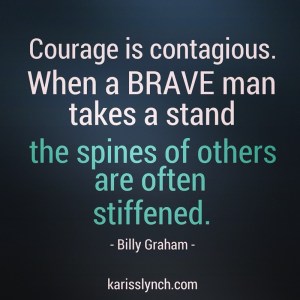
Kariss - Courage quoteI am a writer, and with that comes the necessity to be uniquely myself while God continues to mold me in the process. But when I fail to be who God made me to be, I miss out on being part of the story He is weaving in and through me. When the insecurities or the pride creep in, I vow to fight and write, because no one can write a story exactly like I can.

No one can reach my audience quite like I can.

No one can speak or create or brainstorm or think quite like I can.

I am a writer, but I am only one part of a whole community. Together, we reach a wide audience. Individually, we touch specific hearts, those that are, for one reason or another, particularly attracted to the stories placed on our hearts. When I fail to be unapologetically myself, my readers and those in my life miss out. I miss out.

So this is my writer’s vow. I vow to be unapologetically myself, to be the person, the writer, that God made me to be. I vow to grow in this craft, knowing I will fail and knowing I will succeed. I am a writer, and I want to be part of this beautiful story God is writing with my life, not just an unwilling participant.

What lessons have you learned as you grow to be the best writer YOU can be?

How Many Words to Paint a Picture…?

Writers, editors, and agents like to talk about voice. That elusive thing that gets you published or doesn’t, that sets you apart from others. Much as people have tried, it’s a concept that’s difficult to boil down to a sentence or two.

One of the aspects of voice is how you write descriptions. This is one of the unique fingerprints of your writing that makes it possible for people to tell you apart from another writer. It’s part of your unique gift for storytelling.

Honestly? Descriptions are hard to get just right. If only we could attach pictures to our stories. It wouldn’t be such a bad idea, really, having a nice photo or rendering of what we pictured every hundred pages or so in order to assure ourselves that our readers got it, that the scene we so carefully tried to describe was fully absorbed by them, no room for communication errors. Unfortunately (or maybe not. Haha), the picture thing isn’t an option, so we have to keep practicing using our words to create a picture in our readers’ minds that bears some resemblance to what we were seeing when we wrote it.

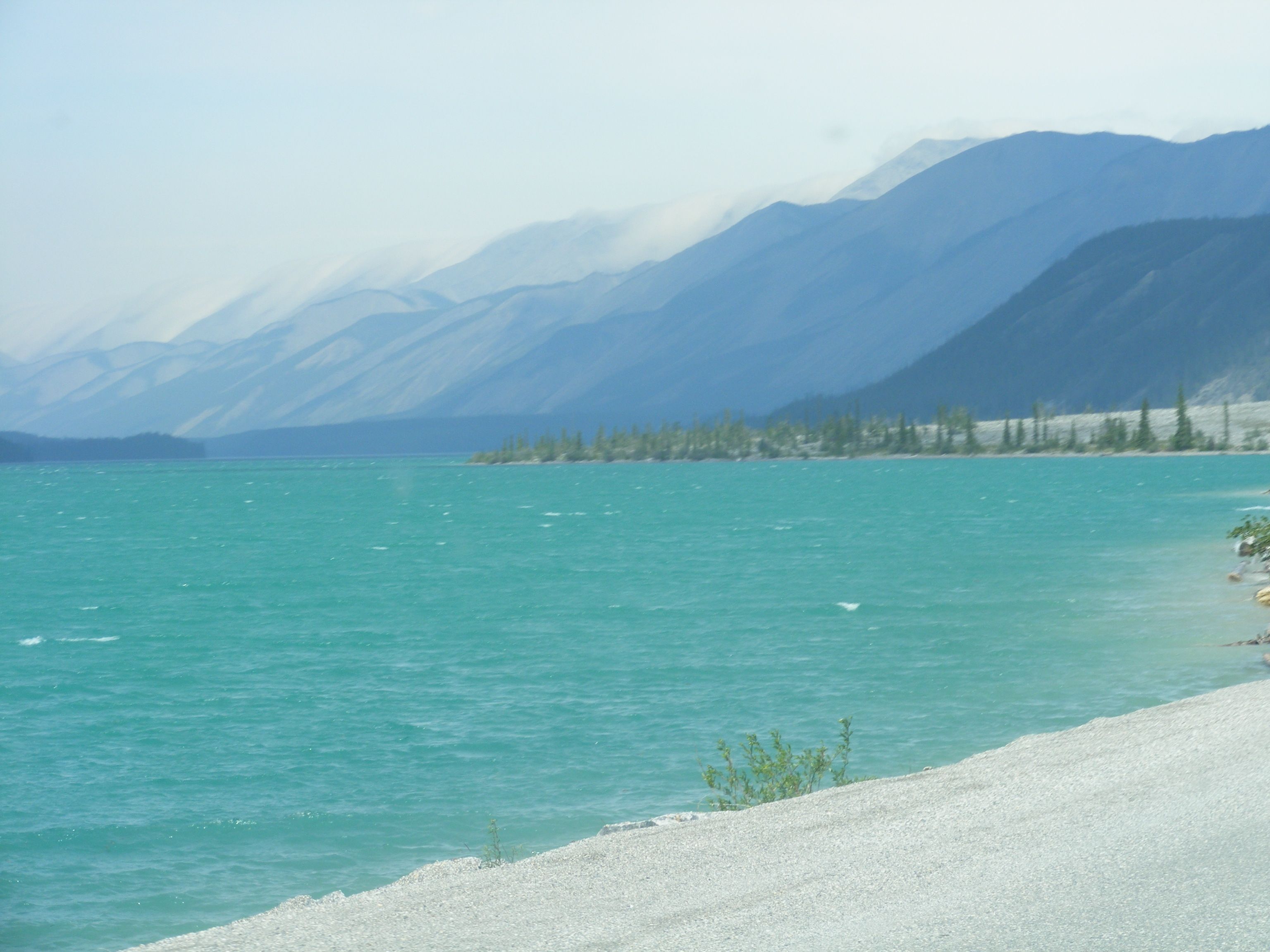
Mucho Lake

How would you describe this picture? Are you a writer who would write long paragraphs about the blues and greens? Would you make an effort to explain the way the road curves around the lake, without so much as a guardrail? Would you try to capture the wilderness feeling of the picture? Write about the trees? Or would you just tell your reader that it’s a mountain lake straight out of a fairy-tale and leave them to fill in the blanks?

If everyone reading this post wrote about the scene above, even if we set strict limits on the number of words you could use, every single example would be different. Every. Single. One.

Here’s what I do think writers need to know…there are generalizations about readers’ preferences that are true. And while writing isn’t all about some set of imaginary “rules,” reader preferences are things to pay attention to if you ever want to have readers (or if you want more readers). If you’re a Hemingway-esque describer and you think less is more…readers of historicals might feel like you’ve robbed them of one of their favorite parts of the story. If you describe the interior of a house and take several pages to do so in a suspense novel…you’ve lost that target reader (you know, unless there’s blood on the furniture or something, but still…).

Use your words to help us feel part of the setting, to help us see it. But use them appropriately for your genre. Also use the words you enjoy reading. Do you skim long description paragraphs? Are they your favorite part? Or are you somewhere in between? How you answer those questions should have some bearing on how you write.

Know your reader.

Know yourself.

And make your setting come alive with your words in the unique way that is yours alone.

Is Writer’s Block Real?

OLYMPUS DIGITAL CAMERA

Ernest Hemingway fought bulls in Spain, dodged bullets as a war correspondent, and hunted big game in Africa . . . but when he was asked to name his scariest experience, he said, “A blank sheet of paper.”

Recently I received an email from a buddy of mine who’s convinced she’s got writer’s block. Convincing me, though, is a tough sell. You can quote Hemingway all you like, but I think writer’s block is a scam.

Hold on. Before you sharpen your pitchforks and/or chastise me for being a heartless friend, allow me to explain.

Just because you can’t pump out fifty words to save your life doesn’t mean you’ve contracted the dreaded Writer’s Block Virus. It simply means you’re going to have to work. Yes, indeedy, welcome to Realsville. More often than not, writing is work. Grunt work. The kind that makes you sweat.

Oftentimes when one thinks they might have writer’s block, it’s simply a case of having to search deep inside to come up with a sentence or two. Sometimes that’s super hard, but it’s never impossible . . . unless of course you’re in a coma and/or your fingers are broken.

Granted, you might not have a clue what to write on your current work in progress (WIP), but writing isn’t just about a WIP. You could write a letter to a friend, an encouraging note to your pastor, a measly shopping list for crying out loud. Writing is writing. It all counts.

I hear you, though. You want to make progress on your Great American Novel, yet you’ve all of a sudden skidded to a stop. Instead of throwing your hands in the air and crying, “I’ve got writer’s block!” give one of these ideas a whirl:

• Write something completely different. A sonnet. A piece of flash fiction. A rebuttal to a letter to the editor.
• Walk away and refuse to think about your story for a day, a week, or two even.
• Kill off a character (one of my personal favorites).
• Add in a new character.
• Do something creative with your hands. Paint a poster. Bake bread. Color with your kids.
• Begin work on another scene.
• Go to a mall and eavesdrop on conversations.
• Write the last scene.
• Think of an event that would make your protagonist weep. Write it.

What do all of these ideas have in common? They put your mind on something other than the spot you were stuck in so that hopefully when you do eventually come back to it, you’ll have a new perspective.

But what if you’re still stuck?

That’s when you need to pull out the big guns. Call a trusted writer buddy and cry on their shoulder, then brainstorm like nobody’s business.

I refuse to believe that writer’s block is real. Is that naive? Cold-hearted? Ignorant? Perhaps, but those are the least of my sins. I serve a pretty big God. If He wants me to write, I will, block or no block. Therein lies my confidence.

Screenwriting for Fun and Energy

As this posts, I’m stretching my writing muscles. Doing something I’ve never attempted before. Writing a screenplay for a contest.

It’s not something I’d ever put thought into. After all, I’m a non-fiction author, although my work is story-rich. But I do have these fascinating plot thoughts that simply won’t go away. So what’s a writer to do with them?

According to a Hollywood screenwriter I met at a recent conference, “Enter a contest and have fun.”

Getting Through
Releasing, April, 2015 through Barbour Publishing

And the timing is right. I just finished writing a book I’m very passionate about called Getting Through What You Can’t Get Over, releasing through Barbour Publishing in April, 2015. I’m totally jazzed about Getting Through, but I’m also drained. It takes a lot to wade into soul-deep true stories of people who’ve experienced unwanted tragedy — many of them my own.

And as I prepare to work on my next non-fiction project, another soul-wrenching work speaking life into hurting people, I need a mental boost. So I’m challenging myself in an out-of-the-box way. I’m screenwriting for seven days in the 168 Film Project, Write of Passage contest.

But right before I started, something very interesting happened. And I wondered if God had hinted at all of this in the past, although I’d forgotten.

It was October, 2010, and I was in South Carolina on the cusp of discovering a life-changing secret about my identity. Though DNA tests wouldn’t confirm it for several days, I would soon learn my dad isn’t my biological father. At forty-six, the news blindsided me from left field.

On this particular day, I was getting ready to visit my dad (the only father I’d ever known), and as I neared his house, I thought my heart might explode from its pounding. I needed to catch my breath before I faced my fears.

It was Sunday evening, and I pulled into a plaza parking lot only two blocks from my dad’s house. The place was deserted, except for one vehicle.

Writing Screenplays
Stretching a Different Set of Muscles Can Energize

I glanced up and the license plate immediately caught my eye. I have no good explanation as to why, but I took a picture. I thought the personalized plate was curious, and remember wondering if God was telling me something. But at the time, I hadn’t even signed with my literary agent, much less sold a book.

Besides, I had bigger things on my mind, so I saved the digital photo in a file, and promptly forgot about it. Until recently.

A few weeks ago, I ran across the picture while looking for something else. Then I realized I was getting ready to enter my first screenwriting contest. And I wondered….

Does it mean anything? Probably not. Could God have hinted to me all those years ago? Possibly so. Is it fun to consider? Absolutely yes.

Whether anything comes from screenwriting or not, this is what I’ve realized. In order to infuse your writing with fresh wind, sometimes you need to do something totally off the wall, very different from what you’ve gotten used to. For a short time.

So I’m not working on a screenplay because I hope to invent the next Hollywood blockbuster, I’m screenwriting for fun and energy. That way, when this contest is over, I’ll have new fodder to make my next book even better than the ones before. And maybe that’s what God had in mind all along.

How do you stimulate your writing in creative new ways?

Anita Fresh Faith

12 Reasons for Writers to Love Facebook

facebook

True Confession: For me, Facebook was love at first post.

Apparently I am not alone. Facebook reigns as Social Media King, with 750 million active users. Here are a dozen reasons why Facebook is this writer’s Social Networking BFF.

1. Cure for Isolation: I am a relational gal and it is no secret that writing can be an isolating business. Facebook is a 24 Hour Kitchen Table “Come and Go” Conversation that never ends. I can connect to other writers who are also trapped at home on a deadline. In fact, Facebook is a virtual water cooler for thousands who work at home in their PJs but enjoy a little human connection with their coffee break.

2. Primes My Writing Pump: I read Facebook the way some read the morning paper (before newspapers all but disappeared). I like to peruse my friends’ thoughts while I sip my coffee. Writing a comment here, a question there, gets my writer’s juices flowing. Before long I fill in my status, which is much less daunting than writing a first sentence on an empty page. Interacting on Facebook eases me into a writing frame of mind.

3. Testing Material: Since I write humor, Facebook is a great place to test comedic material. If I get lots of good comments, I cut and past the post into a “Humor File” to use later in a blog or book.

4. Finding Topics that Hit a Nerve: Recently my daughter wrote a FB status about the pros and cons of when to share news of a pregnancy. More than 300 passionate responses from readers later, Rachel knew she’d stumbled upon a hot topic for her blog (www.thenourishedmama.com).

5. Easy Daily Journal: Everyone knows writers should journal daily. But what with all the social media we are now required to do to build our platform, who has time to journal, too? It’s a comfort to me that I have recorded the highlights of my experiences in a brief (publicly read) journal over the last 5 years… on Facebook. Romance novelist Eloisa James wrote an entire memoir (Paris in Love) based on a year of Facebook posts! Because the posts were so well-written, to my surprise, the book was hard to put down.

6. Gathering Ideas from Readers: In her bestselling book The Happiness Project, Gretchen Rubin sprinkles short tips and thoughts from her blog readers’ comments throughout the book. This added interest and variety to her book, especially when presented in bullet-point format.

7. Finding Original Quotes, Quips, and Anecdotes From Others: I wrote a couple of Facebook posts during a vacation when my husband and I both caught the flu. An author friend, writing a book on marriage, asked if she could use my posts as anecdotal material. I was happy to share; and she was gracious to attribute the quotes to me and mention my latest books as a reference in her book. A win-win!

8. Practicing “Writing Tight”: Today’s internet-skimming readers don’t have patience for long, meandering prose. Writing short FB posts is terrific practice in the art of writing tight. Today’s writers must know how to nutshell and extract worthwhile thoughts with as few words as possible. This past week I experienced two incredibly fun hours at a birthday party with four of my grandsons. Rather than bore my friends with a blow-by-blow account of my adorable grandchildren, I posted: “I went to a birthday party at a skating rink today and did the hokey pokey with four of my grandsons. And that’s what it’s all about.”

9. Facebook Friends are Faithful Fans: I’ve discovered Facebook friends to be faithful supporters of my blogs and books, generous in helping get the word out by re-posting press releases, book sales, and good reviews.

10. Networking: You never know how a Facebook relationship can lead to opportunities for writing or marketing your book. My daughter struck up a friendship with another prolific blogger who asked Rachel to guest post for a popular teacher’s blog. Rachel did so well that she was offered a paying gig to write regularly for http://www.weareteachers.com. We’ve also landed radio, podcast, and other web interviews because someone in media saw and liked our posts, blogs, or book topic on Facebook.

11. Random Polls: In our upcoming book Nourished: A Search for Health, Happiness and a Full Night’s Sleep (Zondervan, January 2015), my daughter (and co-author) wanted to address the Top 10 Everyday Stressors Women Face. So I posted the question, “What are the daily things that slow you down, trip you up, and steal your peace?” We gathered dozens of replies and categorized them into 10 areas that formed the basis for an entire book.

12. A Word for the Weary: How often have I received the perfect word of encouragement, comfort, or advice from someone on Facebook, exactly when I needed it? I’ve also had the privilege of regularly encouraging others via Facebook. For those who welcome it, Facebook connections can be a true ministry of words, whether or not you are professionally published.

How have you used Facebook to reach your readers?

Top 10 Ways to Finish a Book

Kariss editingAs I write this, I have just finished up a few days in St. Louis at the ACFW conference. Any other attendees feel like they drank from a fire hose? I’m still digesting all I learned. Still thanking God for orchestrating the meetings He did. As I talked to published and pre-published authors alike, a trend began to emerge.

Those who want it bad enough have the discipline to finish.

Unfortunately finishing doesn’t immediately equal a contract. Some pre-published authors have multiple completed manuscripts stuffed in drawers still waiting to be read. To you, I say, “Keep writing and keep pursuing publication!”

To those working on the first book and struggling to finish, life happens. It happens to those with deadlines. It happens to those with contracts.

It happens.

In the publishing world, life revolves around deadlines, and somehow you have to find the will and way to “let your yes be yes” and fulfill your commitment. Editors want to know you can finish and finish well before they invest in you. Before you comment with the specific circumstance that hinders you from finishing that manuscript, let me just say that I get it! And I want to help.

My creativity is officially angled towards my third book now, and as I work to finish that one in the next ten weeks, I can confidently share with you what it took to finish Shaken and Shadowed and what it will take to finish Surrendered.

  • Turn off your inner editor and write. I’m not a scientist, but I feel the tug of war in my brain when I try to think technically while thinking creatively. Write. Be creative. Edit later.
  • Pick your favorite caffeinated beverage and keep it handy. I became a coffee drinker about a month after I signed my first contract.
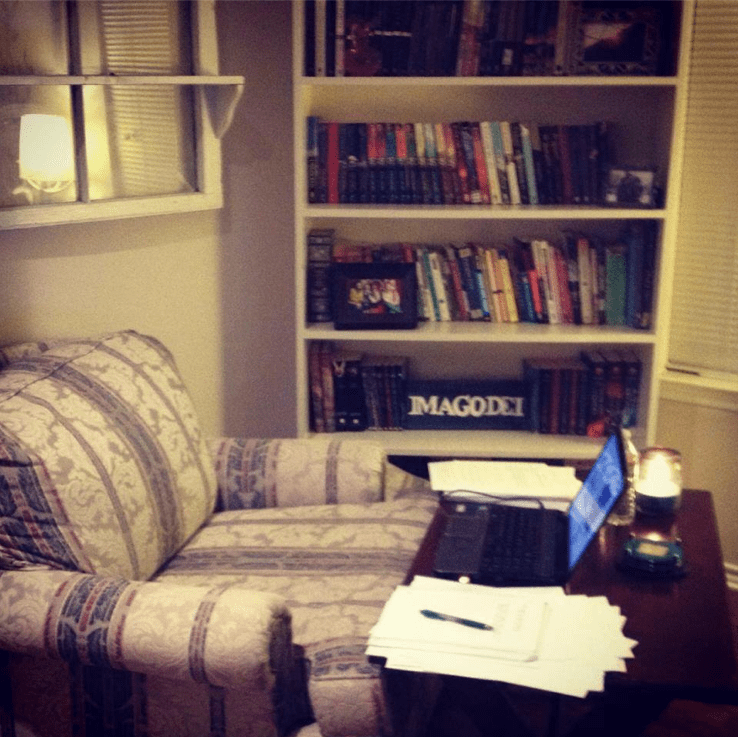
  • Select a time of day, place, and schedule that works for you! I’ve tried to become a morning person, but my best writing happens at night. Why fight my body clock? I love to sit in my room or on my patio in the quiet of the night with a candle burning and my creativity racing full speed ahead.
  • Alert your cheerleading squad. I have a group of about 20 ladies who consistently ask me about my writing schedule. They know when I have a deadline. They help me process. They are my test subjects when I need a reader’s perspective. They see the tears, laughter, creative passion, and the frustration. They know and they encourage me. Find your team.
  • Set healthy boundaries. I work full time, write on the side, volunteer in a young adults ministry, have Bible study, and time with friends and family. BALANCE is key.
  • Know that life will happen and work around it. This year, I’ve experienced family emergencies, my brother’s wedding, ministry situations, work crises, and somehow the writing gets done. I set my schedule and adjust when necessary. If I miss my word count because of something I can’t help, I make it up.
  • Cook ahead of time. Don’t forget to work out. Take care of yourself! Eating correctly and working out gives you energy to juggle everything.
  • Prioritize what’s important. For me, it is making sure to focus on the relationships I currently have. The Lord has sovereignly placed me in my city, my family, and my job right now. I need to be present where I am while saying no when necessary to hibernate and write.
  • Trust the Lord. He knows your journey. When you feel like nothing is happening, trust that He is working behind the scenes.
  • Just do it! Finish strong! You will go from pre-published to publication. But it takes discipline. And chocolate and caffeine. But mostly discipline. And prayer. Tons of that.

What else would you add to this list?