How to Write a Nonfiction Book that Sells — Pt. 2

Good NewsIn Part One, I talked about the importance of subject, title, and content for writing nonfiction books that sell. All of these are key elements. Missing just one could mean the difference between a publisher’s bite on your bait, or their swimming away.

Equally, if you neglect the power of your marketing strategy, including future books you can write, a publisher might say no instead of yes. Short-cutting is not worth the risk of losing a book deal.

So let’s talk specifics.

  • Intriguing marketing strategies are an integral piece of your non-fiction book proposal. Every author’s heard it, “You must help promote your own book.” But most, even those of us with sales and marketing backgrounds from other industries, can feel overwhelmed at how to effectively boost book sales on paper or in application. So what’s an author to do?

Think outside the industry. How do movies and TV programs promote their wares? What are the big producers doing to move sales? Think Coke, Wal-Mart, Apple, Under Armor, Cabelas, or others you see frequenting the air and radio waves, or filling store shelves. Learn from the big boys while creatively using your small budget.

For instance:

  • Getting Through What You Can't Get Over Book CoverBuild human curiosity into the heart of your sales tactics and specify samples in your book proposal. i.e. Six Secrets to…, How to…, What ______ Want, Three Things Most People Forget that Could Cost You Sales. See the pattern?
  • List all of your speaking events, including those you volunteer for, or that may feel more like family than a professional gig. Any exposure to a potential buying public counts — and those with built-in fans increase the odds of book sales.
  • Look at conferences, organizations, businesses, that don’t immediately seem like a fit for your message. Is there a way to connect your book to their needs? For Getting Through What You Can’t Get Over, I’m promoting the impact personal issues have on the workplace and vice-versa. I’ve booked new speaking opportunities as a result.
  • Include something unique. *Talk about the psychology of color and how you can use it in your marketing materials. Note your intent to attract those looking for peace through shades of green, your strategy to pursue passionate responses with strokes of red, or your ability to stir deeper thinking by adding blue.

*After you’ve made the sale, don’t forget to work with your publisher on appropriate colors when considering cover art for your book.

  • Future books you’d like to write are like adding scent to the lure for a publisher ready to bite. After writing your proposal on a subject matter readers are interested in, brainstorming a dynamite title, writing clear content, and adding unique marketing flavors, offer a list of intriguing future titles, true to your brand. This shows the publisher you are more than a one-hit-wonder. You are an author readers will follow for a long time to come.

In conclusion, I must stress the need for a teachable attitude and patient demeanor. Two common challenges we must overcome if we want to succeed. There is no place for arrogance or impatience in any professional venue. Be a turtle, not a hare, and in time, you will write a nonfiction book that sells.

Have you sold books and if so, can you offer insights I missed?
Asking the Question, “How Do I Get Published?”

Woman_talking_on_phoneNothing dispels the misconception that I am unique more categorically than the internet.


Case in point: Every time I embark on some new project—whether it’s growing asparagus from seed or figuring out whether to read a talked-about novel or advising a student about whether she should negotiate for a better grad school fellowship offer—I always begin by asking Google. Invariably, before I get further than a word or two, Google is already offering me the rest of my question in the searchbox, word for word exactly as I was going to phrase it, from one of the millions before me who’ve already posed it. Whatever I’m asking—however stupid, embarrassing, or arcane my inquiry—the e-populace has already considered it and devoted significant effort to answering it. Wherever I go, the virtual multitudes have already been. Truly there is nothing new under the sun.

That said, experience has also taught me that there are many who don’t seek answers on the internet. Or anyway, there may be plenty of mes out there asking my questions, but, whoever they are, they’re not the would-be authors who show up at my office or email or call wanting to know how to turn their great ideas into published books.

Computer Workstation Variables from WikimediaUsually, I concentrate my authorial-guru expertise on trying to turn their initial question—how to get published—into something more answerable, like how do you write a query letter? Or, how do you write a nonfiction book proposal? Or, do I really need an agent?

I explain to them things I’ve learned about the publishing process over the years—like that agents play an important role in the publishing process by vetting billions of manuscripts out there to find ones worth sending on to publishers. I tell aspiring authors that the 15% of what they may make and are already so reluctant to shell out for their as yet unpublished (and often not yet completed or even begun) books is every penny worth it for someone who not only knows how to navigate the crazily mysterious publishing world and has the connections to do so but who has a vested interest—namely, the desire to make money—in their clients’ success, since that’s where their success will come from.

“What you should be asking,” I say, “is not if you really need an agent but how to get one. And how to motivate yourself to finish a draft. Or how to get started in the first place.”

But they didn’t come to be nagged. They came hoping I’d help them keep on dreaming.

Here’s the thing. Getting published takes work, that’s all. And every answer you have about it has already been asked and answered, in billionuplicate, on the internet. And in more detail than any single author could ever offer. Figuring out how to get published is a matter of asking Google a question and then making your way, site by site, into the vast inter-universe of answers, refining and reasking as you go.

Interested in finding an agent? Here’s how.

Interested in getting a particular agent? Here’s how.

Interested in what clients that agent has had and how successful those clients have been in the past few years? Want to know how long your dream-agent takes to respond to queries? To requests for a partial manuscript? To requests for a full manuscript? It’s all there, often conveniently consolidated into a single, sortable site. Verily I say unto you, there is no mystery more fully unraveled in the webby bowels of the internet than publishing a book.

Which isn’t to say everyone’s in agreement about everything. Or about anything. Far from it. Finding some small clump of consensus, much less an answer you can trust, is as difficult as getting the educated lowdown on a loved one’s disease from the internet. It’s there, but you have to sort through a lot of obvious and sometimes not so obvious nonsense to discover it. Publishing questions are no different. You’ll have to winnow your findings.

But answers to your questions are out there. And, if you’re selective, what you learn is likely to be as trustworthy as and more informed than the answer of any single expert.

So, when you have a publishing question—especially THE publishing question—start with Google. Each question you ask and every answer you receive will take you deeper and a bit more confidently into the publishing world than any one published author can. If you’re lucky, you might even end up somewhere like here, where not just one but an entire community of agented writers are dedicated to encouraging, engaging, and enriching you along your writing journey. Without even being asked.Computer Keyboard

How I Discover New Books– Hint, Not in a Bookstore

It’s been said that the reason an author should stick to traditional publishing is book discoverability and distribution by way of a publisher’s marketing budget and sales staff.

bookstore-482970_1280I was fortunate to get a three-book deal with a mid-size Christian publisher who did get behind my book generously with marketing dollars. They even landed me in Sam’s Club with my first two books in hundreds of stores nationwide.

Just, why, didn’t I hit the bestseller lists? I think the books are good. Proof and Poison got starred reviews from Library Journal. Both were nominated (though never won) for awards. Lots of favorable reviews.

In fact, I might even say that landing in Sam’s Club hurt me a little. Why? The issue with Sam’s club is it’s a BIG order. It’s a risk for the publisher. If you’re not a well-known name who can move those novels many are going to get returned and your royalty report is going to look like a defaulted home loan and the bank is knocking on your door.

I began to analyze how I discover books, and does it match with the way a traditional publisher markets novels?

Sure, your best chance of getting into a bookstore is partnering with a traditional publisher but how often are you going to bookstores anymore? I used to go weekly, when they were close. There aren’t any close ones anymore. The one at the mall I would stop in while shopping for other things . . . gone . . . both of them. The closest bookstore is a 15-20 minute drive. And as NYT’s bestselling author Jamie McGuire blogs here— even she wasn’t seeing her novels in bookstores during release week.

Here is a list of how I now discover books.

1. Goodreads Reviews. Goodreads is the place for people who LOVE books and where book lovers leave reviews. I find I have more Goodreads reviews than Amazon reviews. I have close to 2,500 friends on Goodreads. Every day, I get an e-mail of their reviews. I’ve come to know whose reading tastes are similar to mine. A good review of a book will cause me to look further on Amazon. Plus, since I’m friends with so many, I get exposed to a wide variety of books outside my general reading genre (suspense) that I probably wouldn’t have heard about– even browsing bookstore aisles.

2. Amazon Lists. Amazon lists are fun to browse. Of course, there is always the 100 top paid and free Kindle lists but I also look at genre specific top 100 lists. I also pay attention to novels getting a crazy number of reviews and try and read those to see what is catching the reader’s eye. So, from my first two examples, I don’t think any author can say that reviews don’t matter . . . they do.

3. Advertising Lists. There are a couple of advertising lists that I belong to– BookBub and Inspired Reads. On these sites, you can narrow down the types of e-mails you receive to genres you like. Every day you’ll get an e-mail about books that are on sale. Bookbub lists are the primary way I’m buying books. If I see an interesting book cover then I click the buy link for Amazon and check out reviews. Based on the number of reviews, I make a decision about whether or not to buy the novel. BookBub has a very good reputation among authors that though pricey– is generally a good investment of your marketing dollars. I think the same is true with Inspired Reads for their reach/price ratio.

4. Word of Mouth. I’m like every other human being. If a good friend says, “You must read this book.” it will climb up to the top of my TBR list. The more people that say it– the more likely I am to read it. One author I’d almost given up on until a good friend said, “Just read this one. If you don’t like it, I give you permission to never read this author again.” Reading that novel changed my opinion of the author and their work.

What I find is that I’m rarely in a bookstore anymore but I’m discovering a lot more books because these things are available to me every day.

For my fall release, this is how I’m spending my marketing money. I’ll likely not be arranging bookstore book signings, but that’s a topic for another time.

How are you discovering books? Does that determine your marketing plan?

Why the Ninja? And Other Great Questions Your Writers’ Group Will Ask

NinjaWriters are a strange breed. We pretty much live inside our own heads, which isn’t a problem as far as we’re concerned. In fact, inside our heads is a pretty great place to be. Kind of like Willy Wonka’s chocolate factory, where anything is possible, including eating a three course dinner in the form of chewing gum, or turning into a blueberry as punishment for being greedy (a little something we writers like to call poetic justice).

There is a downside, of course, which is that non-writers don’t always get our compulsive need to take ten minutes to compose a grammatically correct text while they’re standing in front of a wall of cereal boxes waiting to hear which one we’d like them to buy, or our propensity for bolting upright in bed at 3 a.m. and shouting “Yes! That’s how she did it!”
Which is why we writers need to seek out other writers–to convince ourselves that we’re not really crazy. Or, if we are, that there just may be a way to convert all that crazy into an actual career (yes, Dad, you can still call it a career if you don’t have regular hours, a place of work, or any viable income, per se).

A writers’ group is a fabulous place to find that support and encouragement. Connecting with people who have a mutual passion for wordsmithing and a mutual penchant for consuming copious cups of coffee daily–which is critical to maintaining both sanity and an ever-increasing word count.

One of the keys to an effective group is trust. Putting yourself out there as you share your work requires tremendous vulnerability, something we self-preserving writers aren’t that keen on. Remembering that other members only want to encourage you to make your work as good as it possibly can be is the secret to surviving (even embracing) the process.

Another key is honesty. Feedback such as “that’s the most amazing writing I have ever read; don’t change a single thing” is all well and good. Very well and very good, in fact. Only it’s not all that helpful. Something like, “I really enjoyed the dialogue between the butcher and the housewife over the meat counter at the grocery store, but I didn’t get why the Ninja darted out of the back room and grabbed a rump roast before back-flipping his way down the International Foods aisle” is much more useful. Now you can go back and read that scene over, realize that the Ninja, while really, really cool, is in fact unnecessary to the plot, and take him out.

Painful as it may be at times, a willingness to receive constructive criticism and honest feedback from people you trust (and who are always willing to make allowances for the fact that you live life on the outer fringes of reality, especially since they usually share the same postal code) inevitably leads to stronger, tighter, more excellent writing.

And there’s nothing crazy about that.

Are you part of a writer’s group? Have you found it helpful?

I’m a Glutton for Information!

French bulldogSelling books and signing them is a happy experience for any author, but if I had to name my favorite part of the writing process that leads to publication, it would be doing the research that goes into my books.

I love doing research. In high school and college, I was the student who jumped for joy when the instructor assigned a research paper. I couldn’t wait to dig through the library for books, or hunt down obscure magazine articles. These days, research is even more expansive (unending, even!) thanks to the internet, but I love it, along with the hands-on research I encounter in the course of writing manuscripts. I’m just a glutton for information, I guess.

In celebration of that nerdy writerly trait, here are a few of my favorite research moments.

  1. I got a personal, private tour of a donut shop. Need I say more?
  2. I spent hours in the dark one night with some good friends checking nets for owls to band. We never got one, but I did get to wear a really cool headlamp while we strung up nets in the woods and told funny stories to pass the time.
  3. I took a firearms safety course and learned how to shoot a gun. I put 19 of 20 shots into the center of the target, so you can call me Eagle Eye from now on!
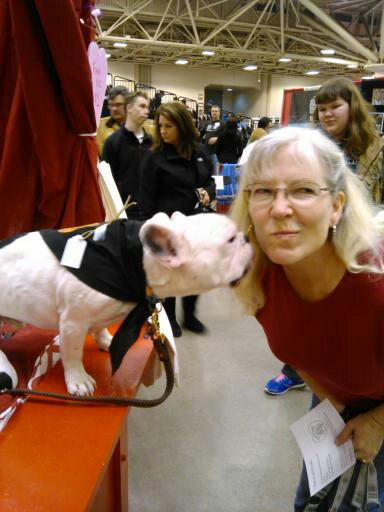
  4. I puckered up for a kiss from a French bulldog at a Pet Expo and posed with rabbits running an obstacle course. (Yup, that’s me and the bulldog above.)
  5. I spent a week in January at one of the world’s premier birdwatching areas in southern Texas. It was sub-zero and snowing back home in Minnesota at the time, which taught me the critical importance of timing when it comes to planning research trips.
  6. I took my husband on a very special summer date night to watch 300+ Chimney Swifts go to roost in an old chimney stack at dusk. It was a breathtaking aerial display and possibly a once-in-a-lifetime event as the populations of these birds dramatically decline.
  7. I met a World War II veteran who worked as an ordnance officer, which led to learning about camouflaging British air bases to hide them from Nazi bombing raids.
  8. I got to sit in the mixing booth of Prince’s Paisley Park Studio while interviewing a pre-eminent Christian composer as he completed mixing his musical tracks for a new CD.

Do you count your research as one of the best parts of your writing pursuit? What is your favorite research moment?

Writing With Style

All writers want to write with style. However, your publisher thinks of style less in terms of crafting words with fashion and flair and more in terms of communicating with good grammar and consistency. iStock_000003403361MediumHere are a few resources you will need as you polish your prose for publication:

1. Manual of Style:
A manual of style (MOS or MoS) is a comprehensive guide to editorial style and publishing practices. These thick books cover industry-wide or profession-wide guidelines for writing. If you are writing a book for general readership, you probably need to follow The Chicago Manual of Style. For both UK and US usage, you can turn to the New Oxford Style Manual.

If you are writing articles for newspapers or magazines, you may need The Associated Press Stylebook. If you are writing for a scientific or medical audience, you will need to use the AMA Manual of Style. Other academic fields and professions have specific manuals of style. I keep several manuals of style handy on a bookshelf near my writing desk. All of these reference books provide guidelines for grammar, citing sources and use of terms specific to that writing style. They also help you better understand the publishing process and the final layout you can expect for the piece you are writing.

2. Publisher’s Style Guide

The publishing house for your book may have its own style guide that serves as a supplement to an industry-wide manual of style. InterVarsity Press, the publisher of my book, Questioning Your Doubts: A Harvard PhD Explores Challenges to Faith, provided me with an editorial style guide that addressed how they format parts of a book and answered specific questions about grammar, punctuation, word usage and appropriate choice of abbreviations. Remember that your publisher’s style guide can overrule a more general manual of style, so always follow your publisher’s editorial direction.

3. Style Sheet

While writing a book or an article, you might find that certain words or phrases could be spelled, capitalized, punctuated, abbreviated or used in more than one way. To keep your writing consistent, create a style sheet that tracks your own or your editor’s rules for these words and phrases. This style sheet will take precedence over the more general publisher’s style guide and the industry-wide manual of style. Make a simple template with two columns: one that lists each word or rule and one that defines the style. Fill in the template as you write or receive comments from your editor.

A style sheet also can help you achieve consistency across a series of articles for the same magazine or for each book in a trilogy. It can save you time when editing your final draft by eliminating the need to look up a given rule in a larger reference work or trying to locate a particular email from your editor. With style sheets, guides and manuals helping you handle the mechanics of writing, you will have creative energy left over for the fun part of writing, such as choosing great literary devices and playing with the rhythm of a sentence. Within the constraints of proper style, your own writing voice will emerge.

Which resources have you found most helpful for keeping your writing in style?

How to Write a Nonfiction Book that Sells — Part 1

Nonfiction Readers Want in a BookYou can have the greatest book idea in the world, but if it won’t sell, what’s the point in writing it? Unless you simply want to leave a legacy for your family and friends with no concern for sharing the message with anyone else.

As a Christian author, I’m driven to offer lasting hope to those who might read my words. So it’s important I wisely choose the subjects, the titles, the content, the marketing plan, and the future books listed in my proposals. There’s a lot I still don’t know about this process, why some titles are purchased while others languish, but I’ve certainly picked up a few secrets. Some of them, I wish I’d known earlier. Maybe what I’ve learned will help someone else in the place I was a short time in the past.

  • The first and most important thing is choose your subject(s) wisely. But with so many books in existence, and a plethora of authors scrambling for attention, how do you find a fresh subject to write about? Here’s one of my secrets. I listen to others, but I also listen to myself. Both of my initial book titles came about that way. With First Hired, Last Fired, someone said to me, “Anyone can be replaced.” I automatically replied, “Is that really true?” Voila, the subtitle, How to Become Irreplaceable in Any Job Market was born as Greg’s variation from my first take on the idea of being irreplaceable at work. My second title happened when I heard myself say to someone, “You know, there are things in life we learn to get through, but no matter what anyone says, we just won’t get over.” A little tweaking and tightening later, Getting Through What You Can’t Get Over became a book that a lot of people say they or someone else needs to read.Getting Through What You Can't Get Over Book Cover

Listen to your own conversations. What scares us? What are we complaining about? What confuses us? What aha moments do we encounter and why? What works and what doesn’t? How have we discovered hope and healing? For Christian authors, what does the Bible say that’s relevant to 21st century issues, in the here and now?

  • The second most important thing is titling. I’d say the process you use to choose a topic works as well for picking a title. What grabs you? Can you turn a cliché upside down? Is there a pithy quote you can tweak to make your own and spread the message in your topic? What do you hear yourself and others say?

For subtitling, follow the advice of Alice Crider, my former coach and agent with WordServe, “Make a promise you can keep to the readers in every subtitle.” Anytime someone offers us a solution to a big problem, we’re interested. Right?

  • For this segment, I’d conclude with the power of valuable content. Slapping a few words together will not provide opportunities to grow your career as a professional author. Do your homework by reading books on writing well. Hone your craft constantly. Connect with other professionals and barter for editing/critiquing services; look for that rare mix of honesty and encouragement. Karen Barnes Jordan deserves credit for every book of mine that’s sold. You can have the best concept in the world, but if you can’t communicate it clearly, it’s lost on potential readers and they will tune you out.

In part two, I’ll share insights about marketing and future books. No proposal worth its words will sell without showing you have great message promotions in the hopper. There’s a basic formula to writing a non-fiction book that sells, the key is in following it all the way through.

What obstacles are you hitting in your efforts to sell your projects?

Let’s Get Serious About Serials

The WordServe Water Cooler is pleased to host guest blogger Becky Doughty.

Welcome, Becky!

When I finally decided to “get serious” about my writing, I quickly discovered I had to have a platform. As so many new authors learn, platforms are hard to build, especially with fiction.

I created a website and started a blog. I found a small circle of authors who opened their ranks and let me squeeze in. We traded guest posts and gained a few more followers from each other. I blogged about my family, about my writing. I blogged about my past sins—you know, the good stuff, like witchcraft and broken marriages. That should have brought them flocking, right? I blogged about gardening and chickens and making bread and home schooling and prayer and whether or not one should blog….

EC-Collection-Cover1I created a Facebook Author page and set up my blog to automatically post there. I linked everything to Twitter, too, and created Pinterest pages with images of what my characters might look and dress like, where they might live and work.

But because I had no books published at that point, I was essentially inviting people to my fancy new restaurant and handing them menus of what they could expect to order on some ambiguous day in the future…. Then I wondered why they didn’t come back every time I announced a new dish being added to the menu.

I needed a way for my visitors to actually “sample” my wares. A serial novel.

For one year, around the 10th of each month, I blogged a 10,000 word episode of my serial novel, Elderberry Croft. Readers could “taste” my fiction for free, with a promise of more to come every time they visited.

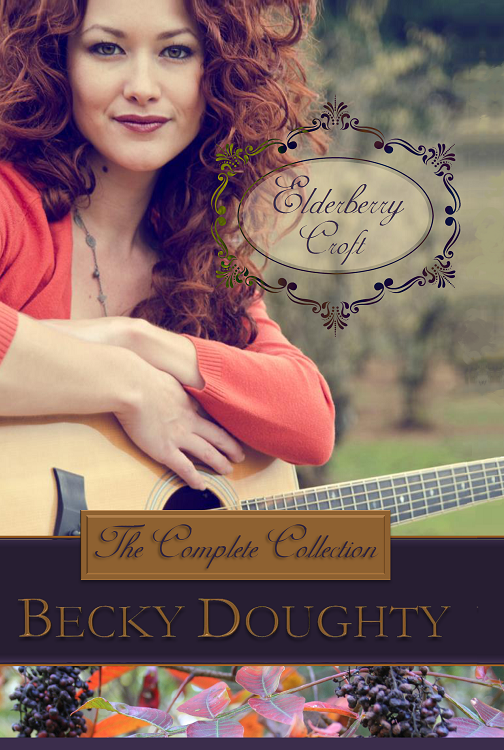
Well, Elderberry Croft has turned out to be more than just a sampler platter on my website. It has remained one of my bestselling series and books (it now comes in a complete collection and there’s a holiday sequel, Elderberry Days) since I began publishing the episodes. It’s been my most productive method to building an eager and faithful readership.

Six Suggestions for Serious Serialists:

  1. A serial novel is not simply a novel broken up into parts. That often frustrates readers. A serial novel should be written like television episodes, each episode essentially a short story with a beginning and an end, but linked to the other episodes by a foundational storyline told over the duration of the serial, one that culminates in the final episode.
  2. Your serial novel should be the same genre in which you primarily write. It’s an excellent way to gain readers, but if you usually write historical romance and your serial novel is a dystopian sci-fi thriller, you’re going to have some disgruntled readers who come looking for more Katniss and only find Sir Liam Drake and the White Rose of Kilarney County.
  3. Write ahead. I did not always do this. Translate: There were many months I lost sleep and suffered great anguish over how I was going to pull it off.
  4. Create memorable characters and storylines, especially the main characters whose stories link the episodes. If your readers don’t care about the foundational story, one “off” episode will send them running.
  5. Post a few “extras” in between episodes to keep readers happy. In Elderberry Croft, Willow Goodhope has a thing for elderberries (imagine that!). I posted elderberry recipes and home remedies, elderberry body care products, crafts, and elderberry lore.
  6. Listen to your readers’ comments. I’m of the mindset that authors should steer clear of reviews. Reviews typically tell us more about the reader than they do about the author’s work. However, in the case of serial novels, this is a perfect opportunity to get to know what your readers like, what they want to read about, and then adjust your story accordingly!

This is a great way to publish a book. When you’ve written the final episode, gather them all up and release them in one complete collection. Voila! You have a full-length novel!

And don’t forget to take a break from “serious” now and then, and simply enjoy the journey!

What are your thoughts on serial novels? Have you ever tried to write one?

************************************************************************************************

becky-doughty-author1 Becky Doughty is the author of the best-selling Elderberry Croft series, the controversial Waters Fall, and the voice behind BraveHeart Audiobooks. Raised on the mission field among the indigenous tribes of West Papua, Indonesia, Becky’s ministry is through the written word. Her heart is for people living on the edge–that fine line where grace becomes truly amazing. Married to her champion of more than 25 years, they have three children, two of whom are starting families of their own, and they all live within a few miles of each other in Southern California. You can connect with Becky via her website, Facebook, Twitter and Pinterest.


Writing Off The Leash

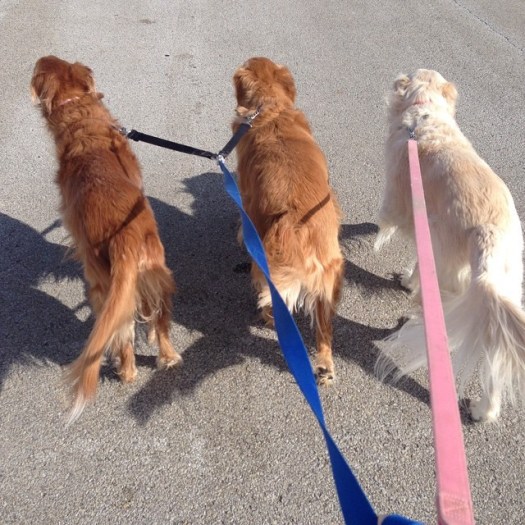
11021249_10205885141785471_6207685168227967330_nToday was the first day above 32 degrees Indiana has seen in forever, so I went gallivanting with my gaggle of golden retrievers. They haven’t had a real walk since the extreme cold came around, so they were giddy. The oldest one (the darkest brown) literally skipped down the street and back. They held their noses high and curled their tails and could hardly keep from tearing themselves from their leashes and running free.
Prior to the walk I’d been at my women’s Bible Study where we talked about 1 Thessalonians 2 and how Paul, Silas and Timothy had to press on with their mission and message despite often overwhelming suffering and odds. In verse 2:2 Paul writes, “Yet our God gave us the courage to declare his Good News to you boldly, in spite of great opposition.”

While not necessarily a Paul-worthy struggle, writing novels does not come easy to me. I write, delete, and rewrite several times over before I get a scene–let alone a plot–to come out right. I question my calling, my ability, my gumption. I call my agent and freak out. I call my husband and freak out. I freak out to my friends on Facebook. But the longer I write, the more I realize that often what hinders me are my own doubts and hang-ups and attempts to write something perfect instead of just…

…writing.

Ray Bradbury, in his book, Zen and the Art of Writing, says as writers, “What we are trying to do is find a way to release the truth that lies in all of us.”

Truth is hard to find. We have to dig for it in the places of our hearts which would rather be left alone. We have to hack through icy corridors of our soul which would rather remain frozen shut. We have to distance, if not remove ourselves, from a world which begs us to tidy up, straighten up, and shut up. Because we can’t release truth into our writing unless we allow ourselves the permission to write poorly, the wisdom to write something wrong, the unencumbered freedom to write the worst thing the world has ever seen.

Beautiful writing, like truth, only emerges when we allow words to roam unhindered across our screens, when we throw off the baggage of perfection and tune out the voices which tell us we are not capable of the task before us.

If you’re called to write, you probably already know the process is a battle, and that you have to be prepared to stay the course despite the worst of odds, the cynicism of the marketplace, and the opposition–whether self-inflicted doubt or another rejection.

My challenge to you is to write off the leash.

Don’t give up.

Spring is coming.

And the words will, too.

All. Those. Books.

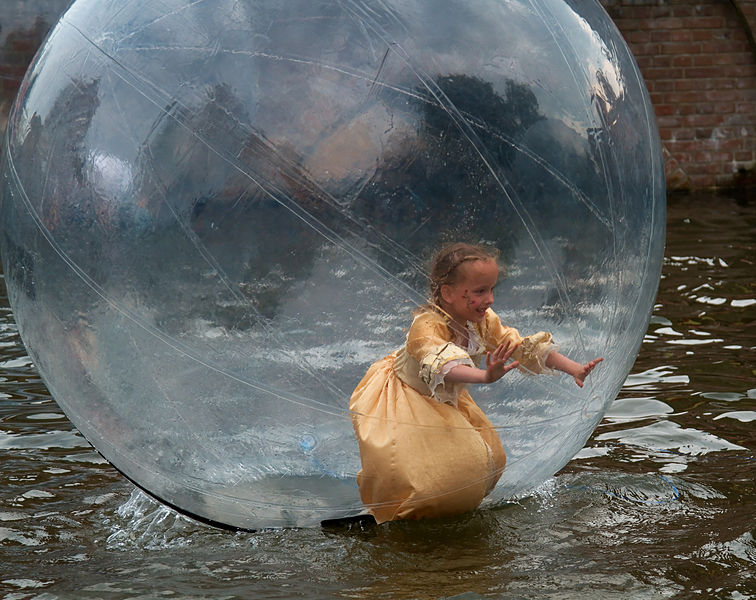
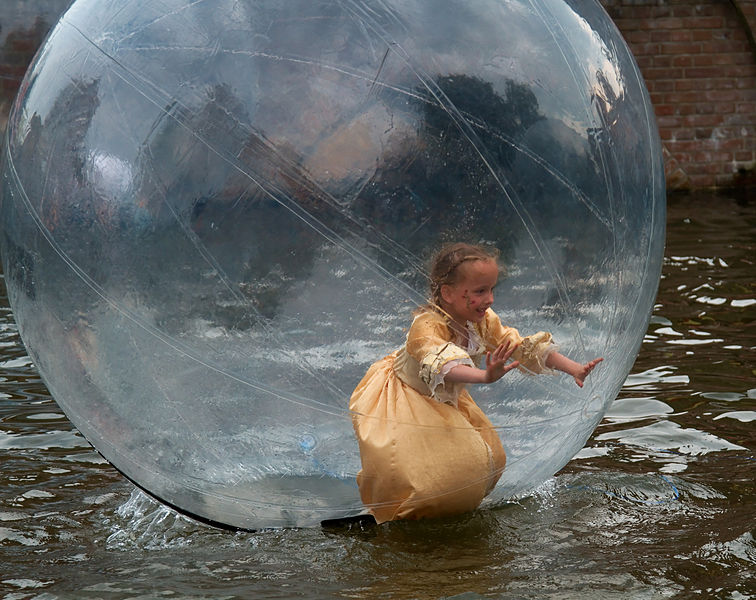
Princess in a Bubble: Sander van der Wel from Netherlands

Recently I totted up that, of the eighty or so college students I’ve taught this year (only about a half of whom were creative-writing-emphasis English majors), a good dozen have written novels. That’s a fifteen percent. They’ve completed novels, they tell me. A couple of them have written more than one.

I haven’t read any of these novels, so I can’t say if they’re any good. Judging from the student-novelists’ writing in other contexts, they’re probably not much worse than a lot of what gets published these days, but they’re probably not masterpieces.

Whether their novels are good or not, though, it seems important that there’s all this fiction-writing going on these days beside and beneath and perhaps instead of all the assignments and tests and papers and other writing that comprise a college education. I certainly wasn’t completing novels—not even short stories—back when I was their age, and I can’t think of a single classmate who was. I’ve been speculating what all these budding—nay, blossoming—young writers might mean for the state of literature in our time and for the writing community at large.

One thing that occurs to me right off is that young people these days must feel more invited and encouraged and empowered to write and publish novels than I ever was. That’s perhaps to be expected of the self-esteem building curriculum promoted in the generations between mine and theirs. I once had my seventh grade teacher’s Little Brown Handbook thrown across the room at me for chewing gum. They, on the other hand, were told they could do pretty much anything they wanted. Consequently, not a few of them went ahead and did that—which is sort of exciting, when you think about it.

Students these days are also very motivated to write. By what? one wonders. One incentive would surely be the myriad publishing opportunities available to writers these days. Several of my students have published their work online and two have paid to have their work published by what we used to call a vanity presses. Publishing has become something anyone can do, at any stage of life, often with little or no investment of resources beyond the time it took stole from a few games of online poker.

Due_sportelli_di_libreria_con_scaffali_di_libri_di_musicaAnother motivation could be the greater variety of subgenres popular with kids nowadays. When I was young, girls read Nancy Drew as tweens, then progressed directly to the classics (Austen, the Brontës, for me Defoe and Dickens); boys who read mostly read adventure or sci-fi then stopped; and everyone liked the odd fantasy stand out like J. R. R. Tolkien. Nowadays, bookstores and libraries have separate young adult sections with whole shelves of mystery/thrillers, even more shelves of fantasies, plus equally popular subgenres we never heard of in my day: apocalyptic, dystopian, historical fiction, alternative historical fiction, cyberpunk, steampunk, contemporary, Christian contemporary, romance, LGBT romance, Amish teen romance. . . The world of fiction these days is like a map of the brain: so much stuff going on, so much new vocabulary you need to even talk about it.

Then there are the novel-writing success stories: J. K. Rowling and her napkin, Christopher Paolini writing Eragon at fifteen, the almost immediate transformation of their and other books popular with young people into big screen movies. It looks so easy nowadays, writing a book. A flick of the pen and you’re there.

I guess the thing that fascinates me most about the novelists among my students is not their license and motivation to write or even the astounding investment of time involved but the enthusiasm they must bring to the fiction-writing enterprise: to prefer it over other more age-appropriate entertainments—such as, for me at their age, hanging out with friends, cooking, reading, learning aikido, making ceramic pots, scavenging my natural and suburban surroundings for sea urchins and kumquats, sewing.

(For them, playing video games, watching YouTube, poking their cellphones? Maybe it’s that. The screen-squinching narrowness of their entertainment alternatives. Writing has become their life before they’ve even had lives, I’m supposing. Although I’d have to read their books to know for sure.)

From everything I’ve heard in the news lately, reading’s on the wane, but writing sure isn’t. Either that or the students at Christian universities like mine are way different—more creative and prolific, harder working, more hip to the possibilities out there—than their secular peers. I’m guessing they’re not all that different, though. I’m guessing my anecdotal fifteen percent of kids these days—perhaps more!—are writing books in lieu of reading them (or maybe in addition to reading them, since somebody’s got to be reading all those cyberEpiscopalian dystopian romances) and will soon be filling the shelves and movie marquees with their opuses.

It’s becoming my new writerly nightmare. Used to, bookstores scared me. All. Those. Books! All that competition for readers. Now it’s them. My students. Our kids. Our kids’ kids.

This isn’t a very encouraging post, I fear, for fellow writers—especially those of a certain age—so let me just close with a little remediation in the self-esteem training some of us missed out on: Don’t. Give. Up. If they can do it, we can too!