Pitching an agent? Read these query letter tips…

student-849825_960_720In my work at WordServe, I read a lot of query letters and book proposals (sometimes more than 100 in a week!) that come into our agency. And in my work as a freelance editor, I often help clients develop their proposals and queries before they submit them. After reading hundreds of pitches across every conceivable genre and topic, I’ve come to notice a few significant Do’s and Don’ts that can make or break whether an agent is going to read any further. If you’re newer to the world of publishing and hoping to get your book noticed, perhaps a few of these will be helpful to you the next time you’re putting together your pitch to an agent or editor.

When sending a query to a literary agency…

  1. Don’t claim that your book is going to be a huge bestseller. The fact of the matter is that only a teeny, tiny percentage of books end up at the top of the New York Times bestsellers list—and much of it depends on things outside of an author’s control. If you claim that you’ve written the next Harry Potter, the agent reading your pitch is probably going to assume that you don’t understand the publishing industry very well; have unrealistic expectations; and/or haven’t done your homework. A better way to emphasize your book’s potential is to try something a little less grand that focuses instead on who is realistically going to buy your book: “I’ve written a book about women in the workplace that will resonate with young working mothers across the country.”
  2. Do your homework on the agents and agency you’re submitting to. If you can find out the name of a specific agent at the firm who represents books in your genre, send the proposal to their attention. Mention why you’ve chosen them. Perhaps comment on another author they’ve represented whose work has similarities to your own. If you can’t submit the proposal to a specific agent, send it to the general agency, but make sure you’ve read up on what kinds of books the agency represents. WordServe represents primarily faith-based books; when I get submissions for romance books with risqué content or nonfiction books that argue against our values, I delete without reading any further.
  3. Don’t claim that your book will make a great feature film. Even fewer books end up as movies than end up on the bestseller list (see #1, above) – and agents who see this in your pitch will know your expectations are overblown and be far less likely to work with you.
  4. Do write your pitch in polished prose that reflects your writing style. You’ve got 30 seconds to get an agent’s attention, so represent your writing well. If your book is humorous, inject some levity in your query. If it’s a thriller, create tension with your first line. If it’s literary fiction, elegant sentences that mirror the book’s style are a must. In every circumstance, ensure that there are absolutely no typos; this is your first impression, and it needs to be 100 percent perfect. Seriously: a few typos in a pitch letter is enough to get an immediate rejection.
  5. Do highlight why you are the right person to write this book; but don’t claim that nothing like this has ever been done before. Chances are, it has—and the agent has already seen it. Instead, focus on what sets your project apart, what new angle or new research or new understanding you bring to a topic—and why you’re the best person to tell readers about it. Focusing on your prior experience, personal connection to the topic, research you’ve conducted, or a dedicated audience you’ve built up are all great ways to convince an agent that you’re worth taking a chance on—and that doesn’t require the claim that no one else has ever thought of anything like this. It just requires you to show me why you’re the best person for the job.
  6. Do read the requirements for submission for every agency you send to. Different agencies have different submission requirements, and it’s essential that you provide them with exactly what they want—or your query will likely be deleted without even being read. If an agent doesn’t want attachments, make sure you include everything in the body of the email. Do they want to see five pages of sample material or fifty—or none at all? Do you need to include a full proposal, or just send a query and wait for a response? Following the specific instructions for each agency, while tedious, will result in a much better response rate, as agents will see that you’ve done your research, are taking this process seriously, and have respect for an agent’s time and wishes.
  7. Last, but not least, do show courtesy and respect to the agents you’re submitting to. Thank them for their time (they really are busy), and don’t pester them if you don’t hear back immediately. While it’s appropriate to follow up with an agent if you don’t hear from them within the time frame they list on their website, do not write to them before this window has elapsed. If they say that they aren’t able to respond to every query, accept that you simply may not hear back. With so many queries coming in, agents aren’t always able to give a personal response to each project they see. It’s unfortunate, but a reality of the industry. And finally, if you do receive a rejection, don’t pester an agent to explain themselves or try to argue for reconsideration. Graciously accept the response, and move on. There are many good agents out there, and you want to find one who connects with your work and is excited to partner with you.

Pitching agents is a difficult process—trust me, I get it! But by spending time polishing your query and making sure to send it to just the right places, you’ll increase your chance of finding the perfect person to represent your work. Above all, don’t be discouraged! It takes time, and often lots of rejections, before you find the right agent—but it does happen. For the most part, agents are in this business because we love books as much as you do; and we’re always hoping that the next query letter we open is going to be the perfect one for us.

You can only eat so much eggplant.

eggplantI’ve rediscovered the joy of vegetable gardening, thanks to our move to a warmer clime that allows for gardening year-round. As a result, I’ve acquired some hands-on experience with how my garden grows…or not. And, being the reflective person I am, I can’t help but apply those lessons to not only life in general, but also to life as a writer. So whether or not you’re a dig-in-the-dirt kind of person, I hope you’ll find some gems in the guidelines I’m culling from my veggies.

  1. Sow liberally and see what comes up. For my first crop of lettuce, I ignored the seed packet instructions and laid seeds thickly the whole length of the row. I wanted to be sure something came up, and my confidence didn’t match the packet’s. The result: I had all the lettuce I could eat, and then some. The next time I sowed lettuce, I followed the instructions and spaced fewer seeds farther apart. The result: nothing came up and my work was a wasted effort.

Writing take-away: when you’re new at writing, try it all. See what develops for you. It’s better to produce more than you can use than have no success at all.

  1. Thin the rows to get better results. When I noticed that the new plants were crowding each other, I pulled out the smaller ones to let the bigger ones get the full advantage of soil, sun, and water. I got healthier plants that produced more and for longer periods of time.

Writing take-away: Capitalize on what’s working for you. If your fiction isn’t doing well, focus on the self-help material that’s popular with your audience and helping your platform grow. Put your energy where you’re seeing the strongest results.

  1. Some seeds just won’t sprout. Get over it. Plant something else. For some reason, I couldn’t get snow peas to grow despite two tries. Instead of letting the soil lay unused, I planted beets, which turned into a bumper crop, forcing me to try lots of new great recipes using beets.

Writing take-away: If you just can’t find an audience for something you’ve written, it’s time to try a different approach, treatment, or subject. The new material you produce might prove an easy winner.

  1. You can only eat so much eggplant. I didn’t think I could get tired of eggplant parmesan and mixed veggie grills, but after this summer and fall, I know there really is a limit to how much eggplant I can eat. Next year, I will plant only one plant, or make a habit of giving excess produce to my neighbors much earlier in the season.

Writing take-away: You can get tired of writing in the same genre. When you just can’t face writing another devotional, or romance, or even a blog post about writing, take a break. Write something else. Binge on reading books. Watch all the movies you missed in the last year. Then a day will come that you really want to write in your genre again. You’ll feel fresh and your writing will benefit.

By the way, if anyone wants eggplant, let me know…

Overachieving Your Platform: Best of the Water Cooler Series Book #2!

overachieving-your-platform-coverMany years ago, a good friend went into a coma after giving birth. She was on life support for nearly four months. We all prayed and wondered if she would pull through to see her baby girl and live a full life.

By her side was her husband. Every day he was at the hospital talking with doctors and nurses, making sure medication was properly being administered, asking questions . . . basically, being every doctor’s worst nightmare when it came to patient care. But you know, on several occasions, he insisted on something that actually saved his wife’s life. The third leading cause of death in America is medical care accidents and misdiagnoses. He needed to care for his wife because if he didn’t, the worst could happen.

I mention this story because I think it can be illustrative of some of the realities of book publishing today. Sometimes, your book is the one on life support, often from the moment of publication. Standing by are publishers and PR folks who are tasked and paid to keep your book alive. They’re busy, they have other patients (authors), and are generally overworked and understaffed.

The point is you cannot leave your book’s marketing and PR ONLY in the hands of publishers. They’ll do their best (usually), but they’re not perfect. And sadly, they have the 80/20 principle that is always screaming at them from the higher-ups. In publishing, it’s true: 80 percent of the money goes to 20 percent of the books. It’s a reality that won’t change, so we have to learn to deal with it.

So what should you do, then, as the author standing by your baby, trying to keep it alive?

You’ve got to tend to it diligently.

With your publisher: ask questions, say thank you a lot (gift cards and flowers are nice) when they do a job well done, give them ideas, don’t mention a problem unless you have a solution, tell them what you’ll do to help, keep track of everyone who helps (radio stations, bloggers, author friends). Work WITH them as much as they will let you.

What else can you do?

Well, we at the Water Cooler have just released a book that will help answer that question. Overachieving Your Platform: 95 Ideas to Embrace Your Inner Sales Marketing Genius is now available from FaithHappenings Publishers, and it offers the tools you need to break out and connect with large audiences. Adapted from the best writing of the WordServe Water Cooler, these doable, practical and affordable ideas will transform your platform and expand your audience if you put them into practice. No, you can’t do them all. But you can certainly go through this book with your highlighter and mark everything you actually could do. Then make a plan. What will you do during your first month from publication, second month, third? Write the plan out . . . and then work it.

Publishers, agents, and retailers agree: you’re only as good as your last book. So if your last book flops in the marketplace, it may very well indeed be your last book!

Don’t let that happen. Stay on guard by your book for the first six months to a year after launch, and you’re far more likely to get that second book contract. You may even get a royalty check.

I’m so proud of all of the authors who contributed to Overachieving Your Platform. They’ve done the hard work in the trenches and have learned from their successes and failures. All they know they’ve shared with you.

Grab a copy today—and take that first step toward creating a platform and brand that will serve you for the rest of your writing career.

Excelling-at-the-Craft-of-Writing-CoverAnd if you haven’t checked out the first book in the series, Excelling at the Craft of Writing: 101 Ways to Move Your Prose to the Next Level, make sure to do that as well. Craft and marketing go hand in hand when it comes to a writing career—you won’t find success unless you’ve got both!

This post was adapted from the Introduction of Overachieving Your Platform: 95 Ideas to Embrace Your Inner Sales Marketing Genius (available now!).

Double Booked by Two Authors

Photo/KarenAnita“Did you find your book?” I asked.

“No, but yours is on this aisle,” Anita responded.

Then the young lady standing near us asked, “What books do you need? I’m looking for one about anxiety and worry.”

“Well, I’ve got the perfect book for you,” I grinned. “I just wrote a book about the lessons I’ve learned about worry.”

Anita added, “It’s called Words That Change Everything: Speaking Truth to Your Soul. They have several copies of it here. It’s a great read!”

BookCover/WordsThatChangeEverything

The lady looked stunned as she examined the back cover of my book and my photo. “Seriously, you wrote this book?”

“Sure did,” I smiled. “And if you need a book about Getting Through What You Can’t Get Over, I highly recommend this one.” I pointed out Anita’s book: Getting Through What You Can’t Get Over: Stories, Tips, and Inspiration to Help You Move Past Your Pain into Lasting Freedom.

“I sure do! I’m looking for a book to encourage my friend, whose son was killed in a motorcycle accident a few weeks ago.“

Getting Through What You Can't Get Over Book Cover“Well, Anita’s book contains several inspiring stories about people who walked through some really difficult situations. I think it would be helpful for a person going through grief and post-traumatic stress.”

“Are you both authors? And you wrote both of these books?” Our new friend appeared confused.

“Yes, we attended a booksellers’ event here in town during the past few days. So, we decided to stop by this bookstore on our way home to see if they carried our books.”

Glancing at the two books in her hands, our new reader looked back up at us and giggled, “Well, I’d love to buy both of your books!”

“Awesome! Would you like for us to autograph your copies?” I asked.

“Yes, that would be great,” she smiled. “I still can’t believe you both really wrote these books!”

“Well, we’re finding it a little hard to believe that you were looking for books that deal with those topics.”

“I’m serious—these are exactly what I needed!” Then, she added, “This has to be a “God-thing.”

“Yes, a ‘God-thing’ for sure.” We agreed.

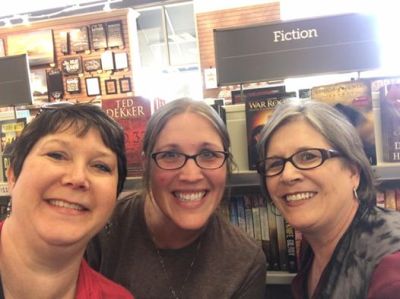
Photo/AnitaKarenThen, one of us suggested, “Hey, let’s take a ‘selfie’ to capture the moment.”

After I fumbled to find my cell phone in my purse, I said, “Okay, let’s strike a pose. Smile!”

After our brief photo shoot, we all embraced, recalling our unexpected encounter.

“Can we pray for you and your friend before we leave?” I offered.

“I would love that!”

“By the way, what’s your name? And what’s your friend’s name?”

“My name is Kendra. And my friend’s name is Karen.”

“Well, of course her name is Karen,” I laughed.

As Kendra walked to the register to purchase our books, we heard her telling the assistant manager about our encounter.

Anita and I waved at both of them as we turned to leave the store.

“What an awesome ending to a very productive week,” I commented to Anita.

“I told you we needed to stop by this bookstore!” Anita laughed.

Before we left the parking lot, Anita posted the photo of us with Kendra on Facebook, sharing our experience at the bookstore.

Best bookstore stop ever! Met this beautiful young lady named Kendra. She was looking for a book on anxiety and worry for herself, and another on grief for a friend who just lost a child. Talk about a God moment.

When she found out we were authors, and Karen wrote a book titled Words That Change Everything, and I wrote one called Getting Through What You Can’t Get Over, she took a copy of each off the shelf. After a quick, impromptu signing, we parted ways—all of us stunned in a great way. People like Kendra are why we do this.

 Amen, Anita. This IS “why we do this.”

Tell us about one of your God-moments as an author.


Are We Ready?

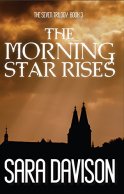
My latest romantic suspense novel released yesterday. The Morning Star Rises is the third book in The Seven Trilogy, after The End Begins and The Dragon Roars. In a recent interview, I was asked if I thought I had accomplished the purpose I’d had for the series when I set out to write it.

51vdnmrjnkl

It was a great question because it made me stop and ask myself what that purpose had actually been, something every author should probably do. Had I wanted to tell a strong, compelling story? Yes. Did I want to be obedient and write the story God had given me to the best of my ability? Always. But what was my unique, specific purpose for this particular trilogy?

Thankfully, I knew the answer. My hope and purpose in writing The Seven Trilogy was to pose the question, “Are We Ready?” to the North American church, the body of Christ, in the twenty-first century.

Times are changing. There is a shift in society that can be felt in the air and seen and heard in the public square in both written and spoken form. Hostility toward Christianity and the Bible is growing. If, as a society, we continue on our current trajectory, the very real possibility of persecution of believers could soon exist, not just in other countries around the world, but right here, in the west.

Are we ready?

In writing The Seven Trilogy, I created a world, forty years in the future, in which such persecution is not a rumour, not a distant, far-off possibility, but reality. With Canada under martial law after a radical group calling itself Christian blows up several mosques across the country, the military is sent in to oppress and keep an eye on believers. Basic rights such as owning a Bible, teaching Christian principles to children, and receiving a fair trial are stripped away. Punishments are meted out swiftly and ruthlessly.

Army Captain Jesse Christenson and believer Meryn O’Reilly find themselves on opposite sides of a ideological chasm that seems impossible to bridge. Can they find a way to be together?

In the midst of the chaos and confusion of this time, when everything they believed in when it was easy to believe is put to the test, the Christians in the story cling to two truths: God is still on his throne, and he has not abandoned them.

A common thread among reviews of the first two novels is that the story made readers stop and think about what they really did believe, how much they were willing to sacrifice for those beliefs, and whether or not they would be able to withstand the threat of severe persecution.

So we’re thinking about whether or not we’re ready. And we’re talking about it, me as much as anyone. Because I didn’t write the books as someone who had it all figured out and wanted to impart my great wisdom on the subject to everyone else. I wrote them as someone deeply concerned, not only about whether the church as a whole is ready for what is to come, but about whether I am ready.

I still don’t know. There is no way to know, really, until what is coming actually arrives. But we can take steps to prepare ourselves.

The believers in these novels wish they had read more, studied more, committed more Scripture to memory before it was taken from them. We still have time to do that.

They regret not doing more to share the gospel with their children and with everyone else in their lives before they had to risk their lives to do so. We can still talk freely about the gospel and expect to receive openness and interest at best, or mocking and dismissal at worst.

After all churches are closed, they agree to continue to meet in secret, risking imprisonment if they are caught. We are still able to meet and worship openly without fear of reprisal.

There is still time, but time does appear to be running out. If The Seven Trilogy inspires believers (including me) to ask ourselves if we are ready, if it generates discussion and gets us thinking about the best way to use the time, resources, and freedoms we have left wisely and effectively, if it drives us to our knees to ask God to help us prepare ourselves and our families for whatever the future brings, then yes, its purpose will have been served.

Thank God for My Virtual Assistant

I made a bold decision this year: I hired a virtual assistant. Now before you think that means I’m really prime-time, know that I’ve been blogging for six years and have three books out – plus she only puts in about 10 hours per month for me. But, still, what a godsend!

If you’re wondering whether to hire a virtual assistant for yourself, let me tell you how things have worked with mine.

Virtual Assistant

What do I have her do?

Since I blog three times a week, on the other days my virtual assistant posts archived articles from my website to various social media sites. She also shares all of my posts, as well as other website links I send her, to Pinterest – a great social media site that overwhelms me because I’m not at all visual. She puts together my monthly newsletter, after I provide content, and sends it out. She moderates comments on my blog when I’m going to be out of town or I’m too busy to take care of that aspect of my website.

But virtual assistants do all kinds of things, including interacting on social media, generating newsletters, scheduling appearances and speaking events, creating promotional graphics, coordinating giveaways, mailing gifts and thank-yous, tracking site statistics, etc. What your virtual assistant does for you depends on what you need, what services they provide, and what deal you strike.

How did I find her?

I got lucky. Or, if you’d rather, blessed. I mentioned on my website that I was looking for a virtual assistant, and three people contacted me. I emailed each the job description and requested a résumé and references. I ended up with a primary candidate, interviewed her by phone, and decided it was a great match. And yes, I prayed about my decision before offering her the position.

Like it or not, becoming an author means you’re now CEO of Me, Inc. If you hire a virtual assistant, you need to seek that person in a professional manner. Get a résumé, check references, interview, and know upfront what you’re willing to pay. The virtual assistant may have a standard rate or be willing to negotiate, but you need to know if your expectations are on the same page. Choosing a virtual assistant also feels like a personal decision, because this person will at times be the face of Me, Inc., and you need to be able to trust him or her with that responsibility.

What positive results have I seen?

I have more time to write! Which is why I got into doing this to begin with. I’m also not spending time trying to figure out how to feel comfortable and be effective on Pinterest, or feeling guilty for not being there even though I want to connect with those readers. Following a death in my family, I turned the reins of my blog over to my virtual assistant and didn’t have to worry about comments being moderated and posted. Her sharing of archived posts has boosted my Facebook reach and thus my number of followers by hundreds. And I can’t prove it, but I believe my greater reach has translated into book sales – sales I wouldn’t have otherwise had.

On a personal level, she’s also been a real encouragement. I know she’s got my back, and she knows I care about her life and success as well. I haven’t met my virtual assistant (she lives several states away), but I hope to someday. Because not only do I think she deserves the small paycheck I give her each month, I’m eager to give her a hug to thank her for all she does. In the meantime, I’m thanking God for my virtual assistant.

What questions do you have about virtual assistants? And is it time for you to hire one?

The 15-Minute Writer: Book Marketing in Life’s Margins

woman writer
Photo by Bench Accounting via Unsplash.com.

We writers wear many hats these days. In addition to writing proposals, queries, and manuscripts, we’re expected to market and promote our books through social media, speaking, radio/television interviews, and book-related events. Whew! What’s a busy author to do?

First, don’t get too overwhelmed. No one can do everything, so take that expectation off your shoulders. Take deep breaths. Now…don’t you feel better? Let’s do our part, and leave the rest in the hands of the Author of our life stories.

Second, after you write it but before your book releases, experiment with different marketing ideas to find out what you enjoy and are good at naturally—Facebook parties? Speaking engagements? Library visits?—and concentrate on those things. The fun you experience will come through, and you’ll sell more books (and even if you don’t, you’ll have more joy. And who doesn’t want that?).

Third, pray for wisdom, discipline, and creativity. After all, God gave us the idea and the opportunity to write a book, and He cares about the people who will read the message we’re sharing.

Finally, clear a few minutes in your schedule and write “marketing” on your calendar in a small window of time. This way, you’ll do a little bit every day. (It’s like the old question, How do you eat an elephant? One bite at a time!)

To help you get started, here are a few book marketing tasks that take 15 or 20 minutes, tops (just make sure each is related in some way—via a hashtag, link, or text—to the volume you’re promoting):

  • Write a short blog post
  • Draft a newsletter for your email list
  • Brainstorm a free resource to offer your list
  • Update a social media profile to reflect your new release details
  • Write a Facebook status or Twitter update
  • Take an Instagram picture and upload it
  • Read a blog post on another author’s site and comment on it (thanks to Michele Niefert for this idea)

    A photo by Alejandro Escamilla. unsplash.com/photos/N7XodRrbzS0
    Picture by Alejandro Escamilla via Unsplash.com.
  • Rate/review a similar book you’ve read on one of the major bookseller’s sites
  • Ask friends on Facebook or Twitter to review your book for you
  • Share another author’s book, which is related in some way to yours, on a social media platform
  • Update your website or blog in some way
  • Draft a query letter to a magazine on a subject related to your book
  • Ask other bloggers to review your book (Elizabeth Evans shared this tip with me)
  • Create an image on Canva or PicMonkey with a reviewer’s blurb on it and Tweet it (a terrific idea from journalist and author Simran Sethi)
  • Write a thank-you note to a book reviewer, librarian or bookseller
  • Follow-up with a meeting planner or editor you pitched but haven’t heard back from
  • Set up an Eventbrite page for a future workshop or seminar you’ll lead on the book topic
  • Read a book marketing article on line or in The Writer, Poets and Writers or Writer’s Digest

Now it’s your turn: share in the comments. What are your favorite—or most effective—quick marketing tasks?

Writing with Personality for Extroverts

Be YouLast month, I shared some simple insights on Writing with Personality for Introverts, so this time, I want to speak to their counterparts. Some misinterpret the definitions for these contrasting temperaments.

An introvert is not always quiet, and an extrovert is not always loud. As a certified personality trainer with over twenty-five years of experience, one of the best determiners I’ve found is this: An extrovert does their best thinking out loud, and an introvert’s most effective ideas take place in solitude and silence. They need to think before they speak.

As a bona fide extrovert myself, I often hear myself say something to someone else that I don’t want to lose. Then I have to stop, dig out paper and pen, as I tell them, “I’m sorry. I need to hurry and write that down before I forget it. Some of my best ideas come from conversations with other people.”

I usually receive an understanding nod along with a statement like this: “Go ahead, I’d hate to be the reason you lost a great idea.”

Sharing & IlluminationThe truth is, sometimes too much solitude hampers my creative flow. As an extrovert, I’ve learned that lunch with a friend or two, calling someone to go for a walk and a talk, or a brief phone call with a colleague, client, or family member releases fresh thoughts that enrich my writing.

Another thing I’ve learned is to use an audio app, so I can speak my thoughts out loud, and capture the concepts that flow from my loose lips. Sometimes I pretend I’m talking to another person, but whether I imagine a human face or not, my rambling, audible monologue releases many interesting pieces of prose.

Guilt used to smother me, because I felt stifled by sitting in solitude for too long. Now I realize extended periods of silence drain my energy, while intentionality in human exposure lifts my spirits and infuses my creative zest.

Nelson Mandela Know YourselfThe key to making any of us more effective in our endeavors is knowing who we are, and giving ourselves permission to operate in our natural giftings and preferences. As long as we are careful to do so in balance.

Whether introvert or extrovert, all writers require a healthy amount of time spent in study, interview, and interactions with other people. We equally need quiet moments with our thoughts and computers. Depending on our personality, some of us require more on one side of the spectrum or the other. Simply realize this — it’s okay to be different, we’re wired that way.

Are you an introvert who needs to think before they speak, or are you an extrovert whose best ideas pop out of your mouth while in conversation?


Acting My Way into Feeling: Just Write!

Photo/KarenJordanI’m about to do one of the hardest things I’ve done recently—WRITE!

“What? How can that be?” you ask. “You’re a writer! Isn’t that what writers do?”

Confusion. I wish I could tell you what’s keeping me from doing what I need to do. But I don’t have any answers at this point.

In fact, I’m not even sure I have anything of substance to offer anyone now. But I’m just going to write—and hope something helpful surfaces. Anything is better than nothing at this point.

Confession. After church this morning, I confessed to my husband that I hadn’t really felt like going to church today and entering into worship. But I did. And I’m glad I did—the sermon really spoke to my heart.

Modification. I’m also reminded what I learned years ago in a behavior modification class at seminary: “You must act your way into feeling.”

At first, I didn’t have a clue what the professor meant by that statement. But I tried it, and it worked.

For instance, I NEVER feel like doing housework. But I ALWAYS feel good about finishing my work.

So, that’s what I’m doing right now. Write—even though I do NOT feel like writing. And in the process, I hope and pray the feeling and the words begin to flow again.

Examination. Have you ever faced this problem? Maybe you’re not a writer, and you don’t get it. But perhaps there is another issue you might be struggling with in your work or even at home.

Perhaps you want to be happy or thankful, but you just can’t conjure up those positive emotions right now. Or perhaps you just don’t “feel” like being anyone’s mom right now—but you ARE a mom.

Maybe you don’t have any romantic feelings toward your spouse anymore. I’ll share what a pastor advised one man who claimed he didn’t love his wife anymore. This wise counselor simply responded with quote from God’s Word.

Husbands, love your wives, just as Christ loved the church and gave himself up for her . . . (Eph. 5:25 NIV).

Do you see his point? God’s Word reveals that love is a choice, not a feeling.

Decision. So, maybe—just maybe—we can experience joy and thankfulness as we make the decision to be happy or grateful.

What about writing? Well, I’ve learned that often I really don’t “feel” like writing. And many times I must just do what I don’t “feel” like doing.

Instruction. So, I guess I’ll just repeat the words of a wise writing instructor once again, “JUST WRITE!”

By the way, I hope my confession encourages you today to do whatever you need to do if you’re stuck!

And another thing—be blessed!

What strategy helps you when you don’t feel like writing?

“I Want to Write a Book”: Five First Steps For Aspiring Writers

When folks contact me because they want to write a book, especially someone who hasn’t been writing, I’m often pessimistic. I want to be able to encourage them, but I know this:  An agent or publisher needs to see that a communicator is reaching an audience. So what’s a first-time writer to do?

1. WRITE

Write an article. Online magazines usually have writer’s guidelines available at their sites. (Also google-able)

Pitch articles to magazines that are already reaching the audience who will read your book. If you don’t know what publications those are, ask among your friends on social media: “Moms, what blogs do you read?” “Business people, what magazines do you read?”

Your pitch to an editor—explaining what you want to write, how it will serve his/her audience, and why you’re the best person to write it—needs a hook. No editor will respond well to a pitch from you offering to write on “parenting,” but if they might be interested if your hook is, “What I Learned About Parenting During My Time in Prison.” Give your pitch a strong hook.

Having a number of articles that appear in print or online communicates to an agent or publisher that you’re reaching audiences.

2. SPEAK

Drum up speaking gigs. Ask folks you know to help you find venues where you can share the message you’re passionate about. Start by speaking for free to build your resume.

Speaking builds your audience and helps you hone your message.

skyscraper-1482851_960_720

3. BUILD

Build a website. Do not pass go, do not collect $200.  Before you pitch one article or seek one speaking gig, build a simple site to let others know who you are and what you’re about. Include experience and endorsements to give editors, agents, organizers, and publishers confidence that you have something to say and that others want to hear it.

A website legitimizes your credibility as a communicator.

4. GROW

Grow your audience. Beyond building your website, be intentional about your online presence. If blogging feels manageable—and it might not!—consider blogging regularly. Guest post on other writers’ blogs. Post quotes or memes on social mediate that relate to your message. Don’t always be self-promoting, though: share relevant content, from other worthwhile sources, with your followers.

Providing valuable content builds your audience.

5. LEARN

Attend a writer’s conference. Even if you’ve never considered it, the chance to grow in your craft and network with other writers and folks in the publishing industry will serve you well.


Bottom line: If you’re not willing to start building with one or more of these building blocks, it’s unlikely that an agent or publisher will consider the book you’re holding in your heart.

The exception, of course, is if you are: the President of the United States, the MVP of the NBA, or someone whose face has graced the cover of People magazine. If you are any of these, disregard this post. The rest of us, though, need to be hustling to build an audience.

Your future agent or publisher will thank you.

Reflect: Which one of these 5 made you balk? How willing/unwilling are you to move forward on any of these? What can you learn from your response?